

P2636 on 2012-2016 GMC Sierra: Fuel Gauge Empty and Low Flow Fixes
On a 2012-2016 GMC Sierra, code P2636 usually means the fuel gauge reads empty and the low fuel light is on, even with fuel in the tank. The most common causes are a faulty Fuel Pump Control Module (FPCM), a kinked fuel transfer hose, or simply refueling the truck while it's running. The FPCM, which is highly susceptible to corrosion, is the most frequent part to fail.
- P2636 on a 2012-2016 Sierra will make your fuel gauge read empty as a safety measure.
- Before buying parts, ensure you always turn the truck completely off when refueling to rule out a simple logic error.
- The most likely failed part is the Fuel Pump Control Module (FPCM), located on the frame. Inspect it for corrosion before assuming the in-tank pump is bad.
- If the FPCM is not corroded, check for kinked fuel hoses near the tank, as this is another known issue covered by a TSB.
What's Unique About the 2012-2016 Gmc SIERRA
This generation of GMC Sierra is particularly known for this issue, prompting GM to release multiple Technical Service Bulletins (TSBs). The problem is often not the main fuel pump, but rather the control system or auxiliary components. The Fuel Pump Control Module (FPCM) is notoriously prone to failure from galvanic corrosion due to its exposed mounting location on the frame rail, where its aluminum housing contacts the steel frame. Additionally, some models, particularly Chassis Cabs with dual tanks, have issues with kinked fuel transfer lines between tank sections, which also triggers this specific code.
Diagnostic Flowchart
Tap your situation to follow the diagnostic path that matches what you're seeing on this vehicle.
Generation note: This year range covers two generations of the GMC Sierra: the GMT900 (2012-2013) and the K2XX (2014-2016). The causes are similar across both, but part numbers for components like the Fuel Pump Control Module differ. The FPCM is a known failure point on both generations due to corrosion from its placement on the frame crossmember above the spare tire, a design flaw most prominent on the GMT900 models.
Symptoms You May Notice
- Fuel gauge suddenly drops to empty.
- Low fuel warning light illuminates, regardless of the actual fuel level.
- Check Engine Light is on.
- Engine may hesitate, stall, or fail to start if the main pump is starved of fuel.
- Replacing the entire in-tank fuel pump assembly when only the external Fuel Pump Control Module is bad. Always inspect the FPCM for corrosion first, as it's a much easier and cheaper repair.
Most Likely Causes
- Faulty Fuel Pump Control Module (FPCM) 🔴 High Probability The FPCM is mounted on the frame rail, often above the spare tire, where it is exposed to road salt and moisture. This leads to severe galvanic corrosion between the aluminum module housing and the steel frame, destroying the module's internal electronics and connector pins.
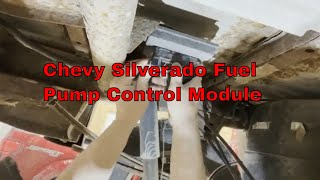
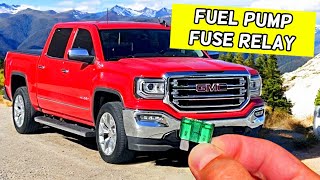
How to confirm: Visually inspect the FPCM for white, crusty corrosion, a swollen case, or physical damage. The module is a small box bolted to the frame crossmember above the spare tire. Use a scan tool to check for communication; a U0109 code 🎬 See how to test and bypass the fuel control module. (Lost Communication With FPCM) often appears with P2636 and strongly indicates a failed module.
Typical fix: Replace the Fuel Pump Control Module. 🎬 Watch: This video shows how to replace a corroded module. The OEM part may require programming by a dealer, but pre-programmed aftermarket units are widely available. Some owners apply RTV silicone to the seams of the new module to prevent future water intrusion.
Est. part cost: $70-$250 - Kinked or Damaged Fuel Tank Fill/Vent Hose 🟡 Medium Probability As identified in TSB #PIT5510B and its successor PIT5510C/D, the fuel tank fill vent hose or the transfer line between tanks can become restricted or kinked, even during installation of a replacement part. This is more common on Chassis Cab models with dual tanks (RPO code N2N).
How to confirm: Visually inspect the fuel lines and hoses running to and from the fuel tank. The line may be covered with a conduit that needs to be slid back to inspect for kinks. A flow test can be performed: the transfer pump should move over 2.6 liters (0.7 gallons) in two minutes.
Typical fix: Replace the affected hose. GM issued a specific fuel transfer line kit (Part #84214102, later updated to #84525925 for some recalls) to address this on some models. The repair may also require an ECM reprogram per the TSB.
Est. part cost: $50-$150 - Refueling with Engine Running or Ignition On ⚪ Low Probability The fuel system logic is sensitive and monitors fuel level changes. Refueling with the ignition on can confuse the system, which interprets the sudden rise in fuel level without a key-off/key-on cycle as a fault and sets the code. This is explicitly documented in TSBs PIT5208 and PIT5208A.
How to confirm: This is a procedural cause. If the code appeared immediately after refueling, this is the likely reason. Question the driver about their refueling habits. Clear the code and ensure the vehicle is always turned off during future refueling.
Typical fix: No parts needed. Clear the DTC with a scan tool and adopt the habit of turning the ignition completely off before opening the fuel cap.
Est. part cost: $0 - Failed In-Tank Fuel Level Sensor / Transfer Pump ⚪ Low Probability The fuel level sensor's resistive contacts can wear out over time, or the small internal transfer pump can fail. This is less common than the FPCM failing but is the next logical step if external components are verified to be good.
How to confirm: This is usually diagnosed after ruling out the FPCM and external wiring/hoses. A scan tool can monitor the fuel level sensor's output for erratic or stuck readings. A bidirectional scan tool can command the pump on to listen for activation and perform a flow test.
Typical fix: Replace the entire fuel pump module assembly, as the sensor and transfer pump are typically integrated into it. This requires dropping the fuel tank or lifting the truck bed for access.
Est. part cost: $200-$500
Rare But Worth Checking
- Wiring Harness Damage: The wiring harness running to the FPCM and fuel tank can be damaged by road debris or corrosion. Check the connectors and harness sections near the FPCM and along the frame rail for any visible issues. The Dark Green/White signal wire between the ECM and FPCM is a potential point of failure.
- Poor Ground Connection for FPCM: The FPCM's ground connection to the frame can corrode, causing high resistance and erratic operation. The primary ground is a black wire bolted to the inside of the driver's side frame rail, near the FPCM. Cleaning this ground point to bare metal can sometimes resolve the issue.
Diagnosis Steps
- Check for other DTCs. Codes like U0109, P069E, P0461, or P2066 are strong clues pointing to the FPCM or fuel level sending units.
- Ask about refueling habits. If the code appeared right after a fill-up, clear the code and advise the owner to always refuel with the truck off, per TSB PIT5208A.
- Lower the spare tire and visually inspect the Fuel Pump Control Module (FPCM) on the frame rail above it for signs of white, powdery corrosion, swelling, or physical damage to the housing and connector.
- Inspect the FPCM wiring harness and its ground connection on the driver's side frame rail for corrosion or damage. Clean the ground point if necessary.
- Inspect the fuel tank vent and transfer hoses for any visible kinks, damage, or restrictions, as noted in TSB #PIT5510B/C.
- If the FPCM and wiring appear fine, use a scan tool to monitor live data from the fuel level sensors while commanding the transfer pump on. The rear tank level should decrease and the front tank level should increase.
- Perform a flow test if possible. The pump should transfer more than 2.6 liters (0.7 gallons) in two minutes. Low flow indicates a kinked line or failing pump.
- If the FPCM is corroded or communication is lost (U0109), replace the FPCM. Note that OEM units require programming.
- If all external components are good and the pump runs but flow is low or non-existent, the fault likely lies with the in-tank fuel pump module/sending unit, which will require tank removal to replace.
Parts You'll Likely Need
- Fuel Pump Control Module (FPCM)
(OEM #23482843)— This is the most common failure point for this code on this platform due to its vulnerability to corrosion. Part number 23482843 is for 2014+ K2XX models and is superseded by 23382215. Older GMT900 models (pre-2014) may use part numbers like 20964306.
Trusted brands: ACDelco, Dorman (e.g., 590-209)
OEM price range: $150-$250
Aftermarket price range: $70-$150 - Fuel Tank Fill Vent Hose / Transfer Line Kit
(OEM #84214102)— A known issue documented in TSB #PIT5510B where a kinked or restricted hose can cause this code. A later recall for a similar issue used part number 84525925.
Trusted brands: ACDelco, GM Genuine
OEM price range: $50-$150
Aftermarket price range: $40-$100
Related Codes That Often Appear With This One
- U0109 — This code means 'Lost Communication With Fuel Pump Control Module' and is a strong indicator that the FPCM itself has failed due to corrosion or internal failure.
- P069E — Indicates 'Fuel Pump Control Module Commanded OFF', which can be set when the FPCM detects a fault like the one causing P2636 and shuts down as a protective measure. It points directly to a failing module.
- P0461 — This code for 'Fuel Level Sensor 'A' Circuit Range/Performance' can appear because the ECM is comparing readings from both tank sensors to verify fuel transfer and detects an illogical signal.
- P2066 — This code for 'Fuel Level Sensor 'B' Performance' is directly related to the secondary tank's sending unit and can be set along with P2636 when the transfer process fails.
Technical Service Bulletins (TSBs) & Recalls
- PIT5510B: Fuel gauge shows empty and low fuel light is on, P2636 is set. Recommends installing a new Fuel Tank Fill Vent hose.
- PIT5208A: Fuel gauge shows empty after refueling. Advises that this can be caused by refueling with the engine or ignition on.
- PIT5510C: Supersedes PIT5510B, adding a diagnostic tip to inspect the *new* fuel transfer line for kinks, which can cause a repeat P2636 code.
Platform-Specific Known Issues
- TSB #PIT5510B/C: Addresses a condition where the fuel gauge shows empty with a P2636 code, requiring inspection and possible replacement of the fuel transfer line for kinks, particularly on 2016 Chassis Cab models with dual tanks.
- TSB #PIT5208A: Notes that P2636 can be set if the vehicle is refueled with the engine running or the ignition on, causing the fuel gauge to read empty. This applies to a wide range of 2007-2014 GM trucks and SUVs.
- GM Recall #17067: A voluntary emission recall for 2015-2016 diesel models with dual tanks to correct a fuel transfer issue that sets P2636. The fix involved replacing fuel line connections and reprogramming the ECM.
Mechanic-Grade Diagnostic Values
- Fuel Transfer Pump Flow Rate — expected: Greater than 2.6 liters (0.70 gallons) in 2 minutes. Failure: A volume less than 2.6 liters indicates a restriction, weak pump, or voltage issue.
- FPCM Power Supply Voltage (Pin 32, Red/White wire) — expected: ≥ 12.6V with key on, engine off. Failure: Low or no voltage indicates a problem with the fuse or wiring from the under-hood fuse box.
- FPCM Ground Connection (Pin 1, Black wire) — expected: < 1.0 Ohm resistance to chassis ground. Failure: High resistance indicates a corroded or broken ground connection at the frame rail.
- FPCM Command Signal from ECM (Pin 13, Dark Green/White wire) — expected: 12V signal for 2-6 seconds when key is first turned to 'ON' (prime cycle), or 12V when commanded ON by a scan tool. Failure: No voltage suggests a wiring break between the ECM (Pin 50) and FPCM, or a faulty ECM.
- Fuel Level Sensor Resistance (GMT900 platform) — expected: Approximately 40 Ohms when empty and 250 Ohms when full. Failure: Readings are outside this range, do not change smoothly, or show an open circuit.
- DTC P2636 Set Condition — expected: The ECM expects to see a fuel level change of 4 Liters (1.06 gal) within 120 seconds of commanding the transfer pump ON.. Failure: If this change is not detected, the DTC is set.
Scan Tool Commands That Help
- GDS2 (GM): Fuel Pump Control Module - Control Functions — Used to command the secondary fuel pump (Pump 'B') ON and OFF to audibly verify its operation and to perform a manual flow rate test.
- GDS2 (GM): Configuration/Reset Functions - Fuel Pump Driver Control Module Configuration — This function is required after replacing the FPCM to program the new module to the vehicle.
- Tech 2 / GDS2: Inability to command transfer pump ON — Per TSB PIT5212A, if the scan tool cannot command the pump on, the tool's software may be outdated (requires version 33.003 or higher) and needs an update before further diagnosis.
Wiring & Ground Locations
- FPCM Ground — A black wire bolted to the inside of the driver's side frame rail, near the FPCM and spare tire.. Corrosion at this single point is extremely common and causes high resistance, leading to low voltage, poor pump performance, and codes P2636 or U0109.
- FPCM Connector (X313) — Located on the Fuel Pump Control Module, mounted to a frame crossmember above the spare tire.. This is the central connection point for power, ground, and the command signal. Key pins for testing are Pin 1 (Ground), Pin 13 (ECM Signal), and Pin 32 (Battery Power).
- ECM Pin 50 — Located in the black connector of the Engine Control Module (ECM).. This is the source of the 'pump on' command signal (Dark Green/White wire). Testing for 12V at this pin can isolate a fault between the ECM and the FPCM if no signal is present at FPCM Pin 13.
Real Owner Repair Stories
- DuramaxDiesels.com forum user (2015 LML (6.6L Diesel) Dump Truck) — Recurring P2636, loss of communication with the fuel pump module, and incorrect fuel level readings.
❌ Tried (didn't work) Dealer repeatedly replaced sending units, Dealer replaced the transfer pump
✅ What actually fixed it The fuel pump ground wire eyelet attached to the frame was severely rusted. The final fix was cutting off the old eyelet and running a new, redundant ground wire to a clean location on the frame.
"I Checked Everything" — The Actual Cause
- A common scenario equivalent to a 'smoke test clean' for this code is when all components seem to test fine, but the code returns. TSB PIT5510C/D highlights a key reason: after replacing a kinked fuel transfer line with the official GM kit, the new line itself can easily get kinked during installation. Technicians are advised to slide back the protective conduit on the newly installed line to visually inspect for kinks, as this will cause a repeat P2636 code.
OEM Part Supersession History
23482843→23382215— Standard part number update by GM.
Heads up: Part 23382215 is the current service replacement for 23482843 and other previous numbers like 20856290, 23184800, and 23199128.
Model Year Variations Within This Range
- 2012-2013 (GMT900): This generation is most known for the FPCM corrosion issue due to its exposed placement on the frame crossmember above the spare tire. TSB PIT5212A specifically notes that 2013 Chassis Cab models may require a scan tool software update to diagnose the transfer pump correctly.
- 2014-2016 (K2XX): This generation has a different electrical architecture and updated engines. TSBs and recalls (like 17067 and PIT5510C/D) for these years focus more on kinked fuel transfer lines and required ECM software updates, particularly on 2015-2016 HD models with dual tanks.
Helpful Videos
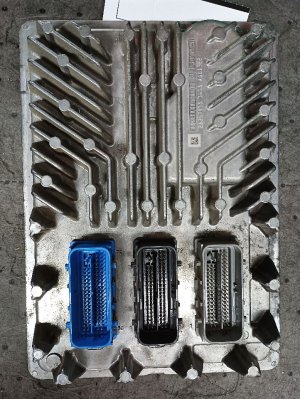
Used OEM Parts in Stock


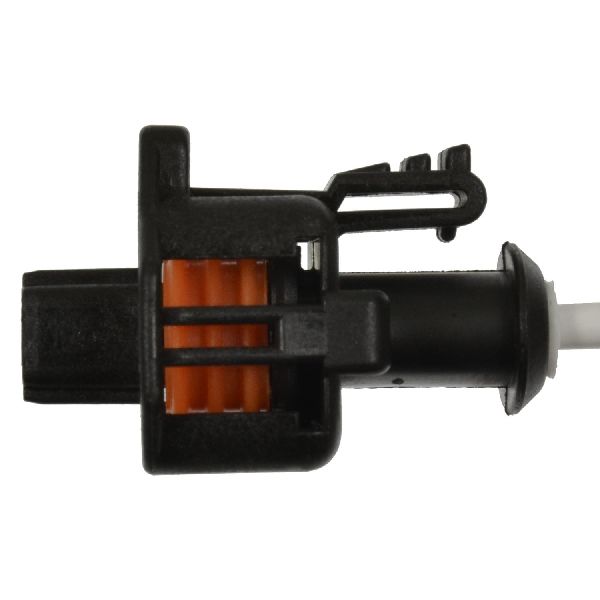
New Aftermarket Parts Available


The information in this article is provided for general reference and educational purposes only. Vehicle specifications, procedures, and part compatibility can vary by production date, trim level, and region. Always consult your vehicle's factory service manual and verify part numbers before purchasing or performing repairs. Safety-critical components such as airbags, seat belts, and braking systems should be installed by a qualified professional.
- Gmc SIERRA:
- 🎬 Helpful Videos
- 🛍️ Shop This Part
- What's Unique About the 2012-2016 Gmc SIERRA
- Diagnostic Flowchart
- Symptoms You May Notice
- Most Likely Causes
- Rare But Worth Checking
- Diagnosis Steps
- Parts You'll Likely Need
- Related Codes That Often Appear With This One
- Technical Service Bulletins (TSBs) & Recalls
- Platform-Specific Known Issues
- Mechanic-Grade Diagnostic Values
- Scan Tool Commands That Help
- Wiring & Ground Locations
- Real Owner Repair Stories
- "I Checked Everything" — The Actual Cause
- OEM Part Supersession History
- Model Year Variations Within This Range
- 🎟️ Get 5% Off