

OBD-II Code P2636: Fuel Pump 'B' Low Flow / Performance
What P2636 means, why it triggers, and how to fix it
- On GM trucks, a corroded Fuel Pump Control Module (FPCM) mounted above the spare tire causes over 80% of P2636 codes.
- Refueling a GM vehicle with the engine running triggers a false P2636 code and instantly drops the fuel gauge to empty.
- Never replace the expensive in-tank fuel pump without first testing the FPCM power and ground wires for a voltage drop.
- A faulty low-pressure fuel sensor on Ford Fiesta ST models mimics a failing pump by sending a stuck 4.5V signal to the PCM.
What Does P2636 Mean?
P2636 means the Powertrain Control Module (PCM) detects the secondary fuel pump circuit ('Fuel Pump B') is not delivering the expected fuel volume. On trucks with dual or saddle-style tanks, this pump moves fuel between tanks or across the tank halves. The computer triggers this code when it commands the pump on but fails to see the expected fuel level change—typically a transfer of 3-4 liters within 120 seconds.
Technical definition: The SAE/OBD-II definition is "Fuel Pump 'B' Low Flow / Performance." 🎬 See this overview of diagnosing P2636 fuel pump B issues This indicates the PCM detects the Fuel Pump 'B' control circuit performance falls outside the manufacturer's specified range. The 'B' designates a secondary transfer pump, a jet pump in a saddle tank, or the performance monitoring circuit of the primary pump.
Can I Drive With P2636?
Yes, But With Caution. You can drive, but risk stalling in traffic. On GM trucks, the fuel gauge drops to empty, masking your true fuel level. If the code stems from a failing pump or control module, the engine stalls without warning. Driving with low fuel flow also starves the primary high-pressure fuel pump on GDI or diesel engines, causing upwards of $2,000 in secondary damage.
Common Causes

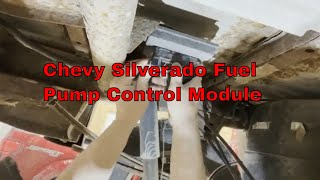
- Faulty Fuel Pump Control Module (FPCM) (Very Common) — On GM trucks, the FPCM mounts directly to the steel frame. Exposure to road salt causes severe galvanic corrosion between the aluminum housing and the steel frame 🎬 Watch: How to inspect and replace a corroded GM FPCM, destroying the internal electronics. This is the absolute most frequent hardware failure for this code.
- Refueling with the Ignition On (Very Common) — Refueling a GM vehicle while the engine runs or the key is on confuses the fuel monitoring system. The computer interprets the rapid, unexpected change in fuel level as a system fault, triggering a false P2636 code per GM Technical Service Bulletin PIT5208A.
- Corroded or Damaged Wiring/Grounds (Common) — The same moisture that kills the FPCM destroys the wiring harness and ground wires. A corroded ground connection bolted to the frame creates high electrical resistance, starving the module of voltage and mimicking a failed pump.
- Failed Fuel Pump 'B' (Lift/Transfer Pump) (Less Common) — The transfer pump itself fails mechanically or electrically, resulting in zero fuel transfer. On dual-tank vehicles, this is the pump located inside the auxiliary tank.
- Clogged Fuel Filter or Kinked Fuel Line (Less Common) — A physical restriction prevents the pump from moving the required volume. GM TSB PIT5510D notes that even brand-new replacement fuel transfer lines arrive kinked out of the box, causing the code to return immediately after a repair.
- Faulty Low-Pressure Fuel Sensor (Uncommon) — On turbocharged models like the Ford Fiesta ST, a faulty low-pressure fuel sensor sends a stuck high-voltage reading to the PCM. The computer misinterprets this inaccurate sensor data as a pump performance issue.
Symptoms

- Fuel Gauge Reads Empty After Refueling — The fuel gauge drops to zero and the low fuel light illuminates immediately after filling the tank. This is a specific failsafe symptom on GM trucks.
- Engine Hesitation or Stalling — The engine stumbles, loses power during acceleration, or stalls completely when RPMs exceed 3,000 due to fuel starvation.
- Engine Hard to Start or Won't Start — The engine cranks for an extended period before starting, or fails to start entirely.
- 'Service Fuel System' Message — The Driver Information Center (DIC) displays a warning message indicating a detected fault in the fuel delivery system.
- Check Engine Light is On (also visible on scanner) — The vehicle's computer illuminates the Malfunction Indicator Lamp (MIL) on the dashboard.
Diagnostic Flowchart

Tap your situation to follow the diagnostic path that matches what you're seeing on this code.
Common Fixes & Costs
- Replace Fuel Pump Control Module (FPCM) — Parts: $80-$250, Labor: $150-$300, ~1.5 hr book time (DIY)
- Change Refueling Procedure — Parts: $0, Labor: $0, ~0.1 hr book time (DIY)
- Repair Corroded Wiring or Ground Connection — Parts: $10-$30, Labor: $150-$300, ~1.8 hr book time (Intermediate)
- Replace Fuel Pump / Transfer Pump Assembly — Parts: $300-$800, Labor: $400-$800, ~3.5 hr book time (Professional)
- Replace Low-Pressure Fuel Sensor — Parts: $50-$150, Labor: $75-$150, ~0.8 hr book time (Intermediate)
DIY vs Professional
- Replace Fuel Pump Control Module (FPCM) — Beginner: Yes. This is a simple bolt-on replacement.
Tools: 10mm socket, ratchet, flashlight, safety glasses. - Repair Corroded Wiring or Ground Connection — Beginner: No. Recommended for intermediate DIYers.
Tools: Multimeter, wire brush, socket set, wire strippers, crimp tools, heat shrink tubing. - Replace Fuel Pump / Transfer Pump Assembly — Beginner: No. Recommended for professionals.
Tools: Floor jack, jack stands, fuel tank jack, fuel line disconnect tools, socket set. - Replace Low-Pressure Fuel Sensor — Beginner: No. Recommended for intermediate DIYers.
Tools: Wrench set, fuel line disconnect tool, rags, safety glasses.
Used vs. New Parts: Buying Guide
When a used part is worth it: A used FPCM only makes sense if sourced from a low-mileage vehicle in a dry, salt-free climate. Buying a used module from a rust-belt state guarantees a repeat failure.
Donor-vehicle mileage cap: roughly under 60000 miles for the part to have meaningful remaining life.
Donor quality checklist:
- Verify the donor vehicle's geographical origin; strictly avoid states with heavy road salt usage.
- Visually inspect the used module's aluminum backplate and connector pins for any white powder or pitting.
- Match the part number exactly, as GM used several non-interchangeable FPCMs across different model years.
Decision logic:
- If The vehicle is from a rust-belt state or a new aftermarket module is under $150 → Buy new. The risk of a used part failing from identical corrosion is too high.
- If Budget is the absolute priority and you can verify the part is from a dry-state vehicle → A used part is viable, but carries no warranty.
- If The OEM part requires dealer programming → Buy a new pre-programmed aftermarket module (like Dorman) to avoid $150+ in dealer programming fees.
Warranty tradeoff: Used parts carry a 30-day warranty at best. New aftermarket modules offer a 1-year to limited lifetime warranty.
Worst-case if a used part fails: $400 if a used FPCM fails after installation, accounting for replacement labor and the cost of buying a new part.
What Happens If You Wait — Timeline
- 0-1 month: Code P2636 appears. On GM trucks, the fuel gauge drops to empty after fill-ups. The issue is primarily an annoyance. (MPG impact: 0%% · Added cost: $0)
- 1-3 months: The engine develops a long crank time or hesitates when accelerating from a stop. The risk of stalling in traffic increases. (MPG impact: 3-5%% · Added cost: $20-$80 in wasted fuel.)
- 3-6 months: Engine stalling becomes common under load. On GDI or diesel engines, intermittent fuel starvation puts severe strain on the high-pressure fuel pump. (MPG impact: 5-10%% · Added cost: $800-$2,000 (Risk of high-pressure fuel pump damage))
- 6+ months: Complete failure of the FPCM or fuel pump. The vehicle refuses to start, leaving you stranded. Prolonged lean running conditions melt the catalytic converter. (MPG impact: 10-15%% · Added cost: $1,500-$3,500+ (High-pressure pump and catalytic converter replacement))
Cost of Not Fixing It
- 0-1 month: Driver inconvenience due to hard starting, stalling, and an unreliable fuel gauge. Increased risk of being stranded in traffic. (Added cost: Negligible)
- 1-6 months: On GDI or diesel engines, the low-pressure pump's failure to supply adequate fuel starves and destroys the high-pressure fuel pump. (Added cost: $800-$2000)
- 6+ months: Prolonged fuel starvation creates a lean running condition, which overheats and melts the catalytic converter. (Added cost: $1200-$2800)
Diagnosis Steps

- Check Your Refueling Habits
If you drive a GM vehicle, refueling with the engine running causes this code. Turn the vehicle completely off, clear the code, and see if it returns after your next proper fill-up.
Tools: OBD-II Scanner (Beginner) - Scan for Related Codes
Check for other stored trouble codes. Codes like U0109 (Lost Communication With FPCM) or P069E (FPCM Commanded OFF) guarantee a faulty FPCM or wiring issue, ruling out the fuel pump itself.
Tools: OBD-II Scanner (Beginner) - Inspect the FPCM and Ground Wire
On GM trucks, lower the spare tire and locate the FPCM on the frame crossmember. Inspect the aluminum backplate for white, powdery corrosion. Remove the nearby ground wire bolt, clean the terminal and frame to bare metal, and re-secure it tightly.
Tools: Socket set, wire brush, flashlight (Intermediate) - Check Fuel Pump Relay and Fuse
Locate the fuel pump fuse and relay in the fuse box (check FPCM fuse #21 and ECM fuse #56 on GM trucks). Swap the relay with an identical non-critical relay (like the horn) to test it.
Tools: Owner's manual, fuse puller (Beginner) - Pro Tip: Test FPCM Voltage and Ground
Back-probe the FPCM connector with a multimeter. The power supply pin must show at least 12.6V with the key on. The ground pin must show less than 1.0 ohm of resistance to a clean chassis ground. High resistance means you have a wiring fault, not a bad module.
Tools: Multimeter, wiring diagram, T-pins (Advanced) - Test Fuel Pump Operation
Turn the key to the 'ON' position without starting the engine. Listen closely at the fuel tank for a 2-second humming sound. If silent, strike the bottom of the fuel tank firmly with a rubber mallet; if the pump temporarily starts, the internal motor is failing.
Tools: Helper, rubber mallet (Beginner) - Pro Tip: Test Low-Pressure Fuel System
Connect a fuel pressure gauge to the low-pressure service port. Command the pump on with a bidirectional scan tool. GM trucks require 50-100 PSI. Pressure below specification confirms a weak pump, clogged filter, or kinked line.
Tools: Fuel pressure gauge, bidirectional scan tool (Advanced) - Pro Tip: Measure Pump Current Draw
Clamp a DC current meter around the fuel pump power wire. A healthy port-injected pump draws 4 to 10 amps. Amperage over 12A indicates a clogged filter or seizing motor. Amperage under 4A indicates high circuit resistance.
Tools: DC current clamp, scan tool (Advanced) - Pro Tip: Check Sensor Voltage (Ford EcoBoost)
On models like the Fiesta ST, back-probe the low-pressure fuel sensor signal wire. Voltage must drop to a 0.5V-0.8V baseline when the system is depressurized. If voltage remains stuck above 4.0V, replace the sensor.
Tools: Multimeter, wiring diagram (Advanced)
When This Code Triggers (Freeze-Frame Conditions)
- Vehicle Speed: 0 mph (Vehicle is at a standstill, often idling.)
- Fuel Level (Primary): < 60 Liters (~16 gal) (The main tank is not full, allowing room for transferred fuel.)
- Fuel Level (Secondary): > 3 Liters (~0.8 gal) (Sufficient fuel exists in the secondary tank to execute a transfer test.)
- Test Duration: 120-200 seconds (The PCM commands the transfer pump ON and expects a 3-4 liter volume change within this window.)
Related Codes
- U0109 — Means 'Lost Communication With Fuel Pump Control Module.' If paired with P2636, the FPCM or its wiring is guaranteed to be the culprit. Diagnose this as an electrical failure before touching the fuel pump.
- P069E — Means the FPCM detected an internal fault and requested the Check Engine Light. The module failed its own self-test and must be replaced.
- P0463 — Means 'Fuel Level Sensor A Circuit High.' Appears with P2636 because the PCM uses fuel level changes to verify transfer pump operation. Suspect a faulty FPCM affecting both circuits.
- P2066 — Means 'Fuel Level Sensor B Performance.' Common on dual-tank vehicles. If the transfer pump fails, the secondary tank fuel level never changes, flagging a sensor performance fault.
Climate & Environmental Factors
- Road Salt and Humidity (Rust Belt Regions): This is the primary environmental trigger. On GM trucks, exposure to road salt creates galvanic corrosion between the FPCM's aluminum housing and the steel frame, destroying the module's internal electronics.
- Cold Weather: Freezing temperatures weaken marginal batteries. A voltage drop during startup causes the PCM to misinterpret low electrical power as a mechanical pump failure, triggering a false P2636 code.
How to Talk to a Mechanic About This Code
Say this: "I have a P2636 code on my vehicle and I need a diagnostic. Based on my research, the most common causes are the Fuel Pump Control Module or a bad ground wire, rather than the in-tank pump itself. Please start by inspecting the FPCM for corrosion and performing a voltage drop test on its circuit before quoting a fuel pump replacement."
This signals you are an informed customer. It directs the shop to diagnose the cheapest and most likely problems first, preventing an immediate quote for an unnecessary $800 fuel pump replacement.
Avoid saying:
- 'My truck is stalling, I think I need a new fuel pump.'
- 'My check engine light is on, can you just fix it?'
- 'The internet said to replace the FPCM, can you just do that?'
Questions to ask before authorizing the repair:
- Did you find corrosion on the Fuel Pump Control Module or its connector?
- What was the exact voltage reading at the FPCM power wire and the resistance on the ground wire?
- If you recommend a fuel pump replacement, what was the pressure reading during a loaded fuel pressure test?
- If the FPCM needs replacement, does the new part require dealer programming and is that included in the quote?
- What is the warranty on the parts and labor for this repair?
Where to Take It: Dealer vs Independent vs Chain
- Dealer:
A strong, but expensive, choice. Best if you suspect a software issue or if the vehicle is covered by a warranty.
Best for: Vehicles under warranty., Complex cases requiring a new OEM FPCM that needs VIN-specific programming via a Tech2/GDS2 tool., Repairs related to a specific recall or TSB.
Downsides: Highest labor rate., Refuses to install cheaper, pre-programmed aftermarket parts. (Typical cost: +50% vs. baseline) - Independent Shop:
Best fit for most cases. An experienced independent mechanic diagnoses FPCM and ground faults efficiently without defaulting to the most expensive repair.
Best for: Out-of-warranty vehicles where cost is a factor., Diagnosing common issues like the corroded FPCM on GM trucks., Shops with strong electrical diagnostic skills.
Downsides: Quality varies widely; look for ASE certifications., May lack the expensive tools required to program OEM modules. (Typical cost: +0% vs. baseline) - Chain Shop:
Use with caution. Acceptable only if you have already diagnosed a bad FPCM and just need it swapped with a plug-and-play aftermarket part.
Best for: Simple parts replacement when the diagnosis is already 100% certain.
Downsides: Technician skill varies greatly., Lacks the in-depth diagnostic experience for circuit testing, leading to unnecessary fuel pump replacements. (Typical cost: -10% vs. baseline)
When to Walk Away From the Repair
If the estimated repair cost exceeds 50% of the car's private-party value, seriously consider selling or trading it in instead of repairing it.
- Car worth $10000, fix is $800: Fix it. An $800 repair for a full fuel pump replacement is well below the 50% threshold for a $10,000 truck.
- Car worth $5000, fix is $2800: Walk away. A repair cost of $2,800 for a high-pressure pump and a catalytic converter exceeds 50% of the vehicle's value.
- Car worth $7000, fix is $3500: Borderline. A $3,500 repair is exactly 50% of the car's value. Get a second opinion and consider the vehicle's overall condition before proceeding.
What Scan Tool You Need for This Code
Minimum: A scanner that reads live data streams for the fuel system and features bidirectional control to command the fuel pump on/off.
A basic $20 code reader only shows the P2636 code. It cannot determine if the cause is the pump, the control module, or a wiring fault. You must view live data and command the pump to run to properly diagnose the issue.
Budget: BlueDriver Pro (~$90) — Reads and clears the P2636 code, displays freeze-frame data, and graphs live data for fuel system parameters. Viewing live data is a critical first diagnostic step.
Mid-range: Foxwell NT510 Elite (~$180) — Offers manufacturer-specific diagnostics, including full bidirectional control to activate the fuel pump and its relay directly. This tests the pump's function without manually jumping wires.
Professional: Autel MaxiCOM MK808S (~$500) — Provides full OEM-level diagnostics and comprehensive bidirectional controls. It commands the pump on/off, reads manufacturer-specific data PIDs, and performs system-wide tests to pinpoint the failure instantly.
Rent vs buy: If this is a one-time fix, auto parts stores offer free tool loaner programs for OBD-II scanners. If you perform regular maintenance, buying a mid-range scanner with bidirectional capabilities is a mandatory investment.
How to Clear the Code After You Fix It
- Use an OBD-II scan tool to clear the P2636 code.
- Ensure the fuel tank is between 1/4 and 3/4 full.
- Perform a complete drive cycle to allow the vehicle's readiness monitors to run.
Drive cycle (~20 minutes): From a cold start (engine temp below 122°F), idle for 3 minutes with A/C on. Accelerate to 55 mph and hold for 3 minutes. Coast down to 20 mph without braking. Accelerate to 60 mph and hold for 5 minutes. Coast down again.
Readiness monitors affected: Fuel System Monitor, Catalyst Monitor, Oxygen (O2) Sensor Monitor
Before emissions retest: drive at least 50 miles to fully set monitors.
Watch out for:
- Disconnecting the battery clears the code but resets all readiness monitors, causing an automatic emissions test failure.
- The code returns immediately if a corroded FPCM ground wire was not cleaned to bare metal.
- Failing to start the drive cycle with a completely cold engine prevents the catalyst monitor from running.
Will This Fail Emissions / State Inspection?
Yes — this code typically fails an OBD-II emissions inspection.
- California: An active P2636 code causes an automatic failure. All readiness monitors must be 'Ready' for the test to proceed.
- New York: The NYS DMV inspection includes an OBD-II scan. A Check Engine Light with code P2636 stored results in an immediate emissions failure.
- Texas: In the 17 counties requiring emissions testing, an illuminated Check Engine Light for P2636 causes the vehicle to fail the inspection.
Most Commonly Affected Vehicles

- Chevrolet Silverado 1500/2500/3500 (2007-2016) — Extremely high failure rate of the frame-mounted FPCM due to corrosion. Also highly susceptible to the refueling-while-on logic error (TSB PIT5208A).
- GMC Sierra 1500/2500/3500 (2007-2016) — Identical FPCM corrosion issues to the Silverado. Dual-tank HD models are prone to kinked transfer lines (TSB PIT5510D).
- Chevrolet Suburban / Tahoe (2007-2013) — Shares the truck platform and suffers identical FPCM failures from corrosion and the refueling logic issue.
- GMC Yukon / Yukon XL (2007-2013) — Shares the high failure rate of the FPCM due to its exposed frame mounting location.
- Nissan Titan (2004-2015) — Experiences P2636 related to a failing fuel pump assembly or integrated fuel level sensor causing performance deviation.
- Ford Fiesta ST (2014-2019) — Triggered by a faulty low-pressure fuel sensor giving incorrect readings. The sensor voltage fails to drop to its 0.5V baseline when pressure is released.
- Subaru Outback (2005-2009) — A faulty fuel pump controller fails to send the correct duty cycle to the pump, causing it to run constantly at full pressure and triggering P2636.
- Hyundai Genesis Coupe (2010-2016) — Points to a weak fuel pump that cannot meet the pressure demands of the GDI engine under heavy load.
Manufacturer-Specific Notes
- General Motors (Chevrolet/GMC): TSB PIT5208A states that refueling the vehicle with the engine running causes a false P2636 and forces the fuel gauge to read empty. Always turn the key off before pumping gas.
- General Motors (Chevrolet/GMC): The FPCM mounts directly to the steel frame, causing galvanic corrosion with the module's aluminum backplate. Aftermarket replacements include rubber spacers to fix this design flaw.
- General Motors (Chevrolet/GMC): On dual-tank models, TSB PIT5510D warns that a kinked fuel transfer hose restricts flow and causes a repeat P2636 code. Technicians must inspect new lines by sliding back the protective conduit before installation.
- General Motors (Chevrolet/GMC): Recall NHTSA #17V399000 addresses 2015-2016 HD trucks with dual tanks. The fix replaces fuel line connections and reprograms the ECM to prevent the rear tank from collapsing.
Real Owner Stories
2011 GMC Sierra 1500, ~110K miles - The Classic FPCM Failure
Owner experienced the fuel gauge dropping to empty immediately after filling up, accompanied by a Check Engine Light for P2636. The truck ran fine otherwise.
What they tried:
- Initially ignored it, but the gauge issue was annoying.
- A shop quoted them $800 to replace the in-tank fuel pump.
Outcome: The owner inspected the FPCM above the spare tire and found it heavily corroded with a swollen aluminum backplate. They replaced it themselves in 30 minutes with a Dorman aftermarket part for $120. The new module included rubber spacers to prevent future corrosion. Cleared the code, and the issue was permanently resolved.
Lesson: On GM trucks, always inspect the FPCM and its ground wire for corrosion before considering an expensive in-tank fuel pump replacement. This is the #1 cause of P2636.
2014 Ford Fiesta ST, ~75K miles - The Unusual Sensor Fault
The car threw a P2636 code but had no noticeable driving symptoms like stalling or hesitation. The owner was concerned about potential fuel pump failure.
What they tried:
- Checked the battery and fuel pump relay, which were both fine.
- Considered replacing the in-tank fuel pump but was hesitant due to the lack of symptoms.
Outcome: A diagnostic test showed the low-pressure fuel sensor's voltage was stuck at 4.8V and did not drop to its 0.5V baseline when the system was depressurized. Replacing the sensor (Motorcraft #BU5Z-9F972-B) fixed the problem. The part cost $60 and took 20 minutes to install.
Lesson: The cause of P2636 is highly vehicle-specific. On a Ford Fiesta ST, a faulty low-pressure fuel sensor triggers this code even if the pump is perfectly healthy.
2015 Chevy Silverado 3500HD (Dual Tank), ~90K miles - A Tale of Misdiagnosis
Truck repeatedly set P2636, stalled intermittently, and the fuel gauge was unreliable. The owner took it to a shop for repair.
What they tried:
- The shop replaced the rear transfer pump for $700.
- When the code returned, they replaced the fuel level sending unit for $400.
- When the code returned again, they began billing for hours of wire tracing.
Outcome: Frustrated, the owner inspected the harness where it passes through the frame rail and found a corroded, broken power wire feeding the FPCM. Repairing this single wire for $5 in materials permanently fixed the code that the shop had thrown $1,100 of parts at without success.
Lesson: Do not just replace parts. A simple wiring or ground fault mimics a very expensive component failure. Always perform a loaded voltage drop test on the FPCM power and ground wires before replacing modules or pumps.
How to Prevent This Code From Triggering
- Always turn the ignition completely off before refueling (Every fill-up) — Prevents the fuel monitoring system from misinterpreting a rapid fuel level change as a system fault, avoiding false P2636 codes per TSB PIT5208A.
- Install new FPCM with included rubber spacers/washers (During FPCM replacement) — Creates an air gap between the FPCM's aluminum housing and the steel frame, preventing the galvanic corrosion that destroys the original module.
- Apply dielectric grease to the FPCM connector (During FPCM replacement or inspection) — Seals the electrical connector from moisture, preventing pin corrosion that causes high resistance and communication errors like U0109.
- Inspect and clean the FPCM ground connection (Every 2 years in rust-belt regions) — The ground wire bolted to the frame is a critical failure point. Corrosion creates high resistance, starving the module of voltage and mimicking a failed pump.
Frequently Asked Questions
Can I just clear the P2636 code and keep driving?
You can clear it, but a hard fault returns immediately. If caused by refueling with the engine running, it stays off after a proper fill-up. Ignoring a real fault risks unexpected stalling and severe high-pressure fuel pump damage.
Why does my fuel gauge say empty after I just filled up?
This is a specific failsafe symptom for P2636 on GM trucks. The computer detects a fuel transfer problem and commands the gauge to zero. This alerts the driver that the fuel reading is unreliable.
What's the difference between Fuel Pump 'A' and 'B'?
'Fuel Pump A' is the primary high-pressure pump feeding the engine injectors. 'Fuel Pump B' is a secondary low-pressure transfer pump. It moves fuel between dual tanks or across a single large saddle tank.
What are the most common misdiagnosis mistakes for P2636?
The biggest mistake is replacing the expensive in-tank fuel pump without inspecting the Fuel Pump Control Module (FPCM). Mechanics also mistakenly replace the fuel level sensor to fix the empty gauge reading. Always test the FPCM power and ground circuits first.
I replaced the FPCM and the code came back. Now what?
Re-check the FPCM ground connection; it must be bolted to bare metal with under 1.0 ohm of resistance. Inspect the wiring harness for hidden breaks inside the frame rail. On dual-tank vehicles, check for a kinked fuel transfer hose.
Do I need to program a new Fuel Pump Control Module?
Original equipment (OEM) modules from the dealer require VIN programming using a Tech2 or GDS2 scan tool. Most aftermarket modules, like those from Dorman, come pre-programmed. Plug-and-play aftermarket units save you a $150+ dealer programming fee.
What does 'Fuel Pump B' mean if my car only has one fuel tank?
On vehicles with a single saddle-style tank, 'Pump B' is a transfer pump moving fuel over the driveshaft hump to the main pump. On standard single tanks, 'B' refers to the performance monitoring circuit of the primary pump system.
Key Takeaways
- On GM trucks, a corroded Fuel Pump Control Module (FPCM) mounted above the spare tire causes over 80% of P2636 codes.
- Refueling a GM vehicle with the engine running triggers a false P2636 code and instantly drops the fuel gauge to empty.
- Never replace the expensive in-tank fuel pump without first testing the FPCM power and ground wires for a voltage drop.
- A faulty low-pressure fuel sensor on Ford Fiesta ST models mimics a failing pump by sending a stuck 4.5V signal to the PCM.
Helpful Videos

The information in this article is provided for general reference and educational purposes only. Vehicle specifications, procedures, and part compatibility can vary by production date, trim level, and region. Always consult your vehicle's factory service manual and verify part numbers before purchasing or performing repairs. Safety-critical components such as airbags, seat belts, and braking systems should be installed by a qualified professional.
- 🎬 Helpful Videos
- What Does P2636 Mean?
- Can I Drive With P2636?
- Common Causes
- Symptoms
- Diagnostic Flowchart
- Common Fixes & Costs
- DIY vs Professional
- Used vs. New Parts: Buying Guide
- What Happens If You Wait — Timeline
- Cost of Not Fixing It
- Diagnosis Steps
- When This Code Triggers (Freeze-Frame Conditions)
- Related Codes
- Climate & Environmental Factors
- How to Talk to a Mechanic About This Code
- Where to Take It: Dealer vs Independent vs Chain
- When to Walk Away From the Repair
- What Scan Tool You Need for This Code
- How to Clear the Code After You Fix It
- Will This Fail Emissions / State Inspection?
- Most Commonly Affected Vehicles
- Manufacturer-Specific Notes
- Real Owner Stories
- 2011 GMC Sierra 1500, ~110K miles - The Classic FPCM Failure
- 2014 Ford Fiesta ST, ~75K miles - The Unusual Sensor Fault
- 2015 Chevy Silverado 3500HD (Dual Tank), ~90K miles - A Tale of Misdiagnosis
- How to Prevent This Code From Triggering
- Frequently Asked Questions
- Can I just clear the P2636 code and keep driving?
- Why does my fuel gauge say empty after I just filled up?
- What's the difference between Fuel Pump 'A' and 'B'?
- What are the most common misdiagnosis mistakes for P2636?
- I replaced the FPCM and the code came back. Now what?
- Do I need to program a new Fuel Pump Control Module?
- What does 'Fuel Pump B' mean if my car only has one fuel tank?
- Key Takeaways
- 🎟️ Get 5% Off