

P2635 on 2013-2017 GMC Acadia: Fuel Pump Low Flow Causes & Fixes
P2635 on a 2013-2017 Acadia almost always means the in-tank fuel pump is failing, a problem that gets worse in hot weather and can cause stalling. The official fix is to replace the fuel pump module assembly with an updated part (ACDelco M100156), a repair that typically costs between $840 and $1,330 at a shop.
- P2635 on a 2013-2017 GMC Acadia is a strong indicator of a failing in-tank fuel pump, not a random sensor issue.
- Symptoms like stalling and hesitation will be noticeably worse in hot weather (above 100°F) or on long drives.
- The correct repair is to replace the entire fuel pump module with the updated ACDelco part (M100156), not just the pump or sensor.
- This is a known issue that also affects the Buick Enclave and Chevrolet Traverse from the same model years.
What's Unique About the 2013-2017 Gmc ACADIA

The first-generation GMC Acadia and its Lambda platform-mates (Buick Enclave, Chevy Traverse) are particularly susceptible to this issue, especially in hot climates. GM has acknowledged the problem through multiple Technical Service Bulletins (TSBs). The core issue, as described in TSBs like #PIP5507B and #17-NA-335, is that the original fuel pump design can struggle in ambient temperatures over 100°F, leading to vapor buildup in the fuel line, a drop in fuel pressure, and stalling. This makes the P2635 code on this specific vehicle a very strong indicator of a failing fuel pump module, not just a random sensor fault.
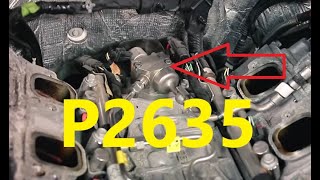
🎬 Watch: Understanding the causes and fixes for the P2635 code.Diagnostic Flowchart

Tap your situation to follow the diagnostic path that matches what you're seeing on this vehicle.
Generation note: The 2013-2016 models are all first-generation. The 2017 model year is split: the all-new second-generation Acadia and the 'Acadia Limited,' a carryover of the first generation. The cited TSBs and common issues primarily relate to the first-generation platform (2013-2016 and 2017 Acadia Limited).
Symptoms You May Notice
- Check Engine Light is on
- Engine hesitation or stumbling, especially under acceleration
- Engine stalling, particularly in hot weather or after extended idling
- Reduced engine power or sluggish performance
- Difficulty starting the engine or extended cranking time
- Engine surging
- Slow to rev with throttle input
- Replacing only the fuel pressure sensor without confirming its failure. While it can be the cause, the fuel pump is far more likely on this platform.
- Assuming the issue is with the high-pressure fuel pump. P2635 on this vehicle points to the low-pressure in-tank pump.
- Replacing other fuel system components like injectors before properly diagnosing the fuel supply from the tank.
Most Likely Causes

- Failing In-Tank Fuel Pump Module 🔴 High Probability As documented in GM TSBs #17-NA-335 and #PIP5507B, the original fuel pump module is known to fail, especially in high ambient temperatures, causing vapor buildup and low fuel flow. The updated pump design includes features to mitigate this vapor lock issue.
How to confirm: Monitor fuel pressure with a scan tool; look for a significant drop in pressure that coincides with symptoms, especially when the ambient temperature is high. The desired vs. actual fuel pressure readings will show a large discrepancy. Diagnostics should confirm that the fuel pump is receiving proper voltage before condemning it. The presence of the code, especially with stalling in hot weather, is a very strong indicator.
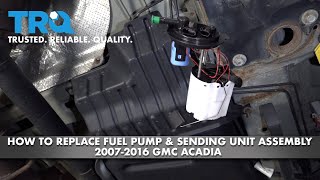
Typical fix: Replace the entire fuel pump module assembly with the updated part, ACDelco M100156 or equivalent. This is the official repair recommended by GM in TSB 16-NA-225.
Est. part cost: $618-$1,007 for an OEM/quality aftermarket part.
Rare But Worth Checking
- Faulty Fuel Pressure Sensor: While less common than pump failure, TSB #PIP5286B notes that a faulty fuel pressure sensor can get stuck and send incorrect readings, triggering P2635 and P018B even if the pump is working correctly. A good diagnostic practice is to check if the sensor reading drops to zero PSI after the system has been depressurized; if it doesn't, the sensor is likely faulty.
- Clogged Fuel Filter: The fuel filter is integrated into the fuel pump module assembly on this vehicle. While not a separate part to replace, a prematurely clogged filter (due to contaminated fuel) can cause the same low-flow symptoms and lead to pump failure.
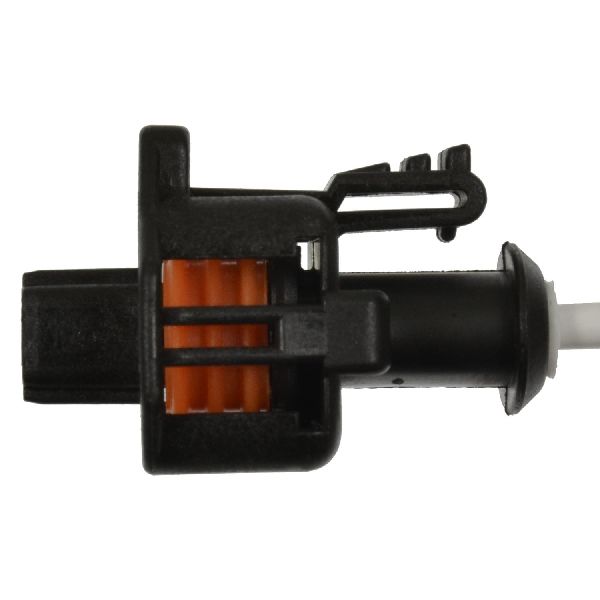
- Wiring Issues or Faulty Fuel Pump Driver Module (FPDM): Corrosion or damage to the wiring or connectors for the fuel pump or FPDM can cause a voltage drop, leading to reduced pump performance. TSB 16-NA-225 also mentions checking for a loose electrical connector at the fuel jet pump inside the module. Another TSB notes that a loss of communication between the ECM and FPCM can sometimes induce a P2635 code.
Diagnosis Steps
- Scan the vehicle's computer for all stored trouble codes and review freeze frame data to see the conditions (like ambient temperature) when the code was set.
- Note the presence of P2635 and especially if it is paired with P018B, which strongly suggests the known fuel pump issue.
- Using a capable scan tool (like GM's GDS2), monitor the low-side fuel pressure sensor data. Compare the 'Desired Fuel Pressure' commanded by the PCM to the 'Actual Fuel Pressure' reading. A significant and persistent difference where actual is lower than desired points to a flow problem.
- Attempt to replicate symptoms (stalling, hesitation), ideally on a hot day or after a long drive. A sharp drop in actual fuel pressure during these events is a clear sign of a failing pump.
- To help rule out a faulty sensor, follow the procedure in TSB #PIP5286B: depressurize the fuel system and check if the fuel pressure sensor reading on the scan tool drops to 0 PSI. If it remains stuck at a higher value, the sensor itself may be the problem.
- Inspect the wiring and connectors for the Fuel Pump Driver Module (FPDM) and the fuel pump itself for any signs of corrosion, damage, or looseness. The FPDM is often located under the vehicle and is susceptible to the elements.
- If the fuel pressure sensor and wiring are confirmed to be good, and the actual fuel pressure is verified to be low or erratic, the fuel pump module is the confirmed culprit.
Parts You'll Likely Need
- Fuel Pump Module Assembly
(OEM #ACDelco M100156 (Supersedes older part numbers))— This is the complete unit that fails, as documented by GM's own service bulletins. It includes the pump, sending unit, and integrated filter. Replacing the entire module with the updated ACDelco part is the correct and most reliable repair.
Trusted brands: ACDelco (GM OE), Delphi, Bosch
OEM price range: $600-$1000
Aftermarket price range: $250-$500
Related Codes That Often Appear With This One
- P018B — This code, 'Fuel Pressure Sensor 'B' Circuit Range/Performance', is frequently set alongside P2635. The TSBs from GM explicitly mention these two codes appearing together as the sensor detects the erratic pressure caused by the failing pump or vapor lock.
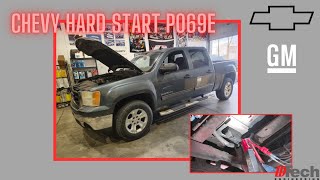
- P069E — This code for 'Fuel Pump Control Module (FPCM) Requested MIL Illumination' often accompanies P2635. It indicates that the FPCM has detected a fault within its own circuits or the components it controls (like the fuel pump) and has instructed the main Engine Control Module (ECM) to turn on the Check Engine Light.
Technical Service Bulletins (TSBs) & Recalls
- 17-NA-335: Supersedes previous bulletins, confirming vapor buildup as the cause in high temperatures and recommending fuel pump module replacement with an updated part as the definitive fix.
- 16-NA-225: Provides the procedure to replace the fuel pump module assembly for DTC P2635 and/or P018B.
- PIP5507B: Links DTCs P2635/P018B and stalling conditions to high ambient temperatures (100°F+), specifically mentioning vapor buildup in the fuel feed line.
- PIP5411F: An earlier bulletin, now superseded by 17-NA-335, which also recommended the replacement of the in-tank fuel pump with a new design part to fix the issue.
- PIP5286B: Provides diagnostic steps to differentiate between a faulty fuel pump and a faulty fuel pressure sensor.
Platform-Specific Known Issues
- According to GM Technical Service Bulletin #PIP5507B, 2013-2017 Acadias may set DTC P2635 and experience hesitation or stalling in ambient temperatures of 100°F (37.7°C) or higher due to vapor buildup in the fuel line.
- GM TSB #17-NA-335, which supersedes earlier bulletins, directly provides the procedure to replace the fuel pump module assembly with an updated version as the fix for code P2635 accompanied by hot weather stalling.
- An earlier bulletin, #16-NA-225, also confirms the issue and states that replacing the in-tank fuel pump module assembly is the recommended correction for P2635 and/or P018B.
Mechanic-Grade Diagnostic Values
- Low-Pressure Fuel Pressure (Idle) — expected: 300-400 kPa (43-58 psi). Failure: Pressure is unstable or consistently below 300 kPa (43 psi), especially during hesitation or stalling events.
- Low-Pressure Fuel Pressure (Key On, Engine Off, Pump Commanded ON) — expected: 345-690 kPa (50-100 psi). Failure: Pressure is below 345 kPa (50 psi), indicating a weak pump, leak, or restriction.
- Fuel Pump Control Module (FPCM) Power Supply Voltage — expected: 12.0 - 14.0 V. Failure: Voltage below 11.5V at the module connector points to a problem with the wiring, fuse, or vehicle charging system, not necessarily the pump itself.
Hidden / Shadow Codes Worth Checking
- P069E: Fuel Pump Control Module (FPCM) Requested MIL Illumination. This code indicates the FPCM has detected a fault in the fuel pump circuit and has commanded the main ECM to turn on the check engine light. It often appears with P2635. (see via Standard OBD-II scanner.)
Scan Tool Commands That Help
- GDS2 (GM Dealer Scan Tool): Fuel Pump Enable / ON-OFF Control — Used to manually command the fuel pump on and off to verify the pump motor runs and to check for voltage at the pump connector. This helps isolate a failed pump from a circuit problem.
- GDS2 (GM Dealer Scan Tool): Fuel System Depressurize — This command is used to test the fuel pressure sensor as per TSB #PIP5286B. When activated with a cold engine, the scan tool's pressure reading should drop to 0 PSI. If it gets stuck at a higher value, the sensor is faulty.
- GDS2 / J2534 Pass-Thru Device: Service Programming System (SPS) — If the Fuel Pump Control Module (FPCM) is replaced, it must be programmed to the vehicle's VIN. This function downloads the correct software and calibration to the new module.
Wiring & Ground Locations
- K27 Fuel Pump Control Module (FPCM) — Located under the vehicle, above the spare tire, mounted to the frame rail.. This module directly controls the in-tank fuel pump. Its location makes it highly susceptible to corrosion from road salt and moisture, which can damage the module itself or its connectors, causing intermittent or total loss of pump function.
- FPCM Ground — The FPCM is grounded to the chassis nearby its mounting location above the spare tire. The ground connection is critical for proper module operation.. A corroded or loose ground connection is a common point of failure that can mimic a failed fuel pump or FPCM. It can cause a voltage drop, leading to low pump performance and setting a P2635 code. This should be inspected and cleaned before replacing expensive components.
Real Owner Repair Stories
- YouTube channel '2012 Chevrolet Silverado 1500 4.8 V8 P2635 How To Fix!!!' (2012 Chevrolet Silverado (similar GM truck platform)) — P2635 code, engine misfire and flashing check engine light on light throttle up a hill, low fuel pressure (38-40 PSI) on live data.
❌ Tried (didn't work) Replaced the in-tank fuel pump with an OEM part., Replaced the Fuel Pump Control Module (FPCM) and had it programmed by the dealer.
✅ What actually fixed it The ground connection for the Fuel Pump Control Module was found to be in an 'awful state' (heavily corroded). Cleaning the ground connection with brake cleaner resolved all symptoms and the P2635 code did not return.
OEM Part Supersession History
M100155→ACDelco M100156— The original pump design was prone to failure and vapor lock issues in high ambient temperatures, as documented in multiple TSBs. The new part is an updated design to mitigate these issues.
Model Year Variations Within This Range
- 2013-2017 (First Generation): The Fuel Pump Control Module (FPCM) requires programming via GM's Service Programming System (SPS) when replaced. This is not a plug-and-play part. Failure to program the new module will result in a no-start or start-and-stall condition.
Helpful Videos

Used OEM Parts in Stock
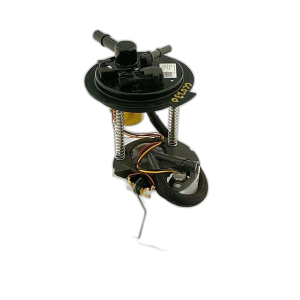
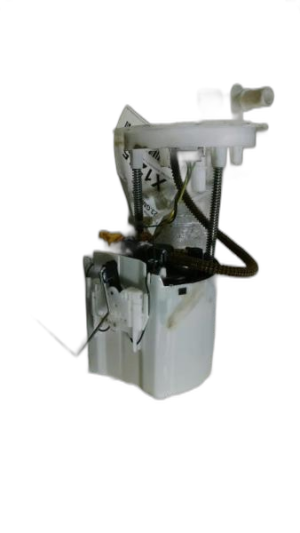
New Aftermarket Parts Available



The information in this article is provided for general reference and educational purposes only. Vehicle specifications, procedures, and part compatibility can vary by production date, trim level, and region. Always consult your vehicle's factory service manual and verify part numbers before purchasing or performing repairs. Safety-critical components such as airbags, seat belts, and braking systems should be installed by a qualified professional.
- Gmc ACADIA:
- 🎬 Helpful Videos
- 🛍️ Shop This Part
- What's Unique About the 2013-2017 Gmc ACADIA
- Diagnostic Flowchart
- Symptoms You May Notice
- Most Likely Causes
- Rare But Worth Checking
- Diagnosis Steps
- Parts You'll Likely Need
- Related Codes That Often Appear With This One
- Technical Service Bulletins (TSBs) & Recalls
- Platform-Specific Known Issues
- Mechanic-Grade Diagnostic Values
- Hidden / Shadow Codes Worth Checking
- Scan Tool Commands That Help
- Wiring & Ground Locations
- Real Owner Repair Stories
- OEM Part Supersession History
- Model Year Variations Within This Range
- 🎟️ Get 5% Off