

P2635 on 2013-2017 Chevrolet Volt: Fuel Pump Performance, Stalling Causes, and Fixes
On a 2013-2017 Chevy Volt, P2635 almost always means the in-tank fuel pump module is failing, especially in hot weather over 100°F. The pump's design is unable to handle vapor buildup in the fuel line caused by the heat. The fix is to replace the entire fuel pump module assembly with an updated part, which differs between Gen 1 (2013-15) and Gen 2 (2016-17) models.
- P2635 on a Chevy Volt is a serious code indicating a failing fuel pump, with a high risk of stalling.
- The issue is a known problem, especially in hot climates, and is addressed by official GM service bulletins.
- The correct fix is to replace the entire fuel pump module assembly with an updated part.
- The required part is different for Gen 1 (2013-2015) and Gen 2 (2016-2017) models, so verify the part number for your specific year.
- This is not a recommended DIY repair due to the safety risks of stalling and working with the fuel system.
What's Unique About the 2013-2017 Chevrolet VOLT
The Chevy Volt is a plug-in hybrid that uses its gasoline engine as a range extender. This means the fuel system can sit dormant for long periods, which can lead to other fuel-related issues, but this specific P2635 fault is a known pattern failure related to heat. GM has issued multiple Technical Service Bulletins (TSBs) acknowledging that high ambient temperatures (above 100°F) can cause a vapor buildup in the fuel line which the original pump struggles to overcome, leading to fuel starvation and stalling. The official fix is not just any replacement, but an updated fuel pump module designed to correct this specific flaw.
🎬 Watch: Understanding the causes and fixes for P2635 codes.Diagnostic Flowchart
Tap your situation to follow the diagnostic path that matches what you're seeing on this vehicle.
Generation note: The 2013-2017 year range covers two generations of the Chevrolet Volt: Gen 1 (2013-2015) and Gen 2 (2016-2017). While the P2635 code and its underlying cause (heat-related fuel pump failure) are the same for both, the specific fuel pump module assembly part number is different for each generation. Ensure you purchase the correct part for your specific model year, as they are not interchangeable.
Symptoms You May Notice
- Check Engine Light is on
- Engine hesitation or surging, especially during acceleration. [Bulletin #17-NA-335, 2, 6]
- Engine stalling, particularly in hot weather or when the gas engine kicks on. [Bulletin #PIP5507B, 12, 6]
- Reduced engine power or 'limp mode'
- Trouble starting the gasoline engine
- Engine runs rough when the gasoline engine is active
- Replacing the fuel pressure sensor. Code P018B (Fuel Pressure Sensor 'B' Circuit) often appears with P2635. [Bulletin #PIP5507B] While the sensor could be faulty, it is more often correctly reporting the low pressure caused by the failing pump. The TSBs direct replacement of the pump module, not the sensor.
- Replacing only the fuel filter. The fuel filter is integrated into the fuel pump module assembly on the Volt. While a clogged filter can cause low flow, the known issue for this code points to a failure of the pump motor itself to overcome heat-induced vapor lock, so replacing the entire module is the correct and required repair.
Most Likely Causes
- Failing Fuel Pump Module Assembly 🔴 High Probability GM has identified a weakness in the original fuel pump module that makes it susceptible to failure or vapor lock in high ambient temperatures. TSB 17-NA-335 explicitly states the cause is a 'vapor buildup in fuel feed line' that the original pump cannot handle. This is the most common reason for P2635 on the Volt.
How to confirm: A technician will monitor fuel pressure data with a scan tool while the engine is running. A pressure reading that is below the specified value or that drops out during the fault condition (often replicable in hot weather) confirms a weak pump. The TSBs direct technicians to replace the pump if these conditions are met.
Typical fix: Replace the entire in-tank fuel pump module assembly with the updated GM-specified part. This is not just the pump motor, but the whole assembly including the sending unit and integrated filter. After replacement, a 'Fuel Pump Trim Reset' procedure should be performed with a scan tool.
Est. part cost: $250-$500
Rare But Worth Checking
- Faulty Fuel Pump Control Module (FPCM): While the TSBs point to the pump itself, a faulty FPCM can also cause low fuel flow. The FPCM controls the voltage to the pump. If a pump replacement does not fix the issue, the FPCM and its wiring should be inspected. Note that a replacement FPCM requires programming by a dealer or qualified shop with access to GM's Service Programming System (SPS).
- Wiring Harness Damage: Corrosion or damage to the wiring for the fuel pump or FPCM can cause a loss of power or signal, mimicking a failed component. TSB 16-NA-225 mentions checking for a loose electrical connector at the fuel pump module as a preliminary step. A visual inspection of the harness is a necessary diagnostic step, especially in regions with heavy road salt use.
- Clogged Fuel Tank Vent: Though less common for this specific code, a clogged fuel tank vent can create a vacuum in the tank as fuel is used. This vacuum can make it harder for the pump to draw fuel, potentially leading to low flow performance and a P2635 code. This issue is mentioned in a TSB for other GM trucks with P2635.
Diagnosis Steps
- Connect an OBD-II scanner and confirm the presence of P2635 and any other related codes like P018B or P069E.
- Check for any applicable Technical Service Bulletins (TSBs) for your vehicle's VIN. TSBs #16-NA-225, #PIP5507B, and #17-NA-335 are highly relevant.
- Using a scan tool with live data capability, monitor the desired vs. actual fuel rail pressure. Also, monitor the fuel pump control module commands and feedback.
- If possible, try to replicate the fault conditions, such as driving in hot weather (above 100°F), to see if the fuel pressure drops significantly.
- Inspect the wiring and connectors at the Fuel Pump Control Module (FPCM) and at the top of the fuel tank for any signs of corrosion, damage, or loose connections, as noted in TSB 16-NA-225.
- If fuel pressure is confirmed to be low, wiring is intact, and the symptoms match the TSBs, the fuel pump module is the most likely cause and should be replaced.
- After replacement, perform the 'Fuel Pump Trim Reset' procedure using a compatible scan tool to ensure the FPCM calibrates to the new pump.
Parts You'll Likely Need
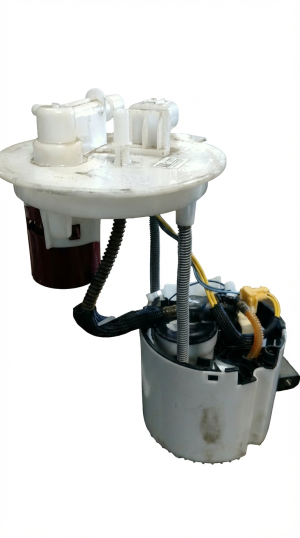
- Fuel Pump Module Assembly (Gen 2)
(OEM #85165016)— This is the complete, updated assembly specified by GM to fix the root cause of P2635 on 2016-2017 Volts. It replaces several older, problematic part numbers.
Trusted brands: ACDelco, GM Genuine Parts
OEM price range: $350-$500
Aftermarket price range: $250-$400 - Fuel Pump Module Assembly (Gen 1)
(OEM #23487339)— This is the required part for 2013-2015 Volts, also sold under ACDelco part number MU2173. The part number is different from the Gen 2 version. Ensure you source the correct part for your model year.
Trusted brands: ACDelco, GM Genuine Parts, Delphi
OEM price range: $300-$450
Aftermarket price range: $230-$350
Related Codes That Often Appear With This One
- P018B — This code for 'Fuel Pressure Sensor 'B' Circuit Range/Performance' is explicitly mentioned in GM TSBs #16-NA-225 and #PIP5507B alongside P2635. It is typically set because the sensor is accurately detecting the erratic or low fuel pressure caused by the failing pump, especially in high temperatures.
- P069E — This code means 'Fuel Pump Control Module Requested MIL Illumination'. It indicates that the FPCM has detected a fault (like the low flow of P2635) and has instructed the main Engine Control Module (ECM) to turn on the Check Engine Light. It's a secondary code confirming the FPCM is the source of the fault report.
Technical Service Bulletins (TSBs) & Recalls
- 16-NA-225: Provides the procedure to replace the fuel pump module assembly if DTC P2635 and/or P018B are set, and instructs to check for loose connectors inside the tank.
- PIP5507B: Notes that P2635 and P018B may set in ambient temperatures of 100°F or higher, causing hesitation or stalling.
- 17-NA-335: Supersedes a previous bulletin, reiterates the high-temperature issue is caused by vapor buildup in the fuel feed line, and advises replacing the fuel pump module with an updated version.
Platform-Specific Known Issues
- A known design flaw causes the fuel pump to fail or create a vapor lock condition in ambient temperatures over 100°F (37.7°C), leading to stalling. The fix is an updated pump module. [Bulletin #PIP5507B, 2, 13, 6]
Mechanic-Grade Diagnostic Values
- Voltage drop on fuel pump power (positive) circuit — expected: Less than 0.5V. Failure: A reading greater than 0.5V indicates high resistance in the circuit, possibly from a corroded connector or failing relay.
- Voltage drop on fuel pump ground (negative) circuit — expected: Less than 0.5V (preferably close to 0V). Failure: A reading greater than 0.5V indicates a poor ground connection, which is a common failure point on GM trucks located on the frame rail.
- Voltage at fuel pump connector (unloaded, key on) — expected: Should be close to battery voltage (12.0-12.6V).. Failure: Voltage below 11.5V suggests a problem with the wiring or the Fuel Pump Control Module (FPCM).
Scan Tool Commands That Help
- GM GDS2: Fuel Pump Trim Reset — This procedure is required after replacing the fuel pump module to allow the Fuel Pump Control Module (FPCM) to learn the characteristics of the new pump and ensure accurate fuel delivery.
- GM GDS2: Fuel System Depressurization — Used to safely relieve fuel pressure before servicing components. It can also be used to test a suspect fuel pressure sensor; after depressurization with the engine cold, the sensor's reading should drop to zero.
- GM GDS2 / High-end Scan Tool: Fuel Pump On/Off Command (Bidirectional Test) — Allows a technician to manually command the fuel pump on to check for operation (listening for the pump to run) and to test for voltage and ground at the pump connector without needing to cycle the ignition.
Wiring & Ground Locations
- FPCM Ground — On many similar GM platforms, the Fuel Pump Control Module (FPCM) is located on the driver's side frame rail, and its ground connection is nearby on the same frame rail. A visual inspection for corrosion is critical.. A poor ground for the FPCM can cause erratic operation and incorrect voltage supply to the fuel pump, mimicking a pump failure and potentially setting a P2635 code.
- Fuel Pump Connector — At the top of the fuel tank, accessible after the tank is lowered.. This is the primary point for testing voltage and ground directly at the pump module. TSB 16-NA-225 specifically mentions checking for loose internal connectors here. The power wire is typically gray and the ground is black.
Real Owner Repair Stories
- gm-volt.com user (2013 Chevrolet Volt) — While driving in 115°F heat in Arizona, the car began to hesitate and stall whenever the gasoline engine was active. Codes P2635 and P018B were stored.
❌ Tried (didn't work) Letting the car cool down only provided a temporary fix before stalling resumed.
✅ What actually fixed it The dealership replaced the entire fuel pump module assembly, which permanently resolved the stalling and codes.
OEM Part Supersession History
23308793, 23375543, 84474299, 84607831→85165016— These are previous part numbers for the Gen 2 (2016-2017) Volt fuel pump module that have been consolidated into the latest updated part, 85165016.
Model Year Variations Within This Range
- All: The updated replacement fuel pump module contains an improved one-way breather valve design compared to the original's two-way breather. This change helps prevent the vapor buildup in the fuel line that causes the stalling in high temperatures.
Helpful Videos
Used OEM Parts in Stock

New Aftermarket Parts Available




The information in this article is provided for general reference and educational purposes only. Vehicle specifications, procedures, and part compatibility can vary by production date, trim level, and region. Always consult your vehicle's factory service manual and verify part numbers before purchasing or performing repairs. Safety-critical components such as airbags, seat belts, and braking systems should be installed by a qualified professional.
- Chevrolet VOLT:
- 🎬 Helpful Videos
- 🛍️ Shop This Part
- What's Unique About the 2013-2017 Chevrolet VOLT
- Diagnostic Flowchart
- Symptoms You May Notice
- Most Likely Causes
- Rare But Worth Checking
- Diagnosis Steps
- Parts You'll Likely Need
- Related Codes That Often Appear With This One
- Technical Service Bulletins (TSBs) & Recalls
- Platform-Specific Known Issues
- Mechanic-Grade Diagnostic Values
- Scan Tool Commands That Help
- Wiring & Ground Locations
- Real Owner Repair Stories
- OEM Part Supersession History
- Model Year Variations Within This Range
- 🎟️ Get 5% Off