

P2635 on 2013-2017 Chevrolet Trax: Fuel Pump Performance Causes and Fixes
On a 2013-2017 Chevy Trax, code P2635 often points to a failing in-tank fuel pump, especially in hot climates. A GM Technical Service Bulletin (TSB) confirms this issue is due to fuel vapor buildup. The fix is typically replacing the fuel tank fuel pump module assembly with an updated part.
- P2635 on a Chevy Trax means the fuel pump isn't delivering enough fuel.
- The most likely cause is a failing in-tank fuel pump, a problem that is well-documented by GM in TSB 17-NA-335, especially in hot climates.
- The official fix for the hot-weather stalling issue is to replace the fuel pump module with an updated part designed to prevent vapor lock.
- A faulty Fuel Pump Control Module (FPCM) is the second most likely cause and requires VIN-programming when replaced.
What's Unique About the 2013-2017 Chevrolet TRAX

The 2013-2017 Chevrolet Trax and its platform-mate, the Buick Encore, are specifically mentioned in General Motors TSBs regarding code P2635, particularly in high ambient temperatures. Bulletin 17-NA-335 clarifies that sustained heat over 100°F (37.7°C) can cause vapor buildup in the fuel feed line, leading to hesitation, stalling, and this specific trouble code. This indicates a known sensitivity in the Trax's fuel delivery system to hot weather conditions, which is resolved by installing an updated fuel pump module.
Diagnostic Flowchart

Tap your situation to follow the diagnostic path that matches what you're seeing on this vehicle.
Symptoms You May Notice
- Hesitation or stumbling during acceleration.
- Engine stalling, especially in hot weather or under load.
- Reduced engine power or 'limp mode'.
- Extended cranking time before the engine starts.
- Check Engine Light is on.
- Engine cranks but will not start.
- Loud whining noise from the fuel tank area.
- Replacing fuel pressure sensors without proper testing. While a sensor can fail, it's less common than the pump or module for this specific code. A scan tool showing live fuel pressure data can help confirm if the sensor is reading logically.
- Replacing the fuel pump for hot weather stalling without consulting TSBs. An early version of the TSB, PIP5507B, confusingly stated that replacing the pump would *not* fix the issue and advised using higher octane fuel. The superseding bulletin, 17-NA-335, corrects this and confirms an updated pump *is* the fix.
Most Likely Causes

- Failing In-Tank Fuel Pump Module 🔴 High Probability GM Technical Service Bulletin #17-NA-335 (which supersedes PIP5411F) directly addresses this code on the Trax, noting that high ambient temperatures can cause fuel vaporization issues that the original pump struggles with. An updated fuel pump module is the official recommended fix.
How to confirm: A technician will perform a fuel pressure and flow test to see if the pump can meet the specifications commanded by the FPCM. The issue may only be reproducible in very hot weather (over 100°F) or when the fuel level is low.
Typical fix: Replace the in-tank fuel tank fuel pump module assembly with the updated part number specified by GM in the electronic parts catalog. This assembly includes the pump, filter sock, and sending unit.
Est. part cost: $200-$400 - Faulty Fuel Pump Control Module (FPCM) 🟡 Medium Probability The FPCM, also called the Fuel System Control Module (FSCM), is an electronic module that powers the fuel pump. It is exposed to the elements, typically mounted on the frame rail behind the passenger-side rear fender well, making it susceptible to corrosion and electronic failure. When it fails, it can no longer supply the correct voltage to the pump.
How to confirm: Diagnosis involves checking for power and ground at the module, and verifying communication with the ECM using a scan tool. A technician can also use scan tool output controls to command the pump on and check the voltage output to the fuel pump.
Typical fix: Replace the Fuel Pump Control Module. This part must be programmed to the vehicle's VIN. Some aftermarket suppliers offer pre-programmed modules.
Est. part cost: $80-$150 - Clogged Fuel Filter ⚪ Low Probability The fuel filter is integrated into the fuel pump module assembly on the Trax and is not a separately serviceable item. While not a common standalone failure, a prematurely clogged filter sock due to poor fuel quality can restrict flow and cause the pump to underperform, triggering P2635.
How to confirm: This is typically discovered during the replacement of the fuel pump module. A visual inspection of the old unit's filter sock will show heavy contamination or debris.
Typical fix: Replace the entire fuel pump module assembly, as the filter is not sold separately.
Est. part cost: $200-$400
Rare But Worth Checking
- Wiring or Connector Issues: Corrosion or damage to the wiring or connectors for the FPCM or the fuel pump can cause intermittent low voltage, leading to low flow performance. The FPCM connector is particularly vulnerable due to its location. This is worth checking before replacing expensive modules.
Diagnosis Steps
- Scan the computer for P2635 and any other related codes, like P018B or P069E. Note freeze frame data to see the conditions when the code was set.
- Check for relevant TSBs. Specifically, review TSB 17-NA-335 for the hot weather stalling issue.
- Using a capable scan tool, monitor live data PIDs: 'Fuel Rail Pressure,' 'Desired Fuel Rail Pressure,' and 'Fuel Pump Driver Module Duty Cycle'. Compare actual vs. desired pressure. A large discrepancy points to a flow problem.
- If symptoms occur in hot weather, attempt to replicate the conditions mentioned in TSB 17-NA-335 (ambient temp > 100°F).
- Inspect the wiring and connectors going to the Fuel Pump Control Module (FPCM), located at the rear of the vehicle on the passenger side frame rail, behind the fender well. Check for corrosion, especially at the connector pins.
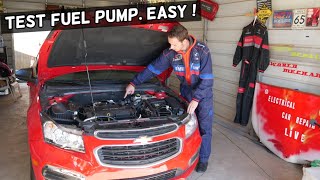
- Command the fuel pump ON using the scan tool's bidirectional controls. Listen for the pump to prime. If it doesn't run, check for power and ground at the pump connector. 🎬 Watch: How to test a GM fuel pump when it won't start.
- If the pump runs but pressure is low, perform a fuel pressure and volume test directly at the fuel pump to confirm if it is mechanically capable of delivering the required fuel flow. If it fails, it is faulty.
- If the fuel pump tests good but is not receiving the correct voltage, test the FPCM's inputs and outputs to condemn the module before replacement. Remember that a new FPCM requires programming.
Parts You'll Likely Need
- Fuel Pump Module Assembly
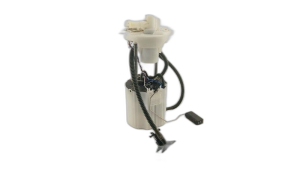
(OEM #13516842 (Superseded by 13594522))— This is the most common failure point for code P2635 on the Trax, especially in hot climates, as documented by GM TSB 17-NA-335. The assembly includes the electric pump, sending unit, and fuel filter. The updated part is designed to prevent vapor lock.
Trusted brands: ACDelco (GM Original Equipment), Delphi
OEM price range: $300-$450
Aftermarket price range: $200-$350 - Fuel Pump Control Module (FPCM)
(OEM #22874300)— If the fuel pump itself is healthy, the module that controls it is the next most likely culprit. It can fail electronically, causing it to send incorrect voltage to the pump. It is mounted externally and prone to weather-related failure.
Trusted brands: ACDelco (GM Original Equipment), Dorman
OEM price range: $100-$180
Aftermarket price range: $70-$120
Related Codes That Often Appear With This One
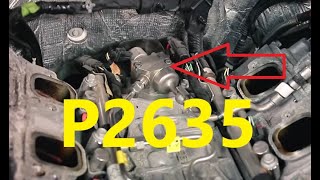
- P018B — This code, 'Fuel Pressure Sensor 'B' Circuit Range/Performance,' is often set alongside P2635, as noted in GM's TSBs #PIP5507B and #17-NA-335. It indicates the sensor reading is out of its expected range, which is a direct consequence of the low flow condition caused by the fuel pump.
- P069E — This code, 'Fuel Pump Control Module Requested MIL Illumination,' can be set when the FPCM detects an internal fault or a problem in the circuit it controls (the fuel pump) and requests the main engine computer to turn on the Check Engine Light.
Technical Service Bulletins (TSBs) & Recalls
- 17-NA-335: Supersedes PIP5411F. Addresses MIL on with DTCs P2635 and/or P018B in high ambient temperatures, causing hesitation, surging, or stalling. Confirms the cause is vapor buildup and the fix is to replace the fuel pump module with an updated version.
- PIP5507B: An earlier preliminary bulletin that described the same hot-weather symptoms but incorrectly stated that replacing the fuel pump would not repair the concern. This bulletin is superseded and its advice should be disregarded in favor of TSB 17-NA-335.
Platform-Specific Known Issues
- A known issue documented in GM Technical Service Bulletin #17-NA-335 describes how P2635 and P018B can set in ambient temperatures over 100°F (37.7°C). This is attributed to vapor buildup in the fuel feed line. The bulletin advises that replacing the fuel pump module with an updated version is the correct repair.
- An earlier, now superseded bulletin (PIP5507B) caused confusion by suggesting replacing the pump would *not* fix the hot-weather issue and instead recommended using higher octane fuel. This advice is now outdated; the current fix is the updated pump module.
Mechanic-Grade Diagnostic Values
- Low-Pressure Fuel System Operating Pressure — expected: Fluctuates between 30-60 PSI (approx. 207-414 kPa) with engine running. Should not be a static number.. Failure: A reading that is stuck on a single value (e.g., 48.7 PSI) or does not build pressure when the pump is commanded on points to a faulty sensor or pump.
- FPCM Power Supply Voltage (at module connector) — expected: 12V+ (Battery Voltage) at the Red/White wire (Pin 32 on some GM models).. Failure: Low or no voltage indicates a problem with the fuse, relay, or wiring harness between the fuse box and the FPCM.
- FPCM Ground Connection — expected: Near 0 ohms resistance between the Black wire at the FPCM connector (Pin 1 on some GM models) and a clean chassis ground.. Failure: High resistance indicates a corroded or broken ground wire, which can cause the module to malfunction.
Scan Tool Commands That Help
- GDS2 (GM Dealer Scan Tool): Fuel Pump Enable / Fuel Pump Speed Control — This bidirectional command allows a technician to turn the fuel pump on and off and vary its speed without the engine running. It is essential for testing if the pump physically runs, checking for pressure build-up, and verifying voltage output from the FPCM to the pump.
Wiring & Ground Locations

- Fuel Pump Control Module (FPCM) — At the rear of the vehicle, mounted to the frame rail behind the passenger-side rear fender well.. This is the control unit for the fuel pump. Its external location makes its connector and wiring vulnerable to corrosion and physical damage from road debris and weather, which can directly cause P2635.
- FPCM Connector Pin 13 (Dark Green/White wire) — At the FPCM connector.. This is the signal wire from the ECM that commands the fuel pump on. A diagnostic test light on this pin should illuminate for a few seconds at key-on or while cranking. If there is no signal, the problem may be the wire itself or the ECM.
- Underhood Fuse Block (X50A) — In the engine bay.. This fuse block contains the primary fuse (typically 20A) and relay for the fuel pump circuit. A blown fuse or faulty relay will cut power to the FPCM and pump.
Real Owner Repair Stories
- YouTube video regarding a 2014+ GM Truck (Tahoe/Silverado) (2014+ GM Truck with Gasoline Engine) — Engine cuts off while driving, Check Engine Light on with codes P2635 and P018B.
❌ Tried (didn't work) The technician in the video directly referenced the TSB, so no other parts were tried first.
✅ What actually fixed it The problem was identified as vapor buildup in the fuel feed line, as described in TSB 17-NA-335. The fix was to replace the original fuel pump with the updated design which includes a new one-way breather valve to prevent vapor lock.
OEM Part Supersession History
e.g., 13516842 (and other previous numbers)→13594522 (and subsequent updated parts)— The original fuel pump design was susceptible to vapor buildup in the fuel feed line in high ambient temperatures, causing vapor lock. The updated pump module assembly includes a revised one-way breather valve designed to properly vent this vapor and maintain fuel pressure.
Model Year Variations Within This Range
- 2013-2017: The Chevrolet Trax received a cosmetic facelift for the 2017 model year. However, the underlying Gamma II platform, 1.4L LUV engine, and fuel system components (fuel pump, FPCM) remained fundamentally the same. The TSBs related to P2635 apply to the entire 2013-2017 range, including the facelifted 2017 models.
Helpful Videos
Used OEM Parts in Stock


New Aftermarket Parts Available


The information in this article is provided for general reference and educational purposes only. Vehicle specifications, procedures, and part compatibility can vary by production date, trim level, and region. Always consult your vehicle's factory service manual and verify part numbers before purchasing or performing repairs. Safety-critical components such as airbags, seat belts, and braking systems should be installed by a qualified professional.
- Chevrolet TRAX:
- 🎬 Helpful Videos
- 🛍️ Shop This Part
- What's Unique About the 2013-2017 Chevrolet TRAX
- Diagnostic Flowchart
- Symptoms You May Notice
- Most Likely Causes
- Rare But Worth Checking
- Diagnosis Steps
- Parts You'll Likely Need
- Related Codes That Often Appear With This One
- Technical Service Bulletins (TSBs) & Recalls
- Platform-Specific Known Issues
- Mechanic-Grade Diagnostic Values
- Scan Tool Commands That Help
- Wiring & Ground Locations
- Real Owner Repair Stories
- OEM Part Supersession History
- Model Year Variations Within This Range
- 🎟️ Get 5% Off