

P2635 on 2010 Chevrolet Silverado 2500: Fuel Pump Performance Causes and Fixes
On a 2010 Silverado 2500, code P2635 almost always points to a problem with the low-pressure fuel system. The most likely culprits are a failing Fuel Pump Control Module (FPCM) due to corrosion, or a weak in-tank fuel pump. The FPCM is notoriously located on a frame rail above the spare tire. Expect to pay $50-$150 for a new FPCM (Part No. 20897924 or updated 23487339) and $200-$450 for a fuel pump assembly.
- P2635 indicates a fuel delivery problem, not an engine mechanical fault.
- Before buying any parts, inspect the Fuel Pump Control Module (FPCM) and its connector for corrosion. This is the most common and specific issue for this truck.
- Verify actual fuel pressure with a mechanical gauge before replacing the fuel pump or sensor.
- This code indicates a condition that can cause the truck to stall, so it should be addressed promptly for safety.
- A replacement FPCM will likely need to be programmed to the vehicle.
What's Unique About the 2010-2010 Chevrolet SILVERADO 2500
General Motors trucks from this era utilize a Fuel Pump Control Module (FPCM) to precisely manage fuel delivery. This module is notoriously prone to failure due to its mounting location on the frame rail, where it's exposed to moisture and road salt, leading to corrosion of the module itself and its electrical connector. While the fuel pump can also fail, the FPCM is a very common and specific point of failure on this platform that often triggers the P2635 code. Many owners find the module and its connector covered in green and white corrosion upon inspection.
Diagnostic Flowchart
Tap your situation to follow the diagnostic path that matches what you're seeing on this vehicle.
Symptoms You May Notice
- Check Engine Light is on
- Engine hesitation or surging, especially under acceleration.
- Reduced engine power or 'Limp Mode'
- Engine stalls unexpectedly, particularly in very hot (over 100°F) or very cold (below 20°F) weather.
- Difficulty starting the engine or a no-start condition.
- Extended cranking time before the engine starts
- Whining noise from the fuel pump in cold weather, as noted in TSB #18-NA-103.
- Replacing the fuel pump when the Fuel Pump Control Module (FPCM) is the actual corroded and failed part.
- Replacing the fuel pressure sensor without first verifying its reading against a mechanical gauge, or without performing the specific cold-engine test from TSB #PIP5286B.
- Replacing the FPCM without having it programmed to the vehicle, resulting in a no-start condition and the same code returning.
Most Likely Causes
- Failing Fuel Pump Control Module (FPCM) 🔴 High Probability The FPCM is mounted on the frame rail above the spare tire, making it highly susceptible to corrosion from water and road salt, which damages the internal electronics or the connector pins. This is a widely documented failure point on GM trucks of this era.
How to confirm: Visually inspect the FPCM and its connector for green or white corrosion. With a scan tool, monitor the commanded vs. actual fuel pump duty cycle. Test for power and ground at the module; if inputs are good but the pump doesn't run correctly, the FPCM is likely bad. A scan tool may also show a 'No Communication' error with the FPCM.
Typical fix: Replace the Fuel Pump Control Module. The new module must be programmed by a dealer or a properly equipped independent shop to the vehicle's VIN. Simply swapping the part will not work.
Est. part cost: $50-$150 - Weak or Failing In-Tank Fuel Pump 🔴 High Probability The fuel pump is a mechanical part with a finite lifespan. TSB #17-NA-335 specifically notes that high ambient temperatures can cause vapor buildup in the fuel line that the original pump design cannot overcome, leading to stalling. An updated pump module was released to fix this.
How to confirm: Perform a fuel pressure and volume test with a mechanical gauge at the fuel rail. Compare the readings to the manufacturer's specifications (typically around 58 psi at idle). If pressure is low despite the FPCM commanding full power, the pump is likely weak.
Typical fix: Replace the in-tank fuel pump module assembly. This requires either lifting the truck bed or dropping the fuel tank for access. It is recommended to use the updated GM part to prevent recurring issues in hot weather.
Est. part cost: $200-$400 - Faulty Fuel Pressure Sensor 🟡 Medium Probability As cited in TSB #PIP5286B, an inaccurate sensor reading can mislead the ECM into thinking there is a flow problem when there isn't one, often setting P2635 and P018B together. This is a common misdiagnosis for a bad fuel pump.
How to confirm: Use a scan tool to read the fuel pressure value from the sensor. Compare this reading to a mechanical fuel pressure gauge. Per TSB #PIP5286B, a specific test involves depressurizing the fuel system with the engine cold; a faulty sensor will fail to drop to zero PSI when the engine stalls.
Typical fix: Replace the fuel pressure sensor, which is typically located on the fuel line on the frame rail under the driver's side of the vehicle. The O-ring seal may need to be ordered separately.
Est. part cost: $40-$80 - Clogged Fuel Filter ⚪ Low Probability On this model, the fuel filter is integrated into the fuel pump module assembly inside the tank. While it can become clogged, it's less common to fail on its own without the pump also being worn. It is not a separately serviceable part.
How to confirm: A significant drop in fuel pressure and volume during a flow test would indicate a restriction. Diagnosis is confirmed by replacing the pump/filter assembly.
Typical fix: Replace the fuel pump module assembly, as the filter is not serviced separately.
Est. part cost: $200-$400
Rare But Worth Checking
- Damaged Wiring or Connectors: Check the wiring harness leading to the FPCM and the fuel pump for any chafing, breaks, or corrosion, especially along the frame rails where it is exposed to debris and moisture.
- Plugged Fuel Tank Vent: A TSB for diesel models (19-NA-277) notes that a plugged tank vent can cause the tank to collapse and trigger P2635. While for a different engine, it's a possibility to consider if other diagnostics fail, as it can damage the in-tank pump module.
- Communication Bus Fault: TSB #PIP5427B indicates that P2635 can appear with communication codes like U0074. If a 'U' code is present, it should be diagnosed first as it may be the root cause of the fuel system fault.
Diagnosis Steps
- Check for other stored DTCs. If any communication 'U' codes are present, diagnose them first per TSB #PIP5427B.
- Visually inspect the Fuel Pump Control Module (FPCM), located on the frame crossmember above the spare tire. Look for any signs of heavy corrosion on the module housing, heat sink fins, and especially the electrical connector and pins.
- Using a capable scan tool, monitor live data for 'Fuel Rail Pressure', 'Desired Fuel Rail Pressure', and 'Fuel Pump Duty Cycle'. Compare the desired pressure with the actual pressure.
- Connect a mechanical fuel pressure gauge to the fuel rail's Schrader valve. Compare the gauge reading to the scan tool's sensor reading to verify sensor accuracy.
- If P018B is also present, perform the test from TSB #PIP5286B: With a cold engine, command the fuel system to depressurize via a scan tool. The pressure reading should drop to zero as the engine stalls. If it hangs at a higher value (e.g., 30-40 PSI), the sensor is bad.
- If the pressure is confirmed to be low, use the scan tool's bidirectional controls to command the fuel pump to 100% duty cycle. If pressure rises to specification (approx. 58-60 PSI), the pump is likely okay, and the issue is with the control side (FPCM, sensor, wiring).
- If pressure remains low even when commanded to 100%, the problem is likely a weak fuel pump, a clogged fuel filter (part of the pump assembly), or a severely restricted fuel line.
- If the FPCM is suspect, test the power and ground wires going into the module. If inputs are good but the output to the pump is incorrect or absent, the FPCM has failed and requires replacement and programming.
Parts You'll Likely Need
- Fuel Pump Control Module
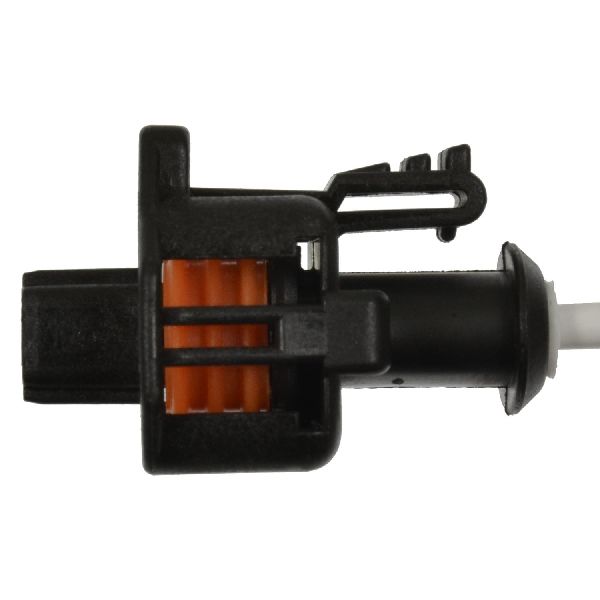
(OEM #23487339 (supersedes 20897924))— This module is a very common failure point due to corrosion from its exposed mounting location. It directly controls the fuel pump's operation and requires programming upon replacement.
Trusted brands: ACDelco (GM Genuine), Dorman
OEM price range: $80-$150
Aftermarket price range: $50-$100 - Fuel Pump and Sender Assembly
(OEM #ACDelco MU1614 (example, verify by VIN))— If the FPCM is working correctly but fuel pressure is still low, the in-tank pump is the next most likely cause due to internal wear or failure to handle high temperatures, as noted in TSB 17-NA-335.
Trusted brands: ACDelco, Delphi (e.g., FG0407), Spectra Premium
OEM price range: $300-$450
Aftermarket price range: $200-$350
Related Codes That Often Appear With This One
- P018B — This code for 'Fuel Pressure Sensor 'B' Circuit Range/Performance' often appears with P2635, as both are related to the fuel pressure monitoring system. TSBs #17-NA-335 and #PIP5286B explicitly link these two codes, pointing to either a failing pump or a faulty sensor.
- P0087 — This code indicates 'Fuel Rail/System Pressure - Too Low,' which is a direct consequence of the low flow condition described by P2635. TSB #18NA103 lists them together, especially in cold weather conditions.
- P069E — This code, 'Fuel Pump Control Module Requested MIL Illumination', is a direct flag from the FPCM that it has detected an internal or pump-related fault. Seeing this with P2635 strongly points to the FPCM or the pump itself.
Technical Service Bulletins (TSBs) & Recalls
- 17-NA-335: Links P2635 and P018B to performance issues in high ambient temperatures due to fuel vapor buildup; recommends replacing the fuel pump module with an updated design.
- 18NA103: Connects P2635 with other fuel pressure codes during cold weather start issues.
- PIP5286B: Discusses P2635 and P018B being caused by a fuel pressure sensor issue and provides a specific diagnostic test.
- PIP5427B: Notes that P2635 can appear with communication (U-codes) and that network faults should be diagnosed first.
- PIP5411F: An earlier, superseded bulletin that first identified the in-tank fuel pump as the cause for P2635 in high temperatures.
Platform-Specific Known Issues
- TSB #17-NA-335 notes that P2635 can set in high ambient temperatures (over 100°F), causing hesitation, surging, and stalling due to vapor buildup in the fuel line that the original pump struggles with.
- TSB #18NA103 documents that P2635 can appear in very cold weather (below 20°F / -6°C), accompanied by start/stall or no-start conditions, often related to the fuel pressure sensor's performance.
- TSB #PIP5286B points to issues where the fuel pressure sensor may not be reading correctly, causing both P2635 and P018B to set. It provides a specific diagnostic procedure for confirmation.
Mechanic-Grade Diagnostic Values
- Low-Side Fuel Pressure (Key On, Engine Off) — expected: 55-62 PSI. Failure: Pressure below 55 PSI indicates a weak pump or restriction.
- Low-Side Fuel Pressure (Engine Idling) — expected: 50-55 PSI. Failure: Pressure significantly below 50 PSI or that drops under acceleration.
- Scan Tool Fuel Pressure vs. Desired Fuel Pressure — expected: Within 8.7 PSI (60 kPa) at a 58 PSI request.. Failure: A discrepancy larger than the specified range indicates a performance fault.
- Scan Tool Fuel Pump Trim — expected: Short Term Trim multiplied by Long Term Trim should be less than 1.5.. Failure: A value of 1.5 or greater indicates the FPCM is commanding maximum flow to compensate for a problem.
- Voltage at FPCM Power Input (Pin 32, Red/White wire) — expected: 12.0 - 12.6 V (Battery Voltage). Failure: Voltage below 11.5V points to a wiring or supply issue before the module.
- Voltage at FPCM PCM Signal (Pin 13, Dark Green/White wire) — expected: 12V signal from PCM when cranking or for 2-3 seconds at key-on.. Failure: No voltage indicates a problem with the PCM or the wiring between the PCM and FPCM.
Scan Tool Commands That Help
- GDS2 / Tech2: Fuel Pump On/Off — This is a primary bidirectional test to verify if the FPCM and fuel pump respond to a command from the scan tool, helping to isolate the fault between the control side and the mechanical pump.
- GDS2 / Tech2: Fuel Pump Duty Cycle — Allows a technician to command the pump to a specific speed (e.g., 100%) to check if it can achieve maximum pressure, which is crucial for diagnosing a weak pump.
- GM Service Programming System (SPS): FPCM Fuel Pump Flow Control Module - Programming — This function is required after replacing the Fuel Pump Control Module. It loads the correct vehicle-specific software into the new module, without which the truck will likely not start or run correctly.
Wiring & Ground Locations
- FPCM Connector — Above the spare tire, mounted to a frame crossmember.. This is the central connection point. Key pins for testing are Pin 1 (Ground), Pin 13 (Signal from PCM), Pin 32 (Battery Power), and Pin 47 (Power to Pump). Corrosion here is a primary cause of P2635.
- G300 — Under the vehicle on a body mount near the driver's door.. This is a major chassis ground point. A poor connection here can cause a variety of electrical issues, including intermittent power or reference loss for the fuel system modules.
- Fuel Pump Ground — On the frame rail, often near the fuel filler neck/behind the gas cap area.. This is the direct ground for the fuel pump assembly. Corrosion or a loose connection here can prevent the pump from running correctly even if the FPCM is sending power.
- Harness Chafe Point — Inside the square tube frame rail, particularly where the harness makes a turn under the driver's side fuse panel.. A documented failure point where the power wire to the FPCM can break internally, causing a loss of power to the module and triggering P2635, even though the FPCM and pump are good.
Real Owner Repair Stories
- 2CarPros Forum User (GM Truck (specific year not mentioned, but same FPCM system)) — No communication with FPCM, no start.
❌ Tried (didn't work) Initial checks of the FPCM and grounds near the module were normal.
✅ What actually fixed it The power wire (Red/Violet) to the FPCM had a break inside the square tube frame rail under the driver's side fuse box. Running a jumper wire bypassed the break and restored power. The final fix was to locate and repair the broken wire in the harness. - YouTube channel 'zombiekiller216' (2018 Chevrolet Silverado (newer model, but demonstrates system logic failure)) — Intermittent P2635 code, especially when accelerating onto the highway.
❌ Tried (didn't work) Initial assumption was a failing fuel pump or FPCM.
✅ What actually fixed it The actual cause was failing active grille shutters. The Body Control Module (BCM) detected the shutters were binding when they were commanded to move at highway speeds (around 55 mph) and set the P2635 code as a related fault. Replacing the active grille shutter assembly resolved the code.
OEM Part Supersession History
20897924→23487339— Likely an internal revision to improve durability and resistance to corrosion.
Heads up: Both parts require programming to the vehicle's VIN using GM's Service Programming System (SPS) after installation. They are not plug-and-play for a 2010 model.
Helpful Videos

We Have This Part in Stock


The information in this article is provided for general reference and educational purposes only. Vehicle specifications, procedures, and part compatibility can vary by production date, trim level, and region. Always consult your vehicle's factory service manual and verify part numbers before purchasing or performing repairs. Safety-critical components such as airbags, seat belts, and braking systems should be installed by a qualified professional.
- Chevrolet SILVERADO 2500:
- 🎬 Helpful Videos
- 🛍️ Shop This Part
- What's Unique About the 2010-2010 Chevrolet SILVERADO 2500
- Diagnostic Flowchart
- Symptoms You May Notice
- Most Likely Causes
- Rare But Worth Checking
- Diagnosis Steps
- Parts You'll Likely Need
- Related Codes That Often Appear With This One
- Technical Service Bulletins (TSBs) & Recalls
- Platform-Specific Known Issues
- Mechanic-Grade Diagnostic Values
- Scan Tool Commands That Help
- Wiring & Ground Locations
- Real Owner Repair Stories
- OEM Part Supersession History
- 🎟️ Get 5% Off