

P2635 on 2013-2017 Chevrolet Camaro: Fuel Pump Flow Causes and Fixes
On a 2013-2017 Camaro, P2635 indicates the fuel pump isn't delivering enough fuel. This is often triggered by high ambient temperatures, as noted in GM TSB #PIP5507B, which points to vapor buildup in the fuel line. The most common fixes are replacing the in-tank fuel pump with an updated part or, less frequently, the Fuel Pump Control Module (FPCM).
- P2635 on a 2013-2017 Camaro means the in-tank fuel pump's flow is too low, often due to high ambient temperatures causing vapor lock.
- The most common fix is replacing the entire in-tank fuel pump module with an updated part, as recommended by GM service bulletins for this issue.
- A faulty Fuel Pump Control Module (FPCM) is the second most likely cause, but should be diagnosed carefully to avoid misdiagnosis.
- The code is often accompanied by P018B, pointing strongly to the heat-related fuel delivery problem.
- Driving is possible but risky, as the engine could stall at any time. Prompt service is recommended.
What's Unique About the 2013-2017 Chevrolet CAMARO

The 2013-2017 Camaro is particularly susceptible to setting code P2635 in high heat. A General Motors Technical Service Bulletin (TSB #PIP5507B) directly links this code to ambient temperatures of 100°F (38°C) or higher. The bulletin explains this is due to "vapor buildup in fuel feed line," which causes fuel pump performance issues leading to hesitation or stalling. This indicates a known sensitivity of the fuel system components to heat, a common complaint among owners on forums.
Diagnostic Flowchart
Tap your situation to follow the diagnostic path that matches what you're seeing on this vehicle.
Generation note: This year range covers two generations of the Camaro: the end of the 5th generation (2013-2015) and the beginning of the 6th generation (2016-2017). The TSB #PIP5507B applies to the entire range, suggesting the fuel system design or components share a similar vulnerability to heat-induced vapor lock across both generations. The FPCM location differs between generations; it is behind the passenger side rear panel on 5th Gen models 🎬 Watch: How to locate the FPCM on 5th Gen models. and in the driver's side rear wheel well or above the axle on 6th Gen models.
Symptoms You May Notice
- Check Engine Light is on
- Engine hesitation or stumbling, especially during acceleration.
- Engine stalling, particularly in hot weather or when coming to a stop in traffic.
- Reduced engine power and poor acceleration.
- Longer than usual engine cranking time to start.
- Slight surging feeling at wide-open throttle.
- Replacing the FPCM when the in-tank fuel pump is the actual cause, or vice-versa.
- Replacing the high-pressure fuel pump (on direct-injection models) when P2635 specifically refers to the low-pressure pump ('Pump A') in the tank.
Most Likely Causes

- Failing In-Tank Fuel Pump 🔴 High Probability As highlighted in TSB #PIP5507B and the superseding TSB 17-NA-335, the fuel pump can struggle to perform correctly in high ambient temperatures, leading to vapor buildup (vapor lock) in the fuel line and insufficient flow. Forum discussions confirm this is a common failure point, with many owners resolving the code by replacing the pump.
How to confirm: Use a scan tool to monitor commanded vs. actual fuel pressure. A significant drop in actual pressure under load, especially when the vehicle is hot, points to a weak pump. A mechanical fuel pressure gauge can also be used for verification; at high load, the FPCM commands 65 psi, and if the actual pressure is less, it will set the code. A shop confirmed a failing low-pressure pump this way for an owner on the Camaro6 forums.
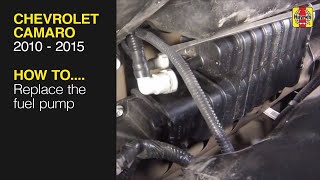
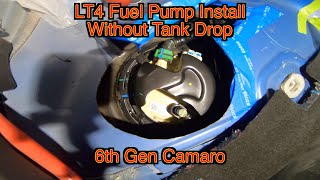
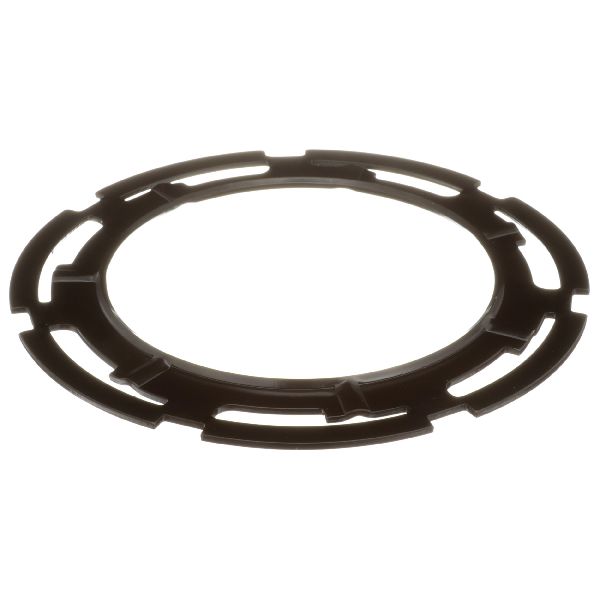
Typical fix: Replace the in-tank fuel pump module. GM has released updated part numbers to address this condition. This requires dropping the fuel tank. 🎬 See this step-by-step fuel pump replacement walkthrough.
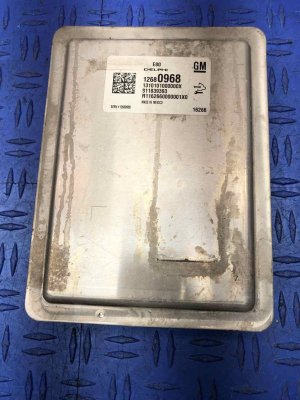
Est. part cost: $250-$500 - Faulty Fuel Pump Control Module (FPCM) 🟡 Medium Probability The FPCM regulates the voltage to the fuel pump. These modules are known to fail from heat stress or internal faults, causing them to send incorrect signals and reduce pump output, mimicking a failed pump.
How to confirm: Diagnosis can be tricky and is often a process of elimination. If a new fuel pump doesn't solve the issue, the FPCM is a strong suspect. A technician can monitor the duty cycle signal from the FPCM to the pump. The FPCM is located behind the passenger side rear interior panel on 5th Gen models and in the driver's side rear wheel well on 6th Gen models, making it accessible for inspection.
Typical fix: Replace the Fuel Pump Control Module. On 2016 and newer models, the new module will likely require programming to the vehicle's VIN.
Est. part cost: $80-$200 - Clogged Fuel Filter ⚪ Low Probability While less common as a standalone failure, a clogged filter restricts flow and can cause P2635. On all modern Camaros, the fuel filter is integrated into the fuel pump module assembly and is not serviced separately. Its failure is synonymous with the failure of the entire module.
How to confirm: Extremely low fuel pressure readings that do not improve with a new pump can indicate a severe restriction. The filter is typically inspected during fuel pump replacement and cannot be checked independently.
Typical fix: Replace the entire fuel pump module assembly.
Est. part cost: $250-$500
Rare But Worth Checking
- Faulty Fuel Pressure Sensor: The sensor that reports fuel pressure to the FPCM can fail, providing incorrect data and causing the computer to mistakenly set a P2635 code. TSBs for similar GM vehicles, like PIP5286B for the Suburban, provide specific diagnostic tests for this sensor when P2635 and P018B are present. This should be checked before replacing more expensive components.
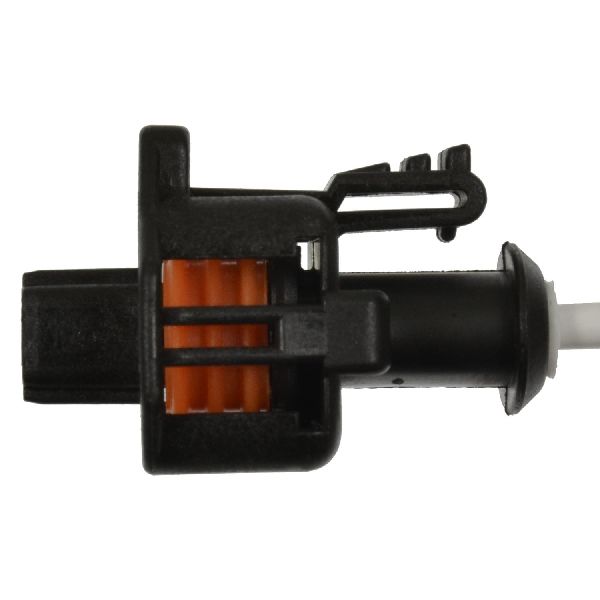
- Wiring or Connector Issues: Damaged wiring or corroded connectors for the FPCM or the fuel pump can cause intermittent voltage drops, leading to low fuel flow. One owner on a forum reported that after replacing both the pump and FPCM, the issue was finally traced to a bad connector at the FPCM, highlighting the importance of a thorough harness inspection.
Diagnosis Steps
- Scan for all DTCs. Note any other codes present, especially P018B or P069E.
- Check for and review any applicable TSBs, paying close attention to #PIP5507B and #17-NA-335.
- Using a scan tool, monitor live data for commanded vs. actual fuel rail pressure. Observe the data during idle, light throttle, and wide-open throttle if safe to do so.
- Attempt to replicate the heat-related issue described in the TSB. If symptoms appear when the car is hot (over 100°F ambient temp), it strongly suggests a failing fuel pump or FPCM.
- Locate the FPCM and inspect all wiring and connectors between it and the in-tank fuel pump for damage, corrosion, or looseness. The FPCM is behind the passenger rear interior panel (5th Gen) or in the driver's side rear wheel well (6th Gen).
- If scan tool data is inconclusive, perform a manual fuel pressure test with a mechanical gauge to verify the electronic sensor's accuracy.
- If fuel pressure is consistently low or drops under load (especially when hot), the fuel pump module is the primary suspect.
- If the fuel pump is confirmed to be good but the code persists, further diagnosis of the FPCM and its circuits is necessary.
Parts You'll Likely Need
- Fuel Pump Module Assembly (5th Gen V8)
(OEM #13592335)— This is the most common cause of failure for the 2013-2015 V8 models, especially in high-heat conditions as identified by GM. The assembly includes the pump, sending unit, and integrated fuel filter. This part number supersedes older versions like 13577475 and 13585454.
Trusted brands: ACDelco, Delphi
OEM price range: $350-$500
Aftermarket price range: $250-$400 - Fuel Pump Module Assembly (6th Gen / V6)
(OEM #Varies by engine/year (e.g., 84873927 for some 2016+))— The 6th generation (2016-2017) and V6 models use different fuel pumps than the 5th Gen V8. The heat-related failure is still common, requiring replacement of the entire module. Always verify the part number with the vehicle's VIN.
Trusted brands: ACDelco, Spectra Premium
OEM price range: $400-$550
Aftermarket price range: $300-$450 - Fuel Pump Control Module (FPCM) — The FPCM is a known failure point on many GM vehicles. It can overheat and fail to command the correct voltage to the fuel pump, leading to low flow.
Trusted brands: ACDelco, Dorman
OEM price range: $120-$200
Aftermarket price range: $80-$150
Related Codes That Often Appear With This One
- P018B — This code for 'Fuel Pressure Sensor 'B' Circuit Range/Performance' is frequently set alongside P2635. TSB #PIP5507B and #17-NA-335 explicitly mention that these two codes often appear together, pointing to the same heat-related fuel delivery issue.
- P069E — This code indicates a fault in the Fuel Pump Control Module feedback circuit. It can appear with P2635 when the FPCM is failing or has detected a problem with the pump's performance. A Camaro6 forum member reported having both codes, which were ultimately resolved by replacing the failing low-pressure fuel pump.
Technical Service Bulletins (TSBs) & Recalls
- PIP5507B: Addresses hesitation, stalling, and DTCs P2635/P018B in high ambient temperatures, identifying the cause as vapor buildup in the fuel feed line.
- 17-NA-335: Supersedes an earlier bulletin (PIP5411F) for other GM vehicles with the same issue. It confirms the cause is vapor buildup and explicitly recommends replacing the fuel pump module with an updated version as the correction.
Platform-Specific Known Issues
- Per TSB #PIP5507B, these vehicles may exhibit hesitation, stalling, and set codes P2635 and/or P018B in ambient temperatures exceeding 100°F (38°C) due to vapor buildup in the fuel feed line. The bulletin suggests that replacing the fuel pump may not fix the concern and advises customers to use higher octane fuel and avoid extended idling. However, the superseding TSB 17-NA-335 for similar platforms clarifies that the definitive fix is to replace the fuel pump module with an updated version.
Mechanic-Grade Diagnostic Values

- Low-Side Fuel Pressure (at high load) — expected: 65 PSI. Failure: Pressure is less than the commanded 65 PSI during high load, which can trigger the code.
- Fuel Pump Supply Voltage (at pump connector) — expected: 12.0 - 12.6 Volts (Key On). Failure: Voltage below 11.5V suggests a wiring or FPCM regulation problem.
- FPCM Command Signal (Dark Green/White wire at FPCM) — expected: Illuminates a test light for 3-6 seconds with key on, or has constant power, or has power only when cranking.. Failure: No voltage signal from the PCM indicates a problem upstream of the FPCM.
- Wiring Harness Resistance — expected: Close to 0.0 Ω. Failure: Resistance values above 0.2 Ω indicate a poor connection or corrosion in the circuit.
Scan Tool Commands That Help
- GDS2 (GM Dealer Scan Tool): Fuel Pump On/Off Bidirectional Control — To manually activate the fuel pump to verify its operation and check for voltage/pressure without starting the engine. This helps isolate a failed pump from a control-side issue.
- GDS2 (GM Dealer Scan Tool): Fuel System Depressurize — Used to test the fuel pressure sensor when P018B is also present. On a cold engine, activating this function should cause the sensor's pressure reading to drop to 0 PSI.
- GDS2 (GM Dealer Scan Tool): Fuel Pump Driver Control Module Configuration — This function may be required after replacing the Fuel Pump Control Module (FPCM) to program it to the vehicle.
Wiring & Ground Locations

- FPCM (5th Gen, 2013-2015) — Behind the interior panel on the passenger side, next to the back seat.. This is the location of the Fuel Pump Control Module, a primary suspect for this code. Access is required for inspection of the module and its connector, or for replacement.
- FPCM (6th Gen, 2016-2017) — In the driver's side rear wheel well area, sometimes described as being above the axle or differential.. This is the location of the FPCM on 6th Gen models. Its location makes it more exposed to the elements and potential physical damage from road debris or tire rub.
- FPCM Fuse (6th Gen) — Fuse #35 (20A) in the rear fuse block located in the trunk.. This fuse supplies power to the Fuel Pump Control Module. A blown fuse will cause a no-start and trigger fuel system codes. It should be checked before attempting more complex diagnostics.
- FPCM Connector Pin 13 (Brown Wire) — On the main connector for the Fuel Pump Control Module.. A technician found this specific pin had backed out of the connector, causing a poor connection, intermittent stalling, and fuel module codes. The FPCM's mounting allows for vibration, which can cause this wire to work itself loose over time.
Real Owner Repair Stories
- YouTube user Seth Joyner (2018 Chevrolet Camaro SS (60,000 miles)) — Stalling, no-start, and multiple fuel pump module circuit codes (P069E, P023F).
❌ Tried (didn't work) Replacing the in-tank fuel pump.
✅ What actually fixed it The brown wire on pin 13 of the FPCM connector had backed out, causing a loose connection. The technician pushed the pin back into place, slightly bent the male pin on the module for a tighter fit, and secured the connector with epoxy to prevent it from vibrating loose again. - Camaro6 Forum user gblaue (2017 Chevrolet Camaro ZL1) — P2635 code trips in hot weather when accelerating hard.
❌ Tried (didn't work) Replacing the fuel pump, Replacing the fuel tank, Replacing the fuel pump controller (FPCM), Replacing the tank pressure sensor, Replacing the BCM
✅ What actually fixed it The issue was never fully resolved, even after replacing nearly every component in the fuel system. The owner considers it a "nuisance code" as GM had no definitive answer for the problem on their vehicle. This highlights that in some rare cases, the issue can be extremely difficult to pinpoint. - Camaro6 Forum user epik_leprikon (Modified 2017 Camaro SS A8 (TSP Stage 2 Cam, E85, etc.)) — Intermittent P2635 and P069E codes, especially at Wide-Open Throttle (WOT). Noticeable drop in performance, hesitation, and cutting out in high RPMs.
❌ Tried (didn't work) Initial diagnosis was inconclusive.
✅ What actually fixed it A diagnostic shop confirmed that the low-pressure fuel pump in the tank was failing and required replacement. This resolved the codes and performance issues.
OEM Part Supersession History
13577475, 13585454, 19208719→13592335— Updated design to address performance issues, likely related to the heat-soak problem identified in TSBs.
Heads up: This part is for 5th Gen 6.2L V8 models without the supercharger/performance package. It is not compatible with V6 or 6th Gen models.
Model Year Variations Within This Range
- 2013-2015 (5th Gen) vs 2016-2017 (6th Gen): The location of the Fuel Pump Control Module (FPCM) is different. On 5th Gen models, it is located inside the car, behind the passenger-side rear trim panel. On 6th Gen models, it is located outside the car, in the driver's side rear wheel well area, making it more susceptible to weather and physical damage.
Helpful Videos


Used OEM Parts in Stock


New Aftermarket Parts Available


The information in this article is provided for general reference and educational purposes only. Vehicle specifications, procedures, and part compatibility can vary by production date, trim level, and region. Always consult your vehicle's factory service manual and verify part numbers before purchasing or performing repairs. Safety-critical components such as airbags, seat belts, and braking systems should be installed by a qualified professional.
- Chevrolet CAMARO:
- 🎬 Helpful Videos
- 🛍️ Shop This Part
- What's Unique About the 2013-2017 Chevrolet CAMARO
- Diagnostic Flowchart
- Symptoms You May Notice
- Most Likely Causes
- Rare But Worth Checking
- Diagnosis Steps
- Parts You'll Likely Need
- Related Codes That Often Appear With This One
- Technical Service Bulletins (TSBs) & Recalls
- Platform-Specific Known Issues
- Mechanic-Grade Diagnostic Values
- Scan Tool Commands That Help
- Wiring & Ground Locations
- Real Owner Repair Stories
- OEM Part Supersession History
- Model Year Variations Within This Range
- 🎟️ Get 5% Off