

P2635 on 2013-2016 Cadillac SRX: Fuel Pump Performance, Causes, and Fixes
On a 2013-2016 Cadillac SRX, code P2635 is most often caused by a failing in-tank fuel pump, especially in hot weather, as noted in GM Technical Service Bulletin #PIP5507B. The second most likely cause is a faulty Fuel Pump Control Module (FPCM). Expect to pay $400-$800 for a fuel pump replacement or $200-$400 for a new FPCM.
- P2635 on a 2013-2016 SRX indicates a fuel delivery problem, not just a sensor fault.
- If symptoms are worse in hot weather, the in-tank fuel pump is the most likely cause, per GM's own technical bulletin.
- The Fuel Pump Control Module (FPCM) is the second most likely cause; check for code P069E, which strongly points to the FPCM.
- Repairing this code almost always involves replacing either the fuel pump module or the FPCM; proper diagnosis is key to avoiding replacement of the wrong part.
- The OEM FPCM requires VIN-specific programming to function correctly after installation.
What's Unique About the 2013-2016 Cadillac SRX

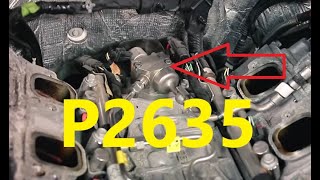
The 2013-2016 Cadillac SRX, along with many other GM vehicles from this era, is specifically known to set code P2635 due to fuel pump issues in high ambient temperatures. A GM Technical Service Bulletin (TSB #PIP5507B) directly addresses this, noting that temperatures above 100°F (38°C) can cause hesitation, stalling, and trigger this code. 🎬 Watch: Understanding the causes and fixes for the P2635 code. Another TSB, #PIP5411E (also numbered 17-NA-335), recommends replacing the fuel pump module with an updated design part to resolve this specific high-temperature issue. This points to a sensitivity in the fuel pump design to heat, which can cause vapor buildup in the fuel line or component failure.
Diagnostic Flowchart

Tap your situation to follow the diagnostic path that matches what you're seeing on this vehicle.
Symptoms You May Notice
- Hesitation or stumbling during acceleration.
- Engine stalling, especially in hot weather or under load.
- Reduced or sluggish engine power.
- Extended cranking time before the engine starts.
- Check Engine Light is on.
- Engine surging.
- A loud whining or buzzing noise from the rear of the vehicle, near the fuel tank.
- Replacing the fuel pump when the Fuel Pump Control Module (FPCM) is the actual cause.
- Replacing the FPCM when the in-tank fuel pump is weak or failing.
- Replacing only the fuel pressure sensor without verifying the actual fuel pressure and pump performance, especially in hot weather.
Most Likely Causes

- Failing In-Tank Fuel Pump Module 🔴 High Probability As documented in TSB #PIP5507B and #PIP5411E, the original fuel pump modules in these vehicles are prone to failure, particularly in high ambient temperatures, leading to low flow conditions due to vapor buildup or heat-related component stress. The fix often involves an updated part number.
How to confirm: A technician will use a scan tool to monitor commanded vs. actual fuel pressure and the fuel pump duty cycle. A mechanical fuel pressure gauge should be used to verify low pressure. Per GM diagnostic procedures, the Key-On-Engine-Off (KOEO) prime pulse fuel pressure should be 55-60 psi. If pressure drops during the conditions described in the TSB (high heat), the pump is the likely culprit.
Typical fix: Replace the entire in-tank fuel pump module assembly. It is critical to use the updated part number (e.g., GM Genuine MU2139) to prevent recurrence. The fuel filter is integrated into this module.
Est. part cost: $250-$500 - Faulty Fuel Pump Control Module (FPCM) 🟡 Medium Probability The FPCM (also called a Fuel Pump Driver Module) is a common failure point on many GM vehicles. It is an electronic module that can fail from heat, vibration, or internal component degradation over time. It's responsible for interpreting ECM commands and sending the correct voltage to the pump.
How to confirm: Diagnosis involves checking for power and ground at the module, and verifying communication with the ECM via a scan tool. A technician may command the pump to run at various speeds to see if the module responds correctly and delivers the appropriate voltage. Codes like P069E often point directly to a faulty FPCM.
Typical fix: Replace the Fuel Pump Control Module. On the SRX, this module is located in the rear of the vehicle, inside the left-hand rear quarter panel trim. The OEM replacement part (GM #23482933) requires programming to the vehicle's VIN using GDS2 software, which typically requires a dealer or a specialized shop. Some aftermarket modules claim to be 'plug and play'.
Est. part cost: $90-$250 - Clogged Fuel Filter ⚪ Low Probability The fuel filter is integrated into the fuel pump module assembly and is not serviced separately. While not a distinct failure point, a prematurely clogged filter due to contaminated fuel can restrict flow and cause this code, effectively requiring a full module replacement.
How to confirm: This is typically confirmed during the fuel pump replacement, as the filter is part of the assembly. Persistently low pressure readings at the rail, when the pump and FPCM are known to be good, point to a restriction, which is almost always the integrated filter sock.
Typical fix: The entire fuel pump module assembly, which includes the integrated filter sock, must be replaced.
Est. part cost: $250-$500
Rare But Worth Checking
- Wiring or Connector Issues: Corrosion or damage to the wiring harness for the FPCM or the fuel pump can cause intermittent low voltage, leading to poor pump performance. This is worth checking, especially on vehicles from regions with road salt. A visual inspection of the connectors at the FPCM and top of the fuel tank is a good first step. The FPCM ground (likely G304 or G305) located in the rear B-pillar or on the frame is a critical check.
- Faulty Fuel Pressure Sensor: Though less common for this code, the fuel pressure sensor can fail and send incorrect low-pressure readings to the ECM, falsely triggering P2635. This often appears with code P018B, as mentioned in TSBs. However, the TSBs point to the pump as the root cause even when P018B is present. Comparing the sensor reading on a scan tool to a mechanical gauge is the definitive test.
Diagnosis Steps
- Check for other DTCs, paying close attention to P018B or P069E, as they provide critical diagnostic direction.
- Review freeze frame data to identify the conditions (ambient temperature, engine load, fuel level) when the code was set. Note if ambient temp was high.
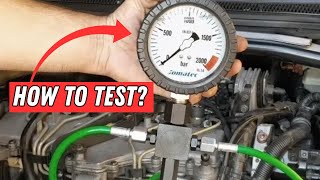
- Connect a mechanical fuel pressure gauge. Verify Key-On-Engine-Off (KOEO) prime pressure is between 55-60 psi.
- Using a capable scan tool (GDS2), compare the desired vs. actual fuel rail pressure. Also, compare the scan tool's pressure reading to the mechanical gauge to check for a skewed sensor.
- Inspect the wiring and connectors at the Fuel Pump Control Module (FPCM) for any signs of corrosion, damage, or looseness. The FPCM is located inside the vehicle, behind the trim in the left-hand rear quarter panel area.
- Inspect the relevant ground connections for the FPCM, likely G304 (right side B-pillar) or G305 (under vehicle at left B-pillar), for corrosion and tightness.
- If fuel pressure is confirmed to be low but the FPCM appears to be sending the correct signal (high duty cycle/voltage), the in-tank fuel pump is the primary suspect.
- If the FPCM is not commanding the pump correctly, is unresponsive, or if code P069E is present, and its power/ground circuits are confirmed good, the FPCM itself has likely failed.
Parts You'll Likely Need

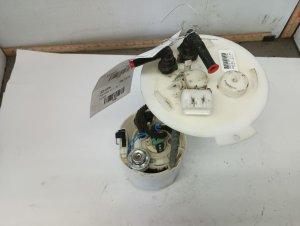
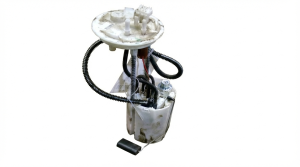
- In-Tank Fuel Pump Module Assembly
(OEM #MU2139)— This is the most common failure part for code P2635 on this vehicle, especially in hot climates, as confirmed by multiple TSBs. The assembly includes the pump, sending unit, and integrated filter.
Trusted brands: GM Genuine Parts, ACDelco, Delphi, Carquest Premium
OEM price range: $350-$500
Aftermarket price range: $250-$400 - Fuel Pump Control Module (FPCM)
(OEM #23482933)— This electronic module regulates voltage to the fuel pump and is a common point of failure on many GM vehicles, leading to low fuel flow. It is the second most likely cause after the pump itself. Supersedes part numbers 23103795, 23172742, 23200138.
Trusted brands: ACDelco, GM Genuine Parts, Dorman, Standard Motor Products
OEM price range: $150-$250
Aftermarket price range: $90-$180
Related Codes That Often Appear With This One
- P018B — This code for 'Fuel Pressure Sensor 'B' Circuit Performance' is explicitly mentioned alongside P2635 in TSB #PIP5507B and #PIP5411E as a code that can set during the same high-temperature, low-flow events.
- P069E — This code indicates a fault in the Fuel Pump Control Module itself ('Fuel Pump Control Module Requested MIL Illumination'). If P069E is present with P2635, the FPCM is the primary suspect.
Technical Service Bulletins (TSBs) & Recalls
- PIP5507B: Communicates that in ambient temperatures 100°F or higher, DTCs P2635 and/or P018B may set, accompanied by hesitation or stalling. It notes this is due to vapor buildup.
- PIP5411E / 17-NA-335: Supersedes previous versions and explicitly recommends replacing the in-tank fuel pump module with a new design part to correct the high-temperature stalling/hesitation issue that sets P2635.
Platform-Specific Known Issues
- A known issue, documented in TSB #PIP5507B, causes hesitation, stalling, and codes P2635 and/or P018B to set in ambient temperatures of 100°F (38°C) or higher due to fuel pump performance issues. The recommended fix per TSB #PIP5411E is to replace the in-tank fuel pump module assembly with an updated design.
Mechanic-Grade Diagnostic Values
- Low-side fuel pressure (prime pulse) — expected: 55-60 psi. Failure: Pressure below 55 psi indicates a weak in-tank pump or leak.
- Fuel pump low reference circuit resistance to ground — expected: Less than 5.0 ohms. Failure: Resistance greater than 5.0 ohms indicates high resistance in the ground circuit for the fuel pump.
- Voltage at FPCM power feed (Ignition ON) — expected: 12.0 - 12.6 V. Failure: A drop below 11.5 V suggests a wiring or power supply problem to the module.
Scan Tool Commands That Help
- GDS2 (GM Dealer Software): Fuel Pump Enable / Fuel Pump Relay Command — Used as a bidirectional control to manually turn the fuel pump on and off to verify the FPCM and pump respond to commands.
- GDS2 (GM Dealer Software): Configuration/Reset Functions -> Fuel Pump Driver Control Module Configuration — This function is required after replacing the Fuel Pump Control Module (FPCM) to program the new module to the vehicle.
Wiring & Ground Locations
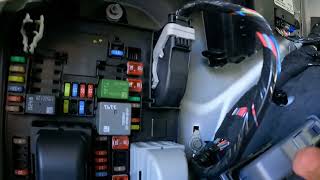
- FPCM (K27) — Inside the vehicle, behind the trim in the left-hand rear quarter panel area.. This is the control module for the fuel pump. All power and control signals pass through it, making its connectors a primary point of inspection.
- G304 / G305 — G304 is on the right side B-pillar behind trim. G305 is under the vehicle near the left B-pillar on the frame.. These are primary body ground points in the rear of the vehicle. A poor ground connection for the FPCM can cause erratic behavior and low voltage to the pump, triggering P2635.
- FPCM Connector (Generic GM) — At the FPCM module.. Knowing common pin functions helps in diagnosis. Pin 13 (Dark Green/White) is often the control signal from the ECM, and Pin 47 (Gray) is the voltage supply to the pump.
- Fuel Pump Connector (G12) — On top of the fuel tank, accessible after dropping the tank or through an access panel.. This is the final connection to the fuel pump motor. Corrosion or damage here will directly affect pump performance. It has a control circuit (Terminal A) and a low reference/ground circuit (Terminal B).
OEM Part Supersession History
23103795, 23172742, 23200138→23482933— GM regularly updates service parts to integrate new materials and technologies for improved reliability.
Helpful Videos

Used OEM Parts in Stock

New Aftermarket Parts Available


The information in this article is provided for general reference and educational purposes only. Vehicle specifications, procedures, and part compatibility can vary by production date, trim level, and region. Always consult your vehicle's factory service manual and verify part numbers before purchasing or performing repairs. Safety-critical components such as airbags, seat belts, and braking systems should be installed by a qualified professional.
- Cadillac SRX:
- 🎬 Helpful Videos
- 🛍️ Shop This Part
- What's Unique About the 2013-2016 Cadillac SRX
- Diagnostic Flowchart
- Symptoms You May Notice
- Most Likely Causes
- Rare But Worth Checking
- Diagnosis Steps
- Parts You'll Likely Need
- Related Codes That Often Appear With This One
- Technical Service Bulletins (TSBs) & Recalls
- Platform-Specific Known Issues
- Mechanic-Grade Diagnostic Values
- Scan Tool Commands That Help
- Wiring & Ground Locations
- OEM Part Supersession History
- 🎟️ Get 5% Off