

P2635 on 2013-2019 Cadillac Escalade: Fuel Pump Performance, Causes, and Fixes
Code P2635 on a 2013-2019 Escalade almost always indicates a problem with the low-pressure in-tank fuel pump, often causing stalling or hesitation in hot weather. The most common fix is replacing the in-tank fuel pump module assembly with an updated part, which can cost between $700 and $1500 at a shop.
- P2635 on a 2013-2019 Escalade points to a problem with the low-pressure fuel pump in the gas tank.
- If you experience engine hesitation or stalling, especially on hot days, the in-tank fuel pump module is the most likely culprit.
- This is a serious issue that can cause the vehicle to stall while driving. It should be addressed immediately.
- Due to the fire hazard involved with handling gasoline and removing the fuel tank, this repair is strongly recommended for a professional mechanic.
- Make sure your mechanic is aware of the TSBs related to this issue, as it will speed up diagnosis and ensure the correct, updated parts are used.
What's Unique About the 2013-2019 Cadillac ESCALADE

This generation of Cadillac Escalade, particularly the 2015-2019 models built on the K2XX platform, is known for this issue, as documented in multiple General Motors Technical Service Bulletins (TSBs). The problem is frequently linked to high ambient temperatures (over 100°F), where heat can cause vapor buildup in the fuel feed line or exacerbate an already weak fuel pump, leading to fuel starvation. This makes the in-tank fuel pump module the primary suspect, more so than on other vehicles where this code might have a wider range of common causes. TSB 17-NA-335 explicitly states the cause may be vapor buildup and the correction is to install an updated fuel pump module with a new one-way breather valve design.
🎬 Watch: Diagnosing P2635 and the updated fuel pump designDiagnostic Flowchart

Tap your situation to follow the diagnostic path that matches what you're seeing on this vehicle.
Generation note: This range covers the end of the third generation (2013-2014) and the fourth generation (2015-2019). The issue of fuel pump failure in high ambient temperatures is especially well-documented for the fourth-generation models (2015-2019) in manufacturer TSBs like 17-NA-335 and PIP5411F. The problem is shared across the entire GM K2XX platform, including the Chevrolet Silverado, Tahoe, Suburban, and GMC Sierra and Yukon.
Symptoms You May Notice

- Check Engine Light is on
- Engine hesitation or surging, particularly in hot weather or under load.
- Engine stalling, which may happen intermittently, often after 10-15 minutes of driving in the heat.
- Reduced engine power and poor acceleration.
- Extended cranking time before the engine starts.
- Engine refuses to start.
- Replacing the high-pressure fuel pump (HPFP) on the engine. The Escalade's direct injection system has both a low-pressure pump in the tank and a high-pressure pump on the engine. P2635 specifically refers to the low-pressure side of the system.
Most Likely Causes

- Failing In-Tank Fuel Pump Module 🔴 High Probability Multiple TSBs (17-NA-335, PIP5411F) confirm that the original fuel pump modules on these vehicles are prone to failure, especially in ambient temperatures over 100°F (37.7°C). TSB 17-NA-335 identifies the cause as potential vapor buildup in the fuel feed line, which the updated pump design is meant to mitigate. Forum discussions and YouTube repair videos for Escalades and their platform mates overwhelmingly point to this as the solution.
How to confirm: A technician will monitor low-side fuel pressure with a scan tool. If the pressure drops significantly during the symptom (e.g., hesitation or stalling), the pump is the likely culprit. The issue is often worse on hot days. The fuel filter is integrated into the module and can become very dirty, contributing to the failure.
Typical fix: Replace the entire in-tank fuel pump module assembly with the updated GM part. TSB #17-NA-335 specifically advises replacing the module with an updated version to correct the condition.
Est. part cost: $350-$600 - Faulty Fuel Pressure Sensor 🟡 Medium Probability This sensor, located on the fuel line under the driver's side of the vehicle, can fail and send incorrect data to the Fuel Control Module, triggering P2635, often with P018B. It's a common failure point across the GM truck/SUV platform.
How to confirm: TSB #PIP5286B provides a specific diagnostic test: with a cold engine, a technician uses a scan tool to command fuel system depressurization. If the sensor reading doesn't drop to zero as the engine stalls, the sensor is faulty. Another key failure indicator is observing the fuel pressure reading on a scan tool; a bad sensor will often get 'stuck' at a specific value (e.g., 48.7 PSI) and will not fluctuate, while a healthy sensor should show pressure changing between roughly 30-60 PSI while the engine is running.
Typical fix: Replace the low-pressure fuel sensor and its O-ring seal, which must be ordered separately. A DIY mechanic on YouTube demonstrated successfully fixing a P2635 code on a 2017 Silverado by replacing only this sensor after a new fuel pump didn't solve the issue.
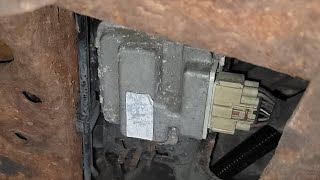
Est. part cost: $40-$110 - Faulty Fuel Pump Control Module (FPCM) ⚪ Low Probability While less common for this specific code than the pump itself, FPCM failures are a known issue on many GM trucks and SUVs. The module is typically located on the frame rail near the spare tire or under the cab and is susceptible to corrosion and wiring issues.
How to confirm: Diagnosis involves checking for power, ground, and command signals at the FPCM. A technician may use a headlight to load-test the power and ground circuits to ensure they can carry sufficient current. If the pump and wiring are good, but the module isn't commanding the pump correctly or has internal faults, the FPCM is suspect. A key test is to check for ~6 volts on the output wire to the pump; millivolt readings indicate a bad module.
Typical fix: Replace the Fuel Pump Control Module. Some aftermarket modules come pre-programmed, avoiding a trip to the dealer for calibration.
Est. part cost: $50-$150
Rare But Worth Checking
- CAN Bus Communication Fault: TSB #PIP5427B notes that if codes U0074 or U18A2 are present alongside P2635, the communication issue should be diagnosed and fixed first, as it could be the root cause.
- Clogged Fuel Filter: The primary fuel filter on these vehicles is integrated into the fuel pump module assembly. Therefore, it gets replaced along with the pump. A severely clogged filter is a direct indicator of a needed pump replacement.
- Wiring Issues: Corrosion or damage to the wiring harness for the FPCM or the fuel pump can cause low voltage or intermittent connections, leading to P2635. This is particularly relevant for vehicles in regions with heavy road salt usage. Resistance values above 0.2 Ω can indicate a poor connection.
Diagnosis Steps
- Scan the vehicle's computer for all stored Diagnostic Trouble Codes (DTCs). Note if P018B or P069E are also present.
- If communication codes like U0074 or U18A2 are present, diagnose and resolve them before proceeding with P2635 diagnostics, as per TSB #PIP5427B.
- Using a professional scan tool, monitor the low-pressure fuel system sensor data. A healthy sensor's reading should fluctuate (e.g., between 30-60 PSI). A reading that is stuck at a fixed value (e.g., 48.7 PSI) indicates a faulty sensor.
- If P018B is also present, perform the sensor test outlined in TSB #PIP5286B on a cold engine to rule out a faulty sensor. This involves commanding a fuel system depressurization and ensuring the sensor reading drops to zero.
- Attempt to replicate the symptoms. If hesitation or stalling occurs in high heat (above 100°F), this strongly points toward the fuel pump module as described in TSBs #17-NA-335.
- Inspect the wiring and connectors for the Fuel Pump Control Module (FPCM), typically on the driver's side frame rail, for any signs of damage, corrosion, or loose connections. Check for proper power (12V+), ground, and a 5V reference signal at the sensor.
- If the sensor and wiring are confirmed to be good, and the symptoms match the TSB descriptions for high-temperature failure, the in-tank fuel pump module is the most likely cause of the failure and should be replaced with the updated part.
Parts You'll Likely Need
- In-Tank Fuel Pump Module Assembly
(OEM #13512934 (Short Wheelbase), 13512935 (Long Wheelbase/ESV) - Note: Always verify with VIN.)— This is the most common failure part for code P2635 on this vehicle, especially when symptoms occur in high ambient temperatures, as confirmed by multiple TSBs. The updated part is designed to prevent vapor buildup.
Trusted brands: ACDelco (GM Genuine), Delphi
OEM price range: $400-$600
Aftermarket price range: $250-$450 - Low-Pressure Fuel Sensor
(OEM #13507129 (Replaces 13577429))— This sensor can fail and send incorrect readings to the computer, triggering code P2635, often along with P018B. TSB PIP5286B details the diagnostic procedure for this specific part.
Trusted brands: ACDelco (GM Genuine), Bosch, Standard Motor Products
OEM price range: $70-$110
Aftermarket price range: $40-$80
Related Codes That Often Appear With This One
- P018B — This code for 'Fuel Pressure Sensor 'B' Circuit Range/Performance' is frequently set with P2635. Multiple TSBs (17-NA-335, PIP5286B) mention these two codes appearing together, often pointing to the same root causes of a failing fuel pump or sensor.
- P069E — This code for 'Fuel Pump Control Module Requested MIL Illumination' can appear alongside P2635, indicating the FPCM has detected a fault and commanded the check engine light on. A forum user with a 2012 Yukon reported this code along with P2635 and P018B.
Technical Service Bulletins (TSBs) & Recalls
- PIP5286B: Provides diagnostic steps for when P2635 and P018B are set together, focusing on testing the fuel pressure sensor on a cold engine.
- PIP5427B: Advises that if communication codes (U0074, U18A2) are present with P2635, they should be diagnosed first.
- 17-NA-335: Supersedes PIP5411F. Describes the condition of MIL illumination with P2635/P018B, hesitation, and stalling in high ambient temperatures. States the cause is vapor buildup and the fix is an updated fuel pump module.
- PIP5411F: Recommends replacing the in-tank fuel pump module to correct the condition and provides updated part numbers.
Platform-Specific Known Issues
- A series of Technical Service Bulletins (#PIP5411F, #17-NA-335) specifically address P2635 on 2015-2019 models, noting that hesitation, surging, and stalling are common in ambient temperatures above 100°F (37.7°C). The prescribed fix is to replace the in-tank fuel pump module with an updated design.
Mechanic-Grade Diagnostic Values
- Low-Side Fuel Pressure (Scan Tool, Engine Running) — expected: Fluctuating between 30-65 PSI depending on load.. Failure: Pressure is stuck at a fixed value (e.g., 48.7 PSI) or drops significantly below spec during hesitation/stalling.
- FPCM Voltage to Fuel Pump — expected: ~6 Volts DC (variable based on demand).. Failure: Reading in millivolts (mV) or 0V indicates a failed FPCM.
- Fuel Pump Power Supply Voltage (at FPCM) — expected: 12.0 - 12.6 Volts.. Failure: Voltage drops below 11.5V, indicating a wiring or charging system problem.
- Fuel Pressure Sensor Reference Voltage — expected: 5 Volts.. Failure: Voltage significantly lower or absent points to a wiring or ECM issue.
Scan Tool Commands That Help
- GDS2 / Professional Scan Tool: Fuel Pump Enable / On — With the engine OFF, this command manually turns on the in-tank fuel pump to pressurize the system. It is used to check if the low-pressure sensor reading increases accordingly, helping to isolate a faulty sensor from a faulty pump.
- GDS2 / Professional Scan Tool: Fuel System Depressurization — As outlined in TSB PIP5286B, this command is used with the engine running to force a stall. The low-side fuel pressure sensor reading should drop to zero. If it doesn't, the sensor is faulty.
- GDS2 / Professional Scan Tool: View Failure Records — To see the specific operating conditions (RPM, temperature, load, etc.) at the exact moment the P2635 code was set. This can help confirm if the failure occurs in high heat or under load, as the TSBs suggest.
Wiring & Ground Locations
- Fuel Pump Control Module (FPCM) — On the driver's side frame rail, typically under the cab or near the spare tire.. This is the module that controls the in-tank fuel pump. Its location makes it vulnerable to water and salt corrosion, which can damage the module or its wiring, causing P2635.
- FPCM Ground — The ground wire is typically a black wire at the FPCM connector (Pin 22 in one example). The physical ground point is likely a chassis ground on the frame rail, such as a G400-series ground.. A corroded or loose ground is a common point of failure and will prevent the FPCM from operating the fuel pump correctly, leading to low flow.
- Low-Pressure Fuel Sensor — On the main fuel line, located on the frame rail under the driver's side of the vehicle, often between the front and rear doors.. This sensor provides the data that the FPCM uses to diagnose low flow. A fault in the sensor or its wiring can falsely trigger code P2635.
- Fuel Pump Power Module Fuse — In the underhood fuse block, identified as fuse #25 in a 2016 Escalade diagram.. This fuse supplies power to the FPCM. While a blown fuse is a simple fix, it may also indicate a larger problem like a shorted module or wiring.
Real Owner Repair Stories
- YouTube channel '4 Realz' (2017 Chevrolet Silverado (platform mate)) — Check Engine Light with code P2635 that would return instantly after clearing.
❌ Tried (didn't work) The owner noted seeing other people replace the entire fuel pump assembly without fixing the code.
✅ What actually fixed it Replaced only the low-pressure fuel sensor located on the frame rail. The part cost approximately $40 and the repair took only a few minutes. The code did not return after replacement. - YouTube channel 'Al Intikhab Auto Maintenance Workshop' (2015-2017 GMC Yukon (platform mate)) — Car stalls after 10-15 minutes of driving, long crank to restart, Check Engine Light with P2635 and a fuel pressure sensor code.
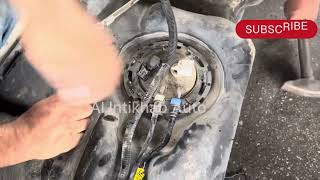
✅ What actually fixed it Following the manufacturer bulletin, the technician dropped the fuel tank and replaced the entire in-tank fuel pump module. The filter on the old pump was noted to be extremely dirty. The replacement fixed the codes and the stalling issue.
OEM Part Supersession History
13582493→13512934 (For Short Wheelbase Escalade)— The original fuel pump design was prone to causing vapor buildup in the fuel line in high temperatures. The updated design incorporates a new one-way breather/check valve to mitigate this issue.13577429→13507129 (Low-Pressure Fuel Sensor)— Standard part revision and update by the manufacturer.
Model Year Variations Within This Range
- 2015-2019 (4th Gen / K2XX Platform): These models are specifically cited in TSBs 17-NA-335 and PIP5411F for the heat-related stalling and P2635 code caused by vapor lock in the original fuel pump module design. The fix is an updated pump module.
- 2013-2014 (3rd Gen / GMT900 Platform): While these models also use an FPCM-controlled returnless fuel system, they are not specifically mentioned in the TSBs related to the high-temperature vapor lock issue. For these years, P2635 is more likely to be a standard component failure (pump, sensor, FPCM) without the specific design flaw seen in the 4th generation.
Helpful Videos
![[QUICK LOOK] Yukon/Tahoe/Suburban/Escalade - Fuel Pump Power Control Module Recall - #N252516900](https://img.youtube.com/vi/I0A4RqqC6YU/mqdefault.jpg)
Used OEM Parts in Stock


New Aftermarket Parts Available


The information in this article is provided for general reference and educational purposes only. Vehicle specifications, procedures, and part compatibility can vary by production date, trim level, and region. Always consult your vehicle's factory service manual and verify part numbers before purchasing or performing repairs. Safety-critical components such as airbags, seat belts, and braking systems should be installed by a qualified professional.
- Cadillac ESCALADE:
- 🎬 Helpful Videos
- 🛍️ Shop This Part
- What's Unique About the 2013-2019 Cadillac ESCALADE
- Diagnostic Flowchart
- Symptoms You May Notice
- Most Likely Causes
- Rare But Worth Checking
- Diagnosis Steps
- Parts You'll Likely Need
- Related Codes That Often Appear With This One
- Technical Service Bulletins (TSBs) & Recalls
- Platform-Specific Known Issues
- Mechanic-Grade Diagnostic Values
- Scan Tool Commands That Help
- Wiring & Ground Locations
- Real Owner Repair Stories
- OEM Part Supersession History
- Model Year Variations Within This Range
- 🎟️ Get 5% Off