

OBD-II Code P2634: Fuel Pump 'B' Control Circuit High
What P2634 means, why it triggers, and how to fix it
- Code P2634 indicates a high-voltage short in the secondary fuel pump's control circuit, causing immediate and unpredictable engine stalling.
- Do not drive the vehicle; a sudden stall at highway speeds or in an intersection poses a severe safety risk and guarantees a tow.
- Inspect the frame-mounted Fuel Pump Control Module (FPCM) and its ground wire first, as corrosion here causes over 60% of P2634 faults.
- Avoid replacing the $400 fuel pump assembly until you have tested the $30 fuel pump relay and verified the control circuit voltage with a multimeter.
What Does P2634 Mean?
The Powertrain Control Module (PCM) detected that the electrical circuit for the secondary fuel pump (labeled 'B') has a voltage exceeding the manufacturer's upper limit. This electrical short prevents the computer from correctly controlling the fuel pump, immediately disrupting fuel delivery to the engine.
Technical definition: The SAE/ISO definition is "Fuel Pump 'B' Control Circuit High." The PCM registered a voltage in the secondary fuel pump's control circuit exceeding the specified upper limit. This occurs when the PCM sees over 12V on a circuit it expects to be lower (e.g., a 0-5V pulse-width modulated signal), strictly due to a short to a power source.
Can I Drive With P2634?
No — Do Not Drive. Driving is not recommended. The core issue is unpredictable fuel delivery, which causes the engine to stall at any moment—a significant safety hazard in traffic or at high speeds. Continuing to drive strains other fuel system components and guarantees you will eventually be stranded.
Common Causes
- Damaged, Corroded, or Shorted Wiring (Very Common) — Wires in the fuel pump circuit fray, pinch, or corrode from exposure to moisture and road salt. This creates a direct short circuit to a 12V power source, which the PCM reads as high voltage.
- Failing Fuel Pump Control Module (FPCM) (Very Common) — A dedicated module controls the fuel pump's speed on modern vehicles. This module fails internally due to overheating, moisture intrusion, or frame-rail corrosion, sending incorrect 12V signals back to the PCM.
- Faulty Fuel Pump Relay (Common) — The fuel pump relay is a mechanical switch controlling power to the pump. It wears out and sticks in the closed position, causing continuous high voltage on the control circuit.
- Poor Ground Connection (Common) — A broken or corroded ground strap for the control module causes a floating voltage. The PCM interprets this unstable ground resistance as a high-voltage condition in the control circuit.
- Defective Fuel Pump Motor (Less Common) — The electric motor inside the fuel pump develops an internal short circuit as it wears out. The pump operates intermittently, but the electrical fault triggers the code.
- CAN Bus Communication Failure (Uncommon) — The FPCM receives commands over the Controller Area Network (CAN) bus. A network fault causes the FPCM to default to a state the PCM interprets as a high-voltage fault, always accompanied by U-prefix codes.
- Failing Alternator or Voltage Regulator (Uncommon) — An over-voltage condition on the vehicle's entire 12V system (producing >15V) raises the voltage across all circuits, flagging a 'circuit high' condition on sensitive monitors.
- Faulty Powertrain Control Module (PCM) (Rare) — The driver transistor inside the PCM that controls the fuel pump circuit fails and shorts internally. Consider this only after exhaustively ruling out wiring and the FPCM.
Symptoms
- Check Engine Light is on — The Malfunction Indicator Lamp (MIL) illuminates immediately upon detecting the voltage spike.
- Engine Stalling or Hesitation — The engine stalls unexpectedly at low speeds or hesitates severely when accelerating.
- Hard Starting or No Start — The engine cranks for an extended period before starting, or refuses to start entirely.
- Reduced Engine Power — The vehicle feels weak when climbing hills or under heavy load due to fuel starvation.
- Whining Noise from the Fuel Tank — A loud humming or whining sound from the rear indicates the pump is running continuously or straining against a short.
- Increased Fuel Consumption — The pump runs at 100% duty cycle due to the control circuit fault, noticeably reducing fuel economy.
Diagnostic Flowchart
Tap your situation to follow the diagnostic path that matches what you're seeing on this code.
Common Fixes & Costs
- Replace the Fuel Pump Control Module (FPCM/FPDM) — Parts: $100-$300, Labor: $125-$250, ~1.5 hr book time (Intermediate)
- Repair or replace damaged wiring/connectors — Parts: $10-$50, Labor: $150-$300, ~1.5 hr book time (Intermediate)
- Replace the fuel pump relay — Parts: $20-$50, Labor: $40-$80, ~0.5 hr book time (DIY)
- Clean or Repair Ground Connection — Parts: $5-$20, Labor: $50-$100, ~0.8 hr book time (DIY)
- Replace the Powertrain Control Module (PCM) — Parts: $600-$900, Labor: $215-$300, ~2 hr book time (Professional)
DIY vs Professional
- Replace the Fuel Pump Control Module (FPCM/FPDM) — Beginner: Yes
Tools: Socket set, jack, jack stands. - Repair or replace damaged wiring/connectors — Beginner: No
Tools: Multimeter, wire strippers, crimpers, soldering iron, heat gun. - Replace the fuel pump relay — Beginner: Yes
Tools: Fuse puller. - Clean or Repair Ground Connection — Beginner: Yes
Tools: Socket set, wire brush, sandpaper. - Replace the Powertrain Control Module (PCM) — Beginner: No
Tools: Professional scan tool with programming capabilities.
Used vs. New Parts: Buying Guide
When a used part is worth it: A used FPCM makes sense for older vehicles on a strict budget, provided the donor part comes from a dry climate.
Donor-vehicle mileage cap: roughly under 80000 miles for the part to have meaningful remaining life.
Donor quality checklist:
- Match the part number exactly.
- Reject any module from a 'Salt Belt' state.
- Inspect the connector pins for green corrosion or heat discoloration.
Decision logic:
- If The new part is under $150 → buy new for the warranty and reliability.
- If The part is a known high-failure item due to corrosion (Ford FPDM) → buy a new aftermarket part that includes design improvements like mounting spacers.
- If The new PCM costs over $600 → a verified-good used PCM is acceptable, but still requires dealer programming.
Warranty tradeoff: Used parts offer 30-90 day warranties covering only the part. New aftermarket parts offer 1-year to lifetime warranties.
Worst-case if a used part fails: $250-$500 if a used module fails, requiring a second replacement and repeat labor.
What Happens If You Wait — Timeline
- 0-1 month: Code P2634 sets. Intermittent hesitation under acceleration or a single unexplained stall. (MPG impact: 0-2%% · Added cost: $0)
- 1-3 months: Stalling becomes frequent at low speeds. Engine is hard to start. Noticeable drop in fuel economy. (MPG impact: 5-10%% · Added cost: $150-$300 for an emergency tow.)
- 3-6 months: The corroded module fails completely. The vehicle cranks but will not start, leaving the driver stranded. (MPG impact: N/A (Vehicle is undrivable)% · Added cost: $400-$1200 if the fuel pump burns out from erratic control signals.)
- 6+ months: Persistent incorrect fuel mixtures overheat and destroy the catalytic converter. (MPG impact: 10-15%% · Added cost: $1200-$2800 for catalytic converter replacement.)
Cost of Not Fixing It
- 0-1 month: Intermittent stalling and hard starting, posing a significant safety risk. (Added cost: $150-$300 for an emergency tow when the vehicle finally refuses to start.)
- 1-6 months: A constantly straining fuel pump burns out its internal motor. (Added cost: $400-$1200 for a new fuel pump assembly.)
- 6+ months: Chronic rich or lean fuel conditions overheat and destroy the catalytic converter. (Added cost: $1200-$2800 for catalytic converter replacement.)
Diagnosis Steps
- Read the Trouble Codes
Use an OBD-II scanner to confirm P2634. Note any U-prefix communication codes (like U0109), which point directly to a failed module rather than a simple wiring short.
Tools: OBD-II Scanner (Beginner) - Inspect Fuses and Relays
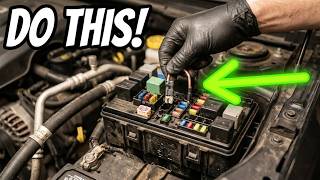
Locate the fuel pump relay in the fuse box. Swap it with an identical relay (like the horn relay). If the vehicle starts or the symptoms change, the original relay is stuck closed.
Tools: Owner's Manual, Fuse Puller (Beginner) - Visually Inspect Wiring and Grounds
Trace the wiring harness from the Fuel Pump Control Module (FPCM) to the PCM. Look for chafed insulation, pinched wires, or green corrosion in connectors. Unbolt and sand the FPCM ground wire to bare metal.
Tools: Flashlight, Safety Glasses (Intermediate) - Test the Control Circuit Voltage
With the ignition on (engine off), probe the 'B' control circuit wire at the FPCM connector using a multimeter grounded to the chassis. A reading of 12V where a 0-5V signal is expected confirms a short to power.
Tools: Multimeter, Wiring Diagram (Advanced) - Isolate the Fault by Disconnecting Components
If the control circuit shows 12V, disconnect the FPCM. If the voltage drops to 0V, the FPCM failed internally and is back-feeding voltage. If 12V remains, the short is in the wiring harness.
Tools: Multimeter, Wiring Diagram (Advanced) - Perform a Voltage Drop Test on the Ground
Set your multimeter to a low DC voltage scale. Place one lead on the negative battery terminal and the other on the FPCM ground pin. A reading above 0.1V indicates excessive resistance requiring repair.
Tools: Multimeter (Advanced) - Check Live Data with a Scan Tool
Monitor 'Fuel Pump Duty Cycle' and 'Fuel Pump Control Module Voltage'. If the duty cycle commands 10% but the voltage PID remains at battery voltage, the module is ignoring PCM commands.
Tools: Advanced OBD-II Scan Tool (Advanced) - Test Fuel Pump Motor Resistance
Disconnect the fuel pump and measure resistance across its power and ground terminals. A healthy pump reads 5-20 Ohms. A reading near 0 Ohms indicates an internal short.
Tools: Multimeter (Advanced) - Scope the Control Signal
Connect an oscilloscope to the control circuit wire. A healthy circuit shows a pulse-width modulated (PWM) square wave. A flat line at 12V confirms a dead short to power.
Tools: Oscilloscope, Wiring Diagram (Professional) - Check for PCM Software Updates
Check Technical Service Bulletins (TSBs). Manufacturers frequently release software updates adjusting voltage thresholds for the fuel pump circuit, resolving false-positive P2634 codes.
Tools: TSB Database Access, Professional Scan Tool (Professional)
When This Code Triggers (Freeze-Frame Conditions)
- Engine Coolant Temp: 170-210°F (Engine fully warmed up)
- RPM: 1500-2500 (Cruise / steady throttle)
- Engine Load: 25-50% (Light to moderate acceleration or maintaining speed on a flat road)
- Vehicle Speed: 45-65 mph (Highway or steady-speed driving)
Related Codes
- P2632 — Means 'Fuel Pump 'B' Control Circuit / Open.' A multimeter test shows 0V because the circuit is broken, whereas P2634 shows 12V due to a short to power.
- P2633 — Means 'Fuel Pump 'B' Control Circuit Low' (short to ground). P2634 is the exact opposite. Intermittent switching between these codes indicates a single chafed wire touching both ground and power.
- P0230 — Indicates a malfunction in the 'Fuel Pump Primary Circuit' (the main relay). A P0230 fault cuts power to the entire system, triggering a secondary P2634 code. Diagnose P0230 first.
- P0627 — Means 'Fuel Pump 'A' Control Circuit / Open'. Seeing both codes indicates a shared problem, such as a faulty power distribution block or a failing PCM controlling both pumps.
Climate & Environmental Factors
- Road Salt / De-icing Agents: Primary contributor in 'Salt Belt' regions. Frame-mounted components (Ford FPDM, GM FPCM) corrode rapidly. Saltwater destroys the aluminum housing and shorts the internal circuit board.
- Water Intrusion: Driving through deep puddles or pressure washing the undercarriage causes immediate short circuits. If the code appears after a car wash, water intrusion at the FPCM connector is the cause.
- High Humidity / Coastal Climates: Constant exposure to salty air corrodes electrical connectors, creating high-resistance paths the PCM interprets as a high-voltage fault.
How to Talk to a Mechanic About This Code
Say this: "I have a P2634 code and the vehicle is stalling. I need a diagnostic starting with the fuel pump control module, its ground, and the relay before quoting a fuel pump replacement."
This proves you know P2634 is an electrical fault. It forces the technician to perform proper electrical testing, preventing an immediate quote for a $1,000 fuel pump job.
Avoid saying:
- 'Just fix my car, it's stalling'
- 'My check engine light is on, can you look at it?'
- 'I think I need a new fuel pump'
Questions to ask before authorizing the repair:
- What were the specific voltage readings on the control circuit?
- Did you confirm the wiring harness between the module and the PCM is intact?
- Have you checked for TSBs related to the FPCM or a PCM reflash?
Where to Take It: Dealer vs Independent vs Chain
- Dealer:
Best for: Vehicles under warranty, Vehicles with known recalls for this issue (GM, Ford, Dodge), Complex CAN bus communication errors (U-codes)
Downsides: Highest labor rates, Will replace entire assemblies (like a TIPM) instead of using bypass kits (Typical cost: +50% vs. baseline) - Independent Shop:
Best fit. An experienced independent technician efficiently diagnoses wiring, ground, or module faults without the dealer markup.
Best for: Out-of-warranty trucks (F-150, Silverado, Ram) where this is a known issue, Shops with strong electrical diagnostic reputations
Downsides: May lack access to the latest OEM software updates (Typical cost: +0% vs. baseline) - Chain Shop:
AVOID. This code requires methodical electrical testing, which high-volume chain shops rarely perform correctly.
Best for: Oil changes or tires
Downsides: High risk of misdiagnosis leading to unnecessary fuel pump replacement (Typical cost: -10% vs. baseline)
When to Walk Away From the Repair
If the estimated repair cost exceeds 50% of the car's private-party value, sell the vehicle as-is or trade it in.
- Car worth $5000, fix is $750: Fix it. This repair cost is well within a reasonable threshold.
- Car worth $3000, fix is $1600: Walk away. The repair cost is over 50% of the car's value.
What Scan Tool You Need for This Code
Minimum: An OBD-II scanner that reads and graphs live data streams.
A $20 code reader only shows the P2634 code. You need live data PIDs like 'Fuel Pump Control Module Voltage' to see if the module responds to computer commands.
Budget: BlueDriver Pro Scan Tool (~$100) — Reads codes and graphs live data streams to compare commanded fuel pump operation versus actual circuit voltage.
Mid-range: Foxwell NT510 Elite or Innova 5610 (~$150) — Includes bidirectional controls to actively command the fuel pump on and off, confirming if the wiring is capable of working.
Professional: Autel MaxiCOM MK808 (~$450-1200) — Full bidirectional control and essential programming capabilities if you need to install a new PCM or FPCM.
Rent vs buy: For a one-time fix, use AutoZone's Loan-A-Tool program. If you plan to do more DIY repairs, buying a midrange scanner is a worthwhile investment.
How to Clear the Code After You Fix It
- Reconnect battery if disconnected for repair
- Use an OBD-II scan tool to clear the P2634 code
- Perform a complete drive cycle to allow readiness monitors to run
Drive cycle (~30 minutes): Start with a cold engine. Idle for 3 minutes. Drive at a steady 45-60 mph for 15 minutes. Perform gradual decelerations without braking hard. Idle for 3 minutes before shutting down. Let the vehicle cold soak for several hours and repeat.
Readiness monitors affected: Fuel System Monitor, Comprehensive Component Monitor, Catalyst Monitor
Before emissions retest: drive at least 100 miles to fully set monitors.
Watch out for:
- Disconnecting the battery clears the code but resets readiness monitors, causing an automatic emissions failure.
- The code returns immediately upon key-on if the electrical short was not repaired.
- The fuel level must be between 15% and 85% for the Fuel System monitor to run.
Will This Fail Emissions / State Inspection?
Yes — this code typically fails an OBD-II emissions inspection.
- California: An active P2634 is an automatic failure. A complete drive cycle must set all monitors to 'Ready' before re-testing.
- New York: The NYS DMV inspection includes an OBD-II scan. A stored P2634 results in immediate failure.
- Texas: In emissions-testing counties, an active P2634 causes an automatic OBD-II failure.
Most Commonly Affected Vehicles
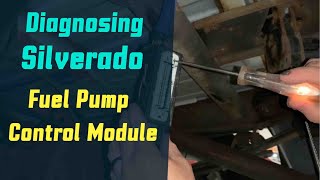
- Chevrolet Silverado 2500/3500 HD (2013-2016) — Highly prone to FPCM failure due to frame-rail corrosion. TSB PIT5212B notes this code on dual fuel tank models, often requiring a software update or redesigned module.
- GMC Sierra 2500/3500 HD (2013-2016) — Shares the Silverado platform. Diagnosis must focus on the FPCM and its connector before considering the fuel pump.
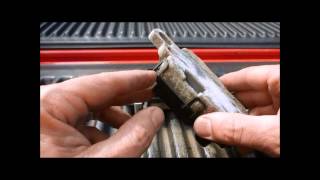
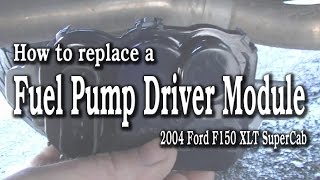
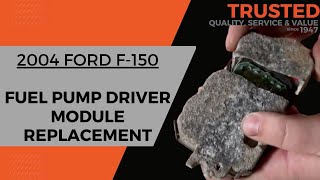
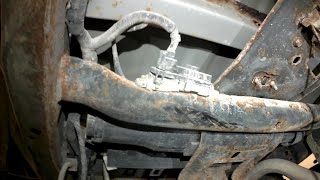
- Ford F-150 (2011-2018) — The Fuel Pump Driver Module (FPDM) mounts on the frame crossmember near the spare tire, making it highly vulnerable to corrosion. Replacement requires using spacers for airflow.
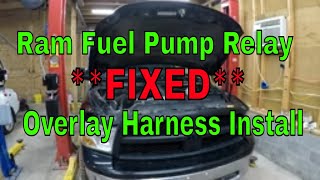
- Dodge / Ram 1500/2500/3500 (2010-2018) — Issues trace to the fuel pump relay inside the Totally Integrated Power Module (TIPM). A TIPM relay bypass cable is the standard, cost-effective repair.
- BMW 3-Series (E90) (2005-2013) — Appears on diesel models (320d), pointing to the EKP fuel pump control module located under the rear seat.
- Hyundai Elantra (2011-2016) — Triggered by failures in the fuel pump assembly's electrical circuit or a faulty fuel pump relay.
- Subaru Outback / Forester (2010-2014) — Caused by a faulty fuel pump controller or wiring harness corrosion under the rear cargo area trim.
- Volkswagen Jetta/Golf/Tiguan (2008-2015) — FPCM is located under the rear seat bench. Spilled liquids or open windows cause moisture damage to the module.
Manufacturer-Specific Notes
- General Motors (Chevrolet/GMC): The frame-mounted FPCM is a notorious failure point. GM issued safety recalls (N212332040, N252516900) for FPCM failures on 2021-2023 vehicles. Always inspect the FPCM connector for green/white corrosion.
- Ford: The FPDM's location on the exterior frame rail guarantees corrosion. When replacing, you must use longer bolts and spacers (included in Dorman kits) to create an air gap between the aluminum module and steel frame.
- Dodge / Ram / Chrysler: The fuel pump relay is integrated into the non-serviceable TIPM. FCA issued recall 14V-530 for some SUVs to install an external bypass. For Ram trucks, installing an aftermarket TIPM bypass kit is the permanent fix.
- Volkswagen / Audi: The FPCM sits under the rear seat. Spilled drinks or rain from open windows seep down and destroy the module. Lift the rear seat cushion and inspect for liquid damage.
Real Owner Stories
2005 Ford F-150 with 150K miles
Truck stalled at low speeds and refused to start. Check Engine Light showed P2634.
What they tried:
- Assumed the fuel pump was dead.
- Checked forums and inspected the Fuel Pump Driver Module (FPDM) first.
Outcome: The FPDM above the spare tire was severely corroded and cracked in half. Replaced it with a Dorman 590-001 kit including spacers. The truck started immediately. Total cost: $70 DIY.
Lesson: On Ford trucks, inspect the FPDM for corrosion before touching the fuel pump. Using spacers is critical to prevent repeat failure.
2013 Chevy Silverado 2500HD
Truck died on the highway. Codes U0109 (Lost Communication with FPCM) and P2634 present.
What they tried:
- Suspected a bad main computer (ECM).
- Shop inspected the frame-mounted FPCM.
Outcome: The FPCM was heavily corroded from road salt, and the connector was full of green powder. Replacing the FPCM and cleaning the connector resolved both codes.
Lesson: A U-code alongside P2634 points directly to a module failure. On GM trucks, the FPCM is the primary suspect.
2011 Dodge Ram 1500
Intermittent no-start and stalling. Code P2634 stored.
What they tried:
- Swapped the horn relay, problem persisted.
- Replaced the fuel pump, code returned in a week.
Outcome: The internal fuel pump relay inside the TIPM failed. Installed an external TIPM bypass cable (Dorman 902-303) for $50, permanently fixing the issue without replacing the $1000 TIPM.
Lesson: Don't guess on Dodge/Ram vehicles. The internal TIPM relay is a known failure point; use a bypass kit before replacing expensive parts.
How to Prevent This Code From Triggering
- Apply dielectric grease to exposed connectors (Every 2 years) — Filling the FPCM socket with dielectric grease seals out moisture and salt, preventing pin corrosion and shorts.
- Install FPDM/FPCM with spacers (When replacing a corroded module) — Creating an air gap between the aluminum module and steel frame stops galvanic corrosion and allows moisture to dry.
- Clean underbody grounds (Every 3 years in Salt Belt regions) — Sanding the frame ground connection to bare metal prevents high resistance that triggers false high-voltage codes.
- Wash the vehicle's undercarriage (Monthly during winter) — Removes corrosive road salt from frame-mounted electrical modules and wiring harnesses.
Frequently Asked Questions
What is the most common misdiagnosis for P2634?
The most common mistake is replacing the $400+ fuel pump assembly without diagnosing the electrical circuit first. P2634 is an electrical code, meaning the fault usually lies in a corroded wire, a bad ground, a $30 relay, or the control module.
Can I just clear the P2634 code and keep driving?
You can clear the code, but it will return immediately. This code indicates a hard electrical short, not a temporary glitch. Ignoring it guarantees you will be stranded when the fuel pump stops completely.
My scanner shows U-codes along with P2634. What does that mean?
Seeing CAN bus codes (e.g., U0109) alongside P2634 strongly suggests the root cause is a failing module (like the FPCM) disrupting network communication. Diagnose the communication issue first before testing the fuel pump power circuit.
Is P2634 a serious problem?
Yes, it is an urgent safety issue. A fault in the fuel pump circuit causes the engine to stall unpredictably at any speed. Diagnose and repair it immediately.
What's the difference between Fuel Pump 'A' and 'B'?
In modern vehicles, 'A' refers to the primary fuel pump, while 'B' refers to a secondary pump, a diesel lift pump, or a secondary control circuit. P2634 specifically points to a high-voltage short in this secondary circuit.
Why did the code appear after I drove in the rain or washed my car?
This confirms water entered a damaged connector or a corroded, externally-mounted Fuel Pump Control Module. The water bridges the connections, creating a short circuit the PCM detects as high voltage.
Can a bad battery cause a P2634 code?
A weak battery causes 'low' voltage codes, not high ones. However, a failing alternator over-charging the system (producing >15 volts) triggers a 'high' circuit code like P2634 as a secondary effect.
Key Takeaways
- Code P2634 indicates a high-voltage short in the secondary fuel pump's control circuit, causing immediate and unpredictable engine stalling.
- Do not drive the vehicle; a sudden stall at highway speeds or in an intersection poses a severe safety risk and guarantees a tow.
- Inspect the frame-mounted Fuel Pump Control Module (FPCM) and its ground wire first, as corrosion here causes over 60% of P2634 faults.
- Avoid replacing the $400 fuel pump assembly until you have tested the $30 fuel pump relay and verified the control circuit voltage with a multimeter.
Helpful Videos


The information in this article is provided for general reference and educational purposes only. Vehicle specifications, procedures, and part compatibility can vary by production date, trim level, and region. Always consult your vehicle's factory service manual and verify part numbers before purchasing or performing repairs. Safety-critical components such as airbags, seat belts, and braking systems should be installed by a qualified professional.
- 🎬 Helpful Videos
- What Does P2634 Mean?
- Can I Drive With P2634?
- Common Causes
- Symptoms
- Diagnostic Flowchart
- Common Fixes & Costs
- DIY vs Professional
- Used vs. New Parts: Buying Guide
- What Happens If You Wait — Timeline
- Cost of Not Fixing It
- Diagnosis Steps
- When This Code Triggers (Freeze-Frame Conditions)
- Related Codes
- Climate & Environmental Factors
- How to Talk to a Mechanic About This Code
- Where to Take It: Dealer vs Independent vs Chain
- When to Walk Away From the Repair
- What Scan Tool You Need for This Code
- How to Clear the Code After You Fix It
- Will This Fail Emissions / State Inspection?
- Most Commonly Affected Vehicles
- Manufacturer-Specific Notes
- Real Owner Stories
- 2005 Ford F-150 with 150K miles
- 2013 Chevy Silverado 2500HD
- 2011 Dodge Ram 1500
- How to Prevent This Code From Triggering
- Frequently Asked Questions
- What is the most common misdiagnosis for P2634?
- Can I just clear the P2634 code and keep driving?
- My scanner shows U-codes along with P2634. What does that mean?
- Is P2634 a serious problem?
- What's the difference between Fuel Pump 'A' and 'B'?
- Why did the code appear after I drove in the rain or washed my car?
- Can a bad battery cause a P2634 code?
- Key Takeaways
- 🎟️ Get 5% Off