

P2610 on 2014-2016 Toyota Prius V: Engine Off Timer Performance Causes and Fixes
On a 2014-2016 Prius V, code P2610 is almost always caused by a known software glitch in the engine computer. The official fix is a software update from a Toyota dealer, detailed in Technical Service Bulletin T-SB-0087-16. This issue also affects the Lexus CT200h. Before heading to the dealer, it's wise to first test your 12V auxiliary battery, as low voltage can also trigger this code.
- P2610 on your Prius V is most likely a software bug, not a failed part.
- The official fix is a dealer-installed software update covered by TSB T-SB-0087-16.
- Before paying for a diagnosis, ensure your 12V auxiliary battery is fully charged and healthy, as low voltage can also cause this code.
- Do not replace the Engine Control Module (ECM); the problem is the software inside it, not the hardware itself.
- The repair may be covered for free if your vehicle is still within the 8-year/80,000-mile Federal Emission Warranty.
What's Unique About the 2014-2016 Toyota PRIUS V
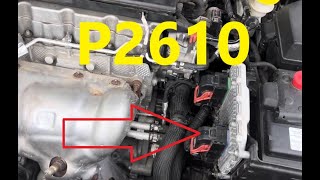
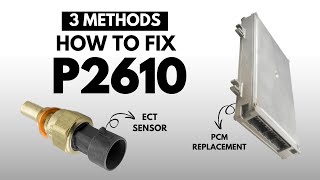
What's unique about the 2014-2016 Prius V is that Toyota officially acknowledged this code is typically caused by a software bug, not a hardware failure. The company issued a Technical Service Bulletin (TSB) for dealers with a specific software update to correct the faulty logic in the Engine Control Module (ECM). 🎬 Watch: A mechanic explains the P2610 code and Toyota's fix. This makes diagnosis much more straightforward compared to other vehicles where P2610 might point to a wider range of potential hardware issues. The same issue and TSB-based fix exist for its platform mate, the 2014-2016 Lexus CT200h.
Diagnostic Flowchart
Tap your situation to follow the diagnostic path that matches what you're seeing on this vehicle.
Symptoms You May Notice
- Check Engine Light is on
- Inability to pass an emissions test because readiness monitors will not set
- An audible 'whirring' or 'modem-like' sound from a small pump under the hood after shut-off, which can indicate a weak 12V battery struggling to maintain power.
- Replacing the Engine Control Module (ECM). Toyota's Technical Service Bulletin T-SB-0087-16 explicitly states that the ECM should not be replaced as part of the standard repair, as the issue is a software glitch, not a hardware failure.
Most Likely Causes
- Outdated Engine Control Module (ECM) Software 🔴 High Probability Toyota identified a logic flaw in the original ECM software for these specific model years and issued TSB T-SB-0087-16 to address it.
How to confirm: A Toyota dealer or a qualified shop can check the vehicle's current calibration ID against the updated IDs listed in TSB T-SB-0087-16. For a 2014 model, the old IDs are 34751000 or 34751100, and the new ID is 34751200. For 2015-2016 models, the old ID is 34758000, and the new ID is 34758100. An "Authorized Modifications" label may also be present in the engine bay if the update has already been performed.
Typical fix: Reprogramming (reflashing) the ECM with the updated software version provided by Toyota. The TSB explicitly states the ECM should NOT be replaced for this issue. The procedure takes approximately 0.4 labor hours.
Est. part cost: $0 - Weak or Failing 12V Auxiliary Battery 🟡 Medium Probability Hybrid vehicles like the Prius are sensitive to the state of their 12V battery. Low or unstable voltage during startup or shutdown can cause various electronic modules, including the ECM, to behave erratically and set spurious codes. Jump-starting the vehicle with a dead battery has been reported by owners to trigger this specific code.
How to confirm: Test the 12V battery with a multimeter or an electronic battery tester. A healthy, resting battery should be at approximately 12.6 volts. A load test is the most definitive way to confirm its health. Some auto parts stores offer this service for free.
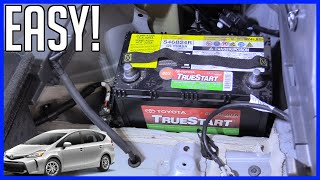
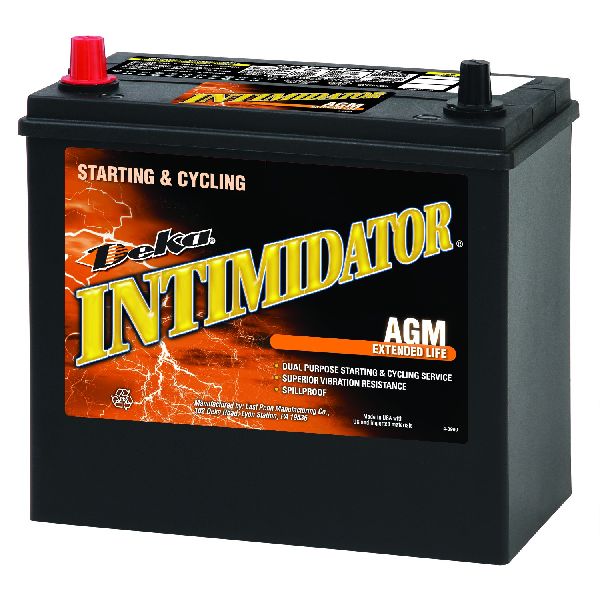
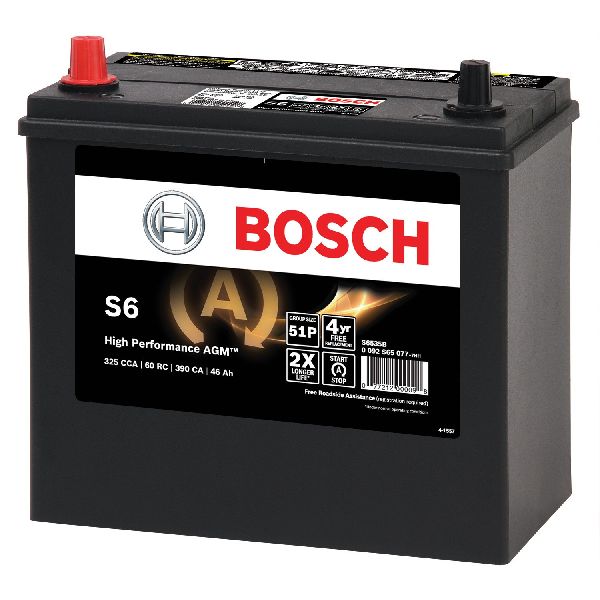
Typical fix: Replace the 12V auxiliary battery if it fails testing. The correct type is an AGM (Absorbent Glass Mat) battery, group size S46B24R.
Est. part cost: $180-$300
Rare But Worth Checking
- Faulty Engine Control Module (ECM): This is a rare hardware failure of the timer circuit inside the ECM. It should only be considered after the software has been updated and the 12V battery has been confirmed to be good. The TSB specifically warns against replacing the ECM as the first step. In older Prius models (Gen 2), a P2610 was more likely to be a true ECM failure, but for the 2014-2016 Prius V, it is almost always the software.
- ECM Power or Ground Circuit Issue: A corroded or loose wire providing power or ground to the ECM can cause intermittent issues, including timer performance problems. This is unlikely but worth investigating if the primary fixes do not resolve the code. A full diagnostic would involve checking for proper voltage and ground at the ECM connector pins per the service manual.
Diagnosis Steps
- Read the code with an OBD-II scanner to confirm P2610 is present.
- Perform a health test on the 12V auxiliary battery. Ensure it holds a proper charge (approx. 12.6V at rest) and passes a load test. Replace if weak or failing.
- If the battery is good, contact a Toyota dealership and reference TSB T-SB-0087-16. Ask them to verify if your vehicle's ECM has the latest software calibration by checking the Calibration ID.
- If the software is outdated, have the dealer perform the ECM reflash procedure outlined in the TSB. This repair is covered under the Federal Emission Warranty for 96 months or 80,000 miles from the vehicle's in-service date, whichever comes first.
- During the reflash, the technician must use a power supply to maintain battery voltage at a constant 13.5 volts.
- After the update, the technician should affix an 'Authorized Modifications' label (P/N 00451-00001-LBL) in the engine bay.
- Clear the code and perform a drive cycle to see if the code returns.
- If the code persists after the software update with a known-good battery, a more in-depth diagnosis of the ECM's wiring and the module itself may be necessary.
Parts You'll Likely Need
- 12V Auxiliary Battery
(OEM #28800-21171 (OEM), 00544-21171-325 (Toyota TrueStart), S46B24R (Group Size))— A weak 12V battery is a common source of various electrical codes on a Prius and can trigger P2610. It should be tested before pursuing more complex repairs.
Trusted brands: Toyota TrueStart, Optima, Bosch, Duralast
OEM price range: $250-$350
Aftermarket price range: $180-$300
Technical Service Bulletins (TSBs) & Recalls
- T-SB-0087-16: Specifically for 2014-2016 Prius V models, this bulletin identifies DTC P2610 and provides the repair procedure, which is to update the ECM software. It specifies new calibration IDs and a 0.4-hour labor time.
- T-SB-0071-16: A related bulletin for 2014-2015 standard Prius and Prius PHV models with the same P2610 code and a similar software update fix, confirming the pattern for this issue across the Prius family.
- L-SB-0039-16: A bulletin for the 2014-2016 Lexus CT200h, a platform mate using the same 2ZR-FXE engine, which details the same P2610 code and software update repair.
Platform-Specific Known Issues
- A known software glitch in the Engine Control Module is the most common cause of P2610 on this vehicle, as documented by Toyota in TSB T-SB-0087-16.
- The issue is not isolated to the Prius V; its Lexus platform-mate, the CT200h, suffers from the same software defect and has a corresponding TSB (L-SB-0039-16) for the fix.
Mechanic-Grade Diagnostic Values
- ECM Keep-Alive Power Source Voltage — expected: Battery positive voltage (approx. 12.6V) should be present at all times, even with the ignition off.. Failure: Voltage below 12.0V or no voltage indicates a problem with the circuit, fuse (ECU-B), or battery.
- Voltage at ECM Power Supply Pins (+B, IGSW) — expected: Should be above 12.2V with the engine off and rise to ~13.5V-14.5V with the vehicle in 'Ready' mode (engine running or not).. Failure: Low or unstable voltage points to a failing 12V battery, alternator issue, or a problem in the power supply relay circuits (EFI M Relay, IG2 Relay).
Scan Tool Commands That Help
- Toyota Techstream: ECU Reprogramming (Calibration Update) — This is the primary repair procedure outlined in TSB T-SB-0087-16 to fix the software logic flaw causing P2610.
- Toyota Techstream: Read Calibration ID — Used before reprogramming to verify if the currently installed software is outdated compared to the new version specified in the TSB.
- Professional Scan Tool (e.g., Techstream): Live Data Monitoring of 'Engine Off Timer' — To visually confirm the timer is not functioning correctly after the engine is shut down. A deviation from the expected countdown confirms the fault.
Wiring & Ground Locations
- Engine Control Module (ECM) — In the engine compartment, on the left side (driver's side in LHD vehicles).. This is the component setting the code. Its power, ground, and physical integrity are critical. Access is needed for software updates and electrical testing.
- ECM Main Ground Points — There are several key ground wire clusters bolted directly to the engine block and transmission housing.. A poor ground connection at these points can cause erratic ECM behavior, including timer faults. This is a crucial check if the TSB and battery replacement do not solve the issue.
- ECM Keep-Alive Power (BATT terminal) — This is a specific pin on the ECM connector that receives constant power from the 12V battery via the ECU-B fuse.. This circuit maintains the ECM's memory, including the data for the engine-off timer. A loss of this constant power, even intermittently, will cause a P2610 or related P0603 KAM error.
Real Owner Repair Stories
- Reddit user on r/ToyotaAvalon (2015 Toyota Avalon (shares similar electronics)) — Check Engine Light with code P2610 appeared after the car was parked for 20 minutes.
❌ Tried (didn't work) User confirmed battery voltage was fine and there were no blown fuses.
✅ What actually fixed it The user noted the only modification was a recently installed and frequently used aftermarket remote start system. The strong implication from the user and community feedback was that the remote starter was interfering with the ECM's timer logic. The immediate fix was to clear the code and monitor, suspecting the remote start as the root cause.
OEM Part Supersession History
34751000, 34751100→34751200— Software logic update to correct timer performance issue.
Heads up: These are software calibration IDs for the ECM, not physical parts. The new ID is for 2014 models only.34758000→34758100— Software logic update to correct timer performance issue.
Heads up: These are software calibration IDs for the ECM, not physical parts. The new ID is for 2015-2016 models only.
Model Year Variations Within This Range
- 2014 vs. 2015-2016: The ECM software calibration IDs required to fix the P2610 issue are different between the 2014 model year and the 2015-2016 model years, as specified in TSB T-SB-0087-16.
Helpful Videos
We Have This Part in Stock


The information in this article is provided for general reference and educational purposes only. Vehicle specifications, procedures, and part compatibility can vary by production date, trim level, and region. Always consult your vehicle's factory service manual and verify part numbers before purchasing or performing repairs. Safety-critical components such as airbags, seat belts, and braking systems should be installed by a qualified professional.
- Toyota PRIUS V:
- 🎬 Helpful Videos
- 🛍️ Shop This Part
- What's Unique About the 2014-2016 Toyota PRIUS V
- Diagnostic Flowchart
- Symptoms You May Notice
- Most Likely Causes
- Rare But Worth Checking
- Diagnosis Steps
- Parts You'll Likely Need
- Technical Service Bulletins (TSBs) & Recalls
- Platform-Specific Known Issues
- Mechanic-Grade Diagnostic Values
- Scan Tool Commands That Help
- Wiring & Ground Locations
- Real Owner Repair Stories
- OEM Part Supersession History
- Model Year Variations Within This Range
- 🎟️ Get 5% Off