

P2610 on 2014-2017 Toyota Corolla: Engine Off Timer Performance Fixes
On a 2014-2017 Toyota Corolla, code P2610 is almost always caused by outdated engine computer software. The fix is a software update performed by a Toyota dealer, which may be covered under the 96-month/80,000-mile federal emissions warranty.
- P2610 on a 2014-2017 Corolla is almost certainly a software issue, not a hardware failure.
- The first step is to contact a Toyota dealer and inquire about TSBs T-SB-0080-16 and T-SB-0336-17.
- This repair may be free if your vehicle is still within the 8-year/80,000-mile federal emissions warranty.
- Do not replace the ECM unless the official software update has been performed and fails to fix the problem.
- The car is safe to drive, but you will not be able to pass an emissions test until the code is resolved.
What's Unique About the 2014-2017 Toyota COROLLA
For the 11th generation Toyota Corolla (2014-2017), this code is a widely recognized issue addressed directly by Toyota. The manufacturer issued multiple Technical Service Bulletins (TSBs) stating that the original ECM software logic was too sensitive and could falsely trigger the P2610 code. This is not a sign of a failing mechanical part, but rather a correctable software glitch specific to this and other Toyota models 🎬 See how Toyota's software glitch affects different models. of the era.
Diagnostic Flowchart
Tap your situation to follow the diagnostic path that matches what you're seeing on this vehicle.
Symptoms You May Notice
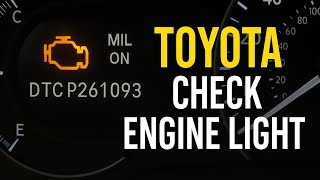
- Check Engine Light (Malfunction Indicator Lamp or MIL) is on.
- Inability to pass a state emissions inspection.
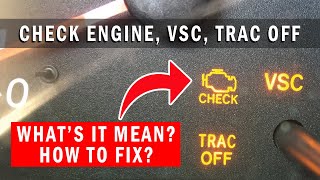
- The 'Trac Off' light may also illuminate, as Toyota's system often disables traction/stability control when any check engine light is present.
- Replacing the Engine Control Module (ECM)
- Replacing the Engine Coolant Temperature (ECT) sensor
Most Likely Causes
- Outdated Engine Control Module (ECM) Software 🔴 High Probability Toyota explicitly identified this as a software logic issue and released TSBs T-SB-0080-16 and T-SB-0336-17 to correct it. The original software was overly sensitive in monitoring the ECM's internal clock.
How to confirm: A Toyota dealer or a shop with a Toyota Techstream scan tool can check the current software calibration ID on the ECM and compare it to the updated versions listed in the TSBs. The dealer can also check for an 'Authorized Modifications Label' under the hood, which indicates a previous reflash.
Typical fix: Reprogramming (reflashing) the ECM with the updated software version provided by Toyota. The TSBs state the ECM should NOT be replaced for this issue. The repair is covered under the Federal Emission Warranty (96 months/80,000 miles).
Est. part cost: $0 - Weak or Failing 12V Battery ⚪ Low Probability While the TSB is the most likely cause, a weak battery or poor connections can cause voltage anomalies that disrupt the ECM's internal processes, including the timer. This can happen on any modern vehicle, but it's a common secondary suspect for this code if the software is already updated.
How to confirm: Test the battery voltage with the engine off (should be ~12.4-12.6V) and while running (should be ~13.5-14.5V). Perform a load test to check the battery's health. Even if it tests fine, if the battery is over 4-5 years old, it can be a source of intermittent issues.
Typical fix: Replace the 12V battery and clean the terminal connections. In some forum discussions, owners reported that simply disconnecting the battery for 15-30 minutes to reset all modules resolved the issue temporarily, pointing towards a power supply glitch.
Est. part cost: $150-$300
Rare But Worth Checking
- Faulty Engine Control Module (ECM): This is very rare and should only be considered after the TSB software update has been performed and all power/ground circuits to the ECM have been verified. The TSBs specifically advise against replacing the ECM as a first step. A replacement can be very expensive, with forum users reporting costs over $3,000 at a dealership for other models.
- ECM Power or Ground Circuit Issue: An intermittent loss of power or a poor ground connection to the ECM can reset its internal clock and cause this fault. This would typically be investigated if the software update does not resolve the code and the battery is confirmed to be healthy.
- Aftermarket Remote Starter: In some cases, an aftermarket remote starter can interfere with the ECM's sleep and wake-up cycles, causing the timer to report an error. One owner of a 2015 Avalon with a remote start reported this code appearing.
Diagnosis Steps
- Scan the vehicle for trouble codes to confirm P2610 is present. Note any other codes, like C1241, which may point to a battery issue.
- Check for Toyota Technical Service Bulletins (TSBs) related to P2610. Specifically, reference T-SB-0080-16 and T-SB-0336-17.
- Contact a Toyota dealership with your VIN. Ask the service advisor to check if the campaigns associated with T-SB-0080-16 or T-SB-0336-17 are open for your vehicle or have already been completed.
- If the software is outdated, have the dealer or a qualified shop perform the ECM reflash procedure. Confirm if this is covered under the 8-year/80,000-mile federal emissions warranty.
- If the code returns after the software update, or if the software is already current, perform a comprehensive test of the 12V battery, including a load test. A simple voltage check may not be sufficient.
- If the battery and software are good, inspect the ECM's power and ground connections for any signs of corrosion or damage. Also, check battery terminals and main chassis grounds.
- If you have an aftermarket remote starter, consider that it may be the cause. You may need to have it professionally inspected or removed to rule it out.
- Only consider replacing the ECM as a last resort if all other steps fail to resolve the issue.
Parts You'll Likely Need
- Engine Control Module (ECM) Reprogramming — This is not a physical part, but a software update service. It is the official fix recommended by Toyota in TSBs T-SB-0080-16 and T-SB-0336-17 to correct the sensitive logic that causes the P2610 code.
OEM price range: $100-$250 (if not covered by warranty)
Aftermarket price range: N/A - Engine Control Module (ECM)
(OEM #89661-0Z643 (supersedes 89661-0Z641, 89661-0Z640 for some 2015-2017 models), 89661-0ZB64 (supersedes 89661-0ZB60, 89661-0ZB61, 89661-0ZB62, 89661-0ZB63 for some 2014-2015 models))— This part is rarely the cause and should only be replaced if the official software update fails and all wiring has been checked. The TSBs specifically state NOT to replace the ECM as part of the standard repair. Part numbers vary by model year, transmission, and engine type.
Trusted brands: Denso (OEM), Delphi (OEM)
OEM price range: $800-$1200
Aftermarket price range: $300-$600 (Remanufactured)
Related Codes That Often Appear With This One
- C1241: Low or High Power Supply Voltage (Often appears with P2610 when a weak battery is the underlying cause)
Technical Service Bulletins (TSBs) & Recalls
- T-SB-0336-17: Expands the P2610 software update to include 2017-2018 models, confirming the fix for the entire 2014-2017 range. It also lists other affected Toyota models like the RAV4, Yaris, and Prius C.
- T-SB-0080-16: Specifically calls out 2014-2016 Corolla models for exhibiting a MIL ON with DTC P2610 and provides a software update to fix it.
Platform-Specific Known Issues
- Toyota issued TSB T-SB-0080-16 for 2014-2016 Corollas and TSB T-SB-0336-17 which expanded coverage to 2017 models. Both bulletins acknowledge that the original ECM logic can incorrectly set code P2610 and provide a software update as the solution.
- This repair is covered under the Toyota Federal Emission Warranty, which is in effect for 96 months (8 years) or 80,000 miles from the vehicle's original in-service date, whichever comes first.
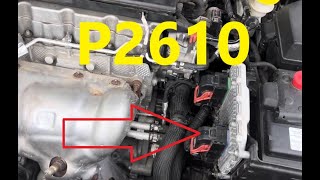
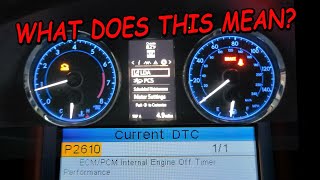
- Owner experiences on forums confirm that visiting a dealer for the software reflash is the most common and successful repair. A YouTube video shows an owner of a 2017 Corolla with the P2610 code, who was able to clear it with a scan tool, but it returned, indicating the need for the underlying software fix.
Mechanic-Grade Diagnostic Values
- ECM Reprogramming Power Supply Voltage — expected: 13.5V. Failure: Voltage outside this level during reprogramming can cause the ECM to fail.
- ECM Ground Circuit Resistance — expected: Below 1 Ω. Failure: Resistance higher than 1 Ω indicates a poor ground connection, which can cause intermittent electronic issues.
- ECM IGSW Pin Voltage — expected: 11V to 14V. Failure: Voltage below 11V with the key on indicates a problem in the power supply circuit to the ECM.
Scan Tool Commands That Help
- Toyota Techstream: Calibration ID Check — This is the primary diagnostic step after confirming DTC P2610 is present. The technician must compare the vehicle's current Calibration ID, found using this function, to the 'New Calibration ID' listed in the relevant TSB to determine if the software update is required.
Wiring & Ground Locations
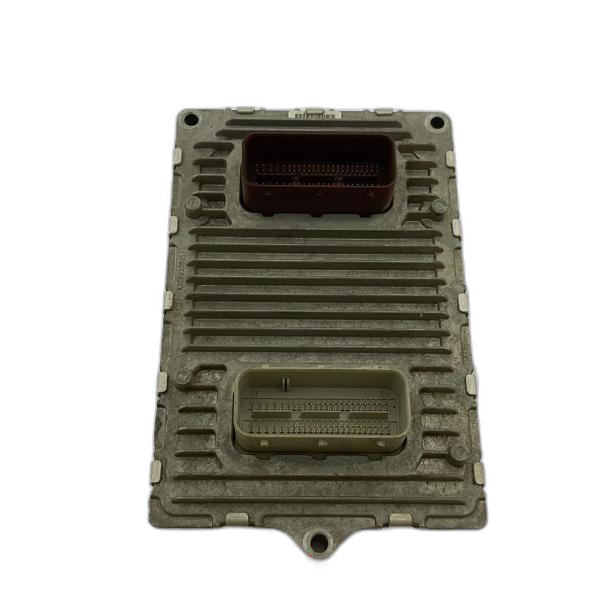
- Engine Control Module (ECM) — In the engine bay, located directly behind the 12V battery.. This is the component that stores the faulty software and requires reprogramming or, in very rare cases, testing of its power and ground connections.
- ECM Ground Pin (E1) — This is a specific pin on the ECM connector, often labeled B31-109 (E1) in wiring diagrams. It serves as the main ground for the module.. If the P2610 code returns after a software update, testing the resistance between this pin's wire and the chassis ground is a key step to rule out a bad ground connection, which could disrupt the ECM's internal timer.
OEM Part Supersession History
30Z73000 or 30Z73100 (Calibration ID)→30Z73200 (Calibration ID)— Corrected overly sensitive logic for the engine off timer.
Heads up: These are software calibration identifiers, not physical part numbers. Flashing the wrong calibration file for the vehicle's specific year, engine, and transmission can render the ECM inoperable. The correct new ID must be chosen from the TSB table based on the vehicle's exact configuration.30Z59000 (Calibration ID)→30Z59100 (Calibration ID)— Corrected overly sensitive logic for the engine off timer.
Heads up: Applies specifically to 2015-2016 Corolla with 2ZR-FE engine and CVT-Sequential transmission. Using this on a different configuration would be incorrect.
Model Year Variations Within This Range
- 2014-2016: These model years were originally covered by TSB T-SB-0080-16, which provided the initial software update solution.
- 2017: The 2017 model year was added to the fix under the superseding bulletin, T-SB-0336-17. While the root cause is the same, the specific calibration files and part numbers referenced for the 2017 model are different from the earlier years.
Helpful Videos
We Have This Part in Stock



The information in this article is provided for general reference and educational purposes only. Vehicle specifications, procedures, and part compatibility can vary by production date, trim level, and region. Always consult your vehicle's factory service manual and verify part numbers before purchasing or performing repairs. Safety-critical components such as airbags, seat belts, and braking systems should be installed by a qualified professional.
- Toyota COROLLA:
- 🎬 Helpful Videos
- 🛍️ Shop This Part
- What's Unique About the 2014-2017 Toyota COROLLA
- Diagnostic Flowchart
- Symptoms You May Notice
- Most Likely Causes
- Rare But Worth Checking
- Diagnosis Steps
- Parts You'll Likely Need
- Related Codes That Often Appear With This One
- Technical Service Bulletins (TSBs) & Recalls
- Platform-Specific Known Issues
- Mechanic-Grade Diagnostic Values
- Scan Tool Commands That Help
- Wiring & Ground Locations
- OEM Part Supersession History
- Model Year Variations Within This Range
- 🎟️ Get 5% Off