

P2610 on 2015-2017 Toyota Camry: Engine Off Timer Fixes & TSB Details
On a 2015-2017 Toyota Camry, code P2610 is almost always caused by a software glitch in the Engine Control Module (ECM). The fix is a software update from a Toyota dealer, which may be covered by the 96-month/80,000-mile federal emissions warranty. Before paying for any repair, check if this warranty applies to your vehicle's in-service date. If out of warranty, expect to pay $100-$250 for the update.
- For a 2015-2017 Camry, P2610 is most likely a software issue, not a hardware failure.
- Before replacing any parts, especially the battery, verify if Toyota's software update (TSB T-SB-0276-17 or T-SB-0230-17) has been performed.
- The repair may be covered free of charge under Toyota's 96-month/80,000-mile Federal Emission Warranty. Check your vehicle's in-service date.
- This code will cause an automatic failure on an emissions test, so it must be resolved to stay compliant.
- The fix requires a trip to a dealer or a well-equipped independent shop with Toyota-specific tools; it is not a DIY repair.
What's Unique About the 2015-2017 Toyota CAMRY
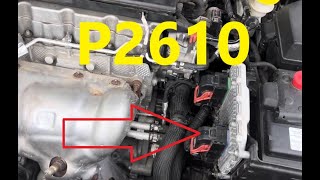
For this specific generation of Toyota Camry, the P2610 code is a widely recognized issue addressed directly by Toyota. The manufacturer issued Technical Service Bulletins (TSBs) T-SB-0276-17 and T-SB-0230-17, acknowledging that the original ECM software logic was too sensitive and could falsely trigger the code. Unlike many other vehicles where this code might point to a bad battery or a failing computer, the problem on these Camrys is most often solved with a simple software reflash, making it a unique, well-documented platform issue. The TSB explicitly states 🎬 Watch: A detailed breakdown of the Toyota P2610 software fix. the ECM should NOT be replaced as part of this repair procedure.
Diagnostic Flowchart
Tap your situation to follow the diagnostic path that matches what you're seeing on this vehicle.
Symptoms You May Notice
- Check Engine Light is on.
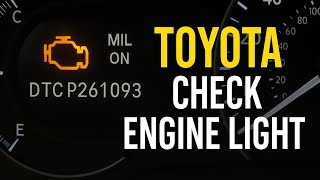
- Inability to pass an emissions/smog test. 🎬 See this quick explanation of the P2610 engine timer code.
- No noticeable difference in how the vehicle drives in most cases.
- Rare reports of brief hesitation on startup or rough idling.
- Replacing the battery without first checking if the ECM software update has been performed. Many owners replace a perfectly good battery when the root cause is the software glitch.
- Replacing the Engine Control Module (ECM) instead of reprogramming it. Toyota's TSB specifically warns against replacing the module for this issue.
Most Likely Causes
- Outdated Engine Control Module (ECM) Software 🔴 High Probability Toyota officially recognized this as a software logic issue and issued TSBs T-SB-0276-17 and T-SB-0230-17 to correct it. The original software was too sensitive and could misinterpret normal engine-off conditions.
How to confirm: A Toyota dealership or a shop with Techstream can check the current software calibration ID against the updated versions listed in the TSBs. For a 2015 Camry HV, the old ID is 306F7000 and the new ID is 306F7100. They can also check for an 'Authorized Modifications' sticker in the engine bay indicating the update was already performed.
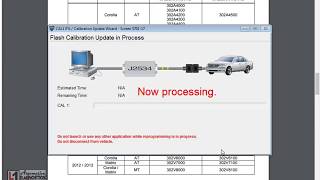
Typical fix: Reprogramming (reflashing) the ECM with the latest Toyota software. This is a 0.4-hour procedure according to the TSB.
Est. part cost: $0 - Weak or Failing 12V Battery 🟡 Medium Probability A battery with low voltage or failing cells can disrupt the constant power supply the ECM needs to maintain its internal clock and memory when the vehicle is off. This can cause the timer to lose track, especially after sitting for a day or two.
How to confirm: Perform a load test on the battery. A simple voltage check is not sufficient. Most auto parts stores can do this for free. Voltage should be above 12.2V with the engine off.
Typical fix: Replace the 12V battery.
Est. part cost: $150-$300
Rare But Worth Checking
- Failing Engine Control Module (ECM): This is very uncommon for this specific issue. The TSB explicitly states the ECM should not be replaced for this repair. An ECM should only be suspected if the software has been updated, the battery is confirmed to be good, and the code still returns. An internal hardware fault in the ECM's timer circuit can cause this.
- Aftermarket Remote Starter: An owner of a 2015 Avalon (a platform mate) with 40k miles reported the P2610 code appeared after frequent use of a newly installed aftermarket remote starter, suggesting it may interfere with the ECM's engine-off detection logic.
Diagnosis Steps
- Confirm the P2610 code is present using an OBD-II scanner.
- Check for an 'Authorized Modifications Label' under the hood. This sticker indicates if a TSB-related software update has already been performed.
- If no label is present, contact a Toyota dealer or qualified shop to verify the ECM's current calibration ID using Toyota Techstream software. Ask them to check it against TSBs T-SB-0276-17 and T-SB-0230-17.
- If the software is outdated, have the ECM reprogrammed. This is the most likely fix and may be covered under the 96-month/80,000-mile Federal Emission Warranty.
- If the software is already up-to-date but the code persists, perform a load test on the 12V battery. Ensure terminals are clean and tight.
- If the battery passes the load test, inspect the battery terminals and main ECM power/ground connections for corrosion or looseness.
- If an aftermarket remote starter is installed, consider its potential interference as a cause.
- If all the above checks out, the issue may be a rare internal failure of the ECM itself, which would require replacement.
Parts You'll Likely Need
- ECM Software Update (Service)
(OEM #EG1645 (Labor Op Code from TSB))— This is not a physical part, but a service. It is the official fix from Toyota for the most common cause of this code on this vehicle.
OEM price range: $100-$250
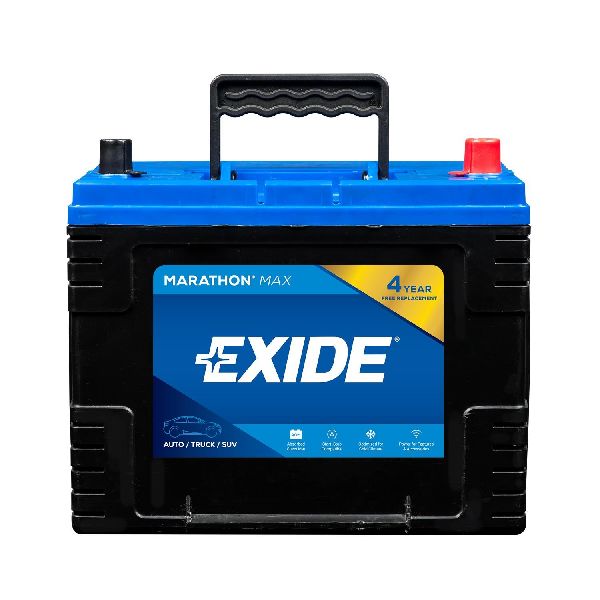
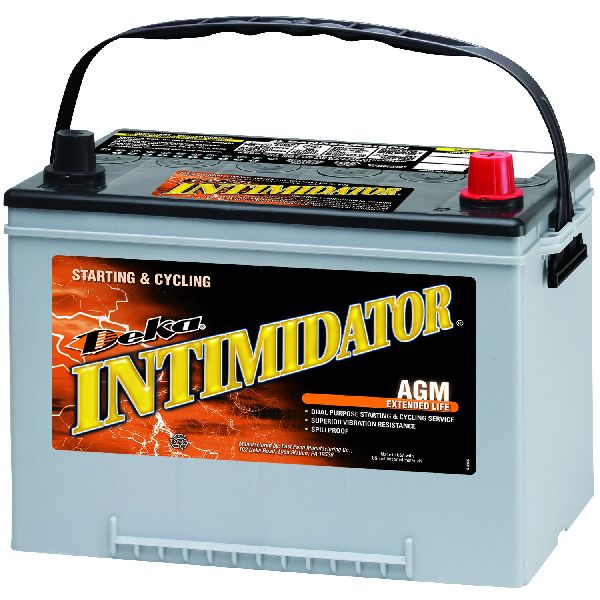
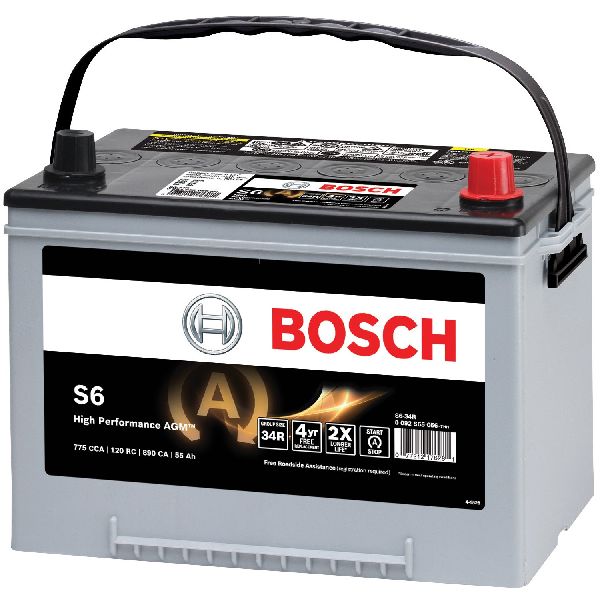
Aftermarket price range: N/A - 12V Automotive Battery
(OEM #28800-28100 (Example OEM for 2016 Camry))— A weak battery is the second most likely cause, as it can disrupt the ECM's memory and internal clock when the car is off.
Trusted brands: Toyota TrueStart, Interstate, DieHard, Duralast
OEM price range: $200-$350
Aftermarket price range: $150-$250
Related Codes That Often Appear With This One
- P1604 — P1604 means 'Startability Malfunction'. A real-world owner complaint filed with the NHTSA showed this code appearing alongside P2610, suggesting the ECM's confusion about its status can sometimes affect starting calculations. [OWNER COMPLAINT ODI #11023574]
Technical Service Bulletins (TSBs) & Recalls
- T-SB-0276-17: Addresses a MIL 'ON' condition with DTC P2610 for 2015-2017 Camry (and other models), stating the ECM logic has been modified. Confirms repair is covered under Federal Emission Warranty.
- T-SB-0230-17: Specifically for 2015 Camry HV models, this TSB also notes that ECM logic was modified to reduce the possibility of code P2610 and provides specific old/new calibration IDs (306F7000 -> 306F7100).
- T-SB-0336-17: A related TSB for other Toyota models (like RAV4, Corolla) that shows how widespread this software logic issue was across the Toyota lineup from 2014-2018.
Platform-Specific Known Issues
- A known software logic flaw in the ECM can cause this code to appear, as documented in Toyota TSBs T-SB-0276-17 and T-SB-0230-17.
- The repair is explicitly covered under the Toyota Federal Emission Warranty, which is in effect for 96 months or 80,000 miles from the vehicle's in-service date.
Mechanic-Grade Diagnostic Values
- System Voltage During ECM Reprogramming — expected: 13.5V. Failure: Voltage below 13.5V can cause the reflash to fail and potentially damage the ECM.
Hidden / Shadow Codes Worth Checking
- Freeze Frame Data: While not a hidden code, analyzing the freeze frame data is critical. It records engine conditions (e.g., coolant temp, vehicle speed) when the fault was set, which can help differentiate a software glitch from a potential battery voltage issue on startup. (see via Standard OBD-II Scan Tool with freeze frame capability.)
Scan Tool Commands That Help
- Toyota Techstream: ECM Reprogramming (Flash Calibration) — This is the primary repair step when the existing ECM calibration ID is found to be outdated according to TSBs T-SB-0276-17 or T-SB-0230-17. Requires software version 12.10.018 or later.
Wiring & Ground Locations
- Engine Harness Grounds (2GR-FE V6) — For the V6 engine, there are two primary grounding points from the harness to the chassis. Both originate from the valve covers and attach to the frame/body near the strut towers. A third computer ground bundle attaches directly to the front valve cover on the Camry harness.. While the software TSB is the most common fix, poor grounding can cause a variety of unpredictable electrical issues, including disrupting the ECM's power supply and internal calculations. Verifying these grounds are clean and tight is a valid step if the software fix and battery check do not resolve the code.
When the Usual Fixes Don't Work
- A significant diagnostic conflict exists for code P2610. Generic OBD-II code databases and some repair manuals state that P2610 indicates an internal, non-serviceable ECM problem and that the necessary repair is ECM replacement. However, for the 2015-2017 Toyota Camry, this is incorrect and constitutes a major misdiagnosis. Toyota's own Technical Service Bulletins (e.g., T-SB-0276-17) explicitly state the cause is a software logic flaw and the fix is to reprogram the existing ECM, warning technicians NOT to replace the module. A technician who relies on generic code information instead of vehicle-specific TSBs would perform an expensive and unnecessary replacement, while the simple software update would have fixed the issue.
OEM Part Supersession History
89661-06T20, 89661-06T21→89661-06T22— Revision and consolidation of part for 2015 Camry SE/XSE models.
Heads up: Must match the part number series for the vehicle's specific model year and trim. Using a part from a different series (e.g., 06Nxx on a car requiring 06Txx) will not work.89661-06N10, 89661-06N11→89661-06N12— Revision and consolidation of part for 2016-2017 Camry LE/XLE models.
Heads up: This series is for 2016-2017 models and is not interchangeable with the 2015 model's 89661-06Txx series.
Model Year Variations Within This Range
- 2015 vs 2016-2017: The OEM part numbers for the Engine Control Module (ECM) are different. For example, some 2015 models use the 89661-06Txx series of ECMs, while 2016-2017 models use the 89661-06Nxx series. While the P2610 fault and TSB apply across the range, a physical replacement, if ever needed, would require the correct part for that specific year range.
Helpful Videos
Used OEM Parts in Stock


New Aftermarket Parts Available


The information in this article is provided for general reference and educational purposes only. Vehicle specifications, procedures, and part compatibility can vary by production date, trim level, and region. Always consult your vehicle's factory service manual and verify part numbers before purchasing or performing repairs. Safety-critical components such as airbags, seat belts, and braking systems should be installed by a qualified professional.
- Toyota CAMRY:
- 🎬 Helpful Videos
- 🛍️ Shop This Part
- What's Unique About the 2015-2017 Toyota CAMRY
- Diagnostic Flowchart
- Symptoms You May Notice
- Most Likely Causes
- Rare But Worth Checking
- Diagnosis Steps
- Parts You'll Likely Need
- Related Codes That Often Appear With This One
- Technical Service Bulletins (TSBs) & Recalls
- Platform-Specific Known Issues
- Mechanic-Grade Diagnostic Values
- Hidden / Shadow Codes Worth Checking
- Scan Tool Commands That Help
- Wiring & Ground Locations
- When the Usual Fixes Don't Work
- OEM Part Supersession History
- Model Year Variations Within This Range
- 🎟️ Get 5% Off