

P2610 on 2015-2017 Toyota 4Runner: Understanding the Engine Off Timer Performance Code
On a 2015-2017 4Runner, code P2610 is almost always caused by outdated engine computer software. The official fix is a software update (reflash) performed by a Toyota dealer, as detailed in Technical Service Bulletin T-SB-0276-17. This is typically a low-cost procedure covered under the federal emissions warranty if the vehicle has under 80,000 miles and is less than 96 months old.
- For a 2015-2017 Toyota 4Runner, P2610 is almost certainly a software issue.
- The official fix is an ECM software update documented in Toyota TSB T-SB-0276-17.
- Before paying for a diagnosis, check if your vehicle is still covered under the 96-month/80,000-mile Federal Emission Warranty, which should cover the cost of the update.
- Do not replace the ECM unless the software update has been performed and all other potential causes (like a weak battery) have been ruled out. The TSB explicitly warns against replacing the module.
- Checking and cleaning your battery terminals is a simple, no-cost first step that has helped some owners.
What's Unique About the 2015-2017 Toyota 4RUNNER
For this specific generation of Toyota 4Runner, the P2610 code is a well-documented software issue. Toyota officially acknowledged that the original ECM logic was too sensitive and could falsely trigger the code. Instead of a failing hardware component, the problem lies within the software's programming. This is a key distinction, as many owners or shops might mistakenly suspect a bad battery or ECM, when the real solution is a simple software update from the manufacturer. This same logic flaw affects a wide range of other Toyota models from the same era, including the Camry, Avalon, Tacoma, and Highlander, indicating a broader issue with Toyota's software calibration during this period.
Diagnostic Flowchart
Tap your situation to follow the diagnostic path that matches what you're seeing on this vehicle.
Symptoms You May Notice
- Check Engine Light is on
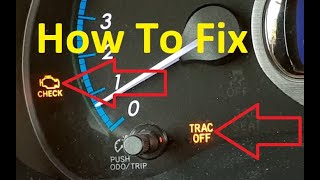
- Traction control light may also illuminate 🎬 See why your Toyota's Trac Off and Check Engine lights appear together.
- Inability to pass an emissions test because readiness monitors cannot be set 🎬 Watch this quick guide on clearing the VSC and Trac Off lights.
- The check engine light may turn off and on intermittently, sometimes reappearing after the vehicle has been sitting for a day or two.
- Replacing the ECM before performing the software update.
- Replacing the battery without properly load testing it first. One owner reported a shop replaced the battery, but the code returned a week later because the issue was the software.
Most Likely Causes
- Outdated Engine Control Module (ECM) Software 🔴 High Probability Toyota issued Technical Service Bulletin T-SB-0276-17 specifically to address this software logic flaw in 2015-2017 4Runners and other models. The original software was overly sensitive.
How to confirm: A Toyota dealer or a qualified shop with Techstream software can check the current calibration ID of your ECM and compare it to the updated IDs listed in the TSB. They can also check for an 'Authorized Modifications Label' (P/N 00451-00001-LBL) in the engine bay, which indicates the update has already been performed.
Typical fix: Flash reprogram the ECM with the updated software provided by Toyota. The TSB notes this repair is covered under the Toyota Federal Emission Warranty (96 months or 80,000 miles). The procedure takes approximately 0.4 hours of labor.
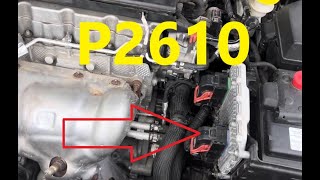
Est. part cost: $0 - Weak or Failing Battery ⚪ Low Probability Low system voltage during startup or shutdown can cause electronic modules, including the ECM's internal timer, to behave erratically. 🎬 Watch: Understanding the P2610 code and how the engine off timer works. One owner on a forum noted the check engine light would only return after letting the vehicle sit for a day or two, which is characteristic of a battery failing to hold a charge.
How to confirm: Perform a load test on the battery. A simple voltage check is often not enough. Most auto parts stores can do this for free. Voltage should be ~12.4-12.6V with the engine off and ~13.7-14.7V with the engine running.
Typical fix: Replace the vehicle's battery and clean the terminals.
Est. part cost: $150-$350 - Corroded Battery Terminals or Poor Ground Connection ⚪ Low Probability
How to confirm: Visually inspect the battery terminals for white or blueish corrosion. Check that the main ground strap from the battery to the chassis is clean and tight. Some owners have resolved the issue simply by cleaning the terminals.
Typical fix: Disconnect the battery and thoroughly clean the terminals and cable clamps with a wire brush. Re-secure the connections.
Est. part cost: $5-$10
Rare But Worth Checking
- Corroded Wiring Harness Connector: One owner on the r/4Runner subreddit reported finding a corroded wiring harness connection in the driver's side kick panel area after a battery replacement failed to solve the P2610 code. This harness carries communications from the ECM. This is an unusual cause but worth considering if the software update does not resolve the code.
- Faulty Engine Control Module (ECM): An internal hardware failure of the ECM is possible but extremely rare. The TSB specifically states the ECM should NOT be replaced as part of the standard repair procedure. This should only be considered as a last resort after the software has been updated and all wiring/power issues have been ruled out.
Diagnosis Steps
- Read the trouble codes with an OBD-II scanner to confirm P2610 is present.
- Check the battery and charging system. Ensure the battery terminals are clean and tight, and perform a load test on the battery to confirm its health.
- Contact a Toyota dealership or a qualified independent shop with Toyota's Techstream software.
- Ask the shop to check if your vehicle's ECM calibration has been updated per TSB T-SB-0276-17. They will first check for an 'Authorized Modifications Label' in the engine bay.
- If no label is present, the technician will connect Techstream to verify the current Calibration ID against the new IDs specified in the TSB.
- If the software is outdated, have the ECM reprogrammed (reflashed). The TSB specifies this requires maintaining battery voltage at 13.5V during the process.
- If the code returns after the reflash, further diagnosis is needed. This would include checking for poor connections at the ECM and inspecting the wiring harness in the driver's side kick panel for corrosion.
Parts You'll Likely Need
- ECM Software Update
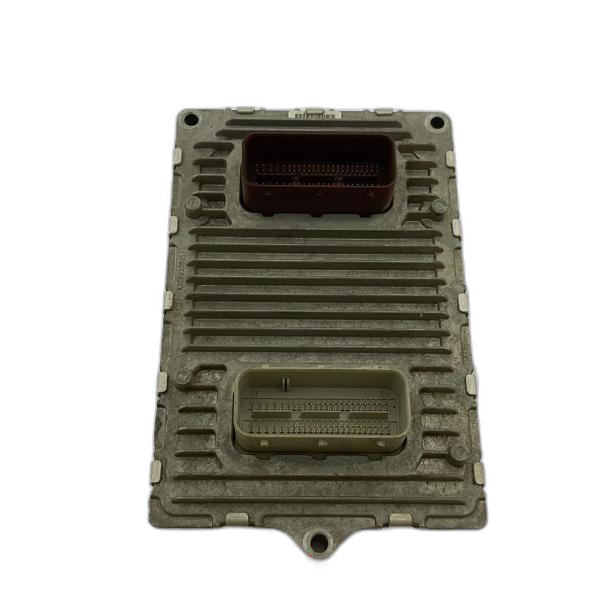
(OEM #For 2015 4Runner: 89661-35M60 (2WD), 89661-35M70 (4WD). For 2016-17: 89661-35N50 (2WD), 89661-35N60 (4WD). Note: These are the original ECU part numbers eligible for the update, not a part you purchase.)— This is not a physical part, but a software reflash that corrects the logic flaw causing the code, as per Toyota's TSB.
Trusted brands: Toyota
OEM price range: $0-$250
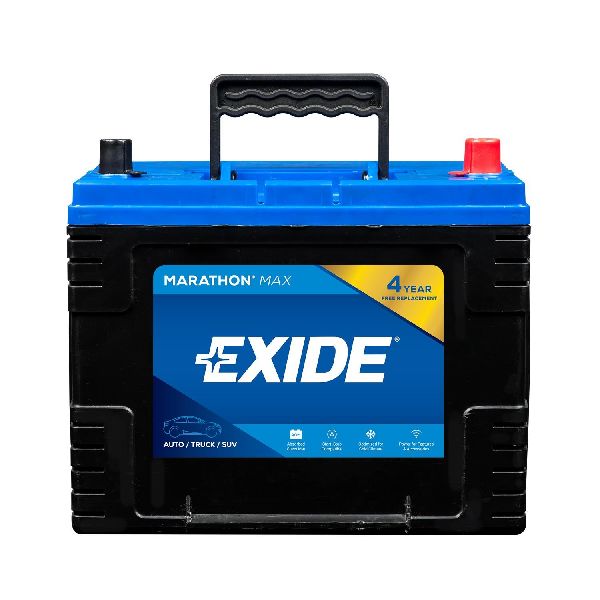
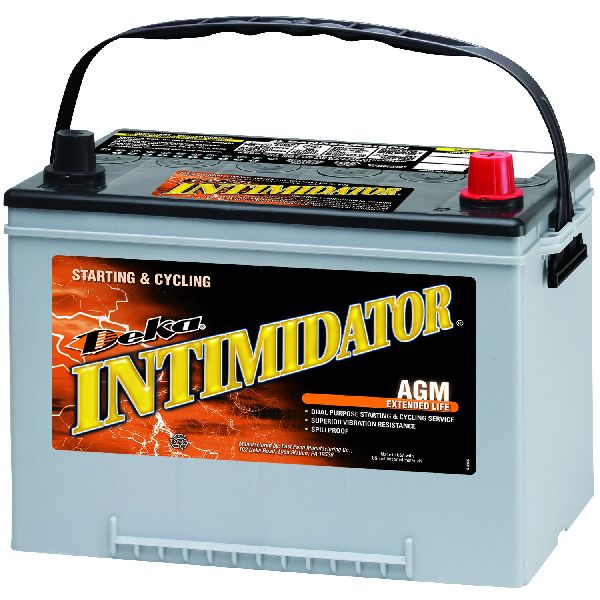
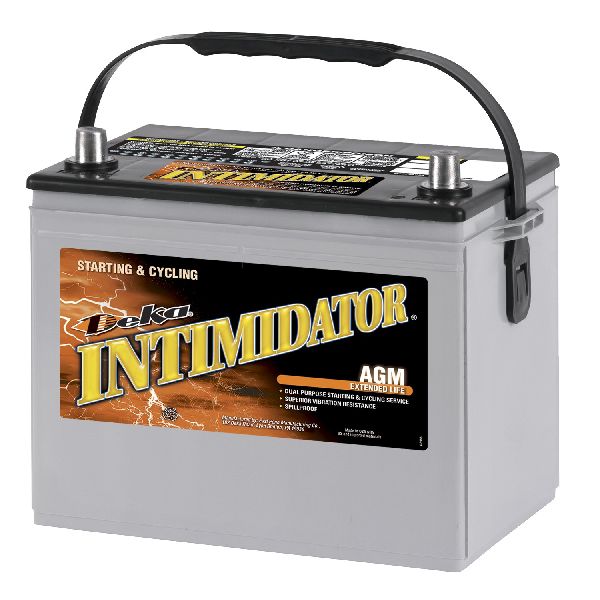
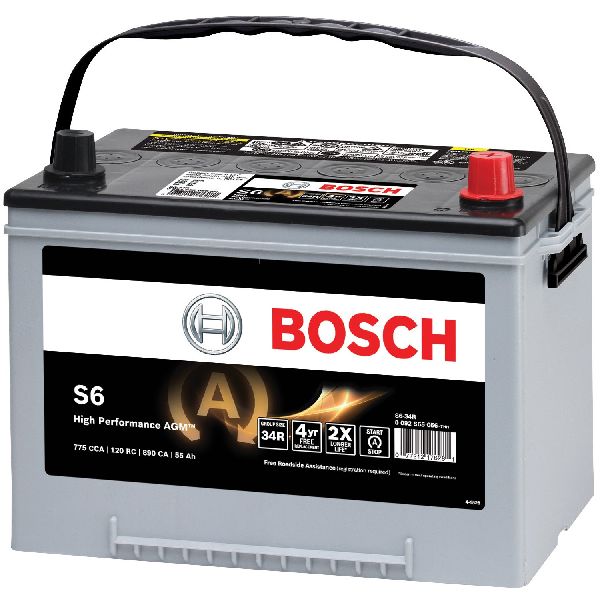
Aftermarket price range: N/A - Automotive Battery — In the rare case that the issue is not the software, a weak battery causing voltage anomalies is the next most likely culprit.
Trusted brands: Toyota TrueStart, Interstate, DieHard
OEM price range: $200-$350
Aftermarket price range: $150-$250 - Authorized Modification Label
(OEM #00451-00001-LBL)— After the reflash is performed, the technician is required to fill out and affix this label in the engine bay to indicate the TSB has been completed.
Trusted brands: Toyota
OEM price range: <$5
Aftermarket price range: N/A
Technical Service Bulletins (TSBs) & Recalls
- T-SB-0276-17: States that some 2015-2017 4Runner, 2015-2017 Avalon/Camry, 2016-2017 Avalon/Camry HV, 2014-2016 Highlander HV, 2015 Tacoma, and 2015-2016 Venza vehicles may exhibit a MIL 'ON' with DTC P2610. It confirms the ECM logic has been modified and provides new calibration IDs to fix the condition.
Platform-Specific Known Issues
- A known software logic issue prompted Toyota to release Technical Service Bulletin T-SB-0276-17 on August 18, 2017. It states that some 2015-2017 4Runner vehicles may exhibit a MIL 'ON' condition with DTC P2610, and that the ECM logic has been modified to correct this.
Mechanic-Grade Diagnostic Values
- Voltage at ECM/PCM power supply connector pins — expected: >12.2V (engine off), >13.5V (engine running). Failure: Lower voltage suggests a power supply issue (battery, alternator, wiring) that could cause the timer to malfunction.
- Battery voltage during ECM flash reprogramming — expected: Maintained at a constant 13.5V. Failure: Voltage dropping below this level can cause the reflash to fail or corrupt the ECM.
- Minimum battery voltage for monitor to run — expected: 8V or more. Failure: If system voltage drops below 8V, the self-test for the timer may not execute.
Hidden / Shadow Codes Worth Checking
- P2610 (Pending): The P2610 code operates on a '2 trip detection logic', meaning the fault must be detected on two consecutive drive cycles to illuminate the Check Engine Light. After a repair, a technician can check for a 'pending code' after a 10+ minute drive to see if the fault was detected once, even if the main light isn't on. (see via Professional scan tool (like Toyota Techstream) under the 'Pending Codes' menu.)
Scan Tool Commands That Help
- Toyota Techstream: Health Check / DTC Check — This is the first step in the official TSB diagnostic procedure to confirm that DTC P2610 is actively present before proceeding.
- Toyota Techstream: Calibration Update Wizard (CUW) — This function is used to check the current software calibration ID of the ECM against the new IDs specified in TSB T-SB-0276-17 and to perform the flash reprogramming with the updated file.
Wiring & Ground Locations
- Main Wiring Harness Connector — In the driver's side lower kick panel area, near the firewall.. This large connector block distributes communications from the ECM (located behind the glove box) to the engine bay. Water intrusion can cause corrosion on the pins, disrupting communication and potentially triggering P2610 if other fixes fail. It is a rare but confirmed failure point.
- Main Engine/Chassis Grounds — Key grounds include battery negative to fender, battery negative to engine block, and engine block to frame/chassis.. While not a specific cause for P2610, a poor ground at any of these points can introduce electrical noise and voltage instability, which can affect sensitive modules like the ECM and its internal timer. Verifying these are clean and tight is a fundamental step if a battery issue is suspected.
Real Owner Repair Stories
- IH8MUD.com Forum user 'ElJayBird' (2014 Toyota Land Cruiser (platform mate)) — Flashing 4LO, check engine light, and TRAC OFF light.
❌ Tried (didn't work) Initial diagnosis was uncertain.
✅ What actually fixed it The dealership identified a TSB for the P2610 code and performed an ECU flash, which resolved the issue.
OEM Part Supersession History
89661-35M70→89661-35M71, then 89661-35M72— Standard hardware revisions by the manufacturer.
Heads up: While the TSB addresses a software issue, if the ECM hardware must be replaced, it is critical to use the latest superseded part number. The TSB explicitly warns NOT to replace the ECM as part of the standard P2610 repair.
Model Year Variations Within This Range
- 2015 vs 2016-2017: The original factory ECM part numbers eligible for the TSB software update are different. For 4WD models, 2015 vehicles use part numbers starting with 89661-35M7x, while 2016-2017 vehicles use 89661-35N6x. This is important for verifying TSB applicability.
Helpful Videos
Used OEM Parts in Stock



New Aftermarket Parts Available


The information in this article is provided for general reference and educational purposes only. Vehicle specifications, procedures, and part compatibility can vary by production date, trim level, and region. Always consult your vehicle's factory service manual and verify part numbers before purchasing or performing repairs. Safety-critical components such as airbags, seat belts, and braking systems should be installed by a qualified professional.
- Toyota 4RUNNER:
- 🎬 Helpful Videos
- 🛍️ Shop This Part
- What's Unique About the 2015-2017 Toyota 4RUNNER
- Diagnostic Flowchart
- Symptoms You May Notice
- Most Likely Causes
- Rare But Worth Checking
- Diagnosis Steps
- Parts You'll Likely Need
- Technical Service Bulletins (TSBs) & Recalls
- Platform-Specific Known Issues
- Mechanic-Grade Diagnostic Values
- Hidden / Shadow Codes Worth Checking
- Scan Tool Commands That Help
- Wiring & Ground Locations
- Real Owner Repair Stories
- OEM Part Supersession History
- Model Year Variations Within This Range
- 🎟️ Get 5% Off