

P2610 on 2014-2017 Mazda MAZDA6: Instrument Cluster Timer Fault Causes and Fixes
On a 2014-2017 Mazda6, code P2610 almost always appears after the 15A ROOM fuse has been removed for service. It's a software glitch, not a broken part. The fix is typically to ensure the fuse is secure and clear the code. A weak battery is the second most likely cause.
- P2610 on a 2014-2017 Mazda6 is almost always a 'ghost' code caused by pulling the 15A ROOM fuse.
- Before attempting any repairs, check that the 15A ROOM fuse is good and properly installed, then clear the code.
- This code points to the instrument cluster's timer, not the main engine computer (PCM). Do not replace the PCM.
- If the code returns and the fuse is good, the next most likely cause is a weak or failing battery, even if it still starts the car.
- This code is often accompanied by P2507, which further points to a power interruption event related to the ROOM fuse.
- This issue is not unique to the Mazda6; it affects most Mazda models from the 2013-2021 era.
What's Unique About the 2014-2017 Mazda MAZDA6

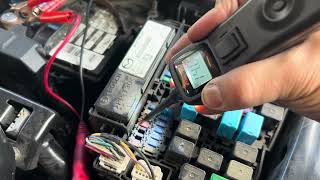
For this generation of Mazda6 and other contemporary Mazda models, the P2610 code is exceptionally specific. Mazda has issued multiple Technical Service Bulletins (TSBs) to inform technicians that this code is expected to appear if the engine is started after the 15A ROOM fuse has been removed. This often happens during diagnostics, battery replacement, or when the vehicle is put into 'transport mode' for shipping, which involves pulling this fuse. The odometer will display “F0-002” 🎬 Watch: A fast check for the P2610 and P2507 codes. when in transport mode. This leads to a false alarm that a component has failed when none has.
Diagnostic Flowchart
Tap your situation to follow the diagnostic path that matches what you're seeing on this vehicle.
Symptoms You May Notice
- Check Engine Light is illuminated
- Slow or labored engine cranking if the battery is weak.
- In rare cases with a failing battery, other electrical issues like flickering interior lights or warnings for other systems (like the Smart City Brake System) may appear.
- Replacing the Powertrain Control Module (PCM). Many technicians unfamiliar with this specific Mazda issue may follow the generic definition of P2610, which points to the PCM's internal timer, and mistakenly recommend replacing the expensive PCM when the issue is just a cleared fuse setting or a weak battery.
- Replacing the Alternator. One owner on Reddit reported being advised to replace the alternator when the root cause was likely the battery, leading to unnecessary expense.
Most Likely Causes

- 15A ROOM Fuse Was Recently Removed or is Blown 🔴 High Probability Mazda TSBs confirm that removing this specific fuse and then starting the engine will trigger DTC P2610, often with P2507. This is done to put the car in 'transport mode' or during parasitic draw testing. The TSB states this is caused by starting the engine 3 or more times with the fuse removed after a brief engine off period.
How to confirm: Check the interior fuse panel for the 15A ROOM fuse. Confirm if any recent work has been done. In one documented case on a CX-5, the fuse was blown and had been incorrectly replaced with a 10A fuse instead of the required 15A.
Typical fix: Ensure the 15A ROOM fuse is present, not blown, and securely installed. Then, clear the diagnostic trouble code with an OBD-II scanner. The code may even clear itself after the fuse is reinstalled and the car is started a few times.
Est. part cost: $1-$5 for a new fuse if needed. - Weak or Failing Battery 🟡 Medium Probability Low battery voltage during cranking can cause communication errors between various modules, including the PCM and the instrument cluster, triggering timer-related fault codes. Multiple owner reports on forums confirm a new battery resolved the code.
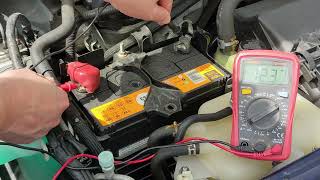
How to confirm: Test the battery with a multimeter or a battery load tester. 🎬 Watch: How to check battery and alternator health with a multimeter. A healthy, resting battery should be at approximately 12.4-12.6 volts. A load test is crucial, as a battery can show good voltage but still fail under load. Many auto parts stores offer free battery testing. Symptoms include slow cranking or the engine struggling to turn over.
Typical fix: Replace the vehicle's battery. One owner on Mazdas247 confirmed that after weeks of troubleshooting with a dealer, a new battery solved the problem. Another user on Reddit for a Mazda CX-3 had the same experience.
Est. part cost: $150-$300
Rare But Worth Checking
- Faulty Instrument Cluster: While the code directly names the instrument cluster's timer, an actual failure of the cluster is very uncommon. This should only be considered after all other possibilities, especially the ROOM fuse and battery, have been thoroughly ruled out. Diagnosis would involve checking power supply circuits to the cluster. A replacement cluster requires professional programming to the immobilizer system.
- PCM Malfunction or Wiring Issue: A fault in the Powertrain Control Module (PCM) or a CAN communication line issue between the PCM and the instrument cluster could theoretically cause this code, but it is extremely rare. This would require advanced diagnostics to confirm and would likely be accompanied by other communication codes.
Diagnosis Steps
- Read the codes: Use an OBD-II scanner to confirm P2610 is present. Note if P2507 is also stored.
- Question recent history: Ask yourself or your mechanic if the battery was recently replaced or jumped, if accessories were installed, or if any electrical testing was performed.
- Inspect the 15A ROOM fuse: Locate the interior fuse panel and check the 15A fuse labeled 'ROOM'. Ensure it is not blown and is seated correctly. Check that it is a 15A fuse and not a lower amperage one.
- Clear the codes: With the fuse secured, use the OBD-II scanner to clear the trouble codes.
- Perform a drive cycle: Per the TSB, start the engine and let it run for at least 10 seconds, then turn it off. Repeat this a couple of times to see if the Check Engine Light returns.
- Test the battery: If the code comes back, have the battery and charging system professionally load tested, even if it seems to start the car okay. A weak battery is the second most common cause.
- Seek professional help: If the fuse and battery are good but the code persists, the problem may be a more complex wiring issue or a rare instrument cluster or Body Control Module (BCM) fault that requires professional diagnosis.
Parts You'll Likely Need

- 15A Low-Profile Mini Fuse
(OEM #0000-11-215A)— This is the most likely cause of the problem, either because it was intentionally removed for service or because it has blown.
Trusted brands: Mazda OEM, Bussmann, Littlefuse
OEM price range: $1-$5.
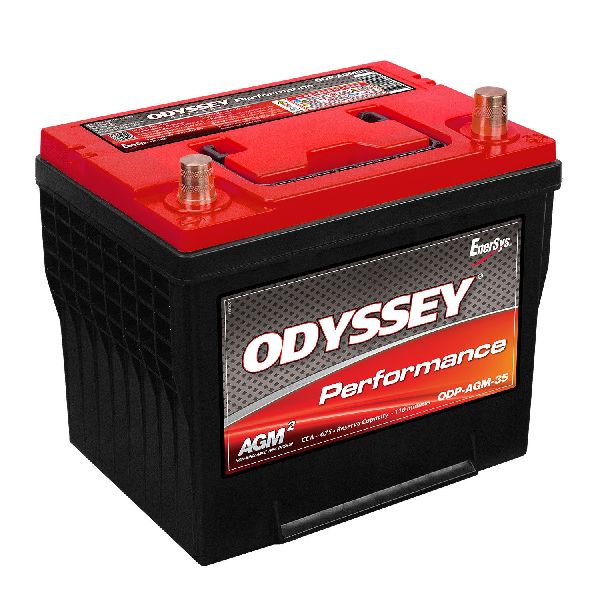
Aftermarket price range: $1-$5 - Vehicle Battery (Group 35) — A weak or failing battery is the second most common cause, triggering various electrical faults. Multiple owners confirm a new battery resolved their P2610 code.
Trusted brands: Interstate (Costco), DieHard, Duralast
OEM price range: $200-$400
Aftermarket price range: $150-$300
Related Codes That Often Appear With This One
- P2507 — Stands for 'PCM Battery Voltage Low Input'. Mazda's TSBs explicitly state that P2507 is often stored along with P2610 when the 15A ROOM fuse is removed, as this action interrupts a key power feed to the control modules.
Technical Service Bulletins (TSBs) & Recalls
- 01-003/21 (Supersedes many others): Confirms CHECK ENGINE LIGHT ON with DTC P2610 and P2507 after 15A ROOM fuse is removed. Applies to 2014-2021 Mazda6, 2013-2021 CX-5, 2014-2018 Mazda3, and others.
- 01-003/19: An earlier version of the above TSB with the same core information, explaining the code is set after 3+ engine starts with the fuse out.
- 01-017-14-2973: One of the earliest TSBs noting this specific issue. [NHTSA Citation]
- 01-012/18: Another superseded TSB that confirms the same ROOM fuse issue.
Platform-Specific Known Issues
- Mazda has issued multiple TSBs (e.g., 01-003/21) stating that P2610 will be stored if the 15A ROOM fuse is removed and the engine is started. This is considered normal behavior under these circumstances and is intended to inform technicians not to perform unnecessary repairs. The TSB explicitly states the repair is covered under warranty only while the vehicle is in 'Dealer New Car status'.
Mechanic-Grade Diagnostic Values
- Battery Voltage (Resting, Engine Off) — expected: 12.4V to 12.7V. Failure: Below 12.3V may indicate a weak or discharged battery that can cause spurious codes during startup.
- Alternator Output Voltage (Engine Running at Idle) — expected: Approximately 14.2V to 14.5V. Failure: Voltage significantly below 14V or above 15V indicates a charging system problem that can create electrical instability.
- Live Data 'Engine Off Timer' Parameter — expected: Timer should count down to zero within 5-10 seconds after engine shutdown.. Failure: Timer does not start, gets stuck, or does not reach zero within the specified window.
Hidden / Shadow Codes Worth Checking
- P2610:00: The ':00' is a standard Failure Type Code (FTC) indicating 'No sub type information'. This means the PCM has detected the timer performance issue but has not identified a more specific component-level fault, which is consistent with a logic-based fault like power interruption. (see via Mazda M-MDS, FORScan, or other professional-grade scanners that can read manufacturer-specific DTCs.)
Scan Tool Commands That Help
- FORScan: IC Module 'AS-BUILT' Data Access — When diagnosing a potential instrument cluster (IC) fault or after swapping a cluster. It allows a technician to read the original configuration and write it to a replacement unit.
- FORScan / M-MDS: Clear DTCs — This is the primary step after ensuring the 15A ROOM fuse is secure. This command is needed to erase the historical P2610 code from memory.
- Mazda M-MDS: KOER Self Test (Key On, Engine Running) — Used to replicate vehicle operating conditions and verify if a pending DTC will become an active, confirmed fault after a repair attempt.
- FORScan / MZD Connect Screen: Factory Reset (Infotainment) — After an instrument cluster swap or major electrical work, a factory reset of the infotainment system can help re-synchronize the communication between the cluster and other modules.
Wiring & Ground Locations

- Main Engine/Transmission Ground — A primary ground strap connects the negative battery terminal to a bracket on top of the transmission case.. A loose or corroded main ground can cause widespread electrical issues and communication errors between modules, potentially triggering timer faults like P2610.
- CAN Bus Wiring Harness — Runs throughout the vehicle, connecting major modules like the PCM, BCM, and Instrument Cluster. A known chafe point can be under the front passenger seat frame.. A short-circuit in the CAN bus wiring can interrupt communication between the PCM and the instrument cluster, directly causing communication codes (U-codes) and potentially timer performance codes like P2610.
- Chassis Grounds — Multiple smaller ground wires are bolted to the chassis in the engine bay, such as one near the passenger motor mount and another on the frame underneath the driver's side headlight area.. The instrument cluster and BCM rely on clean chassis grounds. A loose or corroded ground point for either module can cause erratic behavior and fault codes.
Real Owner Repair Stories
- Reddit user on r/mazda (2016 Mazda6) — All dash lights would flash and flicker randomly, A/C and power steering would shut off, instrument cluster would go dark, and sluggish acceleration. Multiple U-codes (U0100, U0125, U0155) were present.
❌ Tried (didn't work) Multiple new batteries, Multiple visits to Mazda service centers
✅ What actually fixed it The final fix was discovering and repairing a short in the Controller Area Network (CAN) wiring. - Mazdas247 forum user '2MazdaFam' (2016 Mazda CX-9 (similar electronics)) — Check Engine Light with code P2610 that kept returning after being cleared, accompanied by the engine laboring/hesitating to start.
❌ Tried (didn't work) Clearing the code with an OBD-II reader
✅ What actually fixed it Replacing the weak vehicle battery completely resolved the starting issue and the P2610 code.
When the Usual Fixes Don't Work
- While the vast majority of P2610 cases on this vehicle are resolved by checking the 15A ROOM fuse or replacing a weak battery, there are documented instances where the cause was more complex. In one case involving a 2016 Mazda6, the owner experienced a host of electrical problems including a flickering instrument cluster and multiple communication codes that were not resolved by replacing the battery. The root cause was ultimately found to be a short-circuit in the CAN bus wiring harness, which required extensive diagnostics to locate and repair. This highlights that if the simple fixes don't work, a deeper investigation into the vehicle's communication network wiring may be necessary.
OEM Part Supersession History
GJR955471 / GJR955471B→GJR955471C / GJR955471D— Revision updates for the instrument cluster.
Heads up: These part numbers are for 2014 models. Later model years use different part numbers (e.g., GLK2-55-471x for 2014-2015, GRT6-55-430 for 2017). A replacement cluster MUST be programmed by a dealer or specialist to link with the vehicle's immobilizer, otherwise the car will not start.
Model Year Variations Within This Range
- 2016-2017: The 2016 model year introduced a significant interior facelift, including a new dashboard design, a revised instrument cluster, and an updated 'tablet-style' MZD Connect infotainment system. These later models are known to sometimes suffer from infotainment unit (CMU) failures or 'ghost touch' issues on the screen, which can cause electrical interference and phantom inputs. While not a direct cause of P2610, this electrical instability is a known issue on facelift models that is not present on 2014-2015 cars.
Helpful Videos

Used OEM Parts in Stock


New Aftermarket Parts Available


The information in this article is provided for general reference and educational purposes only. Vehicle specifications, procedures, and part compatibility can vary by production date, trim level, and region. Always consult your vehicle's factory service manual and verify part numbers before purchasing or performing repairs. Safety-critical components such as airbags, seat belts, and braking systems should be installed by a qualified professional.
- Mazda MAZDA6:
- 🎬 Helpful Videos
- 🛍️ Shop This Part
- What's Unique About the 2014-2017 Mazda MAZDA6
- Diagnostic Flowchart
- Symptoms You May Notice
- Most Likely Causes
- Rare But Worth Checking
- Diagnosis Steps
- Parts You'll Likely Need
- Related Codes That Often Appear With This One
- Technical Service Bulletins (TSBs) & Recalls
- Platform-Specific Known Issues
- Mechanic-Grade Diagnostic Values
- Hidden / Shadow Codes Worth Checking
- Scan Tool Commands That Help
- Wiring & Ground Locations
- Real Owner Repair Stories
- When the Usual Fixes Don't Work
- OEM Part Supersession History
- Model Year Variations Within This Range
- 🎟️ Get 5% Off