

P2610 on 2021 Mazda CX-9: Instrument Cluster Timer Causes and Fixes
On a 2021 Mazda CX-9, code P2610 is most often caused by a temporary power loss, such as a weak battery or a recently pulled 'ROOM 15A' fuse. Before replacing parts, check the battery's health and ensure all fuses are correctly installed, as this resolves the issue in the vast majority of cases.
- P2610 on a 2021 Mazda CX-9 is an electrical logic code, not a mechanical failure.
- Before any expensive repairs, have the 12V battery professionally load-tested. A weak battery is the most likely culprit if a fuse hasn't been pulled.
- Check the 'ROOM 15A' fuse in the engine bay fuse box. This code is frequently set by pulling this fuse for service or transport mode.
- The code is almost always seen with P2507 ('PCM Battery Voltage Low Input'), reinforcing the power-interruption theory.
- Do not replace the PCM or instrument cluster unless all other, more common causes have been definitively ruled out.
What's Unique About the 2021-2021 Mazda CX-9
Unlike many vehicles where P2610 points to the main engine computer (PCM), on the Mazda CX-9 and its platform mates, this code is specifically tied to the instrument cluster. Mazda has issued multiple Technical Service Bulletins (TSBs) acknowledging that this code, often paired with P2507 ('PCM Battery Voltage Low Input'), can be set simply by removing the 'ROOM 15A' fuse and starting the engine. This is a common procedure for service or to put the vehicle in 'transport mode' to reduce battery drain, during which the odometer may display 'F0-002'. This makes P2610 a frequent procedural issue rather than a true component failure on these vehicles.
Diagnostic Flowchart
Tap your situation to follow the diagnostic path that matches what you're seeing on this vehicle.
Symptoms You May Notice
- Check Engine Light is on
- Slow or labored engine cranking (if caused by a weak battery).
- Check Engine Light may turn on and off intermittently before staying on.
- Other electrical gremlins, like issues with the electronic parking brake (EPB) warning light, may appear if the battery is weak.
- Replacing the Powertrain Control Module (PCM)
- Replacing the instrument cluster
- Diagnosing a loose gas cap (which causes different codes).
Most Likely Causes
- Weak or Failing 12V Battery 🔴 High Probability Modern vehicles with complex electronics, like the CX-9, are highly sensitive to stable voltage. A sharp voltage drop during engine cranking can cause modules like the instrument cluster to glitch and set performance codes like P2610. This is a widely reported issue across Mazda forums for the CX-5, CX-9, and Mazda6.
How to confirm: Test the battery with a multimeter or, preferably, an electronic load tester. A resting voltage below 12.4V is a sign of a weak battery, but the key test is a load test, which measures voltage during cranking. A drop below 10.0V during cranking indicates a failing battery. Most auto parts stores offer this test for free. A simple voltage check with the engine running only tests the alternator.
Typical fix: Recharge or replace the 12V battery. After replacement, the code may need to be cleared with a scanner, though it might clear on its own after several drive cycles. In many documented owner experiences, replacing the battery was the definitive fix.
Est. part cost: $150-$350 - 'ROOM 15A' Fuse Was Recently Removed 🟡 Medium Probability As documented in numerous Mazda TSBs (e.g., 01-003-21-3776), this fuse is sometimes pulled for service or to engage 'transport mode'. Starting the engine three or more times with this fuse removed will trigger codes P2610 and P2507. This is a designed behavior, not a fault.
How to confirm: Check the main fuse box in the engine bay to ensure the 'ROOM 15A' fuse is present and properly seated. Ask if the vehicle was recently serviced, stored, or if the battery was disconnected. The presence of code P2507 alongside P2610 is a strong indicator of this scenario.
Typical fix: With the ignition off, reinstall the 15A fuse. Start the engine, let it run for over 10 seconds, then turn it off. The light should be off on the next startup. Clear any stored codes with an OBD-II scanner.
Est. part cost: $0-$5
Rare But Worth Checking
- Blown or Incorrect 'ROOM 15A' Fuse: While less common than the fuse being intentionally removed, the fuse itself can blow due to a short circuit. In one documented case on a similar platform, an owner found that a 10A fuse had been incorrectly installed in the 15A slot, which eventually blew and caused the code.
- Faulty Powertrain Control Module (PCM): While generic information for P2610 often lists a faulty PCM as a cause, it is extremely rare for this specific code on a Mazda CX-9. All other possibilities, especially the battery and ROOM fuse, should be exhausted first.
- Wiring Issue in PCM or Instrument Cluster Circuit: A poor ground connection or a break in the power supply wire to the instrument cluster or PCM could mimic the symptoms of a pulled fuse or weak battery. This would require professional diagnosis with wiring diagrams.
Diagnosis Steps
- Read all stored trouble codes with an OBD-II scanner. Note if P2507 is present with P2610, as this strongly suggests a power interruption event.
- Inquire about recent service history. Ask if the battery was recently disconnected, if the vehicle was stored, or if any fuses were pulled.
- Locate the under-hood fuse box near the battery. Inspect the 'ROOM 15A' fuse. Ensure it is the correct amperage (15A) and is not blown or loose.
- Perform a load test on the 12V battery. A weak battery is a very common cause, and a simple voltage check is insufficient. The voltage should not drop below 10.0V during engine cranking.
- If the fuse is good and the battery is healthy, clear the codes using an OBD-II scanner.
- Follow the TSB procedure: With the ignition off, ensure the fuse is installed. Start the engine for 10+ seconds, stop the engine, then restart to see if the light returns.
- If the code persists, inspect the battery terminals for corrosion and check the main chassis ground connections for tightness and cleanliness.
- As a final step, a professional may need to check for PCM software updates or diagnose a potential wiring or module fault using the Mazda Diagnostic System (M-MDS). This includes checking for the hidden U3003:16 code in the instrument cluster.
Parts You'll Likely Need
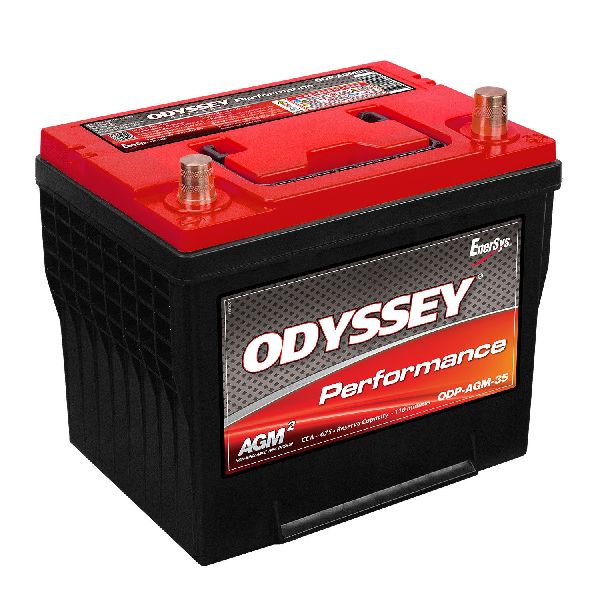
- 12V Automotive Battery — A weak battery causing a voltage drop during startup is a primary cause of this electronic glitch code on Mazda vehicles. The correct size is typically Group Size 35.
Trusted brands: DieHard, Optima, Interstate (Costco), Bosch
OEM price range: $250-$400
Aftermarket price range: $150-$350 - 15 Amp Mini Fuse — Required if the 'ROOM 15A' fuse is missing, blown, or has been replaced with an incorrect amperage fuse.
Trusted brands: Bussmann, Littlefuse
OEM price range: $1-$5
Aftermarket price range: $0.50-$2
Related Codes That Often Appear With This One
- P2507 — Stands for 'PCM Battery Voltage Low Input'. Mazda TSBs explicitly state that P2610 and P2507 are set together when the 'ROOM 15A' fuse is removed, as this action interrupts a key power supply. Its presence strongly points towards a power interruption event.
- U3003:16 — Stands for 'Control Module - Battery Voltage - Circuit Voltage Below Threshold'. Mazda's own diagnostic procedure for P2610 notes that if there is a power supply circuit malfunction to the instrument cluster, the cluster itself may store DTC U3003:16. This hidden code is a strong confirmation that the root cause is electrical.
Technical Service Bulletins (TSBs) & Recalls
- 01-003-21-3776: CHECK ENGINE LIGHT ON with DTC P2610 and P2507 stored in memory after engine start and room fuse 15A (A) removed. (Applies to 2016-2021 CX-9).
- 01-003-19-3557: Supersedes earlier bulletins, confirming the cause for 2016-2019 models and explaining the condition is caused by starting the engine 3+ times with the fuse removed.
- 01-001-17: An earlier TSB for 2016-2017 models documenting the same P2610/P2507 and room fuse issue.
Platform-Specific Known Issues
- Mazda Technical Service Bulletin #01-003-21-3776 specifically calls out that P2610 and P2507 can be stored after starting the engine with the 'room fuse 15A (A) removed'.
- This issue is often related to the vehicle's 'transport mode', which is activated by pulling this fuse to reduce battery drain while the vehicle is being shipped or stored. The odometer may display 'F0-002' in this mode.
- Owner experiences consistently show that a battery replacement resolves the code, even when the battery seems to be working fine for starting the car. A user on Mazdas247 with a CX-9 reported the code returned repeatedly and the car labored to start until the battery was replaced.
Mechanic-Grade Diagnostic Values
- Battery Voltage Drop During Cranking — expected: Should remain above 10.0V. Failure: A drop below 10.0V indicates a weak or failing battery.
- Voltage at Instrument Cluster Connector C-01, Pin 1J — expected: B+ (Battery Positive Voltage, typically 12.4V+) with ignition ON.. Failure: Voltage significantly below battery voltage points to a wiring or fuse issue upstream.
- Continuity at Instrument Cluster Connector C-01, Pin 2A — expected: Continuity to ground (near 0 ohms resistance).. Failure: No continuity (high resistance or 'OL') indicates a bad ground connection.
Hidden / Shadow Codes Worth Checking
- U3003:16: Control Module - Battery Voltage - Circuit Voltage Below Threshold. This code is stored in the instrument cluster itself (not the PCM) when it detects its own power supply is too low. (see via Requires a professional scan tool like the Mazda M-MDS capable of reading DTCs from individual modules beyond the PCM.)
Scan Tool Commands That Help
- Mazda M-MDS (or equivalent): DTC Inspection [Instrument Cluster] — Use this to check for hidden codes like U3003:16 stored in the instrument cluster, which won't be visible with a standard OBD-II engine code reader.
- Mazda M-MDS (or equivalent): Clear DTC from PCM memory — Used as the final step after a repair (like reinstalling a fuse or replacing a battery) to ensure all fault codes are cleared from the system.
Wiring & Ground Locations
- ROOM 15A Fuse — In the main fuse box located in the engine bay, near the battery.. This fuse provides backup power to the instrument cluster. Removing it and starting the engine is the specific trigger for P2610 according to Mazda TSBs.
- Instrument Cluster Connector C-01, Pin 1J — At the rear of the instrument cluster, accessible after removing dashboard trim.. This is the specific pin for the instrument cluster's primary power supply. It should be tested for battery voltage to confirm the circuit is intact.
- Instrument Cluster Connector C-01, Pin 2A — At the rear of the instrument cluster, accessible after removing dashboard trim.. This is the specific ground pin for the instrument cluster. It should be tested for continuity to chassis ground to rule out a bad ground connection.
Real Owner Repair Stories
- Mazdas247 Forum user 'Silly Wabbit' (Mazda CX-9 Signature (year not specified, but in a 2017+ thread)) — Check engine light with P2610, mild difficulty/hesitation on engine turnover.
❌ Tried (didn't work) Driving for 200 miles hoping the code would clear itself.
✅ What actually fixed it Replacing the 12V battery. The code went away immediately after the new battery was installed and the car was started. - Mazdas247 Forum user 'ovexi' (2017 CX-5 (similar platform)) — Check Engine Light with P2610.
❌ Tried (didn't work) Initial diagnosis and attempts to clear the code without addressing the root cause.
✅ What actually fixed it Replaced the original battery (which lasted less than 4 years) with a Kirkland battery from Costco. Both the Check Engine Light and the P2610 code went away. - Mazdas247 Forum user '2MazdaFam' (2016 Mazda CX-9) — P2610 code appeared, was cleared, but came back immediately. The engine was 'laboring to start'.
❌ Tried (didn't work) Clearing the code with a basic OBD-II reader.
✅ What actually fixed it A new battery replacement resolved the issue, as confirmed by another user in the same thread who had the same symptoms and fix.
When the Usual Fixes Don't Work
- While a weak battery is a primary cause, simply replacing it may not be enough if the code was set by other service procedures. In a report from a 2021 CX-5 owner, the code appeared after body shop work. The shop replaced the battery, but the code persisted. This highlights that the specific reset procedure outlined in Mazda's TSBs (reinstalling the ROOM 15A fuse, starting the engine for 10+ seconds, stopping, and restarting) is a critical step that must be followed after any significant power interruption, even if a new battery is installed.
Helpful Videos


Used OEM Parts in Stock

New Aftermarket Parts Available


The information in this article is provided for general reference and educational purposes only. Vehicle specifications, procedures, and part compatibility can vary by production date, trim level, and region. Always consult your vehicle's factory service manual and verify part numbers before purchasing or performing repairs. Safety-critical components such as airbags, seat belts, and braking systems should be installed by a qualified professional.
- Mazda CX-9:
- 🎬 Helpful Videos
- 🛍️ Shop This Part
- What's Unique About the 2021-2021 Mazda CX-9
- Diagnostic Flowchart
- Symptoms You May Notice
- Most Likely Causes
- Rare But Worth Checking
- Diagnosis Steps
- Parts You'll Likely Need
- Related Codes That Often Appear With This One
- Technical Service Bulletins (TSBs) & Recalls
- Platform-Specific Known Issues
- Mechanic-Grade Diagnostic Values
- Hidden / Shadow Codes Worth Checking
- Scan Tool Commands That Help
- Wiring & Ground Locations
- Real Owner Repair Stories
- When the Usual Fixes Don't Work
- 🎟️ Get 5% Off