

P2610 on 2016-2020 Jeep Wrangler: Engine Off Timer Performance Fixes
On a 2016-2020 Jeep Wrangler, code P2610 is most often caused by a weak or failing battery or a software glitch. For 2018+ (JL) models, this includes a high failure rate of the smaller auxiliary battery that runs the Auto Start-Stop system. Start by load testing both batteries. If they are healthy, a PCM software update from a dealer is the next logical step.
- P2610 on your Wrangler means the main computer is having trouble tracking how long the engine has been off.
- For 2018+ JL models, immediately suspect the small auxiliary battery. It's a very common failure point.
- Before anything else, have BOTH batteries professionally load-tested. A weak battery is the most common trigger.
- If the batteries are good, the next step is a software update. Jeep has released several updates to fix this exact issue.
- Do not replace the expensive PCM unless all battery, connection, and software issues have been ruled out.
What's Unique About the 2016-2020 Jeep WRANGLER
For the 2016-2020 Jeep Wrangler, this code has distinct contexts for the two generations. On the JK (2016-2018), it's primarily tied to a weak main battery or a PCM software glitch. For the JL (2018-2020), the issue is complicated by the dual-battery system designed for Engine Start-Stop (ESS). A small, secondary auxiliary battery is used to power vehicle electronics during an auto-stop event. This auxiliary battery has a high failure rate and is a primary cause of P2610 and other electrical gremlins. When the auxiliary battery fails, it can disrupt the PCM's voltage supply and its ability to keep time, even if the main battery is strong enough to start the engine. Jeep has released multiple TSBs for both generations to fix software logic that can falsely trigger this code.
Diagnostic Flowchart
Tap your situation to follow the diagnostic path that matches what you're seeing on this vehicle.
Generation note: This range covers two Wrangler generations: the JK (2016-2018) and the JL (2018-2020). While causes are similar, the 2018+ JL's dual-battery system is a major vehicle-specific factor. A failing auxiliary battery is a top cause for P2610 on the JL. The provided TSBs from NHTSA apply to vehicles in both generations, confirming software updates are a common fix for both.
Symptoms You May Notice
- Check Engine Light is on.
- "Service Start/Stop System" me 🎬 See how to fix the Start/Stop light and check the fuse array.ssage on the dashboard (JL models).
- Auto Start-Stop system is disabled or works intermittently (JL models).
- Vehicle may fail an emissions test.
- In some cases, no noticeable driving symptoms will be present other than the light.
- Hesitation or refusal to remote start.
- Replacing the PCM when only a software update was needed.
- Replacing only the main battery on a JL model when the auxiliary battery was the root cause.
- Replacing other sensors like the Engine Coolant Temperature (ECT) sensor, which can be a cause on other vehicles but is less likely on a Wrangler for this specific code without other accompanying sensor codes.
Most Likely Causes
- Weak or Failing Auxiliary Battery (2018+ JL Models) Very High Probability The small AGM auxiliary battery in JL Wranglers has a notoriously short lifespan. It is responsible for powering accessories when the engine is off and its failure directly impacts the PCM's voltage stability and timer functions, making it a primary trigger for P2610.
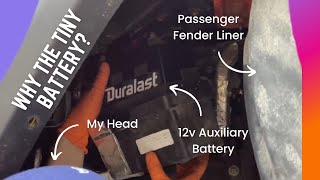
How to confirm: Isolate and load test the auxiliary battery specifically. It is located behind the main battery, under the Power Distribution Center (PDC). Many owners report it failing within 2-3 years.
Typical fix: Replace the auxiliary battery. It is often recommended to replace the main battery at the same time 🎬 Watch: A guide to testing and replacing both batteries the easy way., as a failing auxiliary battery can strain the main one.
Est. part cost: $80-$150 - Weak or Failing Main Battery 🔴 High Probability Modern Wranglers have a high electrical demand. The PCM requires stable voltage even when the engine is off to maintain its memory and timers. A drop in voltage from a weak main battery can corrupt this timer function.
How to confirm: Perform a load test on the battery. A simple voltage check is not sufficient. Many auto parts stores offer this service for free.
Typical fix: Replace the vehicle's main AGM battery.
Est. part cost: $200-$400 - PCM Software Out of Date 🔴 High Probability Jeep has issued multiple TSBs (e.g., 18-090-16 for JK, 18-003-23 for JL) that include a software fix for P2610, indicating that the original PCM logic can be overly sensitive or flawed.
How to confirm: A Jeep dealership or a qualified shop with a wiTECH scan tool can check the current software calibration version against the latest available version using your VIN.
Typical fix: Reprogramming (flashing) the PCM with the latest software update. This typically costs one hour of shop labor.
Est. part cost: $0 - Poor Battery Connections or Grounding Issues 🟡 Medium Probability Corrosion on battery terminals or loose ground straps can cause intermittent voltage drops, mimicking a failing battery. This was cited by some owners as the fix.
How to confirm: Visually inspect the main and auxiliary battery terminals for corrosion. Clean them thoroughly. Check that the main engine and chassis ground straps are clean, tight, and free of corrosion. A key ground to check on JL models is G906A on the passenger side frame rail.
Typical fix: Clean battery terminals and cable ends, or replace corroded cables/straps.
Est. part cost: $5-$100
Rare But Worth Checking
- Faulty Powertrain Control Module (PCM): This is an expensive last resort. An internal hardware failure in the PCM's timer circuit can cause this code. Always exhaust all other possibilities (batteries, connections, software) before condemning the PCM.
- Faulty Intelligent Battery Sensor (IBS): On JL models, the IBS is attached to the negative battery terminal and monitors the battery's state of charge, voltage, and temperature. If the IBS fails, it can send incorrect data to the PCM, leading to various electrical codes, including P2610, and disabling the ESS system.
Diagnosis Steps
- Scan for any other trouble codes. P2610 often appears with others, which can provide clues.
- For 2018+ JL models, focus on the dual-battery system first. The message "Stop/Start Unavailable, Service Stop/Start System" is a strong indicator of a failing auxiliary battery.
- Thoroughly test the main battery AND the auxiliary battery (if equipped). Use a digital battery tester that can perform a load test.
- Inspect all battery terminals and main power/ground cables for both batteries. Clean any corrosion and ensure all connections are tight.
- Check for Technical Service Bulletins (TSBs). Contact a dealer with your VIN to see if any open software updates apply to your vehicle. TSBs 18-090-16 and 18-003-23 are directly relevant.
- If batteries are healthy, connections are good, and software is up to date, further diagnosis of the PCM's power and ground circuits is needed. On JL models, inspect ground G906A on the passenger side frame rail for corrosion.
- If all other steps fail, the PCM itself may be faulty and require replacement.
Parts You'll Likely Need
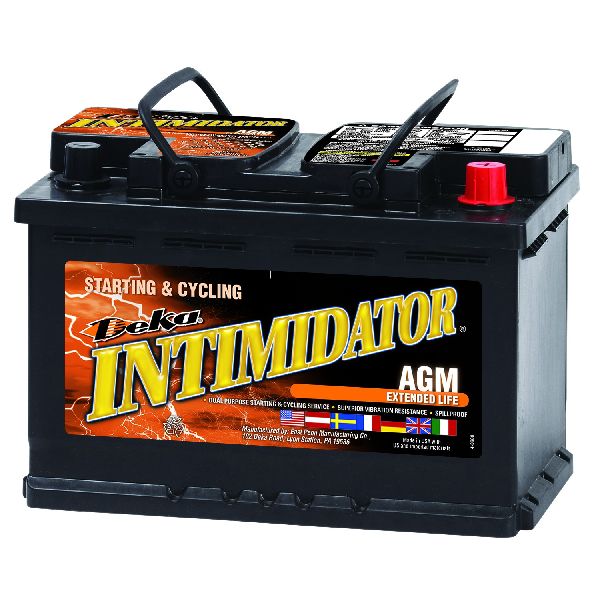
- AGM Auxiliary Battery (for 2018+ JL)
(OEM #56029759AB, 68647042AA)— The auxiliary battery for the Engine Start-Stop system is the most frequent failure point on JL models causing P2610.
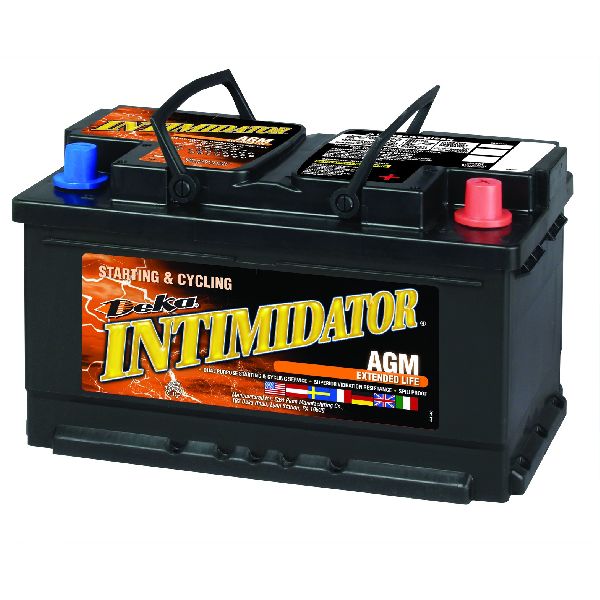
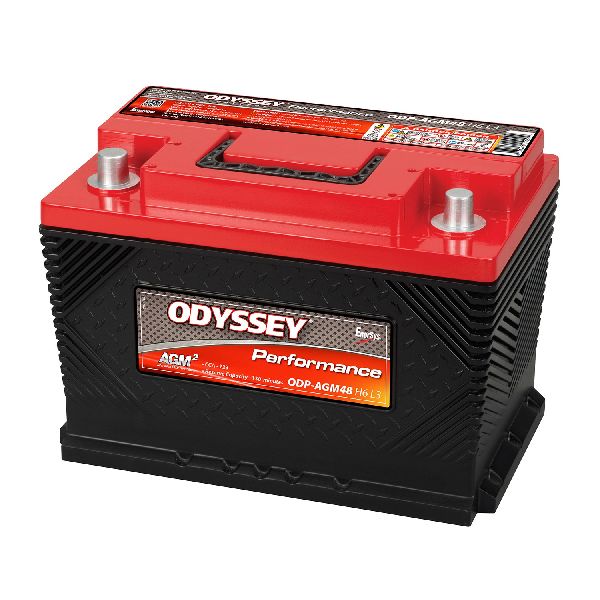
Trusted brands: Mopar, Odyssey, Deka
OEM price range: $120-$180
Aftermarket price range: $80-$150 - AGM Main Battery
(OEM #BBH7A001AA)— A weak or failing main battery is a primary cause of this code due to unstable voltage supplied to the PCM when the vehicle is off.
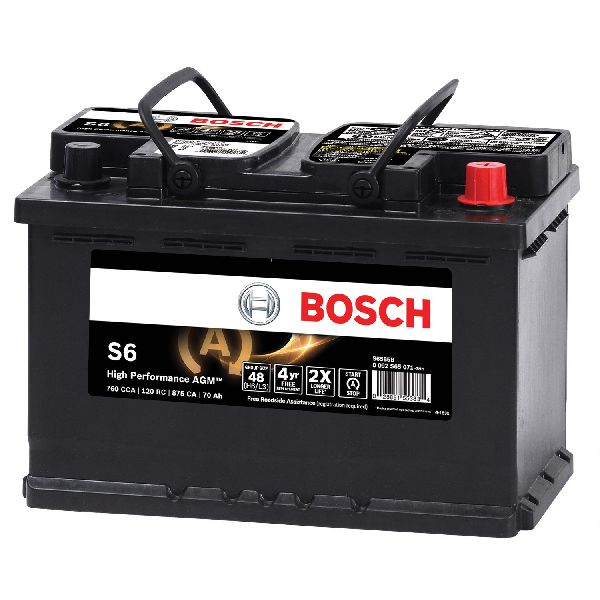
Trusted brands: Mopar, Odyssey, DieHard, Interstate
OEM price range: $250-$400
Aftermarket price range: $200-$350
Related Codes That Often Appear With This One
- P0441 — EVAP Purge System Performance. The PCM's engine-off timer is used to schedule EVAP system tests, so a timer fault can disrupt these tests. (Cited in TSB #18-090-16).
- P0455 — EVAP System Large Leak. Similar to P0441, a faulty timer can interfere with the EVAP leak test, causing this code to appear. (Cited in TSB #18-090-16).
- P0335 / P0339 — Crankshaft Position Sensor codes. These were noted alongside P2610 in a TSB, suggesting a software update addresses multiple unrelated system faults simultaneously. (Cited in TSB #18-090-16).
- B2193 — IBS (Intelligent Battery Sensor) internal monitoring fault. This code on the BCM points directly to a potential issue with the IBS, a known cause of P2610 on JL models.
- U113E — Lost Communication with IBS. This indicates a communication failure on the LIN bus between the BCM and the IBS, which can also trigger P2610.
Technical Service Bulletins (TSBs) & Recalls
- 18-003-23: For 2020 JL with 3.0L Diesel, lists P2610 as one of many codes addressed by a PCM software update.
- 18-090-16: For 2016 JK, bundles a fix for P2610 with EVAP and crankshaft sensor codes via a PCM reflash.
- 1804921: Superseded by 18-003-23, also included P2610 in a list of DTCs fixed by software.
- 18-109-20: For 2020 models with diesel engines, lists P2610 among many other codes fixed by a PCM update.
Platform-Specific Known Issues
- The dual-battery system in 2018+ JL/JT models is a critical point of failure. The smaller auxiliary battery often fails prematurely, causing a cascade of electrical issues including P2610 and disabling the auto start-stop feature. Owners on forums frequently recommend replacing both batteries at once.
- Early 2018 JL models had a factory software issue where a dead auxiliary battery could prevent the vehicle from starting. TSB 18-092-19 was released to correct this logic, allowing the vehicle to start even with a failed auxiliary battery.
Mechanic-Grade Diagnostic Values
- Battery Voltage (Engine Off) — expected: 12.2 V to 12.7 V. Failure: Below 12.2V indicates a discharged or weak battery that can disrupt PCM memory.
- Charging System Voltage (Engine Running) — expected: 13.5 V to 14.5 V. Failure: Voltage outside this range indicates an alternator or regulator issue, causing unstable power to the PCM.
- IBS Quiescent Current (JL Models) — expected: -500mA to 50mA. Failure: Current outside this range after the vehicle has been off for a while indicates a parasitic draw or a faulty IBS, preventing proper State of Charge calculation.
Hidden / Shadow Codes Worth Checking
- B2193: IBS (Intelligent Battery Sensor) Internal Monitoring Fault (see via This code is set in the Body Control Module (BCM) and is visible with a dealer-level scan tool like wiTECH. It indicates the IBS has detected an internal error.)
- U113E: Lost Communication With Intelligent Battery Sensor (IBS) (see via Also set in the BCM and visible with an advanced scan tool. It points to a wiring or communication issue on the LIN bus between the BCM and the IBS.)
Scan Tool Commands That Help
- wiTECH or equivalent professional scanner: PCM Replace — This function is required after installing a new or used PCM. It writes the vehicle's VIN to the new module and transfers the secret security key from the immobilizer module (WCM/WIN) to allow the engine to start.
- wiTECH or advanced aftermarket scanner (e.g., Autel): IBS Reset / Battery Replacement Reset — After replacing the main or auxiliary battery on a JL model, this function should be performed. It forces the Intelligent Battery Sensor (IBS) to relearn the new battery's characteristics. An alternative manual method is to disconnect the IBS electrical connector for 10-15 minutes to force a reboot.
- wiTECH or equivalent: Learn ETC (Electronic Throttle Control) — This procedure may be required after a PCM replacement or software flash to recalibrate the throttle body.
Wiring & Ground Locations
- Power Distribution Center (PDC) — Under the hood, in the engine bay, typically located next to the battery.. The PDC houses the fuses and relays for the PCM. A blown fuse or faulty relay related to the PCM can cause power loss and trigger P2610.
- G906A (JL Models) — On the passenger side front frame rail.. This is a critical chassis ground. Corrosion at this point is a known issue that can cause intermittent voltage drops and electrical problems, including disabling the ESS and potentially triggering P2610.
- PCM Ground Strap (JL Models) — A ground strap is physically connected to one of the PCM mounting bolts.. This provides a direct ground for the PCM. If it is left disconnected, loose, or corroded during service, it can cause erratic PCM behavior and various codes, including P2610.
- PCM Connectors (JK Models) — On the PCM module itself, located on the firewall in the engine bay.. Specific pins provide power and ground to the PCM. For example, on a 2012 JK, pins on connector C2 are designated as 'GROUND' (Z905 circuit, black wire) and are essential for stable operation.
Real Owner Repair Stories
- Reddit user on r/WranglerJL (2018 JLU) — ESS not working, resting battery voltage down to 12.3V.
❌ Tried (didn't work) Initially just observing the issue.
✅ What actually fixed it The user discovered the failing auxiliary battery was dragging down the main battery. Replacing both batteries resolved the issue.
When the Usual Fixes Don't Work
- While weak batteries and software are the primary culprits for P2610, they are not the only causes. In some cases, owners have replaced both batteries and had the PCM flashed, only for the code to return. The underlying issue was later found to be a corroded ground connection (specifically G906A on the passenger frame rail for JL models) or a faulty Intelligent Battery Sensor (IBS). This highlights the importance of checking the entire power and ground circuit integrity before defaulting to a PCM replacement if the common fixes fail.
OEM Part Supersession History
56029759AB→68647042AA— Part number update/revision by manufacturer for the JL/JT auxiliary battery.
Heads up: Both parts are generally interchangeable for the 2018-2023 JL/JT platform, but it is always best to verify with a VIN.
Model Year Variations Within This Range
- 2018+ JL/JT with 3.6L Pentastar: Models equipped with the eTorque mild-hybrid system do not have the small auxiliary battery. The eTorque system's 48V battery pack handles the functions that the auxiliary battery would normally perform. You can identify an eTorque model by the absence of a traditional alternator and a solid metal jumper in the Power Distribution Center.
Helpful Videos

Used OEM Parts in Stock

New Aftermarket Parts Available


The information in this article is provided for general reference and educational purposes only. Vehicle specifications, procedures, and part compatibility can vary by production date, trim level, and region. Always consult your vehicle's factory service manual and verify part numbers before purchasing or performing repairs. Safety-critical components such as airbags, seat belts, and braking systems should be installed by a qualified professional.
- Jeep WRANGLER:
- 🎬 Helpful Videos
- 🛍️ Shop This Part
- What's Unique About the 2016-2020 Jeep WRANGLER
- Diagnostic Flowchart
- Symptoms You May Notice
- Most Likely Causes
- Rare But Worth Checking
- Diagnosis Steps
- Parts You'll Likely Need
- Related Codes That Often Appear With This One
- Technical Service Bulletins (TSBs) & Recalls
- Platform-Specific Known Issues
- Mechanic-Grade Diagnostic Values
- Hidden / Shadow Codes Worth Checking
- Scan Tool Commands That Help
- Wiring & Ground Locations
- Real Owner Repair Stories
- When the Usual Fixes Don't Work
- OEM Part Supersession History
- Model Year Variations Within This Range
- 🎟️ Get 5% Off