

P2610 on 2014-2016 Jeep Grand Cherokee: PCM Timer Performance Causes and Fixes
On a 2014-2016 Jeep Grand Cherokee, code P2610 is almost always caused by outdated Powertrain Control Module (PCM) software. The fix is a software update (reflash) from a Jeep dealer, as documented in multiple Technical Service Bulletins (TSBs). A weak or failing battery is the second most likely cause. This code can also trigger false EVAP system codes like P0441 and P0456, so P2610 should be addressed first.
- For a 2014-2016 Jeep Grand Cherokee, P2610 is most likely a software problem, not a failed part.
- Before replacing any parts, contact a Jeep dealer with your VIN to see if a PCM software update TSB applies to your vehicle.
- Do not immediately replace parts for other codes (especially EVAP codes) that appear with P2610, as they are often symptoms of the timer issue.
- If a software update doesn't fix it, perform a thorough load test on the battery before considering PCM replacement.
What's Unique About the 2014-2016 Jeep GRAND CHEROKEE
For the 2014-2016 Grand Cherokee (WK2 generation), this code is very frequently a software bug, not a hardware failure. Jeep released several Technical Service Bulletins (TSBs) acknowledging that various seemingly unrelated codes would appear alongside P2610, all pointing back to a need for a PCM software update. This makes it critical to check for available software updates before replacing any parts. The issue is also common on its platform-mate, the Dodge Durango.
Diagnostic Flowchart
Tap your situation to follow the diagnostic path that matches what you're seeing on this vehicle.
Symptoms You May Notice
- Check Engine Light is on.
- Vehicle fails emissions testing because system monitors are not ready.
- Other trouble codes may be present, especially for the EVAP system (P0441, P0456) or sensor circuits.
- In some cases, hard starting or longer cranking times.
- For models with Engine Start-Stop (ESS), the system may become unavailable, with a message like 'Stop/Start Not Ready'.
- Replacing EVAP system components (e.g., purge valve, gas cap, or ESIM pump) when EVAP codes like P0441 or P0456 are present. The TSBs show these are often triggered falsely by the P2610 timer issue, which prevents the EVAP self-test from running correctly.
Most Likely Causes
- Outdated PCM Software 🔴 High Probability Manufacturer TSBs #18-090-16, #18-098-16, and #21-029-16 directly link P2610 to a list of other codes, with the prescribed fix being a PCM software update. This indicates a known software bug from the factory.
How to confirm: A Jeep dealer or a well-equipped independent shop can check for available PCM software updates using your vehicle's VIN and a diagnostic tool like wiTECH. They can verify if the calibration ID on the PCM is the latest version.
Typical fix: Reprogramming (flashing) the PCM with the latest manufacturer software. This procedure takes about an hour and must be done while maintaining stable battery voltage (between 13.2 and 13.5 volts).
Est. part cost: $0 - Weak or Failing Battery 🟡 Medium Probability Low or unstable system voltage can disrupt the internal clocks and memory of control modules, causing erratic behavior and performance codes like P2610. For models with a dual-battery system (for ESS), a failing auxiliary battery can also cause 🎬 See this walkthrough for replacing both the main and auxiliary batteries. widespread electrical issues.
How to confirm: Test the battery with a digital multimeter and a load tester. Voltage should be above 12.4V with the engine off and over 13.5V when running. Many auto parts stores offer free battery testing. Pay attention to the battery's age, as they typically last 3-5 years.
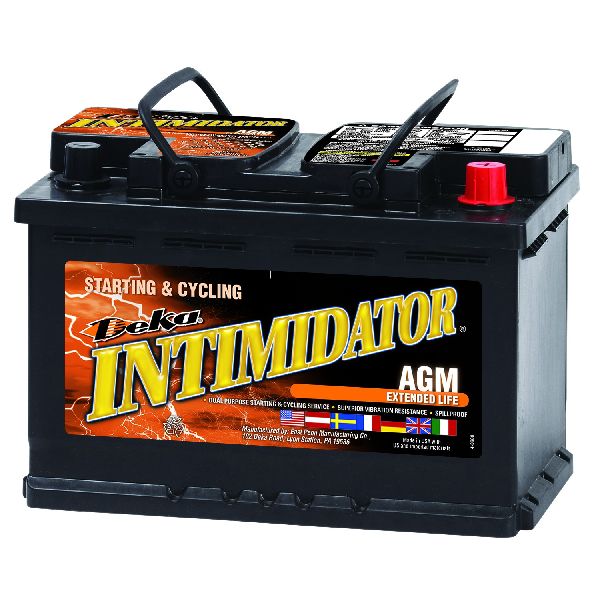
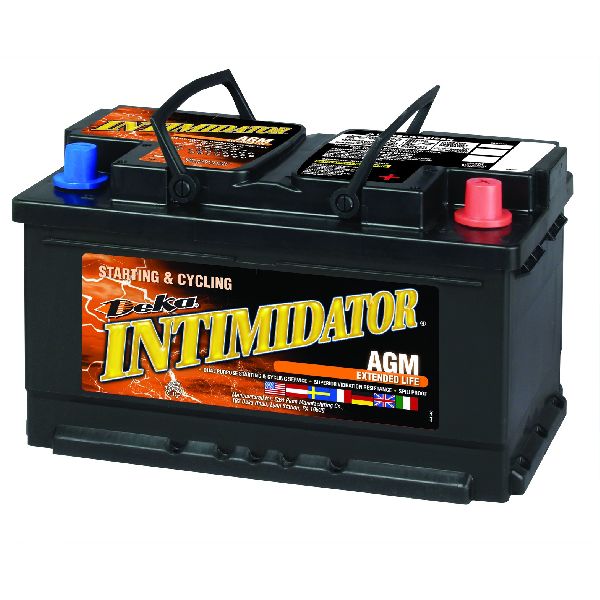
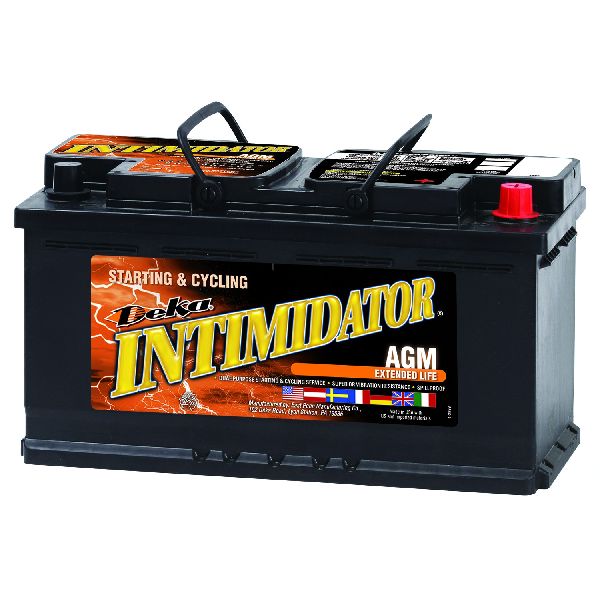
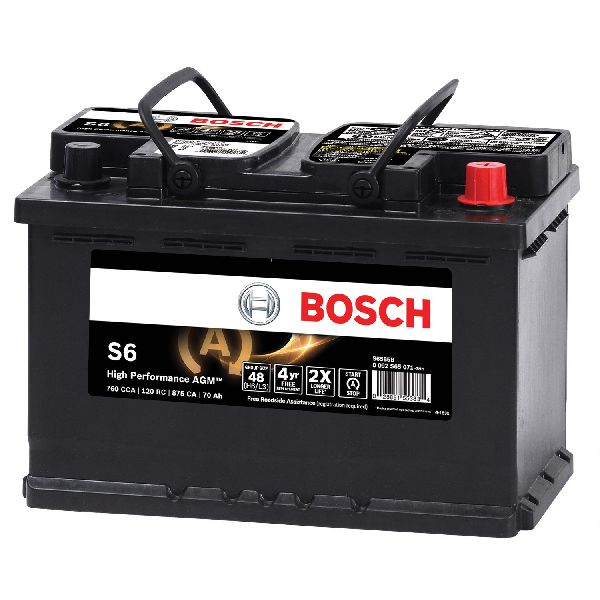
Typical fix: Replace the vehicle's main (and if applicable, auxiliary) battery. An AGM (Absorbed Glass Mat) battery is typically required.
Est. part cost: $200-$450 - Faulty Powertrain Control Module (PCM) ⚪ Low Probability If a software update does not resolve the issue and the battery/charging system is healthy, the internal timer hardware within the PCM itself may have failed due to heat, vibration, or internal component degradation.
How to confirm: This is a process of elimination. If PCM software is up to date and all power/ground circuits to the PCM are confirmed to be good, the module itself is the likely culprit.
Typical fix: Replace the PCM and program it to the vehicle's VIN. Remanufactured units are a cost-effective option.
Est. part cost: $800-$1500
Rare But Worth Checking
- Faulty Engine Coolant Temperature (ECT) Sensor: The PCM often uses the ECT sensor reading to cross-reference how long the engine has been off (by tracking cooldown time). A sensor providing irrational data could potentially confuse the timer logic, although this is less common than a software or battery issue for this specific code on this vehicle.
- PCM Power or Ground Circuit Issue: A poor connection or intermittent open/short in the wiring providing power or ground to the PCM can cause it to lose memory or timer functions, triggering this code. Check for corrosion on battery terminals, main fuse blocks, and PCM connectors.
Diagnosis Steps
- Scan the PCM for all stored trouble codes. Note any other codes that appear with P2610, especially EVAP and sensor codes.
- CRITICAL FIRST STEP: Check for applicable Technical Service Bulletins (TSBs) for your vehicle's VIN. Use a professional service or call a Jeep dealer. Given the known issues, this is the most important step.
- If a TSB for a PCM update exists (e.g., 18-090-16, 18-098-16), have a dealer or qualified shop perform the reflash. This is the most likely solution. Clear codes and re-test.
- If no TSB applies or the code returns, thoroughly test the main battery and, if equipped, the auxiliary battery. A load test is required, not just a voltage check. Ensure battery terminals are clean and tight.
- Inspect the wiring and connectors at the PCM for any signs of damage, corrosion, or looseness. Perform a voltage drop test on the PCM's power and ground circuits to ensure stable connections.
- Using a scan tool, monitor the Engine Coolant Temperature (ECT) sensor data to ensure it is providing rational readings from cold to hot.
- If all previous steps fail to resolve the issue, the PCM is likely faulty and requires replacement. This is a diagnosis of exclusion.
Parts You'll Likely Need
- PCM Software Update — This is not a physical part but a service. It is the most common fix specified by multiple manufacturer TSBs for this exact issue on the Grand Cherokee.
OEM price range: $150-$250
Aftermarket price range: N/A - Automotive Battery
(OEM #Check for Group Size H7 or H8 AGM)— A weak battery can cause erratic voltage, disrupting the PCM's internal timer and triggering code P2610. An AGM type is typically required.
Trusted brands: Mopar, Interstate, DieHard
OEM price range: $250-$400
Aftermarket price range: $200-$350 - Powertrain Control Module (PCM)
(OEM #e.g., 68229976AE, 68229969AH, 68229963AE (Part is VIN-specific))— If a software update and battery check don't fix the problem, the internal hardware of the PCM itself has likely failed.
Trusted brands: Mopar
OEM price range: $1000-$1500
Aftermarket price range: $600-$1000
Related Codes That Often Appear With This One
- P0441 — EVAP Purge System Performance. The faulty engine-off timer (P2610) prevents the PCM from properly running the EVAP system self-test. TSB #18-090-16 REV. A explicitly links these codes.
- P0456 — EVAP System Small Leak. Similar to P0441, this code can be falsely triggered because the timer malfunction prevents the required leak test from running. This is a very common pairing.
- P0335 / P0339 — Crankshaft Position Sensor Circuit codes. TSB #18-090-16 REV. A lists these alongside P2610, indicating the PCM software glitch can affect multiple sensor inputs.
- P2299 — Brake Pedal Position / Accelerator Pedal Position Incompatible. Listed in TSBs #18-098-16 and #21-029-16 as another code resolved by the same PCM flash.
- P0171 / P0174 — Fuel System Lean (Bank 1 / Bank 2). TSB #21-029-16 connects these codes to the same software issue requiring a PCM update.
Technical Service Bulletins (TSBs) & Recalls
- 18-090-16 REV. A: For 2016 models (specifically 6.4L), links P2610 with EVAP and Crankshaft Sensor codes, indicating a PCM software update is needed.
- 18-098-16: For 2015-2016 models, lists P2610 among other DTCs like P2299 (Brake/Accelerator Incompatible) and P0300 (Misfire) that are addressed by a PCM flash.
- 21-029-16: For 2014 models (specifically 6.4L), connects P2610 with lean fuel trim codes (P0171, P0174) and again points to a software update as the solution.
Platform-Specific Known Issues
- A series of TSBs confirm that a PCM software update is the primary intended fix for P2610 on this platform, often resolving a host of other codes at the same time.
- The frequent, and often false, triggering of EVAP codes like P0456 alongside P2610 is a key characteristic of this issue on the WK2 Grand Cherokee. Owners and technicians should always resolve P2610 before attempting any EVAP system repairs.
Mechanic-Grade Diagnostic Values
- Battery System Voltage — expected: Above 12.4V with engine off; 13.5V - 14.8V with engine running.. Failure: Voltage below 12.4V at rest indicates a discharged or failing battery. Voltage outside the specified range while running points to an alternator or regulator issue.
- Engine Coolant Temperature (ECT) Sensor Resistance — expected: Approximately 2,000 to 3,000 Ohms at 68°F (20°C).. Failure: A reading significantly outside this range, or an open/short circuit, indicates a faulty sensor that could confuse the PCM's engine-off timer logic.
- PCM Ground Circuit Resistance — expected: Less than 1 Ohm between the PCM ground pin and a clean chassis ground.. Failure: Resistance higher than 1-2 Ohms indicates a poor ground connection (corrosion, looseness) that can cause erratic module behavior, including timer faults.
- Alternator Field Control Signal — expected: A pulse-width modulated (PWM) signal visible on an oscilloscope, coming from the PCM to the alternator.. Failure: Absence of this signal when the engine is running indicates a fault in the PCM's internal voltage regulator or the wiring between the PCM and alternator.
Scan Tool Commands That Help
- wiTECH: Restore Vehicle Configuration — This function is critical after replacing a PCM to ensure all vehicle-specific options (like trim level, tire size, etc.) are correctly programmed into the new module.
- wiTECH: Learn ETC (Electronic Throttle Control) — After a PCM replacement or reflash, this procedure relearns the throttle body's fully open and closed positions, which is essential for proper engine operation.
- wiTECH: Small Leak Verification Test (SLVT) — Use this test for the EVAP system *only after* the P2610 code has been resolved. Running it beforehand may give a false failure due to the timer malfunction. This confirms if a co-existing EVAP code (like P0456) was a ghost code or indicates a real physical leak.
- wiTECH: PCM Replace — This security function is used to synchronize a new or used PCM with the vehicle's Wireless Control Module (WCM) or SKIM module, allowing the engine to start. It writes the vehicle's VIN and secret key to the PCM.
Wiring & Ground Locations
- G103 / G104 — Ground stud on the passenger side of the engine block, often near the dipstick tube.. This is a primary ground point for the PCM. A poor connection here can directly cause unstable PCM operation and trigger internal performance codes like P2610.
- G108 — On the passenger side inner fender, near the Power Distribution Center (fuse box).. This ground serves the Body Control Module (BCM) and Transmission Control Module (TCM). While not a direct PCM ground, intermittent issues here can disrupt CAN bus communication, potentially causing the PCM to log faults.
- PCM Connector C2, Pin 12 — The second main connector on the Powertrain Control Module.. This is the ECT (Engine Coolant Temperature) Signal pin. The PCM uses this data to determine engine cooldown time. A wiring issue on this specific pin can lead to irrational readings and trigger P2610.
- PCM Connector C2, Pin 32 — The second main connector on the Powertrain Control Module.. This is the Generator Field Control pin. While not directly related to the timer, electrical instability from a charging system problem can cause P2610, and testing this pin is key to diagnosing the alternator control circuit.
- PCM Connector C2, Pin 88 — The second main connector on the Powertrain Control Module.. This is the CKP (Crankshaft Position) Ground pin. Since TSBs link P2610 with crank sensor codes (P0335/P0339), checking the integrity of this specific ground circuit is a valuable diagnostic step.
Real Owner Repair Stories
- jeepgarage.org forum user reports (2014-2016 Jeep Grand Cherokee) — Check Engine Light with codes P2610 and P0456 (EVAP Small Leak).
❌ Tried (didn't work) Replacing the gas cap., Smoke testing the EVAP system (no leaks found).
✅ What actually fixed it A PCM software update (reflash) performed at a Jeep dealership. This resolved both the P2610 and the P0456 codes simultaneously. The reported cost for this service was typically between $150 and $250. - YouTube channel 'Zac Wade' (2014 Jeep Grand Cherokee SRT) — Check Engine Light with code P0456 (Small EVAP Leak).
❌ Tried (didn't work) Initial assumption that it was just a gas cap.
✅ What actually fixed it Replacement of the Evaporative System Integrity Module (ESIM) located in the driver's side rear wheel well. This highlights that while P2610 often causes false EVAP codes, a real EVAP system fault can still occur independently and should be properly diagnosed if it persists after fixing P2610.
"I Checked Everything" — The Actual Cause
- A very common scenario for this vehicle is the presence of both P2610 and an EVAP leak code like P0456. Technicians will often perform a smoke test on the EVAP system as standard procedure for P0456, which will come back clean with no leaks found. The actual root cause is the P2610 timer malfunction, which prevents the PCM from correctly running the EVAP monitor self-test, leading it to falsely set the leak code. The fix is to address P2610 first (usually via software update), which then allows the EVAP monitor to run correctly and the false P0456 code to stay clear.
Model Year Variations Within This Range
- 2016+: The Engine Start-Stop (ESS) system became standard on 3.6L V6 models in 2016. These vehicles are equipped with a second, auxiliary battery to support the system. A failing auxiliary battery can introduce electrical instability and contribute to setting codes like P2610. When diagnosing, both the main and auxiliary batteries must be tested.
Helpful Videos
Used OEM Parts in Stock


New Aftermarket Parts Available


The information in this article is provided for general reference and educational purposes only. Vehicle specifications, procedures, and part compatibility can vary by production date, trim level, and region. Always consult your vehicle's factory service manual and verify part numbers before purchasing or performing repairs. Safety-critical components such as airbags, seat belts, and braking systems should be installed by a qualified professional.
- Jeep GRAND CHEROKEE:
- 🎬 Helpful Videos
- 🛍️ Shop This Part
- What's Unique About the 2014-2016 Jeep GRAND CHEROKEE
- Diagnostic Flowchart
- Symptoms You May Notice
- Most Likely Causes
- Rare But Worth Checking
- Diagnosis Steps
- Parts You'll Likely Need
- Related Codes That Often Appear With This One
- Technical Service Bulletins (TSBs) & Recalls
- Platform-Specific Known Issues
- Mechanic-Grade Diagnostic Values
- Scan Tool Commands That Help
- Wiring & Ground Locations
- Real Owner Repair Stories
- "I Checked Everything" — The Actual Cause
- Model Year Variations Within This Range
- 🎟️ Get 5% Off