

P2610 on 2012-2015 Ford Focus: Engine Off Timer Performance Causes and Fixes
This code usually means the main computer (PCM) has a problem with its internal clock. The most common causes are a weak battery, a faulty PCM power relay, or a software glitch, especially after programming. A no-start condition is a common symptom, often accompanied by flickering dash lights.
- P2610 on a 2012-2015 Focus points to an issue with the PCM's internal engine-off timer.
- Before suspecting an expensive PCM failure, always check the battery's health and the PCM power relay first.
- The code can be triggered by procedural errors, such as disconnecting the battery or reprogramming the PCM without a proper power-down wait time.
- A simple battery disconnect/reconnect (hard reset) or swapping the PCM relay are low-cost first steps in diagnosis.
- If the issue persists, professional diagnosis is needed to check for software updates or confirm PCM failure.
What's Unique About the 2012-2015 Ford FOCUS

For Ford vehicles of this era, including the Focus, P2610 is specifically mentioned in a Technical Service Bulletin (TSB ASI-44707) related to PCM reprogramming. This indicates a high sensitivity in the vehicle's electronics to power-down procedures. An improper shutdown after a software update, a jump-start, or even a simple battery disconnect can trigger this code, pointing towards a software or procedural issue rather than an immediate hard part failure. This sensitivity is shared across other Ford models on the same platform, like the Escape.
Diagnostic Flowchart

Tap your situation to follow the diagnostic path that matches what you're seeing on this vehicle.
Symptoms You May Notice
- Check Engine Light is on.
- Engine may not start or has a delayed start, but the vehicle has power.
- Multiple warning lights on the dashboard (e.g., 'Hill Start Assist Fault', 'Transmission fault service now') and twitching gauges with a clicking noise.
- Sudden loss of RPM and coolant temperature readings on the dash while driving, which may then return to normal.
- Vehicle fails emissions testing because internal monitors cannot be completed.
- Weak-feeling engine starts.
- Complete loss of power after being jump-started, dying as soon as jumper cables are removed.
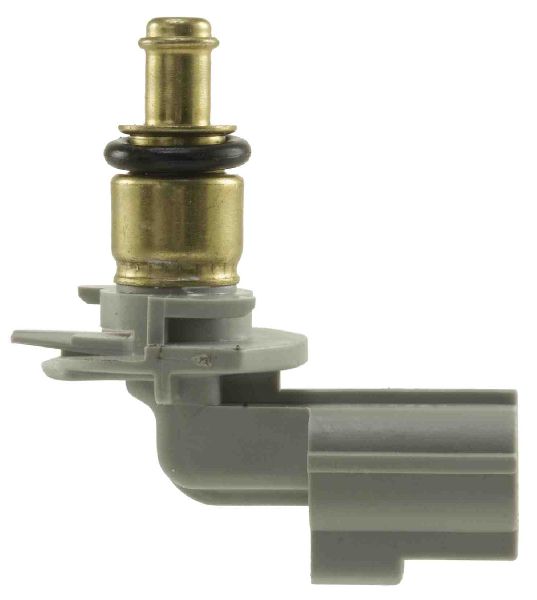
- Replacing the Engine Coolant Temperature (ECT) sensor. While some generic definitions link the timer to the ECT for determining cold starts, for this Ford issue, it's rarely the root cause unless a specific ECT code is also present.
Most Likely Causes

- PCM Software or Programming Issue 🔴 High Probability A known Ford TSB (ASI-44707) states this code can appear after PCM reprogramming if the key is not left in the OFF position for at least 30 seconds, indicating a software/procedural sensitivity.
How to confirm: Check if the code appeared immediately after a software update, battery replacement, or other service. A dealer can check for PCM software updates.
Typical fix: Perform a hard reset by disconnecting the battery terminals and holding them together for several minutes to drain residual power. If that fails, a dealer may need to re-flash or update the PCM software.
Est. part cost: $0-$200 - Weak or Failing Battery / Poor Connections 🟡 Medium Probability Modern control modules require stable voltage. Low voltage during shutdown or startup can corrupt the PCM's 'keep alive' memory and timer function. This is a very common trigger after a battery is replaced or jump-started.
How to confirm: Test the battery voltage with a multimeter. It should be above 12.2V with the engine off. Check terminals for corrosion and tightness. Check the ground connection to the right of the battery and under the battery box for rust or looseness. Many auto parts stores offer free battery testing.
Typical fix: Clean battery terminals and cable ends. Ensure ground connections are clean and tight. If the battery fails a load test, replace it and perform a Battery Monitoring System (BMS) reset.
Est. part cost: $150-$300 - Faulty PCM Power Relay 🟡 Medium Probability The PCM power relay controls the main power to the engine computer. If it sticks or fails, it can disrupt the critical power-down sequence required by the timer, triggering P2610 and often P068A.
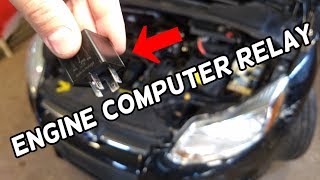
How to confirm: Locate the PCM relay in the engine compartment fuse box. On the Mk3 Focus, this is typically relay R14. 🎬 Watch: How to locate and swap the PCM power relay. Swap it with an identical relay from a non-critical system (like the horn) to see if the problem resolves.
Typical fix: Replace the faulty relay. The common part is a gray 5-pin relay.
Est. part cost: $15-$40 - Faulty Powertrain Control Module (PCM) ⚪ Low Probability The timer is an internal component of the PCM. While less common, an internal hardware failure like a cracked solder joint, failed capacitor, or heat damage can cause this code.
How to confirm: This is a diagnosis of exclusion. If all other causes (software, battery, relay, wiring) have been ruled out, the PCM itself is the likely culprit. This requires professional diagnosis. 🎬 See this video to find the PCM location on your Focus.
Typical fix: The PCM must be replaced and programmed to the vehicle's VIN.
Est. part cost: $500-$1000
Rare But Worth Checking
- PCM Power or Ground Circuit Issue: Corroded or damaged wiring leading to the PCM can mimic the symptoms of a bad battery or relay. A visual inspection of the harness and checking for good ground connections is a worthwhile step, especially the main ground point under the airbox.
Diagnosis Steps
- Scan for any other trouble codes. Pay close attention to codes like P068A or P06B8, as they strongly point to a relay or programming issue.
- Inspect the battery. Check for clean, tight terminals and test the battery's state of charge and health. A voltage below 12.2V engine-off is a red flag.
- Perform a hard reset. Disconnect the negative battery terminal for at least 15 minutes. Some owners have had success disconnecting both terminals and touching them together for several minutes to fully drain system capacitors.
- Inspect and test the PCM Power Relay. It is located in the engine compartment fuse box at position R14. Swap it with a known-good, identical relay to see if the code disappears.
- Inspect PCM ground connections. A key ground point is located under the battery and airbox assembly; ensure it is clean and tight.
- Check for PCM software updates. This must be done by a Ford dealer or a qualified shop with the correct tools (like Ford's IDS).
- Visually inspect the PCM wiring harness and connectors for any signs of corrosion or damage.
- If all other steps fail, the PCM is likely faulty and requires professional diagnosis and replacement.
Parts You'll Likely Need
- PCM Power Relay
(OEM #F57B-14B192-AA)— This relay controls power to the PCM, and its failure is a common cause for the timer malfunction. It's an inexpensive and easy part to replace for diagnosis.
Trusted brands: Motorcraft, Bosch, Standard Motor Products
OEM price range: $25-$40
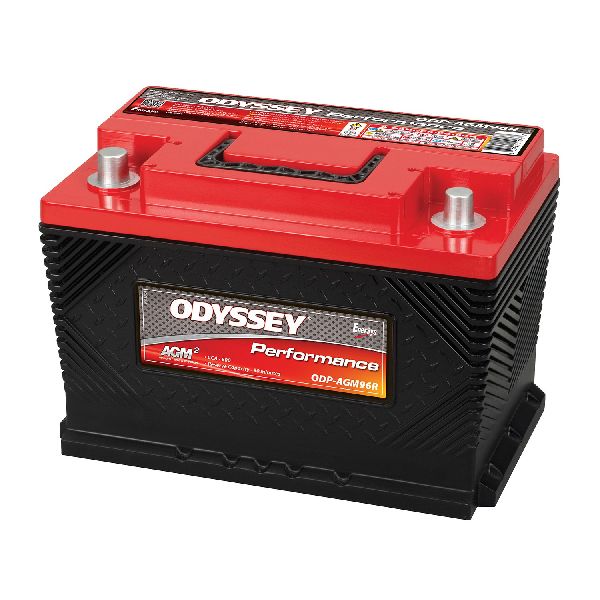
Aftermarket price range: $15-$30 - Battery — Low or unstable voltage from an old battery is a frequent trigger for this code by disrupting the PCM's memory and shutdown procedures.
Trusted brands: Motorcraft, Interstate, DieHard
OEM price range: $200-$300
Aftermarket price range: $150-$250
Related Codes That Often Appear With This One
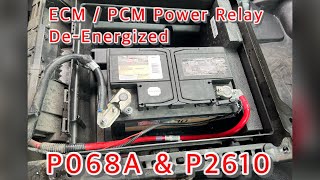
- P068A — Stands for 'ECM/PCM Power Relay De-Energized Too Early'. This code directly points to a problem with the PCM relay or its circuit, which is a primary cause of P2610. Both are mentioned together in TSB ASI-44707. 🎬 Watch: A simple fix for codes P068A and P2610.
- P06B8 — Stands for 'Internal Control Module Non-Volatile Random Access Memory (NVRAM) Error'. This code, along with P2610, is specifically mentioned in TSB ASI-44707 as a possible result of improper PCM programming procedures.
Technical Service Bulletins (TSBs) & Recalls
- ASI-44707: Addresses MIL on with DTCs P06B8, P068A, P2610 after PCM reprogramming if key off procedure is not followed.
Platform-Specific Known Issues
- Technical Service Bulletin #ASI-44707 notes that on some 2009-2015 Ford vehicles, codes P2610, P06B8, and P068A can be set if the ignition key is not left in the OFF position for 30 seconds following a PCM reprogramming.
- Owners on forums frequently report that a simple battery change or jump-start is enough to trigger this code, highlighting the system's sensitivity to power interruptions.
Mechanic-Grade Diagnostic Values
- Battery Voltage (Engine Off) — expected: 12.2V - 12.8V. Failure: Below 12.2V indicates a discharged or failing battery that can trigger the code.
- Battery Voltage (Cranking) — expected: Above 10.0V. Failure: Voltage dropping below 10.0V during cranking can corrupt the PCM's memory and timer function.
- Alternator Output (Engine Running) — expected: 13.5V - 14.5V. Failure: Voltage outside this range indicates a charging system problem that can cause electrical instability.
- PCM Ground Circuit Resistance — expected: < 0.5 Ohms. Failure: High resistance on the ground circuit to the chassis indicates a poor ground connection, a primary suspect after battery/relay replacement.
- Live Data 'Engine Off Timer' PID — expected: Counts down to zero within 5-10 seconds of engine shutdown.. Failure: Timer not counting down, or taking significantly longer, confirms the fault described by P2610.
Hidden / Shadow Codes Worth Checking
- P068A (Ford-specific definition): On some Ford models, dealer-level scanners describe this code as 'The non volatile random access memory (NVRAM) write did not complete successfully after the ignition key was turned OFF, prior to PCM shutdown.' This is more specific than the generic 'De-Energized Too Early' and directly relates to the P2610 timer issue. (see via Ford Integrated Diagnostic System (IDS) or equivalent professional scan tool.)
Scan Tool Commands That Help
- Ford IDS / FORScan: PCM Adaptive Memory Reset — After replacing the battery, performing a hard reset, or replacing the PCM. This command forces the module to relearn its operating parameters and can clear memory corruption that may be causing the P2610 code.
- Professional Scan Tool: CAN Bus Test / Network Scan — To verify the integrity of the communication network between the PCM and other modules. This helps rule out a communication error as the cause of the timer fault.
- Advanced Scan Tool (e.g., iCarsoft CR Pro S): ECM/PCM Internal Scan — To access the PCM's internal self-diagnostic logs. This can help differentiate between a software/firmware corruption issue and an internal hardware failure like a burnt circuit.
Wiring & Ground Locations

- Powertrain Control Module (PCM) — Located in the front driver-side wheel well, ahead of the tire and behind the fender liner/splash shield.. This is the component setting the code. Its location makes it vulnerable to water intrusion and corrosion from road spray, which can damage the module or its connectors, causing this fault.
- Main Battery Ground Point — Bolted to the chassis on the driver's side, underneath the airbox and battery tray. Typically secured with a 10mm or 13mm bolt.. This is the primary ground for the battery. Corrosion or looseness at this point creates high resistance, destabilizing the entire electrical system and is a common, often-overlooked cause of P2610.
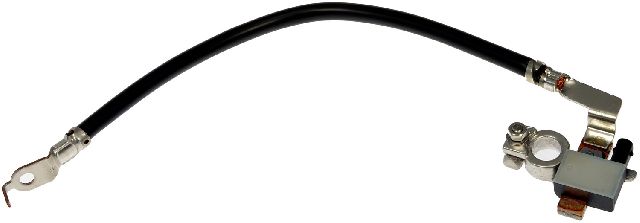
- Engine Bay Ground Cable — Various ground straps in the engine bay. One specific cable for the 2012-2014 Focus has the part number BV6T-14324.. Ensures the engine block and its components have a solid ground path to the chassis and battery. A faulty ground strap can cause erratic sensor readings and module behavior.
Real Owner Repair Stories
- YouTube Channel 'Tuan Tran' (2019 Ford Transit 3.7L (demonstrates a common Ford issue)) — Check Engine Light with codes P068A and P2610, battery kept dying and required a jump start.
❌ Tried (didn't work) The video advises fixing the battery issue before chasing other codes.
✅ What actually fixed it Replacing the weak battery. A battery test showed the old battery had 0% state of health. A new battery resolved the codes.
When the Usual Fixes Don't Work
- In some cases, the most common fixes do not resolve the issue. One owner reported that after experiencing intermittent no-starts with P2610, they replaced the battery (performing a BMS reset), the battery cables, the PCM power relay (R14), and associated fuses, but the problem continued to occur randomly. This indicates that while the battery and relay are primary suspects, a persistent issue is likely caused by a more elusive fault in the wiring harness or, most commonly, a corroded or loose main ground connection under the battery tray, which should be the next diagnostic target.
OEM Part Supersession History
F57B-14B192-AA→N/A— This is a long-standing, multi-purpose relay used across many Ford, Lincoln, and Jaguar vehicles for various functions like A/C clutch, fuel pump, and fans.
Heads up: While there is no direct supersession, it is cross-compatible with aftermarket relays such as Standard Motor Products #RY612.
Model Year Variations Within This Range
- 2015: The 2015 model year marked a significant mid-cycle facelift (Mk3.5) for the Focus. It included a completely redesigned dashboard and center console, upgrading the infotainment system to SYNC Gen II with an 8-inch touchscreen. This change in the Body Control Module (BCM) and related interior electronics could introduce different diagnostic pathways or communication issues compared to the 2012-2014 models, although the root causes for P2610 (battery, relay, PCM) remain consistent.
Helpful Videos

Used OEM Parts in Stock


New Aftermarket Parts Available


The information in this article is provided for general reference and educational purposes only. Vehicle specifications, procedures, and part compatibility can vary by production date, trim level, and region. Always consult your vehicle's factory service manual and verify part numbers before purchasing or performing repairs. Safety-critical components such as airbags, seat belts, and braking systems should be installed by a qualified professional.
- Ford FOCUS:
- 🎬 Helpful Videos
- 🛍️ Shop This Part
- What's Unique About the 2012-2015 Ford FOCUS
- Diagnostic Flowchart
- Symptoms You May Notice
- Most Likely Causes
- Rare But Worth Checking
- Diagnosis Steps
- Parts You'll Likely Need
- Related Codes That Often Appear With This One
- Technical Service Bulletins (TSBs) & Recalls
- Platform-Specific Known Issues
- Mechanic-Grade Diagnostic Values
- Hidden / Shadow Codes Worth Checking
- Scan Tool Commands That Help
- Wiring & Ground Locations
- Real Owner Repair Stories
- When the Usual Fixes Don't Work
- OEM Part Supersession History
- Model Year Variations Within This Range
- 🎟️ Get 5% Off