

P2610 on 2009-2015 Ford Expedition: Engine Off Timer Causes and Fixes
This code means the engine's computer (PCM) has a problem with its internal timer. It's often caused by an improper shutdown procedure after programming, a weak battery, or a failing PCM. A no-start condition is a common symptom, and before performing costly repairs, a simple battery disconnect/reconnect should be attempted.
- P2610 on a 2009-2015 Expedition means the PCM's internal engine-off timer is malfunctioning.
- Before replacing parts, check for the simple fix: turn the ignition completely off for a few minutes, or perform a battery disconnect/reconnect to reset the system, as per TSB ASI-44707.
- The most likely causes are an improper PCM shutdown procedure, a failing PCM, or a faulty PCM power relay located in the engine bay fuse box.
- This issue is also common on platform-mates like the Ford F-150 and Lincoln Navigator of the same era.
What's Unique About the 2009-2015 Ford EXPEDITION
For the 2009-2015 Ford Expedition and its platform mates (Ford F-150, Lincoln Navigator), this code is specifically called out in Technical Service Bulletin (TSB) ASI-44707. The TSB notes that P2610 can be triggered if the ignition key isn't left in the OFF position for at least 30 seconds after the PCM has been reprogrammed. This highlights a sensitivity in the Expedition's PCM to proper power-down procedures, which are necessary for it to save data correctly. This same sensitivity can be triggered by other power interruptions, such as disconnecting the battery or using certain OBD-II scanners.
Diagnostic Flowchart
Tap your situation to follow the diagnostic path that matches what you're seeing on this vehicle.
Symptoms You May Notice
- Check Engine Light is on.
- Engine may not start or has a long crank time.
- Vehicle may fail an emissions test because internal monitors cannot run. 🎬 Watch: A breakdown of P2610 causes and common fixes.
- Sudden stalling (in rare cases).
- Reduced engine performance or fuel efficiency over time.
- Immediately replacing the PCM without thoroughly checking the battery, charging system, and PCM power relay. Power supply issues are a common and much cheaper fix.
- Replacing the battery without confirming it's the root cause. While a weak battery can trigger the code, the fault may lie with the PCM itself or its relay.
Most Likely Causes
- Improper PCM Reprogramming or Power Interruption 🔴 High Probability As cited in Ford's TSB #ASI-44707, these vehicles can set P2610 (along with P06B8 and P068A) if the key is not left in the OFF position for 30 seconds following a PCM reflash. Owners on forums report this code can also appear after a simple battery disconnect or after connecting a scanner that interrupts module communication. This allows the module to shut down and save its settings properly.
How to confirm: If the code appeared immediately after a PCM software update, battery change, jump-start, or connecting a scan tool, this is the most likely cause.
Typical fix: Perform a hard reset. Disconnect the negative battery cable for at least 15-30 minutes, then reconnect. Turn the key to the 'ON' position for 10 seconds, then 'OFF' for 10 seconds before starting the engine. Clear the codes and see if they return.
Est. part cost: $0 - Failing Powertrain Control Module (PCM) 🟡 Medium Probability The internal timer circuit within the PCM can fail due to age, heat, or internal component degradation. This is often the root cause when all other possibilities like power supply and software are ruled out.
How to confirm: After verifying all power and ground circuits to the PCM are good (stable voltage, no corrosion) and the battery is healthy, the PCM itself becomes the primary suspect. This requires professional diagnostic tools to rule out other factors.
Typical fix: The PCM must be replaced and programmed to the vehicle's VIN. Using a pre-programmed unit from a reputable supplier can be a cost-effective alternative to the dealership. 🎬 Watch: 2009 Expedition PCM replacement and spark plug walkthrough.
Est. part cost: $810-$905 (OEM part), $400-$600 (Remanufactured) - PCM Power or Ground Circuit Issue ⚪ Low Probability A weak battery, poor battery cable connections, or a faulty PCM power relay can cause voltage drops that disrupt the PCM's internal timer. The PCM needs a constant, stable power supply to function correctly, even when the key is off. The PCM Power Relay is a common wear item.
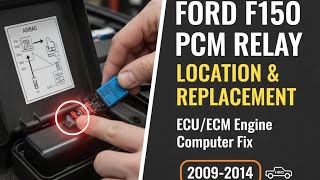
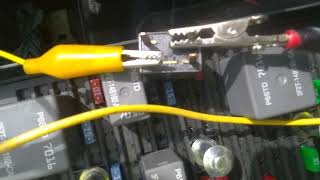
How to confirm: Test the battery and charging system. Battery voltage should be above 12.2V with the engine off and 13.5V-14.5V when running. Inspect battery terminals for corrosion. Check voltage at the PCM connector and test the PCM power relay, which is located in the engine compartment fuse box (Power Distribution Box). A common diagnostic trick is to swap the PCM relay with an identical one (like the horn or starter relay) to see if the issue resolves. 🎬 See how to test Ford 4 and 5 pin relays.
Typical fix: Replace the weak battery, clean the battery terminals, or replace the PCM power relay.
Est. part cost: $20-$250
Rare But Worth Checking
- Faulty Engine Coolant Temperature (ECT) Sensor: In some vehicles, the PCM compares the ECT reading at shutdown and startup to infer engine-off time. A faulty ECT sensor providing illogical readings (e.g., showing a hot engine is cold) could contribute to this code, though it's less common for this specific platform and would typically be accompanied by other ECT-related codes.
Diagnosis Steps
- Scan for all DTCs. Note if P068A or P06B8 are present, as this points strongly towards the TSB issue.
- If service was recently performed (including a battery change or jump-start), try a hard reset first. Disconnect the negative battery cable for 15-30 minutes to force all modules to power down completely.
- Test the battery and charging system. Ensure voltage is stable and above 12.2 volts with the engine off, and between 13.5-14.5 volts when running.
- Inspect the battery terminals and main PCM ground connections for corrosion or looseness. Key grounds are G103 and G104 on the right side of the engine compartment.
- Locate and inspect the PCM power relay in the Power Distribution Box (engine compartment fuse box). Swap it with an identical relay (e.g., horn or fan relay) as a quick test. If the problem changes, the relay is bad.
- Check for any available PCM software updates from Ford, as these can resolve software glitches that may cause the timer fault.
- If all power, grounds, and related components are good, the fault is likely internal to the PCM, requiring replacement.
Parts You'll Likely Need
- Powertrain Control Module (PCM)
(OEM #9L1A-12A650-GA (Example for 2009 5.4L, verify by VIN))— This is the most common fix when the issue is not related to a simple power cycle or battery problem. The internal timer circuit fails.
Trusted brands: Motorcraft, FS1 (Flagship One), Solo PCMs
OEM price range: $810-$905
Aftermarket price range: $400-$600 - PCM Power Relay
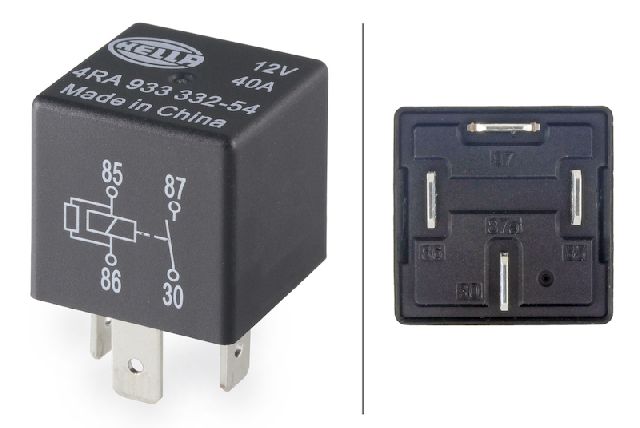
(OEM #F57B-14B192-AA (example, verify by VIN))— This relay supplies power to the PCM. If it fails or provides intermittent power, it can cause the timer fault. It's an inexpensive and common part to fail.
Trusted brands: Motorcraft, Standard Motor Products, Hella
OEM price range: $25-$40
Aftermarket price range: $15-$30
Related Codes That Often Appear With This One
- P068A — This code ('ECM/PCM Power Relay De-Energized Performance - Too Early') is often seen with P2610, as cited in Ford's TSB ASI-44707. It points directly to a problem with how the PCM is powering down.
- P06B8 — This code ('Internal Control Module Non-Volatile Random Access Memory (NVRAM) Error') is also mentioned in the TSB and indicates a memory error within the PCM, which is directly related to the timer and shutdown process.
Technical Service Bulletins (TSBs) & Recalls
- ASI-44707: States that the MIL can illuminate with DTCs P06B8, P068A, and P2610 if the key is not left in the OFF position for 30 seconds following powertrain control module reprogramming.
Platform-Specific Known Issues
- TSB ASI-44707 documents that P2610, P06B8, and P068A can appear if the key is not left in the OFF position for 30 seconds after PCM reprogramming.
- Owner experiences confirm that other power interruptions, like disconnecting the battery or even connecting some OBD-II scanners, can trigger this code on this platform due to its sensitive power-down sequence.
Mechanic-Grade Diagnostic Values
- Battery Voltage at PCM Connector (Engine Off) — expected: Above 12.2V. Failure: Voltage below 12.2V suggests a weak battery or high resistance in the power feed.
- Battery Voltage at PCM Connector (Engine Running) — expected: 13.5V - 14.5V. Failure: Voltage outside this range indicates a problem with the alternator or charging system.
- PCM Power Relay Coil Resistance — expected: ~67 to 72 ohms. Failure: Significantly higher or lower resistance, or an open circuit (O.L.), indicates a faulty relay coil.
Scan Tool Commands That Help
- Ford IDS / FORScan: PCM Adaptive Memory Reset — After replacing the PCM or performing a hard reset by disconnecting the battery. This command forces the PCM to relearn powertrain values and shift points, which can be necessary after a power interruption event that triggered P2610.
Wiring & Ground Locations
- PCM — Typically located in the engine bay, on the passenger side firewall.. This is the module setting the code. Its connections for power and ground are critical for proper timer function.
- PCM Power Relay — Located in the Power Distribution Box (main fuse box) in the engine compartment.. This relay provides main power to the PCM. A faulty or intermittent relay is a direct cause of power interruptions that can trigger P2610.
- G103 / G104 — G103 is on the right side of the engine compartment, on the fender. G104 is on the right side of the engine compartment, on the frame rail.. These are primary ground points for the PCM and other critical engine components. A loose or corroded ground at these locations can cause intermittent voltage drops and trigger this code.
Real Owner Repair Stories
- Ford Truck Enthusiasts Forum (2011 Ford F-150 5.0L (platform mate)) — Check engine light with code P2610, vehicle would intermittently not start.
❌ Tried (didn't work) Replacing the battery, Swapping the PCM power relay, Checking all related fuses
✅ What actually fixed it The Powertrain Control Module (PCM) was faulty and had to be replaced. After the new PCM was installed and programmed, the code did not return.
OEM Part Supersession History
9L3A-12A650-AXA, 9L3A-12A650-AXB, 9L3A-12A650-AXC→9L3A-12A650-AXD— Standard revision and software update for the part.
Heads up: These part numbers are for the 2009 F-150 with a 5.4L engine but are architecturally similar to the Expedition. Always verify the exact part number and hardware code (e.g., 9C2A-12B684-AB) for your specific vehicle's VIN before ordering.
Model Year Variations Within This Range
- 2009-2014: These years primarily used the 5.4L 3V Triton V8 engine. Diagnostics and parts like the PCM are generally consistent.
- 2015: The 2015 model year marked a major redesign, introducing the 3.5L EcoBoost V6 as the primary engine. The PCM, wiring, and specific diagnostic procedures are different from the earlier 5.4L models. While P2610 can still occur, the root causes may differ, and part numbers are not interchangeable.
Helpful Videos
Used OEM Parts in Stock


New Aftermarket Parts Available

The information in this article is provided for general reference and educational purposes only. Vehicle specifications, procedures, and part compatibility can vary by production date, trim level, and region. Always consult your vehicle's factory service manual and verify part numbers before purchasing or performing repairs. Safety-critical components such as airbags, seat belts, and braking systems should be installed by a qualified professional.
- Ford EXPEDITION:
- 🎬 Helpful Videos
- 🛍️ Shop This Part
- What's Unique About the 2009-2015 Ford EXPEDITION
- Diagnostic Flowchart
- Symptoms You May Notice
- Most Likely Causes
- Rare But Worth Checking
- Diagnosis Steps
- Parts You'll Likely Need
- Related Codes That Often Appear With This One
- Technical Service Bulletins (TSBs) & Recalls
- Platform-Specific Known Issues
- Mechanic-Grade Diagnostic Values
- Scan Tool Commands That Help
- Wiring & Ground Locations
- Real Owner Repair Stories
- OEM Part Supersession History
- Model Year Variations Within This Range
- 🎟️ Get 5% Off