

P2610 on 2009-2015 Ford Edge: Engine Off Timer Fixes
This code usually points to a weak or failing battery that is disrupting the Powertrain Control Module's (PCM) internal clock, known as the Keep Alive Memory (KAM). Before suspecting the expensive PCM, the first and most common fix is to test, clean the terminals of, or replace the vehicle's 12V battery.
- P2610 means the PCM's internal 'engine off' clock isn't working right.
- The most likely cause is a weak or old battery. Always test the battery first.
- Do not rush to replace the PCM; it's expensive and less likely to be the problem than the battery.
- This code will cause an automatic failure on an emissions test.
- If you recently had the vehicle serviced, a simple battery disconnect/reconnect might clear a temporary software glitch.
What's Unique About the 2009-2015 Ford EDGE
On the Ford Edge from this era, the electrical system and PCM can be particularly sensitive to voltage fluctuations. A weak battery, improper jump-start, or failure to follow correct procedure after a PCM software update can easily trigger this code. A Ford Technical Service Bulletin (TSB ASI-44707) specifically notes that P2610 can appear if the key is not left in the OFF position for at least 30 seconds after reprogramming the module, highlighting this sensitivity.
Diagnostic Flowchart
Tap your situation to follow the diagnostic path that matches what you're seeing on this vehicle.
Generation note: The 2009-2015 range covers the late first-generation (2009-2010), the facelifted first-generation (2011-2014), and the first year of the second-generation (2015) Ford Edge. The causes for P2610, particularly battery and PCM-related issues, are common across these model years and also affect platform mates like the Lincoln MKX.
Symptoms You May Notice
- Check Engine Light is on.
- Inability to pass an emissions test because system monitors won't complete their cycles.
- Potential issues with remote start functionality.
- Intermittent no-start condition where the vehicle is completely unresponsive until the battery is disconnected and reconnected.
- In rare cases, intermittent stalling while driving.
- Reduced engine performance and fuel efficiency over time as the PCM's adaptive learning is compromised.
- Other electrical issues, such as power door locks failing to operate from the fob.
- Replacing the PCM before thoroughly testing the battery and its connections. A weak battery is the most frequent cause and should always be the first check.
- Ignoring a recent battery replacement or jump-start as the triggering event. The code may simply need to be cleared or the modules reset after the voltage fluctuation.
Most Likely Causes
- Weak or Failing Battery 🔴 High Probability The PCM requires a stable voltage supply to maintain its Keep Alive Memory (KAM) and internal timers when the engine is off. An aging battery with low voltage or bad cells can drop below the required threshold, corrupting the timer and triggering P2610.
How to confirm: Test the battery voltage with a multimeter. A healthy, fully charged battery should read approximately 12.6V with the engine off. A reading below 12.2V suggests a problem. Perform a load test to check its true health. Check battery terminals for corrosion and ensure connections are tight.
Typical fix: Replace the vehicle's 12V battery and clean the battery terminals. 🎬 See this walkthrough on how to replace your battery. After replacement, it may be necessary to reset the Battery Monitoring System (BMS) for vehicles equipped with it. 🎬 Learn how to DIY reset the Battery Monitoring System.
Est. part cost: $150-$250 - PCM Software/Programming Glitch 🟡 Medium Probability As noted in TSB ASI-44707, procedural errors during PCM reprogramming can cause this code. It can also occur from other software anomalies or after a significant voltage drop from a dead battery.
How to confirm: This is difficult to confirm without a dealer-level scan tool. If the code appeared immediately after a battery change, jump-start, or service involving a computer flash, this is a likely cause. A simple 'hard reset' by disconnecting the battery for at least 15 minutes can sometimes resolve it by clearing the KAM. 🎬 Watch: Three methods to fix the P2610 engine error code.
Typical fix: Perform a battery reset. If that fails, a technician may need to re-flash the PCM with the latest Ford calibration.
Est. part cost: $0-$200 - Faulty Powertrain Control Module (PCM) ⚪ Low Probability Internal component failure (like a capacitor, processor, or solder joint) within the PCM can corrupt the timer function. This can be caused by age, heat, or voltage spikes.
How to confirm: This is a last resort after ruling out the battery, wiring, and software. Diagnosis requires a professional scan tool to check for internal PCM faults and to monitor the 'Engine Off Timer' parameter in live data.
Typical fix: Replace the PCM. The new unit must be programmed specifically for the vehicle's VIN.
Est. part cost: $500-$1000
Rare But Worth Checking
- PCM Power or Ground Circuit Issue: A corroded or loose wire supplying the constant 'Keep Alive Power' (KAPWR) or ground to the PCM can mimic the symptoms of a bad battery or faulty PCM. A visual inspection of the PCM harness, connectors, and main grounding points is worthwhile before replacing expensive components.
- Faulty Engine Coolant Temperature (ECT) Sensor: In some systems, the PCM uses the ECT sensor reading after shutdown to help determine how long the engine has been off (a 'cold soak' timer). While less common for this specific code, an erratic ECT sensor could theoretically contribute to the timer performance issue. A diagnostic test of the sensor is simple with a multimeter.
Diagnosis Steps
- Read the code with an OBD-II scanner and check for any other codes, especially U-codes, P068A, or P1633.
- Inspect the battery terminals for corrosion and ensure they are tight.
- Test the battery. Check its static voltage (should be ~12.6V) and perform a load test to confirm its health. A voltage below 12.2V when off is a red flag.
- If the battery is weak or older than 4-5 years, replace it. Clear the codes and drive the vehicle to see if P2610 returns.
- If the battery is good, perform a 'hard reset' by disconnecting the negative battery terminal for at least 15 minutes to clear any temporary module glitches and reset the Keep Alive Memory (KAM).
- Check for any available Technical Service Bulletins (TSBs) related to P2610 or PCM updates for your specific vehicle, such as ASI-44707.
- Inspect the wiring and connectors at the PCM for any signs of damage, corrosion, or looseness. Pay special attention to the Keep Alive Power (KAPWR) wire and ground connections.
- If all the above steps fail, the issue is likely an internal fault in the PCM, which will require professional diagnosis and likely replacement.
Parts You'll Likely Need
- 12V Vehicle Battery
(OEM #Motorcraft BXT-65-850 (example Group 65 size, confirm specific vehicle requirement))— This is the most common cause. The PCM's internal timer relies on stable battery voltage when the car is off, and a weak battery disrupts this function.
Trusted brands: Motorcraft, Interstate, DieHard, Odyssey
OEM price range: $180-$250
Aftermarket price range: $150-$220 - Powertrain Control Module (PCM)
(OEM #Varies by VIN, must be ordered and programmed by VIN.)— If the battery and wiring are confirmed to be good, the internal timer circuit in the PCM itself has likely failed. This is the least common but most expensive fix.
Trusted brands: Motorcraft (new or remanufactured), Cardone (remanufactured), Flagship One (remanufactured)
OEM price range: $700-$1000
Aftermarket price range: $400-$600
Related Codes That Often Appear With This One
- U-codes (e.g., U0100, U0140) — U-codes indicate network communication problems. They often appear alongside P2610 after a battery has been disconnected or has gone dead, causing multiple modules to lose power and communication simultaneously.
- P068A — This code means 'ECM/PCM Power Relay De-Energized Too Early'. It is often seen with P2610, especially in the context of TSB ASI-44707, as both relate to the PCM's power-down sequence.
- P1633 — This code stands for 'Keep Alive Power Voltage Too Low'. It directly points to an issue with the constant power supply to the PCM, which is the root cause of the P2610 timer fault.
Technical Service Bulletins (TSBs) & Recalls
- ASI-44707: Notes that P2610 can be triggered by improper procedure after PCM reprogramming.
Platform-Specific Known Issues
- TSB ASI-44707 notes that on 2009-2015 models, this code can be set along with P06B8 and P068A if the ignition key is not left in the OFF position for 30 seconds immediately following a PCM reprogramming procedure.
- A 2016 Edge owner on fordedgeforum.com experienced a no-start condition with P2610 and multiple U-codes. The vehicle was completely dead to the key fob and start button, but the exterior door keypad still worked. A brief battery disconnection restored functionality, pointing to a temporary module lockout caused by a voltage anomaly.
Mechanic-Grade Diagnostic Values
- Battery Voltage (Static, Engine Off) — expected: 12.4V to 12.7V. Failure: A reading below 12.2V indicates a discharged or failing battery.
- Charging System Voltage (Engine Running) — expected: 13.5V to 14.5V. Failure: Voltage significantly outside this range indicates a problem with the alternator or charging system.
- Engine Coolant Temperature (ECT) Sensor Resistance — expected: 2,000 to 3,000 Ohms at 68°F (20°C). Failure: No reading or a reading far outside the expected range indicates a faulty sensor.
- Live Data PID: 'Engine Off Timer' — expected: Timer should count down to zero within 5-10 seconds after engine shutdown.. Failure: Timer not counting down or taking significantly longer indicates a performance fault.
Scan Tool Commands That Help
- Ford IDS, FORScan, Launch X-431, Innova SDS: Battery Monitoring System (BMS) Reset — This is critical after replacing the vehicle battery, especially on 2011 and newer models. Failing to reset the BMS can cause the system to retain old battery parameters, leading to charging issues and potentially re-triggering P2610.
- Professional Scan Tool (e.g., iCarsoft CR Pro): PCM/ECM Reset to Factory Defaults — This can be used to erase all adaptive data from the PCM after a repair or to resolve a suspected software glitch that a simple battery disconnect does not fix.
- Manual Procedure (No Tool): BMS Reset: Ignition ON (engine off), flash high beams 5 times, then press the brake pedal 3 times within 10 seconds. The battery light on the cluster will flash to confirm the reset. — Use after a battery replacement if a compatible scan tool is not available. This procedure is widely cited for many Ford models of this era.
Wiring & Ground Locations
- Fuse 21 (2009 model) — In the under-hood Battery Junction Box (BJB).. This 7.5A fuse provides the Keep Alive Power (KAPWR) to the PCM. A blown fuse here will cut off constant power, preventing the engine off timer from working and setting P2610.
- PCM Power Relay — In the under-hood Battery Junction Box (BJB). Location varies by year: it is reportedly Relay #20 for 2007-2011 models and Relay #66 for 2010-2014 models. Check the owner's manual to confirm.. This relay supplies switched power to the PCM when the ignition is on. A faulty relay can cause intermittent power loss and trigger various PCM codes, including P2610.
- G103 / G104 — Main engine compartment ground points, typically located on the left side of the engine compartment on the frame rail or inner fender.. The PCM relies on clean, solid ground connections. A corroded or loose main ground can cause a floating voltage reference, leading to unpredictable electronic behavior and codes like P2610.
- PCM Ground Pins (2013 2.0L Example) — Pins 1, 2, and 4 on the main PCM connector.. These are the direct ground return paths for the PCM. A continuity test from these pins to a known good chassis ground is a definitive way to verify the PCM's ground circuit integrity.
Real Owner Repair Stories
- Ford Truck Enthusiasts Forums (Ford Truck (similar PCM logic)) — Check Engine Light with code P2610 appeared after dealing with trailer light issues.
❌ Tried (didn't work) Clearing the code without fixing the underlying electrical short; the code returned after two key cycles.
✅ What actually fixed it The user had a short in their trailer's wiring, which was blowing fuses and caused an electrical glitch in the truck. The final fix was to repair the trailer wiring short, replace the blown fuses/relays, and then clear the code. The P2610 did not return, indicating it was triggered by the external electrical fault.
Model Year Variations Within This Range
- 2011-2015: These models are equipped with a Battery Monitoring System (BMS). After a battery replacement, the BMS must be reset using a scan tool or a manual procedure. Failure to do so can lead to improper charging and electrical issues that could trigger P2610.
- 2009-2010 vs 2011-2014: The location of the PCM Power Relay in the under-hood fuse box may differ. Some sources indicate it is Relay #20 on earlier models and Relay #66 on later (facelifted) models. Always confirm with the vehicle's owner's manual.
- 2015: As the first year of the second generation, the main chassis ground point from the battery may be located on a dedicated stud on the firewall, to the driver's side of the battery, rather than on the frame rail.
Helpful Videos

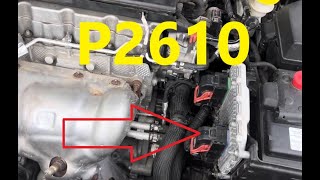

![Avoid Expensive Shop Repairs: DIY Reset the Ford Vehicle Battery Monitoring System [BMS]](https://img.youtube.com/vi/QTtb7rKaZTE/mqdefault.jpg)

Used OEM Parts in Stock



New Aftermarket Parts Available

The information in this article is provided for general reference and educational purposes only. Vehicle specifications, procedures, and part compatibility can vary by production date, trim level, and region. Always consult your vehicle's factory service manual and verify part numbers before purchasing or performing repairs. Safety-critical components such as airbags, seat belts, and braking systems should be installed by a qualified professional.
- Ford EDGE:
- 🎬 Helpful Videos
- 🛍️ Shop This Part
- What's Unique About the 2009-2015 Ford EDGE
- Diagnostic Flowchart
- Symptoms You May Notice
- Most Likely Causes
- Rare But Worth Checking
- Diagnosis Steps
- Parts You'll Likely Need
- Related Codes That Often Appear With This One
- Technical Service Bulletins (TSBs) & Recalls
- Platform-Specific Known Issues
- Mechanic-Grade Diagnostic Values
- Scan Tool Commands That Help
- Wiring & Ground Locations
- Real Owner Repair Stories
- Model Year Variations Within This Range
- 🎟️ Get 5% Off