

P2610 on 2013-2016 Dodge Charger: Causes and Fixes for the PCM Timer Fault
On a 2013-2016 Dodge Charger, code P2610 almost always points to a software glitch in the Powertrain Control Module (PCM). The most common fix, confirmed by multiple Technical Service Bulletins (TSBs) like 18-088-16, is a software update (reflash) from a Dodge dealership, which typically costs between $150 and $250. Before heading to the dealer, ensure your battery is healthy, as low voltage can also trigger this code.
- P2610 on a 2013-2016 Charger is most likely caused by outdated PCM software, a known issue addressed by manufacturer TSBs.
- Before replacing any parts or even going to the dealer, fully test your battery. A simple battery replacement can sometimes resolve the code.
- The official fix is often a PCM software update (reflash) at a Dodge dealership, which typically resolves a batch of other codes simultaneously.
- Do not be quick to replace expensive parts like the PCM or various sensors (crankshaft, EVAP) before checking for applicable software updates.
What's Unique About the 2013-2016 Dodge CHARGER
For this generation of Dodge Charger and its platform mates (Chrysler 300, Dodge Challenger), the manufacturer (FCA, now Stellantis) issued multiple Technical Service Bulletins (TSBs) that directly address P2610. These bulletins, such as 18-088-16 Rev. A, confirm that the root cause is often a software logic issue within the PCM, not a hardware failure. The fix prescribed in these TSBs is a PCM software update, which also resolves other seemingly unrelated trouble codes like P0335 (Crankshaft Sensor) and P0456 (EVAP Leak) that may appear at the same time.
Diagnostic Flowchart
Tap your situation to follow the diagnostic path that matches what you're seeing on this vehicle.
Symptoms You May Notice
- Check Engine Light is on
- Vehicle may intermittently stall
- Vehicle may fail to start or have a long crank time
- Failure to pass an emissions test because internal monitors won't complete.
- Other trouble codes may be present simultaneously (e.g., for EVAP, crankshaft sensor)
- "SVC 4WD" light may appear intermittently on AWD models.
- Replacing the crankshaft position sensor when code P0335 is also present, without first checking for the software TSB.
- Replacing EVAP system components (like the purge valve or leak detection pump) when codes like P0456 are also present, as the PCM reflash often fixes this code as well.
- Immediately replacing the PCM without first attempting a software reflash or verifying battery health.
Most Likely Causes
- Outdated PCM Software 🔴 High Probability The manufacturer released multiple Technical Service Bulletins (e.g., 18-088-16 Rev. A) specifically to update the PCM software to correct this fault, indicating it's a known and widespread issue on this platform.
How to confirm: A technician with a dealer-level scan tool (wiTECH) can check the current software calibration ID against the latest version available from Dodge. If a TSB for P2610 is open for the vehicle's VIN, the update is necessary.
Typical fix: Reprogramming (reflashing) the PCM with the updated software. This procedure typically takes about an hour.
Est. part cost: $0 - Weak or Failing Battery 🟡 Medium Probability Modern vehicles like the Charger are packed with electronics that are highly sensitive to voltage. A weak battery can cause voltage drops during shutdown or startup, corrupting the PCM's memory and internal timer logic.
How to confirm: Test the battery with a digital multimeter or a load tester. A healthy, fully charged battery should read approximately 12.4-12.6 volts with the engine off. With the engine running, the alternator should maintain 13.7-14.7 volts. A voltage drop during cranking is also a key indicator.
Typical fix: Replace the vehicle's battery. Many owners recommend this as the first step before paying for diagnostics.
Est. part cost: $150-$300 - Faulty Powertrain Control Module (PCM) ⚪ Low Probability
How to confirm: This is a diagnosis of exclusion. If the PCM software is confirmed to be up-to-date, the battery and charging system are healthy, and all related wiring/grounds are inspected and found to be good, the PCM itself may have an internal hardware failure.
Typical fix: Replace the PCM and program it to the vehicle's VIN. This is the most expensive option.
Est. part cost: $500-$1200
Rare But Worth Checking
- PCM Power or Ground Circuit Issue: While less common than software or battery issues, a corroded or loose wire supplying power or ground to the PCM can mimic the symptoms of an internal fault by causing intermittent power loss to the module.
Diagnosis Steps
- Check and Test the Battery First. Before any other step, ensure the battery is fully charged and healthy. Test voltage with the engine off (should be ~12.6V), during cranking (should not drop significantly), and while running (should be 13.7-14.7V). A weak battery is a common and simple fix.
- Scan for Technical Service Bulletins (TSBs). Use the vehicle's VIN to check for open TSBs. For this code, TSBs like 18-088-16 are highly relevant and should be the primary focus.
- Scan for All Trouble Codes. Note all other codes present. The presence of codes like P0335, P0456, or U0140 strongly suggests the software update TSB is the correct solution.
- Verify PCM Software Version. If a TSB exists, have a dealer or qualified shop with a wiTECH tool check if the PCM has the latest calibration. If not, perform the update as prescribed by the TSB. This is the most likely repair.
- Inspect PCM Wiring and Connectors. If the code persists after a software update, perform a visual inspection of the PCM harness connectors for corrosion, damage, or loose pins. Check the main power and ground wires to the PCM for integrity.
- Diagnose the PCM. If all other steps fail to resolve the code, the PCM may have an internal hardware fault. This is a last resort and involves replacing the module.
Parts You'll Likely Need
- Powertrain Control Module (PCM) Software Update — This is not a physical part, but a service. It's the most common fix documented in manufacturer TSBs (like 18-088-16) for this specific vehicle and code.
Trusted brands: Mopar (via Dealership Service)
OEM price range: $150-$250
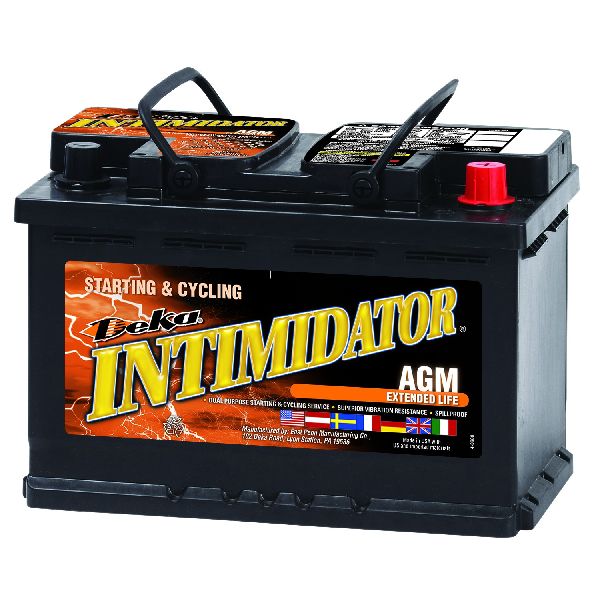
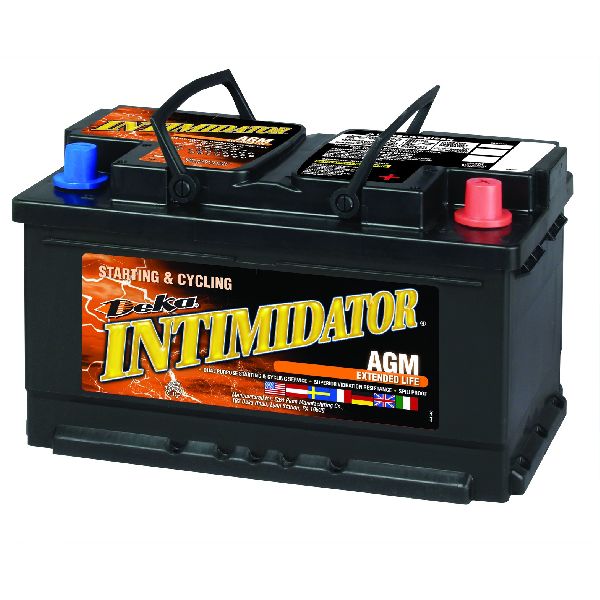
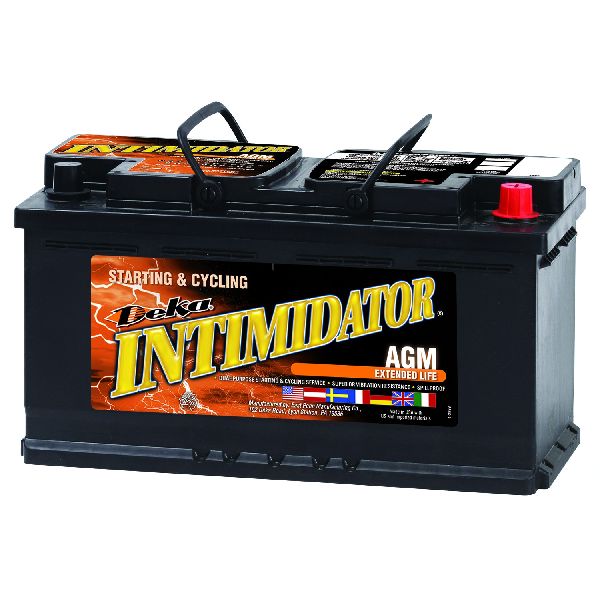
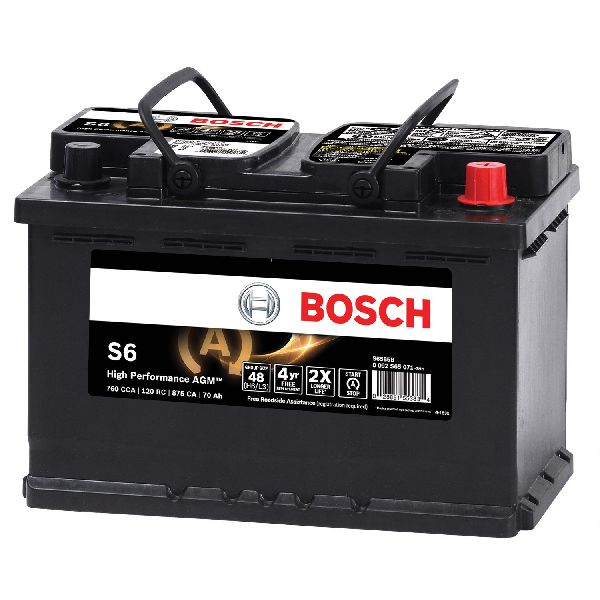
Aftermarket price range: N/A - Automotive Battery — A weak or failing battery can cause erratic voltage, leading to this and other electronic fault codes. It's a common and relatively inexpensive first step in diagnosis.
Trusted brands: Interstate, DieHard, Duralast
OEM price range: $200-$350
Aftermarket price range: $150-$300 - Powertrain Control Module (PCM)
(OEM #68212707AH, 68212703AB (Examples for 2014 5.7L model, part numbers vary by year, engine, and features))— In the rare case that a software update doesn't work and the battery is good, the PCM itself may have failed and requires replacement.
Trusted brands: Mopar (OEM)
OEM price range: $800-$1200
Aftermarket price range: $500-$900
Related Codes That Often Appear With This One
- P0335 — Crankshaft Position Sensor Circuit. The TSBs for the Charger often bundle a fix for this code with the P2610 software update.
- P0456 — EVAP System Small Leak. This is another code frequently addressed by the same PCM software update that fixes P2610.
- P2299 — Brake Pedal Position / Accelerator Pedal Position Incompatible. This code is also mentioned in TSBs alongside P2610.
- P0606 — Internal Control Processor. This code points more directly to a PCM internal fault and can appear with P2610, and is also addressed by TSB 18-088-16.
- U0140 — Lost Communication With Body Control Module (BCM). TSB 18-088-16 Rev. A also lists this code as being resolved by the PCM software update.
Technical Service Bulletins (TSBs) & Recalls
- 18-070-20: Addresses P2610 along with P0456 and P0335.
- 18-073-20: Addresses P2610 along with U1424-00, P0456, P2299, and P0335.
- 18-088-16 Rev. A: A key TSB for 2013-2014 models that involves reprogramming the PCM for P2610, P0335, P0456, U0140, and P0606.
- 18-075-17: Addresses P2610 along with multiple crankshaft and EVAP system codes.
- 18-094-16: Addresses P2610 along with misfire codes and EVAP codes.
Platform-Specific Known Issues
- Multiple TSBs were issued by Dodge for 2013-2016 Chargers, indicating that a PCM software update is the required fix for P2610. TSB 18-088-16 Rev. A specifically covers 2013-2014 Charger/Challenger/300 models with the 3.6L engine and lists P2610, P0335, P0456, U0140, and P0606 as codes resolved by the reflash.
Mechanic-Grade Diagnostic Values
- PCM Power Supply Voltage (at PCM connector) — expected: Should be >12.2V with engine off, and >13.5V with engine running.. Failure: Voltage below these thresholds indicates a battery or charging system issue that must be corrected before further PCM diagnosis.
- PCM Ground Circuit Integrity — expected: Using a 12-volt test light connected to a known good 12V source, probing the PCM ground circuits at the connector should result in a bright light.. Failure: A dim or non-illuminated test light indicates high resistance or an open in the ground circuit.
Scan Tool Commands That Help
- wiTECH: Reprogram PCM — This is the primary repair procedure outlined in multiple TSBs for P2610. It is used to load the updated software calibration that corrects the internal timer logic fault. A battery charger must be connected to maintain stable voltage (13.2-13.5V) during the flash process.
- wiTECH: View ECU Information/Calibration ID — Used before a reflash to verify if the PCM's current software is outdated compared to the latest version available on TechCONNECT. This confirms if the TSB is applicable.
Wiring & Ground Locations
- PCM Location — In the engine bay, on the passenger side, near the firewall and behind the front strut tower. It is a silver metal box with several large wiring connectors.. Physical access is required to inspect connectors for corrosion or damage, and for replacement if it is deemed faulty.
- Main Engine/PCM Ground — A critical ground point is located on a stud on the driver's side cylinder head, near the intake manifold. Another key ground is on the alternator bracket.. A poor ground connection at these points can cause erratic PCM behavior and voltage-related codes, including P2610. Cleaning and securing these grounds is a key diagnostic step if software and battery issues are ruled out.
- Chassis Ground Stud — There is a factory ground post with multiple wires attached under the front passenger seat, beneath the carpet.. This point ties various electronic modules to the chassis. While less likely to be the primary cause for P2610, poor connections here can contribute to widespread electrical issues.
Real Owner Repair Stories
- Reddit user 'Interesting-Lunch902' (2018 Mazda CX-3 (Note: Not a Charger, but demonstrates the same P2610 cause/effect)) — Check engine light with P2610 was on intermittently for a week, then the car failed to start (no crank, but lights worked).
❌ Tried (didn't work) Initially doubted the battery was the issue because interior lights worked fine.
✅ What actually fixed it Replacing the original 5-year-old battery resolved the P2610 code and the no-start condition. Another user confirmed 9 months later the fix held.
OEM Part Supersession History
05150787AA, 68214200AA, etc.→68214210AI, 68214211AI, 68214212AI, etc. (multiple revisions exist)— PCMs for the 2014 Charger 3.6L have numerous part numbers and revisions (AA, AB, AC, etc.). Later revisions often contain updated hardware and are flashed with the latest software from the factory.
Heads up: When replacing a PCM, it is critical to use a part number that is listed as compatible with the vehicle's VIN and specific options. Using an incorrect hardware version may cause communication errors or prevent the vehicle from starting, even if it is physically identical.
Model Year Variations Within This Range
- 2015-2016: The 2015 model year received a significant refresh, including an 8-speed automatic transmission becoming standard on all RWD V6 models. This introduced different PCM and TCM software calibrations compared to the 2013-2014 models. While the P2610 fault is still primarily software-related, the specific TSB and software update part number will differ from earlier years. For example, TSB 18-070-20 applies to 2016 models, while 18-088-16 applies to 2013-2014 models.
Helpful Videos

Used OEM Parts in Stock


New Aftermarket Parts Available


The information in this article is provided for general reference and educational purposes only. Vehicle specifications, procedures, and part compatibility can vary by production date, trim level, and region. Always consult your vehicle's factory service manual and verify part numbers before purchasing or performing repairs. Safety-critical components such as airbags, seat belts, and braking systems should be installed by a qualified professional.
- Dodge CHARGER:
- 🎬 Helpful Videos
- 🛍️ Shop This Part
- What's Unique About the 2013-2016 Dodge CHARGER
- Diagnostic Flowchart
- Symptoms You May Notice
- Most Likely Causes
- Rare But Worth Checking
- Diagnosis Steps
- Parts You'll Likely Need
- Related Codes That Often Appear With This One
- Technical Service Bulletins (TSBs) & Recalls
- Platform-Specific Known Issues
- Mechanic-Grade Diagnostic Values
- Scan Tool Commands That Help
- Wiring & Ground Locations
- Real Owner Repair Stories
- OEM Part Supersession History
- Model Year Variations Within This Range
- 🎟️ Get 5% Off