

OBD-II Code P2609: Intake Air Heater System Performance
What P2609 means, why it triggers, and how to fix it
- Code P2609 indicates a failure in your diesel's intake air heater system, causing hard starts and rough idling in temperatures below 50°F.
- Always test both batteries and inspect terminal connections first, as voltage drops from weak batteries trigger this code in over 30% of cases.
- On 2007.5+ Ram 6.7L Cummins engines, immediately perform a 'jiggle test' on the heater power stud to prevent a loose 'killer bolt' from causing $10,000+ in engine damage.
- Replacing the intake heater relays (costing $50-$150) resolves the issue for most owners, but they must be replaced in pairs and tested for voltage output, not just an audible click.
What Does P2609 Mean?
P2609 means the Powertrain Control Module (PCM) detected a performance failure in the intake air heater system. This system warms incoming air to assist diesel engine combustion in cold weather. The code triggers when the PCM commands the heater on but fails to see the expected 150+ amp electrical draw, monitored via a significant battery voltage drop. Gasoline engines do not use this system.
Technical definition: The SAE/OBD-II definition is 'Intake Air Heater System Performance'. The PCM runs a monitor during the first 15-30 seconds of a cold start. If it does not detect a specific, large voltage drop confirming the heater's high-amperage activation, it sets P2609.
Can I Drive With P2609?
Yes, But With Caution. You can drive, but cold-weather starting will be difficult and drain your batteries. Ignoring this code on 6.7L Cummins engines risks catastrophic engine damage if the heater's retaining bolt fails and falls into the intake. This 'killer bolt' failure requires engine repairs exceeding $10,000.
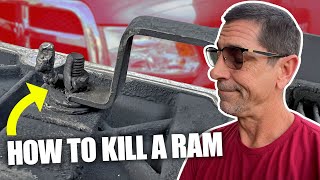
🎬 Watch: See how the 'killer bolt' causes catastrophic engine failure.Common Causes
- Failed Intake Air Heater Relays (Solenoids) (Very Common) — These high-amperage switches control electricity flow to the heater grid. They handle massive current (200+ amps), causing internal contacts to wear out, corrode, or burn up over time. This is the most frequent cause of P2609. 🎬 Watch: How to test the grid heater relay on a Ram.
- Weak or Failing Batteries (Common) — The heater system requires fully charged batteries to operate. If one or both batteries are weak or mismatched, the PCM detects an insufficient voltage drop during activation, triggering the code even if all heater components work perfectly.
- Corroded or Damaged Wiring/Connectors (Common) — Heavy-gauge wires running from the battery to the relays and heater grid loosen, corrode, or melt. High power draw means any poor connection creates high resistance, immediately triggering the code.
- Failed Intake Air Heater Element (Grid Heater) (Common) — The heating element burns out or breaks, creating an open circuit. On Cummins engines, the retaining nut on the heater element loosens and falls into the engine, causing catastrophic damage (the 'killer bolt').
- Poor Main System Ground (Less Common) — The PCM relies on stable voltage references. A corroded main ground wire for the battery or PCM causes erratic readings. On some Cummins engines, the heater grounds through a conductive gasket that degrades over time.
- Faulty Intake Air Temperature (IAT) Sensor (Rare) — An incorrect reading from the IAT sensor tricks the PCM into miscalculating heater performance. The PCM uses this sensor to decide when to activate the heater and verify its operation.
- Defective Intake Air Heater Blower Motor or Restricted Duct (Rare) — Some systems use a dedicated blower motor to force air over the heating element. A failed motor or crushed air duct prevents the system from functioning, leading to a performance code.
- Failed Powertrain Control Module (PCM) (Very Rare) — The internal driver circuit within the PCM that controls the heater relays fails. Consider this only after ruling out all other possibilities and applying any available PCM software updates.
Symptoms
- Check Engine Light is On — An illuminated Check Engine Light on the dashboard is the primary indicator.
- Hard Starting or No Start in Cold Weather — The engine cranks significantly longer before starting, or fails to start entirely, when outside temperatures drop below 50°F.
- Rough Idle After Cold Start — The engine runs roughly and noisily for the first 30-60 seconds until it warms up to operating temperature.
- Excessive White Smoke from Exhaust on Startup — Incomplete combustion from cold air causes a large plume of white smoke (unburnt fuel) from the tailpipe immediately after starting.
- Lack of Voltage Drop on Dash Gauge (also visible on scanner) — During a normal cold start, the voltage gauge dips noticeably when the 'Wait to Start' light is on. An absence of this dip indicates the heater is not drawing power.
Diagnostic Flowchart
Tap your situation to follow the diagnostic path that matches what you're seeing on this code.
Common Fixes & Costs
- Replace Intake Air Heater Relays
— Parts: $50-$150 for a pair, Labor: $50-$100, ~0.5 hr book time
(DIY)
Dodge/Ram 5.9L/6.7L Cummins (2006-2018): OEM Mopar 5187880AC (Alt: Dorman 902-300, Standard Motor Products RY1701)
Ford 6.7L Powerstroke: OEM Motorcraft DY-869 (Alt: Standard Motor Products RY-793) - Replace Weak or Dead Batteries — Parts: $300-$500 for a pair, Labor: $50-$100, ~0.5 hr book time (DIY)
- Repair or Replace Damaged Wiring/Connectors — Parts: $10-$100, Labor: $60-$250, ~1.5 hr book time (Intermediate)
- Replace Intake Air Heater Element (Grid Heater)
— Parts: $150-$850, Labor: $200-$1500, ~3.0 hr book time
(Intermediate)
Dodge/Ram 6.7L Cummins (2007.5+): OEM Cummins/Mopar 3970001 / 4948124 (Alt: Freedom Injection 3970001) - Install Aftermarket Grid Heater Solution
— Parts: $220-$1000, Labor: $200-$400, ~3.0 hr book time
(Intermediate)
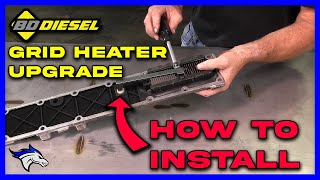
Dodge/Ram 6.7L Cummins (2007.5-2024): OEM N/A (Alt: BD Diesel 1041520, Banks Power 42797-B)
Used vs. New Parts: Buying Guide
When a used part is worth it: Never use used parts for this system. A used relay has an unknown lifespan and handles extreme current, making it a fire risk. A used grid heater carries the exact same risk of engine damage as your current one.
Donor quality checklist:
- For relays, only consider New Old Stock (NOS) in original packaging.
- For a grid heater, visually inspect for any signs of arcing, melting, or looseness at the power stud. A 'jiggle test' is mandatory.
Decision logic:
- If The part is an electrical relay → Always buy new from an OEM or reputable aftermarket brand. Cost savings are not worth the fire risk.
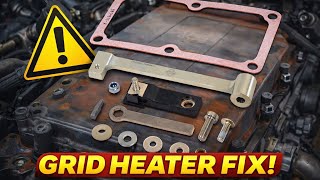
- If The part is a Cummins grid heater element → Buy a new OEM part or an aftermarket solution (Banks or BD Diesel) that eliminates the 'killer bolt' design flaw.
- If The part is wiring or connectors → Always use new, correctly-gauged wire and high-quality connectors designed for high-amperage circuits.
Warranty tradeoff: Used parts have a 30-day warranty. New aftermarket parts carry 1-year to lifetime warranties. New OEM parts carry 1-2 year warranties.
Worst-case if a used part fails: $10,000+ if a used Cummins grid heater fails and drops the 'killer bolt' into the engine.
What Happens If You Wait — Timeline
- 0-1 month: Code P2609 is set. In warm weather, there are no symptoms. In cold weather (<50°F), the engine cranks for 2-3 extra seconds and produces white smoke. (MPG impact: 0%% · Added cost: $0)
- 1-4 months: Hard starting in cold weather requires extended cranking, straining batteries. The engine runs rough for 60 seconds. On Cummins engines, the failing connection arcs, deteriorating the 'killer bolt'. (MPG impact: 0-2% (due to incomplete combustion on startup)% · Added cost: $50-$100 in excess wear on the starter and batteries.)
- 4-12 months (High Risk Stage): A no-start condition strands the driver. The risk of a stuck relay causing a fire increases. For Cummins owners, the 'killer bolt' breaks and falls into the intake manifold. (MPG impact: N/A (vehicle may not start)% · Added cost: $300-$800 (batteries/starter) OR $10,000-$20,000+ (engine replacement).)
- 12+ months: Catastrophic failure. Constant electrical issues damage the PCM. A stuck relay leads to an engine fire, or the 'killer bolt' destroys the engine. (MPG impact: N/A% · Added cost: Total vehicle loss due to fire, or $10,000-$30,000 for engine replacement.)
Cost of Not Fixing It
- Immediate (Cold Climate): Hard starting or no-start condition, leading to being stranded. Excessive cranking causes premature wear on the starter and drains batteries. (Added cost: $300-$800 (for new batteries and a starter))
- 1-6 months (All Climates): On Cummins engines, a failing grid heater connection ('killer bolt') arcs, breaks, and falls into the intake manifold. (Added cost: $10,000-$20,000+ (for cylinder head repair or complete engine replacement))
- Ongoing: A faulty, stuck-on relay creates a constant high-amperage draw, draining batteries and posing a significant engine fire risk, even when parked. (Added cost: Total vehicle loss in case of fire.)
Diagnosis Steps
- Perform a Visual Inspection & 'Jiggle Test' (Cummins)
Inspect all wiring for loose battery terminals, corroded relay connectors, or melted insulation. On Cummins engines, firmly grasp the power stud on the grid heater and attempt to wiggle it. If it moves, the internal 'killer bolt' is loose. Stop immediately and tow the vehicle to a diesel specialist to prevent engine destruction.
Tools: Flashlight, Hands (Beginner) - Test the Batteries
Diesel trucks require two healthy batteries. Use a multimeter to ensure both batteries rest above 12.2V and pass a load test. Test each battery individually. One bad battery brings the entire system down and triggers P2609.
Tools: Multimeter or battery load tester (Beginner) - Check for Technical Service Bulletins (TSBs)
Search online for TSBs related to P2609 for your specific vehicle. Manufacturers frequently release bulletins with updated repair procedures or required PCM software updates. Ram has multiple TSBs for this issue on Cummins engines.
Tools: Internet access (Beginner) - Test the Intake Air Heater Relays
Listen for a loud 'clunk' from the relays when the key turns to 'ON' in cold weather. For a definitive test, use a multimeter to check for battery voltage at the relay's output terminal when commanded on. No voltage output means the relay failed internally.
Tools: Multimeter, assistant (Intermediate) - Perform a Voltage Drop Test
With the circuit activated, place one multimeter lead on the battery positive post and the other on the relay input post. A reading over 0.2V indicates a bad cable. Repeat across the relay (input to output). A reading over 0.5V across the relay confirms high internal resistance and failure.
Tools: Multimeter, assistant or bidirectional scan tool (Advanced) - Test the Intake Air Heater Element Resistance
Disconnect the main power cable from the heater element. Measure resistance between the heater's power stud and the engine block (ground). A healthy element reads very low (0.2 to 1.0 ohms). A reading of infinite ohms (OL) confirms a broken element requiring replacement.
Tools: Digital Multimeter, basic hand tools (Intermediate) - Test Amperage Draw with an Amp Clamp
Place a high-current inductive amp clamp around the main power cable leading to the grid heater. During a cold start, a healthy single element draws 115+ amps; dual elements draw 230+ amps. Zero or low amps despite voltage presence confirms a bad heater element or ground.
Tools: Inductive amp clamp (Advanced) - Test the Relay Control Circuit
If a relay does not click, disconnect its small electrical connector. Check for a 12V signal on the control wires when the key turns on. If 12V is present, the relay is dead. If no signal exists, the wiring from the PCM or the PCM itself is faulty.
Tools: Multimeter, assistant (Advanced) - IAT Sensor Plausibility Check
View live data for the Intake Air Temperature (IAT) sensor using a scan tool. After a cold soak, the IAT must match ambient air and engine coolant temperatures. A reading of -40°F or 250°F confirms a faulty sensor preventing heater activation.
Tools: OBD-II Scan Tool with Live Data (Advanced)
When This Code Triggers (Freeze-Frame Conditions)
- Monitor Trigger: Key-On, Engine Off (The PCM tests the heater circuit during the 'Wait to Start' period before the engine cranks.)
- Intake Air Temperature (IAT): < 50-66°F (10-19°C) (The monitor only runs when the intake air is cold enough to require heating.)
- Engine RPM: 0 RPM (The primary performance test occurs during the pre-heat cycle before the engine starts.)
- Time After Key-On: 0-15 seconds (The PCM expects to see a large voltage drop within the first 15 seconds of turning the key to the 'ON' position.)
Related Codes
- P0542 — Indicates 'Intake Air Heater A Circuit High' and often appears with P2609 on Ram trucks. TSBs recommend replacing both the heater grid and relays when these codes appear together.
- P0541 — Indicates 'Intake Air Heater A Circuit Low'. Appears alongside P2609 if the circuit has low voltage due to high resistance.
- P2509 — Indicates 'ECM/PCM Power Input Signal Intermittent'. Triggered by poor battery connections or failing batteries that affect overall electrical stability.
- P2607 — Indicates 'Intake Air Heater B Circuit Range/Performance'. Points to a performance issue in the second heating circuit on dual-element systems.
Climate & Environmental Factors
- Cold Climate: The intake air heater system activates at temperatures below 50-60°F. The code is far more likely to trigger and cause hard-starting symptoms in colder climates during fall and winter.
- Humidity and Road Salt: High humidity and winter road salt accelerate corrosion on high-amperage electrical connections and ground points. This corrosion increases electrical resistance, directly causing the P2609 code.
- Altitude: High altitude exacerbates symptoms. Thinner air is harder to compress to ignition temperatures in a diesel engine, making a functional heater critical at 5,000+ feet.
How to Talk to a Mechanic About This Code
Say this: "I have a P2609 code. Please test the batteries, intake heater relays, and perform a voltage drop test on the main power cables before quoting a full grid heater replacement."
This directs the technician to perform specific, cost-effective diagnostic steps first, preventing them from immediately quoting the most expensive repair.
Avoid saying:
- 'Just fix the check engine light.'
- 'My truck won't start when it's cold.'
- 'Do whatever you think is best.'
Questions to ask before authorizing the repair:
- What were the results of the battery load tests?
- Did the relays click, and what was the voltage reading at the output post when activated?
- What was the resistance reading on the heater element itself?
- For a Cummins engine: Did you perform a 'jiggle test' on the power stud to check for a loose 'killer bolt'?
- Is any part of this repair covered by the emissions warranty?
Where to Take It: Dealer vs Independent vs Chain
- Dealer:
Recommended for in-warranty vehicles or safety recalls. Be aware they recommend larger, more expensive repairs.
Best for: Vehicles under original, powertrain, or emissions warranty., Repairs related to a specific safety recall (like the Ram relay recall).
Downsides: Highest labor rates., Quick to replace entire assemblies per a TSB, even if only one component failed. (Typical cost: +50% vs. baseline) - Independent Shop:
Best overall fit for out-of-warranty repairs. Choose a reputable diesel specialist to diagnose and replace only the failed component.
Best for: Out-of-warranty trucks where cost is a factor., Shops specializing in diesel engines (Cummins, Powerstroke, Duramax)., Installing aftermarket solutions like Banks Monster-Ram or BD Diesel kits.
Downsides: Quality varies widely; must find a shop with specific diesel expertise. (Typical cost: +0% vs. baseline) - Chain Shop:
Avoid for P2609 diagnosis. Use only for basic battery replacement.
Best for: Battery replacement and terminal cleaning only.
Downsides: Technicians lack specialized knowledge for high-amperage diesel circuits., High risk of misdiagnosis and unnecessary part replacements., Unaware of specific issues like the 'killer bolt'. (Typical cost: -10% vs. baseline)
When to Walk Away From the Repair
If the estimated repair cost exceeds 40-50% of the truck's private-party value, consider alternatives.
- Car worth $15000, fix is $1800: Fix it. The cost to replace the entire grid heater assembly is well below the threshold.
- Car worth $45000, fix is $3000: Fix it. Check for emissions warranty coverage first.
- Car worth $12000, fix is $10000: Walk away. If the 'killer bolt' destroyed the engine, the repair is not economical. Sell the truck 'as-is'.
What Scan Tool You Need for This Code
Minimum: A scan tool that reads live data (IAT, Battery Voltage) and freeze-frame data. A basic code reader is insufficient.
A simple code reader only tells you P2609 is present. It cannot test components, monitor voltage drops, read IAT sensors, or command relays on and off.
Budget: Innova 1000 / BlueDriver Pro (~$100) — Provides live data streams to monitor battery voltage and IAT. Reads and clears codes. Lacks bidirectional control to command relays.
Mid-range: Foxwell NT510 Elite / XTOOL D7 (~$250) — Offers bidirectional control, allowing you to command the intake heater relays on/off from the scanner. Tests the entire circuit without needing a cold engine.
Professional: Autel MaxiCOM MK808S / MK900BT (~$450-800) — Offers full bidirectional control, active tests on relays, and detailed live data graphing. Excellent for serious DIYers with multiple vehicles.
Rent vs buy: Buy a midrange bidirectional scanner. Renting a basic scanner from a parts store lacks the bidirectional control needed to properly diagnose this high-amperage circuit.
How to Clear the Code After You Fix It
- Reconnect batteries securely.
- Use an OBD-II scan tool to erase the P2609 fault code.
- Perform a cold start and allow the 'Wait to Start' light to cycle completely before cranking.
Drive cycle (~15 minutes): The monitor runs at key-on during a cold start, not during a drive cycle. Let the vehicle sit for several hours until the engine is at ambient temperature. Turn the key to 'ON' and wait for the 'Wait to Start' light to go out. Start the engine. If the Check Engine Light stays off, the repair was successful.
Readiness monitors affected: Comprehensive Component Monitor (CCM), Emissions-related monitors if battery was disconnected
Before emissions retest: drive at least 50 miles to fully set monitors.
Watch out for:
- Clearing the code without repairing the fault guarantees it will return on the next cold start.
- Disconnecting batteries clears the code but resets all emissions readiness monitors, requiring a full drive cycle before passing an emissions test.
- Starting the engine before the 'Wait to Start' light goes out falsely triggers the P2609 code.
Will This Fail Emissions / State Inspection?
Yes — this code typically fails an OBD-II emissions inspection.
- California: A P2609 code causes an automatic failure of the OBD-II smog check. The Check Engine Light must be off and all readiness monitors set to 'Ready'.
- New York: An illuminated Check Engine Light from P2609 is an automatic failure. A full drive cycle is needed to set readiness monitors before a re-test.
- Texas: In counties requiring emissions testing, an active P2609 code results in a failed inspection.
Most Commonly Affected Vehicles
- Dodge/Ram 2500/3500 with 6.7L Cummins Engine (2007.5-2024) — Extremely common issue. TSBs exist for 2012-2016 models recommending replacement of the heater grid and relays together. The 'killer bolt' issue is a severe risk for all 6.7L engines.
- Dodge/Ram 2500/3500 with 5.9L Cummins Engine (2003-2007) — Frequently traced to failed relays or main power connections from the battery. The 'killer bolt' remains a concern.
- Ford F-250/F-350/F-450 Super Duty with Powerstroke Engine (2008-2019) — Very common on 6.4L and 6.7L Powerstroke trucks, often caused by failing relays or wiring issues near the batteries.
- Chevrolet/GMC Silverado/Sierra 2500HD/3500HD with Duramax Engine (2004-2016) — Prevalent in LLY, LBZ, LMM, and LML generations. Susceptible to relay and wiring failures.
- Ram 4500/5500 Chassis Cab with Cummins Engine (2008-2024) — Commercial trucks using the 6.7L Cummins are equally affected by relay failures and the 'killer bolt' risk.
- International Trucks with MaxxForce DT Engines (2007-2014) — Medium-duty commercial trucks use an intake grid heater system that fails and causes hard-starting issues.
- Mercedes-Benz / Freightliner Sprinter with Diesel Engines (2500/3500) (2007-2018) — Sprinter vans use an intake air heater but typically log circuit-specific codes (P0540, P0541, P0380) rather than the generic P2609.
Manufacturer-Specific Notes
- Dodge/Ram (Cummins): The 'killer bolt' is a severe design flaw where the nut securing the heater element's power stud loosens and falls into the intake manifold, destroying the engine. A P2609 code requires an immediate 'jiggle test' of this stud.
- Dodge/Ram (Cummins): TSB #9003585 for 2012-2016 models explicitly advises replacing the Intake Heater Grid and Relay as a complete set when code P2609 is present with P0542.
- Dodge/Ram (Cummins): Safety Recalls Y76 and 13A were issued for 2021-2022 Ram HD trucks due to intake air heater relays short-circuiting and causing engine compartment fires. The fix replaces the relay.
- General Motors (Duramax): The PCV system vents oily vapor into the intake, coating the intake air heater and affecting sensor readings and performance over time.
- Volkswagen/Audi (TDI): This code is virtually non-existent on VW/Audi TDI engines. They do not use high-amperage grid heater systems, relying instead on glow plugs.
Real Owner Stories
2005 Ram 5.9L Cummins - Misleading Relay Test
P2609 code appeared. Owner noticed slight melting on the rubber boot of a power feed cable to the heater relay.
What they tried:
- Tested both relays by applying power; both 'clicked'.
- Cleaned all corroded terminals.
- Tested heater element resistance, which showed 0 ohms (good).
Outcome: After replacing both relays with new Mopar parts, the code persisted. A deeper test revealed the original relay clicked but failed internally to pass current. A dealer cleared the hard code, resolving the issue.
Lesson: A relay can 'click' but still be bad. The click only means the coil activates; the internal contacts can be burnt. Always test for voltage output, not just the click.
2020 Ram 2500 6.7L Cummins - A Recurring Problem
Owner experienced a recurring P2609 code since new. Dealer repairs lasted only 6 months before the light returned.
What they tried:
- Two separate dealer visits to fix the issue under warranty.
- Ignored the code in a warm climate until a smog test was required.
Outcome: Frustrated with temporary OEM fixes, the owner installed a Banks Monster-Ram aftermarket intake. This replaced the problematic factory grid heater design, permanently resolving the failure point and passing the smog test.
Lesson: For newer 6.7L Cummins, a recurring P2609 indicates a design flaw. Aftermarket solutions offer a permanent fix over repeated OEM part replacements.
2007 Ram 2500 5.9L Cummins - The Simple Fix
P2609 and P2509 codes appeared after the grid heater cycled on a cold night.
What they tried:
- Attempted to reset the code by disconnecting batteries.
- Took the truck to the dealer for diagnosis.
Outcome: The dealership found a bad ground connection at the intake heater. They replaced the conductive intake heater gaskets, restoring the proper ground and clearing the codes.
Lesson: Don't assume the expensive heater element failed. The issue is often the relays, wiring, or ground connection. Thorough visual inspection saves money.
2006 5.9L Cummins with 256k miles - Melted Battery Terminal
P2609 code appeared, followed by a drop in the voltage gauge.
What they tried:
- Inspected batteries and discovered the positive terminal on the passenger-side battery completely melted.
Outcome: The driver-side battery failed. Because the computer monitors only the driver-side battery, it commanded the alternator to overcharge, melting the passenger-side terminal. Replacing both batteries and the terminal resolved the issue.
Lesson: On dual-battery trucks, a failure in one battery causes destructive symptoms in the other. Always test and replace batteries in pairs.
How to Prevent This Code From Triggering
- Clean Battery Terminals and Relay Connections (Every 6 months) — Corrosion on high-amperage terminals increases resistance, triggering P2609. Cleaning with a wire brush prevents this buildup.
- Apply Dielectric Grease to Electrical Connectors (Whenever connections are serviced) — Dielectric grease blocks moisture and road salt from reaching metal contacts, preventing corrosion and voltage drops.
- Perform a 'Jiggle Test' on Cummins Grid Heater Stud (Every oil change) — Checking for looseness in the power stud provides an early warning of a pending 'killer bolt' failure, allowing proactive replacement before engine destruction.
- Test and Maintain Batteries (Annually (before winter)) — The grid heater requires massive current that weak batteries cannot support. Ensuring both batteries are healthy is critical for system operation.
- Run the Heater Periodically in Off-Season (Once a month) — Cycling the system keeps relay contacts clean and prevents components from seizing due to inactivity.
Frequently Asked Questions
Can I just ignore P2609 if I live in a warm climate?
No. The underlying electrical fault creates a fire hazard. On Cummins engines, it is an urgent warning sign for the 'killer bolt' issue, which destroys engines regardless of climate.
Why did the P2609 code appear right after I replaced my batteries?
This happens when a small wire for the heater system is left off, connected loosely, or damaged during the battery swap. Double-check all connections at the battery terminals, especially the smaller wires feeding the relays.
What is the 'killer bolt' and how does it relate to P2609?
The 'killer bolt' is the nut and stud on the Cummins grid heater that loosens from vibration, eventually falling into the engine and causing catastrophic damage. A P2609 code is an early warning because the loosening connection creates high electrical resistance. Checking this bolt is a mandatory preventative step.
My dealer said the repair might be covered under an 'Emissions Warranty.' Is that correct?
Yes. Because the intake air heater reduces emissions (like unburnt fuel/white smoke) during cold starts, it is part of the emissions control strategy. Many manufacturers cover the grid heater system under the federal emissions warranty, saving you thousands.
Is it better to use OEM or aftermarket parts for the intake air heater system?
Use high-quality OEM or reputable aftermarket parts for relays and wiring due to the extreme electrical current. For the Cummins grid heater, aftermarket solutions from Banks or BD Diesel permanently eliminate the 'killer bolt' design flaw and are highly recommended.
Will clearing the code make it go away?
No. The code returns as soon as the computer runs its self-test on the next cold start. You must repair the underlying hard fault for the code to stay clear.
What are the most common misdiagnosis mistakes for P2609?
The most common mistake is replacing the expensive grid heater element when the actual problem is a cheap relay or a bad wire. Mechanics also frequently overlook weak batteries, which cannot supply enough power to pass the PCM's self-test. Always test relays for voltage output, not just an audible click.
Why don't I see code P2609 on my gasoline car?
Gasoline engines use spark plugs to ignite highly volatile fuel and do not require pre-heated air. Diesel engines rely on high compression to heat the air enough to ignite the fuel. In cold weather, an electric heater is required to warm the incoming air before compression.
Key Takeaways
- Code P2609 indicates a failure in your diesel's intake air heater system, causing hard starts and rough idling in temperatures below 50°F.
- Always test both batteries and inspect terminal connections first, as voltage drops from weak batteries trigger this code in over 30% of cases.
- On 2007.5+ Ram 6.7L Cummins engines, immediately perform a 'jiggle test' on the heater power stud to prevent a loose 'killer bolt' from causing $10,000+ in engine damage.
- Replacing the intake heater relays (costing $50-$150) resolves the issue for most owners, but they must be replaced in pairs and tested for voltage output, not just an audible click.
Helpful Videos

The information in this article is provided for general reference and educational purposes only. Vehicle specifications, procedures, and part compatibility can vary by production date, trim level, and region. Always consult your vehicle's factory service manual and verify part numbers before purchasing or performing repairs. Safety-critical components such as airbags, seat belts, and braking systems should be installed by a qualified professional.
- 🎬 Helpful Videos
- What Does P2609 Mean?
- Can I Drive With P2609?
- Common Causes
- Symptoms
- Diagnostic Flowchart
- Common Fixes & Costs
- Used vs. New Parts: Buying Guide
- What Happens If You Wait — Timeline
- Cost of Not Fixing It
- Diagnosis Steps
- When This Code Triggers (Freeze-Frame Conditions)
- Related Codes
- Climate & Environmental Factors
- How to Talk to a Mechanic About This Code
- Where to Take It: Dealer vs Independent vs Chain
- When to Walk Away From the Repair
- What Scan Tool You Need for This Code
- How to Clear the Code After You Fix It
- Will This Fail Emissions / State Inspection?
- Most Commonly Affected Vehicles
- Manufacturer-Specific Notes
- Real Owner Stories
- 2005 Ram 5.9L Cummins - Misleading Relay Test
- 2020 Ram 2500 6.7L Cummins - A Recurring Problem
- 2007 Ram 2500 5.9L Cummins - The Simple Fix
- 2006 5.9L Cummins with 256k miles - Melted Battery Terminal
- How to Prevent This Code From Triggering
- Frequently Asked Questions
- Can I just ignore P2609 if I live in a warm climate?
- Why did the P2609 code appear right after I replaced my batteries?
- What is the 'killer bolt' and how does it relate to P2609?
- My dealer said the repair might be covered under an 'Emissions Warranty.' Is that correct?
- Is it better to use OEM or aftermarket parts for the intake air heater system?
- Will clearing the code make it go away?
- What are the most common misdiagnosis mistakes for P2609?
- Why don't I see code P2609 on my gasoline car?
- Key Takeaways
- 🎟️ Get 5% Off