

P2583 on 2017-2024 Volvo S90: Front Radar Sensor Fault Causes and Fixes
On a 2017-2024 Volvo S90, code P2583 means the forward-facing camera/radar unit (ASDM) has a fault, disabling safety systems like adaptive cruise and auto-braking. The most common cause is a dirty or obstructed windscreen. Cleaning the area in front of the rearview mirror often fixes it. If not, windscreen damage or the need for recalibration are the next most likely culprits.
- P2583 on your S90 almost always points to an issue with the camera/radar unit in the windscreen.
- Before seeking professional help, always start by thoroughly cleaning the windscreen in front of the rearview mirror.
- This is a safety-critical system. Continued driving is possible, but your automatic braking and other driver aids will not work.
- If the windscreen is chipped or cracked in the sensor area, it must be replaced, not repaired.
- Any replacement of the windscreen or the sensor unit requires professional ADAS recalibration to function correctly.
What's Unique About the 2017-2024 Volvo S90
The Volvo S90, built on the SPA platform, integrates the forward radar and camera into a single unit called the ASDM, located inside the car at the top of the windscreen. This is different from some other manufacturers that place the radar in the front grille. This placement makes the system highly sensitive to windscreen condition, including cleanliness, chips, cracks, and even the use of non-OEM glass, which can all trigger the P2583 code. Any windscreen replacement requires a mandatory and precise ADAS recalibration.
Symptoms You May Notice
- A message on the driver display, such as 'Windscreen sensor Sensor blocked, see Owner's manual'.
- A message on the driver display, such as 'City safety reduced function'.
- Adaptive Cruise Control (ACC) is unavailable or disabled.
- Pilot Assist is unavailable.
- City Safety (collision avoidance) system is disabled.
- Illuminated warning light on the instrument cluster.
- Replacing the ASDM unit when the actual problem is a simple obstruction, a non-OEM windscreen, or a need for recalibration.
- Blaming the radar unit when the fault lies with a damaged or uncalibrated windscreen, which is a much more common failure point.
Most Likely Causes
- Obstructed Windscreen Sensor 🔴 High Probability The sensor is located behind the windscreen, making it susceptible to external contamination.
How to confirm: Visually inspect the windscreen area in front of the interior rearview mirror. Look for dirt, bird droppings, snow, ice, or heavy condensation.
Typical fix: Thoroughly clean the outside of the windscreen in front of the sensor unit. In cold weather, use the defroster to clear any ice or fog. The code may clear automatically after cleaning and driving.
Est. part cost: $0 - Cracked or Chipped Windscreen 🟡 Medium Probability Any distortion in the glass in the sensor's line of sight can disrupt its calibration and ability to see properly.
How to confirm: Carefully inspect the area of the windscreen in front of the ASDM unit for any stone chips, cracks, or delamination. Even a small chip can be enough to cause the fault.
Typical fix: The windscreen must be replaced. Volvo recommends against repairing chips in this critical area. After replacement, the ASDM must be recalibrated by a dealer or qualified ADAS shop.
Est. part cost: $800-$1500 (for OEM windscreen) - Sensor Misalignment / Needs Recalibration 🟡 Medium Probability This is almost guaranteed to occur after a windscreen replacement if not calibrated. It can also happen from a minor front-end impact, or sometimes for no apparent reason, requiring a software-based recalibration.
How to confirm: This requires a diagnostic scan tool capable of reading ADAS-specific codes. A code like B1A7F (Forward Looking Sensor Alignment) or a history of recent windscreen replacement or collision would point to misalignment. Volvo's Technical Journal TJ 31514 also advises performing a calibration if a customer complains about Intellisafe functions.
Typical fix: The ASDM unit must be recalibrated using specialized ADAS targets and software like Volvo's VIDA system. This is a job for a Volvo dealer or a specialty auto glass/repair shop. It may take several attempts to succeed.
Est. part cost: $0 (calibration is a labor charge, typically $250-$600) - Faulty Windscreen Heater Element ⚪ Low Probability The vehicle uses a heater grid in the windscreen to keep the sensor area clear. If this fails, fog or ice can easily block the sensor in cold/humid weather.
How to confirm: This issue typically appears only in cold or humid conditions. A technician can test the electrical circuit for the heater grid in the windscreen. A specific code, B1A7A (Forward Looking Sensor Heater), may also be present.
Typical fix: The windscreen must be replaced to restore the heater function. Some have attempted to repair the grid with conductive paint, but this is not an OEM-approved fix.
Est. part cost: $800-$1500 (for OEM windscreen with heater)
Rare But Worth Checking
- Internal ASDM Failure: While uncommon, the camera/radar unit itself can fail internally. This is usually the last resort after all other possibilities (obstruction, alignment, windscreen) have been ruled out. Diagnosis requires a Volvo-specific scan tool. Volvo Technical Journal TJ 30836 notes that DTC U300087 can lead to ASDM replacement on early models.
- Dirt Inside Windscreen: In rare cases, dirt or debris can get trapped between the ASDM unit and the inside of the windscreen. This requires a visit to a workshop to have the cover removed and the area cleaned.
- Low System Voltage: A weak or failing main or support battery can cause widespread, intermittent electronic faults. Low voltage can cause the ASDM to throw fault codes like P2583. If other seemingly unrelated electrical gremlins are occurring, the battery system should be tested.
Diagnosis Steps
- Read the fault codes using an OBD-II scanner. Note any other ADAS-related codes, especially B1A7F or B1A7A.
- Thoroughly clean the exterior of the windscreen in the area directly in front of the rearview mirror assembly.
- If it is cold or humid, use the front defroster for several minutes to clear any condensation or ice from the sensor area.
- Clear the codes and test drive the vehicle to see if the code returns. Many times, cleaning is all that is needed.
- If the code returns, carefully inspect the windscreen in the sensor's viewing area for any chips, cracks, or pitting. Even a small chip can cause this fault.
- Check vehicle history. If the windscreen has been recently replaced, the issue is very likely a lack of calibration. The vehicle must be taken to a shop with ADAS calibration equipment.
- If the windscreen is damaged, it must be replaced and the ADAS system recalibrated. Using non-OEM glass is not recommended as it can cause calibration failures.
- If the windscreen is clear and intact, and the problem persists (especially in cold weather), have a technician test the windscreen's integrated heater circuit for the sensor.
- As a final step, a dealer or specialist will need to perform a full diagnostic on the ASDM unit itself using Volvo's VIDA software to check for internal failures, following procedures outlined in technical journals like TJ 31514.
Parts You'll Likely Need
- Windscreen
(OEM #Varies by features (e.g., 32368945))— The most common parts-based failure is a chip or crack in the sensor's line of sight, or a failed internal heater grid. Both require full windscreen replacement. Aftermarket glass is available but OEM is recommended to avoid calibration issues.
Trusted brands: Volvo (OEM), Pilkington, Saint-Gobain, Glavista
OEM price range: $800-$1500
Aftermarket price range: $400-$900 - Active Safety Domain Master (ASDM)
(OEM #Varies by model year, e.g., 36010230 (early) or 36012070 (later))— In rare cases, the sensor unit itself fails internally and must be replaced and calibrated. This is a last resort after ruling out all other causes.
Trusted brands: Volvo (OEM)
OEM price range: $1500-$2000
Aftermarket price range: Not Available
Related Codes That Often Appear With This One
- B1A7F — This code indicates the forward-looking sensor requires alignment. It often appears with P2583 when the root cause is misalignment after an impact or windscreen replacement.
- C0083 — This is a more general fault code for the forward-looking sensor. It may be stored alongside P2583 if the system detects an internal or communication failure with the ASDM unit.
- B1A7A — This code points directly to a fault in the forward-looking sensor's heater circuit, which is embedded in the windscreen. It confirms that the cause of P2583 is likely due to sensor blockage from fog or ice in cold weather.
- U300087 — An intermittent internal control module failure. Volvo issued a Technical Journal (TJ 30836) for early XC90s (a platform mate) with this code, which could disable City Safety and other functions, sometimes requiring ASDM replacement.
Technical Service Bulletins (TSBs) & Recalls
- Volvo TJ 31514: Outlines fault-tracing procedures for the ASDM. It advises against replacing the ASDM for certain fan-related DTCs and recommends performing a software update and calibration as a primary step for customer complaints about Intellisafe functions.
- Volvo TJ 30836: Pertains to early SPA-platform XC90s showing a 'City safety reduced function' message with DTC U300087. Depending on the chassis number, the fix involved either a software upgrade or a complete replacement of the ASDM unit.
- Honda Service Bulletin (for context): While for a different brand, a bulletin for the same code P2583-76 on Honda vehicles shows a similar diagnostic path: if the radar won't align, check the physical mounting bracket and clips for damage before replacing the expensive radar unit itself.
Platform-Specific Known Issues
- Owner Experience: Windscreen Chip Leads to Massive Repair Quote: An owner on the Volvo Owners Club Forum reported that a small stone chip on their SPA-platform vehicle's windscreen led to the ADAS system failing. A main dealer quoted a staggering £2,550 for the repair, which
Mechanic-Grade Diagnostic Values
- Windscreen Heater Grid Continuity — expected: Low resistance, typically under 5 ohms.. Failure: An open circuit (infinite resistance) indicates a break in the heater grid, requiring windscreen replacement.
- System Voltage at ASDM — expected: Greater than 12.5V.. Failure: A voltage below 12.5V can cause the ASDM to malfunction and may prevent software downloads or calibration procedures from completing successfully.
Scan Tool Commands That Help
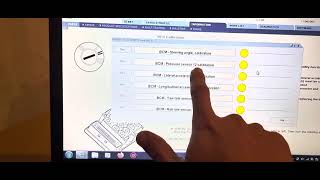
- Volvo VIDA: ASDM Calibration — This function is required after replacing the windscreen or the ASDM unit itself. It is also used to resolve fault code B1A7F (Forward Looking Sensor Alignment). The procedure involves placing targets at specific locations and following on-screen instructions.
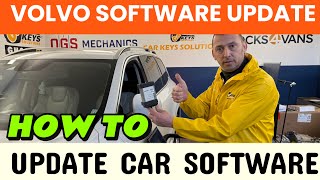
- Volvo VIDA: ASDM Software Reload — If an internal software error is suspected, or if a Technical Journal advises it, a software reload can be performed. This requires purchasing the software through a VIDA subscription and downloading it to the module. This is often a dealer-level fix for persistent, non-hardware related faults.
- Volvo VIDA: Configuration Test — Before attempting a paid software download, a technician can run a $0.01 'Configuration Test'. This confirms that the communication pathway between the laptop, the DiCE interface, and the vehicle's modules is working correctly, ensuring a paid software flash won't fail due to a connection issue.
Wiring & Ground Locations
- ASDM Module Connector — Located at the top of the windscreen, integrated into the rearview mirror assembly.. This is the primary connection point for the ASDM. Technicians may need to access it to check for power, ground, and CAN bus signals if an internal module failure or communication issue is suspected.
- Main Ground Terminals — Easily accessible ground terminals are located on both the left and right spring strut turrets in the engine compartment.. Poor grounding can cause a wide range of electrical issues, including low voltage faults in sensitive modules like the ASDM. Checking that these main grounds are clean and tight is a fundamental step in diagnosing any complex electrical problem.
- ASDM Power Supply Fuse — The ASDM is typically powered by a fuse in the Central Electronic Module (CEM), located under the glove compartment. For the 2017-2024 S90, this is often fuse F51 (5A), designated for the 'Active safety module'.. A blown fuse will cause a complete loss of function for the ASDM, leading to the P2583 code and disabling all related safety features. This should be checked early in the diagnostic process if the module appears to be completely inactive.
OEM Part Supersession History
36003613, 36010594, 32327716, 36012872→36012070— Standard part evolution for hardware/software improvements and component consolidation.
Heads up: Part number 36012070 is specified for S90 models up to chassis number 261256 and from chassis number 824156 for later model years (2022+). It is critical to verify the correct part number for the specific vehicle's VIN using a parts catalog, as installing the wrong hardware version can lead to communication or function failures.
Model Year Variations Within This Range
- 2017-2021 vs 2022-2024: The ASDM part number 36012070 has specific chassis number cutoffs. For S90, it's used up to chassis #261256. For later model years (approx. 2022+), it applies from chassis #824156 onwards, indicating a potential hardware change or different supplier during the mid-cycle refresh.
- 2021+: Vehicles equipped with the Android-based infotainment system (iCup) may experience unique software-related issues, such as invalid security certificates that can affect module communication and updates, as detailed in Volvo Technical Journal TJ 35929.
Diagnostic Flowchart
Other Known Issues on This Vehicle
Issues unrelated to this code that are worth knowing about as an owner of this generation:
- Premature Brake Wear 🟠 Medium — Very common, especially on rear brakes. Owners report needing pads and rotors replaced as early as 15,000-25,000 miles.
- Sensus Infotainment System Glitches 🟠 Medium — Widespread on earlier 2017-2019 models. Symptoms include freezing, lagging, black screens, and random reboots. Software updates have improved it, but issues can persist. (Ref: Multiple software updates issued; a class-action lawsuit was filed regarding system failures.)
- High Oil Consumption / Piston Ring Issues (Early T6) 🔴 High — Reported on some early (approx. 2016-2018) T6 twin-charged engines across the SPA platform. Caused by a piston ring fault that should have been addressed under warranty. (Ref: Likely addressed by internal dealer campaigns or warranty extensions for affected VINs.)
- Vibrations at Highway Speed 🟡 Low — Some owners report persistent vibrations at highway speeds (80-135 km/h) that are difficult to diagnose, potentially related to wheels, tires, or AWD components. (Ref: Volvo has a Technical Journal for dealers to follow a specific test schedule to diagnose the source of such vibrations.)
- T8 Twin Engine Reliability Concerns 🟠 Medium — Early T8 plug-in hybrid models (approx. 2016-2018) had various issues, including problems with the electric motor transmission (ERAD), on-board chargers, and other complex hybrid components.
Used vs. New Parts: Buying Guide for This Vehicle
When a used part is the smart pick: A used OEM windscreen from a low-mileage donor vehicle can be a cost-effective option, provided it is free from any chips, scratches, or delamination in the critical sensor viewing area. A used part makes less sense for the ASDM module itself.
Donor-vehicle mileage cap: roughly under 50000 miles for the part to have meaningful remaining life.
What to inspect on the donor part:
- For a windscreen: Inspect the glass against a bright light to reveal any fine scratches or pitting in the area in front of the camera.
- For a windscreen: Ensure the heater grid element connectors and wiring are intact and not corroded.
- For any part: Verify the donor vehicle was not in a major front-end collision, which could have caused unseen stress or damage to the components.
OEM-only on this vehicle (don't cheap out):
- Active Safety Domain Master (ASDM): Due to software licensing and the need for a software reload/calibration tied to the specific vehicle's VIN, installing a used ASDM is highly problematic. The module may be 'locked' to the donor car's VIN, making it impossible to program without advanced, unauthorized tools. Always purchase a new OEM module from a dealer.
- Windscreen: While aftermarket glass is available, many professional installers and forums strongly recommend using OEM or OEM-equivalent (e.g., Pilkington, Saint-Gobain) glass. Cheaper aftermarket windscreens can have slight variations in curvature or optical clarity that cause ADAS calibration to fail repeatedly, costing more in labor than the savings on the part.
Aftermarket brands forum-validated for this vehicle:
- For windscreen glass, brands like Pilkington and Saint-Gobain are often the original equipment suppliers to Volvo and are considered safe alternatives to dealer-branded glass.
Brands owners have reported issues with on this vehicle:
- Unnamed or low-cost aftermarket windscreen brands are frequently cited as a source of failed ADAS calibrations. It is best to avoid them for vehicles with the ASDM system.
Real Owner Stories
Aggregated from forums and TSBs cited above. Mileages and costs reflect what owners reported in those sources.
2017 Volvo S90
Symptoms: The owner reported that a small stone chip on the windscreen led to the ADAS system failing completely.
What fixed it: The windscreen required replacement followed by a system recalibration.
Source hint: Volvo Owners Club Forum - 'Radar stopped working - damaged windscreen - quoted £2,550'
2017 Volvo S90 — 24000 miles
Symptoms: While not directly P2583, the owner noted the vehicle was 'metal on metal' regarding brake wear, which is a common platform-mate issue often discussed alongside S90 maintenance.
What fixed it: Replacement of pads and rotors.
Source hint: Reddit r/Volvo - 'Had brakes done today. S90 actually metal on metal at 24k miles.'
Related OBD-II Codes
Frequently Asked Questions
My S90 is displaying 'City safety reduced function' and 'Windscreen sensor blocked.' Does Volvo TJ 31514 apply to this?
Can I use an aftermarket windscreen if I have code P2583 on my S90?
Is there a specific TSB for early SPA-platform Volvos regarding the 'City safety reduced function' message?
Why does my S90 only show the sensor blocked message in cold or humid weather?
How much does it cost to fix a P2583 code caused by a cracked windscreen on an S90?
Helpful Videos
We Have This Part in Stock

The information in this article is provided for general reference and educational purposes only. Vehicle specifications, procedures, and part compatibility can vary by production date, trim level, and region. Always consult your vehicle's factory service manual and verify part numbers before purchasing or performing repairs. Safety-critical components such as airbags, seat belts, and braking systems should be installed by a qualified professional.
- Volvo S90:
- 🎬 Helpful Videos
- 🛍️ Shop This Part
- What's Unique About the 2017-2024 Volvo S90
- Symptoms You May Notice
- Most Likely Causes
- Rare But Worth Checking
- Diagnosis Steps
- Parts You'll Likely Need
- Related Codes That Often Appear With This One
- Technical Service Bulletins (TSBs) & Recalls
- Platform-Specific Known Issues
- Mechanic-Grade Diagnostic Values
- Scan Tool Commands That Help
- Wiring & Ground Locations
- OEM Part Supersession History
- Model Year Variations Within This Range
- Diagnostic Flowchart
- Other Known Issues on This Vehicle
- Used vs. New Parts: Buying Guide for This Vehicle
- Real Owner Stories
- 2017 Volvo S90
- 2017 Volvo S90 — 24000 miles
- Related OBD-II Codes
- Frequently Asked Questions
- 🎟️ Get 5% Off