

P2583 on 2016-2022 Honda Pilot: Millimeter Wave Radar Fault Causes and Fixes
This code means the advanced safety systems, like Adaptive Cruise Control (ACC) and Collision Mitigation Braking (CMBS), have been disabled due to a problem with the front radar sensor. The most common cause is a dirty or obstructed sensor located behind the front grille's Honda emblem. If cleaning it doesn't work, the sensor needs professional recalibration, which can cost $300-$500. A full sensor replacement is rare but can exceed $1,500.
- P2583 means your Pilot's advanced safety features (like automatic braking) are turned off.
- Before anything else, thoroughly clean the large Honda emblem on the front grille. This is the most common fix, especially in winter.
- Any minor front-end bump can misalign the radar sensor, requiring a professional calibration.
- This is not a DIY-friendly repair. Fixing the code almost always requires expensive, specialized equipment to re-aim the radar sensor correctly.
- Do not replace the radar sensor unless a professional has diagnosed it with an internal failure; the issue is usually just obstruction or alignment.
What's Unique About the 2016-2022 Honda Pilot

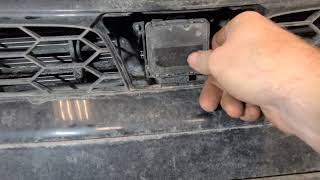
On modern Hondas like the 2016-2022 Pilot, the millimeter wave radar is cleverly hidden behind the large, flat Honda emblem on the front grille. While this protects it, it also makes it highly susceptible to being blocked by snow, ice, or even thick mud, which is a very common cause for this code in winter. Honda has issued service bulletins like A18080E for related models addressing the system's sensitivity and fragile mounting clips, suggesting that minor physical issues can easily trigger this fault. Honda has also acknowledged that a loose radar adapter can trigger codes P2583-97, P2583-76, and P2583-92 even without a collision. Another TSB, A21-068, provides a software update for some Honda models to reduce the system's oversensitivity to snow and ice causing false P2583-76 (misalignment) codes. Manufacturer Bulletin #A17-064 further notes that software issues can lead to improper calibration or front radar blindness due to severe weather conditions.
Symptoms You May Notice

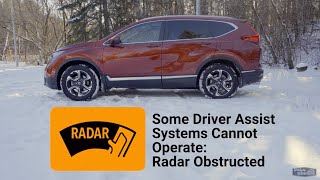
- Warning message on the dashboard, such as "Some Driver Assistance Systems Cannot Operate: Radar Obstructed," "Adaptive Cruise Control (ACC) Problem," or "Collision Mitigation System Problem".
- A Christmas tree effect of multiple warning lights on the dash.
- Flashing or illuminated indicators for ACC, CMBS, and Lane Keeping Assist System (LKAS).
- Adaptive Cruise Control will not engage or will disengage unexpectedly. As noted in Bulletin #A26-036, customers may experience unexpected cancellation during vehicle operation when P2583-76 is stored.
- The Collision Mitigation Braking System will not function.
- Auto High-Beam system may be disabled. 🎬 Watch: A guide to fixing driver assist system warnings.
- Replacing the radar sensor when it only needs cleaning or recalibration. This is a very expensive mistake, as the sensor itself is often not the point of failure. Always check for obstructions, broken clips, and attempt recalibration first.
Most Likely Causes

- Obstructed Radar Sensor 🔴 High Probability The sensor is located behind the front grille emblem, a prime location for accumulating snow, ice, mud, or road grime. This is the most common trigger for the 'Radar Obstructed' message and code P2583-97.
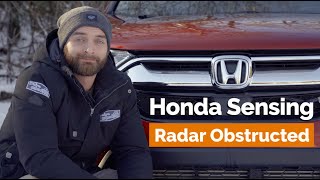
How to confirm: Visually inspect the Honda emblem on the front grille. If it is covered in any debris, it is obstructed. The code P2583-97 specifically means dust or dirt is on the radar. 🎬 See how to quickly clear the radar obstructed message.
Typical fix: Gently clean the emblem with a soft cloth. For ice, allow the vehicle to warm up to melt it; do not use a scraper or hot water, which could damage the emblem or the sensor behind it. After cleaning, the code may clear on its own after driving over 25 mph for a few minutes.
Est. part cost: $0 - Misaligned Radar Sensor 🟡 Medium Probability Even a minor front-end impact, like a parking lot bump or hitting a curb, can knock the sensor out of its precise alignment. This is often indicated by suffix code P2583-76. Sometimes, heavy snow/ice can trigger a -97 code which then leads to a -76 code even after the obstruction is gone. Bulletin #A21-068 notes this can occur when outside temperatures are low or near freezing due to snow and ice getting stuck to the front of the radar.
How to confirm: This requires a professional scan tool to read the specific suffix code. If the code is P2583-76 (Misalignment) or P2583-54 (Aiming Incomplete), the sensor needs calibration.
Typical fix: Perform a static and/or dynamic re-aiming of the millimeter wave radar. This must be done by a dealership or a qualified ADAS shop with calibration targets and software. The cost for calibration is typically between $300 and $500.
Est. part cost: $0 (calibration is a labor charge) - Damaged Radar Mounting Bracket or Clips ⚪ Low Probability The plastic clips holding the radar unit can become brittle or break, causing excessive play in the sensor and preventing it from holding alignment. Honda TSB A18080E specifically instructs technicians to check for this before replacing the whole unit. Honda has also issued requests for information on vehicles where the radar adapter is loose without any collision history, indicating it's a known potential failure point.
How to confirm: After removing the front bumper cover, physically check if the radar unit is loose or has play by gently twisting it. Inspect the mounting clips for any cracks or missing tabs.
Typical fix: Replace the damaged mounting clips (Part # 36806-TLA-A01) or the entire bracket if it is bent. The radar will need to be re-aimed after this repair.
Est. part cost: $25-$50
Rare But Worth Checking
- Internal Radar Sensor Failure: This is uncommon but can happen, especially after a more significant front-end collision or water intrusion. It is often indicated by suffix code P2583-49 (Internal Failure) or P2583-96 (Internal Component Failure). NHTSA ODI #11645537 describes a case where a dealer found code P2583-49 indicating a millimeter wave radar failure even after clearing snow debris. Some owners on Reddit have reported sensor failure after using a portable jump starter. This is an expensive part, so all other possibilities should be ruled out first.
- Low Battery Voltage: A weak or failing 12V battery can cause a cascade of seemingly unrelated electronic errors, including the Honda Sensing system. Multiple forum users report that replacing an old battery resolved the issue after a short drive cycle. If multiple, seemingly unrelated driver-assist warnings appear at once, a weak battery is a likely suspect before blaming the switch panel or sensors.
- CAN Bus Communication Failure: The code P2583-87 (Lost Communication With The Millimeter Wave Radar) indicates a communication problem on the vehicle's network, not necessarily a fault with the radar unit itself. This could be due to a bad ground connection, a wiring issue, or a problem with another module on the same network. A user on a Honda forum reported this code and found a bad ground continuity on the radar harness connector (terminal 1).
Diagnosis Steps

- Check the dashboard for specific warning messages like 'Radar Obstructed'.
- Thoroughly inspect and clean the front Honda emblem on the grille. Ensure it is free of dirt, snow, ice, or any obstructions.
- If cleaning does not resolve the issue, use a professional-grade OBD-II scanner like the Honda i-HDS to read the full DTC, including any suffix codes (e.g., -97, -76, -54, -49).
- If code P2583-97 (Dust or Dirt) is present, the issue is confirmed as an obstruction. Clear the code and test drive; if it returns, further diagnosis is needed.
- If code P2583-76 (Misalignment) or P2583-54 (Aiming Incomplete) is present, the vehicle must be taken to a qualified shop for radar calibration. NHTSA ODI #11575275 describes a situation where a dealership performed a static and dynamic re-aiming to resolve code P2583-54.
- If calibration fails or the sensor is physically loose, inspect the mounting bracket and clips for damage per TSB A18080E. Replace as necessary and attempt calibration again.
- Check the vehicle's 12V battery health. A weak battery can cause these errors.
- If code P2583-87 (Lost Communication) is present, check the radar sensor connector and test the ground continuity on the harness.
- If all other steps fail, or if a code like P2583-49 (Internal Failure) is present, the millimeter wave radar unit itself may need to be replaced and then calibrated.
Parts You'll Likely Need
- Millimeter Wave Radar Sensor
(OEM #36802-TG7-A02 (2016-2018), 36800-TG7-A01 (2016-2017))— This is only needed in rare cases of internal failure or unrepairable physical damage. It is the core component that triggers the P2583 code.
Trusted brands: Honda (Genuine OEM)
OEM price range: $900-$1200
Aftermarket price range: Not typically available - Radar Alignment Mounting Clip
(OEM #36806-TLA-A01)— The clips can break, causing the sensor to become loose and misaligned, which is a known issue that can prevent successful calibration. TSB A18080E recommends checking these first.
Trusted brands: Honda (Genuine OEM)
OEM price range: $8-$12 per clip (3 required)
Aftermarket price range: $15-$25 for a set of 3
Related Codes That Often Appear With This One
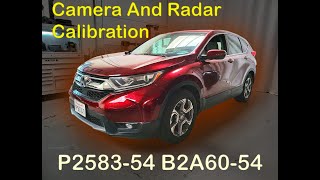
- B2A60-54 — This code often appears with P2583-54 and relates to an incomplete aiming process for the front camera, which works in conjunction with the radar for the Honda Sensing system. Both systems often need to be calibrated together.
Technical Service Bulletins (TSBs) & Recalls
- A18080E / MC-10144375-9999: Discusses checking radar mounting clips for damage when DTC P2583-76 is present and alignment fails on 2017-2019 Honda models.
- A21-068: Provides a software update for the millimeter wave radar to reduce false P2583-76 codes caused by snow/ice in low temperatures on various Honda models.
- A26-036: Notes that DTC P2583-76 (Temporary Stop of Integrated Driver Support System) may be stored if the ACC system experiences unexpected cancellation during operation.
- A17-064: Addresses millimeter wave radar software which may lead to improper calibration resulting in DTC P2583-76 or front radar blindness due to severe weather.
Platform-Specific Known Issues
- Honda has acknowledged issues with the radar mounting clips being a cause for alignment failure (DTC P2583-76) on similar models, instructing technicians to check the clips before replacing the entire radar unit.
- TSB A21-068 was released for several Honda models to update the radar software, reducing its sensitivity to snow and ice which can cause false P2583-76 (misalignment) codes.
- A warranty extension (TSB 21-012) was issued for 2019-2020 Pilots for MOST bus network connectors, which can cause various electronic issues. While not directly for P2583, it highlights the sensitivity of the vehicle's electronic networks.
Mechanic-Grade Diagnostic Values
- Voltage at Millimeter Wave Radar Sensor Connector (IGB Terminal) — expected: 11 to 14 V. Failure: Voltage below 11V or 0V indicates a power supply issue to the sensor.
- Resistance at Millimeter Wave Radar Sensor Connector (Ground Terminal) — expected: Below 1 Ω. Failure: High or infinite resistance indicates an open or poor ground connection for the sensor.
Hidden / Shadow Codes Worth Checking
- P2583-87: Lost Communication With The Millimeter Wave Radar. This indicates a CAN bus or wiring network issue, rather than a fault with the sensor itself. (see via Honda i-HDS or equivalent professional-grade scanner.)
- P2583-92: CMBS or FCW Over Working. This suggests the system is being activated too frequently, which can be caused by a loose radar adapter or other mounting issues. (see via Honda i-HDS or equivalent professional-grade scanner.)
- P2583-4A: Millimeter Wave Radar Function Error. This is a general internal function error code. (see via Honda i-HDS or equivalent professional-grade scanner.)
- P2583-64: Millimeter Wave Radar Aiming Error. This indicates a problem occurred during the aiming procedure itself. (see via Honda i-HDS or equivalent professional-grade scanner.)
Scan Tool Commands That Help
- Honda i-HDS: Millimeter Wave Radar Aiming — This function is required after replacing the radar sensor, repairing front-end damage, or when DTC P2583-76 (Misalignment) or P2583-54 (Aiming Incomplete) is stored.
- Honda i-HDS: Software Update — Used to apply firmware updates to the radar module, such as the one specified in TSB A21-068 to reduce false P2583-76 codes caused by snow and ice.
- Honda i-HDS: All DTC Check / Clear — To perform a full network scan of all vehicle systems to identify related codes and to clear codes after a repair. Some codes, like P2583-54, cannot be cleared until the underlying issue (incomplete aiming) is resolved.
Wiring & Ground Locations
- Radar Harness Connector — Directly on the back of the millimeter wave radar unit, behind the front grille emblem.. This is the primary connection point for power, ground, and CAN bus communication to the radar sensor. A poor connection here can cause communication codes like P2583-87. The ground is on Terminal 1 and the ignition power is on Terminal 5.
- Main Engine/Body Ground Strap — On the 3rd generation Pilot, a primary grounding point is located low on the engine block/transmission, accessible from the top of the engine bay.. A poor main ground connection can cause widespread, intermittent electronic issues across multiple systems, including the Integrated Driver Support System. While not a direct cause of P2583, it can create confounding electrical noise and communication faults.
Real Owner Repair Stories
- Honda Civic Forum user (Honda Civic (similar Honda Sensing architecture)) — ACC, LKAS, and other warning lights on. Code P2583-87 (Lost communication with the Millimeter Wave Radar) was stored.
❌ Tried (didn't work) Visual inspection of the radar unit (clean and secure)., Checking fuses #4 and #24 in the under-dash fuse box., Verifying voltage at the radar harness connector (Pin 5 to ground was OK).
✅ What actually fixed it The user found the root cause to be a lack of continuity on the ground circuit. The test from the harness connector's ground pin (Terminal 1) to the chassis ground failed, indicating a break or poor connection in the ground wire for the radar unit.
Documented NHTSA Reports
- An owner reported in NHTSA ODI #11575275 that their vehicle stored code P2583-54 for radar system aiming incomplete. The issue was resolved after the dealership performed a static and dynamic re-aiming of the radar.
- According to NHTSA ODI #11645537, a technician found code P2583-49 indicating a millimeter wave radar failure. Although snow debris was cleared from the front bumper, the internal failure code persisted, necessitating further repair.
OEM Part Supersession History
36800-TG7-A01→36802-TG7-A02— Part number revision for 2016-2018 model years. The specific reason for the change is not documented in public sources, but it is a common practice for minor hardware or internal software updates.
Heads up: 36800-TG7-A01 is listed for 2016-2017 models, while 36802-TG7-A02 is listed for 2016-2018 models, suggesting the -A02 part is backward compatible.36800-TG7-A11 / -A12→N/A— These part numbers are for the 2019-2022 Pilot models, which received a facelift and have a different part than the pre-facelift models.
Heads up: The radar units for 2016-2018 Pilots are not interchangeable with those for 2019-2022 Pilots due to the front fascia redesign and potential software differences.
Model Year Variations Within This Range
- 2016-2018: Honda Sensing was optional on lower trims (LX, EX) and standard on higher trims (Touring, Elite). The radar part numbers are specific to this pre-facelift period (e.g., 36802-TG7-A02).
- 2019-2022: Following the 2019 model year refresh, the Honda Sensing suite became standard on all Pilot trims, from the base LX up. The front fascia was restyled, and the radar sensor part number was changed (e.g., 36800-TG7-A12).
Diagnostic Flowchart
Real Owner Stories
Aggregated from forums and TSBs cited above. Mileages and costs reflect what owners reported in those sources.
Honda Pilot
Symptoms: Experienced a Christmas tree effect of multiple warning lights on the dash and Honda Sensing system errors.
What fixed it: Replaced the weak 12V battery.
Source hint: r/hondapilot - 'I'm cooked. Just bought this...'
Honda Insight
Symptoms: Required radar aim calibration to resolve ADAS system errors.
What fixed it: Paid dealership for static/dynamic radar re-aiming calibration.
Cost: $300-$425
Source hint: r/hondainsight - 'Price gouging from dealership? Radar aim calibration charge'
Honda Odyssey
Symptoms: Triggered code P2583-96 after attempting to jump-start the vehicle.
What fixed it: Determined the radar sensor was destroyed by using a portable jump starter.
Source hint: r/HondaOdyssey - 'P2583-96'
Related OBD-II Codes
Frequently Asked Questions
Does TSB A21-068 apply to my 2016-2022 Honda Pilot for code P2583?
I have code P2583-97 on my Pilot. Do I need to replace the radar sensor?
My Pilot has code P2583-76 and the dealer says it needs calibration. How much does this cost?
Can a bad battery cause the Honda Sensing warning lights and P2583 code on my Pilot?
The dealer wants to replace my entire radar unit for alignment failure. Should I check anything else first?
Is it safe to use a portable jump starter on my Honda Pilot if the battery dies?
Helpful Videos


We Have This Part in Stock


The information in this article is provided for general reference and educational purposes only. Vehicle specifications, procedures, and part compatibility can vary by production date, trim level, and region. Always consult your vehicle's factory service manual and verify part numbers before purchasing or performing repairs. Safety-critical components such as airbags, seat belts, and braking systems should be installed by a qualified professional.
- Honda Pilot:
- 🎬 Helpful Videos
- 🛍️ Shop This Part
- What's Unique About the 2016-2022 Honda Pilot
- Symptoms You May Notice
- Most Likely Causes
- Rare But Worth Checking
- Diagnosis Steps
- Parts You'll Likely Need
- Related Codes That Often Appear With This One
- Technical Service Bulletins (TSBs) & Recalls
- Platform-Specific Known Issues
- Mechanic-Grade Diagnostic Values
- Hidden / Shadow Codes Worth Checking
- Scan Tool Commands That Help
- Wiring & Ground Locations
- Real Owner Repair Stories
- Documented NHTSA Reports
- OEM Part Supersession History
- Model Year Variations Within This Range
- Diagnostic Flowchart
- Real Owner Stories
- Honda Pilot
- Honda Insight
- Honda Odyssey
- Related OBD-II Codes
- Frequently Asked Questions
- 🎟️ Get 5% Off