

P2583 on 2015-2020 Ford F-150: Adaptive Cruise Sensor Fault Causes and Fixes
This code means there's a problem with the front radar sensor for your Adaptive Cruise Control and Pre-Collision Assist. Most often, the sensor is just blocked by dirt, snow, or ice. Cleaning it is the first step. If that doesn't work, it may be misaligned or have failed, which requires professional calibration or replacement.
- P2583 on your F-150 means the front radar for your adaptive cruise control has a fault.
- The most likely cause is a blocked sensor. Before anything else, wash the front of your truck, paying attention to the driver's side of the bumper.
- If cleaning doesn't fix it, the sensor may be misaligned from a minor bump or have failed.
- Any repair beyond cleaning, including replacement or realignment, requires professional calibration with special tools.
- You can continue to drive the truck, but your automatic emergency braking and adaptive cruise control safety features will not work.
What's Unique About the 2015-2020 Ford F-150

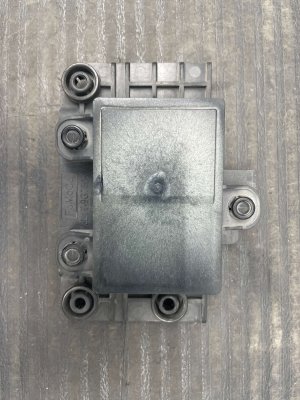
On the 2015-2020 F-150, the front distance range sensor (CCM) is located on the driver's side of the front bumper, often behind a plastic trim piece, making it susceptible to minor impacts and blockage from road debris, snow, or ice. This location also makes it vulnerable to issues from aftermarket bumpers or grilles that are not designed to accommodate it. While the code itself is straightforward, Ford has also issued related service messages (like SSM 48042) for these trucks where the ACC system can fail without any codes due to complex electrical issues tied to the ABS module, complicating diagnosis. Additionally, TSB 19-2004 for 'phantom braking' on some model years highlights the system's sensitivity to radar interference, requiring a specific bumper trim panel replacement to resolve.
Symptoms You May Notice

- Check Engine Light or wrench light may be illuminated
- "Adaptive Cruise Not Available" message on the instrument cluster
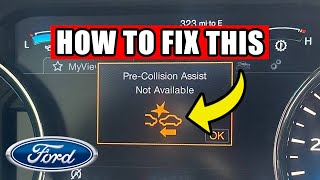
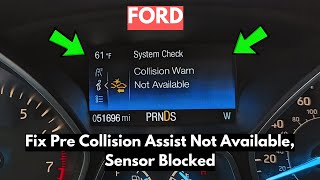
- "Pre-Collision Assist Not Available" message on the instrument cluster
- Adaptive Cruise Control will not engage or will disengage unexpectedly
- Inability to set or maintain vehicle speed using cruise control
- ACC icon on the dash is grayed out or does not appear.
- Replacing the wrong sensor. The issue is with the radar in the bumper (CCM), not the camera on the windshield used for Lane Keeping Assist.
- Assuming the module is bad when it only needs cleaning or calibration. Always start with the simplest fix.
- Replacing the sensor when the mounting bracket is the actual point of failure, preventing proper alignment.
Most Likely Causes

- Obstructed Radar Sensor 🔴 High Probability The sensor's low mounting position on the front bumper makes it vulnerable to blockage from snow, ice, mud, and dirt. Aftermarket license plate brackets or bull bars can also cause obstruction.
How to confirm: Visually inspect the plastic cover on the driver's side of the front bumper for any accumulation of snow, ice, mud, dirt, or other debris. The warning may appear intermittently in heavy rain or frost. Some scan tools may show a specific code like P2583-97 for an obstructed sensor.
Typical fix: Thoroughly clean the sensor area with a soft cloth and mild soap. A simple car wash often resolves the issue. 🎬 See how to clear a blocked sensor warning If the code was triggered by weather, it may clear on its own once conditions improve.
Est. part cost: $0 - Radar Sensor Misalignment or Bracket Damage 🟡 Medium Probability Even a minor parking lot bump, curb strike, or hitting road debris can be enough to knock the sensor's alignment out of specification or damage its plastic mounting bracket.
How to confirm: Inspect the sensor and its mounting bracket for any signs of physical damage, cracks, or looseness. A diagnostic scan tool may show a specific code for misalignment, such as P2583-76 or the Ford-specific B142E. The alignment must be precise; any play in the mount can cause the code.
Typical fix: The sensor must be professionally realigned using specialized calibration equipment and software (like Ford's FDRS). If the bracket is broken, it must be replaced, followed by a calibration. This is not a DIY repair and can cost several hundred dollars for the service.
Est. part cost: $50-$150 for a new bracket - Failed Cruise Control Module (Radar Sensor) ⚪ Low Probability While not exceptionally common, the module is an electronic component exposed to harsh conditions at the front of the vehicle, making it susceptible to failure from moisture intrusion or internal faults over time.
How to confirm: This is typically diagnosed after ruling out all other possibilities. If the sensor is clean, physically secure, wiring is intact, and calibration attempts fail, the module itself is likely faulty. A diagnostic scan will show a persistent P2583 code that cannot be cleared.
Typical fix: Replace the Cruise Control Module (CCM). The new module must be programmed and calibrated to the vehicle by a professional service.
Est. part cost: $400-$950 - Wiring Harness or Connector Issue ⚪ Low Probability Wiring in the front bumper area is exposed to weather, road salt, and potential damage from debris or animals, leading to corrosion or chafing.
How to confirm: Visually inspect the wiring harness and 8-pin connector going to the radar sensor for any signs of corrosion, chafing, or damage. A technician would perform a continuity and load test on the circuit to check for power, ground, and communication integrity.
Typical fix: Repair the damaged section of the wiring harness or clean/replace the corroded connector. Apply dielectric grease to protect the connection.
Est. part cost: $10-$100 for wiring repair supplies
Rare But Worth Checking
- ABS Module Power Issue: Ford Special Service Message (SSM) 48042 notes that on 2018-2019 models, the ACC can become inoperative with NO codes stored due to a loss of switched power to the anti-lock brake system (ABS) module on circuit CBB17. A technician must load-test the circuit to confirm. 🎬 Watch: Diagnosing cruise control issues when no codes appear
- Low System Voltage / BMS Issues: A failing battery or issues with the Battery Management System (BMS) can cause low system voltage, leading to erratic behavior from sensitive electronic modules like the CCM. One owner on f150forum.com found their intermittent ACC issue was resolved by addressing a charging system problem related to the BMS.
Diagnosis Steps
- Read the fault codes with an OBD-II scanner capable of reading Chassis (C) and Body (B) codes to confirm P2583 and look for related codes like B142E.
- Thoroughly clean the front bumper, specifically the plastic trim panel on the driver's side where the radar sensor is located.
- Check for any aftermarket accessories like license plate frames or grille guards that may be obstructing the sensor's view.
- Clear the codes and test drive the vehicle to see if the code returns. If it doesn't, the issue was likely an obstruction.
- If the code returns, perform a close visual inspection of the radar sensor (CCM) and its mounting bracket for any signs of physical damage, cracks, or looseness from a previous impact.
- Inspect the electrical connector and wiring going to the sensor for corrosion, bent pins, or damage.
- As a simple reset, disconnect the negative battery terminal for 15-20 minutes to reset all vehicle modules. Reconnect and test drive. Note that this may clear learned data for other systems.
- If the problem persists, the vehicle needs to be taken to a qualified shop. They will use a professional scan tool (like Ford's FDRS) to check the sensor's live data and alignment values.
- A professional will attempt to perform a sensor calibration. If the calibration fails or a code like P2583-54 (Aiming Incomplete) appears, the sensor/module itself is the likely cause and will require replacement.
Parts You'll Likely Need

- Cruise Control Distance Sensor (Radar Module)
(OEM #FL3Z-9E731-D (supersedes FL3Z-9E731-A, B, and C))— This is the component that fails or requires replacement if cleaning and realignment do not solve the problem.
Trusted brands: Motorcraft
OEM price range: $400-$950
Aftermarket price range: $300-$600 - Cruise Control Sensor Bracket
(OEM #FL3Z-15042A72-A or ML3Z-14C022-B (depending on year/bumper))— The plastic mounting bracket is often damaged in minor front-end impacts, which leads to sensor misalignment and codes.
Trusted brands: Ford (OEM)
OEM price range: $50-$150
Aftermarket price range: $30-$100
Related Codes That Often Appear With This One
- B142E — This is a Ford-specific code for 'Forward Looking Sensor Horizontal Alignment,' directly indicating the radar is misaligned.
- U0415 — This code indicates 'Invalid Data Received From ABS Control Module.' Since the ACC system relies on data from the ABS system (like wheel speed), a fault in the ABS can sometimes trigger warnings in related systems.
- U0235 — Indicates 'Lost Communication With Cruise Control Front Distance Range Sensor', pointing directly to a communication breakdown between the sensor and the rest of the vehicle's network, which could be a wiring, connector, or module fault.
Technical Service Bulletins (TSBs) & Recalls
- TSB 19-2004 - Adaptive Cruise Control (ACC) May Unexpectedly Decelerate When Passing Large Vehicles
- SSM 48042 - Inoperative Adaptive Cruise Control With No DTCs
Platform-Specific Known Issues
- TSB 19-2004 was issued for some 2015-2016 and 2019 F-150s for 'phantom braking' where the truck decelerates unexpectedly when passing large vehicles. The fix involves replacing a front bumper trim panel to reduce radar interference and then verifying radar alignment.
- SSM 48042 applies to 2018-2019 F-150s where the ACC system may become inoperative without setting a trouble code. The cause is a loss of switched power to the ABS module on circuit CBB17.
Mechanic-Grade Diagnostic Values
- CCM Horizontal Alignment Offset PID (ALGN_OFF) — expected: +/- 3.0 degrees. Failure: A value outside of this range will set a B142E or B1433 code and prevent calibration.
- CAN Bus Voltage at CCM Connector — expected: CAN High (GY-OG wire): ~2.6V; CAN Low (VT-OG wire): ~2.4V with key on, engine off.. Failure: Voltages that are stuck high (near battery voltage), low (near 0V), or equal to each other indicate a network wiring fault.
Hidden / Shadow Codes Worth Checking
- P2583-54: Millimeter Wave Radar Aiming Incomplete. This sets when a calibration procedure was started but did not finish successfully. The code cannot be erased until a successful aiming is completed. (see via Ford IDS/FDRS or advanced OBD-II scanner.)
- P2583-76: Misalignment of Millimeter Wave Radar. This is a common suffix code indicating the physical aim of the radar is outside of the specified range. (see via Ford IDS/FDRS or advanced OBD-II scanner.)
- P2583-97: Indicates the radar sensor is obstructed by dust, dirt, snow, or other debris. (see via Ford IDS/FDRS or advanced OBD-II scanner.)
- B142E: Forward Looking Sensor Horizontal Alignment. This Ford-specific DTC indicates the horizontal alignment is out of specification. It often requires a calibration procedure to fix. (see via Ford IDS/FDRS or FORScan.)
- B1433:54: Forward Looking Sensor Horizontal Alignment: Missing Calibration. This code is set if the CCM detects that the alignment angle is out of range or calibration data is missing. (see via Ford IDS/FDRS or FORScan.)
Scan Tool Commands That Help

- Ford IDS / FDRS: CCM - Cruise Control Module Calibration (or Sensor Alignment) — This is a required procedure after replacing the CCM, repairing front-end damage, or if alignment codes like B142E are present. It performs a dynamic calibration while driving to learn the new alignment values.
- FORScan: CCM (Cruise Control Module) Calibration — Used by enthusiasts to perform the dynamic horizontal alignment procedure. The process involves driving at a steady speed until the tool indicates the calibration is complete.
- FORScan: C-CM Reset — A user on a Ford F-150 forum reported successfully fixing an 'Adaptive Cruise Not Available' message by using this reset function, which may resolve module glitches without a full recalibration.
Wiring & Ground Locations
- C410 — This is the 8-pin electrical connector directly on the Cruise Control Module (CCM) itself, located on the driver's side of the front bumper.. This is the primary connection point for the sensor. It should be checked for corrosion, moisture, and bent pins. It carries power, ground, and the CAN bus communication signals essential for the module's operation.
- C134 — A main harness connector located near the driver's side headlight assembly.. This connector serves as an interface between the main body harness and the front-end harness which includes wiring for the fog lights, active grille shutters, and the CCM. A fault here could cut off power or communication to the entire front bumper assembly, including the radar module.
- Gateway Module Connector — Behind the center stack trim, below the radio. On 2021+ models, it's a 26-pin connector, but its location is similar on earlier models.. The CCM communicates with other vehicle systems (like the PCM and ABS module) through the Gateway Module. While a fault here is unlikely to cause only a P2583, widespread communication issues could originate at this central point.
Real Owner Repair Stories
- Reddit user in r/superduty (Ford Super Duty (similar system to F-150) with aftermarket 37-inch tires.) — Persistent 'Pre-collision not available' and 'Front Sensor Not Aligned' messages after installing larger tires.
❌ Tried (didn't work) Standard CCM calibration attempts failed to resolve the issue.
✅ What actually fixed it The owner used FORScan to first update the BCM with the correct, larger tire size. After correcting the tire size, the standard CCM calibration procedure was performed again and completed successfully, clearing the faults. - f150forum.com user 'farmer_frank1990' (2018 F-150 Lariat) — Intermittent, random failure of Adaptive Cruise Control to engage, with no warning messages on the dash. Standard cruise control still worked.
❌ Tried (didn't work) Restarting the truck had no effect. A dealer scan showed low battery voltage alerts and communication issues, but the battery passed a load test.
✅ What actually fixed it The final cause was driver behavior. On 2018+ models, the ACC is disabled if the driver's seatbelt is not fastened. The owner realized the issue only happened on short trips when they weren't wearing their seatbelt. Fastening the seatbelt consistently resolved the problem. - f150forum.com user 'Mohsen Alabbas' (2015 F-150 Platinum) — 'Adaptive Cruise Not Available' message.
❌ Tried (didn't work) Visual inspection of the sensor.
✅ What actually fixed it The owner used the FORScan software to perform a 'C-CM Reset' function. After the reset, a constant message appeared on the dash, but proceeding with the next step, which was the 'CCM Calibration' drive, successfully fixed the issue.
OEM Part Supersession History
FL3Z-9E731-A, B, C→FL3Z-9E731-D— Standard revision and improvement by the manufacturer.FL3T-9G768-AH→FL3T-9G768-AK— This is the engineering part number found on the component itself, which corresponds to a service part number like FL3Z-9E731-D. Revisions (e.g., AH to AK) reflect running changes in production.
Heads up: Always order parts using the VIN and the service part number (e.g., 9E731), not the engineering number (e.g., 9G768), to ensure compatibility.FL3Z-9E731-D→JL3Z-9E731-A— Part number update for later model years or service replacements.
Heads up: While often interchangeable, using the latest part number specified for the vehicle's VIN by the dealer is the safest approach to guarantee software and hardware compatibility.
Model Year Variations Within This Range
- 2018-2020: The Adaptive Cruise Control system was upgraded to include 'Stop-and-Go' functionality, allowing the truck to come to a complete stop in traffic and resume driving. This also introduced the 'seatbelt fastened' requirement for ACC operation.
- 2019-2020: Pre-Collision Assist with Automatic Emergency Braking (AEB) became a standard feature on all F-150 trim levels, increasing the prevalence of the CCM radar across the model lineup.
- 2018-2019: These specific model years are called out in SSM 48042, which identifies a potential issue where a loss of power to the ABS module can disable the ACC system without setting any DTCs.
Diagnostic Flowchart
Real Owner Stories
Aggregated from forums and TSBs cited above. Mileages and costs reflect what owners reported in those sources.
2018 Ford F-150
Symptoms: Intermittent Adaptive Cruise Control failure with no trouble codes present.
What fixed it: Traced the issue to a low voltage condition related to the Battery Management System (BMS).
Source hint: https://www.f150forum.com/f118/adaptive-cruise-intermittent-issue-555898/
2015-2016, 2019 Ford F-150
Symptoms: Phantom braking where the truck decelerates unexpectedly when passing large vehicles.
What fixed it: Replaced the front bumper trim panel to reduce radar interference and verified radar alignment.
Source hint: TSB 19-2004
2018-2019 Ford F-150
Symptoms: Adaptive Cruise Control system became completely inoperative without setting any diagnostic trouble codes (DTCs).
What fixed it: Diagnosed and repaired a loss of switched power to the ABS module on circuit CBB17.
Source hint: SSM 48042
Related OBD-II Codes
Frequently Asked Questions
Does TSB 19-2004 apply to my 2015-2020 F-150 for phantom braking?
My 2018 F-150's Adaptive Cruise Control stopped working but I don't have a check engine light. What could it be?
Can I realign the radar sensor on my F-150 myself if the bracket is bent?
I installed a bull bar on my F-150. Could this cause the P2583 code?
What does the P2583-54 code mean on my Ford scanner?
Will a simple car wash fix the 'Adaptive Cruise Not Available' message?
Helpful Videos
We Have This Part in Stock


The information in this article is provided for general reference and educational purposes only. Vehicle specifications, procedures, and part compatibility can vary by production date, trim level, and region. Always consult your vehicle's factory service manual and verify part numbers before purchasing or performing repairs. Safety-critical components such as airbags, seat belts, and braking systems should be installed by a qualified professional.
- Ford F-150:
- 🎬 Helpful Videos
- 🛍️ Shop This Part
- What's Unique About the 2015-2020 Ford F-150
- Symptoms You May Notice
- Most Likely Causes
- Rare But Worth Checking
- Diagnosis Steps
- Parts You'll Likely Need
- Related Codes That Often Appear With This One
- Technical Service Bulletins (TSBs) & Recalls
- Platform-Specific Known Issues
- Mechanic-Grade Diagnostic Values
- Hidden / Shadow Codes Worth Checking
- Scan Tool Commands That Help
- Wiring & Ground Locations
- Real Owner Repair Stories
- OEM Part Supersession History
- Model Year Variations Within This Range
- Diagnostic Flowchart
- Real Owner Stories
- 2018 Ford F-150
- 2015-2016, 2019 Ford F-150
- 2018-2019 Ford F-150
- Related OBD-II Codes
- Frequently Asked Questions
- 🎟️ Get 5% Off