

P2583 on 2019-2024 BMW X5: Front Radar Sensor Fault Causes and Fixes
On a 2019-2024 BMW X5, code P2583 indicates a fault with the front radar sensor for the Active Cruise Control (ACC) and collision avoidance systems. The most common cause is an obstructed or dirty sensor, but a fix often requires professional recalibration, which can cost $250-$600. A damaged or stolen sensor is very expensive, potentially exceeding $2,500 for the part alone.
- P2583 disables your BMW's Active Cruise Control and Automatic Emergency Braking systems, so it should be addressed promptly for safety.
- Always start by thoroughly cleaning the front sensor area in the lower grille; dirt or snow is a very common cause.
- Theft of this specific sensor is a major issue in some regions; consider installing BMW's anti-theft kit as a preventative measure.
- Any repair, whether it's a bracket replacement or a new sensor, will require a professional ADAS calibration with BMW-specific tools, which adds significant cost and complexity.
What's Unique About the 2019-2024 BMW X5

The G05 generation X5 integrates the front radar sensor heavily into its Driving Assistant Professional packages. These sensors are sensitive to even minor front-end impacts or misalignments that may not show visible damage. A notable and widespread issue, particularly in the UK and Europe, is the theft of these radar units, as they are accessible from the front grille and valuable. Due to this, BMW has created a specific anti-theft hardware kit (Part No. 66315A336F7) to make the sensor more difficult to remove. Furthermore, the 2024 LCI (Life Cycle Impulse) models introduced significant changes, including a move to 'Secure Coding', which complicates retrofits and module replacements as it requires online validation with BMW servers.
Symptoms You May Notice

- Active Cruise Control (ACC) is unavailable or deactivates unexpectedly.
- "Driver Assistance Restricted" or "Frontal Collision Warning Malfunction" message on the instrument cluster or iDrive screen.
- Inability to set or maintain a follow distance with cruise control.
- Check Engine light or other ADAS-related warning lamps are illuminated.
- System deactivates immediately after crossing a lane marking, which may point to a fault in the steering wheel vibration motor or related systems.
- All driver assistance features are disabled for the remainder of a drive, but may return after an ignition cycle.
- Replacing the radar sensor without first attempting to clean and calibrate it. Many shops will default to replacement, but the issue is often just alignment or obstruction.
- Ignoring a damaged mounting bracket. If the bracket is bent, a new sensor will not hold calibration and the fault will return.
- Replacing a used sensor without proper VIN coding and calibration. A used sensor is not plug-and-play and will not function until it is programmed to the car.
Most Likely Causes

- Obstructed or Dirty Radar Sensor 🔴 High Probability The sensor is located in the front lower grille area, making it susceptible to being blocked by snow, ice, mud, heavy rain, or road debris. Even a poorly placed front license plate can cause interference.
How to confirm: Visually inspect the front radar sensor cover, which is typically a smooth, black plastic panel in the lower front bumper/grille. Ensure it is clean and free of any obstructions, including dirt, bugs, or snow. A specific suffix code like P2583-97 may be stored, indicating an obstruction.
Typical fix: Thoroughly clean the sensor area with a soft cloth and automotive soap. If the code was temporary due to obstruction, it may clear on its own after cleaning and an ignition cycle. A code clear with a diagnostic tool may be necessary.
Est. part cost: $0 - Radar Sensor Misalignment 🟡 Medium Probability Even a minor impact from a curb, parking block, deep pothole, or small fender bender can knock the sensitive radar sensor out of alignment, even if no cosmetic damage is visible. A service information bulletin notes that if the sensor cannot be aligned, hidden front impact damage should be suspected.
How to confirm: This requires a diagnostic scan tool capable of reading ADAS module data. A specific sub-code like 481CFB ('module is no longer correctly aligned') or P2583-76 may be present.
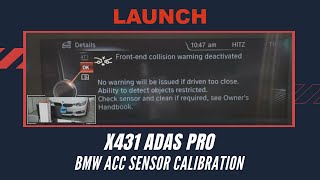
Typical fix: The sensor must be professionally re-aimed and calibrated using specialized ADAS calibration tools and targets. 🎬 Watch how professional BMW ACC radar calibration is performed This is not a DIY procedure and typically costs between $250 and $600.
Est. part cost: $0 (calibration is labor) - Damaged or Failed Radar Sensor ⚪ Low Probability Direct impact from road debris or a collision can physically damage the sensor. Internal electronics can also fail over time. These units are also a prime target for theft in some areas.
How to confirm: After ruling out obstruction and misalignment, a technician will test the sensor's power, ground, and communication lines. If all are good, the sensor itself is likely faulty. A diagnostic tool may show a communication failure or an internal fault with the sensor.
Typical fix: Replace the front radar sensor and perform a mandatory calibration. This is an extremely expensive repair.
Est. part cost: $2500-$4200
Rare But Worth Checking
- Damaged Wiring or Connector: The wiring harness leading to the sensor is in a vulnerable position. Check for any signs of corrosion, chafing, or rodent damage, especially if the vehicle has been parked for extended periods. Water intrusion into the 8-pin connector can cause communication faults.
- Damaged Mounting Bracket: A cracked or bent mounting bracket can prevent the sensor from holding its alignment, causing the code to return even after calibration. The bracket should be inspected closely before replacing the expensive sensor itself. One owner on Bimmerpost reported a dealer quote of $700 to replace a broken bracket due to the labor of removing the bumper.
- Faulty Auxiliary Battery: On models with a 48V mild-hybrid system, a failing auxiliary battery can cause a cascade of electrical faults, including the 'Driver Assistance Restricted' message, as it powers many electronic modules. This is a separate, expensive issue but can be a root cause.
Diagnosis Steps

- Read the fault codes using a BMW-compatible scan tool (like ISTA) to confirm P2583 and check for any specific sub-codes like 481CFB or suffix codes (-76, -54, -87, -97).
- Thoroughly inspect and clean the front radar sensor and the area around it. Ensure there are no license plate frames or other accessories blocking it.
- Perform a visual inspection of the sensor, its mounting bracket, and the 8-pin wiring connector for any signs of physical damage, corrosion, or looseness.
- Using a multimeter, verify power (12V with ignition on) and ground at the sensor connector.
- Check the CAN bus network. With the battery disconnected, measure the resistance between the CAN High and CAN Low wires at a network access point; it should be approximately 60 Ohms. A reading of 120 Ohms indicates a break in the circuit or a missing terminating resistor.
- If no physical or basic electrical issues are found, the next step is to attempt a sensor calibration using a professional ADAS alignment system and diagnostic software like BMW's ISTA.
- If calibration fails or the code immediately returns, and all wiring/power are confirmed good, the radar sensor itself is the most likely point of failure and should be replaced.
- After replacement, the new sensor MUST be coded to the vehicle and then calibrated. This is not a plug-and-play part.
Parts You'll Likely Need
- Front Radar Sensor (ACC Sensor)
(OEM #66315A56336 (supersedes 66315A56337, 66315A404E4, 66315A387E0, and others))— This is the part that fails, is damaged, or is stolen, triggering the code. It is extremely expensive, with forum members confirming costs around $4,000.
Trusted brands: Bosch, Continental
OEM price range: $2500-$4200
Aftermarket price range: Not typically available - Radar Sensor Anti-Theft Kit
(OEM #66315A336F7)— Due to a high rate of theft for this part, BMW released a kit with more secure hardware (rivnuts and security screws) to deter thieves.
Trusted brands: BMW Genuine
OEM price range: $50-$100
Aftermarket price range: Not available
Related Codes That Often Appear With This One
- 481CFB: A BMW-specific code indicating the radar module is misaligned.
- P2583-76: Suffix code for 'Radar misaligned'.
- P2583-54: Suffix code for 'Aiming incomplete', meaning a prior calibration failed.
- P2583-87: Suffix code for 'Lost communication', pointing to an electrical or network issue.
- 800ABF: A BMW-specific code indicating the KAFAS camera's field of view is impaired, which can occur alongside radar faults.
- Other ADAS codes related to the KAFAS camera or side radar sensors if a systemic issue like a power supply problem is present.
Technical Service Bulletins (TSBs) & Recalls
- B660520 / NHTSA ID 10175287: Service Action to replace the left front Short Range Radar (SRR) sensor on certain 2019-2020 G05 X5 models due to reduced functionality.
- B660620 / NHTSA ID 10175287: Service Action to replace the right front Short Range Radar (SRR) sensor on certain 2019-2020 G05 X5 models for the same issue as the left side.
- SI B66 08 23: Describes various system limitations of the KAFAS camera system that can cause faults like 800ABF (Field of vision impaired) and may require a vehicle software update (I-Level).
Platform-Specific Known Issues
- Theft of the front radar sensor is a known, widespread issue, especially in the UK and Europe. Owners report quotes of £2500 to £4000 for replacement.
- BMW issued service actions (similar to recalls) for some 2019-2020 models to replace faulty left and right side *short-range* radar sensors, indicating known hardware issues with ADAS sensors on this platform.
Mechanic-Grade Diagnostic Values
- CAN Bus Network Resistance — expected: Approximately 60 Ω when measured between CAN High and CAN Low wires with the network intact. Approximately 120 Ω if a terminating module (like the ACC sensor) is disconnected.. Failure: A reading significantly different from 60 Ω (e.g., open circuit, short to ground, or 120 Ω with all modules connected) indicates a wiring fault or a problem with a terminating resistor.
- CAN Bus Voltage (High-Speed CAN) — expected: CAN High should be around 2.6V and CAN Low around 2.4V, with both averaging to 2.5V during communication.. Failure: Voltages that are stuck high or low, or are identical on both lines, indicate a short or open in the wiring.
- Sensor Power Supply — expected: Battery voltage (approx. 12-14V) at the power supply pin of the sensor's 8-pin connector with the ignition on.. Failure: No voltage indicates a blown fuse or a break in the power wire.
Hidden / Shadow Codes Worth Checking
- 481CFB: SRSNVR: Misalignment – Side Radar Sensor Short Range Front Right/Left. While this code refers to the side sensors, it indicates the system's sensitivity to alignment and is often seen in discussions of general ADAS faults. The equivalent for the front sensor is often logged as a suffix code to P2583. (see via BMW-specific diagnostic software like ISTA.)
- P2583-76: A suffix or sub-code indicating the front radar sensor is specifically misaligned. (see via Professional OBD-II scanner capable of reading manufacturer-specific suffix codes.)
- P2583-87: A suffix or sub-code indicating a 'Lost Communication' fault with the sensor, pointing towards a wiring, connector, or power supply issue. (see via Professional OBD-II scanner capable of reading manufacturer-specific suffix codes.)
- 800ABF: KAFAS camera: Field of vision impaired for a short time. This code from the windshield camera module can be set due to environmental conditions but can also appear in conjunction with radar faults, indicating a broader ADAS system issue. (see via BMW-specific diagnostic software like ISTA.)
Scan Tool Commands That Help
- ISTA (BMW Dealer Software): ACC sensor adjustment / calibration — This service function is mandatory after replacing the sensor, performing a front-end alignment, or if a misalignment fault (like 481CFB or P2583-76) is stored. It guides the technician through aiming the sensor using a special target.
- ISTA or E-Sys: Module Coding / Vehicle Order (VO) Coding — When a used radar sensor is installed, it must be coded to the vehicle's VIN. The vehicle's option list (VO) is written to the new module, integrating it into the car's network. Failure to do this will result in the module not being recognized.
- Launch X431 / Autel MaxiCOM: Short-range radar sensor: reset correction angle — High-end aftermarket scan tools may have a specific service function to reset the correction values for ADAS sensors after a repair, which can sometimes clear intermittent misalignment faults before a full calibration is attempted.
Wiring & Ground Locations
- Front Radar Sensor Connector — Located directly on the back of the ACC radar sensor, which is in the center of the lower front bumper grille.. This 8-pin connector is the single interface for power, ground, and CAN bus communication for the sensor. It is exposed to the elements and vulnerable to corrosion, water intrusion, and physical damage from front impacts.
- CAN Bus Terminating Resistors — The CAN bus has two 120 Ohm terminating resistors. One is typically within the primary control module (e.g., DSC or ZGM), and the other is often within the last module on the bus line, which can be the ACC sensor itself in some configurations.. If the ACC sensor contains a terminating resistor, a disconnection or internal failure of the sensor will change the total bus resistance from 60 Ohms to 120 Ohms, causing communication faults across the network.
Real Owner Repair Stories
- Bimmerpost user 'Ole 530dA' (2017 BMW G31 (5-series, similar ADAS architecture)) — Sudden 'front collision warning failed' message, followed by other ADAS system failures. ISTA showed no communication with the ACC sensor.
❌ Tried (didn't work) Checked wiring harness for damage (none found). Replaced the ACC sensor with a used part of the same part number, had it coded and calibrated by BMW. The faults returned as soon as the car started driving.
✅ What actually fixed it The story was unresolved in the thread, but the key takeaway for technicians is that even a correctly coded and calibrated used part can fail to solve the issue. The dealer suspected the plastic shield in front of the sensor, getting a 'Lack of visibility' fault text, highlighting that subtle obstructions or material properties can cause calibration to fail under driving conditions.
OEM Part Supersession History
66315A387E0→66315A404E4 -> 66315A56337 -> 66315A56336— Standard hardware revisions for performance, reliability, or manufacturing improvements.
Heads up: While newer parts supersede older ones, installing a used part requires coding. A part from a newer vehicle (especially LCI) may have different firmware and may not be compatible or easily codable to a pre-LCI vehicle. Always verify compatibility with a dealer or parts specialist using the vehicle's VIN.
Model Year Variations Within This Range
- 2024-2024 (LCI Models): The Life Cycle Impulse (LCI) models introduced a new 'Highway Assistant' (Option 5AX) which superseded the previous 'Driving Assistant Professional' (Option 5AU). These models use different KAFAS camera hardware and, critically, moved to 'Secure Coding'. This means module replacement and coding requires an online connection to BMW servers for a signed validation file, making retrofits or use of certain used parts much more difficult or impossible without third-party services.
Diagnostic Flowchart
Other Known Issues on This Vehicle
Issues unrelated to this code that are worth knowing about as an owner of this generation:
- 48V Mild-Hybrid Battery Failure 🔴 High — A widely reported issue, often occurring out of warranty. Can cause a 'Drivetrain Malfunction' message and prevent the vehicle from starting. Replacement is very expensive. (Ref: SIB 61 01 21 discusses proper 48V battery maintenance to prevent total discharge.)
- Active Grille Shutter Failure 🟠 Medium — Common failure between 40,000 and 80,000 miles. Actuator motors burn out or debris jams the plastic shutters, causing a Check Engine Light (codes like P05A0) and potentially loud cooling fan operation. (Ref: BMW has extended the warranty for this component to 15 years/150,000 miles in North America due to the high failure rate.)
- iDrive / Software Glitches 🟡 Low — Owners report various software bugs, including intermittent loss of phone connection, navigation issues, and driver assistance features temporarily failing, often resolved by an iDrive reboot or a dealer software update.
- Transfer Case Problems 🟠 Medium — Some owners have reported issues with the xDrive transfer case, a known concern on previous BMW generations. Using staggered wheel/tire setups is sometimes linked to premature wear.
- N63 Engine Oil Consumption and Leaks 🔴 High — Applies to V8-powered models (M50i, M60i). The N63 engine family has a history of oil consumption issues and leaks from components like valve cover gaskets, which can appear even at low mileage.
Used vs. New Parts: Buying Guide for This Vehicle

When a used part is the smart pick: A used ACC radar sensor is a high-risk, high-reward option. It only makes sense if the cost saving is substantial (over 50% less than new) and you have access to a workshop with advanced BMW coding tools (ISTA/E-Sys) and a clear understanding that it may not work. It is a gamble to save thousands of dollars.
Donor-vehicle mileage cap: roughly under 50000 miles for the part to have meaningful remaining life.
What to inspect on the donor part:
- Verify the part number exactly matches a compatible number for your vehicle's VIN.
- Obtain the donor vehicle's VIN to check its original options and history, if possible.
- Inspect the sensor lens for any scratches, hazing, or delamination. The surface must be perfect.
- Check the 8-pin connector for any bent pins, corrosion, or damage.
- Avoid any parts from vehicles with heavy front-end collision damage, as internal electronics may be compromised even if the case looks intact.
OEM-only on this vehicle (don't cheap out):
- Front Radar Sensor (ACC Sensor)
Aftermarket brands forum-validated for this vehicle:
- Not applicable. No aftermarket versions of the ACC radar sensor are available.
Brands owners have reported issues with on this vehicle:
- Not applicable.
Real Owner Stories
Aggregated from forums and TSBs cited above. Mileages and costs reflect what owners reported in those sources.
2019 BMW X5 (G05)
Symptoms: Theft of the front radar sensor from the lower bumper area.
What fixed it: Replacement of the front radar sensor followed by professional calibration and coding.
Cost: $3,100-$5,000
Source hint: Bimmerpost G05 Forum - "Thefts of front radar sensor." URL: https://g05.bimmerpost.com/forums/showthread.php?t=2113642
2020 BMW X5 (G05)
Symptoms: Driver Assistance Issue after hitting road debris, which broke the sensor's mounting bracket.
What fixed it: Bumper removal to repair the mounting bracket and subsequent sensor calibration.
Cost: $700-$700
Source hint: Bimmerpost G05 Forum - "Driver Assistance Issue." URL: https://g05.bimmerpost.com/forums/showthread.php?t=2167812
2019 BMW X5 (G05)
Symptoms: Front sensor stolen overnight.
What fixed it: Replacement of the radar unit; owner noted the part alone was approximately €2,600.
Source hint: Bimmerpost G05 Forum - "Front sensor stolen last night" URL: https://g05.bimmerpost.com/forums/showthread.php?t=2094248
Related OBD-II Codes
Frequently Asked Questions
My 2019 X5 is showing 'Driver Assistance Restricted' and I have a fault for the left front radar. Is there a service action for this?
Can I recalibrate the front radar sensor on my X5 at home after a minor bumper impact?
Why does my Active Cruise Control deactivate immediately after I cross a lane marking?
I live in an area with high crime; is it true that the X5 radar sensors are being targeted for theft?
Could a front license plate frame be causing my P2583 code?
Does the right side radar sensor have the same known issues as the left side on 2020 models?
Helpful Videos
We Have This Part in Stock



The information in this article is provided for general reference and educational purposes only. Vehicle specifications, procedures, and part compatibility can vary by production date, trim level, and region. Always consult your vehicle's factory service manual and verify part numbers before purchasing or performing repairs. Safety-critical components such as airbags, seat belts, and braking systems should be installed by a qualified professional.
- BMW X5:
- 🎬 Helpful Videos
- 🛍️ Shop This Part
- What's Unique About the 2019-2024 BMW X5
- Symptoms You May Notice
- Most Likely Causes
- Rare But Worth Checking
- Diagnosis Steps
- Parts You'll Likely Need
- Related Codes That Often Appear With This One
- Technical Service Bulletins (TSBs) & Recalls
- Platform-Specific Known Issues
- Mechanic-Grade Diagnostic Values
- Hidden / Shadow Codes Worth Checking
- Scan Tool Commands That Help
- Wiring & Ground Locations
- Real Owner Repair Stories
- OEM Part Supersession History
- Model Year Variations Within This Range
- Diagnostic Flowchart
- Other Known Issues on This Vehicle
- Used vs. New Parts: Buying Guide for This Vehicle
- Real Owner Stories
- 2019 BMW X5 (G05)
- 2020 BMW X5 (G05)
- 2019 BMW X5 (G05)
- Related OBD-II Codes
- Frequently Asked Questions
- 🎟️ Get 5% Off