

P2583 on 2018-2024 BMW X3: Front Radar Sensor Fault Causes and Fixes
This code means there is a fault with the front radar sensor used for Active Cruise Control and collision warning. Most often, the sensor is just dirty or blocked. If cleaning the sensor in the lower front grille doesn't fix it, it likely needs professional recalibration, which can cost $250-$600. In some cases, a damaged mounting bracket or the sensor itself needs replacement.
- P2583 on your X3 disables important safety features like Active Cruise Control and collision warning.
- Before seeking professional help, always start by thoroughly cleaning the radar sensor located in the lower front grille.
- Do not replace the expensive radar sensor unless a professional has confirmed it has failed. The issue is often a much cheaper fix, like cleaning or realignment.
- Any repair involving the sensor or its bracket, including after a minor bump, will require a professional ADAS calibration to work correctly.
What's Unique About the 2018-2024 BMW X3
For the G01 generation X3 (2018-2024), this code is almost exclusively tied to the optional Active Driving Assistant packages. Unlike generic codes, P2583 on a BMW points directly to this sophisticated ADAS component. The most common real-world cause is simple obstruction from dirt, snow, or road grime. However, any physical repair, even for a minor impact, mandates a complex and expensive sensor recalibration with BMW-specific tools like ISTA+. This makes it a common pain point for owners, as a simple bumper knock can lead to a multi-hundred dollar dealer visit for calibration.
Symptoms You May Notice
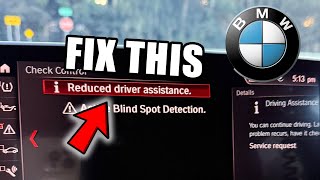
- A 'Driving Assistance restricted' or 'Driver Assistance Reduced' warning message displayed in the instrument cluster or iDrive screen. 🎬 Watch: How to clear the Reduced Driver Assistance warning message
- Active Cruise Control (ACC) is inoperative or cannot be activated.
- The system is unable to maintain a set following distance in traffic.
- Frontal Collision Warning and Automatic Emergency Braking (AEB) systems are disabled.
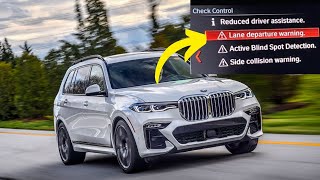
- Yellow collision warning icon appears intermittently, sometimes due to environmental factors that the system misinterprets. 🎬 See a breakdown of common reasons for driver assistance warnings
- Replacing the radar sensor when the only issue is a minor misalignment. Always attempt calibration before approving a costly sensor replacement.
- Blaming the sensor when the mounting bracket is bent. A new sensor on a bent bracket will still not calibrate correctly.
Most Likely Causes
- Obstructed Radar Sensor 🔴 High Probability The sensor is located low in the front bumper, making it susceptible to blockage from dirt, mud, snow, ice, or even heavy rain and bug splatter. A specific sub-code, P2583-97, often confirms this issue.
How to confirm: Visually inspect the smooth plastic cover of the radar sensor in the lower front grille. If it is covered in debris, this is the likely cause. The iDrive system may explicitly state the sensor is dirty.
Typical fix: Thoroughly clean the sensor's surface with a soft cloth and mild soap. The code may clear on its own after cleaning and a short drive or ignition cycle.
Est. part cost: $0 - Radar Sensor Misalignment 🟡 Medium Probability Even a minor front-end impact, like bumping a parking curb, hitting road debris, or a low-speed fender bender can knock the sensor or its mounting bracket out of alignment by as little as one degree. This is the most common cause after obstruction.
How to confirm: This requires a diagnostic scan with BMW-specific software (like ISTA) to check for alignment-related fault codes (e.g., 481CFB, P2583-76). A visual inspection may reveal a bent or damaged mounting bracket.
Typical fix: The sensor must be professionally realigned and recalibrated using specialized ADAS targets and diagnostic tools. This procedure can cost between $300 and $800. In some cases, the mounting bracket may need to be replaced if bent.
Est. part cost: $50-$200 for a new bracket if needed. - Damaged Wiring or Connector ⚪ Low Probability The sensor's location makes its wiring harness vulnerable to road debris, corrosion from road salt, or water intrusion into the connector. Rodent damage to the wiring in the engine bay or front bumper area is also a possibility.
How to confirm: Visually inspect the wiring harness and 8-pin connector leading to the sensor for any signs of damage, fraying, or green/white corrosion on the pins. A multimeter can be used to check for power, ground, and CAN bus network resistance (should be ~60 Ohms).
Typical fix: Repair the damaged section of wiring or clean/replace the connector pigtail. The connector must be fully seated and sealed to prevent future water intrusion.
Est. part cost: $20-$100 for connector repair parts. - Failed Radar Sensor ⚪ Low Probability Internal failure can occur from electronic malfunction or damage from a more significant impact. This is a diagnosis of exclusion after confirming power, ground, wiring, and alignment are all correct.
How to confirm: This is typically diagnosed by exclusion. If the sensor has power, is clean, aligned, and communication codes (like P2583-87 or a general no-communication fault in ISTA) are present, the sensor itself has likely failed.
Typical fix: Replace the front radar sensor and perform a full calibration. This is a very expensive part, though used units are available.
Est. part cost: $1048-$2500+ for a new OEM part.
Rare But Worth Checking
- Sensor Theft: These radar sensors are high-value items and have become a target for theft in some areas. If the sensor is physically missing, this is the cause.
- Software/Adaptation Issue: BMW issued Service Information Bulletin SIB 66 09 23 for G01 models, noting that adaptation value deviations due to environmental influences can cause deteriorating performance of assistance systems. The fix involves a software update and recalibration.
Diagnosis Steps
- Read Fault Codes: Use an OBD-II scanner capable of reading BMW-specific codes to confirm P2583 and check for any related sub-codes (e.g., -76 for misalignment, -97 for obstruction).
- Visual Inspection: Carefully inspect the front radar sensor in the lower grille. Check for any dirt, snow, ice, or physical damage to the sensor face or its mounting bracket.
- Clean the Sensor: Thoroughly clean the sensor surface with a soft cloth and automotive soap. Clear the fault codes and test drive the vehicle to see if the code returns.
- Check Wiring: If the code persists, inspect the electrical connector and wiring harness going to the sensor. Look for any signs of corrosion, water damage, or physical breaks. Check for stable power and ground.
- Check for Misalignment: If there is no visible damage or obstruction, the most likely cause is misalignment. This step requires professional diagnosis with specialized equipment.
- Professional Calibration: Take the vehicle to a qualified independent shop or BMW dealer to perform a sensor alignment check and calibration using ISTA+ and ADAS targets. 🎬 Watch: Professional front radar sensor calibration using specialized equipment They can also perform software updates as per SIB 66 09 23 if applicable and definitively diagnose a failed sensor module.
Parts You'll Likely Need
- Front Radar Sensor (ACC Sensor)
(OEM #66315A9BE28 (latest part number, supersedes older versions like 66316888029, 66315a592d7, 66315a78599))— This is the core component that fails or is replaced if damaged or stolen. Replacement is the last resort after checking for obstruction and alignment.
Trusted brands: Genuine BMW (Bosch or Continental are the OEM suppliers)
OEM price range: $1050-$2500
Aftermarket price range: $300-$600 (used/salvage) - Radar Sensor Mounting Bracket
(OEM #66316873402 (example for a similar platform, confirm by VIN))— The bracket can be bent or broken during a minor impact, causing a misalignment fault that cannot be corrected by calibration alone.
Trusted brands: Genuine BMW
OEM price range: $50-$200
Aftermarket price range: $40-$150
Related Codes That Often Appear With This One
- 481CFB or 482136 — These are BMW-specific codes that directly indicate the radar sensor is out of adjustment or misaligned.
- P2583-76 — A sub-code for P2583 that specifically means 'Radar misaligned'.
- P2583-97 — A sub-code for P2583 that specifically means the sensor is obstructed.
- P2583-87 — A sub-code for P2583 indicating a 'Lost Communication' fault, pointing towards a wiring, connector, or internal sensor problem.
- 800ABF — A fault with the KAFAS camera (the camera in the windshield) which works with the radar. It can be triggered by a dirty windshield or camera issues, causing related driver assistance warnings.
Technical Service Bulletins (TSBs) & Recalls
- SIB 66 09 23: Addresses deteriorating performance of Steering and Lane Control Assistant due to 'adaptation value deviation'. The fix involves a software update, module re-encoding, and recalibration of the front radar sensor.
- SIB 66 14 18: Addresses false 'Crossing traffic warning' messages when parked near walls, caused by a software error in the side radar sensors. While not directly for the front radar, it shows a pattern of ADAS software issues being resolved by ISTA updates.
Platform-Specific Known Issues
- Some owners report intermittent 'Driving Assistance restricted' warnings even in clear weather, which can sometimes be triggered by software adaptation issues or glare affecting the KAFAS camera that works in tandem with the radar. A software update and recalibration may be required per SIB 66 09 23.
Mechanic-Grade Diagnostic Values
- CAN Bus Voltage (High-Speed CAN) — expected: CAN High (H) line: ~2.6V to ~3.0V, CAN Low (L) line: ~2.4V to ~2.0V. Both should average to 2.5V during communication.. Failure: Significant deviation from these voltages or a flat line indicates a bus communication issue, short, or open circuit.
- CAN Bus Network Resistance — expected: ~60 Ω when measured between CAN High and CAN Low pins at the sensor connector (with battery disconnected).. Failure: A reading of ~120 Ω suggests a break in the CAN wiring or that another terminating module is disconnected. A reading near 0 Ω indicates a short between the CAN lines.
- Sensor Operating Voltage — expected: Between 10.6V and 17.2V at the power supply pin on the sensor connector (with ignition on).. Failure: Voltage below 10.6V (undervoltage) or no voltage indicates a power supply issue from the fuse or body control module.
- Sensor Ground to Chassis Resistance — expected: Less than 0.5 Ω.. Failure: Higher resistance indicates a poor ground connection, which can cause intermittent faults and communication errors.
Hidden / Shadow Codes Worth Checking
- 481CFB: ACC sensor is out of adjustment. This is a highly specific BMW fault code pointing directly to misalignment. (see via BMW ISTA diagnostic software or a high-end professional scanner capable of reading manufacturer-specific codes.)
- 482136: ACC sensor is out of adjustment. Similar to 481CFB, this points directly to a misalignment issue. (see via BMW ISTA diagnostic software or a high-end professional scanner.)
- 0x030215: While for the sunroof, this code shows a pattern of modules losing initialization after programming, which can also happen to ADAS modules like the ACC sensor, requiring a service function in ISTA to re-initialize. (see via BMW ISTA diagnostic software.)
Scan Tool Commands That Help
- ISTA: ACC sensor: adjustment (Service Functions -> Driver assistance -> ACC sensor) — This is the primary function required after replacing the sensor, repairing front-end damage, or if a misalignment fault (like 481CFB) is stored. It guides the technician through the physical aiming and electronic calibration process using a special target.
- ISTA or E-Sys: Vehicle Order (VO) Coding / Programming — This is mandatory when installing a new or used radar sensor. The vehicle's option list (VO) must be written to the module to integrate it into the car's network and enable its functions. Failure to code the module will result in it not being recognized by the vehicle.
- High-end Aftermarket (e.g., Autel, Launch): Short-range radar sensor: reset correction angle — Some aftermarket tools offer a function to reset the stored correction values. This can sometimes be used to clear intermittent misalignment faults before attempting a full, target-based calibration, especially if the physical alignment is believed to be correct.
Wiring & Ground Locations
- ACC Sensor Connector — Directly on the back of the ACC radar sensor, located in the center of the lower front bumper grille.. This 8-pin connector is the single point of failure for all power, ground, and communication to the sensor. It is highly exposed to road debris, water, and corrosion, making it a key inspection point for communication faults.
- Front Bumper Ground Point — On the G01 chassis, a common ground bolt for front-end electronics is located on the bulkhead in the passenger footwell area, in front of the fuse box.. A corroded or loose ground connection at this point can cause intermittent power issues or electrical noise, leading to unpredictable sensor behavior and faults. A user confirmed using the 10mm bolt here for a radar detector ground.
- Front Bumper Cable Harness — Runs along the inside of the front bumper cover, connecting various components including the ACC sensor.. This harness is susceptible to chafing and damage from minor impacts or improper routing after a repair. Damage to the CAN bus wires within this harness will sever communication with the ACC sensor.
Real Owner Repair Stories
- Bimmerpost user 'Ole 530dA' (2017 BMW G31 (5-Series, which shares the G01's ADAS architecture)) — Sudden 'front collision warning failed' message, followed by other ADAS system failures.
❌ Tried (didn't work) Visual inspection of wiring harness showed no damage.
✅ What actually fixed it A used ACC sensor with the same part number was installed, coded to the car, and then calibrated by a BMW dealer. The initial fault was no communication with the original sensor. Even after successful coding and calibration of the used part, the faults returned immediately upon driving. The dealer then suspected the plastic shield or another visibility issue. The final resolution was not posted, but the story confirms that a used sensor can be coded and calibrated, but may not solve underlying issues. - Bimmerpost user 'piglet94122' (BMW X5 (G05, similar ADAS system)) — Intermittent lane departure, blind spot, and side collision warnings. Fault code 481CFB (SRSNVR: Misalignment – Side Radar Sensor Short Range Front Right) was stored.
❌ Tried (didn't work) Replacing the sensor module with a used part did not clear the error., Erasing the codes with a scanner resulted in the code immediately returning.
✅ What actually fixed it The user discovered the original radar module was not properly seated in its mounting slot on the side of the bumper. After physically re-seating the module, clearing the codes, and performing a reset/re-initialization drive, the fault code changed from 'permanent' to 'transitionary' and could then be cleared successfully. This highlights the importance of checking physical mounting before replacing parts.
OEM Part Supersession History
66316888029, 66315A592D7, 66315A78599→66315A9BE28— Standard hardware revision and optimization by the manufacturer.
Heads up: While newer part numbers are generally backward compatible, it is critical to ensure any used sensor is compatible with the vehicle's software level (I-Level). A very new sensor on a car with very old software may have communication issues until the vehicle's software is updated by a dealer. Always code any replacement sensor to the vehicle.
Model Year Variations Within This Range
- 2018-2024: While the core hardware and function of the ACC radar sensor remained largely the same between pre-LCI (2018-2021) and LCI (2022-2024) models, the LCI introduced iDrive 7/8 and potentially more advanced software logic for the Driving Assistant Professional package. However, the underlying electronic architecture (SP18) is the same, meaning the fundamental capabilities and failure modes of the radar system are consistent across the generation.
Diagnostic Flowchart
Other Known Issues on This Vehicle
Issues unrelated to this code that are worth knowing about as an owner of this generation:
- Active Grille Shutter Failure 🟠 Medium — Common on earlier (2018-2019) models. The motor fails, causing the shutters to stick open or closed and triggering a Check Engine Light. (Ref: BMW issued an extended warranty for this component, often to 10 years / 120,000 miles.)
- Coolant Loss (B48 & B58 Engines) 🟠 Medium — A notable issue where coolant levels drop without obvious external leaks. Can be caused by failing water pumps, thermostats, or various plastic cooling components that become brittle over time.
- Oil Leaks from Gaskets (B48 & B58 Engines) 🟠 Medium — Common as the vehicle ages (typically 50k-100k miles). The valve cover gasket and oil filter housing gasket are the most frequent culprits, leading to oil smells or drips.
- Cracked Oil Filter Housing (B48 Engine) 🔴 High — Unlike leaks from the gasket, the plastic housing itself can develop cracks, leading to significant oil loss. This is a more serious and expensive repair.
- Electrical Gremlins & Battery Drain 🟡 Low — Some owners report random dashboard warnings, iDrive system glitches, or parasitic battery drain that causes the battery to die prematurely.
- Carbon Buildup on Intake Valves 🟡 Low — A common long-term issue for all direct-injection engines, including the B48 and B58. Typically requires cleaning (e.g., walnut blasting) every 60,000-80,000 miles to prevent rough idle or performance loss.
Used vs. New Parts: Buying Guide for This Vehicle
When a used part is the smart pick: A used radar sensor is a financially viable option if the new OEM part is prohibitively expensive, but it comes with significant risks and requirements. It makes sense only if you have access to a qualified BMW workshop that can perform the necessary coding and calibration, as it is not a plug-and-play part.
Donor-vehicle mileage cap: roughly under 80000 miles for the part to have meaningful remaining life.
What to inspect on the donor part:
- Ensure the part number is identical or a direct, confirmed supersession for your original part.
- Visually inspect the sensor for any cracks, deep scratches, or signs of impact on the front face.
- Check the connector pins for any corrosion, bending, or water damage.
- Obtain the sensor from a donor vehicle that did not have a major front-end collision, as internal damage can be invisible.
OEM-only on this vehicle (don't cheap out):
- Front Radar Sensor (ACC Sensor): While used OEM is an option, aftermarket (non-BMW branded) sensors for this system are not available or recommended due to the complex integration and calibration required.
Aftermarket brands forum-validated for this vehicle:
- N/A for the sensor itself. Stick to Genuine BMW, either new or used.
Brands owners have reported issues with on this vehicle:
- Any non-OEM branded radar sensor claiming to be a replacement. The software and hardware integration is too specific to the manufacturer.
Real Owner Stories
Aggregated from forums and TSBs cited above. Mileages and costs reflect what owners reported in those sources.
2019 BMW 3 Series (G20)
Symptoms: Recurring 'Driving assistance restricted' messages appearing on the dashboard.
What fixed it: Diagnosis revealed a KAFAS camera fault code 800ABF working in conjunction with the assistance system issues.
Source hint: Bimmerpost discussion on a G20 3-series with recurring 'Driving assistance restricted' messages
2019 BMW X5 (G05)
Symptoms: The owner was informed by the dealer that a rock had caused damage to the front-end components, leading to system warnings.
What fixed it: The dealer attributed the failure to external impact (rock damage) to the front shutter/sensor area.
Source hint: https://g05.bimmerpost.com/forums/showthread.php?t=2045063
Related OBD-II Codes
Frequently Asked Questions
My 2018 BMW X3 has a 'Driving Assistance restricted' message; could this be related to the active grille shutters?
Does SIB 66 09 23 apply to my X3 if my cruise control is acting up in clear weather?
Can a minor bump to the front bumper of my X3 cause the P2583 code?
Is it true that the KAFAS camera can cause 'Driving Assistance restricted' warnings on the X3?
I see a P2583-97 sub-code on my BMW diagnostic tool; what does the -97 indicate?
Helpful Videos

We Have This Part in Stock



The information in this article is provided for general reference and educational purposes only. Vehicle specifications, procedures, and part compatibility can vary by production date, trim level, and region. Always consult your vehicle's factory service manual and verify part numbers before purchasing or performing repairs. Safety-critical components such as airbags, seat belts, and braking systems should be installed by a qualified professional.
- BMW X3:
- 🎬 Helpful Videos
- 🛍️ Shop This Part
- What's Unique About the 2018-2024 BMW X3
- Symptoms You May Notice
- Most Likely Causes
- Rare But Worth Checking
- Diagnosis Steps
- Parts You'll Likely Need
- Related Codes That Often Appear With This One
- Technical Service Bulletins (TSBs) & Recalls
- Platform-Specific Known Issues
- Mechanic-Grade Diagnostic Values
- Hidden / Shadow Codes Worth Checking
- Scan Tool Commands That Help
- Wiring & Ground Locations
- Real Owner Repair Stories
- OEM Part Supersession History
- Model Year Variations Within This Range
- Diagnostic Flowchart
- Other Known Issues on This Vehicle
- Used vs. New Parts: Buying Guide for This Vehicle
- Real Owner Stories
- 2019 BMW 3 Series (G20)
- 2019 BMW X5 (G05)
- Related OBD-II Codes
- Frequently Asked Questions
- 🎟️ Get 5% Off