

P2583 on 2017-2024 Audi Q7: Understanding a Rare Code
The code P2583 is not a commonly reported or documented issue for the 2017-2024 Audi Q7. On other vehicle brands, it relates to the front radar sensor for adaptive cruise control. If you see this code on your Q7, it is almost certainly a misinterpretation by a generic OBD-II reader. A professional diagnosis with an Audi-specific scan tool (like VCDS or ODIS) is required to retrieve the actual, manufacturer-specific Diagnostic Trouble Code (DTC).
- P2583 is not a documented or common fault code for the 2017-2024 Audi Q7.
- On other car brands, this code points to a fault with the front radar sensor for adaptive cruise control.
- Do NOT replace parts based on the generic definition. The meaning for Audi is unconfirmed and likely a generic reader error.
- If you encounter this code, the first and most important step is to get a professional diagnosis using an Audi-specific scan tool like VCDS or ODIS to find the true fault code.
What's Unique About the 2017-2024 Audi Q7
It is highly unusual to find no specific information for a trouble code on a popular vehicle like the Audi Q7. This suggests that Audi uses proprietary, manufacturer-specific fault codes for issues related to its Adaptive Cruise Control and Pre Sense systems, which may not follow the generic P2xxx format. Therefore, encountering P2583 on a Q7 is an edge case, and its meaning cannot be assumed from other manufacturers like Honda or Ram, where the code is well-documented with specific sub-types like P2583-54 (aiming incomplete) or P2583-97 (dust or dirt on sensor).
Generation note: The 2017-2024 model years cover the second generation (Typ 4M) of the Audi Q7, including its 2020 facelift. No specific differences regarding this fault code between pre-facelift (2017-2019) and facelift (2020-2024) models could be found, as the code itself is not documented for this platform. The underlying ADAS hardware is similar across these years, though part numbers may vary.
Symptoms You May Notice
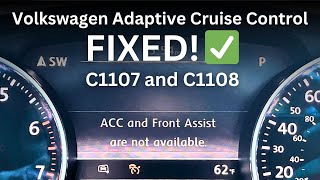
- Adaptive Cruise Control (ACC) unavailable or not functioning
- Pre Sense or other collision avoidance system warnings on the dashboard
- Check Engine Light or other warning lamp illumination
- "Audi Pre Sense: currently limited" or similar message in the driver information system
- misdiagnosis: Replacing the Front Radar Sensor | actual_cause: The actual issue could be a simple obstruction, a wiring problem, or a need for recalibration. Replacing the expensive sensor without proper diagnosis is a common mistake when relying on generic code definitions.
Most Likely Causes
- Definition Uncertain for Audi Q7 / Generic Scan Tool Error 🔴 High Probability No documented instances of this specific code for the Audi Q7 were found during research. The causes listed below are based on the generic definition of P2583 for other manufacturers and are purely speculative for an Audi. The most likely cause is a generic OBD-II reader failing to correctly interpret a proprietary Audi fault code.
How to confirm: A professional scan with an Audi-specific diagnostic tool (like VCDS or ODIS) is required to read manufacturer-specific codes and data streams from the relevant control modules (e.g., ACC Module J428 at Address 13 or A5).
Typical fix: Professional diagnosis is the only first step. The actual fix will depend on the manufacturer-specific code found.
Est. part cost: $0 - Front Radar Sensor Obstruction or Damage (Speculative) 🟡 Medium Probability Based on the generic definition, this would be a primary cause. The ACC sensors are located in the front bumper/grille area and are susceptible to damage from road debris, minor collisions, or obstruction by dirt, snow, or ice.
How to confirm: Visually inspect the front radar sensor domes (typically in the lower grille) for any physical damage, cracks, or heavy contamination. A specific VAG code for signal obstruction would confirm this.
Typical fix: Cleaning the sensor surface. If damaged, the sensor must be replaced and calibrated by a dealer or specialist.
Est. part cost: $250-500 - Radar Sensor Misalignment or Calibration Issue (Speculative) 🟡 Medium Probability The ADAS sensors require precise alignment. A minor front-end impact, suspension work, or even hitting a large pothole can potentially knock the sensor out of alignment, triggering a fault.
How to confirm: This can only be confirmed with specialized dealer equipment that checks the sensor's alignment against the vehicle's thrust angle. A fault code for 'aiming incomplete' or 'misalignment' would be present when scanned with a proper tool.
Typical fix: Recalibration of the ADAS system by an Audi dealer or a qualified independent shop with the correct targets and software. This is a labor-intensive process.
Est. part cost: $0
Rare But Worth Checking
- Wiring or Connector Issue to Radar Sensor (Speculative):
Diagnosis Steps
- Confirm the presence of the code with a high-quality OBD-II scanner.
- Crucially, perform a full system scan with an Audi-specific tool (like VCDS or ODIS) to check for manufacturer-specific codes in the Adaptive Cruise Control module (Address 13 or 8B) and the Front Sensors Driver Assistance System module (Address A5). This is the most important step.
- Document any VAG-specific codes found, as these will guide the true diagnostic path. Ignore the generic P2583 code.
- Based on the VAG codes, proceed with diagnosis. If a code for obstruction is present, thoroughly clean the front sensor surfaces.
- If a code for misalignment or no/incorrect basic setting is present, the vehicle requires professional ADAS calibration.
- If a code for an electrical fault (open circuit, short to ground) is present, inspect the wiring and connector at the corresponding sensor for damage or corrosion. Check for power and ground at the sensor connector.
- Do not replace any parts until a definitive diagnosis is made using Audi-specific trouble codes.
Parts You'll Likely Need
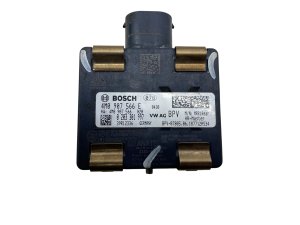
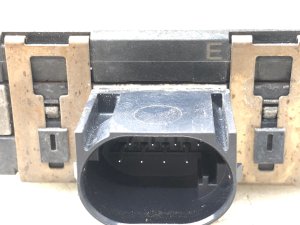
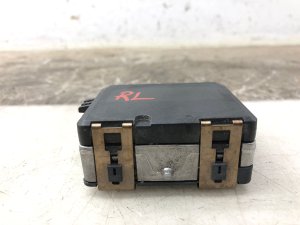
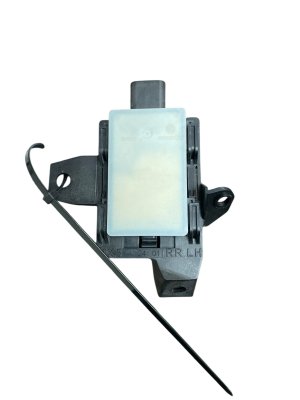
- Front Distance Radar Sensor (Speculative)
Platform-Specific Known Issues
- The Audi Pre Sense system is known to be sensitive, sometimes giving false warnings or malfunctioning due to dirty sensors or software glitches.
- Electrical issues, often stemming from water leaks (clogged sunroof drains) or failing ground connections, are not uncommon in Q7s and can cause a wide range of seemingly unrelated faults.
Mechanic-Grade Diagnostic Values
- ACC Sensor Misalignment Angle (Horizontal or Vertical) — expected: Between -0.8 and +0.8 degrees. Failure: A value outside the +/- 0.8 degree tolerance will set a fault code like C110300 and disable the ACC/Pre-Sense systems. Some forum users report the threshold may be up to +/- 1.0 degree.
- Live Data 'Vertical Deadjustment' Value — expected: Close to 0.0 degrees. Failure: A user on the Ross-Tech forums reported a fault with a vertical deadjustment value of 1.4 degrees, which was the root cause of their ACC failure.
Hidden / Shadow Codes Worth Checking
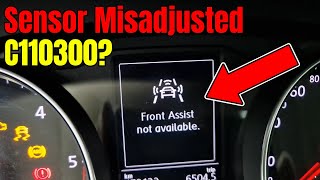
- C110300: This is the most common VAG-specific DTC that corresponds to the symptoms of a generic P2583. It directly translates to 'Adaptive cruise control sensor misadjusted'. This code requires calibration to fix, not just clearing. (see via VCDS (VAG-COM), OBDeleven, ODIS, or other professional VAG-compatible scan tools. It will be found in Address 13 or 8B.)
- C110B F0 (Limited Visibility): This fault indicates the sensor's view is blocked, either by dirt, snow, heavy rain, or physical damage. It often appears intermittently. (see via VCDS or similar, found in Address 13 or 8B.)
- U1122 00 (Implausible Message): This code, with fault text like [FAULT_LRRS_SELFDIAG], suggests an internal sensor failure or a communication bus problem. It is a more serious fault than simple misalignment. (see via VCDS or similar, found in Address 13 or 8B.)
- Component Protection Active: This is not a typical DTC but a status message indicating a control module (like the ACC radar) has been replaced and is not cryptographically paired with the vehicle. This locks the module's functionality until it is authorized online by a dealer. (see via ODIS (dealer tool) is required to see and clear this status. It will be evident after replacing an ACC sensor.)
Scan Tool Commands That Help
- OBDeleven / VCDS: Security Access — Required before making any changes to adaptations or basic settings. For the 4M Q7, the code is typically 20103.
- OBDeleven / VCDS: Adaptation: Reset Misalignment Angle — After a minor misalignment fault (like C110300) caused by load changes (e.g., towing). This involves going into Adaptation for module 13/8B, selecting 'Misalignment Angle, horiz' and 'Vertical Deadjustment', and writing the value '0'. This may resolve soft faults without needing a full static calibration.
- ODIS (Audi Dealer Tool): SVM (Software Version Management) Coding — This is a mandatory online function after replacing an ACC radar sensor. It connects to Audi's factory servers to remove 'Component Protection', download the correct VIN-specific dataset, and code the new module to the car. Without this step, a new sensor will not function.
- VCDS / ODIS: Basic Settings / Adjustment — To initiate the static calibration procedure for the ACC sensors (J428 and J850). This is not a simple reset; it requires a physical calibration rig (like VAS 6430) to be placed in front of the vehicle. This is a professional-only job.
Wiring & Ground Locations
- Main Engine/Chassis Ground — On the right front longitudinal member (frame rail) in the engine bay. A video for an older Q7 shows a primary ground cable attaching near the right front wheel well, connecting to the engine mount.. A poor main ground can cause a cascade of seemingly unrelated electronic faults, including communication errors with sensitive modules like the ADAS controller.
- Plenum Chamber Grounds — There are ground points located in the plenum chamber (the area below the windshield where the wipers are). Specifically, G609 on the right side and G608 in the center.. The plenum chamber is a known area for water ingress from clogged drains, which can corrode these critical ground connections, affecting multiple interior and front-end electronic modules.
- A-Pillar Grounds — Ground connection point on the right lower A-pillar (G43).. The main wiring harness for the front of the vehicle, including the ADAS sensors, runs through this area. A bad ground here could affect the sensor's power supply or CAN bus communication.
- J533 Data Bus Gateway — Located behind the instrument panel on the left side, attached to a mounting bracket.. This is the central hub for all data communication in the vehicle. While not a ground point itself, any wiring issues near it can disrupt the CAN bus signals to and from the ACC modules, causing communication faults.
Real Owner Repair Stories
- AudiWorld Forum user (2017 Audi Q7 3.0T) — ACC system stopped working, multiple faults stored for implausible message, limited visibility, and vertical misalignment (1.4 degrees).
❌ Tried (didn't work) Attempting to find the correct security access code to perform a calibration reset with VCDS. The common code 20103 was accepted but did not enable the necessary basic settings.
✅ What actually fixed it The user planned to physically adjust the radar sensor's vertical alignment screw one half-turn at a time while monitoring the live data value for 'vertical deadjustment' to bring it back within the acceptable range (<0.8 degrees). The final outcome was not posted, but this diagnostic path is the correct one for a physical misalignment. - OBDeleven Forum user (2017 Audi Q7) — ACC stopped working after driving with a heavy load and trailer. Fault code C110300 (sensor misalignment) was present in module 8B, even though live data showed angles were within tolerance.
❌ Tried (didn't work) Manually entering other known security codes (91153, 89531) did not work.
✅ What actually fixed it The user was advised to first use the OBDeleven tool to go into module 8B, enter security access code 20103, change the service mode to 'EOL End of Assembly Line Mode', and then go into 'Adaptation' to manually write '0' to the 'Misalignment Angle, horiz' and 'Vertical Deadjustment' channels. This procedure successfully reset the soft fault. - Reddit user 'cyberstock' (2018 Audi Q7) — ACC fault 'Sensor For Automatic Distance Regulation; Incorrectly Positioned'.
❌ Tried (didn't work) Attempting to use VCDS to perform a reset, but the 'Basic Settings' option was not available, even in developer mode.
✅ What actually fixed it The user successfully solved the problem by using an OBDeleven Pro tool to reset both misalignment values to zero on both ACC modules (13 and 8B).
OEM Part Supersession History
4M0907561E (Right Sensor, pre-facelift)→4M0907561P— Likely an internal hardware or software revision for improved reliability or performance. The 'P' version is listed for 2020-2023 models.
Heads up: While they may physically fit, using a pre-facelift sensor on a post-facelift car (or vice-versa) is not recommended as the software and calibration parameters may differ, potentially causing functionality issues or preventing successful calibration.4M0907541G (Left Sensor, pre-facelift)→Unknown, but likely a similar revision path as the right sensor.— Part evolution.
Heads up: Always verify the correct part number for the specific vehicle VIN. The left and right sensors have different part numbers and are not interchangeable.
Model Year Variations Within This Range
- 2020-2024 (Facelift): The front-end design, including the grille and bumpers, was changed for the 2020 model year and again for 2025. This also involved changes to the ADAS sensor part numbers (e.g., 4M0907561E to 4M0907561P). While the fundamental technology is the same, the physical mounting and specific software may differ.
- 2024-2025 (Second Facelift): The 2025 model year introduced another facelift with new lighting technology and an updated MIB 3 infotainment system that can display more ADAS-related information. The underlying ACC hardware is expected to be similar, but software integration is deeper.
Diagnostic Flowchart
Other Known Issues on This Vehicle
Issues unrelated to this code that are worth knowing about as an owner of this generation:
- Rocker Arm Bearing Failure (3.0T EA839 Engine) 🔴 High — Increasingly common in 2019+ models, can occur from 40k miles onward. Leads to ticking noise and eventual camshaft/engine damage.
- Water Pump / Thermostat Housing Leak (3.0T Engine) 🟠 Medium — Very common issue, often appearing as a slow coolant leak between 50k-80k miles. (Ref: A class-action lawsuit has addressed this for some model years.)
- Electrical System Malfunctions (48V MHEV System) 🟠 Medium — Common on 2020+ models with the mild-hybrid system. Often caused by a failing starter-generator, leading to 'Electrical System Malfunction' warnings.
- Sunroof Drain Clogs Leading to Water Ingress 🟠 Medium — A persistent issue across many Audi models. Clogged drains cause water to leak into the cabin, potentially damaging sensitive electronics in the A-pillar, floor, or dash.
- Excessive Brake Squeal/Noise 🟡 Low — Particularly noted on 2017 models. While braking performance is unaffected, the noise is a frequent owner complaint.
- Oil Consumption / Leaks (CREC 3.0T Supercharged) 🔴 High — More prevalent on the 2017-2019 supercharged 3.0T engine. Can lead to carbon buildup and, in severe cases, valve or piston damage. (Ref: A class-action investigation has been noted for this issue.)
Used vs. New Parts: Buying Guide for This Vehicle
When a used part is the smart pick: A used ACC radar sensor can be a cost-effective option ONLY if the seller guarantees it is fully functional and it is the exact same part number as the one being replaced. It makes sense if you have access to a cooperative dealer or a specialist with an online ODIS subscription who is willing to attempt the Component Protection removal on a used part.
Donor-vehicle mileage cap: roughly under 50000 miles for the part to have meaningful remaining life.
What to inspect on the donor part:
- Verify the part number is an exact match. Do not accept a superseded part unless compatibility is confirmed.
- Inspect the lens for any scratches, chips, or hazing.
- Check the electrical connector pins for any signs of corrosion or damage.
- Ask the seller if the donor vehicle had any front-end collision damage. Even a minor impact can damage the sensor internally.
OEM-only on this vehicle (don't cheap out):
- ACC Radar Sensor: This is the strongest recommendation. While a used OEM part *might* work, it comes with significant risk. A new OEM part is guaranteed to be accepted by the dealer's online system for Component Protection removal.
- Front Windshield: If the vehicle has ADAS, only an OEM windshield should be used to guarantee the camera can be calibrated correctly.
Aftermarket brands forum-validated for this vehicle:
- For the ACC radar sensor itself, there are no known-good aftermarket alternatives. The system is proprietary to Bosch/Audi.
Brands owners have reported issues with on this vehicle:
- Any non-OEM ADAS sensor. They will not have the correct software and will not be recognized by the vehicle's gateway or be programmable via ODIS.
Real Owner Stories
Aggregated from forums and TSBs cited above. Mileages and costs reflect what owners reported in those sources.
2021 Audi Q7
Symptoms: Owner observed an 'Electrical System Malfunction' warning on the dashboard.
What fixed it: The issue was identified as a failure in the 48V mild-hybrid system's alternator/starter-generator.
Source hint: AudiWorld forum thread '2021 Q7 electrical system malfunctions'
Related OBD-II Codes
Frequently Asked Questions
Why is my 2017-2024 Audi Q7 showing a P2583 code when I use a generic scanner?
Could my 'Audi Pre Sense: currently limited' message be related to the front bumper area?
I hit a large pothole and now my Adaptive Cruise Control is unavailable. What happened?
Can water leaks in my Q7 cause electrical faults like the ones associated with P2583?
Is there a TSB or recall for the water pump leaks mentioned in the common issues?
Should I replace my radar sensor if I see a P2583 code?
Helpful Videos

We Have This Part in Stock

The information in this article is provided for general reference and educational purposes only. Vehicle specifications, procedures, and part compatibility can vary by production date, trim level, and region. Always consult your vehicle's factory service manual and verify part numbers before purchasing or performing repairs. Safety-critical components such as airbags, seat belts, and braking systems should be installed by a qualified professional.
- Audi Q7:
- 🎬 Helpful Videos
- 🛍️ Shop This Part
- What's Unique About the 2017-2024 Audi Q7
- Symptoms You May Notice
- Most Likely Causes
- Rare But Worth Checking
- Diagnosis Steps
- Parts You'll Likely Need
- Platform-Specific Known Issues
- Mechanic-Grade Diagnostic Values
- Hidden / Shadow Codes Worth Checking
- Scan Tool Commands That Help
- Wiring & Ground Locations
- Real Owner Repair Stories
- OEM Part Supersession History
- Model Year Variations Within This Range
- Diagnostic Flowchart
- Other Known Issues on This Vehicle
- Used vs. New Parts: Buying Guide for This Vehicle
- Real Owner Stories
- 2021 Audi Q7
- Related OBD-II Codes
- Frequently Asked Questions
- 🎟️ Get 5% Off