

P2583 on 2019-2024 Audi A6: Meaning, Causes, and Fixes for ACC/Pre Sense Faults
The code P2583 on a 2019-2024 Audi A6 is almost always a generic scanner error. The real issue is a fault with the Adaptive Cruise Control (ACC) or Pre Sense system, often due to a dirty or misaligned front radar sensor. Before any repairs, clean the sensor domes in the front grille and get the car scanned with an Audi-specific tool to find the true fault code, which is likely C110300.
- Do not trust the P2583 code. It is a generic code; you must use an Audi-specific scanner (like VCDS) to find the real fault.
- The most likely cause is a dirty or misaligned front radar sensor. Always start by thoroughly cleaning the sensor domes in the front grille.
- If cleaning doesn't work, the problem is almost certainly a sensor misalignment (Code C110300) that requires professional calibration.
- This is not a DIY repair. Calibration requires expensive, specialized equipment that only dealers and some independent specialists have.
- Do not replace the expensive radar sensor unless a professional has proven it is internally faulty after attempting cleaning and calibration.
What's Unique About the 2019-2024 Audi A6

The Audi A6 C8 platform (2019-2024) uses a sophisticated ADAS suite combining long-range radar sensors and sometimes a laser scanner (LIDAR) for its Adaptive Cruise Assist and Pre Sense functions. Due to this complexity, generic P-codes like P2583 are not specific enough for diagnosis. The system is extremely sensitive to physical alignment, and even minor impacts, bumper removal for service, or hitting a pothole can trigger a 'misadjusted' fault (C110300) that requires professional calibration with a specialized target rig. Owner experiences confirm that intermittent warnings are common and can sometimes be traced to software bugs that Audi has addressed via Technical Service Bulletins (TSBs), such as TSB 2063497.
Symptoms You May Notice

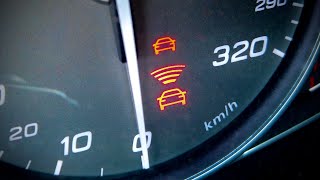
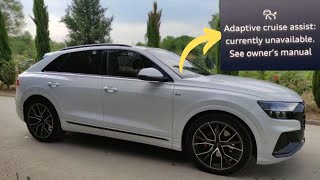
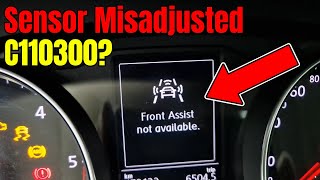
- "Adaptive cruise assist: currently unavailable" message on the dashb 🎬 Watch: See what this dashboard warning looks like in action.oard.
- "Audi pre sense: currently limited" warning message.
- "Intersection assist: malfunction" warning message.
- Adaptive Cruise Control (ACC) cannot be activated or turns off unexpectedly.
- The forward collision warning system is inoperative.
- Yellow triangle warning light on the instrument cluster.
- Replacing the expensive radar sensor when the actual problem is just a dirty lens, a minor misalignment, or a software bug.
- Attempting to clear the P2583 code with a generic scanner without addressing the root cause. The code will return immediately because the underlying manufacturer-specific fault is still active.
- Performing a standard wheel alignment without the necessary ADAS calibration. Any change to vehicle geometry can require sensor recalibration to ensure they are aimed correctly.
Most Likely Causes

- Obstructed Radar Sensor or Windshield Camera 🔴 High Probability The radar sensors are located in domes in the lower front grille, making them susceptible to blockage from dirt, mud, snow, or ice. The front camera can be obscured by grime, stickers, or even bad weather like heavy rain or fog.
How to confirm: Visually inspect the front radar sensor domes and the area around the rearview mirror on the windshield for any obstructions. The fault often appears in bad weather and may resolve on its own after conditions improve or the car is cleaned.
Typical fix: Thoroughly clean the sensor surfaces and the windshield. This often resolves intermittent issues caused by weather or road grime.
Est. part cost: $0 - Radar Sensor Misalignment 🔴 High Probability The sensors are very sensitive to alignment changes. Minor front-end impacts (like hitting a curb or parking block), pothole strikes, or front bumper/grille removal for service can easily knock them out of tolerance.
How to confirm: This is the most common cause if the warning appeared after any minor front-end incident or service. A VAG-specific scan tool will show fault code C110300 ('Adaptive Cruise Control Sensor Misadjusted').
Typical fix: The sensor(s) must be recalibrated by an Audi dealer or a qualified independent shop using a specialized ADAS alignment rig. 🎬 See how a professional radar alignment and calibration is performed. This is not a DIY procedure. The cost for calibration can range from $250 to over $800 depending on the shop.
Est. part cost: $0 (calibration is labor) - ADAS Control Module Software Fault 🟡 Medium Probability Early C8 models were susceptible to software bugs causing intermittent ADAS warnings for various reasons, including phantom object detection or incorrect responses when towing.
How to confirm: A dealer can check if the vehicle's software is up-to-date and if any TSBs apply. TSB 2063497 specifically addresses multiple driver assist malfunctions and provides a software update. TSB 2055338 is another relevant bulletin.
Typical fix: The dealer performs a software update on the relevant control module(s), such as the J1121 Driver Assist Systems Control Module.
Est. part cost: $0 (if covered by warranty or TSB) - Damaged Wiring or Corroded Connector ⚪ Low Probability The sensor connectors are in an area exposed to road spray, which can lead to water intrusion and corrosion over time. The wiring can also be damaged by road debris or improper service procedures.
How to confirm: Visually inspect the sensor connectors and nearby wiring harness for green/white corrosion, chafing, or breaks. A scan tool may show a 'Lost Communication' fault or other specific internal malfunction codes.
Typical fix: Clean the connector pins with contact cleaner or repair/replace the damaged wiring harness and connector pigtail.
Est. part cost: $20-$150
Rare But Worth Checking
- Failing Radar Sensor Unit: While less common than alignment issues, the sensor itself can fail internally. This is usually the last thing to suspect after ruling out all other causes. Replacement is very expensive and requires professional calibration and component protection adaptation by a dealer. A new sensor can cost over $1000.
- Weak or Failing Battery: Low system voltage during startup can cause various electronic modules, including the ADAS system, to generate faults. If you're experiencing other strange electronic gremlins, have your battery and charging system tested. Some owners report Pre Sense faults disappearing after replacing an aging battery.
Diagnosis Steps
- Clean the Sensors: Thoroughly wash the front of the car, paying special attention to the plastic domes in the lower front grille where the radar sensors are housed. Also, clean the windshield in front of the rearview mirror where the camera is located.
- Check for Recent Incidents: Consider if the fault appeared after a minor bump, hitting a large pothole, front bumper removal, or even a windshield replacement, as all can necessitate recalibration.
- Perform a Proper Scan: Use an Audi-specific diagnostic tool (like VCDS, OBDeleven, or a professional shop scanner) to read the fault codes from the 'A5 - Frt Sens. Drv. Assist' and '13 - Auto Dist. Reg' modules. Ignore the generic P2583 code and focus on the Audi-specific codes.
- Analyze the Audi Code: If code C110300 is present, the vehicle needs professional calibration. If communication codes are present, inspect the wiring and connectors for damage or corrosion. If other specific sensor or module faults are stored, further diagnosis of that component is needed.
- Check for TSBs: Have a dealer or equipped independent shop check for any open recalls or Technical Service Bulletins (TSBs) related to the ADAS system for your VIN. TSB 2063497 is particularly relevant for a range of ADAS issues.
- Professional Calibration: If alignment is the issue, take the vehicle to a dealer or ADAS specialist for calibration. This process aligns the sensors with the vehicle's thrust angle using a special target rig. Expect costs to range from $250 to over $1,500 for a full system calibration.
Parts You'll Likely Need
- ADAS Radar Sensor Calibration — This is a labor procedure, not a part. It's the most common required fix when the sensor is misaligned (DTC C110300), which is the most frequent cause of a persistent fault.
OEM price range: $400-$800+ (Labor)
Aftermarket price range: $250-$600 (Labor at specialist) - Front Radar Sensor (Distance Regulation)
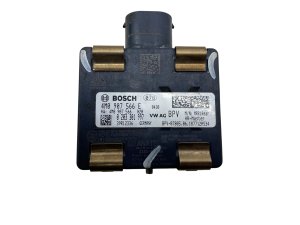
(OEM #4K0907561Q (latest revision, verify by VIN). Other variants include 4K0907561, 4K0907561K, 4K0907561L, etc.)— This is only needed if the sensor itself has failed internally due to impact or electronic failure, which is rare. It is very expensive and requires calibration and component protection removal after installation.
Trusted brands: Bosch, Continental
OEM price range: $1500-$2000
Aftermarket price range: $700-$1200 (Used/Remanufactured)
Related Codes That Often Appear With This One
- C110300 — This is the specific Audi fault code for 'Adaptive Cruise Control Sensor Misadjusted' and is the most likely underlying cause when a generic scanner shows P2583.
- C12EBF1 — This fault points to a malfunction in the laser scanner (LIDAR) unit, often due to a software bug as noted in Audi TSB 2055338.
- B200FF9 — This is a generic internal malfunction code that can be stored in various ADAS modules. TSB 2063497 addresses this code in the context of lane change assist and other systems.
Technical Service Bulletins (TSBs) & Recalls
- 2063497: Addresses various driver assist malfunctions, including ACC inoperability, phantom lane-keeping tugs, and incorrect speed limit displays. The fix is a software update for multiple control modules.
- 2055338: Relates to malfunctions in the laser scanner (LIDAR) unit, often causing Pre Sense errors.
- 2061489: Pertains to DTC B200FF9 (Internal malfunction) in the driver assist control module, causing sporadic Pre Sense and driver assist inoperability.
Platform-Specific Known Issues
- Software Bugs: TSB 2063497 was released to address multiple driver assist optimizations and bug fixes for 2019-2022 models, including issues with the Adaptiv
Mechanic-Grade Diagnostic Values
- ACC Sensor Misalignment Angle (Horizontal) — expected: -0.8 to +0.8 degrees. Failure: A value outside of the expected range will set fault C110300. A negative value indicates the sensor is aimed too far to the right; a positive value indicates it's aimed too far to the left.
- ACC Sensor Misalignment Angle (Vertical) — expected: Typically between -1.0 and +5.0 degrees, with an ideal target around +2.0 degrees.. Failure: A value outside the tolerance range will set a fault. This is less common than horizontal misalignment.
Hidden / Shadow Codes Worth Checking
- U111300: Function limitation due to received malfunction value. This code is often stored in the 'slave' radar sensor (address 8B on older systems, or part of A5 on C8) when the 'master' sensor (address 13) reports a misalignment fault like C110300. It essentially means the slave sensor is shutting down because it's receiving bad data from the master. (see via Audi-specific scan tool (VCDS, ODIS, OBDeleven) checking all ADAS-related modules.)
- C1107 / C1108: Faults related to the front camera video signal (C1107 - Signal Failure, C1108 - Missing Video Data). While less common for a pure radar fault, these can occur alongside ACC issues, indicating a problem with the camera unit in the windshield, which works in tandem with the radar. Sometimes caused by a solder joint failure on the camera's circuit board. (see via Audi-specific scan tool (VCDS, ODIS, OBDeleven) in module A5.)
Scan Tool Commands That Help
- VCDS or OBDeleven: Basic Settings: 'Reset misalignment angle for sensors' — After physically adjusting the sensor's aim, this function is used to tell the control module to begin a new dynamic calibration process during the next drive cycle. A security access code (e.g., 20103, 24085, or 91153 on older models) is required to perform this function. Note: On the newest C8 platforms, this basic setting may not be available, and calibration may require ODIS.
- ODIS (Official Dealer Tool): SVM (Software Version Management) Coding and Component Protection Removal — This is mandatory after replacing a radar sensor. The new (or used) sensor will not function until its Component Protection is removed via an online connection to Audi's servers (GEKO). ODIS is then used to perform SVM coding, which downloads the correct software and parameters for that specific vehicle VIN.
- ODIS (Official Dealer Tool): Guided Fault Finding - 'J428 - Distance regulation calibration' — This is the official, dealer-level procedure for static calibration using the VAS 6430 alignment rig. The tool guides the technician through the physical setup and adjustment of the sensor, followed by the electronic calibration.
Wiring & Ground Locations
- J428 / J533 — The main ACC radar sensor (master) is located in the center of the front bumper cover, often behind one of the lower grille inserts. The central driver assistance controller (zFAS), module A5, which fuses data from all sensors, is often located elsewhere, such as under a seat or in the cabin.. This is the physical location of the sensor that requires alignment or may have wiring damage. The connector at the sensor is the primary point of failure for corrosion or damage.
- Ground Point - Left Front Long Member — On similar Audi platforms (like the A5), a key ground point for front-end electronics is located on the left (driver's side in LHD) front longitudinal frame member. While not specific to the C8 A6, this is a typical location for grounding front-mounted sensors.. A poor ground connection can cause intermittent and difficult-to-diagnose electronic faults, including communication errors or incorrect sensor readings that could disable the ADAS system.
Real Owner Repair Stories
- YouTube user 'mr-fix' (Audi S6 C7 (similar platform and sensor type to early C8)) — ACC and Audi braking guard unavailable message, fault code C110300 (misadjusted) and U111300 (function limitation) after the front bumper was removed for engine service.
❌ Tried (didn't work) Initially had a B2005 'data record invalid' fault, which required parametrization with VCP (not VCDS) to tell the radar it was in the correct bumper., Then had a C1108 'Restricted View' fault, caused by the radar not being clipped into its bracket correctly., Clearing the C110300 fault without adjustment did not work.
✅ What actually fixed it The owner used OBDeleven to read the live 'Misalignment angle' data, which was -1.3 degrees. He then used a 3.5mm socket to physically adjust the horizontal screw on the back of the radar sensor clockwise (a full turn was about 0.5 degrees). After a couple of small adjustments and test drives, he got the misalignment angle to -0.55 degrees, which was within the +/- 0.8 degree tolerance. This cleared the fault and restored ACC function without needing a dealer visit or static calibration rig. - AudiWorld Forums user (2019 A6 Avant (C8)) — ACC+ and lane assist stopped working a few months after purchasing the car new. The dealer reinstalled software and checked for damage but could not fix it, concluding it was a software issue with the new model at the time (early 2019).
❌ Tried (didn't work) Cleaning sensors., Dealer software reinstallation.
✅ What actually fixed it The story was unresolved in the thread, highlighting a real-world case where even the dealer was initially unable to solve the problem, pointing towards early production software bugs that were later addressed by TSBs.
OEM Part Supersession History
4K0907561 / 4K0907561K / 4K0907561L→4K0907561Q (and other revisions)— Hardware and software revisions to improve performance, reliability, and fix bugs.
Heads up: While physically interchangeable, replacing a sensor with a different revision may require a software update to the A5 Driver Assistance module to ensure compatibility. All replacements, regardless of revision, require Component Protection removal and calibration.
Model Year Variations Within This Range
- 2019-2023 vs 2024-2025: The Audi A6 C8 received a facelift for the 2024 model year. Changes were primarily cosmetic, including a new grille and headlight design. The underlying ADAS hardware (sensors, cameras) and the potential for C110300 misalignment faults remained fundamentally the same. There were no major changes to the system architecture that would alter the diagnostic process for this code.
Diagnostic Flowchart

Other Known Issues on This Vehicle
Issues unrelated to this code that are worth knowing about as an owner of this generation:
- 48V Mild-Hybrid System (BSG) Failure 🔴 High — A widely documented problem, especially on 2019-2023 models with the 3.0T engine. Failure of the Belt Starter Generator (BSG) can occur at various mileages, leading to an 'Electrical system: malfunction!' warning and potential vehicle shutdown while driving. (Ref: TSB 2064560/3 and a warranty extension (Recall 27BQ in the US/Canada) have been issued for certain model years.)
- Rocker Arm Bearing Failure (3.0T EA839 Engine) 🔴 High — Primarily affects early-production 2019 models. The needle bearings in the original rocker arms can disintegrate, sending metal through the engine and causing catastrophic failure. A metallic ticking sound that increases with RPM is the main symptom. (Ref: Audi has an updated rocker arm part design and has issued warranty extensions for affected vehicles in some markets.)
- Start-Stop System Malfunctions 🟡 Low — Owners report issues where the vehicle does not restart after coming to a stop. This is often an early symptom of the larger 48V BSG failure or a weakening 12V battery.
- Infotainment System Glitches 🟡 Low — Some owners report the MMI system freezing, becoming unresponsive, or shutting down unexpectedly. A system reboot or software update often resolves the issue. (Ref: Various software updates have been released to improve system stability.)
Used vs. New Parts: Buying Guide for This Vehicle
When a used part is the smart pick: A used radar sensor is a financially tempting option given the high cost of a new unit. It can make sense IF you have access to a workshop with a legitimate, online-capable ODIS tool. Without it, the part is a paperweight.
Donor-vehicle mileage cap: roughly under 50000 miles for the part to have meaningful remaining life.
What to inspect on the donor part:
- Ensure the part number is an exact match or a known compatible supersession.
- Visually inspect the lens for deep scratches, cracks, or any signs of hazing.
- Check the connector pins for any corrosion (green/white powder) or bent pins.
- Confirm the mounting brackets are intact and not cracked or broken.
- Ask the seller if the donor car had a front-end collision. Even if the sensor looks okay, a hard impact can damage it internally.
OEM-only on this vehicle (don't cheap out):
- Front Radar Sensor (Distance Regulation). Due to the Component Protection system, you are locked into using a genuine Audi part, whether new or used. There are no aftermarket alternatives that can be integrated into the vehicle's security system.
Aftermarket brands forum-validated for this vehicle:
- N/A - No aftermarket alternatives exist for the sensor itself due to Component Protection.
Brands owners have reported issues with on this vehicle:
- N/A
Real Owner Stories
Aggregated from forums and TSBs cited above. Mileages and costs reflect what owners reported in those sources.
2019 Audi A6
Symptoms: Owner received a 'Drivers Assistance Not Available' message on the dashboard.
What fixed it: The dealer performed TSB 2063497/1, which is a software update for the driver assistance systems.
Source hint: AudiWorld forum thread titled 'New Driver Assistance TSB - almost caused 3 front end collisions'
2020 Audi A6 Allroad
Symptoms: 'Intersection assistant: malfunction' warning appeared after the car returned from body shop work.
What fixed it: A VCDS scan revealed faults in multiple ADAS modules, requiring professional recalibration of the sensors.
Source hint: Ross-Tech forum thread #39824
2019-2024 Audi A6
Symptoms: The owner found fault code C110300 and was unable to clear the error manually.
What fixed it: The sensor required professional realignment because the 'misadjusted' code is a hard fault that persists until a calibration is performed.
Source hint: OBDeleven forum thread 'ACC / Pre-sense faults'
Related OBD-II Codes
Frequently Asked Questions
My 2019 Audi A6 is showing 'Adaptive cruise assist: currently unavailable' and 'Audi pre sense: currently limited.' Is there a specific TSB for this?
I scanned my A6 and found code C110300. Can I fix this myself?
Could a minor pothole strike cause the P2583/ACC error on my Audi A6?
My dashboard says 'Intersection assist: malfunction.' Is this related to the radar sensors?
How much does it cost to fix the ACC sensor alignment on a 2019-2024 Audi A6?
Is there a TSB for the laser scanner (LIDAR) unit on the A6?
Helpful Videos
We Have This Part in Stock

The information in this article is provided for general reference and educational purposes only. Vehicle specifications, procedures, and part compatibility can vary by production date, trim level, and region. Always consult your vehicle's factory service manual and verify part numbers before purchasing or performing repairs. Safety-critical components such as airbags, seat belts, and braking systems should be installed by a qualified professional.
- Audi A6:
- 🎬 Helpful Videos
- 🛍️ Shop This Part
- What's Unique About the 2019-2024 Audi A6
- Symptoms You May Notice
- Most Likely Causes
- Rare But Worth Checking
- Diagnosis Steps
- Parts You'll Likely Need
- Related Codes That Often Appear With This One
- Technical Service Bulletins (TSBs) & Recalls
- Platform-Specific Known Issues
- Mechanic-Grade Diagnostic Values
- Hidden / Shadow Codes Worth Checking
- Scan Tool Commands That Help
- Wiring & Ground Locations
- Real Owner Repair Stories
- OEM Part Supersession History
- Model Year Variations Within This Range
- Diagnostic Flowchart
- Other Known Issues on This Vehicle
- Used vs. New Parts: Buying Guide for This Vehicle
- Real Owner Stories
- 2019 Audi A6
- 2020 Audi A6 Allroad
- 2019-2024 Audi A6
- Related OBD-II Codes
- Frequently Asked Questions
- 🎟️ Get 5% Off