

OBD-II Code P2583: Front Distance Range Sensor
What P2583 means, why it triggers, and how to fix it
- Always start by thoroughly cleaning your vehicle's front emblem and grille, as snow, ice, or dirt blocking the radar sensor is the number one cause of code P2583.
- You can safely drive with a P2583 code, but your Automatic Emergency Braking (AEB) system is disabled, increasing your risk of a front-to-rear crash by up to 50%.
- Stop DIY repairs after cleaning the sensor; fixing a misaligned radar requires a professional ADAS calibration costing between $250 and $500.
- Never authorize a $2,000+ radar sensor replacement without first asking your mechanic to inspect the $80 plastic mounting bracket for cracks, a frequent failure point noted in Honda TSB A18080E.
What Does P2583 Mean?

P2583 indicates the Powertrain Control Module lost communication with or received an invalid signal from the front millimeter-wave radar sensor. This sensor acts as the primary 'eye' for adaptive cruise control and collision avoidance. When triggered, the vehicle shuts down these safety systems and illuminates multiple dashboard warning lights.
Technical definition: Cruise Control Front Distance Range Sensor Single Sensor or Center
Can I Drive With P2583?
Yes, But With Caution. Yes, the vehicle is drivable, but with a significant reduction in safety. Your adaptive cruise control (ACC) and automatic emergency braking (AEB) systems are disabled. Studies show AEB reduces rear-end crashes by 50%, so driving without it doubles your collision risk in stop-and-go traffic.
Common Causes

- Obstructed Radar Sensor (Very Common) — Snow, ice, heavy dirt, or a poorly placed license plate frame blocks the sensor behind the front emblem. This is the most frequent cause and triggers specific codes like P2583-97.
- Radar Sensor Misalignment (Common) — A minor front-end bump, curb strike, or previous incorrect repair knocks the sensor's precise alignment out of specification, triggering code P2583-76.
- Damaged Mounting Bracket (Common) — A bent or cracked plastic mounting bracket prevents the sensor from holding alignment. Honda TSB A18080E highlights this specific issue, which causes calibration failures.
- Software Glitch (Common) — Internal software issues within the radar module incorrectly trigger the code. Honda TSB A21-068 provides a software update to reduce radar sensitivity to snow and ice. 🎬 See how snow triggers this code and the TSB fix
- Failed Radar Sensor (Rare) — The sensor fails internally due to rock chips, water intrusion, or electronic faults (code P2583-49). This is the most expensive repair and is diagnosed only after ruling out brackets and wiring.
- Low System Voltage (Less Common) — A weak battery, bad alternator, or improper jump-start causes sensitive ADAS modules to malfunction and drop communication.
- Wiring or Connector Issue (Less Common) — Road debris or corrosion damages the wiring harness, causing a loss of power, ground, or communication (code P2583-87).
- Aftermarket Grille Installation (Rare) — Non-OEM grilles or bumpers block or distort the radar signal because they lack the required radar transparency.
Symptoms

- Adaptive Cruise Control (ACC) Disabled — The vehicle cannot maintain a set following distance, and the ACC system refuses to engage. The 'ACC' dash light illuminates or flashes.
- Collision Mitigation Warning Light — Messages like 'Collision Mitigation System Problem' or 'Radar Obstructed' appear on the instrument cluster.
- Multiple Dashboard Warning Lights — The check engine, ACC, and Lane Keeping Assist (LKAS) lights illuminate simultaneously.
- Standard Cruise Control Reverts to Manual — On some vehicles, you can still use standard cruise control to maintain speed, but it will not brake for vehicles ahead.
Diagnostic Flowchart

Tap your situation to follow the diagnostic path that matches what you're seeing on this code.
Common Fixes & Costs
- Cleaning the Radar Sensor — Parts: $0, Labor: $0, ~0.1 hr book time (DIY)
- Professional Radar Sensor Calibration — Parts: $0, Labor: $250-$500, ~1.5 hr book time (Professional)
- Replacing Damaged Mounting Bracket
— Parts: $40-$120, Labor: $150-$300 (plus $250-$500 for mandatory calibration), ~2.5 hr book time
(Intermediate)
Honda CR-V/Accord/Civic: OEM - Software Update via TSB — Parts: $0, Labor: $150-$250, ~1.0 hr book time (Professional)
- Replacing the Front Distance Range Sensor
— Parts: $800-$1,400, Labor: $400-$800 (includes mandatory calibration), ~4.5 hr book time
(Professional)
2017-2022 Honda CR-V: OEM
DIY vs Professional
- Cleaning the Radar Sensor — Beginner:
Tools: Soft cloth, automotive de-icer. - Professional Radar Sensor Calibration — Beginner:
Tools: ADAS calibration frame, radar targets, professional scan tool. - Replacing Damaged Mounting Bracket — Beginner:
Tools: Basic hand tools, bumper removal tools. - Software Update via TSB — Beginner:
Tools: Dealership-level diagnostic tool and software access. - Replacing the Front Distance Range Sensor — Beginner:
Tools: Bumper removal tools, ADAS calibration equipment.
Used vs. New Parts: Buying Guide
When a used part is worth it: Buying a used radar sensor is highly discouraged. These sensitive electronic components are calibrated to specific vehicles, and a used unit may have hidden collision damage.
Donor-vehicle mileage cap: roughly under 10000 miles for the part to have meaningful remaining life.
Donor quality checklist:
- Verify the exact OEM part number matches.
- Avoid sensors from vehicles involved in front-end collisions.
- Understand there is no way to verify functionality without paying for installation and calibration.
Decision logic:
- If The issue is P2583 → Always buy a new OEM sensor if replacement is deemed necessary after ruling out brackets, software, and calibration.
- If Budget is the primary concern → Focus on diagnosing the issue correctly. The fault is often a less expensive component like the mounting bracket.
Warranty tradeoff: Used parts typically have a 30-day warranty, which is insufficient for intermittent electronic issues. New OEM parts carry a 1-year/12,000-mile warranty.
Worst-case if a used part fails: $500-$1000 if a used part fails to calibrate, including the non-refundable labor for the installation attempt.
What Happens If You Wait — Timeline
- Immediate: Code P2583 is set. Adaptive Cruise Control (ACC) and Automatic Emergency Braking (AEB) are disabled. (MPG impact: 0%% · Added cost: $0)
- Ongoing: The vehicle is drivable, but with a significantly higher risk of a front-to-rear collision. The driver must remain vigilant. (MPG impact: 0%% · Added cost: $0, but safety risk is high.)
- 1-6 months: A low-speed collision occurs that the AEB system likely would have prevented, resulting in bumper and grille damage. (MPG impact: 0%% · Added cost: $500 - $2,500 for minor bumper repair.)
- 6+ months: A higher-speed collision occurs. The cost of not fixing the initial P2583 code is dwarfed by major accident repair costs. (MPG impact: 0%% · Added cost: $2,500 - $10,000+ in collision repairs.)
Cost of Not Fixing It
- Immediate: Loss of critical safety features, including Adaptive Cruise Control (ACC) and Collision Mitigation Braking System (CMBS). (Added cost: $0)
- Ongoing: Significantly increased risk of a front-to-rear collision. The driver must manually maintain a safe following distance at all times. (Added cost: Potentially thousands in accident repairs and insurance deductibles.)
- Long-term: Elevated risk of an accident that the ADAS system was designed to prevent. Ignoring the code does not cause mechanical damage, but creates a persistent safety hazard. (Added cost: $2,500 - $10,000+ in collision repairs.)
Diagnosis Steps
- Visually Inspect and Clean the Sensor Area
Wipe the front emblem or lower bumper radar housing with a soft cloth to remove snow, ice, or dirt. Use plastic-safe automotive de-icer for stubborn ice. Never use an ice scraper.
Tools: Soft cloth, automotive de-icer (Beginner) - Restart the Vehicle and Clear Codes
Turn the car off and on to allow the system to self-check. If the obstruction is gone, warning lights often turn off. Otherwise, clear codes with an OBD-II scanner.
Tools: OBD-II Scanner (Beginner) - Read Manufacturer-Specific Suffix Codes
Use a professional OBD-II scanner to read suffix codes like P2583-76 (Misalignment), P2583-54 (Aiming Incomplete), or P2583-97 (Dust/Dirt) to pinpoint the root cause.
Tools: Professional OBD-II Scanner (Intermediate) - Inspect Sensor Mounting Bracket
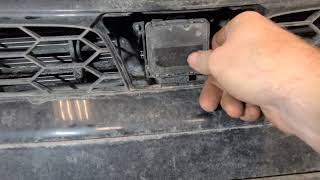
Gently wiggle the sensor unit behind the grille. Any play indicates broken clips or a cracked bracket, a frequent failure point requiring replacement before calibration.
Tools: Flashlight, basic hand tools (Intermediate) - Check Technical Service Bulletins (TSBs)
Search for TSBs like Honda A21-068 (weather sensitivity software update) or A18080E (bracket inspection). Dealerships must perform software updates.
Tools: Internet access (Intermediate) - Verify Power and Ground
For code P2583-87, unplug the radar connector and use a multimeter to check for 12V power and ground. No voltage indicates a blown ADAS fuse or broken wire.
Tools: Multimeter, wiring diagram (Advanced) - Check CAN Bus Communication
Use an oscilloscope to probe CAN High and CAN Low wires at the sensor connector. Healthy networks show mirroring square waves between 1.5V and 3.5V.
Tools: Oscilloscope, wiring diagram (Advanced) - Perform Professional Radar Calibration
If no physical or electrical faults exist, a professional must re-aim the sensor using specialized targets, a level surface, and diagnostic software. This fixes codes P2583-76 and P2583-54.
Tools: ADAS calibration equipment, targets, professional scanner (Professional)
When This Code Triggers (Freeze-Frame Conditions)
- Vehicle Speed: 40-70 mph (Highway driving, ACC engaged)
- Ambient Temperature: < 32°F (0°C) (Cold weather, potential for ice/snow obstruction)
- System Voltage: 11.5-14.5V (Normal operating voltage; values outside this range indicate a battery or alternator issue contributing to the fault.)
Related Codes
- P2583-76 — Radar misaligned. Rule out physical obstruction, check for software updates, inspect the mounting bracket, and perform a professional calibration.
- P2583-54 — Aiming incomplete. A previous calibration was started but failed. It cannot be cleared until a professional successfully finishes the aiming procedure.
- P2583-97 — Sensor obstructed by dust, dirt, or snow. Clean the sensor face. If the code returns, diagnose as a P2583-76 misalignment.
- P2583-87 — Lost communication. An electrical fault requiring checks of ADAS fuses, 12V power, ground, and CAN bus wiring.
- B2A60-54 — Front camera aiming incomplete. Often pairs with P2583-54 after a windshield replacement, indicating the entire ADAS system requires calibration.
Climate & Environmental Factors
- Cold Weather (Snow, Ice, Slush): Thick, wet snow or ice builds up on the front emblem, blocking the radar signal and triggering P2583-76 or P2583-97. Honda TSB A21-068 addresses this oversensitivity.
- Heavy Rain or Fog: Extremely dense fog or torrential rain temporarily disrupts the millimeter-wave radar, displaying a 'Radar Obstructed' message that clears as conditions improve.
How to Talk to a Mechanic About This Code
Say this: "I have a P2583 code. Before quoting a sensor replacement, please check for software update TSBs like A21-068 and physically inspect the radar's mounting bracket for cracks per TSB A18080E. If those are fine, I'd like an estimate for a radar calibration."
This signals you are an informed customer and directs the shop to check cheap, common failures before quoting the most expensive part.
Avoid saying:
- 'My cruise control light is on, can you fix it?'
- 'Just do whatever it takes to get the lights off.'
- 'A friend said I probably need a new radar sensor.'
Questions to ask before authorizing the repair:
- Did you pull a specific suffix code, like -76 for misalignment or -87 for lost communication?
- Did you inspect the mounting bracket and clips for play or damage?
- If recommending replacement, did you attempt a calibration and have it fail?
Where to Take It: Dealer vs Independent vs Chain
- Dealer:
A safe but expensive choice. Best for TSB-related software updates that only a dealer can perform.
Best for: Vehicles under warranty., Performing manufacturer-specific software updates (TSBs).
Downsides: Highest labor rates, typically $400-$600+ for calibration., May recommend full sensor replacement instead of diagnosing cheaper bracket issues. (Typical cost: +50% vs. baseline) - Independent Shop:
Best value, IF they are a qualified ADAS service center. Ask specifically if they perform ADAS calibrations in-house.
Best for: Out-of-warranty vehicles where cost is a factor., Straightforward calibration work after a minor impact.
Downsides: MUST confirm they have modern, OEM-compliant ADAS calibration equipment. (Typical cost: +0% vs. baseline) - Chain Shop:
AVOID for P2583. This is a specialized electronic safety system repair, not a routine maintenance item.
Best for: Simple tasks like oil changes and tires, NOT for ADAS work.
Downsides: Almost never have the specialized equipment required for ADAS calibration., High risk of incorrect diagnosis. (Typical cost: -10% vs. baseline)
When to Walk Away From the Repair
If the estimated repair cost exceeds 40-50% of the car's private-party value, seriously consider selling or trading it in.
- Car worth $15000, fix is $400: Fix it. A calibration is a minor cost relative to the car's value and restores critical safety features.
- Car worth $15000, fix is $2200: Fix it, but get a second opinion first. Ensure a broken bracket or software update isn't the real, cheaper issue.
- Car worth $4000, fix is $2200: Walk away. The repair cost is over 50% of the car's value.
What Scan Tool You Need for This Code
Minimum: A scanner that reads manufacturer-specific Body (B) and Chassis (C) codes to retrieve Honda/Acura suffix codes (-76, -54, -97, -87).
A basic $20 code reader will not see the ADAS module. The suffix code is essential to know whether the problem is misalignment, an obstruction, or an electrical fault.
Budget: KINGBOLEN Ediag / Motopower MP69033 (~$70) — Bluetooth dongles paired with a smartphone app can sometimes access manufacturer-specific codes to retrieve the critical suffix number.
Mid-range: XTOOL D7 / Foxwell NT604 Elite (~$350) — Offers full-system scans, reliably reads Honda-specific suffix codes, and displays live data from the radar sensor.
Professional: Autel MaxiSys MS906 Pro / Launch X431 Series (~$900-1500) — Provides full bidirectional control and initiates the ADAS calibration routine, allowing a technician to see live aiming data.
Rent vs buy: Buy a midrange scanner if you plan to do your own diagnostics regularly. For a one-time P2583 code, pay a shop the $150 diagnostic fee, as even a purchased scanner cannot perform the final calibration repair.
How to Clear the Code After You Fix It
- For simple obstruction, clean the sensor and restart the vehicle; the code often clears itself.
- For hard faults, use a professional OBD-II scan tool to clear the code after the repair is complete.
- Perform a 20-minute drive cycle to allow the system to re-verify the repair.
Drive cycle (~20 minutes): Drive the vehicle for 20 minutes at highway speeds where ACC would normally be used. The system performs self-checks, and if the repair was successful, the warning lights remain off.
Readiness monitors affected: This code does not affect main emissions readiness monitors.
Watch out for:
- Clearing the code with a scanner will not fix a hard fault like misalignment (P2583-76); the code returns immediately.
- If caused by a temporary obstruction, it takes a few key cycles for the warning lights to extinguish on their own.
Will This Fail Emissions / State Inspection?
Yes — this code typically fails an OBD-II emissions inspection.
- California: An illuminated Check Engine Light is an automatic failure for a smog inspection.
- New York: New York's annual safety inspection includes checking for illuminated malfunction indicators. A dashboard lit up with ACC and CMBS lights results in a failure.
- Texas: In counties requiring emissions testing, an active Check Engine Light causes the vehicle to fail the OBD-II inspection.
Most Commonly Affected Vehicles
- Honda CR-V (2017-2024) — Extremely common issue related to weather or minor front impacts causing misalignment. Covered by TSBs A21-068 and A18080E.
- Honda Accord / Accord Hybrid (2018-2022) — Frequently experiences P2583-76 due to weather or misalignment. Addressed by TSBs A21-068 and A18080E.
- Honda Civic (2017-2022) — Prone to P2583-54 (Aiming Incomplete) and P2583-76 (Misalignment), requiring professional calibration after minor incidents.
- Honda Odyssey (2018-2023) — Logs P2583 codes related to low battery voltage or issues after a jump-start.
- Honda Pilot (2016-2022) — Known to experience P2583-87 (Lost Communication) faults, pointing to wiring or power supply issues.
- Acura TLX / MDX (2021-2024) — Logs P2583-97 and P2583-76 if the radar adapter loosens. AcuraWatch is functionally identical to Honda Sensing.
- Subaru Outback, Forester, Crosstrek (2015-2024) — Subaru EyeSight uses different codes but suffers identical calibration failures, especially after windshield replacements.
Manufacturer-Specific Notes
- Honda / Acura: Honda TSB A21-068 provides a software update to reduce the radar's sensitivity to snow and ice, preventing false P2583-76 codes in winter.
- Honda / Acura: Per TSB A18080E, technicians must inspect the radar's plastic mounting clips for damage before replacing the sensor. A loose bracket prevents successful calibration.
- Honda / Acura: Starting a radar calibration with a scan tool but failing to complete it permanently logs a P2583-54 code that cannot be erased until the procedure finishes.
Real Owner Stories
2018 Honda CR-V in winter
Multiple ADAS warning lights appeared during a snowstorm. A scan revealed code P2583-76 (Misalignment).
Outcome: The owner wiped snow and slush off the front Honda emblem. After restarting the car, all warning lights and codes cleared instantly.
Lesson: In winter weather, the most common cause for P2583 is a simple obstruction. Always clean the sensor area before seeking repair.
2018 Honda Accord after minor front impact
After a minor front-end bump, all Honda Sensing warning lights came on. The dealer quoted over $2,000 to replace the radar sensor.
Outcome: The shop found the sensor undamaged, but its plastic mounting bracket was cracked. Replacing the bracket and performing a calibration ($400 total) fixed the issue.
Lesson: Always insist the shop inspects the mounting bracket for damage per TSB A18080E before replacing the sensor.
2018 Honda Odyssey after windshield replacement
Days after a windshield replacement, the Lane Keeping Assist and ADAS features stopped working.
Outcome: The dealership determined the ADAS system needed a full recalibration, which the glass installer skipped. The calibration fixed the issue.
Lesson: After a windshield replacement, a full ADAS calibration is mandatory. Ensure the glass shop includes this service.
2019 Honda Accord with recurring winter errors
The owner repeatedly got the P2583-76 error on the highway during cold weather, even when the sensor was clean.
Outcome: The dealer applied a free software update (TSB A21-068) that reduces radar sensitivity to snow and ice, permanently resolving the problem.
Lesson: If you experience frequent weather-related P2583 faults, ask your dealer to apply the software update described in TSB A21-068.
How to Prevent This Code From Triggering
- Regularly Clean the Sensor Area (Weekly or as needed) — Wiping the front emblem prevents buildup of dirt and road grime that obstructs the radar signal.
- Apply a Hydrophobic Coating (Seasonally (before winter)) — Applying a plastic-safe hydrophobic coating to the front emblem helps snow and ice slide off, reducing weather-related blockages.
- Maintain Stable Battery Voltage (During any vehicle service) — Using a battery maintainer during diagnostics prevents voltage drops that corrupt ADAS modules.
- Drive Defensively to Avoid Minor Impacts (Daily habit) — Avoiding curb strikes and parking blocks prevents minor bumps that break the mounting bracket or knock the sensor out of alignment.
Frequently Asked Questions
Can I fix P2583 myself?
You can fix the most common cause by thoroughly cleaning the front emblem and grille area. If cleaning doesn't work, the repair requires professional ADAS calibration equipment. Do not attempt to adjust the sensor manually.
Why did the P2583 code appear after a snowstorm?
Snow, slush, and ice block the radar sensor, blinding the system and forcing it to shut down for safety. Cleaning the sensor usually resolves the issue. Honda offers a software update to make the system less sensitive to winter weather.
A shop quoted me over $2,000 to fix P2583. Is that right?
That price indicates a full radar sensor replacement, which is often unnecessary. Ask the shop to inspect the inexpensive plastic mounting bracket for cracks first. A simple $400 calibration or an $80 bracket replacement frequently solves the problem.
My shop wants to replace the radar sensor immediately. What should I ask them?
Ask if they checked for software update TSBs and physically inspected the mounting bracket for damage. Also, ask if they attempted a calibration and if it failed. A broken bracket or software glitch is usually the true culprit.
Can a bad battery or a jump-start cause a P2583 code?
Yes. ADAS modules are highly sensitive to voltage fluctuations. A weak battery, failing alternator, or a voltage surge from an improper jump-start easily triggers P2583 and other communication codes.
Will my check engine light go away on its own?
If the code triggered due to a temporary obstruction like ice, the warning lights often disappear after you clean the sensor and restart the car. Persistent lights indicate a hard fault requiring professional diagnosis.
What is ADAS calibration?
ADAS calibration uses specialized targets and software to precisely align your vehicle's cameras and radar sensors. It is mandatory after windshield replacements, alignments, or front-end body repairs.
Can I pass a state inspection with the P2583 code active?
In most states, an illuminated Check Engine Light results in an automatic emissions test failure. Some states also fail vehicles if key safety systems like Automatic Emergency Braking display a dashboard fault.
Why did this code appear after I got a new windshield?
The front camera mounts to the windshield and works in tandem with the radar. Replacing the glass alters the camera's position, requiring a mandatory ADAS calibration for both components.
Key Takeaways
- Always start by thoroughly cleaning your vehicle's front emblem and grille, as snow, ice, or dirt blocking the radar sensor is the number one cause of code P2583.
- You can safely drive with a P2583 code, but your Automatic Emergency Braking (AEB) system is disabled, increasing your risk of a front-to-rear crash by up to 50%.
- Stop DIY repairs after cleaning the sensor; fixing a misaligned radar requires a professional ADAS calibration costing between $250 and $500.
- Never authorize a $2,000+ radar sensor replacement without first asking your mechanic to inspect the $80 plastic mounting bracket for cracks, a frequent failure point noted in Honda TSB A18080E.
Helpful Videos


The information in this article is provided for general reference and educational purposes only. Vehicle specifications, procedures, and part compatibility can vary by production date, trim level, and region. Always consult your vehicle's factory service manual and verify part numbers before purchasing or performing repairs. Safety-critical components such as airbags, seat belts, and braking systems should be installed by a qualified professional.
- 🎬 Helpful Videos
- What Does P2583 Mean?
- Can I Drive With P2583?
- Common Causes
- Symptoms
- Diagnostic Flowchart
- Common Fixes & Costs
- DIY vs Professional
- Used vs. New Parts: Buying Guide
- What Happens If You Wait — Timeline
- Cost of Not Fixing It
- Diagnosis Steps
- When This Code Triggers (Freeze-Frame Conditions)
- Related Codes
- Climate & Environmental Factors
- How to Talk to a Mechanic About This Code
- Where to Take It: Dealer vs Independent vs Chain
- When to Walk Away From the Repair
- What Scan Tool You Need for This Code
- How to Clear the Code After You Fix It
- Will This Fail Emissions / State Inspection?
- Most Commonly Affected Vehicles
- Manufacturer-Specific Notes
- Real Owner Stories
- 2018 Honda CR-V in winter
- 2018 Honda Accord after minor front impact
- 2018 Honda Odyssey after windshield replacement
- 2019 Honda Accord with recurring winter errors
- How to Prevent This Code From Triggering
- Frequently Asked Questions
- Can I fix P2583 myself?
- Why did the P2583 code appear after a snowstorm?
- A shop quoted me over $2,000 to fix P2583. Is that right?
- My shop wants to replace the radar sensor immediately. What should I ask them?
- Can a bad battery or a jump-start cause a P2583 code?
- Will my check engine light go away on its own?
- What is ADAS calibration?
- Can I pass a state inspection with the P2583 code active?
- Why did this code appear after I got a new windshield?
- Key Takeaways
- 🎟️ Get 5% Off