

P2580 on 2014-2020 Ram 3500: Turbo Speed Sensor Causes and Fixes
For a 2014-2020 Ram 3500 with the 6.7L Cummins, code P2580 almost always points to a failed turbocharger speed sensor or its wiring. Thanks to a service change, you can replace just the sensor for around $150-$200, avoiding a costly full turbocharger replacement.
- P2580 on a 6.7L Cummins Ram almost always means the turbo speed sensor or its wiring is faulty.
- Do NOT let a shop replace the entire turbocharger. TSB #9003319 confirms the sensor is a separate, much cheaper part.
- The most likely part needed is the Turbocharger Speed Sensor (OEM part #5550060).
- Before buying a new sensor, always inspect the wiring harness for heat damage and test the old sensor's resistance (should be 600-1600 Ohms).
- In rare cases, a bad MAP or EGT sensor can trigger this code, so check for other codes first.
What's Unique About the 2014-2020 Ram 3500

A key issue for this platform is that the turbocharger speed sensor was not always sold as a separate part. A crucial Technical Service Bulletin (TSB #9003319) announced that the sensor is now serviceable apart from the entire turbocharger assembly. This is a major cost-saving development, as a simple sensor swap can now fix a problem that previously might have led a shop to replace the entire, much more expensive, turbocharger unit.
Diagnostic Flowchart

Tap your situation to follow the diagnostic path that matches what you're seeing on this vehicle.
Generation note: The 2014-2020 year range covers the end of the fourth generation (2010-2018) and the beginning of the fifth generation (2019-present) Ram 3500. The 6.7L Cummins engine is used in both, and this issue, along with the TSB making the sensor separately serviceable, applies across these model years.
Symptoms You May Notice
- Check Engine Light is on
- Reduced engine power or 'limp mode'
- Poor acceleration and sluggish throttle response
- Boost gauge reading lower than normal
- Possible unusual whining or whistling sounds from the turbo area
- Replacing the entire turbocharger assembly. The provided TSB #9003319 explicitly advises against this, as the sensor is now a separate, serviceable part.
- Replacing the speed sensor without first checking the wiring. A simple wiring issue can mimic a failed sensor, leading to unnecessary expense.
Most Likely Causes

- Failed Turbocharger Speed Sensor 🔴 High Probability The sensor operates in a high-heat environment on top of the turbocharger, making it susceptible to failure over time. The sensor itself can develop an internal open or short circuit.
How to confirm: Disconnect the sensor and measure the resistance between its two pins. 🎬 Watch: Testing sensor resistance and troubleshooting the P2580 code. A healthy sensor should read between 600 and 1600 Ohms. A reading of OL (over-limit) or zero indicates a failed sensor.
Typical fix: Replace the turbocharger speed sensor. The new sensor often comes as a kit with a new bolt and harness clips. 🎬 Watch: Step-by-step guide to replacing the turbo speed sensor.
Est. part cost: $150 - $250 - Damaged Wiring or Connector 🟡 Medium Probability The wiring harness is routed near hot exhaust and turbo components. The protective heat shielding can degrade, leading to melted wires, chafing, or corrosion in the connector pins.
How to confirm: Visually inspect the entire length of the sensor's wiring harness for any signs of melting, chafing, or breaks. Check the connector for corrosion or loose pins. Perform a continuity test from the sensor connector to the ECM connector.
Typical fix: Repair the damaged section of the wiring harness or clean/replace the connector. Applying dielectric grease can help protect the new connection.
Est. part cost: $10 - $50 - Outdated ECM Software ⚪ Low Probability The manufacturer has issued TSBs that involve software updates to correct various powertrain issues, including how the ECM interprets sensor data.
How to confirm: A Ram dealership or a properly equipped independent shop can check if your vehicle's ECM has the latest software version installed by referencing your VIN against available updates.
Typical fix: Reprogram the Engine Control Module (ECM) with the latest software.
Est. part cost: $0 - $200
Rare But Worth Checking
- Faulty MAP or EGT Sensor: In some forum-documented cases, a failing Manifold Absolute Pressure (MAP) sensor or Exhaust Gas Temperature (EGT) sensor caused a P2580 code to appear, even though the turbo speed sensor itself was fine. The ECM uses data from multiple sensors, and a bad signal from one can sometimes mislead the diagnostic system.
- Failing Engine Control Module (ECM): While extremely rare, it is possible for the ECM's internal driver circuit for the turbo speed sensor to fail. This should only be considered after all other possibilities (sensor, wiring) have been definitively ruled out.
Diagnosis Steps
- Read the Diagnostic Trouble Codes (DTCs) with an OBD-II scanner.
- Check for any other active codes. If codes for other sensors like MAP or EGT are present, investigate them first as they can sometimes trigger a false P2580.
- Visually inspect the turbo speed sensor wiring harness and connector for any signs of heat damage, melting, chafing, or corrosion.
- Disconnect the sensor connector. Test the sensor's internal resistance with a multimeter. The reading should be between 600 and 1600 Ohms. If it's outside this range, the sensor has failed. 🎬 See how to diagnose turbo speed sensor codes and wiring.
- If the sensor tests good, check the wiring harness for continuity and shorts to ground/power between the sensor connector and the ECM.
- If the sensor and wiring are confirmed to be good, contact a dealership to see if a powertrain software update is available for your vehicle, as mentioned in TSB #9003319.
- If the code persists after replacing the sensor, repairing the wiring, and performing any software updates, the issue may lie with the turbocharger itself or, rarely, the ECM.
Parts You'll Likely Need
- Turbocharger Speed Sensor
(OEM #5550060)— This is the most common failure point for code P2580, as confirmed by the manufacturer TSB and numerous owner experiences.
Trusted brands: Cummins, Holset
OEM price range: $180-$250
Aftermarket price range: $150-$200
Related Codes That Often Appear With This One
- P2033 — A forum user reported a P2033 (EGT Sensor Circuit High) code alongside P2580. A corroded EGT sensor connector was found to be the root cause for both codes, suggesting the sensor circuits can be electrically interrelated.
- P0088 — This code for 'Fuel Rail Pressure Too High' can be part of a list of issues addressed by a PCM software update, which could also be a factor in the P2580 code.
Technical Service Bulletins (TSBs) & Recalls
- Bulletin #9003319: States that for a P2580 code, the Turbo Speed Sensor is now a separately serviceable part and the entire turbocharger should not be replaced. Also mentions a potential software update.
Platform-Specific Known Issues
- A critical TSB (#9003319) was issued for 2013 and newer models, stating the Turbo Speed Sensor is available separately from the turbocharger kit. It advises technicians NOT to replace the entire turbocharger for a P2580 code.
- Some owners have found that issues with other sensors, particularly the MAP sensor or EGT sensors, can cause the P2580 code to be set incorrectly.
Mechanic-Grade Diagnostic Values
- Turbo Speed Sensor internal resistance — expected: 600 - 1600 Ohms. Failure: Reading of 0 Ohms (short) or OL/infinity (open)
- Resistance of sensor circuit at ECM connector — expected: No more than 10 Ohms greater than the sensor's individual resistance reading. Failure: A significantly higher reading indicates high resistance in the wiring harness.
- Resistance between sensor signal/return wires and chassis ground — expected: Greater than 100k Ohms. Failure: A low resistance reading indicates a short to ground in the harness.
- Live Data: Turbo Speed vs. Estimated Turbo Speed — expected: The two values should be closely aligned.. Failure: Scan tool showing Turbo Speed at or near zero while Estimated Turbo Speed is high.
Scan Tool Commands That Help
- OBD-II Scan Tool (e.g., WiTech, Autel, etc.): Live Data Monitoring — Use to monitor 'Turbocharger Speed' and 'Estimated Turbocharger Speed' PIDs. A reading of zero for the actual speed while the estimated speed is high confirms the fault condition the ECM is seeing.
- Dealer-level Scan Tool (e.g., WiTech): Check for ECM/PCM Software Updates — After confirming the sensor and wiring are good, check if a software reflash is available to address how the ECM interprets sensor data, as mentioned in TSB #9003319.
Wiring & Ground Locations
- ECM Connector C1, Pin 17 — On the main engine harness connector (C1) at the ECM, which is located on the driver's side of the engine block.. This is the Turbocharger Speed Sensor Signal pin (K540 circuit, BRN/GRY wire). It's a key point for testing the entire circuit's integrity back to the ECM.
- ECM Connector C1, Pin 16 — On the main engine harness connector (C1) at the ECM, located on the driver's side of the engine block.. This is the Turbocharger Speed Sensor Return/Ground pin (K541 circuit, BRN/VIO wire). It completes the circuit and is the other essential test point at the ECM.
- Engine Harness Routing — The harness for the sensor runs from the top of the turbo, down and around the hot side, to a connector.. This path exposes the wiring to extreme heat and vibration. Inspect for chafing on engine brackets, melting from proximity to the turbo/exhaust, and corrosion at the connector.
Real Owner Repair Stories
- Turbo Diesel Register forum user 'Liecha' (4th Gen Ram 6.7L Cummins) — P2580 code appeared after a TPS replacement.
❌ Tried (didn't work) Replacing the turbo speed sensor (the original sensor tested good at 900 ohms but was replaced anyway).
✅ What actually fixed it A shop diagnosed and replaced a faulty MAP sensor. The bad MAP sensor was triggering the P2580 code without setting its own specific DTC. - Dodge Diesel - Diesel Truck Resource forum user 'etoy' (Ram with 6.7L Cummins) — P2580 and P2033 (EGT bank 1 sensor 2) codes appeared together.
❌ Tried (didn't work) Replacing the turbo speed sensor; scan tool still showed zero turbo speed.
✅ What actually fixed it Found and repaired a corroded connector on the #2 EGT sensor. Once the EGT sensor signal was restored, the turbo speed signal also began reading correctly, resolving both codes.
"I Checked Everything" — The Actual Cause
- A case was documented where the turbo speed sensor was replaced and wiring was inspected, but the P2580 code persisted. The actual root cause was a faulty MAP sensor that was not setting its own trouble code but was corrupting the engine operating model, leading the ECM to flag the turbo speed.
- In another instance, a new turbo speed sensor did not fix the P2580 code. The problem was ultimately traced to a corroded connector on the #2 EGT sensor (Code P2033 was also present). Repairing the EGT sensor's connector fixed both issues, suggesting a shared electrical dependency.
When the Usual Fixes Don't Work
- While the most common fix for P2580 is the sensor or its direct wiring, multiple owner-documented repairs show this is not always the case. In one instance, after replacing the sensor to no effect, the final repair was a new MAP sensor, which was causing the P2580 code without setting a code of its own. In another, a corroded EGT sensor connector was the true culprit. After replacing the turbo speed sensor did not work, fixing the EGT connector resolved the P2580 code. This proves that technicians should investigate other related sensor codes or data streams if a direct repair to the turbo speed sensor circuit fails.
OEM Part Supersession History
Multiple, including 2839964, 4032806, 4034198→Holset 5550060 / 5550060H, Mopar 68483898AA— Part consolidation and revision.
Heads up: The sensor for 2013+ models is different from the one used in 2007.5-2012 trucks; they are not interchangeable.
Model Year Variations Within This Range
- 2019-2020: The 2019 model year introduced the 5th generation Ram HD, which featured a significantly updated 6.7L Cummins. This included a new, larger Holset VGT turbocharger and a new fuel system, particularly for the High Output (HO) variant. While the P2580 fault logic is the same, the physical turbo and associated components are different from the 2014-2018 4th gen trucks.
Helpful Videos
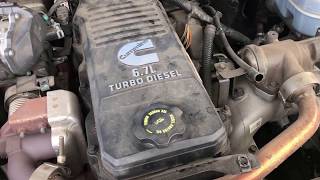


Used OEM Parts in Stock


New Aftermarket Parts Available

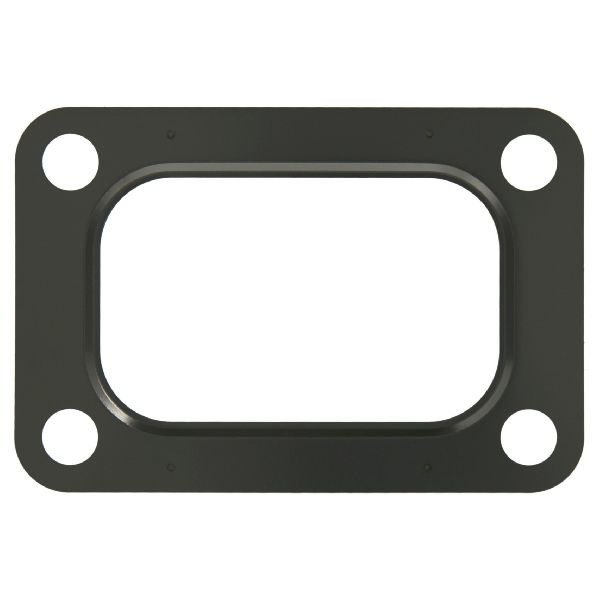
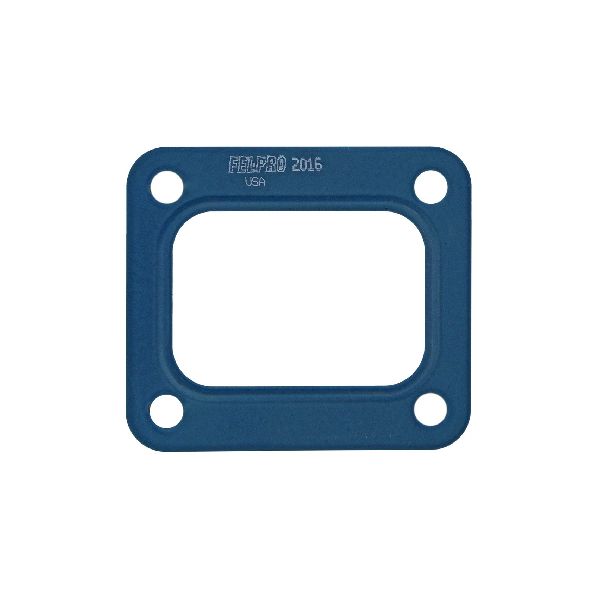
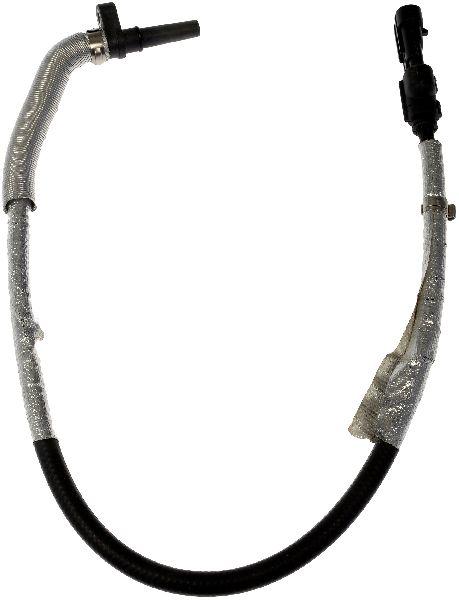

The information in this article is provided for general reference and educational purposes only. Vehicle specifications, procedures, and part compatibility can vary by production date, trim level, and region. Always consult your vehicle's factory service manual and verify part numbers before purchasing or performing repairs. Safety-critical components such as airbags, seat belts, and braking systems should be installed by a qualified professional.
- Ram 3500:
- 🎬 Helpful Videos
- 🛍️ Shop This Part
- What's Unique About the 2014-2020 Ram 3500
- Diagnostic Flowchart
- Symptoms You May Notice
- Most Likely Causes
- Rare But Worth Checking
- Diagnosis Steps
- Parts You'll Likely Need
- Related Codes That Often Appear With This One
- Technical Service Bulletins (TSBs) & Recalls
- Platform-Specific Known Issues
- Mechanic-Grade Diagnostic Values
- Scan Tool Commands That Help
- Wiring & Ground Locations
- Real Owner Repair Stories
- "I Checked Everything" — The Actual Cause
- When the Usual Fixes Don't Work
- OEM Part Supersession History
- Model Year Variations Within This Range
- 🎟️ Get 5% Off