

OBD-II Code P2561: A/C Control Module Requested MIL Illumination
The Ultimate Guide to P2561: What It Means, Why It Triggers, and How to Fix It for Good
- P2561 is a messenger code indicating the A/C module requested the check engine light; you must scan the HVAC or Transmission modules to find the actual 'B' or 'U' fault code.
- A basic $20 OBD-II reader cannot diagnose P2561; use an advanced scanner capable of reading all vehicle modules to pinpoint the root cause.
- On 2002-2015 Mercedes-Benz models, P2561 almost always indicates a failing transmission conductor plate requiring a $600-$1,500 repair, not an A/C issue.
- For 2013-2016 Ford Escapes, P2561 frequently points to a failed engine coolant bypass valve (Part #BM5Z-18495-C), which costs about $50 to replace yourself.
- Before replacing a $500 A/C control module, test the battery voltage (12.4V+) and verify the module's ground connection has less than a 0.1V drop.
What Does P2561 Mean?

P2561 is an informational code, not a direct fault. It means the A/C control module detected an internal or monitored system fault and requested the Powertrain Control Module (PCM) to illuminate the check engine light. P2561 is just the messenger; the actual fault code is stored in the A/C, HVAC, or another related module.
Technical definition: A/C Control Module Requested MIL Illumination. This generic code indicates the heating, ventilation, and air conditioning (HVAC) module has detected a fault. It sends a command over the vehicle's Controller Area Network (CAN bus) to the Powertrain Control Module (PCM) to illuminate the Malfunction Indicator Lamp (MIL).
Can I Drive With P2561?
Yes, But With Caution. Yes, but risks vary by vehicle. For most cars, the only impact is a non-working A/C. However, on a Ford Escape, the fault often relates to an engine coolant valve, risking severe overheating. On Mercedes-Benz models, this code signals a transmission problem that causes limp mode or erratic shifting, requiring immediate attention to prevent internal damage.
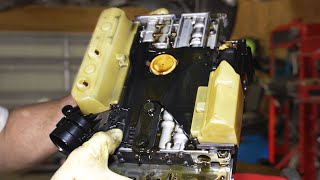
🎬 Watch: How to replace a Mercedes transmission conductor plate.Common Causes


- Faulty Component Monitored by A/C Module (Ford/Honda) (Very Common) — On specific vehicles, the A/C module monitors external engine parts. A failure in the engine coolant bypass valve (Ford Escape) or VTEC spool valve (Honda Accord) causes the A/C module to request the MIL.
- Transmission Conductor Plate Failure (Mercedes-Benz) (Very Common) — On Mercedes vehicles, P2561 is a known quirk indicating a transmission fault, not an A/C issue. A failing conductor plate sends implausible gear readings, triggering this code alongside specific transmission codes.
- Internal A/C Control Module Failure (Common) — The A/C control module fails internally due to overheating, moisture intrusion, or age-related component fatigue, prompting it to request the check engine light.
- Wiring, Connector, or Ground Issues (Common) — Damaged wiring, corroded connector pins, or a loose ground wire interrupt communication and power. Poor grounds create electrical instability that sensitive modules interpret as an internal failure.
- Software Corruption or Glitch (Less Common) — Buggy or corrupted software within the A/C control module causes it to misinterpret data and falsely report a fault. This often requires a dealer software update (reflash).
- Faulty A/C Pressure Sensor (Less Common) — A failing A/C refrigerant pressure sensor provides implausible data. The module flags this incorrect data as a system fault and triggers P2561, storing a specific sensor code in the HVAC module.
- Communication Network (CAN Bus) Failure (Rare) — A short or open circuit on the CAN bus network prevents the A/C module from communicating correctly with the PCM, triggering communication fault codes alongside P2561.
Symptoms

- Check Engine Light is On — The steady illumination of the check engine light on your dashboard is the primary indicator.
- A/C Does Not Work or Works Poorly — The air conditioning blows warm air, blows air at the wrong temperature, or works intermittently.
- Engine Overheating (Ford Escape) — The temperature gauge spikes into the red zone due to a failed engine coolant bypass valve restricting coolant flow.
- Transmission Slipping or Limp Mode (Mercedes-Benz) — The vehicle gets stuck in one gear, shifts harshly, or exhibits delayed engagement when shifting into Drive or Reverse.
- Flashing A/C or HVAC Display — The lights on the climate control panel flash, or the display shows an error message indicating a self-diagnosed fault.
Diagnostic Flowchart
Tap your situation to follow the diagnostic path that matches what you're seeing on this code.
Common Fixes & Costs
- Replacing a Faulty Monitored Component (Ford Valve / Honda Spool) — Parts: $50-$210, Labor: $100-$250, ~1.5 hr book time (Intermediate)
- Replacing the Transmission Conductor Plate (Mercedes-Benz) — Parts: $150-$600, Labor: $400-$800, ~4.5 hr book time (Professional)
- Repairing Damaged Wiring or Ground Connection — Parts: $10-$50, Labor: $125-$350, ~2.0 hr book time (Intermediate)
- Reprogramming (Reflashing) the A/C Control Module — Parts: $0, Labor: $100-$200, ~1.0 hr book time (Professional)
- Replacing the A/C Control Module — Parts: $250-$800, Labor: $150-$300, ~1.5 hr book time (Professional)
DIY vs Professional
- Replacing the Ford Escape Coolant Bypass Valve — Beginner: No
Tools: 8mm socket with swivel and extension, hose clamp pliers, drain pan, replacement coolant. - Replacing the Mercedes-Benz Conductor Plate — Beginner: No
Tools: Vehicle lift or jack stands, T30 Torx socket, torque wrench (inch-pounds/Nm), transmission fluid pump, advanced scan tool for clearing codes. - Repairing Wiring or Grounds — Beginner: Yes (for visible, accessible grounds)
Tools: Multimeter, socket set, wire brush, electrical contact cleaner, wiring repair tools (strippers, crimpers, heat shrink). - Replacing the A/C Control Module — Beginner: No
Tools: Basic hand tools for interior trim removal, advanced scan tool with programming capabilities.
Used vs. New Parts: Buying Guide
When a used part is worth it: For mechanical parts like a Ford coolant bypass valve, a used part from a low-mileage vehicle is a reasonable budget option. For electronic modules, buying used is highly risky.
Donor-vehicle mileage cap: roughly under 60000 miles for the part to have meaningful remaining life.
Donor quality checklist:
- Verify the exact part number matches; superseded numbers may not be compatible.
- Avoid electronic modules that look opened or have damaged connector pins.
- On Mercedes 722.9 transmissions, a used conductor plate cannot be reprogrammed to your vehicle; it is useless.
Decision logic:
- If The part is a simple mechanical valve or sensor and budget is the primary concern. → A used part from a reputable salvage yard with a short warranty is acceptable.
- If The part is an electronic control module (A/C module, conductor plate). → Buy new OEM or a professionally remanufactured unit with a warranty. The risk of a used part requiring theft-locked programming is too high.
- If The vehicle is a Mercedes with a 722.9 transmission. → You MUST buy a new conductor plate from a dealer or have your original unit rebuilt by a specialist. A used one will not work.
Warranty tradeoff: Used parts typically offer a 30-90 day warranty covering only the part. New aftermarket parts offer 1-year to limited lifetime warranties. New OEM parts carry a 1-2 year warranty.
Worst-case if a used part fails: $500-$1500 if a used electronic module fails, requiring repeat labor and the purchase of a new part.
What Happens If You Wait — Timeline
- 0-1 month: Check Engine Light on. On most cars, only symptom is no A/C. On a Mercedes, an occasional hard shift occurs. On a Ford Escape, cabin heat is erratic. (MPG impact: 0%% · Added cost: $0 (but will fail emissions inspection))
- 1-3 months: On a Mercedes, transmission slipping and entering 'limp mode' becomes frequent. On a Ford Escape, the car begins to run hot under load or displays 'Engine Fault Service Now' warnings. (MPG impact: 0-5%% · Added cost: $0-$100 in wasted fuel and diagnostics. Risk of being stranded increases.)
- 3-6 months: On a Mercedes, continued slipping burns the transmission's internal clutch packs. On a Ford Escape, a severe overheating event occurs, potentially warping the cylinder head. (MPG impact: 5-15%% · Added cost: $1,500 - $4,000. The original, cheaper fix is no longer sufficient. The transmission requires internal work, or the engine needs a head gasket replacement.)
- 6+ months: Catastrophic failure. The Mercedes transmission requires a full rebuild or replacement. The Ford Escape engine is seized or has a cracked block from overheating, requiring a complete engine replacement. (MPG impact: N/A (Vehicle is likely disabled)% · Added cost: $4,000 - $8,000+. The cost of ignoring the initial warning has multiplied.)
Cost of Not Fixing It
- Immediate: No air conditioning and an illuminated Check Engine Light, causing an automatic failure of any state emissions inspection. (Added cost: $0)
- 0-3 Months (Vehicle Specific): On a Ford Escape, ignoring the coolant valve fault causes engine overheating and head gasket damage. On a Mercedes, a failing conductor plate causes erratic shifting and internal transmission damage. (Added cost: $1500-$5000+)
- Long-Term: Driving with the check engine light permanently on masks new, critical engine codes that arise later. (Added cost: Varies)
Diagnosis Steps
- Scan for All Trouble Codes (Crucial First Step)
Use an advanced OBD-II scanner capable of reading manufacturer-specific codes from ALL vehicle modules (Engine, Body, HVAC, Transmission). P2561 is a generic request. The actionable code (a 'B', 'U', or 'P' code) is stored in the module that detected the original fault.
Tools: Advanced OBD-II Scanner (Beginner) - Check for Technical Service Bulletins (TSBs)
Search for TSBs related to P2561 for your specific vehicle. Manufacturers often issue software updates (reflashes) or identify known component failures (like the Ford coolant valve) that trigger this code.
Tools: Access to Manufacturer Service Information (Beginner) - Test Ford Coolant Bypass Valve (If Applicable)
On affected Ford Escapes, disconnect the valve's electrical connector. Measure the resistance between the two pins. A good valve reads between 7 and 16 Ω. An open circuit (OL) indicates a failed solenoid winding, requiring replacement.
Tools: Multimeter (Intermediate) - Inspect Fuses and Relays
Locate the fuse boxes in the engine bay and cabin. Check all fuses related to the HVAC system, climate control, and A/C control module. A blown fuse disables the module and triggers this code.
Tools: Fuse Puller, Vehicle's Fuse Diagram (Beginner) - Test Battery and Ground Connections
Confirm the battery has a full charge (12.4-12.6V engine off) and the alternator is charging (13.7-14.7V engine running). Clean and tighten the main chassis and engine ground straps. Check for voltage drop on the ground side (must be < 0.1V).
Tools: Multimeter, Socket Set, Wire Brush (Beginner) - Perform a Visual Wiring Inspection
Inspect the A/C control module's wiring harness and connectors for damage, corrosion, moisture, or loose pins. Trace the wiring to look for chafed or melted sections.
Tools: Flashlight, Inspection Mirror (Intermediate) - Test Module Power and Ground
Identify the power and ground pins at the A/C control module connector using a wiring diagram. With the key on, verify battery voltage at the power pin(s) and near-zero resistance (< 0.1 Ω) to a known good ground.
Tools: Multimeter, Vehicle-Specific Wiring Diagram (Intermediate) - [ADVANCED] Test A/C Refrigerant Pressure Sensor
Monitor the A/C pressure sensor PID with a scan tool. With the A/C off and engine cool, pressure should reflect ambient temperature. A typical 3-wire sensor reports a variable voltage from ~0.1V to ~4.9V. An unchanging voltage indicates a faulty sensor.
Tools: Scan Tool, A/C Manifold Gauge Set, Multimeter (Advanced) - [PRO TIP] Check CAN Bus Network Resistance
Disconnect the battery. Measure resistance between Pin 6 (CAN High) and Pin 14 (CAN Low) on the OBD-II port. A healthy network reads ~60 Ω. A reading of 120 Ω means a terminating resistor is offline. An open circuit (OL) points to a wiring break.
Tools: Multimeter, OBD-II Breakout Box (optional) (Advanced) - [PRO TIP] Analyze CAN Bus Signal with an Oscilloscope
Connect a lab scope to CAN High and CAN Low. A healthy signal shows a 'mirror image' pattern. When idle, both lines sit at ~2.5V. During communication, CAN High pulses to ~3.5V and CAN Low pulses to ~1.5V. Look for distorted waveforms or shorts.
Tools: Oscilloscope, OBD-II Breakout Box (Advanced)
When This Code Triggers (Freeze-Frame Conditions)
- Engine Coolant Temp: 170-220°F (77-104°C) (Engine at normal operating temperature.)
- RPM: 1200-2500 (Light acceleration or steady cruise.)
- Engine Load: 15-40% (Low to moderate engine load during city or highway driving.)
- Vehicle Speed: 25-60 mph (Steady city or highway driving speeds.)
Related Codes
- B-codes (e.g., B1234) — These are the 'real' codes. P2561 is the messenger. A Body (B-prefix) code stored in the HVAC module pinpoints the actual fault, such as a faulty sensor or actuator. Diagnosis MUST start here.
- U0164 — P2561 means the A/C module is successfully communicating its distress. U0164 ('Lost Communication With HVAC Control Module') means the PCM cannot hear the A/C module at all, pointing to a dead module or blown fuse.
- P0AC4 — Both are 'request for MIL' codes. P2561 is from the A/C module. P0AC4 is from the Hybrid Powertrain Control Module. On a hybrid, P2561 points to the climate system, while P0AC4 points to the high-voltage drive system.
- P0717, P2767, P2768 (Mercedes-Benz) — On Mercedes vehicles, if you see P2561, you will almost certainly find one of these transmission codes stored in the Electronic Transmission Control module. They indicate failures of the internal speed sensors on the conductor plate.
Climate & Environmental Factors
- High Humidity / Salt: Regions with high humidity or heavy road salt use accelerate corrosion on wiring connectors, ground points, and within the A/C control module itself. This electrical corrosion is a primary cause of communication faults.
- Extreme Cold: In very cold weather, the engine coolant bypass valve on affected Ford models is commanded to close to speed up engine warm-up. This frequent cycling in cold climates contributes to a higher failure rate of the valve.
- Low Battery Voltage: Cold weather weakens a battery. Low system voltage during engine start-up causes electronic modules, including the A/C controller, to glitch and set spurious fault codes like P2561.
How to Talk to a Mechanic About This Code
Say this: "I have a P2561 code, and I know it's a request from the A/C module. I need a diagnostic that includes a full-system scan to find the real code stored in the HVAC, Body, or—if it's a Mercedes—the Transmission module. Please quote me for the diagnostic time to find the underlying 'B', 'U', or manufacturer-specific code."
This signals you understand the code's nature and prevents the shop from giving a lazy diagnosis or a premature quote to replace the A/C module. It directs them to perform the correct diagnostic procedure from the start.
Avoid saying:
- 'My check engine light is on, can you fix it?'
- 'My A/C isn't working and I have a code.'
- 'Just do whatever it takes to fix it.'
Questions to ask before authorizing the repair:
- What was the specific fault code you found in the other module, and what does it mean?
- If you're recommending a module replacement, did you verify its power, ground, and communication network connections are all good first?
- For my Ford Escape, what was the resistance reading on the coolant bypass valve?
- For my Mercedes, which specific speed sensor or transmission codes were present along with the P2561?
- Can you show me the failed part and explain why it needs to be replaced?
Where to Take It: Dealer vs Independent vs Chain
- Dealer:
A safe but expensive option. Recommended if you suspect a software issue or have a complex brand like Mercedes and don't have a trusted specialist.
Best for: Vehicles under warranty., Known manufacturer-specific quirks like on a Mercedes or Honda., Repairs that require software updates (reflashing) or programming of new modules.
Downsides: Highest labor rates and OEM part prices., May default to replacing an entire assembly when a smaller component or wiring repair would suffice. (Typical cost: +50% vs. baseline) - Independent Shop:
Best choice for most vehicles, provided you find a reputable shop that specializes in your vehicle's make or in complex electrical diagnostics.
Best for: Out-of-warranty vehicles where cost is a factor., Finding a brand specialist (e.g., a German auto expert) who has seen the specific P2561 issue on your car many times., Electrical diagnostics and wiring repairs.
Downsides: Quality and diagnostic capabilities vary greatly; must vet the shop's reputation and ensure they have advanced, all-system scanners. (Typical cost: +0% vs. baseline) - Chain Shop:
AVOID. This code requires a level of diagnostic nuance that is generally not the strong suit of chain repair shops. The risk of a misdiagnosis is very high.
Best for: Simple, routine maintenance like oil changes or tire rotations.
Downsides: Technicians lack the specialized training for complex diagnostic codes like P2561., Often rely on basic code readers that cannot see the necessary modules., Business model incentivizes quick parts replacement over thorough diagnosis. (Typical cost: -10% vs. baseline)
When to Walk Away From the Repair
If the estimated repair cost exceeds 50% of your car's private-party value, you should seriously consider replacing the car.
- Car worth $3500, fix is $2200: Walk away. The repair cost is over 60% of the car's value. Sell as a 'mechanic special' or trade it in.
- Car worth $15000, fix is $600: Fix it. This is a relatively minor cost compared to the vehicle's value and is well below the threshold.
- Car worth $8000, fix is $3500: Borderline. The cost is ~44% of the car's value. Get a second opinion and assess the car's overall health before proceeding.
What Scan Tool You Need for This Code

Minimum: A scanner that can perform a full-system scan and read manufacturer-specific codes from ALL modules (Engine, HVAC, Transmission, Body, etc.).
A basic $20 code reader only shows the generic P2561 code from the engine computer. It CANNOT see the underlying, specific fault code stored in the A/C, transmission, or body module, which is essential for a correct diagnosis.
Budget: Autel MaxiAP AP200 / XTOOL A30M (~$60) — These Bluetooth dongles pair with your smartphone and offer full-system scanning capabilities, allowing you to read the crucial codes from the HVAC or other modules.
Mid-range: Foxwell NT510 Elite / Innova 5610 (~$180) — These handheld tools provide full-system diagnostics and often come with brand-specific software (great for Mercedes/Ford quirks). Many add bidirectional control to test components directly.
Professional: Autel MaxiCOM MK808BT Pro / XTOOL D7 (~$450-600) — Provides full OE-level diagnostics for all modules, extensive bidirectional controls to activate and test components, and advanced service functions essential for deep diagnosis.
Rent vs buy: AutoZone's 'Loan-A-Tool' program requires a deposit but is effectively a free rental. HOWEVER, verify that their loaner scanner has all-system capability; many basic loaners do not, making them useless for this specific code. If the loaner is basic, buying a budget pick is a better investment.
How to Clear the Code After You Fix It
- Perform the physical repair of the root cause (e.g., replace valve, repair wiring).
- Reconnect the battery if it was disconnected for the repair.
- Use an OBD-II scan tool to clear all Diagnostic Trouble Codes (DTCs) from all modules.
- Perform a complete drive cycle to allow the vehicle's readiness monitors to run.
Drive cycle (~30 minutes): Start with a cold engine. Idle for 2-3 minutes with electrical loads on (A/C, defroster). Accelerate to 55 mph and hold steady for 3-5 minutes. Drive in stop-and-go city traffic for 15-20 minutes. Let the vehicle coast from a higher speed down to 20 mph without braking.
Readiness monitors affected: Catalyst (CAT), Evaporative (EVAP) System, Oxygen (O2) Sensor, Oxygen Sensor Heater
Before emissions retest: drive at least 100 miles to fully set monitors.
Watch out for:
- Disconnecting the battery clears the code but resets all readiness monitors, causing an immediate emissions test failure.
- The code returns immediately if the underlying fault in the A/C module (or monitored component) is not fixed.
- Some monitors, like EVAP, require the fuel tank to be between 15% and 85% full to run.
Will This Fail Emissions / State Inspection?
Yes — this code typically fails an OBD-II emissions inspection.
- California: An illuminated Check Engine Light is an automatic failure of the smog inspection. After repair, the vehicle must be driven through a complete drive cycle to set all readiness monitors before re-testing.
- New York: A vehicle automatically fails the emissions inspection if the Check Engine Light is on. Clearing the code right before the test results in a failure because readiness monitors will not be set.
- Texas: In counties requiring emissions testing, an active Check Engine Light is an automatic failure. The bulb for the light must also function correctly during the key-on-engine-off check.
Most Commonly Affected Vehicles
- Mercedes-Benz Various Models (e.g., E-Class, C-Class, ML-Class) (2002-2015) — HIGHLY DECEPTIVE. P2561 almost always points to a transmission problem, not A/C. The root cause is a failing conductor plate inside the 722.6 or 722.9 transmission. Other codes like P0715, P0717, or P2767 are usually present in the transmission module.
- Ford Escape (2013-2016) — Caused by a faulty engine coolant bypass valve (Part #BM5Z-18495-C), which is monitored by the A/C module. This causes severe engine overheating if ignored.
- Honda Accord (2018-2022) — On 1.5T and 2.0L models, a faulty VTEC spool valve assembly triggers P2561. The A/C module monitors this part. Total replacement cost ranges from $250 to $350.
- Ford Fiesta (2011-2016) — Highly susceptible to grounding issues and the same coolant bypass valve fault as the Escape. TSB 11-5-23 addresses poor ground connections at the G103 stud causing communication codes.
- Chevrolet Volt (2011-2015) — The HVAC Control Module requests the MIL for faults related to the high-voltage battery cooling system, even if cabin A/C works perfectly.
- GMC / Chevrolet Various Trucks & SUVs (2010-2019) — Issues on these GM vehicles often point directly to the A/C control module requiring a software update (reflash) or complete replacement.
- Hyundai/Kia Various Models (2010-2019) — Frequently traced to internal failures within the A/C control head (module) or problems in the associated wiring harness.
- Toyota/Lexus Prius, CT200h, and other Hybrids (2010-2015) — These vehicles use a similar MIL request strategy. A P261B code indicates the PCM received a request to turn on the MIL from another module, often due to a failing electric engine water pump.
Manufacturer-Specific Notes
- Mercedes-Benz: The P2561 code is a red herring. It is almost never related to the air conditioning. It is the transmission control module reporting an 'implausible gear ratio' or slipping fault, usually from a defective conductor plate. Investigating the A/C system is a waste of time.
- Ford: The A/C module doubles as a monitor for other components. On an Escape, it watches the engine coolant bypass valve, and a failure there triggers P2561. On a Fiesta, faulty ground points are a known weak spot that cause this code.
- Honda: The A/C module reports faults from the VTEC (Variable Valve Timing) system. A problem with an oil pressure switch or spool valve sends a fault to the A/C module, which then requests the check engine light, setting code P2561.
- General Motors (Chevrolet, GMC): On hybrid vehicles like the Chevy Volt, the HVAC module is deeply integrated with the battery thermal management system. A fault with a sensor or valve in the high-voltage battery cooling loop triggers P2561.
Real Owner Stories
2005 Mercedes E320 CDI with transmission issues
Check Engine Light was on, and the car entered limp mode, getting stuck in 3rd gear. The owner experienced delayed engagement when shifting into Drive or Reverse and a shudder when starting from a stop.
Outcome: Despite replacing the conductor plate, the problem persisted. A transmission specialist determined the torque converter's internal lock-up clutch plates were worn out, requiring a $5,000 repair.
Lesson: On a Mercedes, P2561 is almost always a transmission issue. Even after replacing the common failure item (the conductor plate), the problem can be deeper within the transmission, leading to a much more expensive repair.
2014 Ford Escape 1.6L with Check Engine Light
The Check Engine Light came on. A scan revealed a code related to the coolant bypass valve. The dealership quoted $600 for the repair.
Outcome: The owner successfully replaced the valve in 30 minutes. The total cost was for the part and replacement coolant, saving over $500. The Check Engine Light was cleared and did not return.
Lesson: For Ford Escapes, P2561 is commonly caused by the coolant bypass valve. This is a manageable DIY repair for an intermediate mechanic. Checking for this specific part saves significant time and money.
Honda V6 with oil leak and eventual VTEC-related codes
Owner noticed an oil leak dripping onto the alternator. If ignored, the resulting low oil pressure triggers a fault that the A/C module reports, setting P2561.
Outcome: Replacing the spool valve gaskets, costing less than $20 in parts, resolved the oil leak. This preventive measure ensured the VTEC system maintained correct oil pressure, preventing related fault codes.
Lesson: On a Honda, an oil leak from the VTEC spool valve is a warning sign. Fixing this simple gasket leak is cheap preventative maintenance that prevents the oil pressure issues leading to P2561.
How to Prevent This Code From Triggering
- Maintain a Healthy Battery and Grounds (Annually) — Low voltage and voltage spikes from a weak battery or bad grounds corrupt software or damage sensitive electronic modules like the A/C controller. Clean battery terminals and main ground straps yearly.
- Apply Dielectric Grease to Connectors (When servicing a component) — In humid or salt-belt areas, moisture gets into connectors and causes corrosion, leading to communication faults. Applying dielectric grease to the connector seal keeps moisture out.
- Perform Regular Coolant Flushes (for Ford) (Every 3-5 years or 50,000 miles) — On affected Ford models, old, contaminated coolant causes debris to build up in the cooling system, leading to premature failure of the engine coolant bypass valve.
- Perform Regular Transmission Service (for Mercedes) (Every 40,000 miles) — Regularly changing the transmission fluid and filter on a 722.6 or 722.9 transmission removes contaminants and maintains proper hydraulic pressure, extending the life of the electronic conductor plate.
- Fix Engine Oil Leaks Promptly (for Honda) (As needed) — On Honda V6 engines, the VTEC spool valve gasket is a common source of oil leaks. If left unfixed, the loss of oil pressure triggers faults in the VTEC system that lead to a P2561 code.
Frequently Asked Questions
Can low freon cause a P2561 code?
Indirectly, yes. Low refrigerant causes out-of-range pressure readings, prompting the A/C module to flag a fault and request the check engine light. A specific pressure-related 'B' code will also be stored alongside P2561.
What is the most common misdiagnosis for P2561?
The most common mistake is replacing the A/C control module without retrieving the specific sub-codes from the module itself. Mechanics also frequently ignore manufacturer quirks, such as diagnosing the A/C system on a Mercedes when the code actually points to a transmission failure.
How much does it cost to fix code P2561?
Costs range from $0 for a simple ground repair to over $1,200 for a Mercedes transmission conductor plate. Replacing a Ford coolant valve or Honda spool valve typically costs $150-$350. A full A/C control module replacement averages $400-$800 including programming.
Can I fix P2561 myself?
You can DIY basic checks like fuses, visible wiring, and ground connections, or replace accessible parts like the Ford coolant valve. However, diagnosing the exact fault requires an advanced all-system scanner. Tasks like module replacement or Mercedes transmission repairs require professional programming and tools.
Will clearing the P2561 code fix the problem?
No. Clearing the code only turns the light off temporarily. Because P2561 is a continuous request from the A/C module, the code returns immediately as soon as the underlying fault condition is met again.
What's the difference between a flashing check engine light and the flashing A/C light I see with P2561?
A flashing check engine light indicates a severe engine misfire that can destroy your catalytic converter. P2561 causes a steady check engine light. A flashing A/C or climate control light is a separate warning indicating the A/C module has detected an internal climate system fault.
Why is my check engine light on for an A/C problem?
Manufacturers use the check engine light as a universal warning signal. Because most cars lack a dedicated dashboard light for the climate system, the A/C module commands the check engine light to alert you to a system failure.
Key Takeaways
- P2561 is a messenger code indicating the A/C module requested the check engine light; you must scan the HVAC or Transmission modules to find the actual 'B' or 'U' fault code.
- A basic $20 OBD-II reader cannot diagnose P2561; use an advanced scanner capable of reading all vehicle modules to pinpoint the root cause.
- On 2002-2015 Mercedes-Benz models, P2561 almost always indicates a failing transmission conductor plate requiring a $600-$1,500 repair, not an A/C issue.
- For 2013-2016 Ford Escapes, P2561 frequently points to a failed engine coolant bypass valve (Part #BM5Z-18495-C), which costs about $50 to replace yourself.
- Before replacing a $500 A/C control module, test the battery voltage (12.4V+) and verify the module's ground connection has less than a 0.1V drop.
Helpful Videos
![[EN] Mercedes 722.6 Automatic Transmission conductor plate inspection and replacement.](https://img.youtube.com/vi/lMAqz0LxNj8/mqdefault.jpg)




The information in this article is provided for general reference and educational purposes only. Vehicle specifications, procedures, and part compatibility can vary by production date, trim level, and region. Always consult your vehicle's factory service manual and verify part numbers before purchasing or performing repairs. Safety-critical components such as airbags, seat belts, and braking systems should be installed by a qualified professional.
- 🎬 Helpful Videos
- What Does P2561 Mean?
- Can I Drive With P2561?
- Common Causes
- Symptoms
- Diagnostic Flowchart
- Common Fixes & Costs
- DIY vs Professional
- Used vs. New Parts: Buying Guide
- What Happens If You Wait — Timeline
- Cost of Not Fixing It
- Diagnosis Steps
- When This Code Triggers (Freeze-Frame Conditions)
- Related Codes
- Climate & Environmental Factors
- How to Talk to a Mechanic About This Code
- Where to Take It: Dealer vs Independent vs Chain
- When to Walk Away From the Repair
- What Scan Tool You Need for This Code
- How to Clear the Code After You Fix It
- Will This Fail Emissions / State Inspection?
- Most Commonly Affected Vehicles
- Manufacturer-Specific Notes
- Real Owner Stories
- 2005 Mercedes E320 CDI with transmission issues
- 2014 Ford Escape 1.6L with Check Engine Light
- Honda V6 with oil leak and eventual VTEC-related codes
- How to Prevent This Code From Triggering
- Frequently Asked Questions
- Can low freon cause a P2561 code?
- What is the most common misdiagnosis for P2561?
- How much does it cost to fix code P2561?
- Can I fix P2561 myself?
- Will clearing the P2561 code fix the problem?
- What's the difference between a flashing check engine light and the flashing A/C light I see with P2561?
- Why is my check engine light on for an A/C problem?
- Key Takeaways
- 🎟️ Get 5% Off