

P2560 on 2019 Ram 3500: Engine Coolant Level Low Causes & Fixes
P2560 means your truck's computer has detected a low engine coolant level. The most common cause is an actual coolant leak from a hose, the radiator, or the water pump. Always physically check your coolant level first; if it's low, find and fix the leak. If the level is correct, you may have a faulty coolant level sensor, a stuck float inside the reservoir, or a software issue that requires a PCM update from the dealer.
- P2560 means 'Engine Coolant Level Low'. Your first and most important step is to physically check the coolant level in the reservoir once the engine is cool.
- If the coolant is low, you have a leak. Do not simply keep topping it off. Find and fix the leak to prevent engine overheating and catastrophic damage.
- If the coolant level is full, the most likely cause is a failed coolant level sensor, followed by a faulty coolant reservoir with a stuck internal float.
- Always use the specified Mopar OAT (Organic Additive Technology) coolant for your 2019 Ram. Using the wrong type can cause system damage.
- Check for available PCM software updates with your dealer, as TSBs indicate that updates can resolve issues related to this code.
What's Unique About the 2019-2019 Ram 3500

On the 2019 Ram 3500 with the 6.7L Cummins engine, this code is a critical warning that should not be ignored. The complexity and heat generated by this large turbo-diesel engine make proper coolant levels essential for preventing catastrophic damage. Diagnosis can be complicated by the sensor's design; it is a non-contact magnetic reed switch that senses a float inside a sealed tube within the reservoir. Over time, sediment or sludge in the coolant can cause this internal float to stick, leading to a false P2560 code even when the coolant level is full. Furthermore, Ram has issued TSBs indicating that PCM software updates are sometimes required to correct the logic that triggers this code, suggesting it can be set without a true fault in the cooling system.
🎬 Watch: A complete diagnostic and repair walkthrough for code P2560.Diagnostic Flowchart
Tap your situation to follow the diagnostic path that matches what you're seeing on this vehicle.
Symptoms You May Notice
- "Engine Coolant Level Low" message on the instrument cluster.
- Check Engine Light (Malfunction Indicator Lamp) is on.
- Engine temperature gauge reading higher than normal.
- Visible puddles of pink/purple Mopar OAT coolant under the truck.
- A sweet smell of coolant from the engine bay.
- Intermittent warning light, especially in cold weather, that may disappear after the truck warms up.
- Replacing the coolant level sensor without first confirming the coolant level is actually full.
- Ignoring the warning light, assuming it's just a faulty sensor, without checking for a potentially engine-damaging leak.
- Replacing only the sensor when the actual problem is a stuck float inside the reservoir, leading to the code returning.
Most Likely Causes

- Actual Coolant Leak 🔴 High Probability Diesel engines have complex cooling systems with numerous hoses and components (like EGR coolers and their associated lines) that can develop leaks over time. Common failure points include radiator end tanks, water pumps (weep hole), and various hose connections, which can sometimes only leak when the engine is cold.
How to confirm: Visually inspect the engine bay for signs of coolant residue (pink, crusty deposits). Check all hoses, the radiator, water pump (from above and below), and the EGR system area. A cooling system pressure test is the definitive way to find a leak if it's not visually obvious.
Typical fix: Replace the leaking component, whether it's a hose, radiator, water pump, or gasket. Refill the system with the correct Mopar OAT 10-year/150,000-mile coolant.
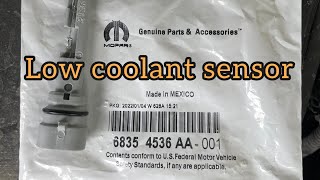
Est. part cost: $20-$800 - Faulty Coolant Level Sensor 🟡 Medium Probability The sensor is a very common failure point. It is a magnetic sensor that reads a float inside the tank. The sensor itself can fail electronically, sending a false 'low' signal even if the float is working correctly. It is located at the bottom of the reservoir and can be difficult to remove, often breaking during extraction.
How to confirm: If the coolant level is physically full but the code persists, the sensor is a primary suspect. The sensor can be tested with a multimeter and a magnet to see if it opens and closes the circuit correctly. Access is typically through the passenger-side front wheel well after removing the liner. 🎬 See how to access and change the sensor through the wheel well.
Typical fix: Replace the coolant level sensor. It is located at the bottom of the coolant reservoir. It is a dry sensor, so no coolant will be lost when removing it. Applying silicone grease to the new sensor's O-ring can aid installation.
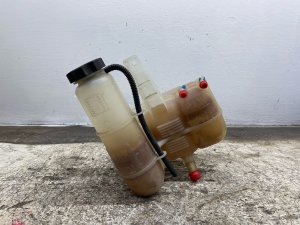
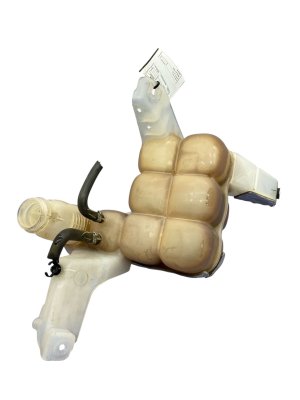
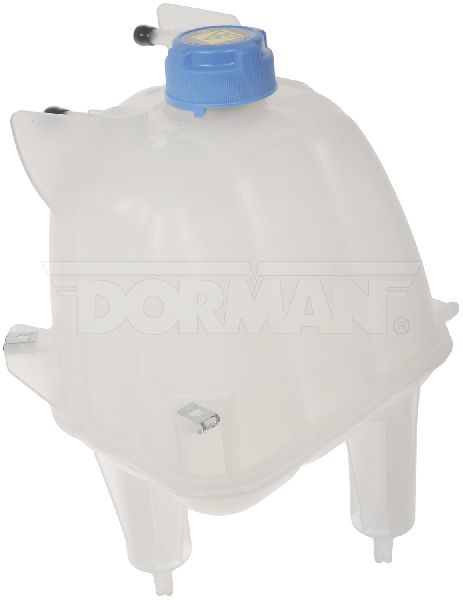
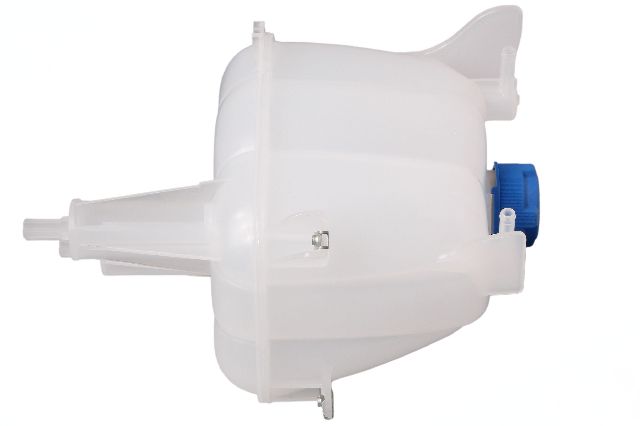
Est. part cost: $30-$50 - Faulty Coolant Reservoir (Degas Bottle) 🟡 Medium Probability This is the other primary cause of a false P2560. Over many heat cycles, sediment and sludge can build up inside the reservoir, preventing the magnetic float for the level sensor from moving freely. This causes it to get stuck in the 'low' position, triggering the code even with a full tank and a new sensor.
How to confirm: This is often diagnosed after replacing the sensor doesn't fix the problem. If the coolant is full and a new sensor still reads low, the issue is almost certainly a stuck float inside the tank. Visually, the tank may also appear stained or dirty.
Typical fix: Replace the entire coolant reservoir. Many owners recommend doing this at the same time as the sensor, as the sensor is often difficult to remove from the old tank without breaking it. Many new OEM reservoirs come with a new sensor pre-installed. 🎬 Watch: How to replace the reservoir to fix a stubborn low coolant light.
Est. part cost: $80-$150 - Wiring or Connector Issue ⚪ Low Probability The sensor is located low on the vehicle, making its wiring susceptible to damage from road debris or corrosion from the elements. The connector pins can also lose tension over time.
How to confirm: Visually inspect the wiring harness and connector leading to the coolant level sensor for any breaks, corrosion, or loose pins. Perform a continuity test from the sensor plug to the PCM. A 'pin drag' test can check for good tension on the connector terminals.
Typical fix: Repair the damaged section of wiring or clean/replace the connector.
Est. part cost: $5-$30
Rare But Worth Checking
- Leaking EGR Cooler: A failed EGR cooler can cause a slow, internal coolant leak where coolant is burned off in the exhaust. This leads to gradual coolant loss without visible drips, and may produce white smoke/steam from the exhaust. This is a known issue on Cummins engines.
- Powertrain Control Module (PCM) Software: In some cases, the fault is not with a physical part but with the PCM's software calibration. FCA has released multiple TSBs (e.g., 18-066-23, 18-052-19 REV. A) that involve flashing the PCM with updated software to resolve erroneously set codes, including P2560. If no physical fault can be found, checking with a dealer for available updates is a valid diagnostic step.
- Faulty Powertrain Control Module (PCM): In very rare cases, the PCM itself can malfunction and misinterpret the sensor's signal. This should only be considered after all other possibilities, including software updates, have been exhausted.
Diagnosis Steps

- Safety First: Park on a level surface and wait for the engine to cool completely before opening the cooling system.
- Check Coolant Level: Visually inspect the coolant level in the coolant reservoir (degas bottle). If it is below the 'MIN' or 'ADD' line, the code is likely accurate and you have a leak.
- Top Off and Inspect for Leaks: If the level is low, top it off with the correct Mopar OAT 10-year/150,000-mile coolant (P/N 68163849AB for 50/50 pre-diluted). Do not use other types. With the system full, start the engine and carefully inspect all hoses, the radiator, the water pump (especially the weep hole), and the EGR system for any visible leaks.
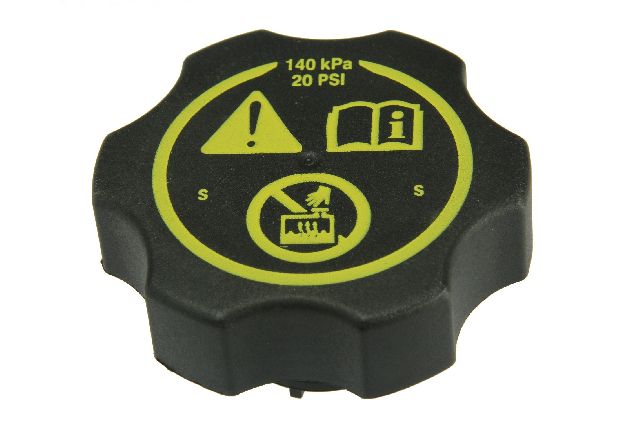
- Perform a Pressure Test: If no leak is obvious, use a cooling system pressure tester to pressurize the system to the specification on the radiator cap. Watch for a drop in pressure, which confirms a leak, and listen or look for where the coolant is escaping.
- Check for TSBs: If the coolant level is full, contact a Ram dealer or use an online service to check if your vehicle's VIN has any open campaigns or applicable TSBs related to PCM software updates for P2560, such as TSB 18-066-23 or 18-052-19 REV. A.
- Inspect Sensor and Wiring: If the coolant level was full from the start and no TSBs apply, the problem is likely the sensor or reservoir. Access the coolant level sensor at the bottom of the reservoir by removing the passenger-side front wheel and fender liner. Inspect the connector for corrosion and the wires for damage.
- Test the Sensor: Disconnect the sensor. It is a magnetic reed switch and does not sit in coolant, so nothing will leak. Test its continuity with a multimeter while moving a magnet near it to simulate the float. The circuit should open and close. If it fails this test, the sensor is bad.
- Replace Sensor and/or Reservoir: If the sensor tests bad, replace it. Be aware that the old sensor is often seized in the plastic tank and may break upon removal, requiring pliers to extract. Many owners recommend replacing the entire reservoir assembly (which often includes a new sensor) as a preventative measure against a stuck internal float, which is the next most likely cause.
Parts You'll Likely Need

- Engine Coolant Level Sensor
(OEM #68489744AA)— This sensor is a very common failure point, either electronically or due to a stuck float in the reservoir. It is the most likely part to fix the code if the coolant level is actually full.
Trusted brands: Mopar
OEM price range: $30-$45
Aftermarket price range: $20-$40 - Coolant Reservoir (Degas Bottle)
(OEM #68370066AC)— Often the root cause when a new sensor doesn't work. Sludge and debris can cause the internal float to stick, necessitating a full tank replacement. Many owners replace this as a unit with the sensor to avoid future issues.
Trusted brands: Mopar, Dorman
OEM price range: $100-$130
Aftermarket price range: $80-$110 - Mopar 10-Year/150,000 Mile OAT Coolant (50/50 Prediluted)
(OEM #68163849AB)— Required for topping off or refilling the system after a repair. Using the correct Organic Additive Technology (OAT) coolant is critical for system longevity.
Trusted brands: Mopar
OEM price range: $25-$35 per gallon
Related Codes That Often Appear With This One
- P24A5 — EGR Cooler Bypass Bank 1 Control Stuck. This code, along with P2560, is listed in TSBs for PCM software updates, indicating they can be flagged under similar conditions or addressed by the same software logic.
- P2201 — Aftertreatment NOX Sensor Circuit Performance. Also listed in the same software update TSBs as P2560, suggesting a potential for multiple codes to be stored, which a PCM update aims to resolve.
Technical Service Bulletins (TSBs) & Recalls
- 1806623: Flash: Powertrain Control Module (PCM) Updates, lists P2560-00 - Engine Coolant Level Low as one of many DTCs addressed.
- 1810122REVA: Flash: Powertrain Control Module (PCM) Updates, also lists P2560-00.
- 18-052-19 REV. A: Flash: Powertrain Control Module (PCM) Updates, also lists P2560-00.
Platform-Specific Known Issues
- Several Technical Service Bulletins (TSBs), including #1806623, #1810122REVA, and #18-052-19 REV. A, list P2560 as one of several codes addressed by a PCM software update. If your truck exhibits multiple electrical or performance issues alongside this code, checking for available software updates with a dealer is a valid step.
Mechanic-Grade Diagnostic Values
- Coolant Level Sensor Resistance (2-wire float type) — expected: Normal Level: 133 ± 3 Ohms. Low Level: 1200 ± 60 Ohms.. Failure: Readings outside these ranges, or an open/shorted circuit that doesn't change when a magnet is applied, indicates a faulty sensor.
- Coolant Level Sensor Continuity Test — expected: With a multimeter in continuity or resistance mode, the sensor should show an open circuit (OL). When a magnet is brought close to the sensor body, the circuit should close and show near-zero resistance (e.g., 0.2 Ohms).. Failure: If the circuit state does not change when a magnet is applied, the internal reed switch is faulty.
- Coolant Level Sensor Voltage (at PCM) — expected: A typical 0-5V sensor will read near the top of its range (e.g., 4.5-5.0V) when the coolant level is full.. Failure: A voltage below approximately 1.0V typically signals a low-level condition to the PCM.
Wiring & Ground Locations
- Sensor Harness Chafe Points — The wiring harness within two feet of the coolant level sensor connector, especially near clipping points to the engine or chassis.. Vibrations and tension can cause wires to chafe or break in this area, leading to an intermittent or constant P2560 code. A TSB for a similar application recommends adding protective TwistTube and a backshell for strain relief.
- Body Grounds — Common ground points include near the battery negative terminal, above the driver's side headlight, near the windshield wiper motor, and on the passenger side wheel well near the alternator.. A poor ground connection for the sensor circuit can cause incorrect voltage readings at the PCM, triggering a false code. Verifying and cleaning main body and engine grounds is a key step in diagnosing persistent electrical issues.
- Engine to Frame Ground Strap — Typically a braided strap connecting the engine block to the vehicle's frame or body.. Ensures the engine block has a solid ground reference to the rest of the vehicle. While less likely to be the sole cause, a corroded or broken strap can contribute to numerous electrical gremlins.
Real Owner Repair Stories
- RamForum.com user (2017 Dodge RAM 2500 6.7L Cummins) — Low coolant light and P2560 code.
❌ Tried (didn't work) Replacing the coolant level sensor.
✅ What actually fixed it The user cut open the old coolant reservoir and discovered the internal float was no longer buoyant and sank in a container of water. The ultimate fix is replacing the entire coolant reservoir because the internal float fails, not just the external sensor. - YouTube video by 'The Way I Do It' (2015 Ram 3500 with 216,000 miles) — Low coolant light was on for months, even though the coolant level was always full.
❌ Tried (didn't work) Replacing the coolant level sensor multiple times. The first replacement worked for a few weeks before the light returned.
✅ What actually fixed it Replacing the entire coolant reservoir (degas bottle). The user explained that sludge and buildup inside the tank causes the internal magnetic float to get stuck, which is why a new sensor alone doesn't solve the problem. - YouTube video by 'Diesel Legiance' (2016 Ram 2500 6.7L Cummins) — Intermittent low coolant light.
❌ Tried (didn't work) Initially considered just the sensor.
✅ What actually fixed it Replaced the entire coolant reservoir, which came with a new sensor pre-installed, along with a lower return hose. The user noted that removing the old sensor from the original tank was nearly impossible without breaking it, reinforcing the recommendation to replace the whole assembly. - YouTube video by '3DHP' (Truck with a stuck coolant float sensor.) — Low coolant light due to a stuck float.
❌ Tried (didn't work) Draining and cleaning the tank was proposed as one option.
✅ What actually fixed it The user took a power tool that vibrates (like an oscillating tool without a blade) and held it against the side of the coolant reservoir for about a minute. The vibrations were enough to un-stick the internal float and turn the warning light off.
"I Checked Everything" — The Actual Cause
- The common pattern for P2560 is not a failed smoke test, but a situation where the coolant level is visibly full, yet the code persists. Technicians will replace the easily accessible coolant level sensor first. When the code returns, the actual root cause is almost always a faulty internal float within the coolant reservoir. The float either gets stuck due to sludge and deposits, or in some cases, the plastic float itself loses buoyancy over time and sinks. This requires the replacement of the entire reservoir assembly to fix permanently.
OEM Part Supersession History
N/A→68370066AC— Standard part number for the 2019 model year.
Heads up: This is the coolant reservoir (degas bottle) for the 2019-2022 Ram 3500.N/A→68489744AA— Standard part number for the 2019 model year.
Heads up: This is the Mopar coolant level sensor for the 2019-2024 Ram. Note that many aftermarket and some OEM replacement reservoirs come with a new sensor pre-installed.
Helpful Videos


Used OEM Parts in Stock
New Aftermarket Parts Available


The information in this article is provided for general reference and educational purposes only. Vehicle specifications, procedures, and part compatibility can vary by production date, trim level, and region. Always consult your vehicle's factory service manual and verify part numbers before purchasing or performing repairs. Safety-critical components such as airbags, seat belts, and braking systems should be installed by a qualified professional.
- Ram 3500:
- 🎬 Helpful Videos
- 🛍️ Shop This Part
- What's Unique About the 2019-2019 Ram 3500
- Diagnostic Flowchart
- Symptoms You May Notice
- Most Likely Causes
- Rare But Worth Checking
- Diagnosis Steps
- Parts You'll Likely Need
- Related Codes That Often Appear With This One
- Technical Service Bulletins (TSBs) & Recalls
- Platform-Specific Known Issues
- Mechanic-Grade Diagnostic Values
- Wiring & Ground Locations
- Real Owner Repair Stories
- "I Checked Everything" — The Actual Cause
- OEM Part Supersession History
- 🎟️ Get 5% Off