

Ultimate Guide to OBD-II Code P2544: Torque Management Request Input Signal 'A'
The Most In-Depth P2544 Guide: What it means, why it triggers, and exactly how to fix it.
- Code P2544 flags a missing 5-volt communication signal between the engine and transmission computers, not a mechanical transmission failure.
- Inspect the wiring harness and ground straps before spending $600 on a new Transmission Control Module, as chafed wires cause over 50% of P2544 codes.
- Stop driving immediately; the resulting violent, full-power gear shifts shatter transmission mounts or clutch packs within 500 miles.
- Verify your battery voltage is above 12.4V before starting any diagnosis, as a weak battery triggers false communication codes across the CAN bus network.
What Does P2544 Mean?

Code P2544 flags a critical communication failure between the Transmission Control Module (TCM) and the Engine Control Module (ECM). In a healthy vehicle, just before a gear shift, the TCM sends a 'torque request' message to the ECM over the Controller Area Network (CAN bus). This message tells the engine to briefly reduce power for a fraction of a second, allowing the next gear to engage smoothly. When code P2544 sets, the ECM did not receive this crucial message, causing the transmission to slam into gear under full engine power.
Technical definition: Torque Management Request Input Signal 'A' - This generic powertrain code signifies that the Powertrain Control Module (PCM) detects a malfunction with a specific input signal from the torque management system. The 'A' indicates the issue is with a particular circuit, wire, or data parameter within the broader torque management communication protocol. The fault means the signal is lost, intermittent, or corrupt.
Can I Drive With P2544?
yes_but_not_advised. Drive only to the nearest safe location. Each harsh, banging shift puts extreme stress on internal clutches, gears, engine mounts, and axles. Driving more than a few miles turns a $150 electrical repair into a $3,500 transmission replacement. The vehicle enters 'Limp Mode' to prevent catastrophic damage, locking the transmission in 2nd or 3rd gear.
Common Causes

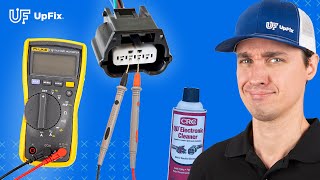
- Damaged or Corroded Wiring/Connectors (Very Common) — The wiring harness between the TCM and ECM is exposed to heat, vibration, and moisture. Wires chafe against brackets, melt on exhaust components, or suffer rodent damage, interrupting the signal. Connectors also corrode from road salt or water intrusion. This is the most frequent cause. 🎬 See how to properly clean and test sensor harness plugs
- Poor Ground Connections (Common) — A corroded, loose, or broken ground strap for the TCM or ECM introduces electrical noise or voltage drops, corrupting the low-voltage CAN bus signal between the modules and triggering the code.
- Faulty Transmission Control Module (TCM) (Common) — The TCM itself fails, particularly the internal circuits or drivers responsible for sending the torque request signal. This is a known, documented issue on certain Ford and GM models.
- Low System Voltage / Weak Battery (Less Common) — Modern control modules require a stable voltage (above 10.5V) to communicate effectively. A weak, dying, or poorly connected battery causes random communication codes, including P2544, to appear.
- Outdated or Corrupt Control Module Software (Less Common) — The software in the TCM or ECM contains bugs. Manufacturers release Technical Service Bulletins (TSBs) with software updates (re-flashes) to fix known communication glitches that falsely trigger a P2544 code.
- Faulty Powertrain/Engine Control Module (PCM/ECM) (Rare) — While less frequent than a TCM failure, the main computer receiving the signal suffers an internal fault, like a bad driver circuit, memory error, or a failed analog-to-digital converter on the signal input channel.
- Aftermarket ECU/TCU Programming (Rare) — Aggressive or poorly written aftermarket performance tunes corrupt the software drivers responsible for torque management communication, leading to this code.
Symptoms

- Harsh or Banging Shifting — The most prominent symptom is a violent slam or bang when the transmission shifts gears, feeling exactly like being rear-ended.
- Check Engine Light is On — This is often the first sign a driver notices. The light remains solid.
- Reduced Engine Power / Limp Mode — To protect the drivetrain, the computer activates 'Limp Mode,' severely limiting engine power and locking the transmission in a single gear (usually 2nd or 3rd).
- Traction Control / Stability Control Light On — Because traction and stability control systems rely on torque management to function, a fault in the system disables them and illuminates their respective warning lights.
- Decreased Fuel Economy — Inefficient shifting and engine operation caused by the fault increases fuel consumption by up to 15%.
- Engine Stalling or No-Start — If the communication loss is severe and accompanied by U-codes, the engine stalls at low speeds or fails to start.
- Torque Request Signal PID Invalid (scan-tool only — no driver-felt sign) — When viewing live data on a scan tool, the PID (Parameter ID) for 'Torque Management Request' shows as 'No', 'Off', or an invalid status even when the TCM should be requesting it during a shift.
Diagnostic Flowchart
Tap your situation to follow the diagnostic path that matches what you're seeing on this code.
Common Fixes & Costs
- Repairing Damaged Wiring or Connectors — Parts: $10-$50, Labor: $150-$350 (Includes diagnostic time), ~1.5 hr book time (Intermediate)
- Cleaning or Repairing Module Ground Straps — Parts: $5-$20, Labor: $75-$150, ~0.8 hr book time (Beginner)
- Updating Control Module Software (Re-flash) — Parts: $0, Labor: $120-$250, ~1.0 hr book time (Professional)
- Replacing the Transmission Control Module (TCM) — Parts: $200-$900, Labor: $150-$300 (plus programming), ~2.5 hr book time (Professional)
- Replacing the Engine Control Module (ECM/PCM) — Parts: $800-$1,400, Labor: $150-$250 (plus programming), ~1.5 hr book time (Professional)
Used vs. New Parts: Buying Guide
When a used part is worth it: For older, high-mileage vehicles (>150k miles) where the cost of a new TCM is a significant portion of the car's value. A used OEM module from a low-mileage, accident-damaged donor is a reliable, cost-effective choice.
Donor-vehicle mileage cap: roughly under 80000 miles for the part to have meaningful remaining life.
Donor quality checklist:
- Verify the part number on the used TCM exactly matches the original.
- Choose a supplier that offers a warranty (30-90 days is common).
- Avoid modules from flood-damaged or rust-belt vehicles due to risk of hidden corrosion.
- Confirm if the used module requires reprogramming; many modern TCMs are VIN-locked to the donor car.
Decision logic:
- If The fix is a known software bug addressed by a TSB → Do not buy any part; pay for the software re-flash at a dealer or qualified shop.
- If Vehicle is under 100K miles and a new OEM or remanufactured part is available for <$500 → Buy new or remanufactured for the longer warranty and assurance of no prior wear.
- If Vehicle is over 150K miles and budget is the primary concern → A tested, warranted used TCM is an acceptable risk, provided it can be reprogrammed if necessary.
Warranty tradeoff: Used parts typically offer a 30-90 day functional warranty. Remanufactured parts often come with a 1-year to limited lifetime warranty. New OEM parts carry a 1-2 year warranty.
Worst-case if a used part fails: $300-$600 if a used TCM fails after installation, covering repeat labor for removal, installation, and programming of another unit.
What Happens If You Wait — Timeline
- 0-100 miles: Check Engine Light appears with P2544. Driver experiences the first few harsh, banging shifts. The car enters and exits 'Limp Mode' intermittently. No physical damage has occurred yet. (MPG impact: 0-5%% · Added cost: $0)
- 100-500 miles: The harsh shifting becomes consistent with every gear change. The repeated shock causes stress fatigue on engine and transmission mounts. The surface material on transmission clutch packs experiences accelerated wear. (MPG impact: 5-10%% · Added cost: $50-$150 in wasted fuel and early mount wear.)
- 500-1,500 miles: Engine and transmission mounts crack or fail completely from the repeated shock loads, leading to a noticeable clunking sound on acceleration. Internal transmission clutch plates glaze or warp, leading to slipping even when the code is not active. (MPG impact: 10-15%% · Added cost: $400 - $1,200 (Engine/trans mount replacement))
- 1,500+ miles: Catastrophic failure occurs. The repeated, full-power shifts shatter planetary gear sets, snap clutch bands, or completely burn out clutch packs, filling the transmission fluid with metal debris. The transmission requires a complete rebuild or replacement. (MPG impact: 15-25% (if drivable)% · Added cost: $3,500 - $7,000+ (Full transmission replacement/rebuild))
Cost of Not Fixing It
- Immediate (0-100 miles): Harsh, banging shifts cause extreme stress on transmission clutches, bands, and drivetrain components like U-joints and axles. Fuel economy drops by 5-15%. (Added cost: Negligible, but risk of component damage begins.)
- Short Term (100-1,000 miles): Accelerated wear on transmission clutches and internal hard parts. Damage to engine and transmission mounts from repeated shock. The vehicle becomes unreliable, entering limp mode frequently. (Added cost: $400 - $1,500 (Mount replacement, minor transmission repairs))
- Long Term (1,000+ miles): Catastrophic internal transmission failure. The repeated slamming under full power shatters gears, breaks bands, or burns out clutch packs, requiring a complete transmission rebuild or replacement. (Added cost: $3,500 - $7,000+ (Transmission replacement/rebuild))
Diagnosis Steps
- Scan for All Codes & Review Freeze Frame
Using a bi-directional scanner, read codes from ALL modules (ECM, TCM, ABS, etc.). Note P2544 and any other codes, especially P0700 or U-series codes. Analyze the freeze frame data for P2544 to see the exact conditions (speed, RPM, temp) when the fault occurred.
Tools: Advanced OBD-II Scanner (Beginner) - Verify Battery Health and System Voltage
Using a multimeter, check the battery voltage with the engine off (must be >12.4V). Start the engine and check the charging system voltage (must be 13.5V-14.5V). Low system voltage causes unpredictable communication faults and ghost codes.
Tools: Digital Multimeter (Beginner) - Check for Technical Service Bulletins (TSBs)
Search for TSBs for your vehicle's make, model, and year related to P2544. The fix is often a known issue with a specific solution, such as a software update (e.g., GM TSB #18-NA-265) or a connector inspection (e.g., GM TSB #PIC4740E).
Tools: Internet Access (Beginner) - Perform a Comprehensive Visual Inspection
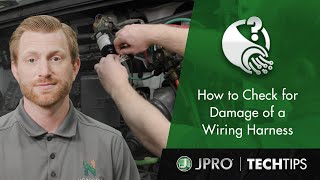
Thoroughly inspect the wiring harness between the TCM and ECM. Look for chafing near brackets, melting near the exhaust, and signs of rodent damage. Unplug the main connectors at both modules and check for green/white corrosion, bent pins, or unseated terminals.
Tools: Flashlight, Inspection Mirror (Beginner) - Monitor Live Data & Perform 'Wiggle Test'
Use your advanced scanner to monitor the 'Torque Management Request' signal PID. While observing the data, gently wiggle the wiring harness and connectors for the TCM and ECM. If the signal value jumps, drops out, or goes erratic, you found the location of the intermittent fault.
Tools: Advanced Scan Tool (Intermediate) - Test Circuit Continuity and Grounds (Pro Tip)
Using a multimeter and the vehicle's wiring diagram, disconnect the TCM and ECM. Check for continuity on the torque request signal wire from pin-to-pin; resistance must be less than 0.2 ohms. Check the resistance from each module's ground pin to the chassis; it must be less than 0.1 ohms.
Tools: Digital Multimeter, Vehicle Wiring Diagram (Advanced) - Check CAN Bus Network Health (Pro Tip)
With the battery disconnected, use a multimeter to measure the resistance between the CAN High and CAN Low pins on the OBD-II port (pins 6 and 14). A healthy network reads approximately 60 ohms. A reading of 120 ohms indicates a missing terminating resistor or an open circuit; 0 ohms indicates a short between the CAN lines.
Tools: Digital Multimeter (Advanced) - Test CAN Bus Voltage Levels (Advanced)
With the key on and engine off, use a multimeter to measure the voltage of the CAN lines. CAN High (Pin 6) must be between 2.5 and 3.5 volts. CAN Low (Pin 14) must be between 1.5 and 2.5 volts. The two voltages mirror each other and add up to approximately 5 volts. A voltage of 0V or 5V on either line indicates a short to ground or power.
Tools: Digital Multimeter (Advanced) - Test Signal Integrity with an Oscilloscope (Professional)
For intermittent issues, back-probe the torque request signal wire with an oscilloscope. The signal must be a clean square wave, cleanly switching between its high and low states (e.g., 0V and 5V). Look for glitches, noise, voltage drops, or a waveform that is not sharp and square, indicating a wiring or module issue undetectable with a multimeter.
Tools: Oscilloscope, Wiring Diagram (Professional)
When This Code Triggers (Freeze-Frame Conditions)
- Engine Coolant Temp: 180-210°F (Vehicle is fully warmed up.)
- RPM: 1500-3000 RPM (During acceleration or right before a gear shift under load.)
- Engine Load: 40-70% (Moderate to heavy acceleration, such as climbing a hill or merging onto a highway.)
- Vehicle Speed: 25-60 mph (The fault often occurs during the 2-3 or 3-4 upshift.)
Related Codes
- P0700 — P0700 is a general code from the TCM requesting the Check Engine Light. When you see P0700, you always find a more specific code like P2544 stored in the TCM. P0700 is the messenger; P2544 is the message.
- P2545 — Means 'Torque Management Request Input Signal 'A' Range/Performance'. While P2544 indicates the signal is completely lost, P2545 means the signal is present but erratic or outside its expected voltage range, pointing strongly to a failing sensor or signal noise.
- P2546 / P2547 — These are specific electrical faults. P2546 ('Signal Low') indicates a short to ground, while P2547 ('Signal High') indicates a short to power. They point to a specific type of wiring failure, whereas P2544 is a general malfunction.
- U-Codes (e.g., U0100, U0101) — U-codes signify a total loss of communication between modules. P2544 indicates a failure of a specific message on the network. Seeing U-codes alongside P2544 points to a broader network problem, like a major wiring harness failure or a failed CAN bus terminating resistor.
Climate & Environmental Factors
- High Humidity / Water Intrusion: Excessive moisture in the air or direct water leaks (from clogged drains or bad seals) leads to condensation inside connectors and modules. This moisture accelerates corrosion on wiring pins and circuit boards, increasing electrical resistance and causing intermittent signal loss.
- Road Salt (Cold Climates): In regions using road salt during winter, the salty spray coats the undercarriage and engine bay. This highly corrosive mixture gets into wiring harnesses and connectors, causing severe corrosion that easily disrupts sensitive low-voltage CAN bus signals.
- Extreme Temperature Cycles (Hot/Cold): Repeated cycles of heating and cooling cause plastic connectors and wire insulation to become brittle and crack over time. It also causes expansion and contraction of electrical terminals, leading to loose and intermittent connections.
How to Talk to a Mechanic About This Code
Say this: "I have a P2544 code with harsh, banging shifts. I'd like to schedule a diagnostic appointment. Please focus on checking the wiring harness between the TCM and ECM, module ground connections, and any available TSBs before recommending a module replacement."
This language signals you understand P2544 is an electrical communication issue, not a mechanical failure. It directs the technician to diagnose the most common and least expensive causes first, preventing a quick and costly misdiagnosis of a bad transmission.
Avoid saying:
- 'My transmission is shot'
- 'Just fix whatever's wrong'
- 'My check engine light is on, can you look at it?'
Questions to ask before authorizing the repair:
- If you are recommending a module (TCM/ECM) replacement, how did you definitively rule out a wiring, connector, or ground issue?
- Did you perform a continuity test on the signal wire and check CAN bus resistance and voltage?
- If the fix is a new module, does the quoted price include the necessary programming/coding?
- Can you show me the damaged wiring or corroded connector that you found?
- What is the warranty on this specific repair, including both parts and labor?
Where to Take It: Dealer vs Independent vs Chain
- Dealer:
Best for: Vehicles under powertrain warranty, Known issues covered by a TSB (software update) or extended warranty (e.g., Ford Focus TCM), Complex German vehicles (BMW, VW) where CAN bus issues are common
Downsides: Highest labor rates, often 1.5-2x more than independent shops., Defaults to expensive module replacement instead of detailed wiring repair. (Typical cost: +50% vs. baseline) - Independent Shop:
A good choice, but only if the shop is vetted and has ASE-certified technicians specializing in electrical diagnostics. Ask them specifically if they are experienced with CAN bus communication faults before booking.
Best for: Out-of-warranty vehicles where cost is a major factor., Finding a shop with a trusted reputation for electrical and diagnostic work.
Downsides: Diagnostic skill varies greatly. A shop without strong electrical expertise misdiagnoses the issue., Lacks access to manufacturer-specific software for required re-flashes. (Typical cost: +0% vs. baseline) - Chain Shop:
AVOID. This is a complex electrical diagnostic issue, not a simple part swap. Chain shops are the most likely to misdiagnose P2544 as a catastrophic transmission failure, leading to an unnecessary and extremely expensive repair quote.
Best for: Simple jobs like oil changes, tires, and brakes.
Downsides: Technician skill is highly variable., High pressure to upsell leads to a recommendation for a transmission replacement without proper diagnosis. (Typical cost: -10% vs. baseline)
When to Walk Away From the Repair
If the total estimated repair cost exceeds 50% of your car's current private-party value (e.g., from Kelley Blue Book), it's time to seriously consider selling or trading it in.
- Car worth $3000, fix is $1800: Walk away. The repair cost is 60% of the car's value. This is not a sound investment.
- Car worth $15000, fix is $450: Fix it. The repair is only 3% of the car's value and is essential for its operation.
- Car worth $5000, fix is $4000: Walk away. This is a classic misdiagnosis scenario where a shop quotes a full transmission replacement. The repair cost is 80% of the vehicle's value. Get a second opinion from an electrical specialist before proceeding.
What Scan Tool You Need for This Code

Minimum: A scanner that reads manufacturer-specific codes from the Transmission Control Module (TCM) and displays live data PIDs.
A basic $20 code reader only pulls the generic P2544 code from the engine computer. It cannot see if the TCM is sending the request or show you the live signal status, which is essential for diagnosis. You will be completely blind to the root cause.
Budget: BlueDriver Pro or Topdon TopScan (~$100) — These smartphone-based tools read codes from the TCM and graph live data. This allows you to perform a 'wiggle test' while watching the torque request signal to find intermittent wiring faults.
Mid-range: Foxwell NT510 Elite or Innova 5610 (~$150) — Adds bidirectional controls to the live data functions. This allows you to command specific tests and get more in-depth diagnostic information from the modules, confirming if a module is responding correctly.
Professional: Autel MaxiCOM MK808 or XTOOL D7 (~$450-600) — Offers full bidirectional control, all OEM-level diagnostic functions, and includes coding/programming capabilities for replacing modules. These are professional-level tools for the serious DIYer.
Rent vs buy: Rent from an auto parts store for a free initial code scan, but their loaner tools are often too basic for a full P2544 diagnosis. Buy a scanner if you plan to diagnose the issue yourself using live data or tackle any future repairs.
How to Clear the Code After You Fix It
- Reconnect the battery if it was disconnected for the repair.
- Use an OBD-II scan tool to formally clear the P2544 code from the ECM and TCM.
- Perform a complete drive cycle to allow the vehicle's readiness monitors to run.
Drive cycle (~20 minutes): Start the vehicle from a cold start. Let it idle for 2-3 minutes. Drive in stop-and-go traffic for 5-10 minutes, including several light accelerations. Drive at a steady highway speed (55-60 mph) for 5-10 minutes. Allow the vehicle to cool down completely.
Readiness monitors affected: Comprehensive Component Monitor (CCM), Catalyst (CAT) Monitor, Evaporative System (EVAP) Monitor
Before emissions retest: drive at least 50 miles to fully set monitors.
Watch out for:
- Simply disconnecting the battery clears the light, but the code returns immediately if the fault isn't fixed, and it erases all readiness monitors, guaranteeing an emissions test failure.
- Not performing a full drive cycle leaves readiness monitors 'Not Ready', causing a failed emissions test even if the fault is fixed.
Will This Fail Emissions / State Inspection?
Yes — this code typically fails an OBD-II emissions inspection.
- California: An illuminated Check Engine Light results in an automatic failure of the Smog Check. After repair, a full drive cycle must be completed to set all readiness monitors before a re-test is possible.
- New York: A vehicle with an illuminated Check Engine Light automatically fails the emissions portion of the annual state inspection. The code must be cleared and readiness monitors must be set to 'Ready' to pass.
- Texas: In the 17 counties requiring emissions testing, an active P2544 code causes the vehicle to fail the OBD-II portion of the annual inspection.
Most Commonly Affected Vehicles

- Ford Focus (2012-2018) — Very common issue related to internal failure of the TCM on the DPS6 'PowerShift' automatic transmission. This is subject to warranty extensions.
- Ford Five Hundred (2005-2007) — Frequently cited for this code, often due to software glitches requiring a PCM/TCM re-flash or internal PCM failure.
- Chevrolet Silverado (2010-2018) — TSB #18-NA-265 was issued for models where the code sets inaccurately; the fix is a TCM software update. Wiring harness chafing is also common.
- Hyundai Elantra (2011-2016) — Often caused by wiring harness issues near the transmission or internal TCM faults. PCM replacement costs on Hyundai models range from $1,374 to $1,412 for the part alone.
- Cadillac STS, CTS (2006-2013) — GM TSB #PIC4740E points to unseated terminals in the main transmission harness connector (X1) as the primary cause before suspecting a bad module.
- Pontiac G8 (2008-2009) — Owners report this code appearing due to intermittent wiring issues or conflicts with aftermarket engine tuners.
- Volkswagen Jetta, GTI (2012-2016) — Triggered by wiring issues or an internal fault within the Mechatronics unit (which houses the TCM) of the DSG transmission.
- BMW 3-Series (E90) (2006-2013) — Often indicates a broader K-CAN communication bus fault rather than an isolated signal issue. Water intrusion into modules in the trunk or behind the glovebox is a known cause.
Manufacturer-Specific Notes
- General Motors (GM): On many GM vehicles (especially Cadillac), TSB #PIC4740E highlights that P2544 is frequently caused by unseated pins in the main transmission connector (X1). Always check this connector thoroughly before replacing any modules. For trucks, TSB #18-NA-265 notes a software glitch requiring a TCM update.
- Ford: On vehicles with the DPS6 PowerShift transmission (e.g., 2012-2016 Focus/Fiesta), P2544 is often a precursor to a complete TCM failure. Ford issued Customer Satisfaction Program 14M02, extending the TCM warranty to 10 years or 150,000 miles. A one-time replacement is offered through June 30, 2025.
- Hyundai/Kia: These vehicles are notoriously sensitive to system voltage. Before diagnosing complex communication circuits, always verify the battery is fully charged and the alternator is functioning correctly. Low voltage triggers a cascade of false communication codes.
- BMW: On platforms like the E90, a P2544-equivalent fault is often part of a larger CAN bus failure (K-CAN). Common causes include water damage to the Junction Box Electronics (JBE) behind the glovebox from a bad windshield seal, or to modules in the trunk from clogged sunroof drains.
Real Owner Stories
2013 Ford Focus at 110,000 miles
Car started shifting very harshly, especially from 1st to 2nd gear. Check engine light came on with P2544. Car would sometimes go into limp mode.
Outcome: Took the car to a Ford dealership. They identified the issue as a failed TCM, covered under Ford's Customer Satisfaction Program 14M02. The TCM was replaced at no cost to the owner. The harsh shifting was resolved.
Lesson: Always check for manufacturer-specific TSBs and warranty extensions, especially on known problematic components. A dealer visit for a known issue saves thousands over a misdiagnosis by a general shop.
2007 Cadillac Escalade at 150,000 miles
Vehicle exhibited a wide array of issues: P2544, harsh shifting, no-start condition, and other communication codes (U-codes).
Outcome: A more thorough inspection revealed the main wiring harness rubbed through on the front driveshaft, causing multiple wires to short out. Repairing the damaged section of the harness for under $200 in materials fixed all the codes and drivability issues.
Lesson: When multiple, seemingly unrelated communication codes appear at once, the root cause is a major wiring harness failure (chafing, water damage, bad ground) or a network-wide issue, not multiple simultaneous module failures.
2011 Chevy Silverado at 135,000 miles
Truck suddenly started banging into gear. Check engine light on for P2544. The owner is a DIYer with some experience.
Outcome: The owner disconnected the battery, carefully separated the wires, and found one wire with its insulation worn through, exposing copper. He repaired the single wire with a solder sleeve and heat shrink, wrapped the harness section in anti-abrasion tape, and secured it away from the bracket with a zip tie. Total cost was under $15. The code was cleared and did not return.
Lesson: The most common cause is often the simplest. A patient, thorough visual inspection of the wiring harness costs nothing and reveals the exact point of failure, saving a trip to the shop.
How to Prevent This Code From Triggering
- Apply Dielectric Grease to Key Connectors (Once, or whenever connectors are disconnected) — Applying a thin layer of dielectric grease to the rubber seals of the main ECM and TCM harness connectors keeps moisture and road salt out. This prevents pin terminals from corroding, a primary cause of high resistance and signal loss.
- Inspect and Secure Wiring Harnesses (Every oil change) — Visually inspect the wiring harnesses running between the engine and transmission. Look for areas where the plastic loom rubs against sharp metal edges or hot exhaust components. Use zip ties to secure loose harnesses away from potential damage points.
- Maintain Battery and Ground Connections (Annually) — Ensure battery terminals are clean and tight. Disconnect, clean, and re-tighten the main chassis and engine block ground straps. A clean, tight ground is essential for stable voltage and preventing electrical noise that corrupts CAN bus communications.
- Regular Transmission Fluid Changes (Every 30,000-60,000 miles (or per manufacturer recommendation)) — Healthy transmission fluid maintains stable operating temperatures for internal and external transmission components, including the TCM on models where it's mounted to the transmission. Overheating accelerates the degradation of electronic components.
Frequently Asked Questions
What is 'Torque Management'?
It's a strategy where the transmission computer (TCM) momentarily tells the engine computer (ECM) to reduce power during a gear shift. This allows the shift to happen smoothly and quickly, protecting the transmission's internal components from the shock of shifting under full power.
What is the most common misdiagnosis for P2544?
The most common and costly mistake is assuming the harsh shifting signifies a catastrophic internal transmission failure. A mechanic condemns the transmission and recommends a rebuild costing thousands, when the root cause is a simple wiring or ground issue.
Can I fix P2544 myself?
A DIYer handles the initial checks: visual inspection of wiring, cleaning connectors, and checking grounds and battery voltage. However, accurately diagnosing the fault requires advanced tools like a bi-directional scanner and wiring diagrams, making it difficult for beginners to solve definitively.
Will clearing the code fix the problem?
No. Clearing the code with a scanner or by disconnecting the battery is only a temporary measure. The code and the harsh shifting return almost immediately if the underlying electrical fault is not repaired.
What's the difference between a P2544 and a U-code?
A U-code (like U0101) means the ECM cannot hear from the TCM at all—the module is completely offline. A P2544 code means the modules still communicate, but the specific 'torque request' message is missing or corrupt. P2544 is a failed conversation about a specific topic; a U-code is a complete failure to communicate.
Can a bad battery cause code P2544?
Yes. Control modules require a stable voltage to operate. A weak or failing battery causes voltage drops that disrupt communication on the CAN network, leading to a variety of 'ghost' codes, including P2544.
Is P2544 an engine or transmission problem?
It's neither; it's a communication problem between the engine and transmission computers. The physical parts of the engine and transmission are fine, but their inability to coordinate for shifting causes the symptom and the code.
Key Takeaways
- Code P2544 flags a missing 5-volt communication signal between the engine and transmission computers, not a mechanical transmission failure.
- Inspect the wiring harness and ground straps before spending $600 on a new Transmission Control Module, as chafed wires cause over 50% of P2544 codes.
- Stop driving immediately; the resulting violent, full-power gear shifts shatter transmission mounts or clutch packs within 500 miles.
- Verify your battery voltage is above 12.4V before starting any diagnosis, as a weak battery triggers false communication codes across the CAN bus network.
Helpful Videos


![What is P2544 Engine Code [Quick Guide]](https://img.youtube.com/vi/Sd9c6yH4GKk/mqdefault.jpg)

The information in this article is provided for general reference and educational purposes only. Vehicle specifications, procedures, and part compatibility can vary by production date, trim level, and region. Always consult your vehicle's factory service manual and verify part numbers before purchasing or performing repairs. Safety-critical components such as airbags, seat belts, and braking systems should be installed by a qualified professional.
- 🎬 Helpful Videos
- What Does P2544 Mean?
- Can I Drive With P2544?
- Common Causes
- Symptoms
- Diagnostic Flowchart
- Common Fixes & Costs
- Used vs. New Parts: Buying Guide
- What Happens If You Wait — Timeline
- Cost of Not Fixing It
- Diagnosis Steps
- When This Code Triggers (Freeze-Frame Conditions)
- Related Codes
- Climate & Environmental Factors
- How to Talk to a Mechanic About This Code
- Where to Take It: Dealer vs Independent vs Chain
- When to Walk Away From the Repair
- What Scan Tool You Need for This Code
- How to Clear the Code After You Fix It
- Will This Fail Emissions / State Inspection?
- Most Commonly Affected Vehicles
- Manufacturer-Specific Notes
- Real Owner Stories
- 2013 Ford Focus at 110,000 miles
- 2007 Cadillac Escalade at 150,000 miles
- 2011 Chevy Silverado at 135,000 miles
- How to Prevent This Code From Triggering
- Frequently Asked Questions
- What is 'Torque Management'?
- What is the most common misdiagnosis for P2544?
- Can I fix P2544 myself?
- Will clearing the code fix the problem?
- What's the difference between a P2544 and a U-code?
- Can a bad battery cause code P2544?
- Is P2544 an engine or transmission problem?
- Key Takeaways
- 🎟️ Get 5% Off