

P2542 on 2012-2015 Land Rover Range Rover Evoque: Software and Fuel Pressure Fixes
On a 2012-2015 Range Rover Evoque, code P2542 is most often caused by a known software glitch documented in Land Rover TSB #SSM72531. The primary fix is a PCM software update performed by a dealer, often as part of the Q511 campaign. If the software is current, the issue may be a faulty low-pressure fuel sensor.
- Before replacing any parts for code P2542, you must verify with a Land Rover dealer if the PCM software update from TSB #SSM72531 or campaign Q511 has been performed.
- The most likely fix for this code on a 2012-2015 Evoque is a software reflash, not a new part.
- Symptoms like engine hesitation and loss of power are serious and can pose a safety risk; the issue should be addressed promptly.
- Do not replace the fuel pump for this code; P2542 points to an electrical circuit issue with the sensor, not a fuel flow problem.
- If a hardware fix is needed, the low-pressure fuel sensor is the most probable part to replace. The current OEM part number is LR044707.
What's Unique About the 2012-2015 Land Rover RANGE ROVER EVOQUE
For this specific generation of Range Rover Evoque with the 2.0L GTDi engine, the P2542 code has a unique and well-documented history of being triggered by a software error, not a hardware failure. Land Rover issued Technical Service Bulletin #SSM72531 acknowledging that a 'sub-optimal PCM software calibration' was the root cause. This TSB directs technicians to check the status of service campaign Q511, which involved a PCM reflash to correct the issue. This often led to misdiagnosis and unnecessary replacement of sensors or pumps before the software fix was identified as the primary solution.
Diagnostic Flowchart
Tap your situation to follow the diagnostic path that matches what you're seeing on this vehicle.
Symptoms You May Notice
- Check Engine Light (MIL) is on.
- Rough or unstable idle.
- Hesitation during acceleration.
- Noticeable loss of engine power.
- Engine may stall or be hard to start (long crank time).
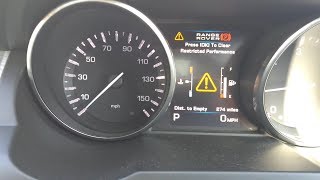
- Vehicle may enter 'Restricted Performance' mode.
- Replacing the high-pressure or low-pressure fuel pump. This code specifically points to a sensor circuit electrical fault, not a mechanical pump failure.
- Replacing the fuel pressure sensor before verifying that the PCM software is up to date, which is the most common fix according to Land Rover's own service bulletin.
Most Likely Causes
- PCM Software Requires Update 🔴 High Probability Manufacturer TSB #SSM72531 explicitly identifies 'sub-optimal PCM software calibration' as the primary cause for this code on this vehicle.
How to confirm: Contact a Land Rover dealership with your VIN to check the vehicle's service history and see if the update from TSB SSM72531 or the related Q511 campaign has been performed. This is the essential first step.
Typical fix: Updating the Powertrain Control Module (PCM) software to the latest calibration. This is a non-physical repair performed with a diagnostic tool.
Est. part cost: $0 - $300 - Failed Low-Pressure Fuel Sensor 🟡 Medium Probability If the software is up-to-date, the sensor itself is the next most likely failure point. It is an electronic component exposed to engine heat and vibration that can fail internally, sending a constant high voltage signal.
How to confirm: Using a scan tool, observe the live data for the low-pressure fuel sensor. A reading stuck above 4.5V with the key on, engine off, points to a faulty sensor or circuit. Disconnecting the sensor should cause the voltage to drop and set a 'circuit low' code (like P2541); if it does, the sensor is confirmed bad.
Typical fix: Replacement of the low-pressure fuel sensor, which is located on the fuel rail. 🎬 See this walkthrough on replacing the low pressure fuel sensor.
Est. part cost: $50-$150 - Wiring or Connector Issue ⚪ Low Probability
How to confirm: Visually inspect the wiring harness and connector for the fuel pressure sensor for any signs of damage, corrosion, or loose pins. Use a multimeter to check for a short to power on the signal wire. If voltage remains high (near 5V or 12V) after disconnecting the sensor, it indicates a short in the wiring harness.
Typical fix: Repairing the damaged section of the wiring harness or cleaning/replacing the connector.
Est. part cost: $10-$50
Rare But Worth Checking
- Faulty Powertrain Control Module (PCM):
Diagnosis Steps
- Read the trouble codes with an OBD-II scanner and note any other codes present, especially P008A or P008B.
- Crucially, contact a Land Rover dealer with the vehicle's VIN to check if Technical Service Bulletin #SSM72531 (or campaign Q511) is open or has been completed. This is the most probable solution.
- If the software is confirmed to be up-to-date, proceed with hardware diagnosis.
- Using a scan tool with live data, monitor the 'Fuel rail pressure - Low range sensor' voltage. A reading stuck near or above 4.5V indicates a circuit high fault.
- Locate the low-pressure fuel sensor. A technical diagram shows it as item 3 on sheet 2 of the component locations for the GTDi 2.0L engine. Inspect its electrical connector and wiring for visible damage, corrosion, or loose connections.
- Disconnect the sensor. Use a multimeter to check the connector for the correct reference voltage (typically 5V) from the PCM.
- With the sensor still disconnected, re-check the signal wire voltage on the harness side. It should be near 0V. If it's still high, there is a short to power in the wiring that must be traced.
- If the reference voltage is correct and the signal wire voltage drops to zero when disconnected, the sensor itself is the most likely culprit.
- If the sensor is replaced and the code returns, a faulty PCM could be the cause, although this is rare.
Parts You'll Likely Need
- Low-Pressure Fuel Sensor
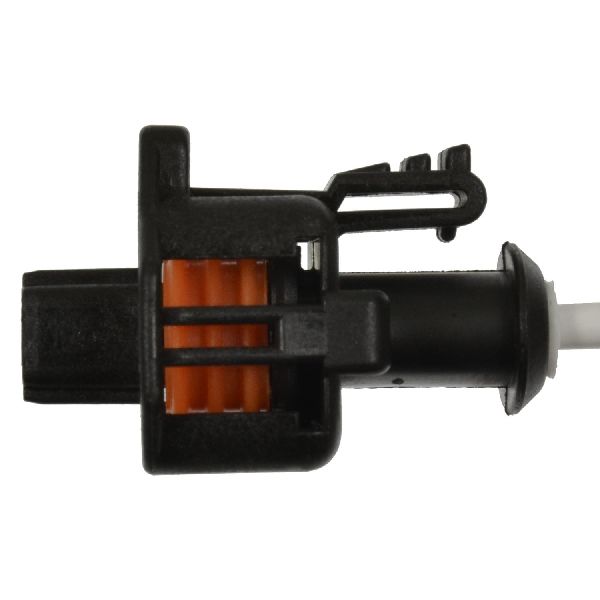
(OEM #LR044707)— If the issue is not software-related, this sensor is the most common hardware component to fail and cause a 'Circuit High' fault. Note that part number LR044707 has superseded earlier numbers like LR015294.
Trusted brands: Bosch, Genuine Land Rover
OEM price range: $120-$200
Aftermarket price range: $50-$100
Related Codes That Often Appear With This One
- P008A — Low Pressure Fuel System Pressure - Too Low. This code is listed in TSB #SSM72531 as being set by the same software issue.
- P008B — Low Pressure Fuel System Pressure - Too High. This code is also listed in TSB #SSM72531 as being set by the same software issue.
Technical Service Bulletins (TSBs) & Recalls
- SSM72531: States that for symptoms of rough idle, hesitation, or power loss, codes P008A, P008B, or P2542 may be set due to 'sub-optimal PCM software calibration' on the 2.0L GTDi engine. It advises checking the status of campaign Q511.
- LTB00587NAS1: While for a different code (P008B), this TSB also points to an internal fault with the low pressure fuel sensor on the Evoque, corroborating it as a potential failure point if software is not the cause.
Platform-Specific Known Issues
- Per TSB #SSM72531, the original PCM software on these vehicles was prone to misinterpreting data from the fuel pressure sensor, incorrectly triggering code P2542 and causing drivability symptoms without any actual hardware failure.
- The 2.0L GTDi engine is a JLR-modified version of the Ford 2.0L EcoBoost, and shares many core components, including the fuel sensing system, making issues seen on Ford platforms relevant.
Mechanic-Grade Diagnostic Values
- Low-Pressure Fuel Sensor Signal Voltage (Live Data) — expected: 0.5V to 4.5V. Failure: A consistent reading above 4.5V, often stuck near 5.0V, with Key On, Engine Off (KOEO).
- Low-Pressure Fuel System Pressure (Mechanical Gauge) — expected: Approximately 55 PSI (3.8 bar), rising to 60-67 PSI during a cold start.. Failure: While P2542 is an electrical code, a technician noted a mechanical gauge reading 100 PSI when the sensor had failed electrically, showing how a bad sensor can mislead the PCM.
- Sensor Connector Reference Voltage — expected: 5.0V. Failure: No voltage or significantly lower voltage indicates a wiring issue or a problem with the PCM's 5V reference circuit.
- Sensor Connector Ground Resistance — expected: < 0.1Ω to chassis ground. Failure: High resistance indicates a poor ground connection, which can cause floating voltage readings and trigger a 'Circuit High' code.
Scan Tool Commands That Help
- JLR SDD (Symptom Driven Diagnostics): Datalogger -> Engine system -> 'Fuel rail pressure - Low range sensor' — This is the primary function to monitor the live voltage from the low-pressure fuel sensor to diagnose its health, as per JLR's own diagnostic procedures.
- JLR SDD (Symptom Driven Diagnostics): Service Functions -> 'Powertrain - High pressure fuel pump test' — Although intended for the high-pressure pumps, this routine sequences the fuel system and can help identify broader system issues or confirm if related codes are being triggered by a specific pump's operation.
Wiring & Ground Locations
- Low Pressure (LP) Fuel Sensor — On the 2.0L GTDi engine, it is listed as component #3 on sheet 2 of the engine control component location diagrams. It is generally found on the fuel rail.. This is the sensor that directly triggers the P2542 code. Correctly locating it is the first step for any physical inspection or testing.
- G1D129B — Lower left front of the engine compartment.. This is a major ground point in the engine bay. A loose or corroded connection here can cause erratic signals from various engine sensors, including the fuel pressure sensor.
- Engine Control Module (ECM) — Center rear of the engine compartment.. The ECM receives the signal from the fuel pressure sensor. All wiring tests for continuity or shorts will ultimately lead back to the ECM connector.
When the Usual Fixes Don't Work
- While the official Land Rover TSB #SSM72531 points to a software update as the primary fix, repair databases note that there are multiple documented cases where performing the software update did not resolve the P2542 code. In these instances, the root cause was a hardware failure of the low-pressure fuel sensor itself, confirming that while checking the software status is the correct first step, it is not a guaranteed fix and hardware diagnostics are often still required.
OEM Part Supersession History
LR015294, LR005493→LR044707— Standard part revision and improvement by the manufacturer.
Heads up: While the parts are physically interchangeable, using the latest part number (LR044707) is highly recommended to ensure you have the most updated and reliable version of the sensor.
Helpful Videos

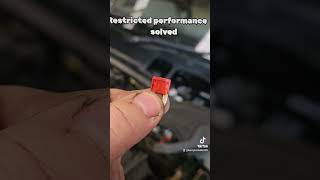
We Have This Part in Stock


The information in this article is provided for general reference and educational purposes only. Vehicle specifications, procedures, and part compatibility can vary by production date, trim level, and region. Always consult your vehicle's factory service manual and verify part numbers before purchasing or performing repairs. Safety-critical components such as airbags, seat belts, and braking systems should be installed by a qualified professional.
- Land Rover RANGE ROVER EVOQUE:
- 🎬 Helpful Videos
- 🛍️ Shop This Part
- What's Unique About the 2012-2015 Land Rover RANGE ROVER EVOQUE
- Diagnostic Flowchart
- Symptoms You May Notice
- Most Likely Causes
- Rare But Worth Checking
- Diagnosis Steps
- Parts You'll Likely Need
- Related Codes That Often Appear With This One
- Technical Service Bulletins (TSBs) & Recalls
- Platform-Specific Known Issues
- Mechanic-Grade Diagnostic Values
- Scan Tool Commands That Help
- Wiring & Ground Locations
- When the Usual Fixes Don't Work
- OEM Part Supersession History
- 🎟️ Get 5% Off