

P2542 on 2008-2012 Land Rover LR2: Fuel Pressure Sensor Circuit High Causes and Fixes
On a 2008-2012 Land Rover LR2, code P2542 is frequently caused by outdated Powertrain Control Module (PCM) software, as detailed in Land Rover TSB SSM72531. The primary fix is a dealer software update. If the software is current, the next most likely cause is a failed low-pressure fuel sensor located on the end of the fuel rail.
- Before buying any parts for a P2542 code on a 2008-2012 LR2, have the PCM software version checked.
- The most likely fix is a software update from a Land Rover dealer, as per TSB SSM72531.
- If the software is current, the problem is likely the low-pressure fuel sensor (P/N LR015294) located on the fuel rail.
- Symptoms include rough idle, power loss, and hesitation, which can impact drivability and may lead to stalling.
- Do not replace the fuel pump for this code; it points to an electrical sensor circuit issue, not a lack of fuel flow.
What's Unique About the 2008-2012 Land Rover LR2

For this specific Land Rover LR2 model range, the P2542 code has a well-documented, non-hardware cause. Land Rover issued a Technical Service Bulletin (SSM72531) acknowledging that a "sub-optimal PCM software calibration" could incorrectly trigger this code, along with P008A and P008B. This makes a software issue a primary suspect, which is unique compared to many other vehicles where this code almost always points to a direct hardware failure. The 3.2L engine in the LR2 is a Volvo SI6 engine, and this issue is also seen in Volvo platforms like the XC90, which share the same sensor and fuel system design.
Diagnostic Flowchart
Tap your situation to follow the diagnostic path that matches what you're seeing on this vehicle.
Symptoms You May Notice
- Check Engine Light (MIL) is on
- Rough or unstable idle
- Hesitation during acceleration
- Noticeable loss of engine power
- Engine may be hard to start or fail to start 🎬 Watch: A case study on diagnosing hard starting issues.
- Engine may stall unexpectedly
- Replacing the fuel pump. This code specifically points to the sensor circuit, not the pump's performance. While a failing pump can cause low pressure (P0087), it won't cause a 'circuit high' electrical fault code like P2542.
- Replacing the fuel pressure sensor before checking for the required software update. This can lead to unnecessary expense as the new sensor will not fix a software-related issue. A repair shop video documented performing a software flash first before moving to hardware diagnosis. 🎬 Watch: A beginner's guide to fixing circuit high codes.
Most Likely Causes

- Outdated Powertrain Control Module (PCM) Software 🔴 High Probability Land Rover officially identified this as a common issue in Technical Service Bulletin SSM72531, stating the cause is a 'sub-optimal PCM software calibration'. This TSB also covers the related codes P008A and P008B.
How to confirm: A Land Rover dealer or a qualified independent shop must connect a JLR-approved diagnostic tool to check the current software version against the latest available version. The TSB also references checking the status of campaign Q511.
Typical fix: Update the PCM to the latest software calibration. This is a dealer-only or specialist procedure.
Est. part cost: $0 - Failed Low-Pressure Fuel Sensor 🟡 Medium Probability The sensor is a common failure point on this engine, which is shared with several Volvo models. It is exposed to heat and vibration at the end of the fuel rail.
How to confirm: With the software confirmed to be up-to-date, a technician can use a scan tool to monitor live data from the sensor. If the voltage is stuck high (near 5V) with the key on and engine off, and disconnecting the sensor causes the reading to drop and set a 'circuit low' code, the sensor is faulty. The sensor is located on the driver's side of the fuel rail and can be accessed by removing the engine cover. A technician on a forum noted a reading of 2.7V corresponded to an erroneous 130 PSI reading on the scan tool, confirming a bad sensor.
Typical fix: Replace the low-pressure fuel sensor. This is a manageable DIY task for some, as it is held by a single T25 Torx bolt, but care must be taken to depressurize the fuel system and manage fuel spillage.
Est. part cost: $35-$210 - Wiring or Connector Issue ⚪ Low Probability
How to confirm: Visually inspect the wiring harness and connector for the fuel pressure sensor for any signs of damage, corrosion, or loose pins. A multimeter can be used to check for a short to power on the signal wire. The connector is located under the plastic engine cover on the driver's side.
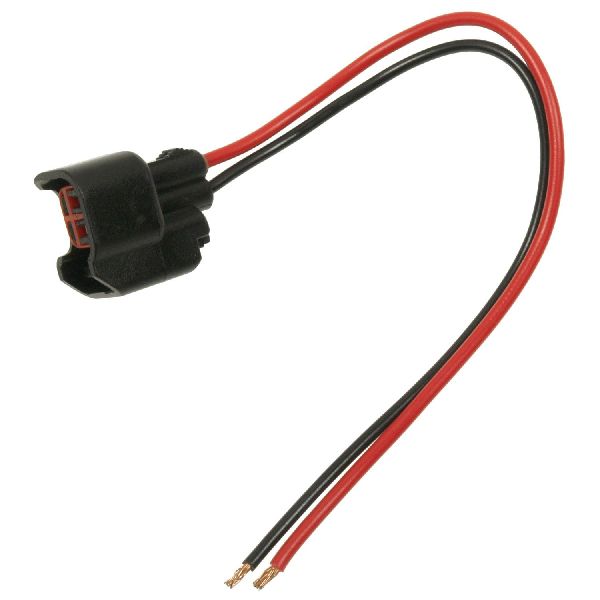
Typical fix: Repair the damaged section of wiring or replace the connector pigtail.
Est. part cost: $10-$50
Rare But Worth Checking
- Failing Powertrain Control Module (PCM): This is extremely rare. It should only be considered after all other possibilities, including software, sensor, and wiring, have been definitively ruled out by a professional.
Diagnosis Steps
- Connect a JLR-compatible OBD-II scanner and verify that P2542 is present. Note any other codes, especially P008A, P008B, P0087, or P0088.
- IMPORTANT FIRST STEP: Check for applicable TSBs, specifically SSM72531. Use the scanner to determine the current PCM software calibration version.
- If the software is outdated, the primary repair is to have a dealer or qualified shop update the PCM software. Retest the vehicle afterward.
- If the software is already up-to-date, proceed with hardware diagnostics.
- Remove the plastic engine cover. Locate the fuel pressure sensor on the driver's side end of the fuel rail.
- Monitor the live data for the low-pressure fuel sensor. With the Key On, Engine Off (KOEO), check the voltage. A reading stuck near 5 volts points to a circuit high fault.
- Disconnect the fuel pressure sensor connector. If the scan tool now shows a low voltage (around 0V) and a new code like P2541 (Circuit Low) appears, the sensor itself is very likely faulty.
- If the voltage remains high after disconnecting the sensor, inspect the wiring harness between the sensor and the PCM for a short to a power source.
- If the wiring is confirmed to be good, the issue may be an internal fault in the PCM, though this is the least likely cause.
Parts You'll Likely Need

- Low-Pressure Fuel Sensor
(OEM #LR015294)— If the PCM software is up-to-date, the sensor itself is the most common hardware component to fail and cause this specific electrical fault. It is sometimes called a fuel pressure regulator in parts catalogs.
Trusted brands: Land Rover Genuine, Bosch, Standard Motor Products
OEM price range: $180-$210
Aftermarket price range: $35-$90
Related Codes That Often Appear With This One
- P008A — This code for 'Low Pressure Fuel System Pressure - Too Low' is also mentioned in TSB SSM72531 as being potentially caused by the same software issue.
- P008B — This code for 'Low Pressure Fuel System Pressure - Too High' is also listed in TSB SSM72531 and is directly related to the same system and potential software glitch.
- P0087 — This code for 'Fuel Rail/System Pressure - Too Low' is often seen alongside high pressure codes when the sensor is failing and sending erratic signals.
- P0088 — This code for 'Fuel Rail/System Pressure - Too High' can be triggered by the same failing sensor sending incorrect high voltage signals.
Technical Service Bulletins (TSBs) & Recalls

- SSM72531: Addresses MIL illumination with DTCs P008A, P008B, and/or P2542, citing 'Sub-optimal PCM software calibration' as the cause and recommending a software update as the action.
Platform-Specific Known Issues
- The primary vehicle-specific issue is the PCM software calibration problem identified by Land Rover in TSB SSM72531, which can cause a false P2542 code without any hardware failure.
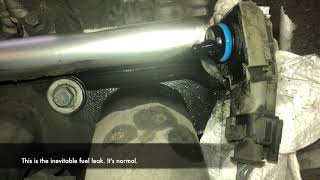
- The sensor is located on the end of the fuel rail, accessible by removing the top engine cover. A DIY replacement is possible with a T25 Torx bit and a mini ratchet, without removing the entire fuel rail. 🎬 See this walkthrough for replacing the fuel rail sensor.
Mechanic-Grade Diagnostic Values
- Low-pressure fuel system pressure (normal operation, engine running) — expected: Approximately 55 PSI (3.8 bar), rising to 60-67 PSI during a cold start before settling.. Failure: A technician with a mechanical gauge measured 100 PSI when the sensor was faulty, even though the scan tool was reporting an incorrect value.
- Fuel pressure sensor signal voltage — expected: Typically 0.5V to 4.5V. A technician noted a reading of 2.5V corresponded to a normal pressure of 380 kPa (55 PSI).. Failure: A faulty sensor produced 2.7V while the scan tool incorrectly reported 130 PSI. Disconnecting the sensor (open circuit) results in a reading of ~5V and a maxed-out pressure reading on the scan tool.
- Fuel pressure at key-off — expected: Pressure should hold and not drop to zero immediately. A slow bleed-down is normal.. Failure: Pressure dropping immediately to 0 PSI after engine shutdown indicates a faulty check valve, which is typically part of the in-tank fuel pump assembly.
Hidden / Shadow Codes Worth Checking
- P0087-XX (e.g., P0087-21, P0087-22): While not specific to P2542, a forum user noted that the related code P0087 has four manufacturer-specific variants (-00, -21, -22, -23) that provide more detail about the fault. This indicates the fuel system on this platform uses sub-codes. (see via A Land Rover-specific diagnostic tool like SDD/Pathfinder is required to read these extended trouble codes.)
Scan Tool Commands That Help
- JLR SDD/Pathfinder or equivalent: Check/Update PCM Software Calibration — This is the first step in diagnosis for P2542, per TSB SSM72531, to rule out a known software bug before replacing any hardware.
- Advanced OBD-II Scanner: Module Self-Test — Can be used to check the PCM's internal voltage-regulation circuitry and communication integrity after external wiring and the sensor have been verified as good.
Wiring & Ground Locations

- Engine Control Module (ECM) — Located at the top center of the firewall in the engine compartment.. This is the destination for the fuel pressure sensor's wiring. The harness should be checked for damage between the sensor on the fuel rail and this module.
- Main Engine Earth Strap — Runs between the chassis rail, located under the battery tray, and the gearbox.. A poor engine ground can cause a variety of incorrect sensor readings and electrical faults. This is a primary ground point to inspect and clean when diagnosing any circuit-related code.
Real Owner Repair Stories
- Pawlik Automotive, YouTube (2008 Land Rover LR2) — Check engine light on, hard starting (long crank), and fuel system rich codes (P0171, P0174).
❌ Tried (didn't work) Owner replaced fuel injectors and fuel rail pressure sensor., Shop performed a PCM software update., Shop replaced the fuel rail pressure sensor again with a verified correct OEM part., Shop replaced the in-tank fuel pump to fix a pressure bleed-down issue.
✅ What actually fixed it After all fuel system components were verified good, the hard starting and rich codes remained. The final root cause was a faulty/leaking EVAP purge valve, which was allowing un-metered fuel vapor into the engine. Replacing the purge valve resolved all remaining symptoms. - Pawlik Automotive, YouTube (2008 Land Rover LR2) — Rough running, Check Engine Light with codes for fuel pressure too low, despite the engine seeming to run rich.
❌ Tried (didn't work) A PCM software reflash was performed first, as per the TSB, but it did not solve the problem.
✅ What actually fixed it Diagnosis showed the scan tool read 0 kPa while a mechanical gauge showed 100 PSI (extremely high). This contradiction pointed directly to a sensor failure. Replacing the fuel pressure sensor on the rail fixed the issue, with the final pressure reading a correct 438 kPa (~64 PSI).
"I Checked Everything" — The Actual Cause
- In one documented case, after replacing the fuel pressure sensor and the entire fuel pump assembly, the vehicle still had rich running codes and hard starting. The issue was not with the low-pressure fuel circuit itself, but with a leaking EVAP system purge valve allowing excess fuel vapor into the intake manifold. This would not be found by testing the fuel sensor circuit but would be identified with an EVAP system smoke test.
When the Usual Fixes Don't Work
- While TSB SSM72531 points to a software update as the primary fix, there are multiple documented professional repairs where performing the software update did not resolve the P2542 code or related symptoms. In these cases, the root cause was a hardware failure, most commonly the low-pressure fuel sensor itself. This confirms that while the TSB should be checked first, it is not a guaranteed fix, and hardware diagnostics are often still required.
OEM Part Supersession History
LR005493→LR015294— Part revision by Land Rover.
Heads up: Using the correct, latest part number is critical. A technician noted that using the wrong sensor, even if it fits, can cause persistent problems on these engines.8699449, 30756097, 30650015→31272730 (Volvo PN)— Part revision by Volvo, whose SI6 engine is used in the LR2.
Heads up: This is the equivalent Volvo part number for the Land Rover sensor. The Bosch part number is 0261230110.
Model Year Variations Within This Range
- 2008-2012: The 2008-2012 Land Rover LR2 exclusively used the 3.2L I6 Volvo engine. In 2013, the powertrain was changed to a 2.0L 4-cylinder turbo. Therefore, this code's causes and fixes are specific to the 2008-2012 model years.
Helpful Videos

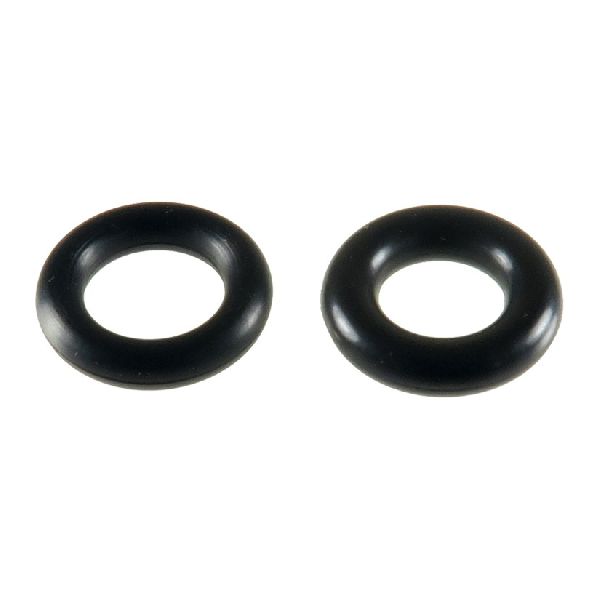
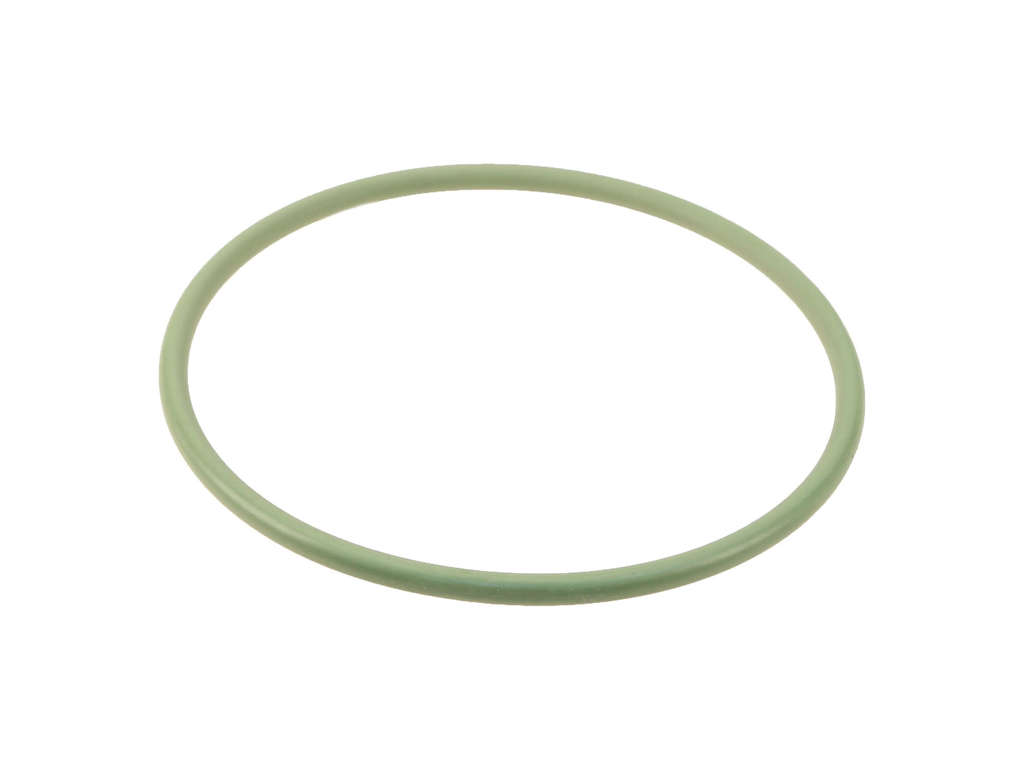
We Have This Part in Stock


The information in this article is provided for general reference and educational purposes only. Vehicle specifications, procedures, and part compatibility can vary by production date, trim level, and region. Always consult your vehicle's factory service manual and verify part numbers before purchasing or performing repairs. Safety-critical components such as airbags, seat belts, and braking systems should be installed by a qualified professional.
- Land Rover LR2:
- 🎬 Helpful Videos
- 🛍️ Shop This Part
- What's Unique About the 2008-2012 Land Rover LR2
- Diagnostic Flowchart
- Symptoms You May Notice
- Most Likely Causes
- Rare But Worth Checking
- Diagnosis Steps
- Parts You'll Likely Need
- Related Codes That Often Appear With This One
- Technical Service Bulletins (TSBs) & Recalls
- Platform-Specific Known Issues
- Mechanic-Grade Diagnostic Values
- Hidden / Shadow Codes Worth Checking
- Scan Tool Commands That Help
- Wiring & Ground Locations
- Real Owner Repair Stories
- "I Checked Everything" — The Actual Cause
- When the Usual Fixes Don't Work
- OEM Part Supersession History
- Model Year Variations Within This Range
- 🎟️ Get 5% Off