

P2537 on 2015-2018 GMC Yukon: Ignition Switch Run/Start Position Circuit Low
This code indicates a problem with the ignition switch's 'Run/Start' signal circuit. The most common cause is a faulty ignition switch, which is a relatively inexpensive part to replace. Other possibilities include wiring issues, particularly under the driver's side sill plate, or a problem with the Body Control Module (BCM).
- P2537 on a 2015-2018 Yukon means there's a low voltage problem in the ignition switch's 'Run/Start' circuit.
- The most probable cause is a worn-out and faulty ignition switch.
- A known wiring issue under the driver's side sill plate is another specific cause to investigate, per GM TSBs.
- Symptoms often include a no-start condition, intermittent stalling, and non-functional accessories.
- Diagnosis involves testing the voltage from the ignition switch; if it's low, the switch needs replacement. If voltage is good, check the wiring to the BCM.
- While you might be able to drive with the code, there's a risk of being stranded if the vehicle fails to start.
What's Unique About the 2015-2018 Gmc YUKON
For the 2015-2018 GMC Yukon, which belongs to the K2UG generation, this code is almost always tied to the ignition switch itself or the wiring connected to it. Unlike some other vehicles where similar codes can point to complex module failures, the Yukon's architecture for this circuit is relatively straightforward. The ignition switch sends its status to the Body Control Module (BCM), which then communicates with the engine and other systems. A failure in this simple, high-use part is the most frequent point of failure. Additionally, GM has identified a specific wiring issue under the driver's sill plate as a known point of high resistance for this circuit on related platforms, which can also trigger the code.
Diagnostic Flowchart
Tap your situation to follow the diagnostic path that matches what you're seeing on this vehicle.
Symptoms You May Notice
- Engine may not crank or start
- Check Engine Light is on
- Vehicle may stall intermittently
- Loss of power to accessories (radio, climate control, power windows) when the key is in the 'Run' or 'ACC' position.
- Other warning lights may appear on the dash
- Remote start is inoperative.
- Power liftgate may not work when the ignition is off.
- Weird clicking sounds and flashing lights on the dash during a no-start event.
- Replacing the battery without load testing it first. While a failing battery can cause various electrical issues, P2537 specifically points to a circuit voltage drop, not necessarily low source voltage.
- Replacing the starter motor when the issue is a lack of signal to the starting circuit, not the starter itself.
- Replacing the steering column for noises when a TSB addresses a specific bearing or wiring harness issue not related to the ignition switch.
Most Likely Causes
- Faulty Ignition Switch 🔴 High Probability The ignition switch is a mechanical part with electrical contacts that wears out over time from repeated use. The internal contacts for the 'Run/Start' or 'Accessory' position can become worn or corroded, causing a voltage drop that the BCM interprets as a fault. It's the most common failure point for this circuit.
How to confirm: Use a multimeter to test the voltage at the 'Run/Start' signal wire coming from the ignition switch. When the key is in the 'Run' position, the voltage should be close to battery voltage (12.6V). If it's low (e.g., below 9V) or zero, the switch is likely bad.
Typical fix: Replace the ignition switch. This is a common DIY repair.
Est. part cost: $30-$70 - Wiring or Connector Issue 🟡 Medium Probability Wires in the steering column can be subject to stress and chafing over time. A GM Technical Service Bulletin (PIT5308B/C) points to a known area of high resistance or an open in circuit 5985 (the accessory wakeup circuit) located under the driver's side sill plate. This specific wiring fault is a documented cause for P2537 on these platforms.
How to confirm: Visually inspect the wiring harness from the ignition switch to the Body Control Module (BCM), paying close attention to the harness under the driver's sill plate for any signs of damage, chafing, or loose connections. Perform a continuity test on the signal wire (circuit 5985) if no visual damage is found.
Typical fix: Repair the damaged wire section or clean/replace the faulty connector.
Est. part cost: $5-$50 - Failing Body Control Module (BCM) ⚪ Low Probability While less common, the BCM is the module that receives and interprets the signal from the ignition switch. An internal fault in the BCM's circuitry can cause it to misread an otherwise good signal.
How to confirm: This is typically a diagnosis of exclusion. If the ignition switch and wiring are confirmed to be good (i.e., correct voltage is leaving the switch and arriving at the BCM connector), the BCM is the next suspect. A high-end scan tool may be needed to check BCM data and status.
Typical fix: Replace and reprogram the Body Control Module. This usually requires a professional due to VIN-specific programming.
Est. part cost: $250-$500
Rare But Worth Checking
- Poor Ground Connection:
- Aftermarket Accessories:
Diagnosis Steps
- Scan for all DTCs to see if other codes are present, which can provide additional clues. Note codes like U0074 or P129D.
- Check the battery and charging system to ensure a healthy baseline voltage (at least 12.4V at rest). A weak battery can complicate diagnosis.
- Using a multimeter, check for voltage on the 'Run/Start' signal circuit (often circuit 5985) at the ignition switch connector. The voltage should be near battery voltage when the key is in the 'Run' position.
- If voltage is low at the switch, the ignition switch is the likely culprit. Replace it.
- If voltage is correct at the switch, inspect the wiring between the ignition switch and the Body Control Module (BCM). Pay special attention to the harness running under the driver's side sill plate, as this is a known chafe/corrosion point per TSB PIT5308C.
- Check the same signal wire for correct voltage at the BCM connector. If voltage is good at the switch but low at the BCM, a wiring issue is present between the two points.
- If the switch and wiring are confirmed to be good, the Body Control Module (BCM) may be faulty. This should be confirmed by a professional before replacement, as it requires programming.
Parts You'll Likely Need
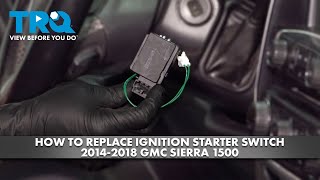
- Ignition Switch
(OEM #23377933)— This is the most frequent failure point for the P2537 code, as its internal contacts wear out from normal use.
Trusted brands: ACDelco (OEM), Standard Motor Products, TRQ
OEM price range: $50-$70
Aftermarket price range: $30-$50
Related Codes That Often Appear With This One
- U-series codes (e.g., U0100, U0140, U0074) — If the BCM is failing or the ignition signal is unstable, it can cause communication issues with other modules (like the TCM) on the vehicle's network, triggering various 'U' (network) codes.
- P129D — This code is often mentioned alongside P2537 in GM service bulletins related to the accessory wakeup circuit, indicating a related fault.
Technical Service Bulletins (TSBs) & Recalls
- PIT5308C: Mentions P2537 on GM trucks/SUVs with various symptoms including no-start, inoperative remote start, and power liftgate issues. It directs technicians to check circuit 5985 for low voltage and inspect for opens/high resistance, specifically noting the area under the driver's sill plate.
- PIT5452C: While not directly for P2537, this TSB addresses a common pop/click noise from the steering column caused by a misrouted airbag wiring harness. This is relevant as it highlights the potential for wiring issues within the same physical area as the ignition switch and its wiring.
Platform-Specific Known Issues
- A Technical Service Bulletin for some GM diesel vehicles mentions P2537 in relation to a blower motor staying on, caused by a wiring issue at the ECM/TCM. While the 2015-2018 Yukon is primarily gasoline-powered, this highlights that GM has identified wiring circuit integrity as a potential cause for this code on related platforms.
- TSB PIT5308C specifically calls out the accessory wakeup circuit (5985) as a potential cause for a no-start, P2537, and other electrical issues. It notes a common point of failure for this wire is under the driver's sill plate.
Mechanic-Grade Diagnostic Values
- Accessory Wakeup Circuit (5985) Voltage — expected: Approximately battery voltage (12.6V) when the BCM is awake (e.g., ignition on).. Failure: Low voltage (below 11V under load) or no voltage indicates high resistance or an open in the circuit.
- Load Test of Circuit 5985 — expected: A 194 bulb connected between circuit 5985 and a good ground should light up when the BCM is awake.. Failure: If the bulb does not light, there is an open or short in the circuit. If it lights but the voltage across it is less than 11V, there is high resistance.
- Ground Circuit Resistance — expected: Less than 5 Ω, though readings may be higher for up to 20 minutes after ignition off as modules go to sleep.. Failure: A reading of 10 Ω or greater indicates a poor ground connection that needs to be cleaned or repaired.
- Wiring Harness Continuity — expected: Less than 2 Ω from end to end on a given circuit (e.g., B+ or ignition circuit).. Failure: 2 Ω or greater indicates high resistance or an open in the wire, requiring repair.
Scan Tool Commands That Help
- GDS2 (GM Global Diagnostic System 2): Module Diagnostics > BCM > Control Functions — To individually command BCM-controlled subsystems (like exterior lighting, windows) on and off. This helps verify if the BCM itself is capable of commanding functions, which can help isolate the problem to the input signal (from the ignition switch) if the BCM commands work correctly.
- GDS2 (GM Global Diagnostic System 2): Vehicle DTC Information > Clear All DTCs — After a repair has been performed, this function is used to clear the P2537 and any related codes from all modules to verify the fix.
Wiring & Ground Locations
- Circuit 5985 at BCM — On the Body Control Module (BCM), this is a Tan wire located at Pin 10 of the Brown connector X5.. This is the specific pin where the BCM receives the accessory wakeup signal. Testing for voltage here is the definitive way to know if the signal is reaching the module correctly.
- G218 — Located under the driver's side dash, behind the kick panel.. This is a primary instrument panel ground. A poor connection here can cause a variety of electrical issues within the dash and BCM, potentially contributing to the voltage drop that triggers P2537.
- G304 — Located behind the front passenger side wheel well / kick panel area.. This is a key body ground point. Owners on forums have reported that cleaning corrosion from this specific ground has resolved intermittent no-start and electrical issues similar to those caused by P2537.
- Chassis Harness Splice — Under the driver's side sill plate.. This is a known high-resistance point in circuit 5985, as identified by GM in TSB PIT5308C. Water intrusion and corrosion in this area are common, leading to an open or intermittent signal on the wakeup circuit.
Real Owner Repair Stories
- Reddit user in r/Silverado (2016 Chevrolet Silverado (sister platform)) — Started with a slow crank, then progressed to an intermittent no-crank situation. A new battery did not solve the problem.
❌ Tried (didn't work) Replacing the battery
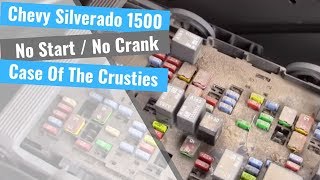
✅ What actually fixed it Cleaning the ground connection located behind the front passenger wheel well (G304). This resolved the no-crank issue. - YouTube video by Peter L. (2015 Chevrolet Silverado (sister platform)) — Intermittent no-crank, no-start. All electronics worked, but turning the key only produced a single click. The issue had previously been temporarily resolved by replacing the battery.
❌ Tried (didn't work) Swapping the starter relay with a known-good relay., Checking fuses.
✅ What actually fixed it The problem was ultimately diagnosed as a faulty starter motor. The owner confirmed this by running a direct line from the battery to the starter with no response. Replacing the starter resolved the no-crank condition.
Helpful Videos
Used OEM Parts in Stock


New Aftermarket Parts Available


The information in this article is provided for general reference and educational purposes only. Vehicle specifications, procedures, and part compatibility can vary by production date, trim level, and region. Always consult your vehicle's factory service manual and verify part numbers before purchasing or performing repairs. Safety-critical components such as airbags, seat belts, and braking systems should be installed by a qualified professional.
- Gmc YUKON:
- 🎬 Helpful Videos
- 🛍️ Shop This Part
- What's Unique About the 2015-2018 Gmc YUKON
- Diagnostic Flowchart
- Symptoms You May Notice
- Most Likely Causes
- Rare But Worth Checking
- Diagnosis Steps
- Parts You'll Likely Need
- Related Codes That Often Appear With This One
- Technical Service Bulletins (TSBs) & Recalls
- Platform-Specific Known Issues
- Mechanic-Grade Diagnostic Values
- Scan Tool Commands That Help
- Wiring & Ground Locations
- Real Owner Repair Stories
- 🎟️ Get 5% Off