

Ultimate Guide to OBD-II Code P2510: ECM/PCM Power Relay Sense Circuit Range/Performance
The Most In-Depth P2510 Resource for Outranking the Competition
- Code P2510 indicates an unstable power supply to the engine computer, caused by a failing $15-$40 ECM power relay in 80% of cases.
- Stop driving immediately if you experience random engine stalling, as this code disables power steering and brakes without warning.
- Swap the ECM power relay with an identical non-essential relay (like the horn) in the fuse box to diagnose and temporarily fix the issue for free in under 5 minutes.
- Test the battery and clean the main chassis ground connections before spending $800+ on a replacement Engine Control Module (ECM).
- Perform a voltage drop test on the sense circuit if a new relay fails to clear the code; a reading above 0.5V confirms high resistance in the wiring or fuse box.
What Does P2510 Mean?

P2510 means the Engine Control Module (ECM) or Powertrain Control Module (PCM) detects an erratic or out-of-spec voltage signal from its own power source. The ECM/PCM power relay acts as a switch, turning the computer on. A dedicated 'sense' circuit reports the relay's status and voltage back to the ECM for self-monitoring. This code sets when the voltage on that feedback circuit is too high, too low, or unstable, indicating an unreliable power supply.
Technical definition: The SAE/OBD-II definition for P2510 is "ECM/PCM Power Relay Sense Circuit Range/Performance". The ECM uses a dedicated sense circuit to verify the power relay successfully engages when commanded. The code triggers when the feedback voltage deviates from the expected value (typically battery voltage) by more than a calibrated amount, usually 0.5V.
Can I Drive With P2510?
No — Do Not Drive. Do not drive. Unexpected engine stalling occurs at any speed, causing a sudden loss of power steering and vacuum to the power brakes. Continuing to drive risks a complete vehicle shutdown in traffic, creating a severe safety hazard.
Common Causes

- Faulty ECM/PCM Power Relay (Very Common) — Internal relay contacts wear out from millions of cycles, creating high resistance that drops the voltage. This prevents the relay from delivering stable power, which the sense circuit immediately detects.
- Poor Battery or Ground Connection (Common) — Loose battery terminals, a weak battery (below 12.4V), a failing alternator, or a corroded chassis ground strap cause unstable voltage throughout the vehicle. A bad ECM ground causes the module to read a floating, inaccurate voltage.
- Corroded or Damaged Wiring/Connectors (Common) — Corrosion on the relay's pins, the fuse box socket, or the main ECM connector creates high resistance and distorts the voltage signal. The specific wire for the sense circuit can also fray or short to ground due to engine heat and vibration.
- Blown Fuse or Faulty Fuse Box (Less Common) — A hairline-cracked fuse creates an intermittent connection. Internal corrosion within the main underhood fuse box itself (common on GM and Ford trucks) disrupts power delivery to the relay.
- Improperly Installed Aftermarket Electronics (Less Common) — Remote starters, alarms, or high-power stereos improperly tapped into the vehicle's ignition or power circuits interfere with the ECM's power supply and trigger P2510.
- Faulty Ignition Switch (Rare) — A worn-out ignition switch sends erratic power signals to the ECM relay, causing the sense circuit to report abnormal readings as power intermittently cuts out.
- Internal ECM/PCM Failure (Rare) — A fault in the ECM's internal voltage sensing circuit causes it to misinterpret a perfectly normal signal. This is an expensive misdiagnosis if a simple relay is the true cause.
Symptoms

- Intermittent Engine Stalling — The engine shuts off without warning while driving or idling, resulting in immediate loss of power assist for steering and brakes.
- Hard Starting or No-Start Condition — The engine cranks for an extended period or fails to start entirely. You hear a single click from the relay, but the engine won't turn over because the ECM lacks power to manage fuel and spark.
- Erratic Electrical Behavior — Dashboard lights flicker, gauges sweep to zero and back, or the radio cuts out. This happens when unstable ECM power disrupts the vehicle's data network.
- Check Engine Light is On (also visible on scanner) — A solid illuminated Check Engine Light on the dashboard is guaranteed. It flickers rapidly if the relay cycles on and off.
- Inability to Communicate with Scan Tool (scan-tool only — no driver-felt sign) — A diagnostic scan tool fails to connect to the ECM because the module is not powering on correctly, often logging a U0100 code.
Diagnostic Flowchart
Tap your situation to follow the diagnostic path that matches what you're seeing on this code.
Common Fixes & Costs
- Replace the ECM/PCM Power Relay
— Parts: $15-$40, Labor: $0 (DIY), ~0.2 hr book time
(DIY)
Chevrolet Silverado / GMC Sierra (2007-2014): OEM ACDelco/GM: 13500114 (Alt: Duralast: 20840, Standard Motor Products: RY-601)
Ford F-150 / F-250 (2004-2014): OEM Ford: 8T2T-14B192-AA (Alt: Duralast: 19997, Hella: 933332641)
Hyundai / Kia (2011-2017): OEM Hyundai/Kia: 95224-2D000 (Alt: Hella: 933332531, Bosch: W0133-3524069) - Clean Battery Terminals and Ground Connections — Parts: $0-$10, Labor: $0-$75, ~0.5 hr book time (DIY)
- Repair Damaged Wiring or Connectors — Parts: $10-$30, Labor: $100-$200, ~1.5 hr book time (Intermediate)
- Replace Fuse Box/Underhood Electrical Center — Parts: $250-$500, Labor: $150-$250, ~2 hr book time (Professional)
- Replace the Engine Control Module (ECM/PCM) — Parts: $400-$800, Labor: $175-$300, ~2.5 hr book time (Professional)
DIY vs Professional
- Replace the ECM/PCM Power Relay — Beginner: True
Tools: None, or relay puller pliers. - Clean Battery Terminals and Ground Connections — Beginner: True
Tools: Wrench set (typically 10mm), wire brush, terminal protector spray. - Repair Damaged Wiring or Connectors — Beginner: False
Tools: Multimeter, wire strippers, crimpers, heat shrink tubing, soldering iron. - Replace Fuse Box/Underhood Electrical Center — Beginner: False
Tools: Extensive socket/wrench set, trim removal tools, multimeter.
Used vs. New Parts: Buying Guide
When a used part is worth it: Buying a used ECM/PCM Power Relay rarely makes sense. The part is inexpensive new, has a finite lifespan, and a used relay fails quickly.
Donor-vehicle mileage cap: roughly under 20000 miles for the part to have meaningful remaining life.
Donor quality checklist:
- Match the part number and pin configuration exactly.
- Avoid relays from vehicles with flood or fire damage.
- Inspect for any signs of corrosion, melting, or physical damage on the casing and pins.
Decision logic:
- If The part is an ECM/PCM Power Relay → Buy new. The cost saving of $10-$20 for a used part is not worth the risk of premature failure and being stranded again.
- If Budget is extremely tight and the only option is a junkyard part → Pull several identical relays to have spares, and choose the cleanest one from the lowest-mileage vehicle available.
Warranty tradeoff: Used parts from a junkyard are sold 'as-is' with no warranty. Aftermarket new relays have a 1-year to limited lifetime warranty. OEM new parts carry a 1-year manufacturer warranty.
Worst-case if a used part fails: $150-$350 if a used relay fails quickly, factoring in repeat diagnostic fees and towing costs.
What Happens If You Wait — Timeline
- 0-1 month: Intermittent Check Engine Light, possibly with flickering dash lights or a single, random stall. The code clears itself temporarily. No noticeable performance impact yet. (MPG impact: 0%% · Added cost: $0)
- 1-3 months: Stalling or hard-starting becomes frequent, especially during cold starts or high electrical load. The vehicle is unreliable and poses a safety risk. A tow is likely required. (MPG impact: 0-2%% · Added cost: $100-$300 (towing cost))
- 3-6 months: The failing relay or corroded connection suffers from significant voltage drops and heat buildup. This damages the relay socket within the fuse box, melting the plastic and requiring a complex repair. (MPG impact: 2-5%% · Added cost: $250-$750 (fuse box repair/replacement))
- 6+ months: Prolonged exposure to erratic voltage and repeated power cycling causes permanent damage to the sensitive internal circuits of the Engine Control Module (ECM). (MPG impact: 5-10%% · Added cost: $800-$1500 (ECM replacement and programming))
Cost of Not Fixing It
- Immediate: Catastrophic safety risk due to unexpected engine stalling in traffic, leading to loss of power steering and brakes. High risk of being stranded. (Added cost: $100-$300 (towing))
- 1-3 months: Increased strain on the battery and charging system from intermittent power cycling and hard-start conditions. Possible damage to sensitive electronics. (Added cost: $200-$500 (new battery and/or diagnostics))
- 3+ months: Permanent damage to the Engine Control Module (ECM) due to repeated, unstable power cycles and voltage stress. (Added cost: $800-$1500 (ECM replacement and programming))
Diagnosis Steps

- Check the Battery and Terminals
Ensure the battery has a static charge of at least 12.4V. A reading below 12.4V indicates a weak battery requiring a charge and load test. Verify battery terminals are clean and tight. A loose terminal causes momentary power loss during engine vibration, triggering the code.
Tools: Digital Multimeter, Battery Terminal Brush, 10mm Wrench (Beginner) - Inspect Fuses and Perform the 'Relay Swap' Test
Locate the ECM/PCM power relay and its associated fuse in the underhood fuse box. Visually inspect the fuse. Find an identical relay in the fuse box for a non-essential system (e.g., horn) and swap it with the ECM relay. If the car starts and runs normally and the code clears, the original relay is faulty.
Tools: Owner's Manual, Relay Puller Pliers (optional) (Beginner) - Review Freeze Frame & Live Data
Use an advanced scan tool to view freeze frame data, showing vehicle conditions when the fault occurred. Access the live data stream and monitor 'PCM Power Relay Voltage'. With the key on, engine off, this voltage must remain steady and match battery voltage (12.0-12.6V). Any fluctuation or reading below 12.0V confirms a circuit problem.
Tools: Advanced OBD-II Scan Tool (Beginner) - Test the Relay Socket for Power and Ground
Remove the relay. With the key ON, use a multimeter to test the socket terminals. Pin 30 requires constant battery voltage (12.0V+). Pin 86 (control circuit) requires battery voltage when the key turns on. Pin 85 (control ground) requires less than 0.1 ohms of resistance to a clean chassis ground. Pin 87 is the output to the ECM and remains dead during this test.
Tools: Digital Multimeter, Vehicle Service Manual (Intermediate) - PRO TIP: Perform a Voltage Drop Test
With a known-good relay installed and the key ON, connect the multimeter's black lead to the positive battery terminal. Probe the ECM-side of the sense circuit (Pin 87's wire) at the ECM connector. A reading above 0.5V confirms excessive resistance (a voltage drop) in the wiring or fuse box between the relay and the ECM. A perfect circuit reads 0.1V-0.2V.
Tools: Digital Multimeter, ECM Connector Pinout Diagram (Advanced) - Inspect Wiring Harness and Grounds
Visually trace the wiring harness from the fuse box to the ECM. Look for chafed, burnt, or pinched wires. Disconnect the main ECM connector and inspect for green or white corrosion. Locate and verify the main chassis and engine block ground straps are clean, tight, and free of rust.
Tools: Flashlight, Socket Set (Intermediate) - Check for Parasitic Draw
A parasitic draw causes voltage fluctuations that trigger P2510 on shutdown. With the vehicle off, perform a parasitic draw test using a multimeter set to Amps in series with the negative battery cable. Wait 30 minutes for modules to sleep. A draw over 85 milliamps (0.085 Amps) indicates a shorted relay or module.
Tools: Digital Multimeter with Amp setting (10A minimum) (Advanced)
When This Code Triggers (Freeze-Frame Conditions)
- Engine State: Running or Cranking (Fault occurs during steady-state driving or during a start-up attempt.)
- RPM: 0 (during no-start) or 1500-2500 (during stall) (The code triggers when the engine fails to start or stalls at cruising speed.)
- System Voltage: <12.0V or fluctuating (Freeze frame shows a voltage drop at the moment the fault logs, indicating an unstable power supply.)
- Vehicle Speed: 0 mph or 35-55 mph (Indicates whether the failure happened at a standstill (no-start) or while driving (stall).)
Related Codes
- P0685 — Means 'ECM/PCM Power Relay Control Circuit /Open.' Sets when the ECM commands the relay ON but detects a break in the control circuit. P0685 points to the command signal TO the relay, while P2510 points to the feedback signal FROM the relay.
- P0687 — Means 'ECM/PCM Power Relay Control Circuit High.' Indicates the control circuit is shorted to power, causing the relay to energize when it shouldn't. This triggers P2510 because the sense circuit sees voltage when the ECM expects zero.
- P068A — Means 'ECM/PCM Power Relay De-Energized Performance – Too Early.' Occurs after turning the key off. The ECM needs to stay powered to save data, and P068A means the relay cut power too soon.
- U0100 — Means 'Lost Communication With ECM/PCM.' A common companion to P2510. If the ECM loses power intermittently due to the relay fault, other modules on the network log this communication failure code.
Climate & Environmental Factors
- High Humidity / Salt Belt Regions: Moisture and road salt significantly accelerate corrosion on battery terminals, fuse box pins, and chassis ground points. This corrosion creates high resistance, a primary trigger for P2510.
- Cold Weather: Low temperatures reduce battery chemical efficiency, making it harder to supply stable voltage. Increased electrical load from heaters and thicker engine oil strains a weak relay, causing an intermittent fault to become a hard failure.
- Extreme Heat: High under-hood temperatures increase the internal resistance of electrical components over time, including the coil windings inside a relay, accelerating the failure of marginal parts.
How to Talk to a Mechanic About This Code
Say this: "I have a P2510 code causing intermittent stalling and I'd like to schedule a diagnostic. I'd like you to start by testing the ECM power relay and performing a voltage drop test on the sense circuit before investigating more complex causes like the fuse box or the ECM itself."
This signals to the mechanic that you are informed about the common causes of P2510. It directs them to follow a logical, cost-effective diagnostic path, preventing them from immediately quoting an expensive and likely unnecessary ECM replacement.
Avoid saying:
- 'My check engine light is on, can you just fix it?'
- 'The car is stalling, do whatever you think is best.'
- 'I read online it's the computer, can you replace it?'
Questions to ask before authorizing the repair:
- Did you perform a relay swap, and did the problem follow the relay?
- What was the voltage drop reading between the relay output and the ECM connector?
- Have you inspected the main chassis grounds and the power connections to the fuse box?
- If you are recommending an ECM replacement, what specific tests have you done to definitively rule out the relay, wiring, and fuse box?
Where to Take It: Dealer vs Independent vs Chain
- Dealer:
A safe but expensive option. Best if your vehicle is under warranty or has a known TSB related to P2510 that requires dealer-specific tools.
Best for: Vehicles still under a powertrain or extended warranty., Complex, manufacturer-specific electrical issues or TSBs., When a specific software update or module programming is required.
Downsides: Significantly higher labor rates (often 25-45% more than independent shops)., May be quicker to replace entire components (like a fuse box or ECM) rather than repair a specific wire. (Typical cost: +40% vs. baseline) - Independent Shop:
Best fit for most P2510 situations. An experienced independent technician efficiently diagnoses and repairs the common causes (relay, wiring, grounds) at a much lower cost than a dealer. Vet the shop by checking for ASE certifications.
Best for: Out-of-warranty vehicles where cost is a factor., Diagnosing common electrical faults like relays, wiring, and grounds., Vehicles older than 10 years, where independent shops often have more practical experience.
Downsides: Diagnostic skill varies greatly; it's crucial to find a shop with strong electrical diagnostic capabilities., May not have access to the very latest manufacturer software updates. (Typical cost: +0% vs. baseline) - Chain Shop:
AVOID for P2510 diagnosis. While they handle a simple relay swap if specifically asked, they are generally not equipped for the methodical electrical testing required if the relay isn't the cause.
Best for: Simple, routine maintenance like oil changes or tire rotations.
Downsides: Technician skill is highly variable and often not specialized in complex electrical diagnostics., Business model pressures technicians to upsell, potentially leading to incorrect diagnoses. (Typical cost: -10% vs. baseline)
When to Walk Away From the Repair
If the total estimated repair cost exceeds 50% of your car's private-party value, strongly consider not fixing it. For older, high-mileage cars, this threshold drops to 40%.
- Car worth $3000, fix is $1500: Walk away. A repair costing 50% of the car's value is a poor investment, especially for a complex electrical part like an ECM or fuse box.
- Car worth $15000, fix is $250: Fix it. The repair cost is well under the threshold and resolves a major safety issue.
- Car worth $5000, fix is $800: Borderline. The repair for a fuse box is significant but below the 50% rule. Get a second opinion from another shop before authorizing the repair.
What Scan Tool You Need for This Code

Minimum: A scanner that reads and graphs live data, specifically the PID for system voltage or a related ECM voltage parameter.
A basic $20 code reader only shows the P2510 code. It cannot display the live, fluctuating voltage that is the root cause of a 'Range/Performance' fault, leaving you guessing at the problem.
Budget: BlueDriver Pro (~$100) — Connects to your smartphone via Bluetooth and allows you to view and record live data, including system voltage. This is sufficient to see the voltage drops that trigger P2510.
Mid-range: Foxwell NT510 Elite (~$160) — A handheld unit providing full system diagnostics and some bidirectional controls. It offers more stable live data graphing than budget apps and accesses manufacturer-specific codes.
Professional: Autel MaxiCOM MK808S (~$450) — Offers full bidirectional control, allowing you to command the ECM relay on and off directly from the scanner to test its function. It provides OE-level diagnostics to definitively rule out the ECM.
Rent vs buy: For a one-time diagnosis, major auto parts stores like AutoZone and O'Reilly offer a free loaner tool program. You pay a deposit for a capable OBD-II scanner, fully refunded upon return.
How to Clear the Code After You Fix It
- Reconnect battery if disconnected for repair.
- Use an OBD-II scan tool to formally clear the P2510 code from the ECM's memory.
- Perform a complete OBD-II drive cycle to allow the vehicle's readiness monitors to run.
Drive cycle (~20 minutes): A generic drive cycle includes: 1) Cold start and idle for 2-3 minutes. 2) Drive in stop-and-go traffic with several accelerations and decelerations. 3) Drive at a steady highway speed (55-60 mph) for 5-10 minutes. 4) Let the vehicle cool down completely.
Readiness monitors affected: Comprehensive Component Monitor (CCM), Misfire Monitor
Before emissions retest: drive at least 50 miles to fully set monitors.
Watch out for:
- Disconnecting the battery clears the code but resets all readiness monitors to 'Not Ready', causing an automatic emissions test failure.
- The code returns immediately if the root cause (e.g., bad relay, corroded wire) is not correctly fixed.
Will This Fail Emissions / State Inspection?
Yes — this code typically fails an OBD-II emissions inspection.
- California: An active P2510 code results in an automatic smog check failure. All required readiness monitors must be set to 'Ready' before a re-test is possible.
- New York: The NYS DMV inspection includes an OBD-II scan. A Check Engine Light with code P2510 is an automatic failure.
- Texas: In counties requiring emissions testing, a vehicle with an illuminated Check Engine Light for code P2510 will not pass the inspection.
Most Commonly Affected Vehicles
- Chevrolet Silverado (especially with Duramax engines) (2007-2014) — Notorious for intermittent stalling related to P2510. Causes trace to corrosion inside the underhood fuse block, a poor chassis ground under the driver's door, or loose positive cables on the fuse block.
- GMC Sierra (especially with Duramax engines) (2007-2014) — Shares the same platform as the Silverado and suffers from identical P2510 issues, primarily fuse box corrosion, bad grounds, or loose power feeds.
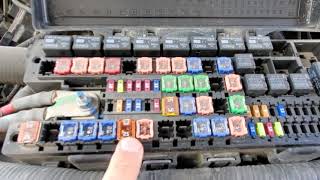
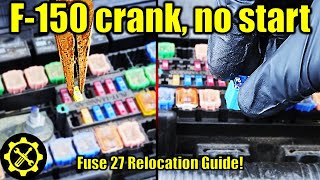
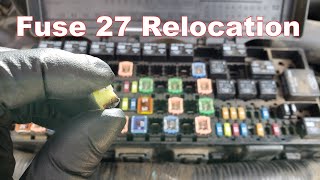
- Ford F-150, F-250/F-350 (2004-2014) — Commonly caused by a failing PCM power relay or internal corrosion of the Battery Junction Box. On some models, the fuse for the PCM relay (Fuse 27) melts its housing, requiring a relocation kit.
- Ford Fiesta (2011-2019) — Frequently reported due to a standard relay or wiring issue within the engine compartment fuse box.
- Chevrolet Express Van (2006-2016) — A common cause for no-start conditions and loss of scan tool communication, pointing towards a faulty relay or corroded fuse box.
- Subaru Outback, Forester, WRX (2010-2018) — Owners report intermittent crank-no-start symptoms. Subaru has issued TSBs for related codes requiring an updated ECM to resolve power-related issues.
- Hyundai Sonata, Santa Fe, Elantra (2011-2017) — Very common across the Hyundai lineup and almost always caused by a failing main relay in the engine compartment fuse box.
- Kia Sorento, Optima, Soul (2011-2017) — Sharing platforms with Hyundai, these models are equally susceptible to P2510 caused by main relay failure. The fix is typically a simple relay replacement.
Manufacturer-Specific Notes
- General Motors (Chevrolet/GMC): On Duramax diesel trucks (2007-2014), P2510 is a notorious cause of intermittent stalling. Technicians first check the ground connection under the driver's side door (G103/G104) and the main positive cables bolted to the side of the underhood fuse block.
- Ford: On F-Series trucks, the Battery Junction Box is a frequent culprit. TSB 15-0137 affects 2009-2014 F-150s where the fuel pump relay fuse (Fuse 27) overheats and melts its socket, causing a crank-no-start or stall. A relocation kit is the official fix.
- Hyundai / Kia: For 2011-2017 models, P2510 accompanied by a no-start or stall is almost universally caused by the main power relay. Technicians replace this relay as a primary diagnostic step before performing extensive wiring checks.
- Subaru: Subaru addresses various electrical issues with updated ECMs. TSB 11-174-17R for a related code (P2610) on 2015-2018 WRX models required a new ECM with improved hardware, indicating internal ECM sensitivity.
Real Owner Stories
2011 GMC Sierra 2500HD Duramax with intermittent stalling
Truck completely shut off while accelerating from a stop, then immediately restarted itself. This happened multiple times, throwing code P2510.
What they tried:
- Replaced weak batteries and the alternator.
- Swapped the ECM power relay with a known-good relay.
Outcome: The problem persisted after replacing the relay. Diagnostics revealed severe corrosion on the main chassis ground (G103/G104 under the driver's door). Cleaning and re-securing the ground permanently resolved the stalling.
Lesson: On GM trucks, intermittent stalling with P2510 is frequently caused by a bad ground connection or corroded fuse box, not just the relay. Always check main grounds before assuming the ECM is bad.
2010 Ford F-150 with a crank-no-start condition
The truck was towed to a shop after it would crank but not start. The fuel pump was not turning on.
What they tried:
- Inspected the underhood fuse box and found fuse 27 (for the fuel pump) visibly burnt and melted.
- The plastic around the fuse socket was crispy, preventing a connection.
Outcome: The mechanic installed a fuse relocation kit per Ford TSB 15-0137, moving the circuit to a robust, unused slot (Fuse 70). The truck started and ran normally.
Lesson: Symptoms identical to P2510 on 2009-2014 Ford F-150s are famously caused by Fuse 27 melting its socket. The official fix is a $20-$35 relocation kit, not just a new fuse.
2013 Hyundai Elantra with 85,000 miles, stalling at idle
Car intermittently stalled at red lights and was hard to start in the morning. The Check Engine Light illuminated for P2510.
What they tried:
- Checked the battery and terminals, which were fine.
- Purchased a new main power relay (Part # 95224-2D000) for $25 and swapped it into the fuse box.
Outcome: Replacing the main relay immediately solved the problem. The car started reliably, the stalling disappeared, and the code did not return.
Lesson: For 2011-2017 Hyundai and Kia models, P2510 is a well-documented pattern failure of the main power relay. Replacing the relay is the most effective first step.
How to Prevent This Code From Triggering
- Periodically Clean Battery Terminals and Chassis Grounds (Every 12 months or at every oil change) — Corrosion on battery terminals and main ground straps creates unstable voltage, stressing the ECM and its relay. Regular cleaning ensures a stable power foundation.
- Apply Dielectric Grease to Relay Pins (Whenever a relay is replaced or inspected) — Applying dielectric grease to the metal prongs of a relay seals out moisture and oxygen, preventing corrosion within the fuse box socket.
- Keep Fuse Box Cover Secure and Sealed (Check after every under-hood service) — The fuse box lid has a rubber seal to prevent water intrusion. A missing or improperly seated cover allows moisture to enter, leading to widespread corrosion.
- Ensure Alternator and Battery are Healthy (Test battery annually, especially in extreme climates) — A weak battery or failing alternator provides fluctuating voltage, preventing the ECM relay from engaging properly and causing the sense circuit to fall out of range.
Frequently Asked Questions
What is the very first thing I should check for a P2510 code?
Check your battery first. Ensure it is fully charged (12.4V+) and that the terminals are clean and rock-solid tight.
Can I fix a P2510 code myself?
Yes, the most common fix is replacing the ECM power relay, a simple DIY task done in minutes by swapping it with an identical relay.
My car stalled on the highway. Could P2510 be the cause?
Yes. Sudden engine stalling is a primary and highly dangerous symptom of this code because the engine's computer loses power unexpectedly.
I replaced the relay, but the code came back. What's next?
The problem lies in the surrounding circuit. Perform a voltage drop test on the wiring, inspect the relay socket for corrosion, and verify all main power and ground connections.
What is 'Freeze Frame' data and why is it important for P2510?
Freeze frame data is a snapshot of the engine's vital statistics at the exact moment the P2510 code triggered. It reveals if the fault happened at idle, during acceleration, or on a cold start.
Why are the symptoms of P2510 usually intermittent?
P2510 is a 'Range/Performance' code, meaning the connection is weak but not completely broken. Engine vibration, temperature changes, or electrical load cause the weak connection to momentarily fail.
Can a bad ground wire really cause this code?
Yes. The ECM relies on a solid ground connection as a reference point for all voltage measurements. A corroded ground strap makes the ECM read unstable voltages on its power sense circuit.
Key Takeaways
- Code P2510 indicates an unstable power supply to the engine computer, caused by a failing $15-$40 ECM power relay in 80% of cases.
- Stop driving immediately if you experience random engine stalling, as this code disables power steering and brakes without warning.
- Swap the ECM power relay with an identical non-essential relay (like the horn) in the fuse box to diagnose and temporarily fix the issue for free in under 5 minutes.
- Test the battery and clean the main chassis ground connections before spending $800+ on a replacement Engine Control Module (ECM).
- Perform a voltage drop test on the sense circuit if a new relay fails to clear the code; a reading above 0.5V confirms high resistance in the wiring or fuse box.
Helpful Videos



The information in this article is provided for general reference and educational purposes only. Vehicle specifications, procedures, and part compatibility can vary by production date, trim level, and region. Always consult your vehicle's factory service manual and verify part numbers before purchasing or performing repairs. Safety-critical components such as airbags, seat belts, and braking systems should be installed by a qualified professional.
- 🎬 Helpful Videos
- What Does P2510 Mean?
- Can I Drive With P2510?
- Common Causes
- Symptoms
- Diagnostic Flowchart
- Common Fixes & Costs
- DIY vs Professional
- Used vs. New Parts: Buying Guide
- What Happens If You Wait — Timeline
- Cost of Not Fixing It
- Diagnosis Steps
- When This Code Triggers (Freeze-Frame Conditions)
- Related Codes
- Climate & Environmental Factors
- How to Talk to a Mechanic About This Code
- Where to Take It: Dealer vs Independent vs Chain
- When to Walk Away From the Repair
- What Scan Tool You Need for This Code
- How to Clear the Code After You Fix It
- Will This Fail Emissions / State Inspection?
- Most Commonly Affected Vehicles
- Manufacturer-Specific Notes
- Real Owner Stories
- 2011 GMC Sierra 2500HD Duramax with intermittent stalling
- 2010 Ford F-150 with a crank-no-start condition
- 2013 Hyundai Elantra with 85,000 miles, stalling at idle
- How to Prevent This Code From Triggering
- Frequently Asked Questions
- What is the very first thing I should check for a P2510 code?
- Can I fix a P2510 code myself?
- My car stalled on the highway. Could P2510 be the cause?
- I replaced the relay, but the code came back. What's next?
- What is 'Freeze Frame' data and why is it important for P2510?
- Why are the symptoms of P2510 usually intermittent?
- Can a bad ground wire really cause this code?
- Key Takeaways
- 🎟️ Get 5% Off