

P2507 on 2019 Mazda MAZDA3: ECM/PCM Power Input Signal Low Causes and Fixes
On a 2019 Mazda MAZDA3, code P2507 almost always points to a weak battery, corroded terminals, or a specific issue where the 'ROOM 15A' fuse was removed for transport. Before replacing parts, test the battery and check that fuse. A new battery is the most common fix, costing around $150-$300.
- P2507 means the engine computer (PCM) detected low voltage.
- The most likely cause is a weak battery or corroded terminals.
- Check for a missing 'ROOM 15A' fuse, as this is a known quirk documented by Mazda that can set this code without a real fault.
- Always test the battery with a load tester before replacing more expensive parts like the alternator or PCM.
- This code is usually a simple fix and does not typically indicate a major engine problem.
What's Unique About the 2019-2019 Mazda MAZDA3
For the 2019 Mazda3 and many other Mazda models of the era, this code has a well-documented, non-malicious cause. A Technical Service Bulletin (TSB) explains that P2507, often paired with P2610, can be set if the engine is started while the 'ROOM 15A' fuse is removed. This is a common procedure for dealerships to put the car in 'transport mode' to prevent battery drain, during which the odometer may display 'F0-002'. The code may be discovered later as a stored fault with no actual problem present.
Diagnostic Flowchart
Tap your situation to follow the diagnostic path that matches what you're seeing on this vehicle.
Symptoms You May Notice
- Check Engine Light is on
- Engine may stall intermittently
- Potential no-start condition
- Loss of power while driving
- i-Stop (start-stop) system may be disabled
- Other seemingly unrelated electrical issues
- Replacing the PCM when the actual fault is a weak battery, a poor connection, or a missing fuse. This is an expensive and unnecessary repair in most cases.
Most Likely Causes
- Weak or Failing Battery 🔴 High Probability Modern vehicles with many electronic modules, including start-stop systems, are highly sensitive to battery voltage. An aging battery may hold a surface charge but fail under load, causing voltage to dip and trigger the code.
How to confirm: Use a multimeter to check the battery voltage with the engine off; a healthy battery should read between 12.4V and 12.6V. For a definitive diagnosis, perform a load test using a dedicated battery tester, as a simple voltage check can be misleading.
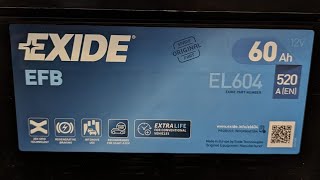
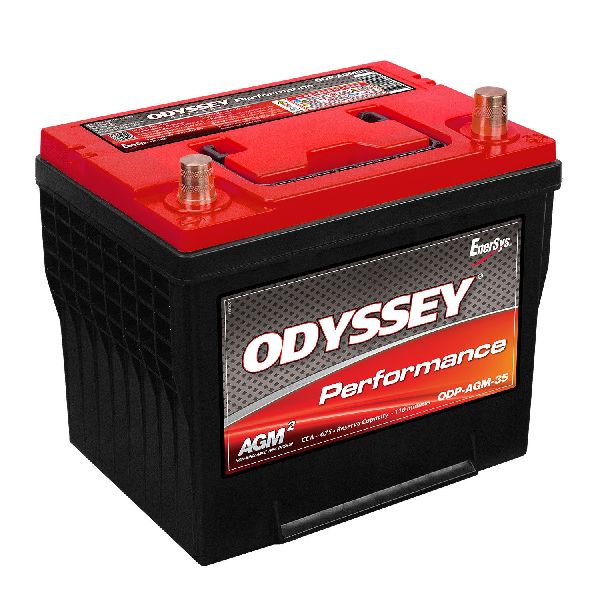
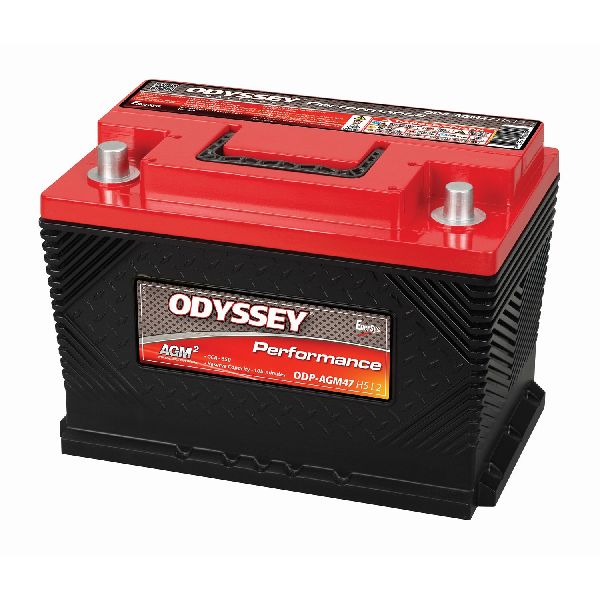
Typical fix: Replace the 12V battery. The 2019 Mazda3 with i-Stop requires an EFB (Enhanced Flooded Battery) or AGM type battery, often a Q-85 size. Some systems may need a reset procedure after replacement to restore full i-Stop functionality. 🎬 See how to perform the i-Stop battery initialization procedure.
Est. part cost: $150-$300 - Loose or Corroded Battery Terminals/Grounds 🟡 Medium Probability Corrosion acts as a resistor, impeding current flow and causing a voltage drop between the battery and the PCM. This is a common issue on all vehicles but is a primary check for any low-voltage code.
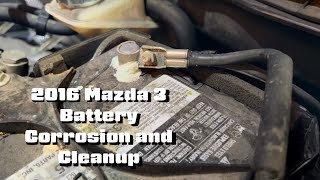
How to confirm: Visually inspect the battery terminals for white or greenish buildup. Ensure the terminal clamps are tight and cannot be moved by hand. Check the main engine-to-chassis ground strap for corrosion or looseness. Perform a voltage drop test on the ground side for a more thorough check.
Typical fix: Disconnect the battery (negative terminal first). Clean the terminals and clamps with a wire brush and a baking soda/water solution. 🎬 Watch: A quick guide to cleaning battery terminal corrosion. Reconnect securely (positive terminal first).
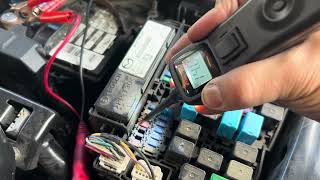
Est. part cost: $1-$10 - Blown or Missing Fuse ⚪ Low Probability As noted in Mazda TSB #01-003/19, the code is commonly set by starting the engine with the ROOM 15A fuse removed for transport. In other cases, a fuse in the PCM's power circuit (like the ENG+B 7.5A fuse) could be blown. In one documented case on a similar model, a previous owner had installed an incorrect 10A fuse in the 15A ROOM slot, which subsequently blew and caused the code.
How to confirm: Check if the vehicle was recently serviced or transported. Inspect the 'ROOM 15A' fuse in the interior fuse panel and the 'ENG+B 7.5A' fuse in the engine compartment fuse box. Verify the amperage rating on the fuse is correct.
Typical fix: Install the correct 15A fuse if missing or incorrect. If a fuse is blown, replace it. If it blows again, there is a short circuit that needs to be diagnosed.
Est. part cost: $1-$5 - Failing Alternator ⚪ Low Probability
How to confirm: With the engine running, use a multimeter to measure the voltage at the battery terminals. A healthy charging system should read between approximately 13.5V and 14.5V. A reading below this range indicates the alternator is not charging the battery properly.
Typical fix: Replace the alternator.
Est. part cost: $300-$600
Rare But Worth Checking
- Damaged Wiring Harness or Fuse Box Connection: An open circuit, a short to ground, or a corroded pin in the wiring between the battery, fuse box, and the PCM can cause this code. One owner found a corroded wire terminal inside the fuse box itself and had to solder in a bypass.
- Faulty Powertrain Control Module (PCM): It is extremely rare for the PCM itself to be the cause of this code. Always exhaust all other possibilities before considering PCM replacement. A Reddit user with a 2019 Mazda3 reported their dealer replaced the PCM for a related code, only for the problem to return, indicating a misdiagnosis.
Diagnosis Steps
- Read all stored DTCs with an OBD-II scanner. Note if P2610 is also present.
- Ask about recent service history. Was the car recently transported or did it have work done that might involve disconnecting the battery or pulling fuses? Check if the odometer displays 'F0-002', indicating transport mode.
- Visually inspect the battery terminals for corrosion and ensure they are tight.
- Inspect the 'ROOM 15A' fuse in the interior fuse panel. If it is missing or has the wrong amperage, install a 15A fuse, clear the codes, and see if they return.
- Test the battery voltage with the engine off (should be ~12.6V). Then, start the engine and test the charging voltage (should be ~13.5V-14.5V).
- Perform a battery load test to confirm its health, as a simple voltage test can be insufficient.
- If the battery and connections are good, inspect other relevant fuses like the 'ENG+B 7.5A' and 'MAIN 200A' fuses.
- If the issue persists, perform a voltage drop test on the PCM power and ground circuits to check for wiring integrity.
Parts You'll Likely Need
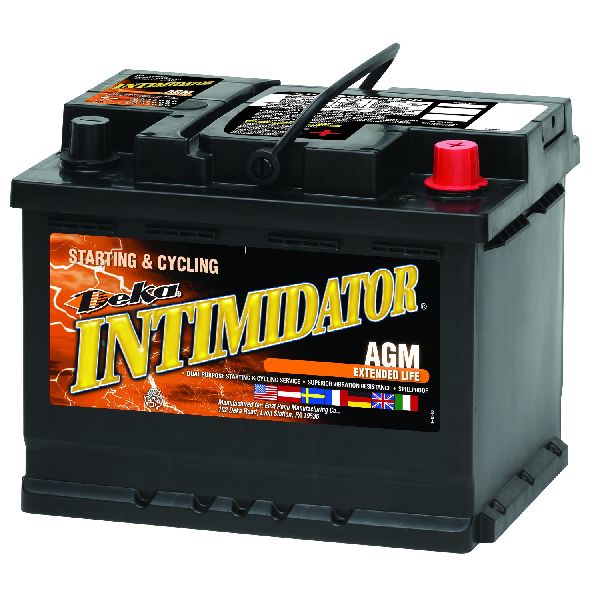
- 12V Battery
(OEM #PE1T-18-520-9U)— This is the most frequent cause of low voltage codes. Modern cars are very sensitive to a battery's state of health.
Trusted brands: Panasonic (OEM Q-85), Bosch, Interstate, DieHard
OEM price range: $250-$400
Aftermarket price range: $150-$300 - 15A Blade Fuse
(OEM #99-705-1315)— Specifically for the TSB-related issue where the 'ROOM 15A' fuse is missing or blown after vehicle transport or service.
Trusted brands: Bussmann, Littlefuse, Mazda Genuine
OEM price range: $1-$5
Aftermarket price range: $1-$5
Related Codes That Often Appear With This One
- P2610 — P2610 ('Instrument cluster internal engine off timer performance problem') is often stored with P2507. Mazda TSB #01-003-19-3557 confirms they are set together when power is interrupted, specifically when the ROOM 15A fuse is removed during vehicle transport or service.
Technical Service Bulletins (TSBs) & Recalls
- 01-003-19-3557: CHECK ENGINE LIGHT ON WITH DTC P2610 AND P2507 - This TSB explains that the codes can be set after starting the engine with the 15A room fuse removed. It applies to 2013-2019 CX-5, 2016-2019 CX-3, 2014-2019 Mazda6, 2016-2019 MX-5, 2014-2019 Mazda3, and 2016-2019 CX-9 models. The repair is covered under the new car warranty.
Platform-Specific Known Issues
- A Technical Service Bulletin (TSB #01-003-19-3557) states that P2507 and P2610 can be stored in memory if the engine is started after the 'ROOM fuse 15A' has been removed. This is a normal procedure for vehicle transport and does not indicate a component failure. The fix is to install the fuse and clear the codes. While the TSB focuses on new vehicles, this can happen any time the fuse is pulled during service.
Mechanic-Grade Diagnostic Values
- PCM Backup Power Voltage — expected: Battery Voltage (approx. 12.6V engine off, 13.5-14.5V engine on). Failure: Voltage drops below 6V for 5 seconds (SKYACTIV-G) or below 50% of battery voltage for 10 seconds (SKYACTIV-D).
- Voltage Drop on Ground Circuit — expected: Below 0.2V. Failure: A reading above 0.2V between the negative battery terminal and a clean point on the engine block/chassis indicates high resistance in the ground path.
Hidden / Shadow Codes Worth Checking
- P2507:00: The ':00' is a Failure Type Code (FTC) used by Mazda. In this context, it does not indicate a hidden sub-code but is part of the full DTC identifier, often meaning 'No sub type information' or simply confirming the primary fault definition. (see via Standard OBD-II scanner that can read Mazda-specific codes.)
Scan Tool Commands That Help
- Mazda MDARS (Mazda Diagnostic and Repair Software): Software Update — Used to reprogram the PCM with the latest calibration files. This is not a direct fix for P2507 but is a standard procedure if the PCM is replaced or if a TSB advises a software update for related issues. A stable power supply (10-15A charger) is required during this process.
- Mazda MDARS: Clear DTCs — Used to erase the P2507 and P2610 codes after the underlying issue (e.g., missing fuse, weak battery) has been resolved. For some related codes, a specific procedure of starting, stopping, and then clearing is required.
- Manual Procedure (No Scan Tool): i-Stop System Initialization — After replacing the battery, the i-Stop system may be disabled. A manual reset procedure is required to make the PCM relearn battery status. This involves a sequence of turning the ignition on, pressing the i-Stop OFF switch for a set duration, starting the engine, and letting it idle until the i-Stop light on the dash stops flashing.
Wiring & Ground Locations
- PCM Terminal 2O — At the main Powertrain Control Module electrical connector.. This specific pin is the PCM's input for monitoring its backup battery positive terminal voltage. An open circuit or short to ground in the wiring harness leading to this terminal will directly cause a P2507 code.
- Main Chassis Ground — On the driver's side (LHD) front strut tower in the engine bay.. This is a primary grounding point for the vehicle's electrical system. Corrosion or looseness at this point can create high resistance, leading to intermittent voltage drops and various electrical faults, including P2507.
- ENG+B 7.5A Fuse — In the engine compartment fuse box.. This fuse is part of the PCM's power supply circuit. If it is blown, it will interrupt power and can trigger P2507.
- ROOM 15A Fuse — Typically in the interior fuse panel, but location should be verified with the owner's manual.. This is the fuse cited in Mazda TSBs. If removed for transport/service, starting the engine will set P2507 and P2610.
Real Owner Repair Stories
- Reddit user in r/mazda3 (2021 Mazda 3 2.0L) — After many months of the i-Stop system not working, 'i-Stop System Malfunction' and 'Battery Management System Malfunction' errors appeared on the dash.
❌ Tried (didn't work) Replacing the battery by itself did not immediately clear the error messages from the dashboard.
✅ What actually fixed it The error messages cleared on their own after a few weeks of driving with the new battery installed. No specific reset procedure was successfully performed by the owner; the system appeared to self-correct over time. - Reddit user in r/MechanicAdvice (2014 Mazda 3 2.0L (similar generation wiring principles)) — Intermittent illumination of brake, key, and traction control lights, along with dimming headlights.
❌ Tried (didn't work) Tightening a slightly loose battery terminal provided a temporary fix., Cleaning a corroded ground point on the passenger-side fender brace worked for a while but the problem returned.
✅ What actually fixed it The original grounding point on the fender brace had lost its ability to provide a good ground. The fix was to run a new, separate ground wire from the headlight/ABS ground cable to a different, solid grounding point on the shock tower. This permanently resolved the electrical issues.
Helpful Videos




Used OEM Parts in Stock

New Aftermarket Parts Available


The information in this article is provided for general reference and educational purposes only. Vehicle specifications, procedures, and part compatibility can vary by production date, trim level, and region. Always consult your vehicle's factory service manual and verify part numbers before purchasing or performing repairs. Safety-critical components such as airbags, seat belts, and braking systems should be installed by a qualified professional.
- Mazda MAZDA3:
- 🎬 Helpful Videos
- 🛍️ Shop This Part
- What's Unique About the 2019-2019 Mazda MAZDA3
- Diagnostic Flowchart
- Symptoms You May Notice
- Most Likely Causes
- Rare But Worth Checking
- Diagnosis Steps
- Parts You'll Likely Need
- Related Codes That Often Appear With This One
- Technical Service Bulletins (TSBs) & Recalls
- Platform-Specific Known Issues
- Mechanic-Grade Diagnostic Values
- Hidden / Shadow Codes Worth Checking
- Scan Tool Commands That Help
- Wiring & Ground Locations
- Real Owner Repair Stories
- 🎟️ Get 5% Off