

P2507 on 2014-2021 Mazda CX-5: PCM Battery Voltage Low Causes and Fixes
This code often appears with P2610 after the 15A ROOM fuse was pulled for service or transport. If the fuse wasn't touched, P2507 points to a weak battery, corroded terminals, or a charging system problem. Always check the battery and its connections first.
- Before any diagnosis, determine if the 15A ROOM fuse was recently pulled. If so, the fix is likely to simply clear the codes after reinstalling the fuse.
- If the code appeared on its own, the most common 'real' causes are a weak battery or corroded battery terminals.
- A simple voltage test of the battery (engine off) and the alternator (engine on) can quickly identify the most likely culprits.
- This code is often seen with P2610; their appearance together is a strong indicator of the 'ROOM fuse' scenario.
- Do not replace the expensive PCM unless all other simpler causes have been completely ruled out.
What's Unique About the 2014-2021 Mazda CX-5

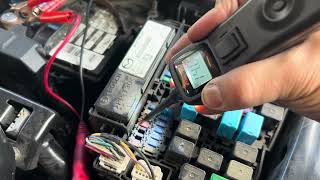
The Mazda CX-5 platform has a well-documented quirk related to this code. Mazda issued multiple Technical Service Bulletins (TSBs) to inform technicians that P2507, usually paired with P2610, will set if the engine is started with the 15A ROOM fuse removed. This fuse is often pulled to prevent battery drain during vehicle shipping ('transport mode'), which is indicated by an "F0-002" message on the odometer. 🎬 Watch: How to check for these specific instrument cluster codes. The codes are triggered if the engine is started 3 or more times with the fuse out. In this specific context, the code is not a sign of a component failure but an expected outcome of a specific procedure.
Diagnostic Flowchart

Tap your situation to follow the diagnostic path that matches what you're seeing on this vehicle.
Generation note: This issue is documented on both the first generation (KE, 2014-2016) and second generation (KF, 2017-2021) of the Mazda CX-5. Mazda TSBs cover models across this entire year range, and the underlying electrical architecture is similar. According to some bulletins, the P2507 portion of the common P2610/P2507 fault is primarily applicable to 2016 and later models in the 'ROOM fuse' scenario.
Symptoms You May Notice

- Check Engine Light illuminated
- i-Stop (start-stop system) may be disabled or show a malfunction message
- Intermittent stalling or engine shutting off
- Slow or difficult engine cranking
- Loss of power during acceleration
- Other seemingly unrelated electrical glitches, like TPMS or DSC warnings
- Dimming or flickering headlights and interior lights
- Accessories like power windows or wipers moving slowly
- Replacing the PCM without checking for the 'ROOM fuse' scenario or thoroughly testing the battery and charging system.
- Performing extensive electrical diagnostics when the code was simply set due to the known TSB issue regarding the ROOM fuse.
- Replacing the battery without testing the alternator, which may be the root cause of the battery not charging properly.
Most Likely Causes

- ROOM 15A Fuse Recently Removed 🔴 High Probability Documented in multiple Mazda TSBs as a normal result of starting the engine with this fuse out, often done for shipping or service. The odometer will display 'F0-002' when in this transport mode.
How to confirm: Check if any service was recently performed or if the vehicle was recently transported. The code will almost always be accompanied by P2610.
Typical fix: Install the 15A ROOM fuse if it's missing. Clear the diagnostic trouble codes. The codes should not return.
Est. part cost: $0-$1 - Weak or Failing Battery 🟡 Medium Probability Modern vehicles like the CX-5 have significant electrical demands, even when off, which can wear down a battery. OEM batteries in these vehicles often last only 2.5-4 years. A weak battery can cause numerous, seemingly unrelated electrical faults.
How to confirm: Test the battery with a digital multimeter (should be >12.4V with engine off) and, more definitively, with an electronic battery tester to check its cranking amps and overall health. Many auto parts stores will test it for free.
Typical fix: Replace the vehicle's battery. For models with i-Stop, an AGM (Absorbent Glass Mat) or EFB (Enhanced Flooded Battery) type is often required.
Est. part cost: $150-$350 - Corroded or Loose Battery Terminals/Cables 🟡 Medium Probability Corrosion acts as a resistor, causing a voltage drop between the battery and the vehicle's electrical system, which can trigger the P2507 code.
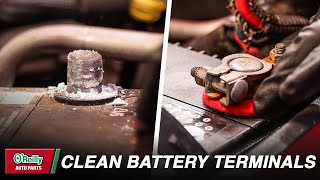
How to confirm: Visually inspect the battery terminals for white, blue, or green crust. 🎬 See this quick guide on cleaning corroded battery terminals. Physically check if the cable clamps are tight on the battery posts.
Typical fix: Disconnect the battery cables (negative first), clean the posts and clamps with a wire brush or terminal cleaning tool, and reconnect securely (positive first).
Est. part cost: $5-$15 - Failing Alternator ⚪ Low Probability If the alternator fails to properly recharge the battery, the overall system voltage will drop, eventually triggering this code. Symptoms can be intermittent at first.
How to confirm: With the engine running, measure the voltage at the battery terminals. A healthy alternator should produce between 13.5V and 14.5V. A reading near 12V or lower while running indicates a problem.
Typical fix: Replace the alternator. Quality remanufactured units from brands like Denso or Bosch are often recommended.
Est. part cost: $250-$600 - Blown Fuse ⚪ Low Probability Besides the ROOM fuse being pulled, it or another related fuse (like the ENG+B 7.5A fuse) could be genuinely blown due to a short circuit. In one documented case on a 2015 CX-5, a 10A fuse was incorrectly installed in the 15A ROOM slot, causing it to blow and trigger the codes.
How to confirm: Visually inspect the ROOM 15A fuse in the interior fuse panel and other related fuses in the engine bay fuse box, such as the ENG+B 7.5A fuse.
Typical fix: Replace the blown fuse after diagnosing the underlying cause of the short.
Est. part cost: $1-$5
Rare But Worth Checking
- Damaged PCM Power or Ground Wiring: A corroded wire or a loose ground connection for the PCM can mimic the symptoms of a bad battery. This should be checked before condemning the PCM itself.
- Faulty Powertrain Control Module (PCM): This is extremely rare. All other possibilities, especially battery, charging, and wiring issues, must be exhaustively ruled out before considering PCM replacement.
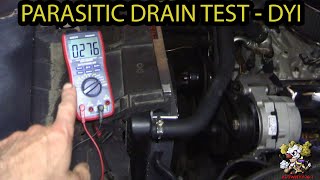
- Parasitic Battery Drain: A component may not be shutting down correctly when the car is off, leading to a slow battery drain that eventually triggers P2507 upon startup. Diagnosing this requires a multimeter and pulling fuses one-by-one to isolate the faulty circuit. A TSB for 2017-2022 CX-5s notes that liquid spills in the front cup holder can corrode connector C-16, leading to battery drain and multiple low voltage codes.
Diagnosis Steps
- Ask the driver about recent service history. Was the battery disconnected or were any fuses pulled? If so, this may be related to the TSB scenario.
- If the 'ROOM fuse' scenario is likely, ensure the 15A ROOM fuse is installed correctly, clear the codes, start the engine for at least 10 seconds, stop it, restart, and verify they do not return.
- If the cause is unknown, begin by visually inspecting the battery terminals for looseness or corrosion. Clean and tighten as necessary.
- Test the battery's state of charge and health. A simple voltage check is a start (>12.4V), but a load test is required for a definitive diagnosis.
- With the engine running, test the alternator's output voltage at the battery terminals. It should be approximately 13.5-14.5 volts.
- Inspect the relevant fuses, including the 15A ROOM fuse and the 7.5A ENG+B fuse. Ensure the correct amperage fuse is installed.
- If the battery repeatedly dies, perform a parasitic draw test to check for components drawing power when the vehicle is off. A normal draw should be under 50mA after all modules have gone to sleep (wait at least 20-30 minutes). Check for corrosion at connector C-16 under the center console if a draw is found.
- If all the above checks out, inspect the PCM power and ground wires for any signs of damage, corrosion, or looseness, particularly at the fuse box connections and main ground points.
- Only after all other possibilities are exhausted should a faulty PCM be considered.
Parts You'll Likely Need
- Automotive Battery
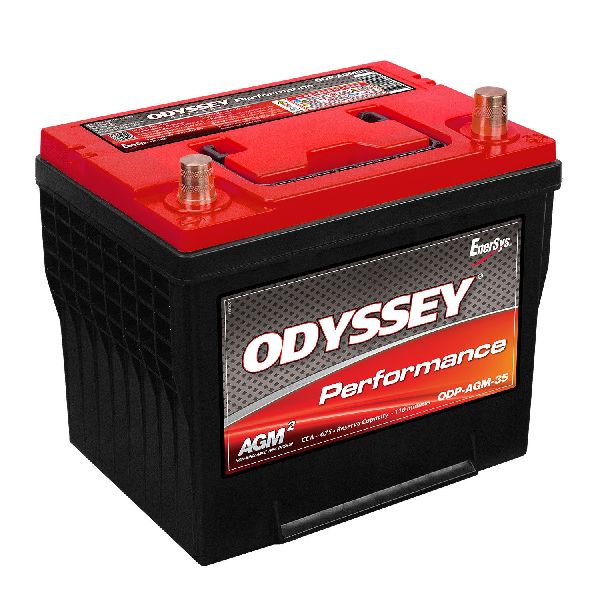
(OEM #PE1T-18-520-9U (example for non i-ELOOP models))— This is the most common cause of P2507 when it's not related to the ROOM fuse TSB. The battery can no longer hold a sufficient charge to keep the PCM powered correctly. Models with i-Stop require an AGM or EFB battery.
Trusted brands: DieHard, Duralast, EverStart, Optima
OEM price range: $200-$350
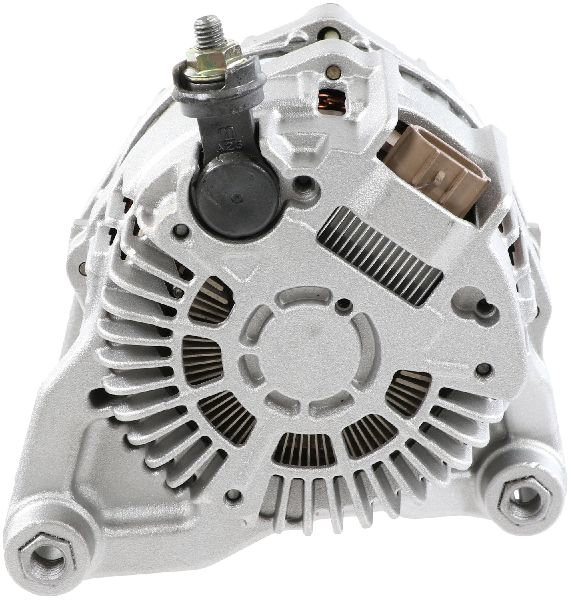
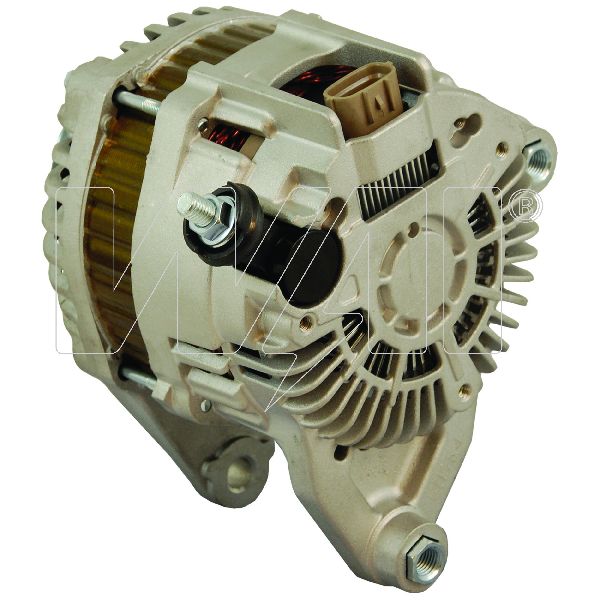
Aftermarket price range: $150-$300 - Alternator
(OEM #PE01-18-300 (example for 2013-2016 2.5L))— If the alternator is failing, it cannot properly charge the battery, leading to low system voltage that triggers the code.
Trusted brands: Denso, Bosch, Carquest Premium, WAI Global
OEM price range: $500-$700
Aftermarket price range: $250-$500 - Mini Fuse — If the ROOM 15A fuse is missing or blown, it will need to be replaced.
OEM price range: $1-$5
Aftermarket price range: $0.50-$2
Related Codes That Often Appear With This One
- P2610 — Stands for 'Instrument cluster internal engine off timer performance problem'. Mazda TSBs state that P2610 and P2507 are set together when the engine is started with the 15A ROOM fuse removed.
- U3003:16 — This is a general low power supply voltage input code that can be stored in various modules (EATC, EPB, R_BCM, SSU, RCM). A TSB for 2017-2022 models suggests this can be caused by liquid spills in the cup holder corroding a nearby connector (C-16), leading to a parasitic drain.
Technical Service Bulletins (TSBs) & Recalls
- 01-003-21-3776: CHECK ENGINE LIGHT ON with DTC P2610 and P2507 stored in memory after engine start and room fuse 15A (A) removed. (Covers 2014-2021 models)
- 01-003-19-3557: CHECK ENGINE LIGHT ON with DTC P2610 and P2507 stored in memory after engine start and room fuse 15A (A) removed. (Covers 2014-2019 models)
- 01-012/18: CHECK ENGINE LIGHT ON WITH DTC P2610 AND P2507. (Covers 2013-2018 models)
- 01-018/15: CHECK ENGINE LIGHT ON WITH DTC P2610 AND P2507. (Covers 2013-2016 models)
Platform-Specific Known Issues
- Mazda has issued multiple Technical Service Bulletins (including #01-003-21-3776 and #01-003-19-3557) stating that P2507 and P2610 will be stored in memory if the engine is started with the 'room fuse 15A' removed. This is considered a normal side effect of that specific action (often for shipping, called 'transport mode') and is not a vehicle fault.
Mechanic-Grade Diagnostic Values
- PCM Backup Voltage (Keep Alive Power) — expected: Above 6V. Failure: Voltage drops below 6V for 5 seconds.
- PCM Backup Voltage (SKYACTIV-D) — expected: Above 50% of battery voltage. Failure: Voltage is less than 50% of battery voltage for 10 seconds.
- PCM Power Supply PID (VPWR) — expected: Should read B+ (Battery Voltage). Failure: Reading is significantly lower than battery voltage, indicating an open or short in the power supply circuit.
- Ground Circuit Resistance — expected: < 0.1 Ω. Failure: Resistance higher than 0.1 Ω between a ground point and the negative battery terminal indicates a poor ground connection.
Hidden / Shadow Codes Worth Checking
- P2507:00: The ':00' is a Failure Type Code used by Mazda and other manufacturers. For this DTC, it generally means 'No Subtype Information' but its presence confirms the fault is logged according to ISO/SAE standards. The diagnostic logic is tied to the base P2507 code. (see via Most modern OBD-II scanners capable of reading manufacturer-specific codes, including FORScan and dealer-level tools like M-MDS.)
Scan Tool Commands That Help
- FORScan / M-MDS: BMS (Battery Management System) Reset / Battery Learned Value Reset — After replacing the battery, especially on models with i-Stop or i-ELOOP. While not always mandatory for US models without i-Stop, resetting the battery parameters can prevent charging system issues and erroneous codes by informing the PCM of the new battery's state of health.
- M-MDS (Mazda Modular Diagnostic System): i-Stop Initialization — Required after battery replacement on vehicles equipped with i-Stop to recalibrate the system. Failure to do so will result in the i-Stop system being disabled.
- M-MDS / Professional Scan Tool: Clear DTCs — This is the final step after confirming the ROOM 15A fuse is installed correctly per the TSB procedure. The codes must be cleared from PCM memory.
Wiring & Ground Locations
- PCM Power Input Pin — At the PCM connector, terminal 2O receives power from the battery via the MAIN 200A and ENG+B 7.5A fuses.. This is the specific terminal the PCM monitors for its keep-alive voltage. An open circuit or short to ground in the wiring to this pin will directly cause P2507.
- G02 — Ground point located under the left (driver's side) headlight assembly.. This is a primary chassis ground point in the engine compartment. A loose or corroded connection here can affect multiple systems, including the PCM's ground reference.
- G03 — Ground point located on the left front of the engine compartment.. Another critical engine bay ground point. Poor continuity at this location can cause intermittent voltage drops and trigger various electrical fault codes.
- Connector C-16 — Instrument panel harness connector located under the center console, near the front cup holder.. A Mazda TSB for 2017-2022 CX-5s identifies this connector as being susceptible to corrosion from liquid spills. This corrosion can cause a parasitic draw, leading to a dead battery and multiple low-voltage DTCs, including U3003:16, which is related to P2507.
Real Owner Repair Stories
- YouTube video by 'Tio Tony' (2015 Mazda CX-5 2.5L) — Check Engine Light on with codes P2610 and P2507.
❌ Tried (didn't work) Initial inspection pointed towards the known TSB issue.
✅ What actually fixed it The technician discovered that the 15A ROOM fuse was not missing, but had been replaced with an incorrect 10A fuse, which had blown. Replacing the blown 10A fuse with the correct 15A fuse and clearing the codes resolved the issue. - Mazdas247 Forum user 'KMcBride' (2017 Mazda CX-5 (4 years, 5 months old)) — Check Engine Light with code P2610, slight hesitation when starting the engine.
❌ Tried (didn't work) Initial dealer diagnosis suggested a loose gas cap., Clearing the code worked temporarily but it returned.
✅ What actually fixed it After multiple visits, the dealership determined the original battery was failing ('in the red'). Replacing the battery solved the starting hesitation and the check engine light did not return.
Model Year Variations Within This Range
- 2017-2021 (KF Generation): The center console design places harness connector C-16 in a location where it is vulnerable to liquid spills from the cup holders. A TSB was issued noting this can cause corrosion, parasitic draw, and numerous low-voltage related fault codes.
- Models with i-Stop and/or i-ELOOP: These vehicles require a specific battery type (EFB or AGM) and may require a battery management system (BMS) reset or i-Stop initialization procedure after battery replacement using a capable scan tool. Failure to use the correct battery or perform the reset can lead to charging system problems or disabled i-Stop functionality.
Helpful Videos
![How to [EASILY] Replace the Battery - Mazda CX-5 (2017-2021)](https://img.youtube.com/vi/rjgnTzFxw7k/mqdefault.jpg)

Used OEM Parts in Stock


New Aftermarket Parts Available


The information in this article is provided for general reference and educational purposes only. Vehicle specifications, procedures, and part compatibility can vary by production date, trim level, and region. Always consult your vehicle's factory service manual and verify part numbers before purchasing or performing repairs. Safety-critical components such as airbags, seat belts, and braking systems should be installed by a qualified professional.
- Mazda CX-5:
- 🎬 Helpful Videos
- 🛍️ Shop This Part
- What's Unique About the 2014-2021 Mazda CX-5
- Diagnostic Flowchart
- Symptoms You May Notice
- Most Likely Causes
- Rare But Worth Checking
- Diagnosis Steps
- Parts You'll Likely Need
- Related Codes That Often Appear With This One
- Technical Service Bulletins (TSBs) & Recalls
- Platform-Specific Known Issues
- Mechanic-Grade Diagnostic Values
- Hidden / Shadow Codes Worth Checking
- Scan Tool Commands That Help
- Wiring & Ground Locations
- Real Owner Repair Stories
- Model Year Variations Within This Range
- 🎟️ Get 5% Off