

P2504 on 2021-2023 Ram 1500: Charging System Output High Causes and Fixes
On 2021-2023 Ram 1500s, code P2504 means the charging system voltage is too high. This is often caused by a faulty alternator (or Motor-Generator Unit on eTorque models), but can also be triggered by software issues. Always check with a dealer for available PCM software updates before replacing expensive hardware, as this is a known issue addressed by TSBs.
- P2504 means the alternator or MGU is likely producing too much voltage.
- Before replacing any parts, have a dealer check for Powertrain Control Module (PCM) software updates; this is a common fix.
- Be aware if your truck has the eTorque system, as it uses a Motor-Generator Unit (MGU) instead of a traditional alternator.
- A sustained overcharging condition can damage the battery and other expensive electronics, so address the issue promptly.
What's Unique About the 2021-2023 Ram 1500
For the 5th generation Ram 1500 (DT), the charging system is highly sophisticated. Non-hybrid models use a traditional alternator, while models with the eTorque mild-hybrid system use a belt-driven Motor-Generator Unit (MGU) that replaces the alternator. Both systems are heavily controlled by the PCM. A faulty alternator/MGU is a common cause for P2504, but Chrysler/Ram has a history of issuing software updates (TSBs) to correct false triggers. Notably, a recall was issued for some 2021 Ram 1500s with the 5.7L eTorque engine for a PCM software issue that could cause stalling, highlighting how critical software calibration is to this platform's stability. The existence of TSBs S2308000022 and S2108000066 specifically for P2504 confirms this is a known issue requiring careful diagnosis.
Diagnostic Flowchart
Tap your situation to follow the diagnostic path that matches what you're seeing on this vehicle.
Symptoms You May Notice
- Check Engine Light is on
- Red battery warning light may be illuminated
- No start or no crank condition [TSB S2308000022].
- Engine may stall, especially at idle
- Headlights or interior lights may appear unusually bright or flicker
- Voltage gauge on the dashboard reads high (above 15V).
- Multiple, seemingly unrelated warning lights (e.g., "Service Trailer Brake," "Service ABS") may appear, as high voltage can disrupt communication between modules.
- On eTorque models, messages like "Stop/Start Unavailable" may appear as the hybrid system detects voltage irregularities.
- Replacing the battery without testing the alternator/MGU. A new battery will likely be damaged by the overcharging condition if the charging system is the root cause.
- Replacing the alternator/MGU without first checking for available PCM software updates, which is a known issue for this code on Ram vehicles.
Most Likely Causes
- Failing Alternator / Motor-Generator Unit (MGU) 🔴 High Probability The voltage regulator is internal to the alternator (or controlled by the PCM via the MGU on eTorque models). If the regulator fails or the MGU malfunctions, it can no longer properly control the voltage output, often leading to an overcharging condition. This is a common failure point for charging systems on most modern vehicles.
How to confirm: With the engine running, use a multimeter to test the voltage across the battery terminals. A reading consistently above 15.0 volts indicates the alternator/MGU is overcharging. Many auto parts stores can also bench-test a conventional alternator if it's removed from the vehicle.
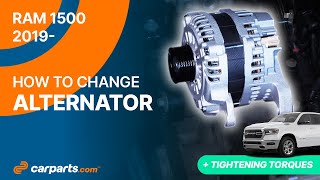
Typical fix: Replace the entire alternator or MGU assembly. 🎬 See this walkthrough on how to replace the alternator yourself.
Est. part cost: $300-$1600 - Powertrain Control Module (PCM) Software Issue 🟡 Medium Probability Ram has issued TSBs for this exact code on 2021 models (S2308000022, S2108000066) and numerous other software-related fixes for the powertrain and hybrid control processors. The PCM's logic for interpreting voltage can sometimes be too sensitive or flawed, leading to a false code or improper charging control.
How to confirm: A Ram dealership or a qualified shop with access to OEM software (like wiTECH) must check if the vehicle's PCM calibration is up to date. There is no DIY method for this.
Typical fix: Flash the PCM with the latest manufacturer software update. This is a software-only repair.
Est. part cost: $0 (if under warranty) - $200 - Wiring or Connection Issues ⚪ Low Probability Vibrations and exposure to the elements can cause connections to become loose or corroded over time. The complex wiring for the PCM and on eTorque models can be susceptible to high resistance or shorts.
How to confirm: Visually inspect the battery terminals for corrosion, ensuring they are clean and tight. Check the main power (B+) cable at the back of the alternator/MGU and the main engine/chassis ground straps for tightness and corrosion. A voltage drop test on the main power and ground cables can check for high resistance that could skew voltage readings.
Typical fix: Clean the corroded terminals and tighten any loose connections. Replace any damaged battery cables or ground straps.
Est. part cost: $10-$150
Rare But Worth Checking
- Failing Battery: While less common for a high voltage code, a battery with an internal short or other failure can sometimes cause erratic behavior from the charging system as the alternator/MGU tries to compensate. On these trucks, a failing battery is known to cause a cascade of seemingly unrelated electrical faults.
- Faulty Powertrain Control Module (PCM): In rare instances where a software update does not fix the issue and the alternator/MGU and wiring test good, the PCM's internal voltage monitoring circuit may have failed, requiring PCM replacement.
Diagnosis Steps
- Check for and record any other Diagnostic Trouble Codes (DTCs). Note any seemingly unrelated codes, as they may be caused by the high voltage condition.
- Visually inspect the battery terminals, alternator/MGU connections, and primary ground straps for looseness or corrosion.
- Have the battery's health checked with a load tester to rule it out as a cause. A voltage of 11.6V or lower is a dead battery.
- With the engine running, use a multimeter to measure the DC voltage directly at the battery terminals. A normal reading is typically 13.5V to 14.8V. A reading consistently above 15.0V points to an overcharging condition.
- If voltage is high, the next step is to determine if a software update is available. This is the most crucial step. Contact a Ram dealer or qualified shop to check for TSBs S2308000022, S2108000066, and any newer PCM calibrations.
- If the PCM software is up-to-date and the voltage is confirmed to be high, the alternator (or MGU on eTorque models) is the most likely culprit and should be tested and likely replaced.
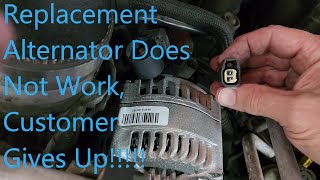
- If the alternator/MGU is replaced and the problem persists, perform a voltage drop test on the main power and ground cables to check for high resistance that could be skewing voltage readings. 🎬 Watch: Troubleshooting charging codes and wiring issues on a Ram.
- If all other components test good, the PCM itself may be faulty, though this is rare.
Parts You'll Likely Need
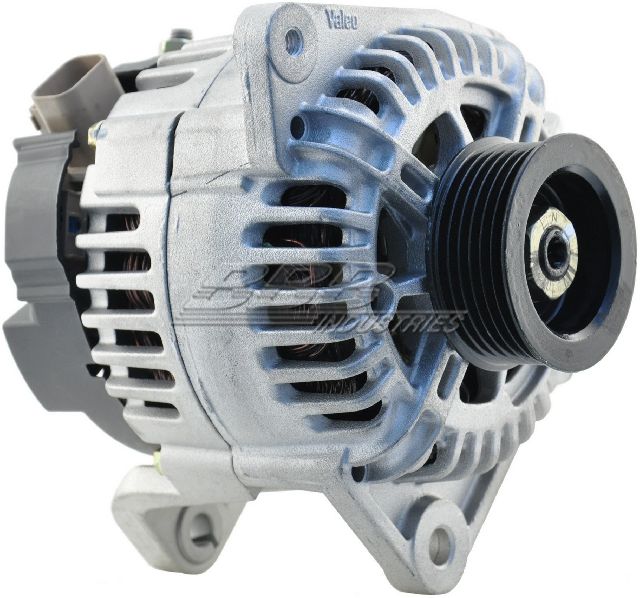
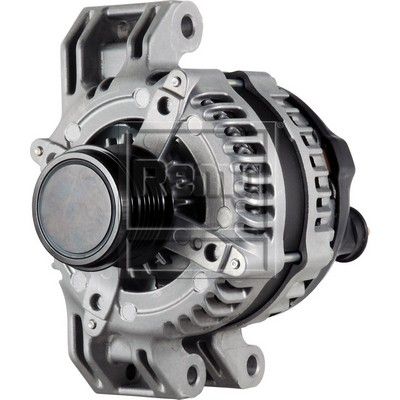
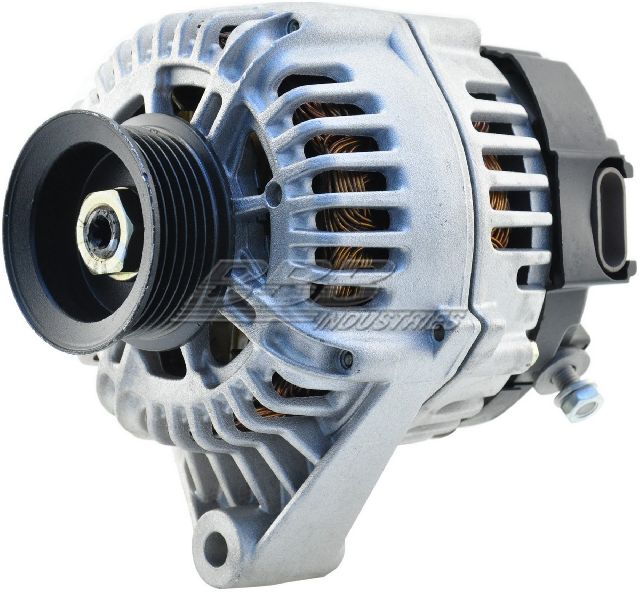
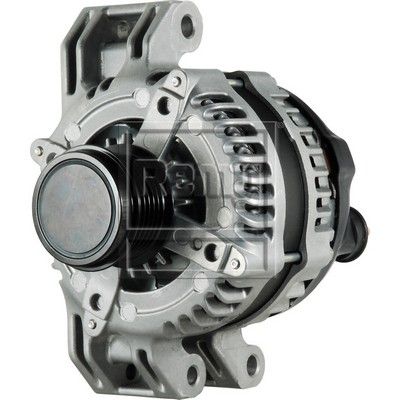
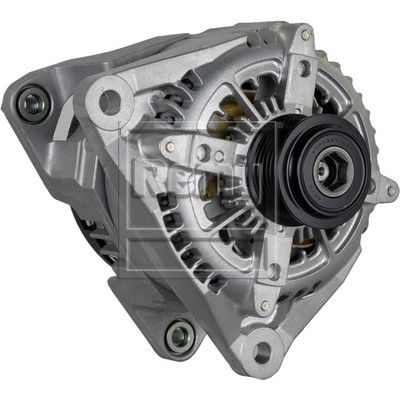
- Alternator (for non-eTorque models)
(OEM #68422277AC (Example for 5.7L HEMI))— The internal voltage regulator is the most common failure point that leads to an overcharging condition and a P2504 code.
Trusted brands: Mopar, Denso, Bosch
OEM price range: $500-$800
Aftermarket price range: $300-$500 - Motor-Generator Unit (MGU) (for eTorque models)
(OEM #68623194AB (Example for 5.7L eTorque, superseded by 68623194AC))— On eTorque models, the MGU serves as the alternator. A malfunction within this unit can cause overcharging.
Trusted brands: Mopar
OEM price range: $1200-$1600
Aftermarket price range: N/A
Technical Service Bulletins (TSBs) & Recalls
- S2308000022: No Start, No Crank, Diagnostic Trouble Codes (DTC) P2504 Charging System Output High
- S2108000066: Check Engine Lamp On, P2504 Charge System Output High
Platform-Specific Known Issues
- NHTSA Technical Service Bulletin #S2308000022 was issued for some 2021-2022 models, linking P2504 to a potential no-start or no-crank condition.
- NHTSA Technical Service Bulletin #S2108000066 was also issued for 2021 models for the check engine light being on with code P2504.
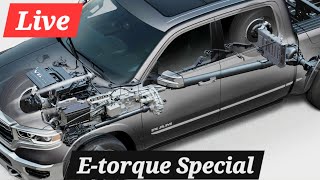
- eTorque models do not have a traditional alternator and use a Motor-Generator Unit (MGU). While the P2504 code can still be set, the physical component to inspect is the MGU, not a standard alternator. 🎬 Learn more about common eTorque system problems and how they work.
- A recall was issued in April 2023 for some 2021 Ram 1500s with 5.7L eTorque engines for a PCM software issue causing an overly rich fuel mixture that could lead to stalling. This underscores the platform's reliance on correct software calibration for proper powertrain function.
Mechanic-Grade Diagnostic Values
- Voltage Drop on B+ (Power) Circuit — expected: Less than 0.4 Volts. Failure: A reading greater than 0.4V between the alternator/MGU B+ post and the positive battery terminal indicates high resistance in the main power cable.
- Voltage Drop on Ground Circuit — expected: Less than 0.1 Volts. Failure: A reading greater than 0.1V between the alternator/MGU case and the negative battery post indicates a high-resistance ground connection.
- Alternator Field Winding Resistance (non-eTorque) — expected: 5 to 15 Ohms. Failure: A reading outside this range when measured between the two field terminals on the alternator connector indicates a faulty alternator.
- Alternator Field Control Circuit Voltage (non-eTorque, engine running) — expected: One wire should be near battery voltage, the other is a variable voltage or Pulse-Width Modulated (PWM) signal from the PCM.. Failure: If the supply wire voltage is low, the power feed to the circuit is faulty. If the control wire voltage doesn't change with electrical load, there's a control issue with the PCM or wiring.
Scan Tool Commands That Help
- wiTECH 2.0: View DTCs & Freeze Frame Data — To read the primary P2504 code and, crucially, the freeze-frame data which provides a snapshot of vehicle conditions (RPM, temperature, etc.) at the moment the fault was triggered.
- wiTECH 2.0: ECU Home > Flash — Used to check for and apply PCM software updates, which is a primary diagnostic step for this code per TSBs S2308000022 and S2108000066. The tool will show if an update is available for the specific VIN.
- wiTECH 2.0: Monitor Live Data (Target vs. Actual Charging Voltage) — To compare the PCM's commanded charging voltage with the actual output reported by the alternator/MGU in real-time. A significant, sustained discrepancy where the actual voltage is higher than the target voltage points towards a faulty alternator/MGU regulator.
- wiTECH 2.0: Topology View — To get a quick overview of all vehicle modules. High voltage from P2504 can cause communication faults in other modules, which will show up as 'non-responsive' (red) or 'has DTCs' (yellow) in the topology map, helping to correlate seemingly unrelated issues.
Wiring & Ground Locations
- Alternator/MGU 2-Pin Connector — Plugged directly into the back of the alternator (non-eTorque) or MGU (eTorque).. This connector carries the field control circuit wires from the PCM. A loose connection, corrosion, or a damaged pigtail here is a common failure point that can interrupt the PCM's ability to regulate voltage, potentially causing an overcharge condition.
- Main Engine/Body Ground Straps — Key locations include a strap from the battery negative terminal to the body/fender wall, and a primary strap from the engine block to the frame or body. On some models, a ground point is located on the passenger side wheel well near the alternator.. The alternator/MGU is grounded through its mounting to the engine block. A corroded or loose engine-to-frame ground strap creates high resistance, which can cause the alternator's voltage regulator to read incorrectly and overcharge the system.
- PCM Connectors (C1/C2) — Located on the firewall, these are the main harness connectors for the Powertrain Control Module.. The alternator field control and sense wires terminate at these connectors. While less common, corrosion or pushed-out pins at the PCM itself can cause this code. Probing these connectors requires special tools to avoid damaging the sensitive pins.
Real Owner Repair Stories
- Jeep Gladiator Forum (similar platform/systems) (2021 Jeep Gladiator Mojave, 26k miles) — Dashboard lit up with numerous, unrelated warning lights (traction control, lane departure, etc.), radio screen blank, would not shift out of Park. After restart, only the check engine light remained with code P2504.
❌ Tried (didn't work) A previous dealership visit for the same issue involved checking the starting/charging system, finding no faults, and clearing the code.
✅ What actually fixed it The issue occurred intermittently. The owner took it back to the dealer, who confirmed all software was up to date. The final resolution was not posted, but the symptoms highlight the classic cascade of electrical faults caused by an unstable voltage condition that confuses multiple vehicle modules.
OEM Part Supersession History
68623194AB (and others like 68438054AF)→68623194AC— Standard part revision by the manufacturer, likely to improve reliability or address known failure modes.
Heads up: Part 68623194AC is the current replacement MGU for 2019-2024 Ram 1500s with the 5.7L eTorque engine. Using an older, superseded part number is not recommended.
Helpful Videos
Used OEM Parts in Stock


New Aftermarket Parts Available


The information in this article is provided for general reference and educational purposes only. Vehicle specifications, procedures, and part compatibility can vary by production date, trim level, and region. Always consult your vehicle's factory service manual and verify part numbers before purchasing or performing repairs. Safety-critical components such as airbags, seat belts, and braking systems should be installed by a qualified professional.
- Ram 1500:
- 🎬 Helpful Videos
- 🛍️ Shop This Part
- What's Unique About the 2021-2023 Ram 1500
- Diagnostic Flowchart
- Symptoms You May Notice
- Most Likely Causes
- Rare But Worth Checking
- Diagnosis Steps
- Parts You'll Likely Need
- Technical Service Bulletins (TSBs) & Recalls
- Platform-Specific Known Issues
- Mechanic-Grade Diagnostic Values
- Scan Tool Commands That Help
- Wiring & Ground Locations
- Real Owner Repair Stories
- OEM Part Supersession History
- 🎟️ Get 5% Off