

OBD-II Code P2502: Charging System Voltage Problem
What P2502 means, why it triggers, and how to fix it
- Stop driving immediately when code P2502 appears; your vehicle runs solely on battery reserve and stalls in traffic within 30 to 60 minutes.
- Test the battery and alternator before buying parts; a healthy battery reads 12.4-12.6V with the engine off, and a working alternator outputs 13.5-14.8V while running.
- Perform a voltage drop test to find hidden resistance; a reading over 0.4V on the positive cable or 0.2V on the ground strap indicates a bad connection mimicking a failed alternator.
- Verify your manufacturer's specific code definition; on many Mercedes-Benz 7-speed transmissions, P2502 indicates internal transmission slipping, not a charging system failure.
What Does P2502 Mean?

P2502 means the Powertrain Control Module (PCM) detects charging system voltage is outside the expected range, typically too low. Your car's electrical system isn't getting enough electricity from the alternator to keep the battery charged and components running.
Technical definition: The SAE/OBD-II definition for P2502 is "Charging System Voltage". The PCM sets this code when the charging system voltage falls below a predetermined threshold for a specified amount of time. The PCM's internal voltage reading does not match the expected target voltage (usually 13.5-14.8V while running) for the current operating conditions.
Can I Drive With P2502?
No — Do Not Drive. A failing charging system leaves you stranded without warning and damages expensive electronic components like control modules due to voltage instability. The vehicle runs on battery power alone, which depletes rapidly, causing the engine to shut off while driving—a significant safety risk in traffic.
Common Causes

- Failing Alternator (Very Common) — The alternator is the most frequent cause. Internal parts like the voltage regulator, brushes, or diodes wear out, stopping electrical generation.
- Weak or Dead Battery (Common) — An old or damaged battery cannot hold a charge. Even with a good alternator, a bad battery drags the entire system's voltage down.
- Loose or Corroded Battery Terminals/Cables (Common) — Corrosion (white or green powder) or loose connections act as roadblocks for electricity. This prevents the battery from charging or delivering power.
- Damaged Wiring or Poor Ground Connection (Less Common) — Wires connecting the alternator, battery, and PCM fray, break, or short. A poor ground connection restricts electrical flow, causing a severe voltage drop.
- Blown Fusible Link or Main Fuse (Less Common) — A high-amperage fusible link protects the main power wire. If it blows due to a voltage spike, alternator power cannot reach the battery.
- Intermittent Overcharging from Faulty Regulator/ECM (Rare) — A failing voltage regulator intermittently commands over-voltage (15-18+ volts). This boils the battery and triggers P2502 as the system ultimately fails.
- Faulty Battery Temperature Sensor (Rare) — Some vehicles use a temperature sensor to optimize charging. If it fails, the PCM incorrectly reduces charging voltage.
- Faulty Powertrain Control Module (PCM) (Very Rare) — The PCM's internal voltage-reading circuit fails. It reports a non-existent problem or fails to regulate an externally-controlled alternator.
Symptoms

- Check Engine Light or Battery Light is On — The check engine light or a dedicated battery/charging system warning light illuminates on the dashboard.
- Dimming Headlights and Interior Lights — Headlights, dash lights, or the radio display flicker or dim, especially at idle or when using the A/C.
- Engine Stalling or No-Start Condition — The engine stalls while driving, especially when stopped at a light. Eventually, the battery drains completely and the car won't start.
- Malfunctioning or Slow Electrical Accessories — The radio cuts out, power windows operate slowly, or electric power steering stops working.
- Burning Smell or Hot Battery — If a faulty voltage regulator causes overcharging, you smell burning plastic or sulfur (rotten eggs) from the battery boiling.
- Improper Automatic Transmission Shifting (also visible on scanner) — Low system voltage causes issues with transmission solenoids, leading to harsh shifting or delayed engagement.
Diagnostic Flowchart
Tap your situation to follow the diagnostic path that matches what you're seeing on this code.
Common Fixes & Costs
- Replace Alternator
— Parts: $300-$850, Labor: $150-$400, ~2 hr book time
(Intermediate)
: OEM Mopar: 56029764AB (Alt: Bosch AL6476X, Denso)
: OEM Motorcraft: HL3Z-10346-C (VIN verification critical) (Alt: Motorcraft GL-8834, TYC)
: OEM Honda: 31100-5A2-A02 (Alt: Denso A005TL0581ZC) - Replace Battery
— Parts: $150-$350, Labor: $25-$100, ~0.5 hr book time
(DIY)
: OEM - Clean or Replace Battery Terminals/Ends — Parts: $10-$30, Labor: $50-$100, ~0.5 hr book time (DIY)
- Repair Wiring or Connectors — Parts: $10-$50, Labor: $100-$400, ~2.5 hr book time (Professional)
- Replace Powertrain Control Module (PCM)
— Parts: $600-$1500, Labor: $200-$300, ~1.5 hr book time
(Professional)
: OEM VIN-specific (e.g., GB5A-12A650-AKD) (Alt: Programmed replacement services available via Flagship One.)
DIY vs Professional
- Replace Alternator — Beginner:
Tools: Wrench and socket set, serpentine belt tool, torque wrench. - Replace Battery — Beginner:
Tools: Wrench set, terminal cleaner brush, memory saver. - Clean or Replace Battery Terminals/Ends — Beginner:
Tools: Wrench set, wire brush, terminal cleaner spray. - Repair Wiring or Connectors — Beginner:
Tools: Digital multimeter, wiring diagrams, wire strippers, crimpers, soldering iron. - Replace Powertrain Control Module (PCM) — Beginner:
Tools: Socket set, advanced scan tool with programming capabilities.
Used vs. New Parts: Buying Guide
When a used part is worth it: A used (junkyard) alternator makes sense for an older, high-mileage vehicle where the budget is the primary concern and the owner accepts the risk of a shorter lifespan.
Donor-vehicle mileage cap: roughly under 80000 miles for the part to have meaningful remaining life.
Donor quality checklist:
- Verify the donor vehicle was not scrapped for electrical or engine failure.
- Look for parts from vehicles in dry climates to avoid corrosion.
- Match the part number and amperage rating exactly.
Decision logic:
- If Vehicle is under 5 years old or has low mileage (<80k) → Buy a new OEM or high-quality new aftermarket part to maintain reliability.
- If Budget is tight and vehicle is over 150k miles → A remanufactured alternator from a reputable brand with a good warranty is a balanced choice.
- If The goal is maximum reliability and long-term ownership → Buy a new OEM alternator. It offers the best guarantee of performance and longevity.
Warranty tradeoff: Used parts offer a 30-90 day warranty. Remanufactured parts come with a 1-year to limited-lifetime warranty. New OEM parts carry a 1-2 year manufacturer's warranty.
Worst-case if a used part fails: $300-$800 if a used or cheap remanufactured part fails prematurely, requiring a second replacement and paying for labor twice.
What Happens If You Wait — Timeline
- 0-1 day: Code P2502 is set and the battery light comes on. The car runs on battery power alone. Headlights dim. (MPG impact: 0%% · Added cost: $0)
- 30 minutes to 2 hours of driving: The battery's reserve capacity is depleted. Power steering and A/C fail. The engine stalls in traffic, requiring a tow. (MPG impact: N/A (Vehicle becomes inoperable)% · Added cost: $75-$250 for a tow service.)
- 1-5 deep discharge cycles: Repeatedly jump-starting and driving until the car dies causes permanent damage to the battery's internal plates. The battery must be replaced. (MPG impact: N/A% · Added cost: $150-$350 for a new battery.)
- Weeks to months (if driven with intermittent overcharging): Prolonged voltage spikes (>15V) 'cook' the battery and damage sensitive electronics like the PCM, ABS module, or instrument cluster. (MPG impact: N/A% · Added cost: $800-$2500+ for replacing damaged control modules.)
Cost of Not Fixing It
- Immediate (0-1 day): Vehicle stalls while driving, potentially in a dangerous situation. Requires tow service. (Added cost: $75-$250)
- Short-Term (1-4 weeks): Permanent damage to the battery from repeated deep discharging, requiring replacement. (Added cost: $150-$350)
- Long-Term (1-6+ months): Damage to sensitive electronics, such as the PCM, instrument cluster, or audio system, due to unstable voltage. (Added cost: $500-$2500+)
Diagnosis Steps

- Test the Battery Voltage (Engine Off)
Use a multimeter set to DC volts. Touch the red probe to the positive (+) terminal and the black probe to the negative (-) terminal. A healthy battery reads 12.4 to 12.6 volts. A reading below 12.0 volts indicates a discharged or failing battery.
Tools: Digital Multimeter (Beginner) - Test the Alternator Voltage (Engine Running)
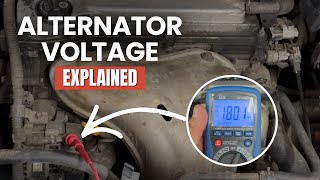
Start the engine. Check the voltage at the battery again. A healthy alternator outputs between 13.5 and 14.8 volts. If the voltage is the same as your engine-off reading, lower, or over 15 volts, the alternator or voltage regulator is faulty.
Tools: Digital Multimeter (Beginner) - Visually Inspect and Clean Connections
Check battery terminals for loose connections and white/green corrosion. If corroded, disconnect the battery (negative first). Scrub terminals with a wire brush and baking soda/water mixture until shiny. Reconnect tightly.
Tools: Wrench set, wire brush, baking soda, water (Beginner) - Perform a System Load Test
With the engine running, turn on all major electrical accessories (high beams, A/C on high, radio, rear defroster). The voltage at the battery must remain stable and above 13.0 volts. If it drops significantly, the alternator is failing.
Tools: Digital Multimeter (Intermediate) - Get a Professional Charging System Test
Visit an auto parts store for a free battery and alternator test. They use a computerized machine to apply a controlled load, accurately assessing component health beyond a simple voltage check.
Tools: None (visit an auto parts store) (Beginner) - Inspect Wiring, Grounds, and Fusible Links
Trace the main wire from the alternator's 'B+' post to the battery. Inspect the fusible link block for blown fuses. Check the main ground wire from the battery to the car's body and engine block. Ensure all connections are tight and unbroken.
Tools: Flashlight, Digital Multimeter (Intermediate) - [PRO TIP] Perform a Voltage Drop Test
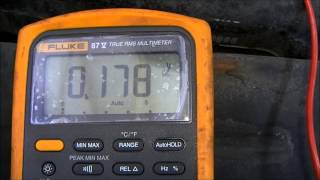
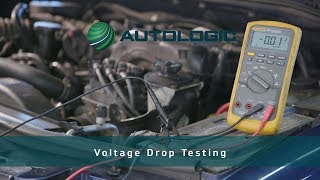
Find hidden resistance. Place the multimeter's red lead on the alternator's B+ post and the black lead on the positive battery terminal. With the engine running and loaded, a reading over 0.4 volts indicates high resistance in the charging cable. For the ground side, place the red lead on the alternator case and the black lead on the negative battery post; a reading over 0.2 volts indicates a bad ground.
Tools: Digital Multimeter with long leads (Professional) - [PRO TIP] Check for AC Ripple Voltage
Set your multimeter to a low AC voltage scale. With the engine running at 2000 RPM and a heavy electrical load, connect leads to the battery terminals. A reading over 500 millivolts (0.5V AC) indicates failing alternator diodes, requiring replacement.
Tools: Digital Multimeter with AC voltage function (Professional) - [ADVANCED] Analyze Scan Tool Live Data
Connect an advanced OBD-II scanner and monitor 'Battery Voltage' or 'Module Voltage'. Compare the PCM's reading to the actual voltage at the battery terminals. A significant discrepancy (e.g., PCM reads 12.5V while battery is 14.2V) points to a faulty PCM voltage-sense circuit.
Tools: Advanced OBD-II Scan Tool (Advanced) - [ADVANCED] Test Battery Temperature Sensor
If equipped, locate the battery temperature sensor. Disconnect it and measure resistance with a multimeter. Compare to manufacturer specifications. An out-of-spec sensor causes the PCM to incorrectly command low charging voltage.
Tools: Digital Multimeter, Service Manual (Advanced)
When This Code Triggers (Freeze-Frame Conditions)
- Engine Coolant Temp: 80-110°C (176-230°F) (Fully warmed up.)
- RPM: Idle to 3000 RPM (Fault is checked continuously while engine is running.)
- Battery Voltage: < 11.0V (Triggered when battery voltage is low while generator voltage is high.)
- Electrical Load: High (Fault is more likely to be detected when accessories like headlights or A/C are on.)
Related Codes
- P0562 — Means 'System Voltage Low' and is a general version of P2502. If a car starts with a jump but dies in gear, the alternator can't support the load (P2502), whereas P0562 is often just a dead battery.
- P0563 — Means 'System Voltage High.' A failing voltage regulator causes intermittent voltage spikes (over 15V) before failing completely, leading to a low voltage situation and setting P2502.
- P0620 — Means 'Generator Control Circuit Malfunction.' Points specifically to a problem with the control circuit wiring or PCM. P2502 points to the result (low output voltage).
- P065A — Means 'Generator System Performance.' A generic code set when the PCM detects the alternator is not performing as expected, pointing to the same group of charging system failures.
Climate & Environmental Factors
- Cold Weather: Cold temperatures slow battery chemical reactions, reducing power output by up to 50% at 0°F (-18°C). Thick engine oil requires more starting power, severely straining the charging system.
- High Humidity and Moisture: Moisture creates a conductive film on terminals, trapping acidic gases. This accelerates corrosion, increasing electrical resistance and preventing the battery from charging.
- High Heat: Under-hood heat accelerates battery and alternator aging. Heat evaporates battery fluid and degrades internal alternator components like diodes and voltage regulators.
How to Talk to a Mechanic About This Code
Say this: "I have a P2502 charging system voltage code and the battery light is on. Please test the battery and alternator, including a load test and a voltage drop test on the main cables."
This signals you want a thorough diagnosis, not just a quick part replacement. Mentioning 'load test' and 'voltage drop' prevents a shop from simply replacing the most expensive part without proper validation.
Avoid saying:
- 'My car won't start, I think it's the battery.'
- 'My check engine light is on, can you just fix it?'
- 'Just replace the alternator.'
Questions to ask before authorizing the repair:
- What were the results of the battery load test and the alternator output test (volts and amps)?
- Did you perform a voltage drop test on the battery cables and ground straps? What were the readings?
- Can you show me the old part that failed?
- What is the warranty on the recommended parts and the labor?
Where to Take It: Dealer vs Independent vs Chain
- Dealer:
Recommended only if your vehicle is under warranty or has a known manufacturer-specific issue.
Best for: Vehicles still under warranty., Known manufacturer-specific quirks (e.g., P2502 as a transmission code on a Mercedes-Benz)., Complex electrical issues requiring factory-specific software.
Downsides: Highest labor rates and parts costs., More inclined to replace an entire assembly rather than repair a specific wire. (Typical cost: +50% vs. baseline) - Independent Shop:
Best overall fit. An experienced independent technician handles the vast majority of P2502 causes effectively.
Best for: Most out-of-warranty vehicles., Standard charging system repairs like alternator or battery replacement., In-depth electrical diagnostics.
Downsides: Quality varies; look for ASE certifications., May lack the latest manufacturer-specific software for programming new modules. (Typical cost: +0% vs. baseline) - Chain Shop:
Acceptable for a free initial test, but get a second opinion from an independent shop for extensive work.
Best for: Free battery and alternator testing., Simple battery replacement.
Downsides: Technician skill varies dramatically., Lacks advanced diagnostic tools to trace wiring faults., Quick to recommend replacing both the battery and alternator without complete diagnosis. (Typical cost: -10% vs. baseline)
When to Walk Away From the Repair
If the estimated repair cost exceeds 50% of your car's private-party value, consider selling or trading it in.
- Car worth $5000, fix is $1200: Fix it. The repair cost is well below the 50% threshold.
- Car worth $4000, fix is $2200: Walk away. The repair (e.g., alternator and a damaged PCM) costs more than half the car's value.
- Car worth $2000, fix is $800: Borderline. The repair is 40% of the car's value. If the car is otherwise reliable, fix it. If it has other problems, walk away.
What Scan Tool You Need for This Code

Minimum: A scanner that displays live data, specifically the voltage PID.
A basic $20 code reader only shows the P2502 code. It cannot show live charging voltage, which is essential to see if the alternator responds to electrical loads.
Budget: BlueDriver Pro (~$100) — Connects to your smartphone to display live data as a graph, allowing you to monitor battery voltage in real-time.
Mid-range: Foxwell NT510 Elite (~$180) — Offers bidirectional controls. On some modern vehicles, you can command the alternator or run specific charging system tests.
Professional: Autel MaxiCOM MK808S (~$500) — Offers full system diagnostics and accesses manufacturer-specific codes, crucial for diagnosing complex issues involving smart charging systems.
How to Clear the Code After You Fix It
- Reconnect battery (if disconnected for repair).
- Use an OBD-II scan tool to clear diagnostic trouble codes.
- Perform a complete drive cycle to allow readiness monitors to run.
Drive cycle (~30 minutes): Cold start after sitting for 8+ hours. Idle for 2-3 minutes with electrical load (A/C, defroster). Drive 15 minutes of mixed city/highway speeds (up to 55 mph), including steady cruising and stop-and-go. Allow vehicle to cool.
Readiness monitors affected: Catalyst Monitor, Evaporative System Monitor, Oxygen Sensor Monitor
Before emissions retest: drive at least 100 miles to fully set monitors.
Watch out for:
- Clearing the code resets readiness monitors, causing an immediate emissions test failure if not followed by a complete drive cycle.
- The code returns immediately if the underlying electrical fault is not properly repaired.
- A drive cycle may need to be repeated 2-5 times, requiring up to 400 miles for all monitors to set.
Will This Fail Emissions / State Inspection?
Yes — this code typically fails an OBD-II emissions inspection.
- California: An illuminated check engine light is an automatic failure of the Smog Check. After repairs, you must complete a drive cycle to set readiness monitors before re-testing.
- New York: A vehicle automatically fails the NYVIP3 emissions inspection if the check engine light is on. Clearing the code just before the test results in failure due to unset readiness monitors.
- Texas: An active check engine light results in an automatic failure. You may have only one monitor 'Not Ready' (or two for 1996-2000 models) to pass.
Most Commonly Affected Vehicles
- Dodge/Ram Ram 1500/2500/3500 (2005-2018) — Often related to alternator failure or wiring harness issues. On Cummins diesel models, the ECM regulates voltage. Recall S68 addresses sudden alternator failure on 2007-2013 HD trucks.
- Ford F-150 (2011-2018) — Frequently caused by a broken wire in the alternator connector pigtail (GEN MON circuit) or a failing PCM. Alternator replacement is costly on these models.
- Honda Accord, Civic (2008-2017) — Associated with alternator failure. Some models use an Electronic Load Detector (ELD) unit in the fuse box that fails and causes charging issues.
- Hyundai Accent, Santa Fe (2010-2017) — On some models, P2502 means 'No Cluster Bus Message,' indicating a communication failure with the instrument cluster, not a charging problem.
- Nissan Altima, Titan, Murano (2006-2018) — These models use a Variable Voltage Control System that intentionally lowers voltage at idle to improve efficiency. This is often misdiagnosed as a fault without a proper load test.
- Mercedes-Benz C-Class, S-Class, ML-Class (2003-2019) — On models with the 722.9 7G-Tronic transmission, P2502 is a transmission code meaning 'The gear is implausible or the transmission is slipping,' completely unrelated to charging.
- Chevrolet/GMC Silverado/Sierra (2007-2014) — Prone to alternator failure and poor ground connections. The main engine-to-chassis ground strap corrodes or breaks, triggering this code.
- Mazda 3, 6 (2004-2013) — Frequently associated with alternator failure. The PCM directly controls the alternator and sets P2502 if it detects generator voltage over 17V while battery voltage is under 11V.
Manufacturer-Specific Notes
- Mercedes-Benz: For models with 722.6 or 722.9 automatic transmissions, P2502 is a transmission-related code indicating 'The gear is implausible or the transmission is slipping.' It points to internal transmission issues like a faulty conductor plate.
- Hyundai: On certain models, P2502 is defined as 'No Cluster Bus Message.' This indicates the PCM lost communication with the instrument cluster. Diagnosis requires checking the CAN bus network, not the alternator.
- Dodge/Ram (Cummins): The ECM directly controls the alternator field circuit. P2502 sets if the ECM commands the alternator off for a test and doesn't see the expected voltage drop. Recall S68 addresses sudden alternator failure on 2007-2013 diesel models.
- Ford: The PCM uses a multi-wire connector to monitor the alternator via the 'GEN MON' circuit. A broken wire in this specific connector causes a P2502 code, even if the alternator is good.
- Nissan: Uses a Variable Voltage Control System that reduces charging voltage at idle to save fuel. An unloaded, idling engine showing 12.5-13.0V is normal and easily misdiagnosed as a faulty alternator.
Real Owner Stories
2013 Ram 1500 with intermittent stalling
Owner experienced intermittent stalling and dimming lights. Battery was replaced, but the problem returned. The alternator tested good at an auto parts store.
What they tried:
- Replaced the battery.
- Had the alternator tested (it passed).
- Cleaned all battery and ground connections.
Outcome: A mechanic performed a voltage drop test and found high resistance in the main ground cable between the engine block and chassis. Replacing the corroded ground cable resolved the issue permanently.
Lesson: An alternator or battery can test 'good' off the vehicle but fail under real-world conditions due to bad connections. A voltage drop test is essential for finding hidden resistance.
2005 Dodge Grand Caravan, no-start and dead cluster
After multiple jump-starts, the vehicle would not start and the instrument cluster was completely dead. A mechanic quoted $880 to replace the PCM.
What they tried:
- Multiple jump-starts.
- Took the vehicle to a mechanic for diagnosis.
Outcome: The owner considered buying a pre-programmed aftermarket PCM online. Forum advice warned that improper jump-starting fries the PCM, and aftermarket PCMs carry risks if not from a reputable source.
Lesson: Voltage spikes from improper jump-starting destroy expensive electronics like the PCM. Research reputable aftermarket suppliers that offer programming and a warranty.
2001 Mercedes S430 stuck in limp mode
Vehicle went into limp-home mode, stuck in one gear. The only code present was P2502. The owner suspected a charging issue based on the generic code definition.
What they tried:
- Replaced the transmission conductor plate and connector plug.
- Cleared the code, which returned immediately upon shifting.
Outcome: The owner discovered that for this Mercedes model, P2502 means 'The gear is implausible or the transmission is slipping'. The issue was entirely with the transmission, eventually traced to a failing torque converter.
Lesson: Always verify the code definition for your specific make and model. Chasing a charging problem on a Mercedes with this code wastes significant time and money.
2012 Hyundai Santa Fe with P2502
Check engine light on with code P2502. The owner was confused because sources pointed to both charging issues and communication errors.
What they tried:
- Scanned for codes.
- Researched the code online.
Outcome: For this model, Hyundai defines P2502 as 'No Cluster Bus Message', indicating a communication failure between the PCM and the instrument cluster. The fix involves diagnosing the CAN bus network.
Lesson: Manufacturer-specific definitions are critical. On some Hyundai models, P2502 is an electronics communication issue, not a voltage problem.
How to Prevent This Code From Triggering
- Keep Battery Terminals Clean (Every 6 months or at every oil change) — Corrosion creates high resistance, forcing the alternator to work harder. Cleaning with a wire brush and applying terminal protector spray prevents this buildup.
- Inspect and Maintain the Serpentine Belt (Inspect every 15,000 miles; replace every 60,000-90,000 miles.) — A worn or loose serpentine belt slips on the alternator pulley, reducing power generation and causing premature alternator failure.
- Test Battery Health Annually (Once per year, especially before winter.) — A weak battery places a constant, heavy load on the alternator. Replacing a failing battery is cheaper than replacing an overworked alternator.
- Avoid Deeply Discharging the Battery (As a daily habit) — Never use the alternator as a battery charger for a dead battery. Use a dedicated battery charger. An alternator trying to recharge a deeply discharged battery overheats and fails.
- Manage Electrical Load (As needed) — Avoid running numerous high-draw accessories for extended periods at idle. This reduces the constant maximum load on the alternator, extending its life.
Frequently Asked Questions
Can I just replace the battery to fix P2502?
Only if the battery is the actual problem. If the alternator is bad, a new battery drains quickly and leaves you stranded again. Always test both components before replacing parts.
What are the most common mistakes when diagnosing P2502?
The biggest mistake is replacing the alternator without testing the battery first. A dead battery skews test results and causes misdiagnosis. Technicians also frequently overlook simple fixes like cleaning corroded ground wires or checking blown fusible links.
My battery and alternator tested good. What else is it?
If the main components pass, the issue lies in the connections or control system. Perform a voltage drop test to find high resistance in cables or inspect the alternator's control connector. In rare cases, the PCM's voltage sensing circuit fails.
How long can I drive with the P2502 code?
Do not drive the vehicle. The car runs entirely on battery reserve power, which lasts anywhere from 15 to 60 minutes depending on electrical load. Once depleted, the engine shuts off completely, creating a severe safety hazard in traffic.
Will the P2502 code clear itself?
No, the code remains active as long as the PCM detects a voltage problem. You must fix the underlying electrical issue and clear the code with an OBD-II scanner. If the repair is successful, the light stays off.
Is it expensive to fix code P2502?
Repair costs range from $10 for battery terminal cleaner to over $1,200 for a new alternator on a modern truck. Cleaning corroded connections costs only your time. Replacing an alternator averages $600 to $900 depending on parts and labor rates.
What does P2502 mean on a Mercedes?
On many Mercedes-Benz models with 7-speed automatic transmissions (722.9), P2502 is a transmission code. It means 'The gear is implausible or the transmission is slipping.' This points to an internal transmission fault like a bad conductor plate, completely unrelated to the alternator.
Key Takeaways
- Stop driving immediately when code P2502 appears; your vehicle runs solely on battery reserve and stalls in traffic within 30 to 60 minutes.
- Test the battery and alternator before buying parts; a healthy battery reads 12.4-12.6V with the engine off, and a working alternator outputs 13.5-14.8V while running.
- Perform a voltage drop test to find hidden resistance; a reading over 0.4V on the positive cable or 0.2V on the ground strap indicates a bad connection mimicking a failed alternator.
- Verify your manufacturer's specific code definition; on many Mercedes-Benz 7-speed transmissions, P2502 indicates internal transmission slipping, not a charging system failure.
Helpful Videos

The information in this article is provided for general reference and educational purposes only. Vehicle specifications, procedures, and part compatibility can vary by production date, trim level, and region. Always consult your vehicle's factory service manual and verify part numbers before purchasing or performing repairs. Safety-critical components such as airbags, seat belts, and braking systems should be installed by a qualified professional.
- 🎬 Helpful Videos
- What Does P2502 Mean?
- Can I Drive With P2502?
- Common Causes
- Symptoms
- Diagnostic Flowchart
- Common Fixes & Costs
- DIY vs Professional
- Used vs. New Parts: Buying Guide
- What Happens If You Wait — Timeline
- Cost of Not Fixing It
- Diagnosis Steps
- When This Code Triggers (Freeze-Frame Conditions)
- Related Codes
- Climate & Environmental Factors
- How to Talk to a Mechanic About This Code
- Where to Take It: Dealer vs Independent vs Chain
- When to Walk Away From the Repair
- What Scan Tool You Need for This Code
- How to Clear the Code After You Fix It
- Will This Fail Emissions / State Inspection?
- Most Commonly Affected Vehicles
- Manufacturer-Specific Notes
- Real Owner Stories
- 2013 Ram 1500 with intermittent stalling
- 2005 Dodge Grand Caravan, no-start and dead cluster
- 2001 Mercedes S430 stuck in limp mode
- 2012 Hyundai Santa Fe with P2502
- How to Prevent This Code From Triggering
- Frequently Asked Questions
- Can I just replace the battery to fix P2502?
- What are the most common mistakes when diagnosing P2502?
- My battery and alternator tested good. What else is it?
- How long can I drive with the P2502 code?
- Will the P2502 code clear itself?
- Is it expensive to fix code P2502?
- What does P2502 mean on a Mercedes?
- Key Takeaways
- 🎟️ Get 5% Off