

OBD-II Code P2493: EGR Cooler Bypass Position Sensor Performance Problem
What P2493 means, why it triggers, and how to fix it
- Code P2493 almost always indicates a carbon-seized EGR cooler bypass valve or a failed position sensor, requiring physical inspection before buying parts.
- Expect a 2-5% drop in fuel economy, rough idling, and on GM diesel trucks, an automatic speed-limited limp mode restricting you to 65 mph.
- Never replace the $800+ EGR valve assembly without first using a bi-directional scan tool to confirm whether the failure is mechanical or electrical.
- Owners of 2009-2015 VW/Audi TDI models should immediately check their VIN for the Extended Emissions Warranty, which often covers this $1,500+ repair for free.
- Driving with a leaking EGR cooler (indicated by white exhaust smoke) permanently destroys the Diesel Particulate Filter (DPF), turning a moderate repair into a $2,500 to $7,000 nightmare.
What Does P2493 Mean?

The engine control module (ECM) detects the EGR cooler bypass valve position sensor signal does not match the commanded position. This valve directs exhaust gases through a cooler or bypasses it to speed up engine warm-up. A mismatch means the valve is stuck, the sensor failed, or the wiring is damaged.
Technical definition: The official SAE/OBD-II definition is "Exhaust Gas Recirculation (EGR) Cooler Bypass Position Sensor Range/Performance - Bank 1".
Can I Drive With P2493?
Yes, But With Caution. Yes, but you will experience poor engine performance, lower gas mileage, and a rough idle. Some diesel trucks, like the GMC Sierra and Chevy Silverado, enter a speed-limited 'limp mode,' displaying messages like '175 miles to 65 mph.' Ignoring the code long-term is risky; a malfunctioning EGR system causes excessive engine temperatures or a leaking EGR cooler, which clogs the Diesel Particulate Filter (DPF) and adds $2,500-$7,000 to the repair bill.
Common Causes

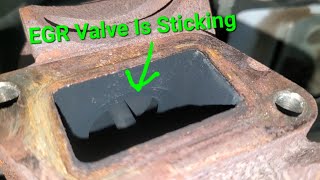
- Sticking or seized EGR cooler bypass valve (Very Common) — Carbon and soot from the exhaust clog the passages and seize the bypass valve, preventing it from moving. This is the primary culprit, especially in diesel engines used for frequent short trips.
- Failed EGR cooler bypass position sensor (Common) — Extreme heat and exhaust gas exposure destroy the sensor's internal components, causing it to send incorrect voltage signals to the ECM.
- Wiring or connector issues (Common) — Engine heat and vibration crack, melt, or break the sensor's wiring. Corroded pins or a loose ground connection cause erratic readings, triggering the code even if the sensor and valve work perfectly.
- Failed EGR bypass valve actuator motor (Less Common) — The electric motor that moves the bypass valve fails. The valve and sensor remain intact, but because the valve cannot move, the sensor reports a performance error.
- Leaking EGR Cooler (Less Common) — An internal leak allows coolant to mix with soot, creating a thick sludge that jams the bypass valve. On some BMW diesel models, this causes a severe fire risk.
- Engine Control Module (ECM) fault (Rare) — The vehicle's main computer experiences a software glitch requiring a reflash, or an internal hardware fault prevents it from interpreting the sensor signal. 🎬 Watch: A complete tutorial on troubleshooting common EGR valve problems.
Symptoms

- Reduced engine performance — The engine hesitates, stumbles during acceleration, or feels sluggish under light loads. A severely stuck EGR valve causes a no-start condition.
- Rough or uneven idle — The engine shakes, runs poorly, or stalls when stopped in traffic.
- Decreased fuel economy — Engine efficiency drops, resulting in a 2-5% decrease in fuel economy.
- Audible engine knocking or pinging — A stuck EGR system fails to cool the combustion chamber, raising temperatures and causing pre-ignition (a metallic knocking sound).
- Check Engine Light is on (also visible on scanner) — The Malfunction Indicator Lamp (MIL) illuminates on your dashboard. This is the most certain and often the first sign of the trouble code.
- White smoke or steam from exhaust (also visible on scanner) — A critical symptom indicating an internal EGR cooler leak. Engine coolant is burning in the exhaust, requiring immediate repair to prevent catastrophic engine damage.
Diagnostic Flowchart

Tap your situation to follow the diagnostic path that matches what you're seeing on this code.
Common Fixes & Costs
- Clean the EGR cooler bypass valve and passages — Parts: $20-$50, Labor: $150-$350, ~1.5 hr book time (Intermediate)
- Replace the EGR cooler bypass position sensor
— Parts: $75-$420, Labor: $75-$200, ~1.0 hr book time
(Intermediate)
GMC/Chevrolet (2011-2016 LML): OEM ACDelco 12642623 (Alt: Dorman, Standard Motor Products (SMP)) - Repair damaged wiring or connectors — Parts: $10-$50, Labor: $100-$250, ~1.2 hr book time (Intermediate)
- Replace the EGR cooler bypass valve assembly
— Parts: $450-$900, Labor: $200-$400, ~2.5 hr book time
(Professional)
Ram (2007-2018 6.7L Cummins): OEM Mopar 68027453AA (Alt: Bostech, Bullet Proof Diesel, Standard Motor Products (SMP))
Ford (2011-2016 6.7L Power Stroke): OEM Motorcraft BC3Z-9D475-J (CX-2638) (Alt: Alliant Power, Dorman) - Replace the entire EGR Cooler Assembly
— Parts: $700-$1,500, Labor: $400-$800, ~4.5 hr book time
(Professional)
Ram (2014-2018 6.7L Cummins): OEM Mopar 68620418AA (Alt: Bullet Proof Diesel, Bostech, Mishimoto)
Ford (2011-2019 6.7L Power Stroke): OEM Motorcraft BC3Z-9V425-A (Alt: Dorman (904-405), Sinister Diesel)
DIY vs Professional
- Clean the EGR cooler bypass valve and passages — Beginner: yes_with_caution
Tools: Basic socket set, wrenches, torque wrench, wire brushes, scrapers, EGR cleaning solvent, new gaskets. - Replace the EGR cooler bypass position sensor — Beginner: yes_on_some_models
Tools: Socket set, wrenches, Torx bits, inspection mirror. Varies significantly by vehicle. - Repair damaged wiring or connectors — Beginner: no
Tools: Multimeter, wire strippers, crimpers, heat shrink tubing, soldering iron (recommended), factory wiring diagrams. - Replace the EGR cooler bypass valve or entire cooler assembly — Beginner: no
Tools: Extensive socket set, extensions, universal joints, torque wrench, drain pans (for coolant), hose clamp pliers, and potentially specialized wrenches for hard-to-reach bolts.
Used vs. New Parts: Buying Guide
When a used part is worth it: For a high-cost assembly like an EGR cooler or valve, a used OEM part from a low-mileage vehicle is a cost-effective option, especially for older, high-mileage trucks where the budget is a primary concern.
Donor-vehicle mileage cap: roughly under 80000 miles for the part to have meaningful remaining life.
Donor quality checklist:
- Verify the donor vehicle's mileage and reason for being salvaged.
- Match part numbers exactly; superseded parts have different fittings or programming needs.
- Inspect for signs of internal coolant leakage (white residue) or excessive, oily soot.
- Avoid parts from rust-belt vehicles, as external corrosion compromises the housing.
Decision logic:
- If The part is just the sensor or a simple wiring pigtail → Buy new. The cost savings are minimal and the risk of a faulty used electronic part is high.
- If Vehicle is > 150K miles and the new OEM part costs > $800 → A used OEM part from a reputable salvage yard is a reasonable choice. Expect 30-60% of the original service life.
- If A reputable aftermarket company offers an upgraded design (e.g., tube-style vs. fin-style cooler) → Favor the new aftermarket part over a used OEM part, as it solves a known factory weakness.
Warranty tradeoff: Used parts typically come with a 30-90 day warranty, covering only the part itself, not labor. New aftermarket parts often have a 1-year to limited lifetime warranty. New OEM parts carry a 1-2 year warranty.
Worst-case if a used part fails: $500-$1500 if a used EGR assembly fails shortly after installation, requiring repeat labor costs plus the price of another replacement part.
What Happens If You Wait — Timeline
- 0-1 month: Code P2493 sets, and the Check Engine Light is on. You notice a very slight drop in fuel economy or a minor hesitation, but often there are no perceivable symptoms. (MPG impact: 0-2%% · Added cost: $0)
- 1-4 months (Stuck Valve Path): Carbon buildup worsens, causing the valve to stick more frequently. Rough idle, noticeable hesitation, and a consistent 3-5% drop in MPG become apparent. On GM trucks, speed-limited limp mode triggers intermittently. (MPG impact: 3-5%% · Added cost: $50-$150 in wasted fuel)
- 2-6 months (Leaking Cooler Path): If the cause is a leaking EGR cooler, coolant contaminates the exhaust. White smoke appears. The coolant and soot mixture coats and clogs the Diesel Particulate Filter (DPF), causing regeneration cycles to fail. (MPG impact: 5-10%% · Added cost: $2,500-$7,000 (for a now-required DPF replacement due to permanent coolant/ash damage).)
- 6+ months (Leaking Cooler Path): The DPF becomes completely blocked, putting the vehicle into a permanent, severe limp mode. If the coolant leak is significant, it enters a cylinder and hydro-locks the engine, causing bent rods and catastrophic internal failure. (MPG impact: 15-25%+% · Added cost: $7,000-$20,000+ (for DPF replacement plus major engine repair or replacement).)
Cost of Not Fixing It
- 0-1 month: Reduced fuel economy (2-5%), rough idle, and failing an emissions test. The vehicle enters a speed-limited limp mode on some trucks. (Added cost: Negligible, other than increased fuel consumption.)
- 1-6 months: If the failure is due to a leaking EGR cooler, coolant contaminates the exhaust system. This poisons the catalysts in the Diesel Oxidation Catalyst (DOC) and damages the Diesel Particulate Filter (DPF), leading to regeneration failures. (Added cost: $2,500-$7,000)
- 6+ months: Catastrophic engine damage. If a significant EGR cooler leak leads to hydro-locking (coolant entering a cylinder), it causes bent connecting rods or other severe internal engine failure. A completely clogged DPF requires replacement. (Added cost: $5,000-$20,000+)
Diagnosis Steps
- Read Codes and Freeze Frame Data
Use an OBD-II scanner to confirm P2493 is active and check for related codes (e.g., P0401, P0406, P2494). Analyze the freeze frame data to see the engine's operating conditions when the fault triggered.
Tools: OBD-II Scanner (Beginner) - Visually Inspect the System
Thoroughly inspect the EGR cooler bypass valve, sensor, actuator, and wiring harness. Look for melted connectors, cracked wires, heavy soot buildup, or signs of coolant leakage around the cooler.
Tools: Flashlight, Inspection Mirror (Beginner) - Verify Valve Mechanical Movement
If accessible, move the bypass valve's linkage by hand with the engine off and cool. It must move freely and spring back. If it binds, it is clogged with carbon and requires cleaning or replacement.
Tools: Basic hand tools (Intermediate) - Command the Valve with a Bi-Directional Scan Tool
Use an advanced scan tool to command the EGR cooler bypass valve open and closed while monitoring the position sensor's live data PID. The value must change smoothly from 0% to 100%.
Tools: Advanced Bi-Directional Scan Tool (Advanced) - Test Sensor Wiring and Connectors
Disconnect the sensor and inspect pins for corrosion. With the key on and engine off, use a multimeter to verify the 5-volt reference wire and ground. Check the signal wire for shorts to power or ground.
Tools: Multimeter (Intermediate) - Advanced: Test Sensor Voltage Range
While commanding the valve, backprobe the sensor's signal wire. A healthy sensor shows a smooth voltage transition from 0.5V to 4.5V. Sudden jumps, dropouts, or static voltage indicate a failed sensor.
Tools: Multimeter, Backprobe Kit (Advanced) - Advanced: Analyze Live Data PIDs (Duramax LML)
For 2011-2016 GM Duramax LML engines, monitor the 'Intake Air Flow Leak Equivalence Ratio'. Command the EGR valve to 0%; the value must stabilize between 0.8 and 1.2. If it drops when commanded open but stays low when closed, the valve is mechanically stuck.
Tools: Advanced Bi-Directional Scan Tool (Advanced) - Pro Tip: Check for a Stuck Valve vs. Bad Sensor Mismatch
On engines like the 6.7L Cummins, the actuator motor retracts even if the valve is mechanically stuck open. The sensor reports the valve is closed, but the engine suffers excessive EGR flow. Physically confirming valve position prevents misdiagnosis.
Tools: Visual Inspection, Hand tools (Professional) - Pro Tip: Analyze Sensor Waveform with an Oscilloscope
Connect an oscilloscope to the sensor's signal wire. Command the valve open and closed. A good sensor produces a clean, smooth waveform. Glitches or dropouts confirm a bad sensor.
Tools: Oscilloscope (Professional)
When This Code Triggers (Freeze-Frame Conditions)
- Engine Coolant Temp: 180-210°F (82-99°C) (The engine must be fully warmed up for the EGR system to be active.)
- RPM: 1500-2500 RPM (The fault sets during steady-state cruising or light acceleration, not at idle or full throttle.)
- Engine Load: 30-60% (The code triggers under part-load conditions where EGR flow is actively modulated.)
- Vehicle Speed: 40-65 mph (65-105 km/h) (Consistent highway or arterial road speeds are common conditions for the EGR monitor to run and detect a fault.)
Related Codes
- P2494 — Indicates the EGR cooler bypass control circuit is low. P2493 points to a 'performance' issue (e.g., stuck valve), while P2494 points specifically to an electrical fault like a short to ground in the actuator's control circuit.
- P0401 — Means 'EGR Flow Insufficient.' This appears with P2493 if the bypass valve is stuck in a position that restricts exhaust gas from flowing when commanded, leading to a lack of EGR activity.
- P0402 — Means 'EGR Flow Excessive.' This triggers if the bypass valve is stuck in a position that allows too much exhaust gas to recirculate, causing rough running, especially at idle.
- P0406 — Indicates 'EGR Position Sensor Circuit High Voltage.' While P2493 is a general performance error, P0406 is a specific electrical fault, strongly suggesting a short to power in the wiring or a sensor that failed internally.
Climate & Environmental Factors
- Cold Weather & Short Trips: In cold weather, the EGR cooler bypass is used more frequently to help the engine warm up. This environment promotes condensation inside the bypass valve actuator and sensor housing, leading to corrosion and failure. Frequent short trips prevent the engine from reaching sustained high temperatures needed to burn off soot, accelerating carbon buildup.
- High Humidity: Humid climates contribute to moisture and corrosion on external wiring connectors and accelerate internal corrosion if seals are compromised.
How to Talk to a Mechanic About This Code
Say this: "I have an active P2493 code on my [Vehicle Make/Model/Year]. I'd like to schedule a diagnostic. Can you please verify if the EGR cooler bypass valve is mechanically stuck or binding before testing or recommending a new position sensor? I'd also like a check of the sensor's wiring and connector for any heat damage or corrosion."
This signals you understand the common failure points for P2493 are both mechanical (a stuck valve) and electrical (a bad sensor/wire). It directs the technician to perform a physical inspection first, which prevents a costly misdiagnosis of replacing a good sensor when the valve is simply jammed with carbon.
Avoid saying:
- 'Just fix whatever's wrong'
- 'My check engine light is on, can you look at it?'
- 'Whatever you recommend is fine'
Questions to ask before authorizing the repair:
- Did you physically confirm the bypass valve moves freely, or is it stuck?
- If you command the valve with a scan tool, does the position sensor's live data reading change smoothly?
- If you are recommending a new sensor or valve assembly, is the part from the original manufacturer (OEM) or aftermarket?
- What is the warranty on the proposed repair, including both parts and labor?
Where to Take It: Dealer vs Independent vs Chain
- Dealer:
Recommended for warranty/recall work. For out-of-warranty repairs, get a quote here but compare it with a trusted independent specialist.
Best for: Vehicles still under powertrain or emissions warranty (e.g., VW TDI Extended Warranty)., Vehicles with open safety recalls related to the EGR system (e.g., certain BMW models)., Complex, recurring electrical issues where access to factory-specific diagnostic software is critical.
Downsides: Typically the highest labor rate., Defaults to replacing an entire expensive assembly rather than a smaller component like a sensor or cleaning a valve. (Typical cost: +50% vs. baseline) - Independent Shop:
Best fit for most out-of-warranty cases, provided you find a reputable shop with proven diesel expertise. They are more likely to attempt a cost-saving cleaning or targeted part replacement.
Best for: Out-of-warranty diesel trucks (Ram, Ford, GM) where P2493 is a common and well-understood issue., Vehicle owners seeking a better price than the dealership., Shops that explicitly state they specialize in diesel engines and/or electrical diagnostics.
Downsides: Quality and expertise vary widely; a general mechanic lacks the specific diesel knowledge or advanced scan tools required., You must vet the shop's reputation and ask if they have experience with modern diesel emissions systems. (Typical cost: +0% vs. baseline) - Chain Shop:
AVOID for P2493 diagnosis and repair. The risk of misdiagnosis and being sold unnecessary, expensive parts is very high.
Best for: Simple, unrelated maintenance like oil changes, tires, or brake pads.
Downsides: Technicians lack the specialized training for complex diesel emissions diagnostics., Business model encourages replacing parts unnecessarily rather than performing a nuanced diagnosis (e.g., mechanical vs. electrical)., Unlikely to have the required bi-directional scan tools to properly test the EGR system. (Typical cost: -10% vs. baseline)
When to Walk Away From the Repair
If the total estimated repair cost exceeds 40-50% of your vehicle's current private-party market value (e.g., from Kelley Blue Book), you should seriously consider selling the vehicle as-is or trading it in rather than fixing it.
- Car worth $20000, fix is $1800: Fix it. The repair cost is less than 10% of the truck's value, which is a sound investment.
- Car worth $8000, fix is $3500: Borderline. The repair is nearly 44% of the vehicle's value. Get a second opinion, and if the cost is firm, consider selling it 'as-is' to a buyer willing to do the repair.
- Car worth $3000, fix is $2000: Walk away. The repair cost is two-thirds of the vehicle's value. It is not economically sensible to proceed with the repair.
What Scan Tool You Need for This Code
Minimum: A scanner that reads live data PIDs for the EGR system. However, for a confident diagnosis, a tool with bi-directional control is strongly recommended.
A basic $20 code reader only confirms the P2493 code exists. It cannot help you determine the root cause. You need to see live data to watch the sensor's position and use bi-directional control to command the valve open and closed. Without this, you are guessing whether the valve is stuck or the sensor is bad.
Budget: BlueDriver Pro Scan Tool (~$100) — Reads and clears the code, views freeze frame data, and monitors live data PIDs for the EGR position sensor. This allows you to see if the sensor's value changes as you drive, but it LACKS the bi-directional control to command the valve, making it a partial diagnostic solution.
Mid-range: FOXWELL NT510 Elite / XTOOL D7 / MUCAR BT200 Max (~$150-400) — Offers bi-directional control, allowing you to actively command the EGR cooler bypass valve to open and close from the scanner. You watch the live sensor data to see if it responds correctly. This is the key test to distinguish a mechanically stuck valve from a failed sensor or actuator, making this the best-value category for a serious DIYer.
Professional: Autel MaxiCOM MK808BT / MK900BT / LAUNCH X431 series (~$450-1200) — Provides full, OEM-level bi-directional control for all vehicle systems, including the EGR bypass valve. These professional-grade tools offer faster processing, more robust data logging, and access to advanced functions like ECU coding and programming needed after a module replacement.
Rent vs buy: Rent for free from an auto parts store to simply read/clear the code. However, these rental tools lack the essential bi-directional control needed for a proper P2493 diagnosis. If you plan to diagnose the issue yourself, you must buy at least a mid-range scanner with this capability.
How to Clear the Code After You Fix It
- Use an OBD-II scan tool to clear the P2493 code and any related fault codes.
- Reconnect the battery if it was disconnected during the repair.
- Perform a complete drive cycle to allow the vehicle's readiness monitors to run and confirm the fix.
Drive cycle (~30 minutes): A general drive cycle includes: a cold start, 5 minutes of idling in drive, 15 minutes of mixed city/stop-and-go driving, followed by 10 minutes of steady highway speed (55-60 mph). The vehicle must then be shut off and allowed to cool completely to reset all monitors.
Readiness monitors affected: EGR System, Catalyst Monitor, O2 Sensor Monitor
Before emissions retest: drive at least 100 miles to fully set monitors.
Watch out for:
- Clearing the code with a scanner or disconnecting the battery resets the readiness monitors to 'Not Ready.' The vehicle will fail an emissions test in this state.
- The code returns if the underlying mechanical (stuck valve) or electrical issue is not fully resolved.
- A specific manufacturer drive cycle is required to set the EGR monitor; a generic one is often insufficient.
Will This Fail Emissions / State Inspection?
Yes — this code typically fails an OBD-II emissions inspection.
- California: An illuminated Check Engine Light is an automatic failure of the smog check. After repair, all readiness monitors must be set to 'Ready,' which requires driving 100+ miles over several trips before re-testing.
- New York: The NYS vehicle inspection includes an OBD-II scan. An active P2493 code causes an automatic failure of the emissions portion of the test. Simply clearing the code is not enough, as the readiness monitors must be complete.
- Texas: In the 17 Texas counties requiring emissions testing, an active Check Engine Light for an emissions-related fault like P2493 results in a failed inspection. The vehicle cannot be registered until the issue is repaired and the code is cleared.
Most Commonly Affected Vehicles
- Ram 2500/3500 (2007-2018) — The 6.7L Cummins is highly susceptible to P2493 due to heavy carbon buildup causing the bypass valve to stick. The valve replacement is a common repair. An OEM Mopar sensor costs around $300-$420. A full EGR valve replacement costs between $836 and $987.
- GMC Sierra 2500/3500 HD (2011-2016) — The Duramax LML engine frequently experiences P2493 due to corrosion of the position sensor, which is integrated into a plastic cover on the bypass valve. Often, only this cover/sensor needs replacement. A full EGR valve replacement costs between $786 and $928.
- Chevrolet Silverado 2500/3500 HD (2011-2016) — Shares the Duramax LML engine with the GMC Sierra and suffers from the identical EGR sensor corrosion issue. The vehicle enters a 65-mph speed limit mode after a warning. A full EGR valve replacement cost is comparable to the Sierra, around $786-$928.
- Ford F-250/F-350 Super Duty (2011-2016) — On the 6.7L Power Stroke, this code is caused by a soot-clogged EGR cooler or a sticking bypass valve. While more reliable than the 6.0L, the 6.7L's EGR system is still a common failure point. A full EGR valve replacement costs between $527 and $609.
- Volkswagen Jetta, Golf, Passat, Beetle (2009-2015) — Models with 1.6L and 2.0L TDI diesel engines (CBEA/CJAA/CKRA) are prone to EGR valve failures. Post-"Dieselgate" software updates increased EGR rates, accelerating carbon buildup. Check for TDI Extended Emissions Warranty coverage, which covers this repair for free.
- BMW 328d, 535d, X3, X5 (2013-2018) — Vehicles with N47 and N57 diesel engines are subject to a safety recall for leaking EGR coolers. The coolant leak mixes with soot, creating a fire hazard. Symptoms include coolant loss and white smoke.
- Audi A3, Q7 (2010-2015) — Equipped with the same 2.0L TDI engines as Volkswagen models, the Audi A3 and other TDI models are susceptible to EGR valve and cooler failures from soot buildup. The TDI Extended Emissions Warranty applies.
- Subaru Legacy, Outback (2012-2015) — These models experience carbon-fouled electronic EGR valves. A sticking valve leads to position sensor performance codes, rough idle, and hesitation.
Manufacturer-Specific Notes
- General Motors (Chevrolet/GMC): On Duramax LML engines, the position sensor is part of a plastic cover on the bypass valve. Condensation and subsequent corrosion on the sensor's internal contacts is the most common cause of P2493. A savvy technician inspects the valve's mechanical movement; if it's free, they replace only the cover/sensor assembly (e.g., ACDelco 12642623), saving hundreds over a full valve replacement.
- Ram (Dodge): For the 6.7L Cummins, P2493 is almost always caused by the valve itself sticking from heavy carbon buildup. The sensor works perfectly but reports an error because the valve is physically jammed. Cleaning is a common first step, but the issue returns. Also check for TSB 18-023-21, which involves a PCM software update that addresses related EGR control logic issues.
- Volkswagen/Audi: On many TDI engines, software updates issued after the emissions scandal increased EGR usage to better control NOx. A side effect is a higher rate of carbon buildup, leading to more frequent EGR valve failures than on earlier software versions. Always check if the vehicle is covered under the TDI Extended Emissions Warranty, as this repair is covered.
- BMW: Diesel models with N47 and N57 engines have a major safety recall for the EGR cooler (Campaign 18V-755). An internal coolant leak mixes with soot, forming a combustible sludge that melts the intake manifold and causes a fire. Any P2493 code on these vehicles must be investigated with this recall in mind.
Real Owner Stories
2015 GMC Sierra 2500 LML at 110K miles
Check Engine Light came on intermittently at idle, with a 'Service Emissions System' and '175 miles to 65 mph' warning. The warning disappeared at highway speeds but the CEL remained.
What they tried:
- Initially suspected a loose connection due to the intermittent nature of the warning.
Outcome: Forum diagnosis pointed to the common LML failure: a sticking EGR bypass valve or a failed position sensor. The owner was advised that the sensor itself, located on the back left of the engine, fails due to corrosion from condensation. The fix was to replace the EGR bypass valve assembly.
Lesson: On a Duramax LML, an intermittent P2493 with a speed-limiter warning is a classic sign of a failing bypass valve position sensor, often due to corrosion, not necessarily a valve seized with soot.
2012 Ram 2500 6.7L Cummins with recurring code
Truck had just been to the shop for a leaking EGR cooler and new gaskets. Shortly after, the P2493 code appeared.
What they tried:
- The shop had already replaced the EGR bypass valve and gaskets in the previous repair attempt.
Outcome: The code returned, indicating the initial repair failed, was incomplete, or a new fault was introduced. The owner returned to the shop for a repeat diagnosis, frustrated by the recurring issue despite recent, expensive repairs.
Lesson: If P2493 appears right after a related repair, immediately return to the shop. The issue is a faulty new part, an improperly seated connector, or a misdiagnosis where the true root cause (like a wiring issue or stuck valve) was never fixed.
2013 VW Passat TDI at 130K miles
Check Engine Light came on, and a scan revealed a code for the EGR system.
What they tried:
- Owner heard about the 'Dieselgate' warranty and decided to investigate before paying for a diagnosis.
Outcome: The owner confirmed their vehicle was covered by the TDI Extended Emissions Warranty. However, their vehicle was just past the 120,000-mile coverage limit. In many other cases, owners with fewer miles have had the entire EGR system, including the valve, cooler, and sensors, replaced for free by a VW dealer under this warranty.
Lesson: If you own a 2009-2015 VW or Audi TDI, ALWAYS check your VIN for TDI Extended Emissions Warranty coverage before paying for any EGR-related repairs. The warranty covers the entire EGR system and saves you thousands.
2014 Ram 3500 6.7L Cummins with P2493
The truck threw code P2493, and the owner tried to diagnose it without going to the dealership.
What they tried:
- Replaced the EGR position sensor with a new part, but the code came back.
- Replaced it again with a high-quality OEM Mopar sensor.
Outcome: The code was finally resolved by using the OEM Mopar sensor, which cost around $300. A mechanic noted that cheap aftermarket sensors cause the code to return, while another common mistake is replacing the sensor when the valve itself is mechanically stuck with carbon.
Lesson: On a 6.7L Cummins, a P2493 code is a toss-up between a stuck valve and a bad sensor. Before replacing anything, physically check if the valve moves freely. If you replace the sensor, use a high-quality OEM part to avoid a repeat failure.
How to Prevent This Code From Triggering
- Perform regular highway drives (At least once per week) — Driving at sustained highway speeds for 30+ minutes allows the exhaust system to reach temperatures high enough to burn off soot deposits (passive regeneration), preventing the carbon buildup that causes the EGR valve to stick.
- Avoid excessive idling and short trips (Daily habit) — Frequent short trips and long idle times load the EGR system with soot but don't generate enough heat to clean it out. This is the number one cause of carbon buildup in modern diesel engines.
- Use high-quality diesel fuel and additives (Every fill-up or periodically) — Fuels with better detergents and higher cetane ratings lead to more complete combustion, creating less soot. Additives like Hot Shot's Secret or Liqui Moly keep injectors clean and further reduce carbon formation.
- Follow the 'severe duty' oil change schedule (Per manufacturer's schedule) — If your driving consists mainly of short trips, your engine oil becomes contaminated with unburned fuel and condensation. Following the shorter 'severe duty' oil change interval removes these contaminants before they contribute to sludge and wear.
- Allow proper engine warm-up (Every cold start) — Allowing the engine to idle for 3-5 minutes before driving in cold weather lets oil circulate and helps the engine reach operating temperature smoothly, reducing the formation of condensation and soot during the warm-up phase.
Frequently Asked Questions
What is an EGR cooler bypass valve?
It's a component in modern diesel engines that controls the temperature of exhaust gases being recirculated into the engine. It either sends hot exhaust gas through a small radiator (the 'cooler') to be cooled or directs it around the cooler ('bypasses' it) to help the engine warm up quickly from a cold start.
What are the most common mistakes when diagnosing P2493?
The biggest mistake is immediately replacing the entire EGR valve or cooler assembly. The actual fault is often a much cheaper component like the position sensor, the actuator motor, or a damaged wire. Another common pitfall, especially on Cummins engines, is replacing the sensor when the valve is just mechanically stuck with carbon.
Can I clean the EGR valve instead of replacing it?
Yes, in many cases. If the problem is simply carbon buildup causing the valve to stick, removing the component and cleaning it thoroughly with specialized solvents and brushes restores its function and saves money. However, this is a temporary fix if the root cause (e.g., short-trip driving) is not addressed.
Should I use a cheap aftermarket sensor or pay for an OEM part?
For critical emissions components, using a quality OEM or reputable OEM-supplier part is mandatory. Cheap aftermarket sensors fail quickly, have incorrect voltage ranges, or fail to calibrate correctly. This causes the P2493 code to return shortly after the repair.
What happens if the EGR cooler is leaking?
A leaking EGR cooler is a severe problem that introduces coolant into the exhaust system, creating white smoke. This coolant mixes with soot to form a thick sludge that destroys the expensive Diesel Particulate Filter (DPF). In certain BMW models, this condition poses a documented fire risk.
Can I just delete the EGR system to fix this?
EGR deletion is illegal in all 50 states for on-road vehicles and guarantees an emissions inspection failure. It also requires specialized ECU tuning costing $1,000-$3,500+ and instantly voids your powertrain warranty.
Will a fuel additive or 'mechanic in a can' fix this code?
No. A fuel additive cannot clean heavy carbon deposits from the EGR valve, nor will it repair a failed sensor, a bad actuator motor, or damaged wiring. Aerosol intake cleaners are preventative measures and cannot fix a mechanically seized valve.
Key Takeaways
- Code P2493 almost always indicates a carbon-seized EGR cooler bypass valve or a failed position sensor, requiring physical inspection before buying parts.
- Expect a 2-5% drop in fuel economy, rough idling, and on GM diesel trucks, an automatic speed-limited limp mode restricting you to 65 mph.
- Never replace the $800+ EGR valve assembly without first using a bi-directional scan tool to confirm whether the failure is mechanical or electrical.
- Owners of 2009-2015 VW/Audi TDI models should immediately check their VIN for the Extended Emissions Warranty, which often covers this $1,500+ repair for free.
- Driving with a leaking EGR cooler (indicated by white exhaust smoke) permanently destroys the Diesel Particulate Filter (DPF), turning a moderate repair into a $2,500 to $7,000 nightmare.
Helpful Videos

The information in this article is provided for general reference and educational purposes only. Vehicle specifications, procedures, and part compatibility can vary by production date, trim level, and region. Always consult your vehicle's factory service manual and verify part numbers before purchasing or performing repairs. Safety-critical components such as airbags, seat belts, and braking systems should be installed by a qualified professional.
- 🎬 Helpful Videos
- What Does P2493 Mean?
- Can I Drive With P2493?
- Common Causes
- Symptoms
- Diagnostic Flowchart
- Common Fixes & Costs
- DIY vs Professional
- Used vs. New Parts: Buying Guide
- What Happens If You Wait — Timeline
- Cost of Not Fixing It
- Diagnosis Steps
- When This Code Triggers (Freeze-Frame Conditions)
- Related Codes
- Climate & Environmental Factors
- How to Talk to a Mechanic About This Code
- Where to Take It: Dealer vs Independent vs Chain
- When to Walk Away From the Repair
- What Scan Tool You Need for This Code
- How to Clear the Code After You Fix It
- Will This Fail Emissions / State Inspection?
- Most Commonly Affected Vehicles
- Manufacturer-Specific Notes
- Real Owner Stories
- 2015 GMC Sierra 2500 LML at 110K miles
- 2012 Ram 2500 6.7L Cummins with recurring code
- 2013 VW Passat TDI at 130K miles
- 2014 Ram 3500 6.7L Cummins with P2493
- How to Prevent This Code From Triggering
- Frequently Asked Questions
- What is an EGR cooler bypass valve?
- What are the most common mistakes when diagnosing P2493?
- Can I clean the EGR valve instead of replacing it?
- Should I use a cheap aftermarket sensor or pay for an OEM part?
- What happens if the EGR cooler is leaking?
- Can I just delete the EGR system to fix this?
- Will a fuel additive or 'mechanic in a can' fix this code?
- Key Takeaways
- 🎟️ Get 5% Off