

OBD-II Code P2482: Exhaust Gas Temperature Sensor Circuit High (Bank 1, Sensor 5)
What P2482 means, why it triggers, and how to fix it
- Code P2482 indicates an open circuit or short to voltage at Exhaust Gas Temperature (EGT) sensor 5, located near the tailpipe.
- Internal sensor failure from extreme exhaust heat and broken wiring harnesses account for over 90% of P2482 triggers.
- Driving with an active P2482 code halts DPF regeneration, risking a permanently clogged filter that costs $2,000 to $8,000 to replace.
- Test the sensor's internal resistance with a multimeter and verify a 5V reference at the connector before spending $150+ on a replacement part.
What Does P2482 Mean?

P2482 means the Powertrain Control Module (PCM) detects an abnormally high voltage signal from the #5 Exhaust Gas Temperature (EGT) sensor on engine bank 1. This indicates an open electrical circuit, typically caused by a broken wire or a dead sensor. Sensor 5 monitors exhaust gas temperatures to manage the diesel particulate filter (DPF) regeneration process.
Technical definition: The official SAE/OBD-II definition is "Exhaust Gas Temperature Sensor Circuit High (Bank 1 Sensor 5)". The PCM logs this fault when it detects infinite resistance (an open wire) or a voltage reading at or above the 5V reference limit. This represents an implausible temperature reading, triggering the code.
Can I Drive With P2482?
Yes, But With Caution. You can drive short distances, but fix it promptly. Driving beyond 50-100 miles risks irreversible Diesel Particulate Filter (DPF) damage. A faulty sensor halts DPF regeneration, causing a clog that costs $2,000 to $8,000 to replace.
Common Causes

- Failed Exhaust Gas Temperature (EGT) Sensor (Very Common) — The sensor is a high-failure item due to the harsh exhaust environment. The internal thermistor breaks, creating an open circuit that sends a continuously high voltage signal to the PCM.
- Damaged or Corroded Wiring/Connectors (Very Common) — The wiring harness is exposed to extreme heat, road debris, and vibration. Wires become brittle, break, or rub against sharp edges, causing an open circuit. Connectors also fill with water and corrode.
- Soot or Carbon Buildup on the Sensor (Common) — Excessive soot coats the sensor probe. This insulates the sensor, leading to inaccurate temperature readings that disrupt DPF regeneration and eventually cause the sensor to fail.
- Exhaust Leaks (Less Common) — A crack in the exhaust manifold or pipes upstream of the sensor allows fresh air into the exhaust stream. This alters the temperature, causing the sensor to provide readings the PCM interprets as a fault.
- Aftermarket Exhaust System Installation (Less Common) — Installing a 'DPF-delete' or aftermarket exhaust system without correct provisions for the EGT sensor leaves the sensor unplugged or misaligned, triggering a circuit high code.
- Poor Vehicle Ground or Low Battery Voltage (Rare) — Low battery voltage or a poor ground connection for the engine control unit causes erratic sensor readings. The PCM relies on stable voltage to accurately interpret data.
- Failed Powertrain Control Module (PCM) (Rare) — An internal short or a bad driver circuit within the PCM causes it to misread the signal from a perfectly good sensor. Check this only after ruling out all other possibilities.
Symptoms

- Check Engine Light (CEL) is on — The primary symptom. The P2482 code is stored in the PCM's memory.
- Reduced Engine Power / Limp Mode — The PCM forces the vehicle into limp mode to protect the engine and emissions components from damage due to unknown exhaust temperatures.
- DPF Regeneration Issues or DPF Light — A bad EGT signal prevents the DPF regeneration cycle. This leads to a clogged DPF and triggers a separate DPF warning light or a P2463 code.
- Decreased Fuel Economy — When the DPF system fails to regenerate properly, engine efficiency drops, leading to worse gas mileage.
- Failed Emissions Test — An active P2482 code and illuminated Check Engine Light automatically fails an OBD-II emissions inspection.
Diagnostic Flowchart
Tap your situation to follow the diagnostic path that matches what you're seeing on this code.
Common Fixes & Costs
- Replacing the EGT Sensor (Bank 1 Sensor 5) — Parts: $80-$250, Labor: $100-$180, ~0.8 hr book time (DIY)
- Repairing Damaged Wiring or Connector — Parts: $10-$50, Labor: $120-$250, ~1.0 hr book time (Intermediate)
- Cleaning Soot from EGT Sensor — Parts: $5-$15, Labor: $60-$120, ~0.5 hr book time (DIY)
- Updating PCM Software — Parts: $0, Labor: $150-$250, ~1.0 hr book time (Professional)
- Replacing the Powertrain Control Module (PCM) — Parts: $600-$1200, Labor: $200-$300, ~1.5 hr book time (Professional)
DIY vs Professional
- Repairing Damaged Wiring or Connector — Beginner: Yes, if the damage is clearly visible and accessible.
Tools: Multimeter, wire strippers, crimpers, heat shrink tubing, butt connectors, electrical tape. - Replacing the EGT Sensor (Bank 1 Sensor 5) — Beginner: Yes, but with significant risk.
Tools: Flare-nut or sensor-specific socket (e.g., 22mm), ratchet, torque wrench, penetrating oil, safety glasses, propane torch. - Updating PCM Software — Beginner: No.
Tools: Manufacturer-specific diagnostic tool with an active software subscription. - Replacing the Powertrain Control Module (PCM) — Beginner: No.
Tools: Basic hand tools, plus manufacturer-specific diagnostic tools to program the PCM to the VIN.
Used vs. New Parts: Buying Guide
When a used part is worth it: Never buy a used EGT sensor. It is a high-failure wear item exposed to extreme heat. The risk of receiving a dead part outweighs minimal savings.
Donor-vehicle mileage cap: roughly under 20000 miles for the part to have meaningful remaining life.
Donor quality checklist:
- Only consider used from a very low-mileage vehicle wrecked for non-engine reasons.
- Inspect for corrosion, damaged threads, or brittle wiring.
- Favor new OEM or reputable aftermarket brands (Denso, Bosch).
Decision logic:
- If The part is an EGT sensor. → Buy new. The low cost does not justify the risk of repeat labor.
- If OEM sensor cost is high and budget is tight. → Buy a new aftermarket sensor from a well-known manufacturer.
- If The vehicle is under an emissions warranty. → Use a new OEM part installed by a dealer to ensure coverage.
Warranty tradeoff: Used parts have a 30-day warranty. New aftermarket sensors offer 1-year to lifetime warranties. New OEM parts carry a 1-2 year warranty.
Worst-case if a used part fails: $200-$350. A failed cheap sensor requires paying for the part again plus 1-2 hours of repeat labor.
What Happens If You Wait — Timeline
- 0-1 month: Code P2482 sets. DPF regeneration is disabled. Vehicle occasionally enters limp mode. (MPG impact: 5-10%% · Added cost: $50-150 in wasted fuel.)
- 1-3 months: Soot builds up in the DPF. Code P2463 (DPF Restriction) sets. Engine performance drops noticeably. (MPG impact: 10-15%% · Added cost: $150-500 for a forced regeneration at a workshop.)
- 3-6 months: The DPF becomes completely blocked with hardened soot. Exhaust backpressure is dangerously high. Vehicle is in permanent limp mode. (MPG impact: 15-25%% · Added cost: $800-1,800 for professional off-car DPF cleaning.)
- 6+ months: Catastrophic failure. The DPF filter substrate cracks. High backpressure damages turbocharger seals. (MPG impact: 25%+% · Added cost: $2,500-10,000 for full DPF and potential turbocharger replacement.)
Cost of Not Fixing It
- 0-1 month: DPF regeneration is disabled. Vehicle enters limp mode, and fuel economy decreases by 5-10%. (Added cost: $50-$150 in wasted fuel.)
- 1-3 months: The DPF becomes clogged with soot, triggering a P2463 code. A forced regeneration at a shop is required. (Added cost: $150-$500 for a forced regeneration.)
- 3+ months: The DPF is completely blocked with hardened ash, creating excessive backpressure that damages the turbocharger. Requires professional cleaning or full replacement. (Added cost: $800-$1,800 for professional cleaning, or $2,000-$8,000+ for DPF replacement.)
Diagnosis Steps

- Read the Codes and Freeze Frame Data
Use an OBD-II scanner to confirm P2482 is active. Check for related codes (P2463, P2480, P2481). Record the freeze frame data to see vehicle conditions when the code set.
Tools: OBD-II Scanner (Beginner) - Visually Inspect the Wiring and Sensor
Locate EGT Bank 1 Sensor 5 near the DPF. Check for burnt, melted, or chafed wires. Inspect the connector for corrosion, water ingress, or bent pins.
Tools: Flashlight, Safety Glasses (Beginner) - Check Live Data for Fault Signature
View the live data stream for EGT Bank 1 Sensor 5. A 'high circuit' code results in a default high reading (over 1000°F / 537°C) or a voltage stuck at 5.0V. A static reading confirms an open circuit.
Tools: Advanced OBD-II Scanner (Intermediate) - Test the Sensor's Internal Resistance
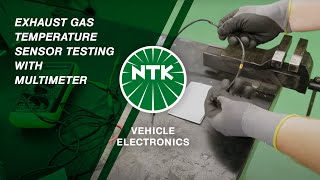
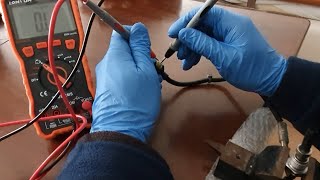
Unplug the sensor and measure resistance (Ohms) across its two pins. A good sensor reads ~220 ohms at room temperature. An infinite resistance reading (OL) confirms the sensor has an internal open circuit and requires replacement.
Tools: Multimeter (Advanced) - Test the Circuit for Reference Voltage and Ground
With the sensor disconnected and key on, engine off (KOEO), check for a 5V reference at the connector. Check the ground wire for continuity to the chassis (less than 0.1 ohms). If either is missing, the wiring or PCM is at fault.
Tools: Multimeter (Intermediate) - PRO TIP: Perform a Wiggle Test
While watching live EGT data, wiggle the wiring harness and connector for Sensor 5. If the temperature reading jumps, you have an intermittent connection or a broken wire making occasional contact.
Tools: Advanced OBD-II Scanner, Gloves (Intermediate) - Verify Signal Voltage Thresholds
Backprobe the sensor's signal wire at the PCM connector. With the sensor connected (KOEO), voltage should be <1.0V. Disconnecting the sensor should pull the voltage to 5.0V. A stuck high voltage confirms an open in the sensor or wiring.
Tools: Multimeter, Back-probe Pins, Vehicle Wiring Diagram (Advanced) - Check for Exhaust Leaks
With the engine running, feel and listen for air puffs around the exhaust manifold and downpipe gaskets. Soot trails around a flange indicate a leak disrupting sensor readings.
Tools: Safety Glasses, Mechanic's Stethoscope (optional) (Advanced) - PRO TIP: Scope the Sensor Signal
Use an oscilloscope to view the sensor's voltage signal. A P2482 fault shows a flat line at 5V or no signal, definitively distinguishing a sensor failure from an intermittent wiring issue.
Tools: Oscilloscope, Back-probe Pins (Professional)
When This Code Triggers (Freeze-Frame Conditions)
- Engine Coolant Temp: 180-200°F (82-93°C) (The engine is fully warmed up and operating at normal temperature.)
- RPM: 1500-2500 RPM (The fault sets during steady-state highway cruising, not during idle or heavy acceleration.)
- Engine Load: 30-70% (Triggers under moderate, consistent engine load, such as driving on a flat highway.)
- Vehicle Speed: 45-65 mph (72-105 km/h) (Corresponds with steady highway driving where the PCM actively monitors emissions components.)
Related Codes
- P2480 — 'Exhaust Gas Temperature Sensor Circuit Low'. The opposite of P2482. P2482 points to an open circuit (infinite resistance), while P2480 points to a short to ground (near-zero resistance).
- P2481 — 'Exhaust Gas Temperature Sensor Circuit Intermittent'. Appears when a wire is loose or a sensor is failing. Diagnosed via a 'wiggle test' on the harness.
- P2463 — 'Diesel Particulate Filter Restriction'. A direct consequence of P2482. The faulty EGT reading prevents DPF regeneration, causing soot buildup. Fix P2482 first.
- P2033 — 'Exhaust Gas Temperature Sensor Circuit High Bank 1 Sensor 2'. Functionally identical to P2482 but points to a sensor closer to the engine.
Climate & Environmental Factors
- Cold Climates / Road Salt: Road salt accelerates corrosion of the sensor body and wiring, causing the sensor to seize in the exhaust pipe and degrading electrical connections.
- Extreme Temperature Cycling: Rapid heating and cooling cycles cause metal fatigue, internal sensor element failure, and thread galling, contributing to seizing.
- High Humidity: Moisture intrusion into unsealed electrical connectors accelerates pin corrosion, leading to high-resistance connections.
How to Talk to a Mechanic About This Code
Say this: "I have an active P2482 code for the Exhaust Gas Temperature Sensor Circuit High on Bank 1, Sensor 5. Please visually inspect the wiring harness for heat damage and test the circuit for 5V reference and ground before recommending a sensor replacement."
This tells the shop you understand the problem is often simple wiring damage, encouraging a thorough diagnosis instead of immediately firing the parts cannon.
Avoid saying:
- 'My check engine light is on, can you just fix it?'
- 'My truck feels sluggish, do whatever you think is right.'
- 'I read online it's the sensor, so just replace it.'
Questions to ask before authorizing the repair:
- Did you find a specific failure in the sensor's internal resistance, or a broken wire?
- Can you show me the damaged part or a photo of the wiring issue?
- If the sensor is seized in the exhaust, what is your process for removing it without damaging the pipe?
- What is the warranty on the parts and labor?
Where to Take It: Dealer vs Independent vs Chain
- Dealer:
Strong choice if warranty applies or if you own a brand known for complex electronics. Well-equipped to handle seized sensors.
Best for: Vehicles under a powertrain or emissions warranty., Vehicles with known TSBs requiring a software update., Complex diagnostics on German brands (BMW, Mercedes, VW).
Downsides: Highest labor rate., Often recommends replacing entire assemblies instead of repairing wiring. (Typical cost: +50% vs. baseline) - Independent Shop:
The best fit for most out-of-warranty vehicles. An experienced diesel mechanic efficiently diagnoses P2482 faults at a lower cost than a dealer.
Best for: Out-of-warranty diesel trucks and cars., Shops specializing in diesel repair.
Downsides: Diagnostic skill varies widely; vet shops for ASE certifications., Lacks access to the latest manufacturer software updates. (Typical cost: +0% vs. baseline) - Chain Shop:
Avoid for anything beyond a simple, easily accessible sensor swap. Not ideal for diagnosing root electrical causes.
Best for: Simple jobs like oil changes or tire rotations.
Downsides: Technicians lack experience diagnosing circuit faults versus sensor faults., High risk of breaking a seized sensor due to lack of specialized tools. (Typical cost: -10% vs. baseline)
When to Walk Away From the Repair
If the estimated repair cost exceeds 50% of your car's private-party value, evaluate your options.
- Car worth $18000, fix is $450: Fix it. This is a routine repair far below the threshold.
- Car worth $10000, fix is $5000: Walk away. The P2482 code was ignored, leading to catastrophic DPF failure. The repair cost is 50% of the vehicle's value.
- Car worth $3500, fix is $450: Fix it. A $450 repair to keep the vehicle running and passing emissions is a smart financial move compared to replacement costs.
What Scan Tool You Need for This Code

Minimum: A scanner that reads and graphs live data for specific sensor PIDs.
A $20 code reader only confirms the code exists. It cannot show live EGT sensor voltage. Seeing a voltage stuck at 5.0V or 1000°F confirms the 'circuit high' condition, distinguishing a wiring fault from a sensor fault.
Budget: BlueDriver Pro (~$100) — Connects to your smartphone via Bluetooth to view and graph live EGT sensor data. Sufficient for a DIYer to perform a 'wiggle test'.
Mid-range: Foxwell NT510 Elite (~$180) — Handheld scanner providing full-system diagnostics and live data graphing.
Professional: Autel MaxiCOM MK808 (~$450-600) — Professional tablet scanner offering robust live data, graphing, and bi-directional controls to diagnose the EGT circuit and DPF systems.
Rent vs buy: For a one-time diagnosis, borrow a scanner for free from AutoZone. Buy a scanner only if you perform regular DIY diagnostics.
How to Clear the Code After You Fix It
- Use an OBD-II scan tool to clear the P2482 fault code.
- Start the engine and idle for 2-3 minutes.
- Perform a complete OBD-II drive cycle to run readiness monitors.
Drive cycle (~30 minutes): Cold start (engine off 8+ hours), idle 2-3 minutes, drive 10-15 minutes in city traffic (25-45 mph), followed by 10 minutes of steady highway driving (50-65 mph). Cool down completely.
Readiness monitors affected: Exhaust Gas Sensor Monitor, Catalyst Monitor, Diesel Particulate Filter Monitor
Before emissions retest: drive at least 100 miles to fully set monitors.
Watch out for:
- Clearing the code without a drive cycle leaves monitors incomplete, failing emissions tests.
- The code returns immediately if the underlying electrical fault wasn't fixed.
- Fuel tank must be between 15% and 85% full to run EVAP monitors.
Will This Fail Emissions / State Inspection?
Yes — this code typically fails an OBD-II emissions inspection.
- California: An active P2482 code automatically fails the smog check. A full drive cycle is required after repair before re-testing.
- New York: An illuminated Check Engine Light and active P2482 code results in an emissions failure.
- Texas: Fails the OBD-II inspection in the 17 testing counties. The CEL must be off and readiness monitors set to pass.
Most Commonly Affected Vehicles
- Chevrolet/GMC Silverado/Sierra 2500/3500 with Duramax Diesel (2011-2023) — Sensor 5 is located at the very rear of the exhaust system. Failures are common across LML and L5P engines.
- Dodge/Ram 2500/3500/4500 with Cummins Diesel (2013-2024) — Wiring harness damage is a known issue. The harness rubs and breaks, causing an open circuit. TSBs address harness routing.
- Ford F-250/F-350 with Power Stroke Diesel (2011-2024) — EGT sensors notoriously seize in the exhaust on 6.7L engines, making replacement difficult.
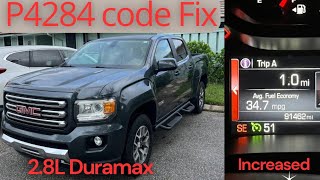
- GMC Canyon with 2.8L Duramax Diesel (2016-2022) — The #5 EGT sensor is a known failure point. An updated replacement part number is required.
- BMW X-series and sedans with diesel engines (e.g., X5 35d) (2009-2018) — Complex emissions systems utilize multiple EGT sensors. Failures lead to DPF regeneration problems and limp mode.
- Kia/Hyundai Sorento, Santa Fe with diesel engines (2010-2020) — Typically points to a failed EGT sensor located in the DPF assembly.
- Volkswagen/Audi TDI Models (Jetta, Golf, Passat, Touareg) (2009-2015) — Sensor failures are common and often covered under the extended 'Dieselgate' emissions warranty.
- Mercedes-Benz Sprinter, E-Class, GL-Class with BlueTEC Diesel (2010-2016) — BlueTEC engines are prone to EGT sensor failures, inhibiting DPF regeneration.
Manufacturer-Specific Notes
- GM (Chevrolet/GMC): On 2.8L Duramax engines, EGT sensor 5 (Part # 55495859) is a highly common failure. The replacement part supersedes the original faulty number.
- Ram (Dodge): On 6.7L Cummins engines, P2482 is frequently caused by the engine wiring harness chafing against other components, not the sensor itself. Inspect the harness thoroughly before replacing parts.
- Ford: On 6.7L Power Stroke engines, EGT sensors notoriously seize in the exhaust. Removal requires significant heat, penetrating oil, and specialized sockets. Check for extended coverage programs like 15M02.
- Volkswagen/Audi: For 2009-2015 TDI models, EGT sensors are often covered under the extended diesel emissions settlement warranty. Check with a dealer before paying out of pocket.
Real Owner Stories
2016 GMC Canyon 2.8L Duramax - The Straightforward Fix
Owner experienced a Check Engine Light and poor gas mileage. A scan confirmed code P2482 for EGT Sensor 5.
What they tried:
- The owner performed a DIY replacement of the sensor.
Outcome: Replaced EGT sensor 5 (part #55495859) at the rear of the exhaust system. The $75 repair resolved the code and restored normal fuel economy.
Lesson: For GM diesel trucks, P2482 frequently points directly to a failed EGT sensor 5. It is an inexpensive DIY replacement.
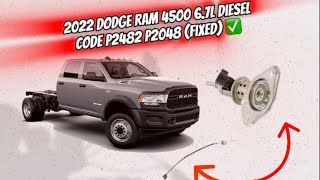
2022 Ram 4500 6.7L Cummins - The Misdiagnosis Trap
A nearly new Ram 4500 threw a P2482 code along with a P2048 for the DEF injector.
What they tried:
- Initial assumption was a failed sensor.
Outcome: Visual inspection revealed the wiring harness for EGT sensor 5 and the DEF injector was physically cut. Repairing the broken wires resolved both codes permanently.
Lesson: Never assume P2482 is a bad sensor without a visual inspection, especially on Ram trucks. Trace the wiring for chafing or breaks before buying parts.
Mercedes Diesel with Repeated Failures - The Unusual Root Cause
A Mercedes diesel owner experienced a P2482 fault. A replacement sensor failed after a few months. A second, cheaper aftermarket sensor failed on the first drive.
What they tried:
- Replaced the EGT sensor with a UK-sourced part, which cracked internally.
- Replaced it again with a cheap AliExpress sensor, which arrived dead (open circuit).
Outcome: The issue was the use of poor-quality aftermarket parts, not an underlying vehicle fault. EGT sensors require high-quality materials to survive exhaust heat.
Lesson: Using cheap, unverified aftermarket EGT sensors leads to repeated failures. Stick with OEM or reputable brands to ensure a lasting repair.
How to Prevent This Code From Triggering
- Use high-quality, ultra-low sulfur diesel (ULSD) fuel (Every fill-up) — Low-quality fuel increases soot production, forcing the DPF to regenerate more often and stressing EGT sensors.
- Use low-ash (Low-SAPS) engine oil (Every oil change) — Incorrect oil creates metallic ash that permanently clogs the DPF, increasing exhaust backpressure and temperatures.
- Optimize Driving Habits for DPF Regeneration (Weekly) — Avoid prolonged idling and ensure sustained highway speeds (20+ minutes) regularly. This allows passive DPF regeneration, reducing thermal stress on sensors from forced active regenerations.
- Inspect and clean EGT sensor electrical connectors (Every 30,000 miles) — Applying dielectric grease prevents moisture intrusion and corrosion, a primary cause of circuit faults in salty or humid climates.
Frequently Asked Questions
Can I just clean the EGT sensor instead of replacing it?
Cleaning heavy soot buildup with brake cleaner works as a temporary fix in rare cases. However, a P2482 'circuit high' code indicates an electrical open circuit, which cleaning cannot resolve.
Where is Bank 1, Sensor 5 located?
Bank 1 is the side of the engine with cylinder #1. Sensor 5 is the final EGT sensor in the exhaust stream, located after the Diesel Particulate Filter (DPF).
What is a common misdiagnosis for P2482?
Immediately replacing the EGT sensor without testing the circuit is a costly mistake. P2482 is frequently caused by a broken wire in the harness between the sensor and the PCM. Always test for a 5V reference voltage first.
Why does my scan tool show a temperature of over 1,000 degrees?
When the PCM detects an open circuit, it loses the valid signal. As a failsafe, the software defaults to a pre-programmed static high value, such as 1,000°F or 5.0V. This fixed reading is the classic signature of a P2482 fault.
Will the P2482 code clear itself?
No. This is a hard electrical fault. The Check Engine Light stays on until the circuit is repaired and the code is cleared with a scanner.
Is it safe to drive with a P2482 code?
It is safe for short trips, but do not ignore it. The PCM disables DPF regeneration while this code is active. Continued driving will permanently clog the DPF, costing thousands to replace.
How can I prevent my EGT sensor from failing?
Ensure your engine runs efficiently by using high-quality diesel fuel and low-ash oil. Drive at highway speeds regularly to allow passive DPF regeneration. In salty climates, apply dielectric grease to connectors to prevent corrosion.
Can I bypass an EGT sensor?
Wiring a resistor to mimic a working sensor is not recommended and is illegal in many regions. It prevents the PCM from monitoring exhaust temperatures, leading to severe DPF and turbocharger damage.
Key Takeaways
- Code P2482 indicates an open circuit or short to voltage at Exhaust Gas Temperature (EGT) sensor 5, located near the tailpipe.
- Internal sensor failure from extreme exhaust heat and broken wiring harnesses account for over 90% of P2482 triggers.
- Driving with an active P2482 code halts DPF regeneration, risking a permanently clogged filter that costs $2,000 to $8,000 to replace.
- Test the sensor's internal resistance with a multimeter and verify a 5V reference at the connector before spending $150+ on a replacement part.
Helpful Videos

The information in this article is provided for general reference and educational purposes only. Vehicle specifications, procedures, and part compatibility can vary by production date, trim level, and region. Always consult your vehicle's factory service manual and verify part numbers before purchasing or performing repairs. Safety-critical components such as airbags, seat belts, and braking systems should be installed by a qualified professional.
- 🎬 Helpful Videos
- What Does P2482 Mean?
- Can I Drive With P2482?
- Common Causes
- Symptoms
- Diagnostic Flowchart
- Common Fixes & Costs
- DIY vs Professional
- Used vs. New Parts: Buying Guide
- What Happens If You Wait — Timeline
- Cost of Not Fixing It
- Diagnosis Steps
- When This Code Triggers (Freeze-Frame Conditions)
- Related Codes
- Climate & Environmental Factors
- How to Talk to a Mechanic About This Code
- Where to Take It: Dealer vs Independent vs Chain
- When to Walk Away From the Repair
- What Scan Tool You Need for This Code
- How to Clear the Code After You Fix It
- Will This Fail Emissions / State Inspection?
- Most Commonly Affected Vehicles
- Manufacturer-Specific Notes
- Real Owner Stories
- 2016 GMC Canyon 2.8L Duramax - The Straightforward Fix
- 2022 Ram 4500 6.7L Cummins - The Misdiagnosis Trap
- Mercedes Diesel with Repeated Failures - The Unusual Root Cause
- How to Prevent This Code From Triggering
- Frequently Asked Questions
- Can I just clean the EGT sensor instead of replacing it?
- Where is Bank 1, Sensor 5 located?
- What is a common misdiagnosis for P2482?
- Why does my scan tool show a temperature of over 1,000 degrees?
- Will the P2482 code clear itself?
- Is it safe to drive with a P2482 code?
- How can I prevent my EGT sensor from failing?
- Can I bypass an EGT sensor?
- Key Takeaways
- 🎟️ Get 5% Off