

OBD-II Code P2467: Exhaust Gas Temperature Sensor Circuit Range/Performance (Bank 2, Sensor 3)
What P2467 means, why it triggers, and how to fix it
- Code P2467 indicates an electrical failure in the Bank 2, Sensor 3 Exhaust Gas Temperature (EGT) circuit, typically caused by internal sensor degradation from 1,000°F+ exhaust heat.
- Driving more than 100-200 miles with this code disables DPF regeneration, risking a completely clogged filter and $2,000 to $5,000 in turbocharger and exhaust damage.
- Verify the sensor failure by checking live OBD-II data; a reading stuck at -40°F or above 1,800°F confirms a hard electrical fault.
- Always test the wiring harness for a 5-volt reference signal before spending $80-$250 on a new sensor, as melted wires cause identical symptoms.
- Apply a 2,400°F-rated nickel anti-seize to the new sensor's threads during installation to prevent it from permanently seizing in the exhaust bung.
What Does P2467 Mean?
This code means your vehicle's Powertrain Control Module (PCM) detected an incorrect or out-of-range signal from the Exhaust Gas Temperature (EGT) sensor labeled 'Bank 2, Sensor 3'. This sensor measures exhaust heat to control the emissions system. When the signal fails, the DPF cannot perform its self-cleaning regeneration cycle, leading to rapid soot buildup.
Technical definition: The SAE/OBD-II definition is "Exhaust Gas Temperature Sensor Circuit Range/Performance Bank 2 Sensor 3". The PCM detected the EGT sensor voltage is outside its 0.5 to 4.5-volt operational window, or the signal fails to change with engine temperature. This flags a performance problem and stores the P2467 code.
Can I Drive With P2467?
Yes, But With Caution. You can drive, but it carries significant risk. Your vehicle enters 'limp mode' with reduced power and disables Diesel Particulate Filter (DPF) regeneration. Driving just 100-200 miles completely clogs the DPF, creating severe exhaust backpressure that destroys turbocharger seals. A clogged DPF and blown turbo add $2,000 to $5,000+ to your repair bill, making immediate diagnosis critical.
Common Causes
- Faulty Exhaust Gas Temperature (EGT) Sensor (Very Common) — Extreme exhaust temperatures degrade internal electronics, causing short-circuits and incorrect voltage readings sent to the PCM.
- Damaged Wiring or Connectors (Common) — Wiring routed near the hot exhaust melts insulation, breaks wires, or corrodes connectors, interrupting the 5-volt reference signal.
- Soot Buildup on the Sensor (Less Common) — Heavy carbon deposits coat the sensor tip, insulating it from exhaust gas and preventing accurate temperature readings.
- Exhaust Leaks (Less Common) — A crack in the exhaust manifold upstream of the sensor introduces cool ambient air, causing the sensor to report a falsely low temperature.
- Aftermarket Exhaust Modifications (Less Common) — Installing an aftermarket exhaust that relocates or removes the EGT sensor bung without reprogramming the PCM triggers this code.
- Failed DPF or SCR Injector/Vaporizer (Less Common) — A clogged DPF injector prevents the exhaust from reaching regeneration temperatures, tricking the PCM into flagging the EGT sensor as faulty.
- Outdated PCM Software (Rare) — Factory software logic errors falsely trigger the code. Manufacturers release TSBs to widen acceptable sensor reading ranges.
- Faulty Powertrain Control Module (PCM) (Rare) — An internal circuit board failure prevents the PCM from correctly interpreting the sensor's analog voltage signal.
Symptoms
- Check Engine Light is On — The primary and immediate indicator of an emissions circuit fault.
- Reduced Engine Power (Limp Mode) — The PCM limits turbo boost and fuel delivery to prevent catastrophic DPF damage.
- Decreased Fuel Economy — Blocked DPF regeneration increases exhaust backpressure, forcing the engine to work harder and burn more fuel.
- Excessive Black Smoke from Exhaust — A severely clogged DPF forces soot out of the tailpipe under heavy acceleration.
- Failed Emissions Test — An active P2467 code automatically fails state OBD-II smog inspections.
- Cooling Fans Running Constantly — The PCM commands high-speed fan operation as a thermal precaution when exhaust temperature data is unreliable.
Diagnostic Flowchart
Tap your situation to follow the diagnostic path that matches what you're seeing on this code.
Common Fixes & Costs
- Replace the EGT Sensor (Bank 2, Sensor 3) — Parts: $80-$250, Labor: $150-$250, ~1.5 hr book time (DIY)
- Repair Damaged Wiring or Connector — Parts: $15-$50, Labor: $150-$350, ~2.0 hr book time (Intermediate)
- Force DPF Regeneration — Parts: $0, Labor: $100-$200, ~1.0 hr book time (Professional)
- Update or Replace Powertrain Control Module (PCM) — Parts: $100-$300 (Flash) / $800-$2000 (Replace), Labor: $150-$300, ~1.5 hr book time (Professional)
- Repair Exhaust Leak — Parts: $50-$300, Labor: $200-$500, ~2.5 hr book time (Professional)
Used vs. New Parts: Buying Guide
When a used part is worth it: Never. EGT sensors are wear-and-tear items exposed to 1,000°F+ heat. The $100 savings is not worth the risk of immediate failure.
Donor-vehicle mileage cap: roughly under 20000 miles for the part to have meaningful remaining life.
Donor quality checklist:
- Only consider used if sourced from a very low-mileage wreck.
- Verify the exact OEM part number.
- Avoid parts from the Rust Belt, as corrosion destroys the sensor threads.
Decision logic:
- If A new OEM or quality aftermarket sensor costs under $250. → Buy new. The reliability and warranty are mandatory.
- If The budget is extremely tight. → A used sensor is a last resort; expect to pay labor twice when it fails.
- If The part is an expensive, integrated sensor assembly (like BMW PM sensors). → A low-mileage used part is viable, but new remains strongly preferred.
Warranty tradeoff: Used parts offer a 30-day warranty. New aftermarket sensors include 1-year to lifetime warranties. New OEM parts carry a 1-2 year warranty.
Worst-case if a used part fails: 200-400, representing the repeat labor cost to install another sensor when the used one fails.
What Happens If You Wait — Timeline
- 0-100 miles: Code P2467 stores, Check Engine Light illuminates. The PCM disables DPF regeneration. Vehicle enters limp mode. (MPG impact: 0-5%% · Added cost: $0)
- 100-500 miles: Soot accumulates rapidly in the DPF. Exhaust backpressure increases, causing a noticeable drop in fuel economy and sluggish acceleration. (MPG impact: 5-10%% · Added cost: $50-150 in wasted fuel)
- 1-3 Months (or 500-1000 miles): DPF becomes heavily clogged. Vehicle remains in permanent limp mode. High backpressure strains turbocharger seals. A forced regeneration at a shop is required. (MPG impact: 10-20%% · Added cost: $300-800 (diagnostics and forced regeneration))
- 3+ Months (or 1000+ miles): DPF completely blocks with hardened soot. Extreme backpressure blows turbocharger seals. The vehicle fails to start or run. (MPG impact: 20-50%+% · Added cost: $2,000-7,000+ (DPF and turbocharger replacement))
Cost of Not Fixing It
- 0-1 Month: DPF regeneration is disabled. Soot accumulates rapidly, dropping fuel economy by 5-10% due to exhaust backpressure. (Added cost: 50-150)
- 1-3 Months: The DPF becomes heavily clogged. The vehicle enters permanent limp mode. A shop must perform a forced regeneration to save the filter. (Added cost: 300-800)
- 3+ Months: The DPF is completely destroyed by hardened soot. Extreme backpressure blows the turbocharger seals, requiring complete replacement of both components. (Added cost: 2000-7000+)
Diagnosis Steps
- Read Codes and Freeze Frame Data
Connect an OBD-II scanner to confirm P2467. Note any secondary codes (like P2463) and review freeze-frame data to identify engine conditions when the fault occurred.
Tools: OBD-II Scanner (Beginner) - Check Live Sensor Data
View the live data stream for all EGT sensors. With the key on, engine off, all sensors should read near ambient temperature. Start the engine; temperatures must rise steadily. A Bank 2, Sensor 3 reading stuck at -40°F or 1,800°F+ confirms a hard electrical fault.
Tools: OBD-II Scanner with Live Data (Intermediate) - Visually Inspect the Sensor and Wiring
Locate Bank 2, Sensor 3. Inspect the wiring harness for melted insulation, chafing against the frame, or corroded connector pins. Physical damage is a leading cause of this code.
Tools: Flashlight (Beginner) - Test the Sensor's Resistance
Disconnect the sensor and measure its internal resistance with a multimeter. A common PTC sensor reads roughly 220 Ohms at room temperature. An infinite reading (Open Loop) or zero Ohms confirms a dead sensor.
Tools: Digital Multimeter, Repair Manual (Intermediate) - Test the Circuit Voltage and Ground
With the sensor disconnected and key on, probe the harness connector. One pin must show a 5-volt reference signal from the PCM; the other must show a solid ground (under 0.1 volts). Missing voltage indicates a broken wire.
Tools: Digital Multimeter (Advanced) - Inspect for Exhaust Leaks
With the engine running, check for black soot trails or ticking sounds near the sensor bung. Exhaust leaks introduce cool air, skewing the temperature reading.
Tools: Flashlight (Intermediate) - Perform a Voltage Drop Test
Back-probe the 5V reference wire with the sensor connected. Connect the positive multimeter lead to the battery positive. A reading above 0.5 volts indicates excessive resistance (corrosion) in the wiring harness.
Tools: Digital Multimeter with back-probe pins (Advanced) - Check Sensor with an Oscilloscope
For intermittent faults, connect an oscilloscope to the signal wire. A healthy sensor shows a smooth voltage curve. Sudden dropouts or a noisy signal indicate internal sensor failure under vibration.
Tools: Automotive Oscilloscope (Professional)
When This Code Triggers (Freeze-Frame Conditions)
- Engine Coolant Temp: 180-200°F (82-93°C) (The engine must be fully warmed up to run the diagnostic monitor.)
- RPM: 1500-2500 RPM (The fault is detected during steady-state cruising or light acceleration.)
- Engine Load: 30-60% (The code sets under moderate engine load, like maintaining highway speeds.)
- Vehicle Speed: 40-65 mph (65-105 kph) (The monitor runs at highway speeds when exhaust temperatures stabilize.)
Related Codes
- P2463 — 'DPF Restriction - Soot Accumulation.' Appears with P2467 because a dead EGT sensor blocks regeneration. If EGT live data is stuck, P2467 is the root cause. If EGT data is normal but DPF pressure is high, the DPF is genuinely clogged.
- P2031 — 'EGT Sensor Circuit Bank 1, Sensor 2'. The diagnostic procedure is identical, but points to a different physical sensor. Always verify the exact sensor location in a repair manual.
- P0544 — 'EGT Sensor Circuit Bank 1, Sensor 1'. Points to the upstream sensor. Multiple simultaneous EGT codes suggest a melted shared wiring harness or PCM fault, not independent sensor failures.
- P2BAC — 'NOx Exceeded - Deactivation of EGR.' Appears on Cummins diesels alongside P2467. The PCM disables EGR flow when it loses EGT data. Fixing the P2467 fault resolves P2BAC.
Climate & Environmental Factors
- Cold Climates / Rust Belt: Road salt accelerates corrosion of the sensor body, connectors, and exhaust threads. This makes the sensor highly likely to seize, complicating replacement.
- High Humidity: Moisture intrusion into poorly sealed electrical connectors causes corrosion and intermittent signal faults, triggering P2467 without a sensor failure.
- High Altitude: Lower air density affects DPF regeneration efficiency, placing different thermal stresses on the system, though it rarely triggers electrical circuit codes directly.
How to Talk to a Mechanic About This Code
Say this: "I have a P2467 code. Please check the live data for the Bank 2, Sensor 3 EGT and test the circuit's 5-volt reference and ground before recommending a part replacement."
Directs the technician to perform a logical diagnosis rather than blindly swapping parts, preventing you from paying for a new sensor when the actual fault is a melted wire.
Avoid saying:
- 'My check engine light is on, can you just fix it?'
- 'I think it's a bad sensor, just change it.'
- 'My truck is in limp mode, do whatever you think is best.'
Questions to ask before authorizing the repair:
- What did the live data for the Bank 2, Sensor 3 EGT show when the engine was running?
- Did you test the sensor's resistance and the voltage at the connector? What were the readings?
- If the sensor needs replacement, can you show me the old part?
- What is the warranty on the new sensor and labor?
Where to Take It: Dealer vs Independent vs Chain
- Dealer:
Best for: Vehicles under federal emissions or extended warranties (like VW's 'Dieselgate')., Vehicles with known TSBs or software updates related to EGT sensors., Complex electronic issues with multiple active codes.
Downsides: Highest labor rates, often 1.5-2x more than independent shops., Tendency to replace expensive assemblies rather than repairing wiring. (Typical cost: +50% vs. baseline) - Independent Shop:
Best fit for out-of-warranty vehicles. Find a reputable independent diesel specialist to save significantly on labor.
Best for: Out-of-warranty diesel trucks., Straightforward sensor replacement after a clear diagnosis., Cost-effective wiring harness repairs.
Downsides: Diagnostic capabilities vary; ensure they specialize in modern diesels., May lack access to the latest manufacturer software updates. (Typical cost: +0% vs. baseline) - Chain Shop:
Avoid. Chain shops lack the specialized scan tools and expertise required to properly diagnose and reset modern diesel aftertreatment systems.
Best for: Simple part swaps where the diagnosis is 100% certain.
Downsides: Technicians often lack advanced diesel emissions training., Inability to perform forced DPF regenerations., High pressure to upsell unnecessary services. (Typical cost: -10% vs. baseline)
When to Walk Away From the Repair
If the total estimated repair cost, including secondary DPF and turbocharger damage, exceeds 50% of your truck's private-party market value, consider selling the vehicle as-is.
- Car worth $30000, fix is $7000: Fix it. The repair is expensive due to DPF/turbo damage, but well below the 50% threshold.
- Car worth $15000, fix is $8000: Borderline. The repair cost exceeds 50% of the vehicle's value. Evaluate the truck's overall condition before proceeding.
- Car worth $8000, fix is $6500: Walk away. The repair cost consumes nearly the entire value of the truck.
What Scan Tool You Need for This Code
Minimum: A scanner that reads manufacturer-specific codes and displays live sensor data for all EGT sensors.
A $20 code reader only displays the P2467 code. It cannot show live EGT temperatures, which are mandatory to confirm if the sensor is dead or the wiring is faulty.
Budget: BlueDriver Pro (~$119) — Reads codes, provides freeze-frame data, and displays live EGT sensor data on your smartphone. Cannot perform forced DPF regeneration.
Mid-range: Foxwell NT510 Elite (~$180) — Offers live data and bi-directional controls, including the ability to command a forced DPF regeneration after repairing the sensor.
Professional: Autel MaxiCOM MK808 (~$500) — Provides comprehensive live data, bi-directional control, and robust support for forced DPF regeneration across all major diesel brands.
Rent vs buy: Buy a mid-range scanner. AutoZone loaner tools lack the live data and bi-directional controls needed for P2467. A $180 scanner pays for itself by avoiding a single diagnostic fee.
How to Clear the Code After You Fix It
- Use an OBD-II scan tool to clear the P2467 fault code.
- Perform a complete drive cycle to run the vehicle's readiness monitors.
- Do not disconnect the battery, as this erases all readiness monitor data.
Drive cycle (~30 minutes): Start cold and idle for 5 minutes. Drive 15-20 minutes in mixed city/highway conditions, including steady accelerations. Finish with 10 minutes of steady highway cruising at 55+ mph.
Readiness monitors affected: Catalyst Monitor, Exhaust Gas Sensor Monitor, DPF Monitor
Before emissions retest: drive at least 100 miles to fully set monitors.
Watch out for:
- Clearing the code without driving results in a 'Not Ready' status, causing an automatic emissions test failure.
- The code returns immediately if the underlying broken wire or dead sensor was not fixed.
- Disconnecting the battery clears the light but resets all monitors, requiring a lengthy drive cycle to pass inspection.
Will This Fail Emissions / State Inspection?
Yes — this code typically fails an OBD-II emissions inspection.
- California: An active P2467 code is an automatic failure. All readiness monitors must read 'Ready' to pass. A significant drive cycle is required post-repair.
- New York: Fails the NYVIP3 inspection if the Check Engine light is on. For diesels 2007+, more than one 'Not Ready' monitor causes a failure.
- Texas: An illuminated Check Engine Light is an automatic failure in emissions counties. Drive 50-100 miles post-repair to set readiness monitors.
Most Commonly Affected Vehicles
- Ford F-250/F-350 Super Duty (Power Stroke) (2011-2019) — The 6.7L uses four EGT sensors that fail frequently. For 2011-2016 models, check TSB 15-0054 for wiring harnesses rubbing on the frame rails.
- Chevrolet / GMC Silverado/Sierra 2500/3500 HD (Duramax) (2011-2019) — LML engines (2011-2016) are highly prone to EGT failures. Misdiagnosing the correct sensor position is the most common repair error.
- Ram 2500/3500 (Cummins) (2010-2018) — Cummins 6.7L EGT sensors fail regularly. Always check for PCM software updates (like TSB 18-018-13) that address false sensor codes.
- Volkswagen Jetta, Golf, Passat (TDI) (2009-2015) — TDI models suffer from sensor wires chafing at the turbo manifold. Check with a dealer, as the 'Dieselgate' warranty covers these repairs.
- Nissan Titan XD (Cummins) (2016-2019) — The 5.0L Cummins shares EGT sensor vulnerabilities with Ram. Inspect wiring near hot exhaust components carefully.
- Toyota Hilux, Land Cruiser, Prado (D-4D) (2015-2023) — DPF codes frequently trace back to a clogged DPF fuel injector (vaporizer) preventing regeneration, rather than a failed EGT sensor.
- BMW 3-Series, 5-Series, X5 (Diesel models) (2014-2018) — Late-model diesels use integrated Particulate Matter (PM) sensors. Circuit failures here trigger P2467 and block DPF regeneration.
- Mercedes-Benz Sprinter, E-Class, GL-Class (BlueTEC) (2010-2016) — Sprinter EGT sensor wires frequently break right at the sensor body due to severe vibration and heat stress.
Manufacturer-Specific Notes
- Ford: On 6.7L Power Strokes, check TSB 15-0054 and emissions recall 14E03 for PCM reprogramming to fix overly sensitive EGT logic. Recall 13V-535 addresses EGT faults causing engine shutdowns on ambulance packages.
- GM (Duramax): LML/L5P EGT sensors are color-coded, but colors fade with heat. You must physically trace the wire back to the exhaust bung to confirm you are replacing Sensor 3 (typically pre-DPF).
- Ram (Cummins): Always check for PCM software updates. TSB 18-071-20 adjusts sensor parameter tolerances to prevent outdated PCM calibrations from misinterpreting healthy sensor data.
- Volkswagen/Audi: TDI sensor wiring becomes brittle and breaks exactly where it enters the sensor body. Gently wiggle the wire while monitoring live data to reveal hidden breaks. Most are covered under the extended emissions warranty.
Real Owner Stories
2013 Ford F-250 6.7L Power Stroke at 130K miles
Check engine light illuminated with code P2467. Truck entered limp mode with severe power loss.
What they tried:
- Ignored the light for two days.
- Shop diagnosed a faulty Bank 2, Sensor 3 EGT sensor.
- Shop replaced the sensor and forced a DPF regeneration.
Outcome: Replacing the sensor restored power and resumed normal regeneration cycles. Delaying the repair nearly clogged the DPF permanently.
Lesson: Do not delay diagnosis. A faulty EGT sensor is a $200 fix, but ignoring it directly causes $3,000+ in DPF damage.
2015 GMC Sierra 2500HD LML Duramax
P2467 code appeared. Owner attempted a DIY sensor replacement.
What they tried:
- Replaced the most accessible EGT sensor.
- Code returned immediately.
- Traced the wiring diagram to identify the correct Bank 2, Sensor 3 location.
- Replaced the correct sensor.
Outcome: Replacing the correct sensor cleared the code permanently. The initial repair wasted $100 and two hours of labor.
Lesson: Modern diesels utilize up to four identical-looking EGT sensors. Always consult a factory wiring diagram to pinpoint 'Bank 2, Sensor 3' before turning a wrench.
2014 Ram 2500 6.7L Cummins with intermittent issues
Truck stumbled at idle and threw multiple codes, including P2467 and MAP sensor faults.
What they tried:
- First shop replaced the turbocharger.
- Owner replaced the MAP sensor.
- Second shop replaced the CP3 fuel pump.
- Second shop load-tested the electrical system.
Outcome: The root cause was failing batteries causing severe voltage drops. Replacing both batteries stabilized the 5-volt reference circuit, resolving all sensor codes.
Lesson: Intermittent, multi-sensor codes often stem from low system voltage. Always load-test your batteries and check grounds before replacing expensive emissions components.
How to Prevent This Code From Triggering
- Drive at highway speeds (40+ mph) for 20+ minutes weekly (Weekly) — Sustained highway driving generates the 1,100°F+ exhaust temperatures required for passive DPF regeneration, burning off soot and reducing thermal stress on EGT sensors.
- Limit frequent short trips (Daily habit) — Short trips prevent the engine from reaching operating temperature, accelerating DPF soot buildup and forcing harsh, active regenerations that shorten sensor lifespan.
- Use Low-SAPS engine oil and quality diesel fuel (Every fill-up and oil change) — Low-ash (Low-SAPS) oil prevents permanent DPF ash clogging. Quality fuel minimizes soot production, keeping the entire exhaust aftertreatment system clean.
- Apply 2400°F-rated nickel anti-seize to sensor threads (During any EGT sensor replacement) — EGT sensors permanently seize in the exhaust bung due to extreme heat. Nickel anti-seize prevents galling, making future replacements fast and cheap.
- Fix leaking injectors or faulty thermostats immediately (As they occur) — Rich or cool running conditions overload the DPF with soot, forcing excessive regenerations that burn out EGT sensors prematurely.
Frequently Asked Questions
Where is the Bank 2, Sensor 3 EGT sensor located?
Bank 2 refers to the side of the engine without cylinder #1. Sensor 3 is typically located furthest downstream, often after the DPF, though numbering varies by manufacturer. Always consult a vehicle-specific repair manual to pinpoint the exact location.
What is the most common misdiagnosis for P2467?
The most common mistake is replacing the wrong EGT sensor, as modern diesels have four or more similar-looking sensors. Another pitfall is replacing a good sensor when the actual fault lies in a melted wiring harness. Always test the circuit voltage and resistance before buying parts.
Can I just clean the EGT sensor instead of replacing it?
While you can clean heavy soot off the tip with a soft wire brush, the failure is almost always internal to the sensor's electronics. Cleaning rarely fixes a P2467 circuit code. Replacement is the definitive repair.
What happens if I ignore code P2467?
Ignoring this code disables DPF regeneration, causing the filter to rapidly clog with soot. This triggers limp mode and requires a $2,000+ DPF replacement. Extreme backpressure also destroys turbocharger seals, adding thousands more to the repair bill.
Will a fuel additive or 'mechanic in a can' fix this code?
No. This code indicates a specific electrical circuit failure in the sensor or its wiring. Chemical additives cannot repair broken wires, faulty electronic components, or internal short circuits.
Is an EGT sensor covered under my car's warranty?
EGT sensors are critical emissions components often covered under the Federal Emissions Warranty (8 years/80,000 miles in the US). Certain vehicles, like VW TDIs, have extended emissions warranties that provide even longer coverage. Call a dealer with your VIN to confirm your specific coverage.
Can a bad battery cause a P2467 code?
A weak or failing battery causes erratic voltage throughout the vehicle's electrical system, triggering false codes from sensitive modules like the PCM. If you experience multiple unrelated electrical codes, test the battery and charging system first.
Key Takeaways
- Code P2467 indicates an electrical failure in the Bank 2, Sensor 3 Exhaust Gas Temperature (EGT) circuit, typically caused by internal sensor degradation from 1,000°F+ exhaust heat.
- Driving more than 100-200 miles with this code disables DPF regeneration, risking a completely clogged filter and $2,000 to $5,000 in turbocharger and exhaust damage.
- Verify the sensor failure by checking live OBD-II data; a reading stuck at -40°F or above 1,800°F confirms a hard electrical fault.
- Always test the wiring harness for a 5-volt reference signal before spending $80-$250 on a new sensor, as melted wires cause identical symptoms.
- Apply a 2,400°F-rated nickel anti-seize to the new sensor's threads during installation to prevent it from permanently seizing in the exhaust bung.
Helpful Videos
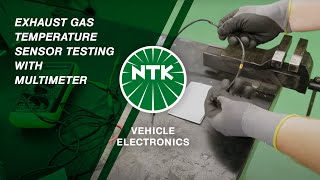
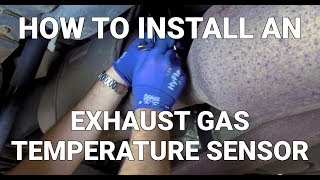


The information in this article is provided for general reference and educational purposes only. Vehicle specifications, procedures, and part compatibility can vary by production date, trim level, and region. Always consult your vehicle's factory service manual and verify part numbers before purchasing or performing repairs. Safety-critical components such as airbags, seat belts, and braking systems should be installed by a qualified professional.
- 🎬 Helpful Videos
- What Does P2467 Mean?
- Can I Drive With P2467?
- Common Causes
- Symptoms
- Diagnostic Flowchart
- Common Fixes & Costs
- Used vs. New Parts: Buying Guide
- What Happens If You Wait — Timeline
- Cost of Not Fixing It
- Diagnosis Steps
- When This Code Triggers (Freeze-Frame Conditions)
- Related Codes
- Climate & Environmental Factors
- How to Talk to a Mechanic About This Code
- Where to Take It: Dealer vs Independent vs Chain
- When to Walk Away From the Repair
- What Scan Tool You Need for This Code
- How to Clear the Code After You Fix It
- Will This Fail Emissions / State Inspection?
- Most Commonly Affected Vehicles
- Manufacturer-Specific Notes
- Real Owner Stories
- 2013 Ford F-250 6.7L Power Stroke at 130K miles
- 2015 GMC Sierra 2500HD LML Duramax
- 2014 Ram 2500 6.7L Cummins with intermittent issues
- How to Prevent This Code From Triggering
- Frequently Asked Questions
- Where is the Bank 2, Sensor 3 EGT sensor located?
- What is the most common misdiagnosis for P2467?
- Can I just clean the EGT sensor instead of replacing it?
- What happens if I ignore code P2467?
- Will a fuel additive or 'mechanic in a can' fix this code?
- Is an EGT sensor covered under my car's warranty?
- Can a bad battery cause a P2467 code?
- Key Takeaways
- 🎟️ Get 5% Off