

P2463 on 2010-2014 Volkswagen Golf: DPF Soot Accumulation Causes and Fixes
This code means the Diesel Particulate Filter (DPF) is clogged with soot. The most common fix is to address the underlying cause preventing filter cleaning (regeneration), such as a faulty DPF pressure sensor or throttle body, and then perform a forced regeneration or professional cleaning. A sensor replacement can cost $100-$250.
- P2463 means your Golf's Diesel Particulate Filter is clogged with soot.
- Do not immediately assume the DPF itself is bad; the root cause is often a failed sensor or another component preventing the filter from cleaning itself.
- The most common culprits are a faulty DPF pressure sensor or a malfunctioning throttle body.
- A driving style with frequent short trips can contribute significantly to this problem.
- Professional diagnosis is highly recommended to avoid replacing an expensive DPF unnecessarily.
What's Unique About the 2010-2014 Volkswagen GOLF

The Mk6 Golf TDI engines (engine codes CJAA, CBEA) are generally robust, but their emissions systems are sensitive and highly interconnected. A key issue on this platform is that P2463 is often a symptom, not the root cause. Problems with other components, like the throttle body (intake manifold flap), DPF pressure sensor, or EGR system, can prevent the DPF from regenerating correctly, leading to soot buildup. The provided TSB specifically links P2463 with an EGR flow fault (P0401), highlighting this interconnectedness on VW diesels. A cracked DPF can also cause the low-pressure EGR filter to clog, triggering P0401, which then prevents proper DPF function.
Diagnostic Flowchart

Tap your situation to follow the diagnostic path that matches what you're seeing on this vehicle.
Symptoms You May Notice
- Check Engine Light is on
- Flashing glow plug light on the dashboard
- DPF warning light is illuminated
- Vehicle enters 'limp mode', with engine RPM limited (e.g., to 2500 RPM)
- Reduced engine performance and acceleration
- Excessive black smoke from the exhaust (if DPF is cracked)
- Increased fuel consumption
- Engine may run rough or hesitate
- Replacing the DPF assembly without diagnosing the root cause. The clogged DPF is often the symptom. If the underlying issue (like a bad sensor, throttle body, or a cracked DPF clogging the EGR) isn't fixed, the new DPF will quickly clog again.
Most Likely Causes

- Failed DPF Differential Pressure Sensor 🔴 High Probability These sensors (VW part # 076906051B for MY 2010+) are exposed to harsh exhaust conditions and can fail by giving incorrect pressure readings, tricking the ECM into thinking the DPF is clogged when it isn't, or vice-versa. They are a very common failure point.
How to confirm: Use a scan tool like VCDS to monitor live data from the DPF pressure sensor at idle. At idle, pressure should be very low (under 15 mbar, ideally under 10 mbar). If the reading is high at idle or doesn't change with RPM, the sensor or its hoses are likely faulty. With the ignition on and engine off, the sensor should read 0.0 mbar. Visually inspect the sensor and its rubber hoses for cracks, melting, or blockages.
Typical fix: Replace the DPF differential pressure sensor (also known as G450) and ensure its connecting hoses are clear and correctly routed. An adaptation of the new sensor using a scan tool may be required.
Est. part cost: $45-$190 - Failed DPF Regenerations 🔴 High Probability Primarily caused by a driving style consisting of short, low-speed trips which don't allow the exhaust to get hot enough for passive regeneration. The system then fails to initiate or complete an active regeneration cycle. This is a rare cause if no other fault codes are present.
How to confirm: Review the vehicle's fault history for codes related to regeneration failure. Check live data for soot mass; a calculated value over the specified limit (e.g., 40-45 grams) confirms a blockage that prevents automatic regeneration. A stationary forced regeneration may only be possible if the soot load is below this threshold.
Typical fix: Perform a forced (static or dynamic/driving) regeneration using a compatible diagnostic tool like VCDS. This requires driving at a steady speed (e.g., 70-90 km/h in 4th/5th gear at ~2500 RPM) for 15-30 minutes. If this fails, the DPF may require professional off-car cleaning or replacement.
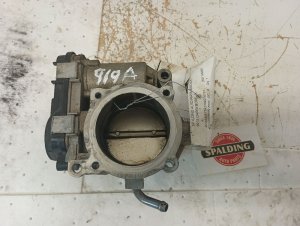
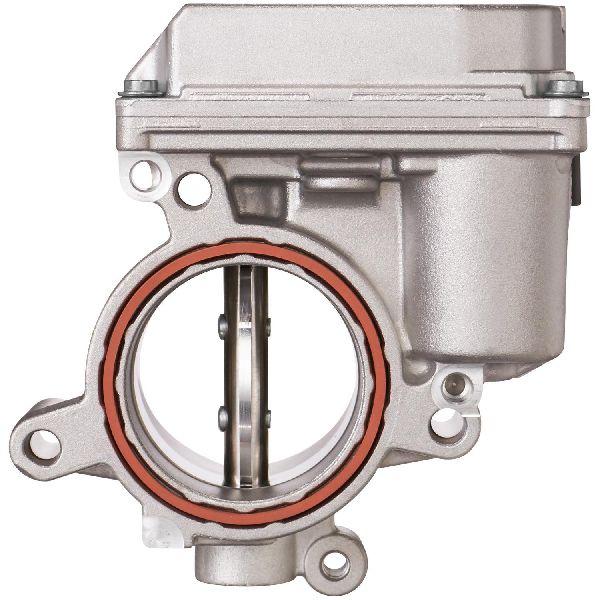
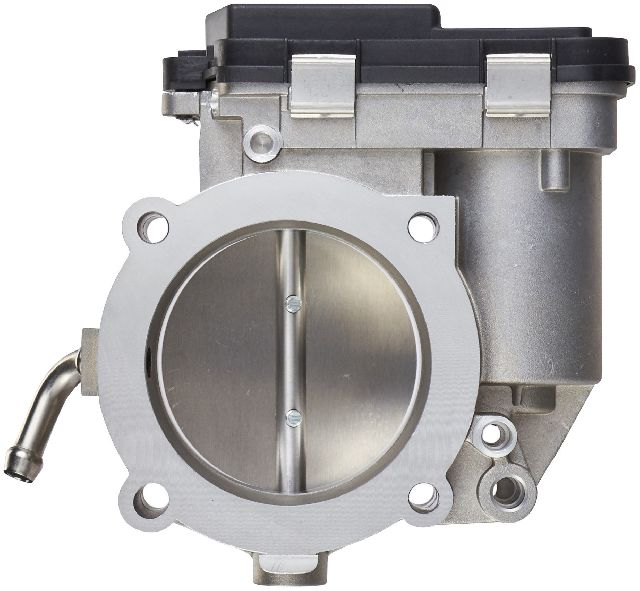
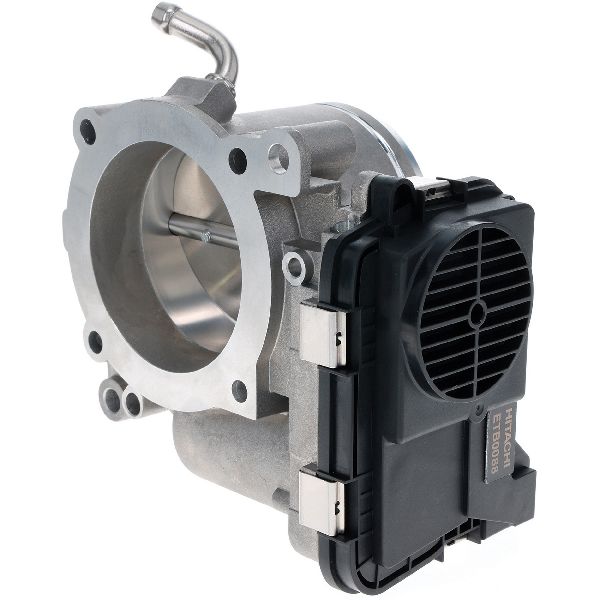
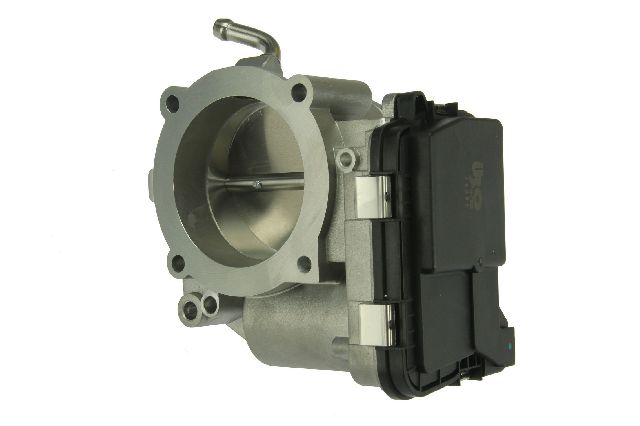
Est. part cost: $200-$600 for professional cleaning - Faulty Throttle Body (Intake Manifold Flap) 🟡 Medium Probability The throttle body on the TDI engine (part # 03L128063R) is used to create a vacuum and regulate airflow during DPF regeneration. Oil and soot contamination can cause the internal motor or gears to fail, preventing the throttle plate from closing as needed. This aborts the regeneration process and often logs a P145F fault ('Mass Air Flow in Regeneration Operation Too High') alongside P2463.
How to confirm: Using a scan tool, perform an output diagnostic test (actuation test) on the throttle body. The specified and actual positions should match. If the valve doesn't move, twitches, or makes grinding noises, it's faulty.
Typical fix: Replace the throttle body assembly. It is located on the front of the intake manifold. After replacement, a basic setting or adaptation may need to be performed using a scan tool.
Est. part cost: $200-$400 - EGR System Fault ⚪ Low Probability As noted in TSB V011609_2034898, an insufficient EGR flow (P0401) can accompany P2463. A cracked DPF can allow soot to pass through and clog the low-pressure EGR filter, which triggers the P0401 code and prevents proper engine management for DPF regeneration. This creates a cycle where one failed component causes another to log a fault.
How to confirm: Check for EGR-related fault codes, specifically P0401. Remove the low-pressure EGR filter and inspect for heavy soot. If soot is present, it's a strong indicator the DPF has failed (cracked).
Typical fix: If the EGR filter is clogged, it must be replaced. Crucially, the DPF must also be inspected and likely replaced, as it is the source of the soot. Simply cleaning the EGR filter will not solve the problem long-term.
Est. part cost: $150-$500 for EGR components, significantly more if DPF is also required.
Rare But Worth Checking
- Faulty Exhaust Gas Temperature Sensor: The ECM relies on accurate temperature readings to initiate and control DPF regeneration. A failed sensor can prevent regeneration from starting or completing.
- Cracked or Clogged DPF Pressure Sensor Hoses: The rubber hoses leading to the pressure sensor can become brittle, melt, crack, or get blocked with soot, leading to inaccurate readings that can trigger P2463.
- Low Diesel Exhaust Fluid (DEF): While more related to the SCR system, insufficient DEF levels can sometimes inhibit other emissions-related functions, including DPF regeneration, on some vehicles.
Diagnosis Steps
- Connect a VW-compatible OBD-II scanner (like VCDS) and confirm P2463 is present. Check for any other codes, especially P0401, P145F, or temperature sensor faults.
- Check freeze frame data to understand the conditions when the code was set.
- View live data for 'soot mass calculated' and 'soot mass measured'. A calculated value over 40-45g confirms a blockage and will likely prevent automatic regeneration.
- Monitor the DPF differential pressure sensor readings at idle. A reading above 10-15 mbar at idle points to a sensor, hose, or genuine blockage issue.
- Visually inspect the rubber hoses going to the DPF pressure sensor for cracks, melting, leaks, or blockages.
- If P145F is present, perform an actuation test on the throttle body using the scan tool. Watch for smooth movement and listen for unusual noises. If it twitches or fails to move, it is faulty.
- If P0401 is present, inspect the low-pressure EGR filter for soot contamination, which strongly implies a cracked/failed DPF.
- If sensor and throttle body readings seem plausible, attempt a forced regeneration using the scan tool. This may require a service-bay (static) regen or a dynamic (driving) regen. 🎬 Learn how to activate a forced regeneration using VCDS software.
- If regeneration fails or is not permitted by the ECM, the DPF may require professional off-car cleaning or replacement. If the DPF is replaced, an adaptation must be performed in the ECM to reset learned values.
Parts You'll Likely Need

- DPF Differential Pressure Sensor
(OEM #076906051B)— This sensor is a very common failure point and directly reports the data that triggers the P2463 code. Its failure is a more frequent root cause than the DPF itself. Note: Part number 076906051A is for earlier models (pre-2010) and is not compatible.
Trusted brands: Bosch, Hella, Genuine VW/Audi
OEM price range: $120-$180
Aftermarket price range: $45-$110 - Throttle Body / Intake Manifold Flap
(OEM #03L128063R)— Failure of this part is a known issue that prevents DPF regeneration, directly leading to soot buildup and the P2463 code. It often fails due to internal contamination from oil and soot.
Trusted brands: VDO, Pierburg, Genuine VW/Audi
OEM price range: $300-$450
Aftermarket price range: $200-$350
Related Codes That Often Appear With This One
- P0401 — As cited in TSB V011609_2034898, insufficient EGR flow can be a contributing cause or a related symptom. A cracked DPF can clog the EGR filter, causing P0401.
- P145F — This VW-specific code for 'Mass Air Flow in Regeneration Operation Too High' often points directly to a faulty throttle body that fails to close during the regen cycle, which in turn causes the P2463 code.
- P0544 — This code for 'Exhaust Gas Temperature Sensor Circuit Bank 1' can appear alongside P2463, indicating a problem with a sensor critical for the regeneration process.
Technical Service Bulletins (TSBs) & Recalls
- V011609_2034898 (also referenced as 2034898): MIL ON, DTC P0401 Exhaust Gas Recirculation Flow Insufficient Stored in ECM Fault Memory, Could be accompanied with Fault P2463 DPF Soot Accumulation.
Platform-Specific Known Issues
- The manufacturer issued Technical Service Bulletin #V011609_2034898 which notes that DTC P2463 for DPF soot accumulation can appear alongside DTC P0401 for insufficient EGR flow. The TSB explains that high soot loads can cause restrictions in the EGR filter and advises on diagnosis.
- A faulty throttle body (intake flap) is a well-documented failure pattern on this platform that directly prevents DPF regeneration and triggers P2463, usually accompanied by P145F.
Mechanic-Grade Diagnostic Values
- DPF Differential Pressure Sensor (G450) Signal Voltage — expected: 0.5V at idle, rising with RPM, but not exceeding 4.5V. The reference wire should have ~5V and the ground wire should have 0V.. Failure: A signal voltage that is stuck high (e.g., 5V) or does not change with engine RPM suggests a faulty sensor or wiring issue. Negative pressure values can indicate a sensor fault or leak.
- VCDS Live Data: DPF Differential Pressure at Idle — expected: Under 15 hPa (mbar), ideally under 10 hPa.. Failure: A value significantly higher than 15 hPa at idle points to a genuine blockage in the DPF or an issue with the sensor/hoses.
- VCDS Live Data: DPF Soot Load (Calculated) — expected: Well below 40 grams.. Failure: A value exceeding the regeneration limit, typically 40-45 grams, will trigger P2463 and prevent automatic regeneration.
Scan Tool Commands That Help
- VCDS (VAG-COM): Basic Settings > "Resetting of learned values of particle filter" — This function is critical after replacing the DPF. It resets the ECU's stored ash load value to zero. Failure to do this will cause the ECU to operate with incorrect data, leading to improper regeneration cycles. This should NOT be used after a simple cleaning, only a full replacement.
- VCDS (VAG-COM): Adaptation > "Carbon Mass (DPF Replacement)" — An alternative method to reset the DPF's learned values after replacement. A new value of '1' is saved to initialize the new filter. For a cleaned filter, some technicians suggest resetting the ash mass to a percentage of its original value rather than zero.
- VCDS (VAG-COM) or similar: Security Access > Code for enabling regeneration (e.g., 12233 for driving, 27971 for standing) — This is used to unlock the ability to perform a forced or emergency regeneration of the DPF when soot levels are high but still below the absolute lockout threshold.
- VCDS (VAG-COM): Basic Settings > Output test for Intake Manifold Flap — To diagnose a faulty throttle body (Intake Manifold Flap). This command cycles the flap motor, allowing a technician to observe if it moves smoothly through its full range of motion or if it is sticking, a common cause of P145F and subsequent P2463 faults.
Wiring & Ground Locations
- G652 — Main ground connection for the transmission and engine.. A poor main engine/transmission ground can cause erratic behavior in various sensors, including the DPF pressure sensor and exhaust temperature sensors, leading to incorrect readings and fault codes.
- G18 — Ground connection on the engine block.. Provides a ground path for engine-mounted sensors. Corrosion or a loose connection here can disrupt sensor signals required for DPF regeneration.
- DPF Pressure Sensor (G450) Connector — On the sensor itself, which is located in a foil pouch just behind the oil cap on CJAA engines.. This is the primary connection to test for the 5V reference, ground, and signal wires when diagnosing a faulty sensor. Pin 1 is typically the 5V supply, Pin 2 is ground, and Pin 3 is the signal output.
Real Owner Repair Stories
- YouTube channel "LM-Automotive" (2010 Volkswagen Golf 2.0 TDI (CFF Engine)) — Check Engine Light, flashing Glow Plug light, and DPF light all illuminated. Vehicle in limp mode, would not rev over 2500 RPM.
❌ Tried (didn't work) Initial diagnosis confirmed the DPF was blocked (high differential pressure) but the technician knew this was a symptom.
✅ What actually fixed it The root cause was a faulty throttle body (intake manifold flap). It was failing an output test, causing fault code P145F (Mass Air Flow in Regeneration Operation Too High) which prevented regeneration and led to P2463. Replacing the throttle body and then performing a forced DPF cleaning resolved all issues.
OEM Part Supersession History
076906051A / 03G906051G / 03G906051J→076906051B— Updated sensor design for 2010+ model year vehicles.
Heads up: The earlier sensor (076906051A) used on pre-2010 models (like CBEA engines) is NOT compatible with 2010-2014 models (like CJAA engines). Installing the wrong sensor will cause immediate fault codes.Various older revisions→03L128063R (and subsequent letters)— Revisions to the throttle body/intake flap motor to improve reliability.
Heads up: While most revisions are physically interchangeable, some aftermarket versions or very early OEM parts may have different software expectations. It's noted that after replacement, the ECU may need to be updated or have an adaptation performed.
Model Year Variations Within This Range
- 2010 vs pre-2010: The DPF differential pressure sensor (G450) part number changed for the 2010 model year. Pre-2010 vehicles typically use part number 076-906-051-A, while 2010 and newer vehicles (including the Golf Mk6 CJAA) require 076-906-051-B. The two are not interchangeable.
Helpful Videos
Used OEM Parts in Stock



New Aftermarket Parts Available


The information in this article is provided for general reference and educational purposes only. Vehicle specifications, procedures, and part compatibility can vary by production date, trim level, and region. Always consult your vehicle's factory service manual and verify part numbers before purchasing or performing repairs. Safety-critical components such as airbags, seat belts, and braking systems should be installed by a qualified professional.
- Volkswagen GOLF:
- 🎬 Helpful Videos
- 🛍️ Shop This Part
- What's Unique About the 2010-2014 Volkswagen GOLF
- Diagnostic Flowchart
- Symptoms You May Notice
- Most Likely Causes
- Rare But Worth Checking
- Diagnosis Steps
- Parts You'll Likely Need
- Related Codes That Often Appear With This One
- Technical Service Bulletins (TSBs) & Recalls
- Platform-Specific Known Issues
- Mechanic-Grade Diagnostic Values
- Scan Tool Commands That Help
- Wiring & Ground Locations
- Real Owner Repair Stories
- OEM Part Supersession History
- Model Year Variations Within This Range
- 🎟️ Get 5% Off