

P2463 on 2019-2020 Ram 2500 6.7L Cummins: DPF Soot Accumulation Causes & Fixes
P2463 means the Diesel Particulate Filter (DPF) is clogged with soot, often due to short-trip driving habits that prevent self-cleaning. The most common fix is a 'forced regeneration' at a shop ($150-$400). Before considering a costly DPF replacement ($2500+), always check for a faulty DPF pressure sensor, its hoses, and crucial PCM software updates outlined in Ram TSBs.
- P2463 means the DPF is clogged with soot, most often due to driving habits like frequent short trips that prevent the truck from self-cleaning.
- Do not immediately assume the expensive DPF needs replacement. A forced regeneration, a faulty DPF pressure sensor, or clogged sensor hoses are much more common and cheaper fixes.
- The vehicle will enter a low-power 'limp mode' to protect the engine and should be serviced promptly to avoid more costly damage to the turbo or DPF itself.
- Ask your service provider to check for any available Powertrain Control Module (PCM) software updates, as several TSBs indicate this can be part of the solution.
- Check with a Ram dealer about potential warranty coverage under emissions extension XQ1 for 2019 models, which could cover the repair.
What's Unique About the 2019-2020 Ram 2500

On the fifth-generation Ram 2500 with the 6.7L Cummins, the emissions system is complex and requires specific operating conditions to self-clean (regenerate). This P2463 code is common, especially on trucks used for frequent short trips or prolonged idling, which prevents the exhaust from getting hot enough for automatic regeneration. Ram has issued multiple Technical Service Bulletins (TSBs)—specifically 18-066-23 for 2019 models and 18-102-22 REV A for 2020 models—that group P2463 with other codes. These TSBs often recommend a PCM software update as the primary fix, indicating the issue can be flawed software logic rather than a simple clogged filter. For 2019 models, an emissions recall known as "VB6" was also issued to address software issues. A major point of concern for 2019-2020 models is the factory-installed Bosch CP4.2 high-pressure fuel pump, which is known for a higher failure rate compared to the CP3 pump used in other model years. A failing CP4.2 can contaminate the entire fuel system and potentially affect combustion, leading to excess soot.
Diagnostic Flowchart
Tap your situation to follow the diagnostic path that matches what you're seeing on this vehicle.
Symptoms You May Notice
- Check Engine Light or DPF warning light is on
- Message on the dashboard like "Exhaust Filter Full, Service Required" or "Acceleration reduced, use caution"
- Severely reduced engine power (vehicle is in 'limp mode')
- Increased fuel consumption
- Engine may run rough or fail to accelerate properly
- DPF gauge on the instrument cluster reads 100% full
- In severe cases, black smoke from the exhaust
- Replacing the entire Diesel Particulate Filter (DPF) assembly without first testing the DPF pressure sensor and its hoses. The sensor and hoses are far more common failure points and are significantly cheaper to replace.
- Assuming the DPF is bad when a PCM software update is the actual required fix per manufacturer TSBs.
- Confusing soot accumulation (P2463, which is reversible via regeneration) with ash accumulation (P242F, which is permanent and requires cleaning or replacement).
Most Likely Causes

- Insufficient DPF Regeneration Due to Driving Habits 🔴 High Probability These trucks are designed for long-distance, high-load work which generates high exhaust temperatures for passive regeneration. Frequent short trips, city driving, or extended idling prevent the exhaust from reaching the high temperatures needed to automatically burn off soot.
How to confirm: Review driving habits. If the truck is rarely driven at highway speeds for 30+ minutes, this is a likely cause. Attempting a highway drive (over 55 mph for 20-30 minutes) may initiate an automatic regeneration cycle.
Typical fix: Perform a 'forced regeneration' using a compatible scan tool like AlfaOBD or wiTECH. This stationary procedure raises engine RPM and exhaust temperatures to burn off the soot. If successful, modify driving habits to include regular highway driving to allow the system to self-clean.
Est. part cost: $0 - Faulty DPF Differential Pressure Sensor 🔴 High Probability This sensor operates in a harsh environment and is a common failure point. It can become clogged with soot, fail electronically, or drift out of calibration, sending incorrect high-pressure readings to the PCM and falsely indicating a clogged DPF.
How to confirm: Use a scan tool to monitor the DPF pressure sensor readings with the key on, engine off; the reading should be near zero (0.5-1.0 Volts). If it shows significant pressure, or if the readings are erratic while driving, the sensor is likely faulty. You can also test the sensor's 5V reference wire, which should read between 4.9-5.1 Volts.
Typical fix: Replace the DPF differential pressure sensor. The OEM part number is 68312096AB, which fits 2019-2024 models.
Est. part cost: $70-$180 - Clogged, Cracked, or Melted DPF Pressure Sensor Hoses 🟡 Medium Probability The rubber or metal tubes connecting the sensor to the DPF are exposed to extreme heat and can get clogged with soot, become brittle and crack, or even melt. This leads to inaccurate pressure readings that mimic a clogged filter or failed sensor.
How to confirm: Visually inspect the entire length of both hoses that connect to the DPF pressure sensor. Look for cracks, melting, kinks, or blockages. Remove the hoses and attempt to blow compressed air through them to check for restrictions.
Typical fix: Replace the damaged or clogged hoses. One known OEM part number for a downstream hose is 68363177AC.
Est. part cost: $30-$100 - Outdated Powertrain Control Module (PCM) Software 🟡 Medium Probability Ram has released multiple TSBs for this issue that involve updating the PCM software. The original software may have parameters that are too sensitive or that manage the regeneration process inefficiently, falsely triggering P2463.
How to confirm: A Ram dealership or a well-equipped independent shop can check the current software version against the latest available version. TSB 18-066-23 is for 2019 models and TSB 18-102-22 REV A is for 2020 models.
Typical fix: Update or 'reflash' the PCM to the latest software version. This is often the primary fix specified by the manufacturer and should be checked before replacing expensive parts.
Est. part cost: $0-$200
Rare But Worth Checking
- DPF End of Life (Ash Accumulation): While regeneration burns off soot, it leaves behind a small amount of incombustible ash. Over many miles (typically 150,000+), this ash can build up and permanently clog the filter, preventing successful regeneration. This is often indicated by code P242F appearing alongside P2463. At this point, the DPF requires professional off-vehicle cleaning ($300-$650) or full replacement.
- Exhaust Leaks: A leak in the exhaust system upstream of the DPF can alter the pressure and temperature readings seen by the sensors, preventing proper regeneration and potentially leading to an incorrect P2463 code. Look for black soot trails around exhaust flanges.
- Wiring Issues: A damaged wire or corroded connector in the DPF pressure sensor circuit can cause a short or open, leading to false readings. In one documented case for a 6.7L Cummins, the sensor's signal wire had rubbed through on a grounding strap near the transmission, causing an intermittent short that was only resolved after repairing the wire.
- Faulty Mass Air Flow (MAF) Sensor: In at least one documented case, a technician found that a MAF sensor under-reporting airflow by a small margin (3-5 g/s at idle) was the root cause for a cluster of emissions codes, including P2463. The PCM relies on accurate airflow data to manage the DPF system, and incorrect data can lead to improper regeneration.
Diagnosis Steps

- Check for TSBs: Before any other step, check your vehicle's VIN for applicable Technical Service Bulletins, specifically TSB 18-066-23 (2019) or TSB 18-102-22 REV A (2020). A PCM software update may be the designated fix.
- Scan for All DTCs: Use an OBD-II scanner to confirm P2463 and check for related codes like P1451, P242F, or P0299, as they provide critical context.
- Inspect DPF Sensor Hoses: Visually inspect the hoses running to the DPF differential pressure sensor for any signs of melting, cracks, or kinks. Remove them and blow compressed air through to ensure they are not clogged with soot.
- Analyze Sensor Data: Using a capable scan tool, view the live data for the DPF pressure sensor with the key on and engine off. The reading should be 0 PSI or 0.5-1.0V. Start the engine; the pressure should rise with RPM. If the reading is high at idle or doesn't change, the sensor or its wiring is suspect. Verify the sensor connector has a 5V reference (4.9-5.1V).
- Attempt Highway Regeneration: If driving habits are a likely cause, drive the vehicle at highway speeds (above 55 mph) for at least 30 minutes to see if an automatic regeneration will occur and clear the code.
- Perform a Forced Stationary Regeneration: If highway driving doesn't work, use a scan tool like AlfaOBD or wiTECH to command a 'DPF Service Regeneration'. Note that this may fail if other codes (like for glow plugs or intake sensors) are present.
Parts You'll Likely Need
- DPF Differential Pressure Sensor
(OEM #68312096AB)— This sensor is a very common failure point. It can provide false readings that incorrectly trigger the P2463 code, making it a primary suspect after confirming the DPF is not actually clogged. - DPF Pressure Sensor Hoses
(OEM #68363177AC (Downstream Hose))— The hoses that connect the sensor to the DPF can clog with soot, crack, or melt from heat, causing incorrect pressure readings. - Diesel Particulate Filter (DPF) Assembly
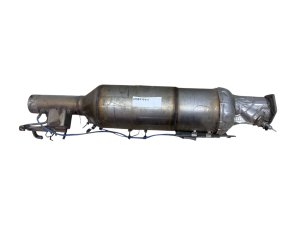
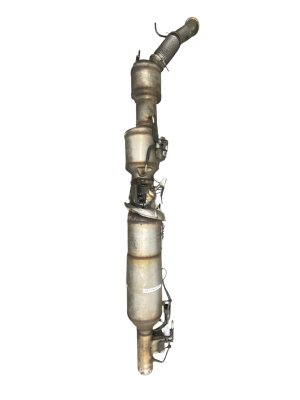
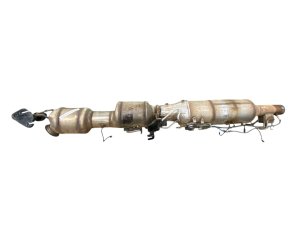
(OEM #68296341AE (Reman Part # 121-0010RM-DPF))— In high-mileage cases, or if the code P242F is also present, the filter may be permanently clogged with ash and require replacement. This is the most expensive fix and should be the last resort.
Related Codes That Often Appear With This One
- P1451 — This is a general 'Diesel Particulate Filter System Performance' code that commonly appears with more specific DPF codes like P2463. TSBs 18-066-23 and 18-102-22 REV A list them together as being resolved by a PCM software update.
- P242F — This code indicates 'Diesel Particulate Filter Restriction - Ash Accumulation'. Seeing it with P2463 is a strong indicator that the DPF is at the end of its service life and full of non-burnable ash, requiring professional cleaning or replacement. One owner on the HD Rams forum with all three codes (P1451, P242F, P2463) ended up replacing the entire DPF system.
- P0299 — This 'Turbocharger Underboost' code can be triggered when extreme backpressure from a clogged DPF affects the turbo's performance. It is also listed in the same TSBs as P2463, suggesting a software update can sometimes resolve both.
- P0607 — This 'ECU Internal Performance' code is frequently mentioned in the same TSBs as P2463. This indicates that the PCM may log an internal performance fault while struggling to manage a severe DPF issue, and a software update is designed to fix the logic for both.
Technical Service Bulletins (TSBs) & Recalls

- 18-102-22REVA (also listed as 18-067-23): For 2020 Ram 2500/3500 models, this TSB involves a PCM software update to address a long list of DTCs including P2463, P242F, P1451, P0299, and P0607. It also includes improvements for engine warm-up, idle stability, and other drivability concerns.
- 18-066-23: For 2019 Ram 2500/3500 models, this TSB supersedes a previous version and involves a PCM software update to fix a large group of DTCs, including P2463, P1451, and P242F.
- 18-101-22REVA: This TSB for 2019 models was superseded by 18-066-23 but also listed P2463, P242F, and P1451 as being addressed by a software update.
Platform-Specific Known Issues
- Multiple Technical Service Bulletins (TSBs) have been issued by Ram for P2463 and related codes. These include #1810222REVA, #1806623, #18-102-22, and #1810122REVA. These bulletins often recommend a PCM software update as part of the repair procedure.
- For 2019 models, an emissions warranty extension (XQ1) related to recalls VB6 and 67A may cover the replacement of the DPF assembly and DPF differential pressure sensor for up to 10 years or 120,000 miles. Owners should check with a dealer for eligibility.
Mechanic-Grade Diagnostic Values
- DPF Differential Pressure Sensor 5V Supply — expected: 4.9 - 5.1 Volts DC. Failure: Voltage outside this range points to a wiring or PCM issue, not the sensor itself.
- DPF Differential Pressure Sensor Signal Voltage (Key On, Engine Off) — expected: 0.5 - 1.0 Volts DC. Failure: A reading outside this range, especially near 0V or significantly higher, suggests a faulty sensor or a wiring short/open.
- DPF Differential Pressure Sensor Ground Circuit Resistance — expected: Less than 10.0 Ohms. Failure: Resistance higher than 10 ohms indicates a poor ground connection, which can cause erratic sensor readings.
- DPF Backpressure at Idle (Healthy, Post-Regen) — expected: 1 - 3 millibars (approx. 0.015 - 0.044 PSI). Failure: Significantly higher pressure at idle suggests the DPF is still restricted with soot or ash.
- DPF Backpressure at 2500-3000 RPM (Healthy, Post-Regen) — expected: 35 - 40 millibars (approx. 0.5 - 0.58 PSI). Failure: Excessively high pressure that doesn't return to baseline indicates a blockage.
Scan Tool Commands That Help
- wiTECH or AlfaOBD: DPF Service Regeneration — Used to command a stationary forced regeneration when a highway regeneration is not possible or has failed. This is a primary step in clearing a soot-filled DPF.
- AlfaOBD: DPF Replacement — This function must be run after physically replacing the DPF assembly. It resets the learned values and soot/ash counters in the PCM. Failure to do this can cause the new DPF to be treated as if it were old and full. Note that a security bypass cable is required for this function on 2018+ vehicles.
Wiring & Ground Locations
- DPF Differential Pressure Sensor Connector — Located on the passenger side of the truck, mounted on a bracket above the transmission.. This is the central connection point for the sensor. The wiring harness here is susceptible to heat damage and chafing from nearby components, such as grounding straps, which can cause shorts or open circuits.
- K354 (5V Supply), K355 (Signal), K951 (Ground) — These are the circuit identifiers for the wires running between the PCM and the DPF pressure sensor connector.. Knowing these identifiers helps in tracing specific wires on a schematic to test for continuity, shorts to ground, or shorts to power, which are common causes of sensor-related fault codes.
Real Owner Repair Stories
- Ovens Garage YouTube Channel (2009 Ram 3500 6.7L Cummins (3rd Gen, but demonstrates an identical failure mode)) — Check engine light with code P2454 (DPF Pressure Sensor A Circuit Low), a closely related code indicating a circuit fault.
❌ Tried (didn't work) Replacing the DPF pressure sensor with a new part did not resolve the code.
✅ What actually fixed it The factory grounding strap on the passenger side of the transmission had rubbed through the insulation of the DPF sensor's signal wire, causing an intermittent short to ground. Repairing the damaged wire and protecting it from the strap permanently fixed the issue. - RamForum.com user (2020 Ram 2500 6.7L Cummins with 125,000 miles) — DPF full message, vehicle would not perform an automatic regeneration.
❌ Tried (didn't work) Attempting automatic regeneration through driving., Dealer wanted $4-5k to replace the DPF.
✅ What actually fixed it The owner replaced the DPF himself. Afterward, he needed to use AlfaOBD with a security bypass cable to run the 'DPF Replacement' active diagnostic function to reset the ECU. Without this reset, the truck's computer would not correctly recognize the new, clean filter.
OEM Part Supersession History
68312096AA→68312096AB— Standard part revision by the manufacturer.
Heads up: The parts are interchangeable. 68312096AB is the current replacement for 2019-2024 models.
Model Year Variations Within This Range
- 2019-2020: These model years were equipped with the Bosch CP4.2 high-pressure fuel pump, which has a reputation for being less reliable than the CP3 pump used on earlier (pre-2019) and later (2021+) models. Failure of this pump can cause fuel system contamination and lead to issues that may manifest as DPF codes like P2463.
Helpful Videos
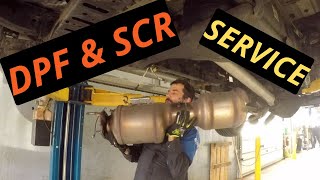
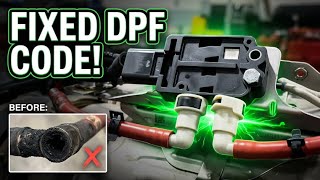
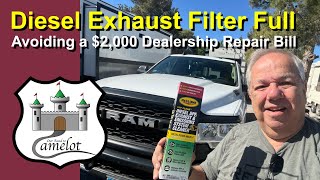
Used OEM Parts in Stock
New Aftermarket Parts Available


The information in this article is provided for general reference and educational purposes only. Vehicle specifications, procedures, and part compatibility can vary by production date, trim level, and region. Always consult your vehicle's factory service manual and verify part numbers before purchasing or performing repairs. Safety-critical components such as airbags, seat belts, and braking systems should be installed by a qualified professional.
- Ram 2500:
- 🎬 Helpful Videos
- 🛍️ Shop This Part
- What's Unique About the 2019-2020 Ram 2500
- Diagnostic Flowchart
- Symptoms You May Notice
- Most Likely Causes
- Rare But Worth Checking
- Diagnosis Steps
- Parts You'll Likely Need
- Related Codes That Often Appear With This One
- Technical Service Bulletins (TSBs) & Recalls
- Platform-Specific Known Issues
- Mechanic-Grade Diagnostic Values
- Scan Tool Commands That Help
- Wiring & Ground Locations
- Real Owner Repair Stories
- OEM Part Supersession History
- Model Year Variations Within This Range
- 🎟️ Get 5% Off