

P2463 on 2007-2011 GMC Sierra Denali: DPF Restriction Causes & Fixes
P2463 means the Diesel Particulate Filter (DPF) is clogged with soot. This is often due to short-trip driving habits or extended idling that prevent the filter from self-cleaning (regenerating). The most common fix is to perform a forced "service regeneration" with a scan tool, but the code can also be caused by a faulty DPF pressure sensor, its hoses, or a failed 9th injector on 2011 LML models.
- P2463 means your truck's DPF is clogged and needs a cleaning cycle that can no longer happen automatically.
- Before replacing any expensive parts, try to initiate a 'service regeneration' with a proper scan tool. This often solves the problem.
- The most common parts to fail are not the DPF itself, but the much cheaper DPF pressure sensor and its connecting hoses.
- Your driving habits matter. Ensure the truck gets regular, sustained highway driving to allow the emissions system to work as designed.
- For 2011 models, a faulty 9th injector is a unique and possible cause that should be investigated if regenerations are failing.
What's Unique About the 2007-2011 Gmc SIERRA DENALI
The GMC Sierra Denali from this era uses either the LMM (2007.5-2010) or LML (2011) Duramax engine. Both are prone to DPF clogging if not driven at highway speeds regularly, which is necessary for the DPF to heat up and perform a 'regeneration' cycle to burn off soot. The 2011 LML engine introduced a '9th injector' (hydrocarbon injector) specifically to spray fuel into the exhaust to aid regeneration. This adds a unique potential failure point not present on the earlier LMM models, which perform regeneration using post-combustion injection events from the main fuel injectors. A failure of the 9th injector is a common cause for P2463 on the LML.
🎬 See this walkthrough on replacing the 9th injector.Diagnostic Flowchart
Tap your situation to follow the diagnostic path that matches what you're seeing on this vehicle.
Generation note: While all models are part of the GMT900 platform, the engine and its emissions system changed. The 2007.5-2010 models use the 6.6L Duramax LMM engine. The 2011 model year introduced the 6.6L Duramax LML engine, which uses a different DPF regeneration strategy involving a 9th injector to introduce fuel into the exhaust stream.
Symptoms You May Notice
- Check Engine Light is on
- "Reduced Engine Power" message on the DIC
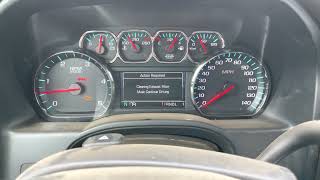
- "Clean Exhaust Filter See Owners Manual Now" or similar message on the DIC
- Noticeable loss of engine power and acceleration
- Increased fuel consumption
- Vehicle may not be able to maintain highway speeds
- Excessive black smoke from the exhaust in severe cases
- Engine may be difficult to start or fail to start in extreme cases of blockage
- Replacing the entire Diesel Particulate Filter (DPF) assembly. The DPF itself is often just clogged with soot, not failed. A forced regeneration or fixing a faulty sensor is usually the correct first step. The DPF is extremely expensive and should only be replaced as a last resort if it's physically cracked or clogged with non-burnable ash (which accumulates over many miles and cannot be burned off like soot).
Most Likely Causes
- Insufficient DPF Regeneration Due to Driving Habits 🔴 High Probability These heavy-duty trucks require sustained highway driving (typically above 30 mph) to generate enough heat for the DPF to self-clean. Frequent short trips, stop-and-go traffic, or extended idling prevent this process, causing soot to build up faster than it can be burned off.
How to confirm: Review driving habits and engine hour to mileage ratio. A high number of engine hours relative to miles indicates excessive idling. Use a capable OBD-II scanner to check the 'Soot Level' percentage PID. A reading over 100% confirms excessive accumulation; P2463 often sets when levels reach a calculated 70 grams or more.
Typical fix: Perform a 'Service Regeneration' (also called a forced regeneration) using a professional-grade scan tool. This procedure runs the engine at a high RPM while stationary for 20-60 minutes to burn out the soot.
Est. part cost: $0 - Failed DPF Differential Pressure Sensor 🟡 Medium Probability The sensor is exposed to harsh exhaust conditions and its internal diaphragm can fail, or the plastic nipples for the hoses can become brittle and break. This causes it to send false 'clogged' signals to the ECM, even if the filter is clean.
How to confirm: With a scan tool, monitor the DPF pressure sensor voltage or pressure reading with the key on, engine off (should be 0 psi or ~0.5V-0.77V). At idle, it should still be very low (0-2 psi). Raise RPMs; the pressure should increase steadily. If the reading is stuck high, low, or doesn't change, the sensor is likely bad.
Typical fix: Replace the DPF differential pressure sensor. After replacement, the new sensor may need to be calibrated or reset using a scan tool.
Est. part cost: $50-$150 - Clogged, Cracked, or Melted DPF Pressure Sensor Hoses/Pipes 🟡 Medium Probability
How to confirm: Visually inspect the rubber hoses and metal pipes leading from the DPF to the pressure sensor. They can become brittle and crack, get clogged with soot, or melt due to proximity to hot exhaust components, especially if a heat shield is missing or damaged. Disconnect them and blow compressed air through to check for blockages.
Typical fix: Replace the damaged or clogged hoses/pipes. Ensure any factory heat shields are correctly reinstalled. The pressure lines should have a continuous downward gradient with no sharp bends or kinks to ensure accuracy.
Est. part cost: $30-$100 - Failed 9th Injector (Hydrocarbon Injector) - 2011 LML Only ⚪ Low Probability The 2011 LML engine uses this injector to supply fuel for DPF regeneration. If it fails, becomes clogged, or its dedicated fuel line is restricted, regeneration cannot occur, leading to soot buildup.
How to confirm: During a commanded regeneration, use a scan tool to monitor Exhaust Gas Temperatures (EGTs). If EGT temperatures fail to rise significantly (should exceed 1100°F), the injector is likely not working. It can be commanded on with a bidirectional scanner to test for function.
Typical fix: Replace the 9th injector assembly (GM Part # 12661071 / 19421482) and its associated fuel lines.
Est. part cost: $200-$350
Rare But Worth Checking
- Exhaust Leaks: An exhaust leak before or near the DPF can alter the pressure readings and trick the sensor. Check for soot trails or audible leaks from the exhaust manifold gaskets, turbo V-band clamp, and exhaust piping flanges.
- ECM Software Issue: GM has issued multiple service bulletins related to DPF messages and P2463, sometimes involving software updates to change the logic for regeneration triggers. Check with a dealer to see if any updates apply to your vehicle's VIN.
- Failed Thermostat(s): On LML engines, if the engine does not reach a sufficient operating temperature, the ECM will not permit a regeneration cycle to start. A failed-open thermostat can prevent the engine from warming up properly, indirectly leading to P2463.
Diagnosis Steps
- Read all stored DTCs with a capable OBD-II scanner. Address any other codes for sensors (EGT, MAF, Thermostat) or the EGR system first, as they can inhibit regeneration.
- Check the DPF soot level percentage or grams using the scanner's live data. Soot levels over 100% (or over 70 grams on LML models) confirm a clogged state. Note that there may be two PIDs, one calculated by pressure and one by engine modeling; the pressure-based one is often more accurate.
- Attempt a service regeneration using the scan tool. Ensure the vehicle is parked on a non-combustible surface with at least a 1/4 tank of fuel and a fully warmed-up engine. This may take 20-60 minutes. Note: Some scanners may require you to perform a 'DPF reset' function to clear the code before a forced regen will initiate.
- If the regeneration completes successfully and the soot level drops significantly (e.g., below 30%), the issue was likely driving habits. Advise driving at highway speeds for at least 20-30 minutes weekly.
- If regeneration fails, aborts, or the code immediately returns, perform a thorough visual inspection. Check the DPF pressure sensor hoses for cracks, melting, kinks, or blockages.
- Test the DPF differential pressure sensor. Monitor its voltage/pressure with a scan tool (Key On Engine Off should be ~0.5V-0.77V / 0 psi). If readings are irrational, replace the sensor.
- For 2011 LML models, if regeneration temperatures don't rise above ~1100°F, investigate the 9th injector (hydrocarbon injector), its fuel supply line, and its electrical connector.
- Inspect the charge air system (boost tubes) and exhaust system for any leaks between the turbocharger and the DPF. An air leak can cause excessive soot production or throw off sensor readings.
- If all sensors, hoses, and regeneration aids are working correctly but the DPF remains clogged after multiple regen attempts, the DPF itself may be clogged with non-burnable ash or is physically damaged, requiring professional off-vehicle cleaning or replacement.
Parts You'll Likely Need
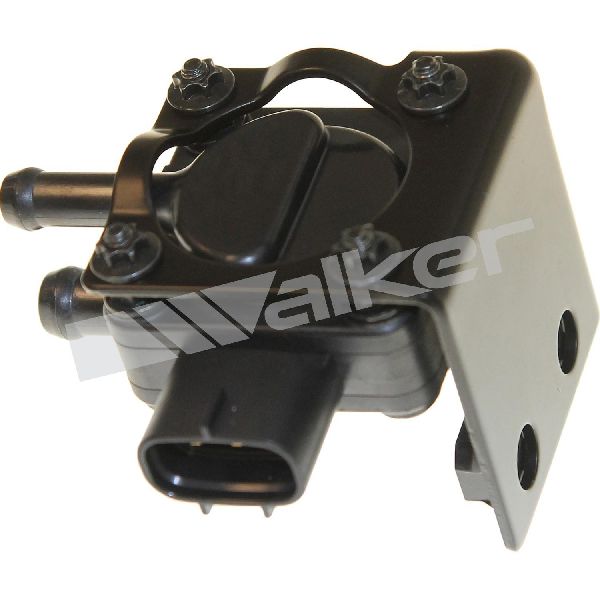
- DPF Differential Pressure Sensor
(OEM #12643911 (Superseded by 12660138 for LML))— This sensor is a common failure point and directly responsible for reporting DPF restriction to the ECM.
Related Codes That Often Appear With This One
- P2459 — This code indicates 'Diesel Particulate Filter Regeneration Frequency' is too high. It often appears with P2463 because the truck is constantly trying and failing to regenerate, leading to the eventual clog.
- P0299 — This code for 'Turbocharger/Supercharger Underboost' can sometimes appear if the extreme backpressure from a clogged DPF affects turbo performance.
- P0420 — On LML engines, this code for 'Catalyst System Efficiency Below Threshold' can sometimes accompany P2463 when a faulty 9th injector is the root cause, or if an EGT sensor is slow to respond.
Technical Service Bulletins (TSBs) & Recalls
- 10-06-05-002K: Information on DIC messages related to DPF cleaning and DTC P2463.
- PI0845: Preliminary information for diagnosing P2463, focusing on soot gram thresholds and air leak inspection.
Platform-Specific Known Issues
- GM has issued multiple Technical Service Bulletins (TSBs) for this issue. Bulletin #10-06-05-002K is an informational bulletin explaining to customers and technicians that the 'Clean Exhaust Filter' message is a normal part of operation and requires driving at speed to resolve. It warns that ignoring the message will lead to P2463 and require dealer service.
- Another bulletin, PI0845, details the diagnostic procedure when P2463 is set, emphasizing checking for air leaks and noting that soot levels above 70 grams will set the code.
- Owners on forums frequently report that the DPF pressure sensor hoses are a primary culprit, either cracking from age or being accidentally damaged during other service.
Mechanic-Grade Diagnostic Values
- DPF Differential Pressure Sensor Voltage (KOEO) — expected: 0.5V - 0.77V DC. Failure: Voltage outside this range indicates a faulty sensor or wiring issue.
- DPF Differential Pressure at Idle — expected: 0 - 2 PSI. Failure: An elevated reading at idle suggests a clogged filter or a biased sensor.
- DPF Soot Mass Threshold for P2463 (LML) — expected: Below 70 grams. Failure: When the ECM detects 70 grams or more of soot, it will set DTC P2463 and may disable active regeneration.
- DPF Regeneration Temperature (EGT) — expected: 1100°F - 1300°F (600°C - 700°C). Failure: Failure to reach this temperature range during a commanded regen points to a problem with the regeneration enabling components, like the 9th injector on an LML.
Scan Tool Commands That Help
- GDS2 (GM Dealer Tool): DPF Service Regeneration — To command a stationary, forced regeneration of the DPF when it is clogged beyond the point where normal driving (passive regen) can clear it. This is the primary fix for P2463 when the cause is soot accumulation.
- GDS2 (GM Dealer Tool): DPF Pressure Sensor Reset — After replacing the DPF differential pressure sensor, this function resets its learned values in the ECM. Some tools may require this before a forced regen will initiate.
- GDS2 / Bidirectional Scanner: Indirect Fuel Injector (9th Injector) Test — On 2011 LML models, this command activates the 9th injector to verify it is spraying fuel. This is used to diagnose a failed regeneration cycle where exhaust temperatures do not rise.
Wiring & Ground Locations
- DPF Pressure Sensor Wiring (LMM) — On the LMM engine's X1 ECM connector.. For manual testing: Pin 14 is the 5-Volt Reference 2 (BN wire), Pin 35 is the Low Reference (YE/BK wire), and the signal wire is on a different pin. Verifying 5V at Pin 14 and good ground at Pin 35 is a key step in diagnosing a sensor that reads incorrectly.
- Engine Block Grounds (Driver Side) — On the driver's side of the engine block, there are three main ground connections on a single stud, including the large battery cable and smaller harness grounds.. A loose or corroded main engine ground can cause a variety of electrical issues and incorrect sensor readings for components grounded to the block, potentially affecting the DPF sensor system.
- Cab-to-Engine Ground Strap — A ground strap connects the firewall/cab to the rear of the driver's side cylinder head.. This ground is critical for ensuring a stable ground reference between the chassis, body control modules, and the engine control module. A poor connection here can lead to intermittent and difficult-to-diagnose electronic faults.
Real Owner Repair Stories
- YouTube channel "scannerdanner" (2019 Chevy Silverado 6.6L Duramax (newer model but same code logic)) — Reduced engine power message, 'cleaning exhaust filter' message, P2463 stored.
❌ Tried (didn't work) A service regeneration was performed and soot load dropped from over 200% to 66%. However, the truck had no power afterward and set a P0299 underboost code.
✅ What actually fixed it The technician disconnected the battery for 15 minutes. He suspected that a laptop glitch during the commanded regeneration prevented the ECM from performing necessary resets after the procedure completed. After the battery disconnect, the truck's power was restored and it operated normally.
OEM Part Supersession History
12641278→12661071 / 19421482— GM updated the part design over time.
Heads up: Part is for the 2011-2016 LML/LGH engine's 9th injector (Hydrocarbon Injector). While later part numbers exist for newer engines, 12661071 is the correct replacement for this generation.55599156→12677718— Part number consolidation and design updates by GM.
Heads up: This DPF pressure sensor part number is listed for some GM diesel applications (like the 2.8L) but may not be the primary replacement for all 2007-2011 Duramax engines. Always verify the correct part number by VIN. The LML sensor (12660138) is different from the LMM sensor (12643911).
Model Year Variations Within This Range
- 2011 only: The 2011 LML engine introduced the '9th injector' (hydrocarbon injector) system for DPF regeneration. This adds a specific failure point (the injector itself, its fuel lines, and control circuit) that does not exist on the 2007.5-2010 LMM engines. Diagnosing P2463 on an LML must include checking this system if regeneration fails to heat up.
Helpful Videos

![[EN] How to replace a DPF sensor | Masters of Motion](https://img.youtube.com/vi/rX9WGUP7p7c/mqdefault.jpg)
We Have This Part in Stock

The information in this article is provided for general reference and educational purposes only. Vehicle specifications, procedures, and part compatibility can vary by production date, trim level, and region. Always consult your vehicle's factory service manual and verify part numbers before purchasing or performing repairs. Safety-critical components such as airbags, seat belts, and braking systems should be installed by a qualified professional.
- Gmc SIERRA DENALI:
- 🎬 Helpful Videos
- 🛍️ Shop This Part
- What's Unique About the 2007-2011 Gmc SIERRA DENALI
- Diagnostic Flowchart
- Symptoms You May Notice
- Most Likely Causes
- Rare But Worth Checking
- Diagnosis Steps
- Parts You'll Likely Need
- Related Codes That Often Appear With This One
- Technical Service Bulletins (TSBs) & Recalls
- Platform-Specific Known Issues
- Mechanic-Grade Diagnostic Values
- Scan Tool Commands That Help
- Wiring & Ground Locations
- Real Owner Repair Stories
- OEM Part Supersession History
- Model Year Variations Within This Range
- 🎟️ Get 5% Off