

P2463 on 2011-2015 GMC Sierra: DPF Restriction, Causes, and Fixes
P2463 means the Diesel Particulate Filter (DPF) is severely clogged with soot. This is common on the 6.6L Duramax and is often caused by driving habits like frequent short trips. The first step is a long highway drive; if that fails, a mechanic must perform a 'service regeneration' with a scan tool. Ignoring it leads to 'limp mode' and costly DPF replacement.
- P2463 means your DPF is clogged with soot, most likely because your driving style (short trips, lots of idling) prevents the truck from cleaning itself.
- Before going to a shop, try driving on a highway at a steady speed (50+ mph) for 30 minutes. This can often clear the filter automatically.
- If a highway drive doesn't work, the truck will need a 'service regeneration' performed by a mechanic with a professional scan tool.
- Do not immediately assume the expensive DPF needs replacement. The problem is often a much cheaper part like a clogged pressure sensor hose ($40) or a bad sensor ($100).
- Ignoring the 'Engine Power Reduced' message can lead to permanent DPF damage, turning a potentially simple fix into a multi-thousand-dollar repair.
What's Unique About the 2011-2015 Gmc SIERRA
The 2011-2016 LML Duramax engine was designed to meet stricter emissions standards, featuring a complex aftertreatment system including the DPF and a 9th injector (hydrocarbon injector) to aid regeneration. This system is sensitive to driving habits; frequent short trips or extended idling are notorious for causing P2463 because the exhaust doesn't get hot enough for long enough to self-clean. GM has issued multiple service bulletins acknowledging this tendency and guiding technicians on proper diagnosis, which often points back to driving style rather than a broken part. A failed or clogged 9th injector is a unique 🎬 Watch: How to replace a failed 9th injector and common failure point on the LML engine that prevents regeneration and directly leads to code P2463.
Diagnostic Flowchart
Tap your situation to follow the diagnostic path that matches what you're seeing on this vehicle.
Generation note: This range covers the end of the GMT900 generation (2011-2014 HD models) and the beginning of the K2XX generation (2014-2015). Both generations used the 6.6L LML Duramax engine, so the causes and fixes for P2463 are largely identical.
Symptoms You May Notice
- Check Engine Light is on.
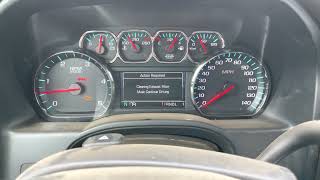
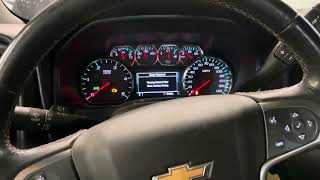
- Driver Information Center (DIC) message like 'Clean Exhaust Filter See Owners Manual Now' or 'Diesel Partic Filter is Full Continue Driving'.
- 'Engine Power is Reduced' message on the DIC (limp mode).
- Inability to accelerate past a certain speed.
- Increased fuel consumption.
- Abnormally frequent DPF regeneration cycles prior to the code setting.
- Visible black smoke from the exhaust in some cases.
- Immediately replacing the DPF. The DPF is extremely expensive, often over $2,000. The actual cause is often a much cheaper component like a sensor, a hose, or simply driving habits. A forced regeneration should always be attempted before considering DPF replacement.
Most Likely Causes
- Insufficient DPF Regeneration Due to Driving Habits 🔴 High Probability The DPF requires sustained high exhaust temperatures (like steady highway driving) to burn off trapped soot. Frequent short trips, stop-and-go traffic, or excessive idling prevent this, causing soot to build up until the system is overwhelmed. Many of these trucks are used as work vehicles and accumulate high engine hours from idling, which is a primary contributor.
How to confirm: Review driving habits and check engine hours versus mileage on a scan tool. A high ratio of hours to miles indicates excessive idling. If the truck is rarely driven at highway speeds for 20-30 minutes at a time, this is the likely cause.
Typical fix: First, attempt to initiate a regeneration by driving at a sustained highway speed (over 40 mph) for 20-30 minutes. If the light remains and the truck is in limp mode, a manual 'service regeneration' is necessary using a capable scan tool.
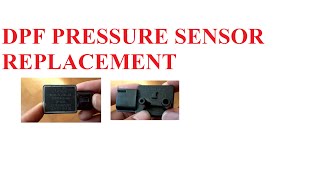
Est. part cost: $0 - Failed DPF Pressure Sensor 🟡 Medium Probability The sensor measures pressure before and after the DPF to calculate soot load. These sensors can fail electronically or their ports can become clogged with soot, sending false high-pressure readings to the ECM and incorrectly triggering code P2463.
How to confirm: Use a scan tool to monitor the DPF pressure sensor voltage/pressure readings. With the Key On, Engine Off (KOEO), the sensor should receive a 5-volt reference from the ECM. The signal wire voltage at idle should be low, around 0.5V, and increase with RPM. Unrealistic readings (e.g., high pressure with the engine off) indicate a faulty sensor.
Typical fix: Replace the DPF pressure sensor. The ACDelco OEM part number is 12643911, which superseded 12630257.
Est. part cost: $50-$150 - Clogged or Damaged DPF Pressure Sensor Hoses 🟡 Medium Probability The rubber hoses or metal pipes connecting the DPF to the pressure sensor can crack, melt from exhaust heat, or become clogged with soot, leading to inaccurate pressure readings.
How to confirm: Visually inspect the hoses for cracks, melting, or kinks. Remove the hoses and check for blockages by attempting to blow air through them.
Typical fix: Replace the damaged or clogged hoses/pipes. The OEM metal pipes are part numbers 84316440 and 25960609.
Est. part cost: $20-$80 - Air Leak in the Induction System ⚪ Low Probability According to GM TSB PI0845, air leaks after the turbocharger (in places like the charge air cooler or its hoses) can alter the air-fuel mixture, leading to excessive soot production that overwhelms the DPF. A collapsed or improperly installed engine air filter can also cause this.
How to confirm: Perform an induction system leak test (smoke test) to check for leaks in hoses, clamps, and the charge air cooler (intercooler). A scan tool can also be used to check the 'Air Leak Equivalence Ratio' parameter; a value outside the 0.80:1 to 1.20:1 range indicates a leak.
Typical fix: Repair the air leak by replacing the faulty hose, clamp, or charge air cooler. Ensure the engine air filter is installed correctly.
Est. part cost: $50-$800
Rare But Worth Checking
- Failed Aftertreatment Fuel Injector (9th Injector): The LML engine uses a dedicated '9th injector' to spray fuel into the exhaust to initiate regeneration. If this injector fails, clogs, or its fuel line leaks, regeneration cannot occur, leading to P2463. A diagnostic test involves commanding the injector on with a scan tool while it's removed to see if it sprays fuel.
- DPF Reached End of Life (Ash Loaded): Regeneration burns soot into a small amount of ash, which remains in the filter. Over 100,000-150,000+ miles, this ash can permanently fill the DPF. A service regen will not clear an ash-loaded filter, and the code will return quickly. A scan tool may show a high soot percentage (e.g., 66%) even after a successful service regen, indicating significant ash loading.
- Faulty Exhaust Gas Temperature (EGT) Sensor: The ECM uses EGT sensors to monitor temperatures for regeneration. If a sensor fails and reports an incorrect temperature (e.g., too cool), the ECM may not initiate or sustain a regeneration cycle, leading to soot buildup.
- Stuck/Failed Thermostats: If the engine does not reach its proper operating temperature (around 180-200°F), the ECM will inhibit DPF regeneration. An owner on a forum reported that replacing faulty thermostats that kept the engine too cool was a necessary step before the P2463 code could be resolved.
Diagnosis Steps
- Check for other DTCs. Address any other codes, especially for EGT sensors, the 9th injector, or turbo performance, before diagnosing P2463.
- Review driving habits and engine hours. Determine if short-trip driving or excessive idling is the likely cause.
- Attempt a manual regeneration. Drive the vehicle at highway speeds (over 50 mph) for at least 20-30 minutes to allow an automatic regeneration to occur.
- Inspect DPF pressure sensor hoses. Visually check the rubber and metal lines going to the DPF pressure sensor for cracks, melting, or blockages.
- Test the DPF pressure sensor. With a scan tool, observe the sensor's readings. KOEO voltage should be ~0.5-0.77V. Pressure at idle should be near 0 PSI. Compare readings to known good values.
- Perform a 'Service Regeneration'. If the above steps fail, use a GM-compatible scan tool (like a Tech2 or GDS2) to command a stationary service regeneration. This process can take 30-60 minutes and produces extreme heat and noise.
- Inspect for intake/exhaust leaks. As per TSB PI0845, check the charge air cooler system and exhaust system for leaks that could cause excessive soot. Also check for a collapsed or dirty engine air filter.
- Test the 9th Injector. If regeneration fails to start or doesn't heat up, test the aftertreatment fuel injector for clogging or failure.
- If regeneration fails or the code returns immediately, suspect a DPF that is full of unburnable ash. Check the soot level percentage with a scan tool after a regen; a high reading (e.g., over 50-60%) points to an ash-loaded filter requiring professional cleaning or replacement.
Parts You'll Likely Need
- Diesel Particulate Filter (DPF) Pressure Sensor
(OEM #ACDelco 12643911 (supersedes 12630257))— This sensor is a common failure point and can send incorrect data, making the ECM believe the filter is clogged when it is not.
Trusted brands: ACDelco, Bosch, Standard Motor Products (SMP)
OEM price range: $80-$150
Aftermarket price range: $40-$90 - DPF Pressure Sensor Hoses/Pipes
(OEM #84316440, 25960609)— The lines connecting the DPF to the pressure sensor can get clogged with soot, crack, or melt, causing inaccurate readings.
Trusted brands: ACDelco / GM Genuine Parts, Dorman
OEM price range: $40-$80
Aftermarket price range: $20-$50 - Diesel Particulate Filter (DPF) — If the filter is permanently clogged with ash from high mileage or has been damaged by a failed regeneration, it must be professionally cleaned or replaced. This is the most expensive repair and should be the last resort.
Trusted brands: ACDelco / GM Genuine Parts, Dorman
OEM price range: $2000-$2800
Aftermarket price range: $1500-$2200
Related Codes That Often Appear With This One
- P2459 — This code for 'Diesel Particulate Filter Regeneration Frequency' often appears because the truck is attempting to regenerate too often due to the persistent clog that P2463 indicates.
- P0299 — This code for 'Turbocharger/Supercharger Underboost' can be triggered because the extreme exhaust backpressure from the clogged DPF restricts the turbo's ability to spin freely.
- P0420 — This code for 'Catalyst System Efficiency' can sometimes appear with P2463, especially if a faulty 9th injector is the root cause of the regeneration failure.
Technical Service Bulletins (TSBs) & Recalls
- PIP5085C: Mentions P2463 and directs technicians to use standard diagnostics.
- PI0845: Details procedures for when a service regeneration won't run with P2463 set, and emphasizes checking for induction system air leaks.
- 10-06-05-002M: Informs technicians and customers about the 'Clean Exhaust Filter' messages, their relation to driving habits, and clarifies that a service regeneration due to driving style may not be covered by warranty.
Platform-Specific Known Issues
- Real-World Repair Story: The Collapsed Air Filter: In a YouTube diagnostic video, a technician found a truck with P2463 and discovered the engine air filter had completely collapsed and was being sucked into the intake tube. This created a rich-running condition, producing excessive soot that clogged the DPF. This highlights the importance of checking basic maintenance items like the air filter before diving into expensive emissions components.
- Real-World Repair Story: High Idle Hours: A technician diagnosing a P2463 on a company-owned truck noted it had relatively low mileage (78k miles) but very high engine hours (4840 hours). This indicated excessive idling, a known cause for preventing passive DPF regeneration. Even after a successful service regen, the soot load remained high (66%), suggesting the DPF was likely becoming loaded with non-burnable ash due to its life of idling.
Mechanic-Grade Diagnostic Values
- DPF Pressure Sensor Signal Voltage (KOEO) — expected: ~0.5V - 0.77V. Failure: Voltage significantly higher or lower than the expected range with the engine off.
- DPF Pressure Sensor Signal Voltage (Engine at Idle) — expected: Around 0.5V. Failure: Voltage significantly higher than 0.5V at idle, or voltage that does not rise smoothly with RPM.
- DPF Pressure Sensor Reference Voltage — expected: Steady 5V. Failure: If the 5V reference from the ECM is missing, the issue is with the wiring or ECM, not the sensor itself.
- DPF Differential Pressure during Service Regeneration — expected: Pressure should decrease as soot is burned off.. Failure: Pressure remaining high (e.g., 2-12 PSI) during the regen process indicates a severe clog or ash-loaded filter.
- Scan Tool PID: Air Leak Equivalence Ratio — expected: 0.80:1 to 1.20:1. Failure: A value outside this range indicates an air leak in the induction system, which can cause excessive soot.
- Main Fuel Injector (Piezo) Resistance — expected: 150k - 210k Ohms. Failure: A reading outside this range indicates a failed injector. This test is for the main 8 injectors, not the 9th injector.
Scan Tool Commands That Help
- GDS2 / Tech2: DPF Service Regeneration — To command a stationary, high-temperature cleaning of the DPF when a P2463 code is set and normal driving regeneration is inhibited or has failed.
- GDS2 / Tech2: DPF/Catalyst 2 Reset — This function must be performed after replacing the DPF or the DPF pressure sensor to tell the ECM to relearn the new component's baseline values. Failure to do so can cause P2463 to return.
- GDS2 / Tech2: Reductant Fluid Quality Test (RFQT) — GM TSB PI0845 outlines a specific procedure where this test is initiated just before starting a DPF Service Regeneration to ensure the system is ready.
Wiring & Ground Locations
- Cab-to-Engine Ground Strap — A ground strap connects from the firewall of the cab to the rear of the driver's side cylinder head.. A poor ground connection between the cab/chassis and the engine can cause erratic sensor readings and communication issues for modules, potentially leading to incorrect fault codes.
- Main Engine Block Grounds — There are multiple ground points on the engine block. The driver's side has three grounds near the oil cooler lines, including the main battery cable. The passenger side has three grounds as well, including another main battery cable connection.. The ECM and its network of sensors, including the DPF pressure sensor and EGT sensors, rely on these primary grounds for accurate operation. Corrosion or loose connections here can cause a wide range of electrical issues.
Real Owner Repair Stories
- YouTube channel 'DadsGarage Diagnostic Specialist' (GMC Sierra 6.6L Duramax with 78,992 miles and 4,840 engine hours (indicating high idle time)) — Reduced engine power message, 'cleaning exhaust filter' message, and code P2463.
❌ Tried (didn't work) A service regeneration was performed, which lowered the calculated soot load from 203% down to 66%. However, the truck still had no power and entered limp mode, setting a new P0299 (Turbo Underboost) code.
✅ What actually fixed it After the service regeneration seemed to fail to restore power, the technician disconnected the battery for 15 minutes. This was suspected to have forced a full reset of the ECM's learned values after the scan tool had a communication glitch mid-procedure. After the battery reconnect, the truck's power was restored and it operated normally. - YouTube channel 'DadsGarage Diagnostic Specialist' (2019 Duramax (L5P, but same principle) log truck with high idle time.) — Reduced engine power, 'cleaning exhaust filter' message, codes P2463 and P2459.
❌ Tried (didn't work) Initial diagnosis pointed directly to a clogged DPF requiring a service regeneration.
✅ What actually fixed it Before running the service regeneration, the technician found a completely collapsed engine air filter. This was allowing dirt into the induction system and likely contributing to the excessive soot. The fix involved replacing the collapsed air filter first, then performing the service regeneration to clear the existing clog.
OEM Part Supersession History
GM 12661071→GM 19421482— Standard part number update by the manufacturer.
Heads up: These parts are interchangeable for the 2011-2016 LML/LGH engine. This is the Aftertreatment Fuel Injector (9th injector).GM 12630257→ACDelco 12643911 / GM 213-4682— Standard part number update by the manufacturer.
Heads up: These parts are interchangeable. This is the DPF Differential Pressure Sensor. Aftermarket cross-references include Walker 274-1025.
Model Year Variations Within This Range
- 2011-2016: The LML engine platform itself was a major update over the prior LMM, with GM claiming 60% new components. Key changes relevant to P2463 include the introduction of the '9th injector' for DPF regeneration, which eliminated the fuel-in-oil dilution problems of the LMM. The engine also gained a more robust block, new pistons, and a higher-pressure CP4.2 fuel pump. While the core causes of P2463 are consistent across the 2011-2015 range, the entire emissions system was new compared to pre-2011 models.
Helpful Videos
We Have This Part in Stock


The information in this article is provided for general reference and educational purposes only. Vehicle specifications, procedures, and part compatibility can vary by production date, trim level, and region. Always consult your vehicle's factory service manual and verify part numbers before purchasing or performing repairs. Safety-critical components such as airbags, seat belts, and braking systems should be installed by a qualified professional.
- Gmc SIERRA:
- 🎬 Helpful Videos
- 🛍️ Shop This Part
- What's Unique About the 2011-2015 Gmc SIERRA
- Diagnostic Flowchart
- Symptoms You May Notice
- Most Likely Causes
- Rare But Worth Checking
- Diagnosis Steps
- Parts You'll Likely Need
- Related Codes That Often Appear With This One
- Technical Service Bulletins (TSBs) & Recalls
- Platform-Specific Known Issues
- Mechanic-Grade Diagnostic Values
- Scan Tool Commands That Help
- Wiring & Ground Locations
- Real Owner Repair Stories
- OEM Part Supersession History
- Model Year Variations Within This Range
- 🎟️ Get 5% Off